为什么坚持写日记能改变你的人生 dante 2026-04-19 31.7 KB ☆ 收藏 𝕏 文章列表 文章阐述了写日记对于个人成长的深远影响。作者认为写日记不仅是缓解焦虑的工具,更是实现自我发现、识别行为模式、追踪习惯进展以及改善记忆的有效手段。通过将思维具象化,人们能更客观地审视自己,从而建立更好的生活方式和职业生涯。 个人成长写日记自我认知习惯养成生产力时间管理心智模式健康生活方式方法论 67 值得读 ▶ 文章通俗生动地论述了写日记在自我认知、行为追踪和记忆方面的益处,虽缺乏深刻的独创观点且文末未完结,但近期发布且具备较强的实际操作启发性。 # How a little pen and paper could save your life **作者**: dante **日期**: 2026-04-17T13:34:29.000Z **来源**: [https://x.com/dantefofante/status/2045133799571259519](https://x.com/dantefofante/status/2045133799571259519) ---  I attribute a large chunk of my personal growth to the seemingly simple practice of writing in a journal. Everything about my life has improved since I started putting pen to paper. Stronger relationships, better health, a more lucrative career. Fulfilling hobbies, goals and purpose, the list goes on. On the surface, journaling doesn’t seem like it would do a whole lot. Monkey write on paper so monkey feel better? Yes, but journaling is like golf, chess, and meditation-hit ball into hole, capture king, sit and think about nothing. Ogres and onions. Layers. Simple on the surface with a complicated core. Letting the demons spill out onto the pages of a pocket notebook will help with anxiety, sure, but there’s so much more to it than meets the eye-something I failed to notice when I started. Today, I’m going to talk about those hidden features that only start to make sense once you start. Today I’m going to talk about why you should journal for the rest of your life. Shall we? ## Self Discovery > “In life, the challenge is not so much to figure out how best to play the game; the challenge is to figure out what game you’re playing” - Kwame Anthony Appiah Most people are abysmal at viewing themselves objectively. They’re overly emotional and sensitive. They lack depth and control. They lack understanding and self awareness. Most people take the hand they’re dealt over and over again without question. They board a random airplane and then get disappointed when they don’t land in Monaco. All because they never really asked themselves who they are and what they wanted in the first place. Think about how easy it is to see what’s good or bad for someone else. Their shortcomings and strengths are clear. The emotion vanishes and makes room for objectivity and logic. You can tell the boyfriend isn’t right for them. You can see they’re lazy. You see how their addictions work against them. You can see what they can’t. All because you view them from the third person. The solution to the problem-the path forward-is so clear. Our brains are remarkable at persuasion. Convincing us to stay comfortable. “We need the alcohol.” “She won’t do it again.” Wrong. We are stupid animals. What manifests in our mind is often not reality. We need to learn how to detach, and view ourselves from an eagle eye. When you write, you’re forced to slow down and articulate what’s actually happening. Not what you’re telling yourself is happening. What do you like? What don’t you like? What gives you energy? What drains it? Where could you be better? What have you been doing well? What are you good at? If you want to change your life, the first step is knowing who you are and what you want. The second step is understanding how you can get there. You wouldn’t expect a monkey to thrive in an aquarium, so why treat yourself any differently? Right now you have no idea whether you’re a sea creature or a jungle cat. When you write consistently, you begin recognizing patterns in your own behavior. You learn what ideas you should discard and where you should double down. Themes emerge. You iterate until you lab rat your way to the person you’ve always wanted to be. ## Patterns Human beings are pattern recognition machines. We evolved to piece together our environment so as to not get eaten by lions or fall off cliffs. Today, at best, we use it to identify the trendy new bagel shop or the popular, low quality Shein sweater. Journaling lets us resuscitate this ancient skill for something truly beneficial-realizing our own potential. When you write consistently, you inevitably start to make sense of yourself. Imagine writing this every day for a week: Monday: was late today Tuesday: was late today Wednesday: was late today Thursday: was late today Friday: was late today Lightbulb — “Shit, I’m always late!” Maybe you notice that every time you hang out with that jabroni Joe Shmo you feel drained? Maybe Greek yogurt gives you a silky smooth complexion? Perhaps you feel better on 7 hours of sleep than 8? Who knows. The point is, your brain is relentlessly looking for ways to connect dots, and journaling serves it up on a golden platter. It forces you to pay attention-you cannot change what you don’t see. It sends the snowball barreling down the mountain and once it gets momentum change is easy. Magically, shaving 5-10 minutes off your morning routine isn’t that hard. You become a mini zookeeper on yourself and the gap between awareness and action shrinks dramatically. ## Tracking > “What gets measured gets managed” - Peter Drucker Writing things down makes them important. We take notes in meetings, concoct grocery lists, and craft hearty to do lists. Journaling, quite masterfully, makes things that are seemingly mundane and useless, a priority. By tracking our habits we can use this to our advantage. Every morning, I weigh myself and write down my weight. Body composition is important to me so I document it. This makes it easy for me to recognize when I haven’t been taking my diet or training seriously. If my weight jumps up over a week or two (and that’s not my intention) then I can rapidly course correct. Most people only track their weight once (at their annual physical) before they realize they’ve gained 15 pounds and now have some serious work to do. Log what’s important to you. Track things that you want to progress in. Even if you fail, it will help you set micro goals and self actualize. How many miles will I run this month? Did I go to the bathroom today? Did I text a friend I haven’t talked to in a while? How many cups of coffee did I have? When did I go to sleep? Did I study Japanese? Did I write? Did I eat my fermented vegetables? Did I study for my interview? Did I spend money today? Did I read? Frankenstein yourself. Examples of my journals are below. The list of possibilities is infinite. When you design yours, be creative and make it fun. All of the examples seen at the end of this essay align with something I’m working towards. Daily tracking lets you focus on the now—controlling the inputs—without hyper-fixating on the end goal. The outcome isn’t in your control, but your actions today, are. You won’t one shot the boss in a day, but you can stack small daily habits to build something meaningful over time. Journaling is there to hold your hand along the way. Brandon Sanderson - one of the greatest fantasy and science fiction authors of all time - often emphasizes that a satisfying story follows a transformative arc. The protagonist begins broken - battered by flaws, losses, or external forces - then progresses through trials that test and reshape them, culminating in a reflective payoff. The “I was broken but now I’m whole” moment. The looking back moment. The “look how far I’ve come.” You’re writing your own story every day. So why not document it and have something cool to look back on? ## Memory How many times have you sworn to yourself that you’d remember, only to forget an hour later? The assignment you understood in class but forgot by the time you got home. The grocery list you filed away in your brain, only to realize when you got home that you forgot toilet paper. Maybe you chalk this up to shitty memory, maybe ego, maybe both. The point is, it’s really not your fault. You’re just using the tool you’ve been given incorrectly-you’re trying to use a star screwdriver on a flathead screw. Whether you have S-tier memory or can’t remember how to spell Wednesday, the human brain isn’t designed to hang onto the details. It’s remarkable at getting the gist of things, at holding onto the outline of a memory, but extremely poor at remembering specifics. What makes this sad is that the tiny details are often what matter, really, it’s the micro-moments within the memory that makes things meaningful. Yes, you remember being happy on Christmas, on vacation, or on your birthday-but you don’t actually know why. You remember how you felt, that the trip was fun, but not much else. It’s actually all of the little things that happened on those days that made it worth remembering—and you remember none of them. You remember your 20th birthday, but not dad’s tragically bad one liner? You remember the wedding, but not the 6 year old ripping the Fortnite dance for ten seconds? It’s the culmination of 100s of little moments across an event that actually give you the feeling of excitement when you think back. Journaling is a beautiful little time capsule that helps you capture these deep moments that are so easily forgotten. Every night I write about my day because every day there are minuscule moments that are so awesome I want to remember. 12/23/25 - Girlfriend ate all of the cookie dough out of our ice cream and handed it to me like she did nothing wrong. 11/5/25 - Girlfriend dropped container of eggs and blamed me—we cracked up over it (pun intended) 9/7/25 – Had a sausage sandwich at the Steelers game and it tasted terrible, but we all pretended it was good 7/5/24 – Played DayZ until my eyes hurt with X, Y, and Z. We made it super far first run—went to bed at 4AM on the same day I ran a marathon. 6/3/24 – Went to the driving range and was smoking my 5 iron—probably hit 25 pure in a row which has never happened. These are so stupid, but I’m happy just reading them—and they’re all memories I had completely forgotten. It’s the details that make the memory. I want to be able to look back one day and remember the random moments that actually made me smile, and that alone is enough to force me to journal forever. Imagine years and years of these little moments captured, and the beauty of rereading them. Without my journal, these lovely, joyous moments that had me smiling ear to ear would be lost forever, and that makes me so sad. It’s not that you don’t remember these things happening—you just don’t think to recall them. As I read each of those above, I remember them all now, but I never would have had I not written about them. If you decide to write in a journal for any reason at all, I think it should be this. ## Creative Outlet Journaling isn’t strictly a productivity tool—it’s a way to express yourself, a way to let that dormant creativity run rampant. Draw pictures of plants and ugly self portraits. Practice a language and take notes on coral reefs. Tape photographs from trips and write poetry. Make calendars and conjure up plots and bar charts. Use the scientific method on a study about olive oil, or on yourself. There’s a million things you can do, which is what makes it so amazing. It becomes exactly what you want it to be. We live in a time where we consume relentlessly, never releasing the pressure valve. Zero creation. Eating forever and never excreting. The world is struggling because no one is letting it out. If you have no means of creation in your repertoire, let journaling become your little force de resistance. A way to express what’s been lost through years of doomscrolling and chronic online-ness—your release, your outlet, your little way of saying fuck you to the regime. It’s difficult at first, but once you sit down for a few minutes, it gets surprisingly fun. ## Self-Expression Journaling sharpens your thoughts and improves self awareness. You become more comfortable with yourself and your ideas—what you do and don’t believe and how you want to portray yourself. There’s less guesswork which makes you more comfortable and confident out in the world. When you’ve already worked through your ideas on paper, you know what you want and where you should be going—and there’s no distractions. No need to put on performances because you believe with conviction in who you are. You’ve mapped out pitfalls of decisions and honed your own strategy for success. Then, when it’s game time, there’s no stagnation, no hesitation, just execution. This newfound confidence and understanding makes you a better speaker. When you write, you’re forced to condense your ideas into what’s most important to keep the reader engaged. There’s no room for fluff and stuttering. You’re essentially practicing articulation and fluency, but through a different medium. This extrapolates into how you use life’s most sacred instrument—your voice. It transcends into conversation and the mark you leave on the world. Self awareness and introspection are key to ping ponging with randos. You stop blurting shit out because you’ve already processed your thoughts privately. You become okay with not being the center of attention. You find yourself assessing the conversation objectively, almost from the third person, in the moment. You make way to be interested and not interesting, making you more memorable and unique than most. ## Breadcrumbing > “Pages are more patient than people” - Anne Frank When I first started, my journal was something I turned to when shit wasn’t going my way. A little tool to help me vanquish demons and work through challenges. It was absolutely beneficial—but I was hopping on one foot when I could’ve been running. I wasn’t perpetually in death spirals. I was happy a lot too. Journaling is a way to breadcrumb yourself. Reflect and write when things are going well. Then, when you find yourself in the depths once more, you have a candy trail back to the top that’s catered directly to you. What were you doing when you felt good? You have a log. Matthew McConaughey talks about this at length—keep recording your life even when it’s good, and use those records as a playbook for future decisions. ## Make it Fun If you choose to give it a shot—don’t overthink it. Make it fun for yourself. Keep putting your ass in the chair because that’s when the movie gets good. Commit to 1 minute. Or 1 sentence. Write down your favorite part of the day. Write about what went well, or what didn’t. Capture cool moments and shit that made you laugh. In my opinion, one of the keys to a fulfilling life is realizing your potential. I believe journaling is one of, if not the most powerful levers you can pull to support that process. I will do it for the rest of my life, without question, and I think you should too. I truly believe that journaling can can change your life, because for me, outside of exercise, nothing has been more beneficial than putting a little pen to paper. Thank you for reading and godspeed. - Dante ## My Journals for Ideation/Reference: 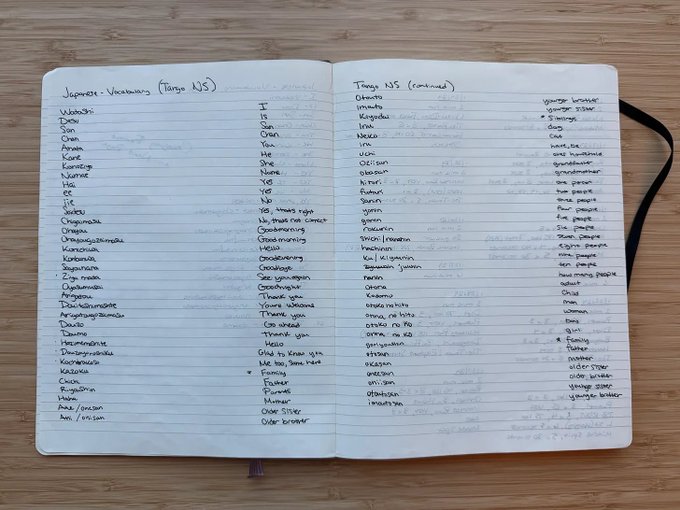 Studying Japanese 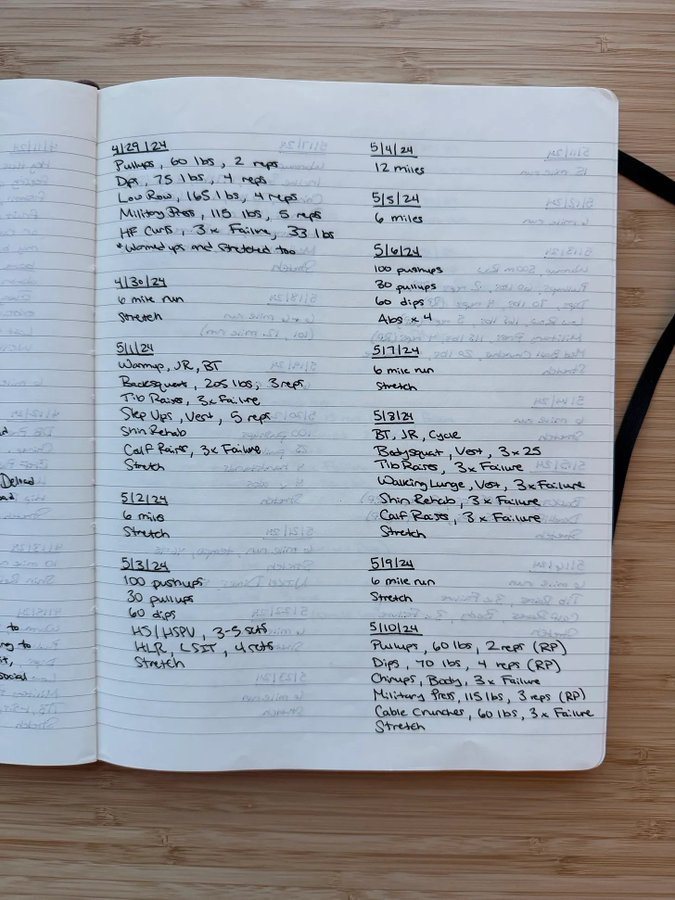 Tracking workouts  Basic tracking setup - My daily entries/writing take place in the space between months 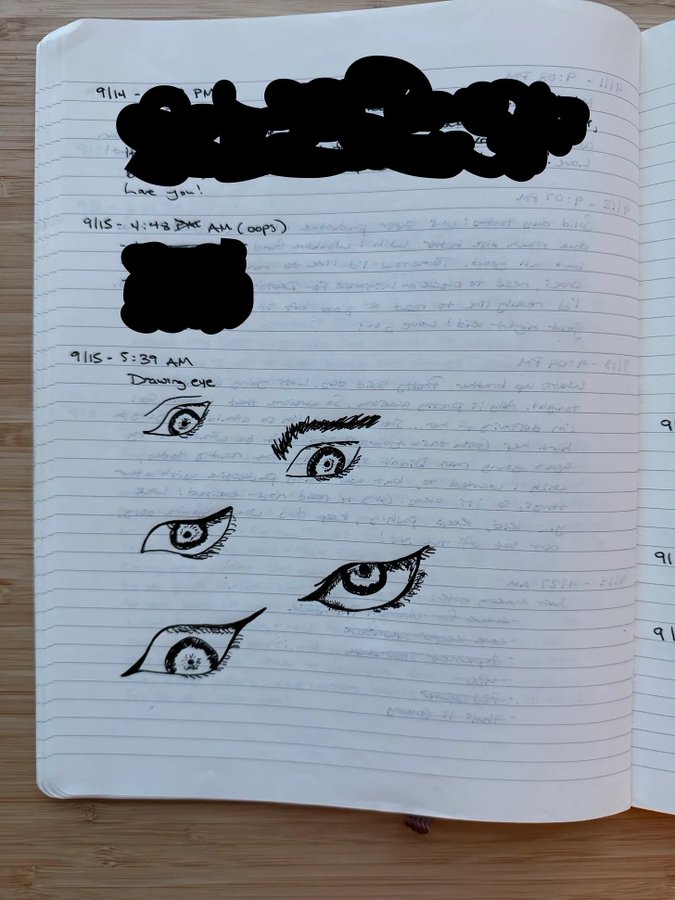 Some doodles 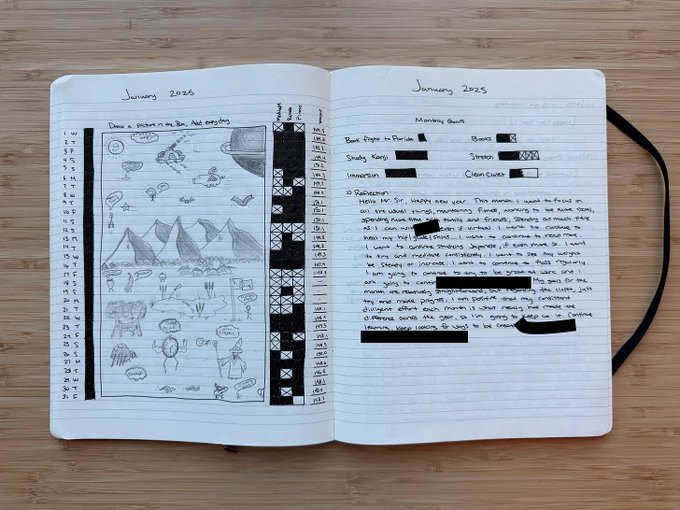 Got creative here 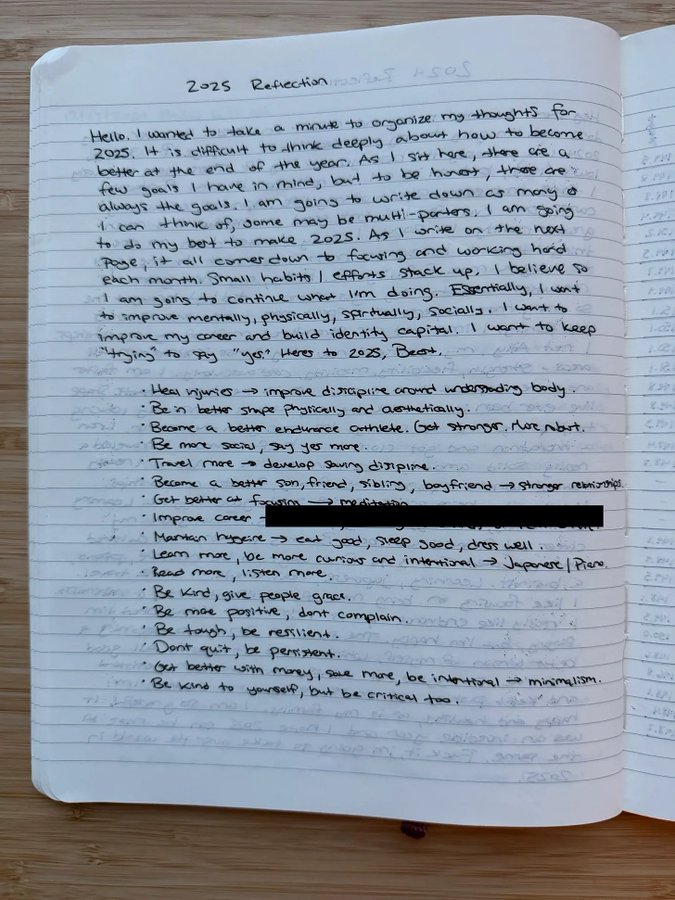 2025 reflection 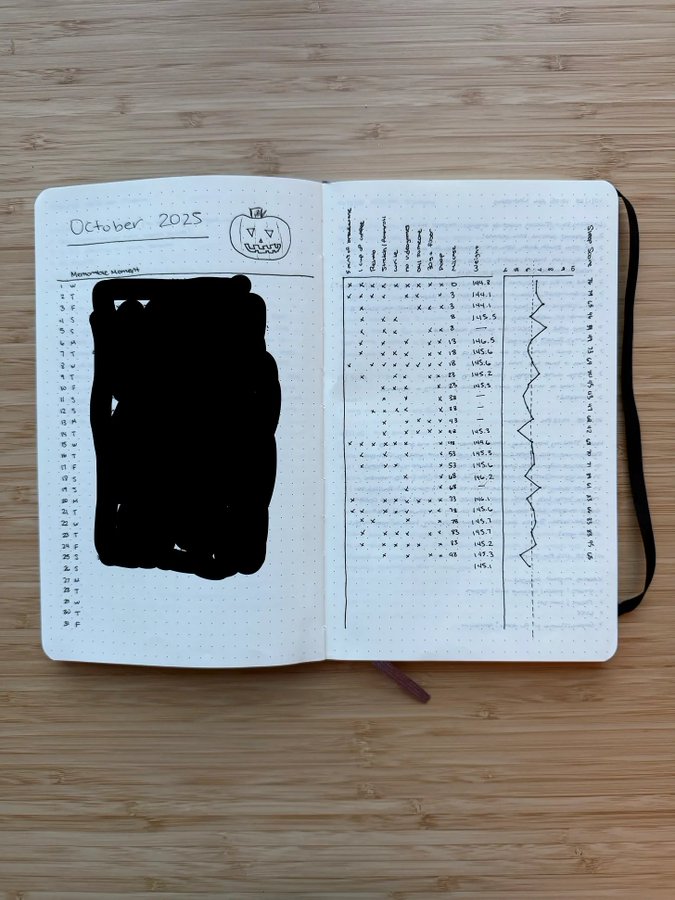 Tracking setup I’ve been playing with 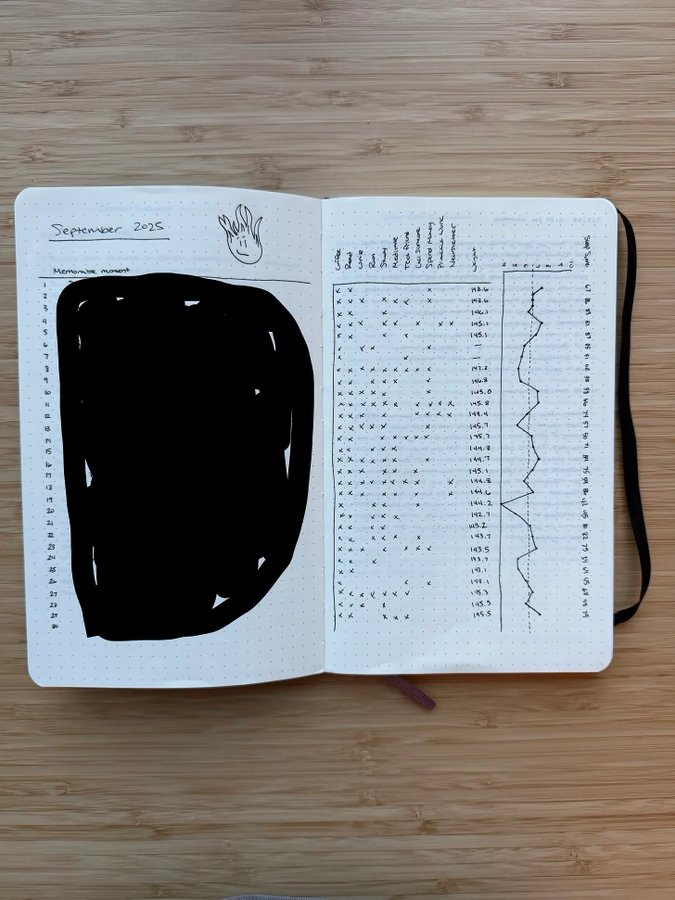 Example 2 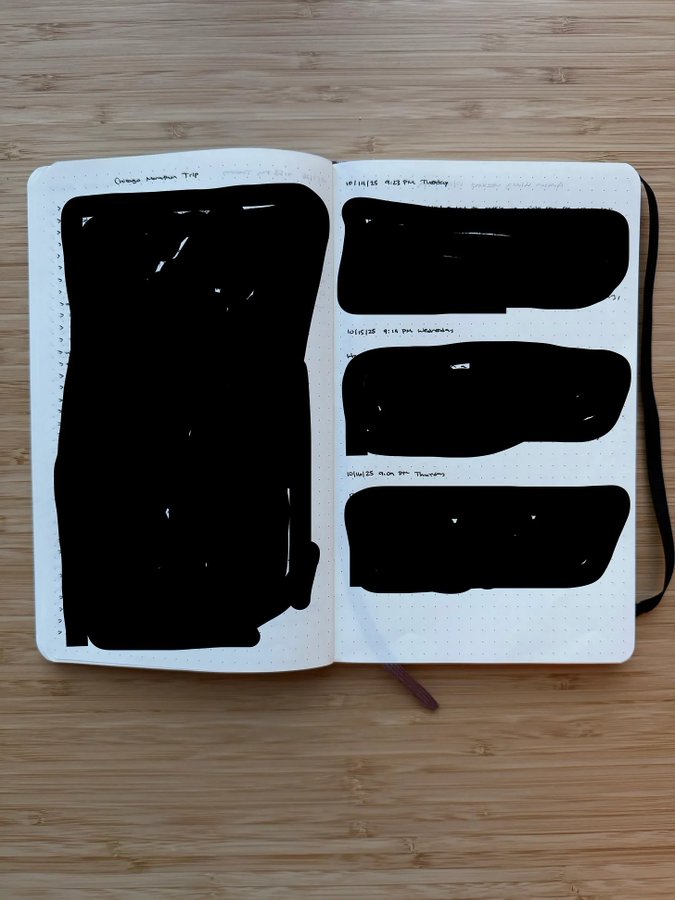 This one is useless, but on the page on the left I write all the memorable moments from a special trip - the right is just normal entries ## Pen/Paper I Use - Muji Smooth Gel Ink Ballpoint Pen Knock Type 0.5mm - Moleskine Large Classic Notebook Dotted ## 相关链接 - [Toan Truong reposted](https://x.com/ToanTruong_) - [dante](https://x.com/dantefofante) - [@dantefofante](https://x.com/dantefofante) - [21K](https://x.com/dantefofante/status/2045133799571259519/analytics) - [Upgrade to Premium](https://x.com/i/premium_sign_up) - [9:34 PM · Apr 17, 2026](https://x.com/dantefofante/status/2045133799571259519) - [21.8K Views](https://x.com/dantefofante/status/2045133799571259519/analytics) - [View quotes](https://x.com/dantefofante/status/2045133799571259519/quotes) --- *导出时间: 2026/4/19 13:02:48* --- ## 中文翻译 # 一支笔和一张纸如何能拯救你的生命 **作者**: dante **日期**: 2026-04-17T13:34:29.000Z **来源**: [https://x.com/dantefofante/status/2045133799571259519](https://x.com/dantefofante/status/2045133799571259519) ---  我把自己个人成长的很大一部分归功于写日记这个看似简单的习惯。自从我开始动笔书写以来,我生活中的一切都得到了改善。 更牢固的人际关系、更健康的身体、更赚钱的事业。充实的爱好、目标和使命感,不胜枚举。从表面上看,写日记似乎不会带来多大作用。猴子在纸上写字,猴子就感觉更好?是的,但写日记就像高尔夫、国际象棋和冥想——把球打进洞、将死国王、坐着什么都不想。如同食人魔和洋葱,有层次。表面简单,内核复杂。 让内心的魔鬼倾泻到袖珍笔记本的页面上当然有助于缓解焦虑,但它远比表面看起来更有价值——这是我刚开始时未能察觉的。 今天,我要谈谈那些只有开始写之后才会显现的隐藏功能。 今天我要谈谈为什么你应该终生写日记。 我们开始吧? ## 自我发现 > “在人生中,挑战不在于弄清楚如何把游戏玩得最好;挑战在于弄清楚你玩的是什么游戏。”——夸梅·安东尼·阿皮亚 大多数人都极不擅长客观地看待自己。他们过于情绪化和敏感。他们缺乏深度和自控力。他们缺乏理解和自我认知。大多数人一遍又一遍地接受发到手中的牌,从不质疑。他们登上一架随机选择的飞机,然后因为没有降落在摩纳哥而失望。这一切都是因为他们从来没有真正问过自己:我是谁?我想要什么? 想想看,看清什么对别人有好、什么对别人有害是多么容易。 他们的缺点和优点一目了然。情绪消失了,为客观和逻辑腾出了空间。你能看出那个男朋友不适合她。你能看出他很懒。你能看到他们的恶习如何拖累他们。你能看到他们自己看不到的东西。这一切都是因为你以第三人称视角看待他们。 问题的解决方案——前进的道路——如此清晰。 我们的大脑极其擅长自我说服。说服我们安于现状。 “我们需要酒精。” “她不会再那样做了。” 错了。我们是愚蠢的动物。脑海中浮现的东西往往不是现实。我们需要学会抽离,用鹰一般锐利的眼光审视自己。 当你写作时,你被迫放慢速度,清晰表达实际发生的事情。而不是你告诉自己正在发生的事情。 你喜欢什么?你不喜欢什么?什么给你带来能量?什么在消耗它?你在哪些方面可以做得更好?你一直在哪些方面做得不错?你擅长什么? 如果你想改变自己的生活,第一步是了解你是谁、你想要什么。第二步是理解你如何才能到达那里。 你不会指望一只猴子在水族馆里茁壮成长,那为什么要如此对待自己呢?此刻,你根本不知道自己是海洋生物还是丛林猫科动物。 当你坚持写作时,你会开始识别自己行为中的模式。你学会该丢弃哪些想法、该在哪些方面加倍投入。主题逐渐浮现。你不断迭代,直到像实验鼠一样摸索出通往理想自我的道路。 ## 模式 人类是模式识别机器。 我们进化出拼凑环境信息的能力,是为了不被狮子吃掉或从悬崖上跌落。而今天,我们至多用它来辨认新开的人气贝果店或流行但劣质的 Shein 毛衣。 写日记让我们将这项古老的技能复活,用于真正有益的事情——认识自己的潜力。当你坚持写作时,你不可避免地会开始理解自己。 想象一下你连续一周每天都写下这些: 周一:今天迟到了 周二:今天迟到了 周三:今天迟到了 周四:今天迟到了 周五:今天迟到了 灵光一现——“糟了,我总是迟到!” 也许你会注意到,每次和那个蠢货 Joe Shmo 一起玩,你都感觉筋疲力尽? 也许希腊酸奶让你的皮肤变得丝般光滑? 也许你睡 7 小时比睡 8 小时感觉更好? 谁知道呢。重点是,你的大脑在不知疲倦地寻找连接点滴的方式,而写日记把它端上了金盘。它迫使你保持关注——你无法改变自己看不见的东西。 它让雪球从山上呼啸而下,一旦有了势头,改变就变得容易。神奇的是,把早晨的例行事务缩短 5-10 分钟其实并不难。你成了自己的迷你动物园管理员,觉察与行动之间的差距急剧缩小。 ## 记录 > “被衡量的东西才能被管理。”——彼得·德鲁克 把事情写下来会让它们变得重要。 我们在会议中做笔记、列购物清单、制定详尽的待办事项清单。写日记非常巧妙地让那些看似平凡无用的东西成为优先事项。通过追踪我们的习惯,我们可以利用这一点为自己谋利。 每天早上,我都会称体重并记录下来。身体成分对我很重要,所以我会把它记录下来。这让我很容易察觉自己什么时候没有认真对待饮食或训练。如果我的体重在一两周内上涨了(而且这不是我的本意),我就能迅速纠正方向。 大多数人只测量一次体重(在年度体检时),然后才发现自己胖了 15 磅,现在有一大堆艰巨的工作要做。记录对你重要的东西。追踪你想要进步的方面。即使你失败了,它也会帮助你设定微目标并实现自我。 这个月我要跑多少英里?今天上洗手间了吗?有没有给许久未联系的朋友发消息?喝了几杯咖啡?几点睡的?学日语了吗?写作了吗?吃发酵蔬菜了吗?准备面试了吗?今天花钱了吗?读书了吗? 自己打造一个“科学怪人”式的自我。 下面是我的日志示例。 可能性是无穷无尽的。 设计你自己的日志时,要有创意,让它变得有趣。本文末尾展示的所有例子都与我在努力的方向相符。每日记录让你专注于当下——掌控输入——而不过度执着于最终目标。 结果不在你的掌控之中,但你今天的行动在。你无法一天之内一击必杀大 Boss,但你可以积累微小的日常习惯,日积月累,构建出有意义的东西。日记本就是在这一路上牵着你的手的那个人。 布兰登·桑德森——有史以来最伟大的奇幻与科幻作家之一——经常强调,一个令人满足的故事遵循一条蜕变弧线。主人公起初是破碎的——被缺陷、损失或外力摧残——然后在考验中不断前行,这些考验磨练并重塑了他们,最终迎来一个引人回味的圆满结局。那个“我曾经破碎,如今我完整了”的时刻。那个回望过去的时刻。那个“看看我走了多远”的时刻。 你每天都在书写自己的故事。那为什么不去记录它,留下一些日后可以回味的美好东西呢? ## 记忆 你有多少次对自己发誓一定会记住,结果一小时后就忘了? 课堂上听懂了、回到家却忘光了的作业。你以为已经存进大脑的购物清单,到家才发现忘了买卫生纸。 也许你把这归咎于糟糕的记性,也许归咎于自负,也许两者都有。重点是,这真的不是你的错。你只是没有正确使用你被赋予的那件工具——你是在用十字螺丝刀拧一字螺丝。 无论你拥有顶级记忆力,还是连 Wednesday 都不会拼,人类大脑的设计初衷就不是为了留住细节。它极其擅长把握事物的要点、保留记忆的轮廓,但在记住具体细节上却非常糟糕。 令人难过的是,微小的细节往往才是真正重要的东西——说真的,正是记忆中的那些微时刻才让一切变得有意义。是的,你记得圣诞节、度假或生日那天你很开心——但你并不知道为什么。你记得自己的感受,记得那次旅行很有趣,但其他就没什么了。其实正是那些日子里发生的所有小事才让它值得铭记——而你一件都不记得了。 你记得自己的 20 岁生日,却不记得爸爸那个惨不忍睹的冷笑话?你记得那场婚礼,却不记得那个 6 岁小孩连跳十秒《堡垒之夜》舞步的样子? 正是漫长岁月里数百个小时刻的累积,才让你在回想时产生那种兴奋感。日记就是一个美丽的小小时间胶囊,帮你捕捉这些如此容易被遗忘的珍贵时刻。 每天晚上我都会写下我的一天,因为每天都有微小的、美好到让我想要铭记的时刻。 2025/12/23 - 女朋友把冰淇淋里的饼干面团全挖出来吃了,还若无其事地把它递给我。 2025/11/5 - 女朋友打翻了一盒鸡蛋还赖到我头上——我们为此笑得前仰后合(一语双关) 2025/9/7 - 在钢人队比赛现场吃了块香肠三明治,难吃极了,但我们全都假装很好吃 2024/7/5 – 和 X、Y、Z 玩 DayZ 玩到眼睛疼。第一局就走了超远——在我跑完马拉松的当天凌晨四点才睡。 2024/6/3 – 去高尔夫练习场,我的五号铁杆发挥神勇——大概连打了 25 杆标准球,这从未发生过。 这些事特别蠢,但我光是读着就觉得很开心——而且这些都是我完全忘记了的记忆。 正是细节构成了记忆。我希望有一天回头望去,还能记得那些真正让我微笑的-random-时刻,光是这一点就足以让我永远坚持写日记。 想象一下,年复一年积累下来的这些小小时刻,重读它们该有多美好。如果没有我的日记,这些让我笑得合不拢嘴的可爱、欢乐的时刻将永远消失,这让我非常难过。并不是你不记得这些事发生过——只是你想不起来去回忆它们。 当我读上面每一条时,我现在都还记得,但如果我没写下来,我绝不会想起它们。如果你决定出于任何理由写日记,我认为理由就应该是这个。 ## 创意出口 写日记并不只是一种生产力工具——它是一种表达自我的方式,是让那种蛰伏的创造力尽情奔放的方式。 画植物的图和丑丑的自画像。练习一门语言,顺便做珊瑚礁的笔记。把旅行拍的照片贴上去,写写诗。制作日历,构思情节,画柱状图。对一项关于橄榄油的研究、或者对你自己,运用科学方法。 你能做的事情有千千万万,这正是它如此美妙的地方。它会变成你想要的任何样子。 我们生活在一个无休止消费的时代,从不释放压力阀。零创造。只进食,从不排泄。这个世界之所以挣扎,就是因为没有人把东西释放出来。如果你的技能库里没有任何创造的途径,那就让写日记成为你的小小抵抗之力。一种表达那些在多年的末日刷屏和长期沉迷网络中失落之物的方式——你的释放口,你的出口,你对这个体制说“去他妈的”的小小方式。 一开始很难,但一旦你坐下来几分钟,它就会变得出奇地有趣。 ## 自我表达 写日记能磨砺你的思维,提升自我认知。你会更自在地面对自己和自己的想法——你相信什么、不相信什么,以及你想展现怎样的自己。猜测减少了,你在外面的世界也会更加从容自信。当你已经在纸上理清了自己的想法,你就知道自己想要什么、该往哪里去——而且没有任何干扰。 无需装腔作势,因为你对真实的自己怀有坚定的信念。你已经预演过决策中的陷阱,磨砺出了自己的成功策略。于是,当关键时刻来临,没有停滞,没有犹豫,只有执行。 这种新获得的自信与理解让你成为更好的表达者。写作时,你必须把想法浓缩成最重要的内容,才能吸引读者。没有废话和结巴的余地。你其实是在练习表达的清晰度和流畅度,只是通过一种不同的媒介。 这会延伸到如何使用人生最神圣的工具——你的声音。 它会渗透到你的对话中,影响你留给世界的印记。自我认知与内省是和陌生人自如交流的关键。你不再随口乱说,因为你已经在私下里消化过自己的想法。你开始接受自己不必成为众人瞩目的焦点。你发现自己在对话中能够客观地审视,几乎像第三者一样置身当下。你让自己做一个感兴趣的人,而非只顾着有趣的人,这反而让你比大多数人更令人难忘、更与众不同。 ## 面包屑标记 > “纸张比人更有耐心” —— 安妮·弗兰克 刚开始时,我写日记是在事情不顺时的求助手段。一个帮我战胜心魔、应对挑战的小工具。这确实大有裨益——但我本可以奔跑,却只是单脚跳跃。我并非一直陷在死亡螺旋里,也有很多快乐的时候。 写日记是一种为自己留下面包屑标记的方式。在一切顺利时也要反思并记录下来。这样,当你再次陷入低谷时,就有一条专门为你铺设的糖果小径,引你回到顶峰。你感觉良好时在做什么?你有一份记录。马修·麦康纳对此有详尽的论述——即使一切顺利也要坚持记录生活,并把这些记录作为未来决策的剧本。 ## 让它变得有趣 如果你决定尝试——不要想太多。让自己觉得有趣就好。坚持坐到椅子上,因为好戏才刚刚开场。承诺只写1分钟,或者1句话。写下你一天中最喜欢的部分。写下顺利的事,或不顺的事。记录精彩瞬间和让你大笑的趣事。 在我看来,充实人生的关键之一是实现自己的潜力。我相信写日记是推动这一过程最强大的杠杆之一,如果不是最强的话。毫无疑问,我会坚持写一辈子,我认为你也应该如此。我真心相信写日记可以改变你的人生,因为对我而言,除了锻炼,没有什么比提笔写作更有益的了。 感谢阅读,一路顺风。 - Dante ## 我的日记(构思/参考用):  学日语  记录锻炼  基础记录布局 - 我的每日记录/写作在两个月份之间的空白处进行  一些涂鸦  这里发挥了一下创意  2025年反思  我一直在尝试的记录布局  示例2  这个没什么用处,但左边那页我记下了一次特别旅行中所有难忘的时刻——右边只是普通记录 ## 我使用的笔/纸 - 无印良品顺滑中性笔按动式 0.5mm - Moleskine 大号经典点阵笔记本 ## 相关链接 - [Toan Truong reposted](https://x.com/ToanTruong_) - [dante](https://x.com/dantefofante) - [@dantefofante](https://x.com/dantefofante) - [21K](https://x.com/dantefofante/status/2045133799571259519/analytics) - [Upgrade to Premium](https://x.com/i/premium_sign_up) - [9:34 PM · Apr 17, 2026](https://x.com/dantefofante/status/2045133799571259519) - [21.8K Views](https://x.com/dantefofante/status/2045133799571259519/analytics) - [View quotes](https://x.com/dantefofante/status/2045133799571259519/quotes) --- *导出时间: 2026/4/19 13:02:48*
一 一定要早起,但很少有人真正做到:它真的可以改命 本文阐述了作者持续凌晨4:30起床2117天的深刻体会。文章指出,许多人并非不努力,而是输在了清晨的精力、节奏和掌控感上。作者认为,解决晚睡最有效的方法是先强制早起,通过重建生物节律来对抗混乱和低能量。早起不仅是作息调整,更是拿回生命主权的关键,能让人在混乱中重新获得掌控感,从而改变整个人生的走向。 生活 › 随笔 杨高能 2026-04-19 早起自律时间管理健康成长生活方式精力管理习惯养成曾国藩改变命运
从 从迷茫到清醒:4年时间总结的「人生使用指南」 本文作者分享了历时4年总结的一套自我操作系统,旨在帮助人们摆脱无意识的生活惯性。文章从身体使用手册、情绪错题本、消费观察系统和内驱力地图四个核心维度,提供了具体的实操方法和观察模板,帮助读者重新掌握人生的选择权,构建符合自身价值结构的生活方式。 生活 › 方法论 V Vincent|只上干货 2026-04-07 自我认知个人成长人生规划情绪管理消费习惯健康时间管理生活哲学
如 如何随时进入极致专注状态的完整指南 本文提出每天专注一小时就足以改变人生,反对盲目苦干12小时的成功观。作者借用心理熵和注意力稀缺的概念,解释为何人们难以专注:注意力被遗憾、焦虑、娱乐和未完成任务分散。文章将工作分为构建、维护、恢复三类,并强调成功人士往往在头脑中深度思考,执行时迅速高效。获得深度专注的三个关键要素是清晰度、重要性和紧迫感:选择有挑战性的目标,将大任务拆解为可控子目标,并理解其人生意义。文章引用心流理论,倡导像健身一样科学管理心智能量。 职场 › 职业发展 DAN KOE 2026-10-18 专注力深度工作生产力时间管理自我提升心流个人成长
人 人生五大资本|别困在支线陷阱,荒废主线 文章指出许多人无法实现财富突破,根源在于把精力消耗在支线琐事上,如无效社交、即时娱乐、频繁跳槽、精神内耗等,错过人生主线的窗口期。作者提出人生应经营五大底层资本:时间资本是根基,金融资本强调强制储蓄与复利认知,认知资本要求深耕赛道与独立思考,人脉资本核心是价值互换,健康资本是一切的本金载体。五者形成循环系统:时间沉淀认知,认知创造本金,本金购买资产,人脉放大机会,健康延长复利周期。财富积累靠做减法,停止无复利之事,把自己变成一项长期资产。 生活 › 随笔 Tom Zheng 2026-10-01 人生资本财富积累复利认知提升时间管理长期主义个人成长理财健康人脉
年 年轻人不要过度努力 作者借张朝阳“年轻人不要过度努力,努力和回报没有因果关系”的观点,结合自己做产品的踩坑经历展开反思:他曾每天工作十几个小时却用户寥寥,发现失败源于方向错误而非不够勤奋。文章指出,赚钱的决定因素是认知、选择、资源和杠杆、方法这四个更上游的要素,执行层面的勤奋只是下游动作。作者通过聚焦单一平台做内容冷启动的经历验证了“选择优于努力”的规律,并建议每周留出半天时间思考核心假设、时间分配和优先级,把精力放在判断而非盲目执行上。 其他 › 杂谈 J Jessi Cao 2026-10-01 认知选择大于努力产品创业独立开发个人成长方法论时间管理复盘
用 用这种方式管理你的目标吧(OAATI 模型) 作者尝试过各种效率系统却始终无法实现目标,最终总结出一个五词模型:OAATI(Outcome → Activities → Actions → Time → Iterate)。核心观点是:目标必须具体、可衡量,先定义一个清晰的成果,再将其拆解为活动、具体行动及所需时间,通过测试剔除无效部分,找出关键制约因素,将其余工作系统化,并持续迭代修正。文章强调大多数人的效率方法只是碎片化技巧,唯有明确方向、清晰定义目标及其反面(失败状态),才能产生真正的紧迫感和行动力,最终实现任何目标。 职场 › 个人成长 Craig Perry 2026-09-11 目标管理效率方法OAATI模型个人成长生产力时间管理自我提升迭代
生 生命资产审计:写给1%顶峰行者的12篇健康指南合集 70后健康教练杨高能汇总其X平台上累计865万+阅读的12篇健康干货文章。文章核心观点是:健康不是养生话题,而是风险管理,身体是最底层、最易被透支的核心资产。作者结合自身4:30早起2073天、慢跑、力量训练、轻断食等实践经验,剖析熬夜、久坐、睡眠不足对中年人的隐性长期伤害,引用《柳叶刀》研究说明生活方式对寿命差距的影响。给出可落地的行动建议:固定作息、每小时起身活动、记录睡眠、循序渐进断食等,倡导"读1篇、做1个动作、坚持7天"。 生活 › 健康 杨高能 2026-08-22 健康睡眠熬夜中年危机轻断食久坐自我管理风险管理习惯养成生活方式
我 我正在经历一场“逆向中年危机” 作者提出“逆向中年危机”的概念。传统中年危机试图追逐过去以取悦年轻的自己,而逆向中年危机则专注于当下,做能产生长期复利的事以让未来的自己骄傲。作者指出应对时间流逝的恐惧有三个核心支柱:做减法而不是加法,聚焦真正重要的事;投资时间而非消耗时间;活在当下,不要盲目追逐。唯有拥抱人生的每个阶段,才能获得内心的平静。 生活 › 随笔 Sahil Bloom 2026-08-10 中年危机个人成长时间管理活在当下人生感悟心理健康生活方式自我反思
如 如何夺回你的注意力 文章探讨了为何消除干扰后仍难以专注的原因,指出问题在于缺乏明确的行动单元。作者建议在开始工作前确定具体任务、执行方式和完成标准,并在任务间隙主动决定下一步,以避免注意力被碎片化信息劫持,从而确保重要事项获得优先关注。 职场 › 职业发展 Max 2026-07-24 专注力效率时间管理自我提升生产力深度工作注意力经济习惯养成目标管理决策
A Agent时代精力的重分配:Think与Make的新模型 本文探讨了AI Agent时代下个人时间分配模型的演变。作者提出,随着Agent接管基础执行工作,人类应将时间从传统的“70%执行+30%思考”向“50%执行+50%思考”迁移。文章重新定义了“Make”为编排式执行,“Think”为复合思维与系统设计,并提出了意图设计、工作流设计、质量判定及责任心等四项核心生存能力。 技术 › Agent WquGuru 2026-05-28 AI Agent工作流个人成长时间管理LLM思维模型方法论职业发展
长 长期主义心智与复利思维训练:重构人生算法的系统性指南 本文是一套结合认知科学与行为心理学的系统性指南,旨在帮助读者从根本上重构与时间的关系。文章深入剖析了长期主义的心智模式,解释了复利思维在知识、健康、人脉和财富等领域的多维应用,并提供了从认知重构、习惯养成到反馈机制设计的具体训练方案,强调通过持续积累实现人生的指数级增长。 读书 › 方法论 V Vincent Logic 2026-04-27 长期主义复利思维认知升级个人成长心智模型习惯养成时间管理自我管理决策框架人生算法
什 什么是AI时代最不能被取代的技能? 本文探讨了AI时代下人类的核心竞争力。作者认为,虽然AI擅长处理肤浅的重复性工作,但需要高强度认知和独特判断力的“深度工作”反而愈发稀缺和珍贵。文章分析了深度工作的特点、职场环境对其的阻碍,并提出了通过4DX原则和职业规划来培养深度工作能力的实用建议。 职场 › 职业发展 Saito 2026-04-26 深度工作AI个人成长职业规划方法论生产力技能提升