# How to build an audience when you hate building a "personal brand"
**作者**: Louis McKeeve
**日期**: 2026-07-13T08:58:12.000Z
**来源**: [https://x.com/lmkeev/status/2076592014322176308](https://x.com/lmkeev/status/2076592014322176308)
---

If you’re like me, your feed is a daily bombardment of LinkedIn and Twitter wannabe Platos: dispensing life advice, telling some made-up story to push a product, or sharing their Ironman result. I found it cringe for years. But it’s now beyond reasonable doubt: social media might be a game, but it is the undeniable S-tier route to the most valuable commodity left — attention. In an age where you can literally build software products on your phone while sitting on the toilet, how do I get customers? is now 10x more important than what should I build?
And if you’re like me, the whole personal-brand thing makes you wince. It took me years to get over the judgment of parroting my daily thoughts online — but don’t worry, this won’t be the millionth article about overcoming your fear of posting. There are far better writers doing that. This is for people who already know distribution comes first and want the quiet alternative: you don’t need a personal brand to build a distribution asset. Here are the three ways I’ve done it and illustrate various alternatives for you to consider:
## 1. Borrow someone else’s distribution
If you’re a builder, let me tell you: there are literally millions of people out there with the exact opposite problem to yours. There are over 200 million content creators in the world, and only about 2% of them — roughly 4 million — have more than 100,000 followers. Around half earn less than $15,000 a year, and 67% have never done a single brand deal. Sit with that: millions of people holding real audiences, with no business attached to them. They have the eyeballs and no product. You have the product skills and no eyeballs.
In 2024 I thought: why not send a thousand emails to content creators in the US and find one to build an ecommerce brand with? That became my creator partnership business, Thrive Creators. We had about 15 conversations off those thousand emails (yes, cold reply rates are brutal), and eventually formed a partnership with one of the largest homesteading creators in America. At the time I didn’t even know what homesteading was. But we brought a new dimension to a creator business now doing 7 figures a year: product, distribution, operations — and with the advent of vibe coding, professionalising a creator operation into a e-commerce brand.
If you can vibe-code, there has never been a better time to build software with creators instead of hunting your own audience from zero. Here’s exactly what I’d do:
1. Scrape creators in a niche — use Apify’s APIs to pull creators on TikTok/Instagram in a given vertical (finance, parenting, pets, cooking, whatever).
2. Do handwritten, tailored outreach — not “cold email.” Inboxes are drowning in AI-generated generic crap, which means it has never been easier to stand out with a proper email that took you 10 minutes. Go on their actual profile, watch their last two videos, and make your first line explicitly about one of them. Nobody puts in that effort anymore — which is exactly why it works. Expect 5–10% replies instead of the ~1% mass cold email gets.
3. Test demand before building — a landing page with a signup form and discounted early-customer packages for the service. Offer to set this all up for the creator free.
4. If there’s demand and the product is simple — specifically mini-SaaS-type products — offer to front the build costs yourself (a $60/month Cursor vibe-coding subscription).
5. Agree a revenue or profit share — let Claude draft the agreement structure, then get a real lawyer to look before signing anything that matters.
6. Congratulations — you’ve done the genuinely hard part of making a product: finding the initial eyeballs that get it off the ground.
## 2. SEO / GEO
I remember sitting at some proptech conference in Miami in 2022, on a project while working in Cambodia, thinking: what the fuck is SEO? It sounded like the most boring, nerdy marketing technique imaginable and I brushed it off. Now, in 2026, SEO — and more recently GEO (getting cited by AI answer engines) — is the foundational asset I build into every new project. In my view it’s the S-tier technique, because it gives the asset itself a higher underlying enterprise value if you ever sell — versus a business where client acquisition depends on someone’s LinkedIn account continuing to post.
I learned this the expensive way. When I first launched my creator-brand UGC marketplace, Pitchlo, I became a Facebook Ads addict — the quick rush of revenue, watching the Stripe balance tick up, thinking I could sit back. Any new Meta advertiser learns the truth soon enough: you’re on a hamster wheel. Constant new ad creatives, tiring audiences, random algorithm shocks. One day, as a solopreneur staring at declining ROAS and the endless spend on new UGC creatives, I decided it wasn’t worth my time — and built my own content-publishing and SEO software instead: something that regularly pushes content, finds backlink opportunities, and has my assistant pitch insertions into blogs. I now run four of my businesses through that same software, and within two months Pitchlo’s traffic went from 90% Meta Ads to 90% Google and AI search:
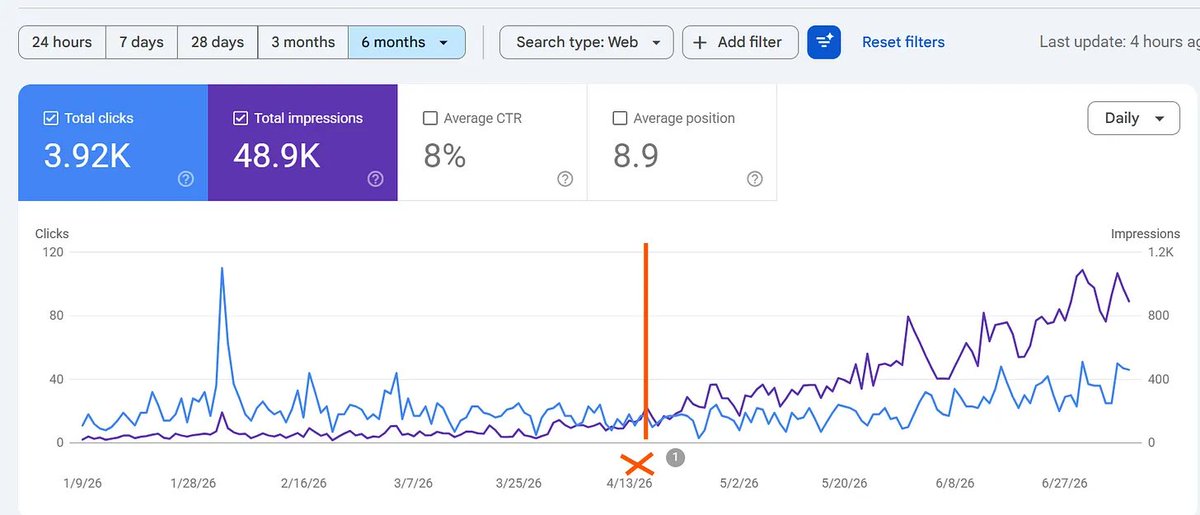
SEO Growth on Pitchlo has been slow and steady since April...but slowly compounding
SEO/GEO is the strongest long-term distribution you can own, and in the long run the cheapest acquisition there is — and with Claude and other AI tools you no longer need an expensive agency to run it. Here’s the basic setup I use across my projects:
1. Keyword research first. Connect Claude to an Ahrefs subscription (MCP) or the DataForSEO API and have it hunt low-competition keywords in your niche — difficulty under ~20, real search volume, high intent. Prioritise question-style queries: those are what AI engines answer, and what you want to be the cited source for.
2. A content engine on a cron. Scheduled jobs that construct articles to current Google and AI-search standards — which today means: a direct answer in the first paragraph, proper heading structure, schema markup, first-hand data or examples the model can’t get elsewhere, and internal links. The direct-answer-up-top part is what gets you quoted by ChatGPT and AI Overviews instead of scrolled past.
3. A self-improving loop with Search Console. Plug GSC into the pipeline and have an agent review every two weeks: what’s ranking, what’s dead, which pages to kill or merge, which new keywords to test. This loop is the difference between a content pile and a compounding asset.
4. Backlinks, systematised. Use the DataForSEO Backlinks API to find prospects with decent domain rating and traffic from your target market, in a similar field to yours — relevance matters more than raw DR. Build a scraper that hunts variations of “write for us” and “contribute” pages. Have AI generate personalised pitches; expect that some placements charge a fee, and budget for the good ones.
5. Let Claude run the boring parts. Everything above except final editorial judgment can be delegated. Your job is taste and the fortnightly review, not the grind.
## 3. Build a media asset
This one’s the sneakiest, and my favourite. I’m doing it right now with millionaire.news.
The mechanics are stupidly simple. Some people do podcasts, Instagram pages.. but its now never been easier to build your own news platform. You can build a news website (Wordpress has many templates) in a high-value niche, then reach out to professionals in that world — lawyers, wealth managers, founders, whoever — offering to write about them or interview them. And here’s the thing: Most people says yes. People are obsessed with being seen. A feature in a publication is a LinkedIn flex they cannot resist, and most of these professionals have never been asked.
Now watch what happens. They share the piece with their network — that’s your distribution, borrowed again, but this time you own the platform it points back to. Half of them add the feature to their website’s press page — that’s a backlink, which strengthens your domain, which grows your organic traffic, which makes the next person you approach take you more seriously. And every interview is a warm relationship with someone in a high-value industry who could become a client, a partner, or a buyer. The asset gets stronger with every single conversation — it’s a networking weapon disguised as a website, and unlike a personal brand, it doesn’t need your face on it.
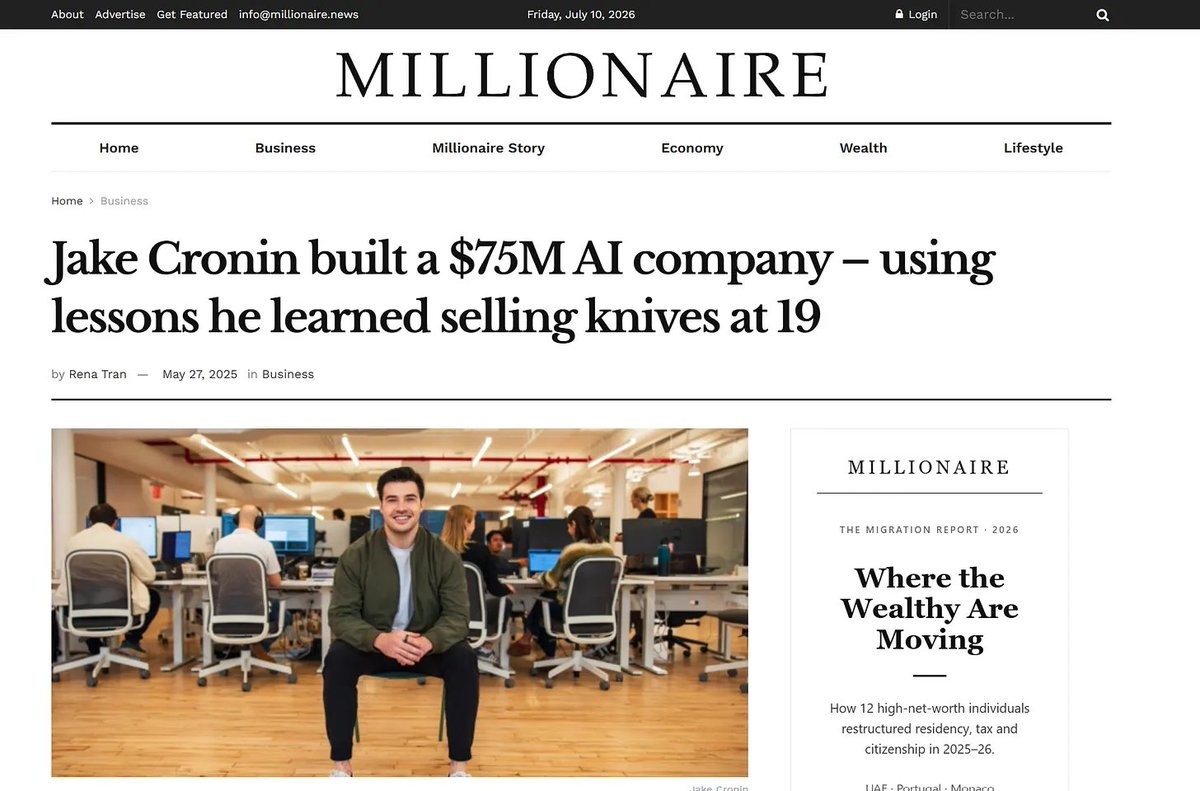
Your own content media site enables you to give value to people you want to connect with
## Nobody wants to hear hear this but..
I hate to break it to you, but every one of these — personal brand included — takes a real amount of time to properly see results if you’re bootstrapping (at least 1 year if not two years realistically). Yes. Two years. That’s the one big realisation you earn from actually doing business: this is a 20–30 year game. We’re wired for instant results, and the internet sells overnight winners hard — but nearly everything real is the slow compounding of small, boring, daily actions. Ten emails to creators. The article that goes out on the cron. The backlink pitch nobody will ever see. Weirdly, this is the most freeing realisation in business: nothing is wrong with you — it’s just early. Stop trying to win this month. Pick the distribution asset you can stomach building for two years, and start stacking reps each day.
## 相关链接
- [Louis McKeeve](https://x.com/lmkeev)
- [@lmkeev](https://x.com/lmkeev)
- [55K](https://x.com/lmkeev/status/2076592014322176308/analytics)
- [over 200 million content creators](https://market.biz/content-creator-economy-statistics/)
- [half earn less than $15,000 a year](https://archive.com/blog/creator-economy-market-size)
- [67% have never done a single brand deal](https://market.biz/creator-economy-statistics/)
- [Pitchlo](https://pitchlo.com/)
- [millionaire.news](http://millionaire.news/)
- [Upgrade to Premium](https://x.com/i/premium_sign_up)
- [4:58 PM · Jul 13, 2026](https://x.com/lmkeev/status/2076592014322176308)
- [55.3K Views](https://x.com/lmkeev/status/2076592014322176308/analytics)
- [View quotes](https://x.com/lmkeev/status/2076592014322176308/quotes)
---
*导出时间: 2026/7/14 08:34:37*
---
## 中文翻译
# 如何在你讨厌建立“个人品牌”的情况下建立受众
**作者**: Louis McKeeve
**日期**: 2026-07-13T08:58:12.000Z
**来源**: [https://x.com/lmkeev/status/2076592014322176308](https://x.com/lmkeev/status/2076592014322176308)
---

如果你像我一样,你的信息流每天都会充斥着 LinkedIn 和 Twitter 上那些渴望成为柏拉图式哲学家的人:他们传授人生建议,编造故事来推销产品,或者分享他们的铁人三项成绩。多年来,我觉得这很让人尴尬。但现在已毫无疑问:社交媒体可能是一场游戏,但它是获取剩余最有价值商品——注意力——无可争议的 S 级途径。在这个你可以坐在马桶上用手机开发软件产品的时代,“我如何获得客户?”的重要性现在是“我应该构建什么?”的 10 倍。
如果你也像我一样,整个人“个人品牌”的概念让你直皱眉。我花了好几年才克服在网上复述日常想法的心理障碍——但别担心,这不会是第一百万篇关于克服发布恐惧的文章。有更优秀的作家在做这件事。这篇文章是给那些已经知道“分发优先”并想要一个安静替代方案的人的:你不需要个人品牌也能建立分发资产。以下是我做到这一点的三种方法,并为你展示了各种可供考虑的替代方案:
## 1. 借用别人的分发渠道
如果你是一个构建者(Builder),让我告诉你:外面有数百万人的问题与你截然相反。世界上有超过 2 亿内容创作者,但其中只有约 2%(大约 400 万)拥有超过 10 万粉丝。大约一半的人年收入低于 15,000 美元,67% 的人从未达成过一次品牌合作。仔细想想:数百万人掌握着真实的受众,却没有任何业务依附于他们。他们有眼球,没有产品。你有产品技能,没有眼球。
2024 年,我想:为什么不向美国的内容创作者发一千封邮件,找一个人一起建立电商品牌呢?这成了我的创作者合伙企业,Thrive Creators。在那 1000 封邮件中,我们进行了大约 15 次对话(是的,冷邮件回复率很残酷),最终与美国最大的自给自足生活方式创作者之一建立了合作关系。当时我甚至不知道什么是“自给自足”。但我们为一家现在年收入达到 7 位数的创作者业务带来了新的维度:产品、分发、运营——随着“氛围编程”的出现,将创作者运营专业化为电商品牌。
如果你会“氛围编程”,现在是与创作者合作开发软件而不是从零开始寻找受众的最好时机。我会完全按照以下步骤操作:
1. **抓取垂直领域的创作者**——使用 Apify 的 API 从 TikTok/Instagram 上拉取特定垂直领域(金融、育儿、宠物、烹饪等)的创作者。
2. **进行手写的、定制化的外联**——不是“群发冷邮件”。收件箱里充斥着 AI 生成的通用垃圾邮件,这意味着只要花 10 分钟写一封得体的邮件,就比以往任何时候都更容易脱颖而出。去他们的实际主页,看他们最近的两个视频,让你的第一句话明确与其中之一相关。再也没有人愿意费这个劲了——这正是它有效的原因。期待 5-10% 的回复率,而不是群发冷邮件的 1%。
3. **在构建之前测试需求**——一个带有注册表的落地页,以及为该服务提供的折扣早期客户套餐。提议为创作者免费设置这一切。
4. **如果有需求且产品简单**——特别是迷你 SaaS 类产品——提议自己承担构建成本(一个 60 美元/月的 Cursor 氛围编程订阅)。
5. **商定收入或利润分成**——让 Claude 起草协议结构,然后在签署任何重要文件之前找真正的律师过目。
6. **恭喜**——你已经完成了产品制作中真正困难的部分:找到让产品起飞的初始关注。
## 2. SEO / GEO
我记得 2022 年坐在迈阿密的某个房地产科技会议上,为一个项目工作,当时人在柬埔寨,心里想:SEO 到底是什么鬼?这听起来像是有史以来最无聊、最极客的营销技术,我不屑一顾。现在,在 2026 年,SEO——以及最近的 GEO(被 AI 答案引擎引用)——是我为每个新项目构建的基础资产。在我看来,这是 S 级技术,因为如果你以后出售资产,它能让资产本身拥有更高的潜在企业价值——相比之下,如果客户获取依赖于某人的 LinkedIn 账号持续发文,那企业价值就会低得多。
我是花了昂贵代价才学到这一点的。当我第一次推出我的创作者品牌 UGC 市场 Pitchlo 时,我成了 Facebook 广告的瘾君子——那种收入的快速冲动,看着 Stripe 余额上涨,以为可以高枕无忧了。任何新的 Meta 广告主很快就会学到真相:你在仓鼠轮上。不断需要新的广告素材,受众疲劳,随机的算法冲击。有一天,作为一名看着广告支出回报率(ROAS)下降且无尽花费在新的 UGC 素材上的独立创业者,我决定这不值得我花时间——于是我自己构建了内容发布和 SEO 软件:一个能定期推送内容、寻找外链机会,并让我的助理去推销博客插入内容的工具。我现在通过同一个软件运营我的四家企业,在两个月内,Pitchlo 的流量从 90% 的 Meta 广告转变为 90% 的 Google 和 AI 搜索:

自 4 月以来,Pitchlo 的 SEO 增长缓慢而稳定……但缓慢地复利着
SEO/GEO 是你拥有的最强大的长期分发渠道,从长远来看也是最便宜的获取方式——而且有了 Claude 和其他 AI 工具,你不再需要昂贵的代理机构来运营它。这是我在各个项目中使用的基本设置:
1. **首先进行关键词研究。** 将 Claude 连接到 Ahrefs 订阅(MCP)或 DataForSEO API,让它寻找你利基市场中的低竞争关键词——难度低于 20,有真实搜索量,高意图。优先考虑问题式查询:这些是 AI 引擎回答的内容,也是你希望成为被引用来源的内容。
2. **基于定时任务的内容引擎。** 构建符合当前 Google 和 AI 搜索标准的文章调度任务——今天这意味着:第一段直接回答,正确的标题结构,架构标记,模型无法从其他地方获得的的一手数据或示例,以及内部链接。顶部直接回答的部分是让你被 ChatGPT 和 AI 概览引用而不是被划过的关键。
3. **与 Search Console 建立自我改进循环。** 将 GSC 接入管道,让代理每两周审查一次:什么在排名,什么已经失效,哪些页面应该删除或合并,哪些新关键词需要测试。这个循环是内容垃圾堆和复利资产之间的区别。
4. **系统化的外链建设。** 使用 DataForSEO 外链 API 寻找拥有不错域名评级和来自你目标市场流量的潜在客户,在与你相似的领域——相关性比原始 DR 更重要。构建一个抓取工具,寻找“为我们撰稿”和“投稿”页面的变体。让 AI 生成个性化的推销;预期某些展示位置会收费,并将好的展示位置纳入预算。
5. **让 Claude 处理无聊的部分。** 除了最终的编辑判断外,上述所有事情都可以委派。你的工作是品味和双周审查,而不是苦干。
## 3. 建立媒体资产
这一个最隐蔽,也是我最喜欢的。我现在正在 millionaire.news 上做这个。
其机制简单得令人难以置信。有些人做播客,Instagram 页面……但现在建立自己的新闻平台比以往任何时候都容易。你可以在一个高价值的垂直领域建立一个新闻网站,然后联系那个世界的专业人士——律师、财富经理、创始人等——提议写关于他们的文章或采访他们。事情是这样的:大多数人都会答应。人们痴迷于被看到。在出版物上出现是他们无法抗拒的 LinkedIn 资本,而且这些专业人士大多从未被请求过。
现在看看会发生什么。他们与他们的网络分享这篇文章——这是你的分发,再次借用的,但这次你拥有它指回的平台。他们中的一半人会把这个专题添加到他们网站的媒体页面上——这是一个外链,它增强了你的域名,增加了你的自然流量,这让你接触的下一个人更认真地对待你。每一次采访都是与高价值行业人士的温暖关系,他们可能成为客户、合作伙伴或买家。资产随着每一次对话而增强——这是一个伪装成网站的社交网络武器,而且不像个人品牌,它不需要你的脸在上面。

你自己的内容媒体网站使你能够为你想要联系的人提供价值
## 没人想听这个,但是……
我不忍心告诉你,但这其中的每一项——包括个人品牌——如果你是自力更生的,都需要真正大量的时间才能看到适当的结果(实际上至少 1 年,如果不是 2 年的话)。是的。两年。这是你通过实际做生意获得的重大领悟:这是一场 20 到 30 年的游戏。我们天生渴望即时结果,互联网大力兜售一夜暴富的故事——但几乎所有真实的事物都是微小、无聊的日常行动的缓慢复利。给创作者发十封邮件。定时发布的文章。没人会看到的外链推销。奇怪的是,这是商业上最自由的领悟:你没有错——只是时间还早。停止试图在这个月获胜。选择一个你能忍受建立两年的分发资产,并开始每天堆叠重复次数。
## 相关链接
- [Louis McKeeve](https://x.com/lmkeev)
- [@lmkeev](https://x.com/lmkeev)
- [55K](https://x.com/lmkeev/status/2076592014322176308/analytics)
- [over 200 million content creators](https://market.biz/content-creator-economy-statistics/)
- [half earn less than $15,000 a year](https://archive.com/blog/creator-economy-market-size)
- [67% have never done a single brand deal](https://market.biz/creator-economy-statistics/)
- [Pitchlo](https://pitchlo.com/)
- [millionaire.news](http://millionaire.news/)
- [Upgrade to Premium](https://x.com/i/premium_sign_up)
- [4:58 PM · Jul 13, 2026](https://x.com/lmkeev/status/2076592014322176308)
- [55.3K Views](https://x.com/lmkeev/status/2076592014322176308/analytics)
- [View quotes](https://x.com/lmkeev/status/2076592014322176308/quotes)
---
*导出时间: 2026/7/14 08:34:37*