How to Become an LLM Engineer ✍ Swati Gupta🕐 2026-07-16📦 8.7 KB 🟢 已读 𝕏 文章列表 本文是2026年成为LLM工程师的实用指南,涵盖核心技能(RAG、Agents、生产部署)、学习路线、推荐工具及项目构建建议,帮助读者系统掌握大模型应用开发与工程化能力。 LLM工程师RAGAgent学习路线项目实战LangChainPython职业发展AI技能 # How to Become an LLM Engineer **作者**: Swati Gupta **日期**: 2026-07-15T05:43:56.000Z **来源**: [https://x.com/hrswatigupta/status/2077267903188205935](https://x.com/hrswatigupta/status/2077267903188205935) --- 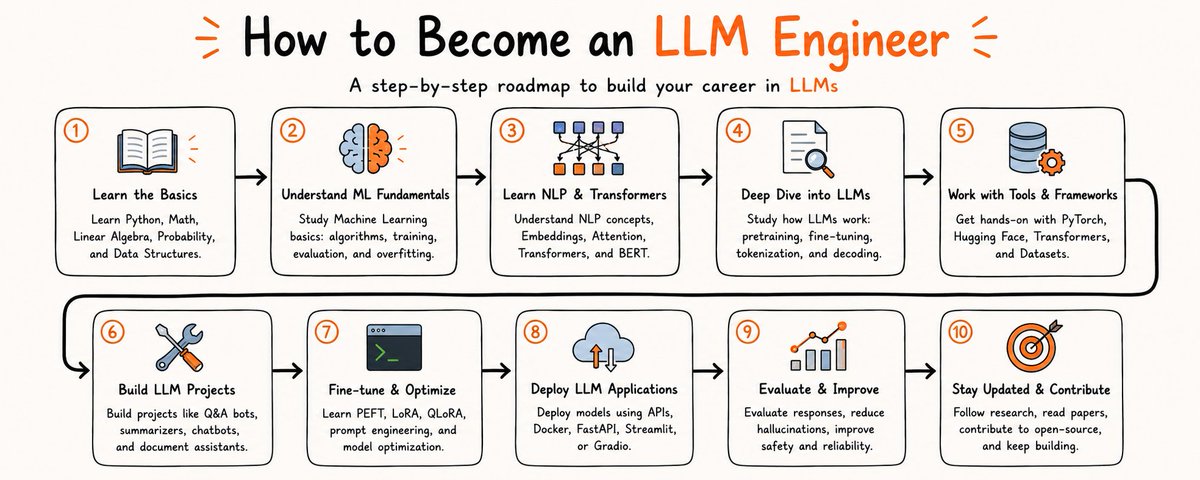 A technical and practical guide to becoming an LLM Engineer in 2026, including the skills, tools, projects, and roadmap that actually matter. ## What is an LLM Engineer? An LLM Engineer is a specialized software engineer who focuses on building, deploying, and maintaining production-grade systems powered by Large Language Models. Unlike traditional Machine Learning Engineers who work with a wide range of models, LLM Engineers primarily work with language models and the complex infrastructure required to make them reliable, scalable, and useful in real-world applications. The role has evolved significantly over the past few years. In the early days of generative AI, many companies only needed simple prompt-based chatbots. In 2026, companies expect much more. They want intelligent systems that can reason, use tools, retrieve accurate information, maintain long-term context, and operate autonomously with minimal human intervention. Key responsibilities of an LLM Engineer include: - Designing and building RAG (Retrieval-Augmented Generation) pipelines - Developing and orchestrating AI agents and multi-agent systems - Fine-tuning and evaluating language models for specific domains - Deploying LLM applications using APIs and containerization - Implementing memory, context management, and tool integration - Optimizing for cost, latency, accuracy, and reliability - Monitoring LLM systems in production and handling failures - Ensuring compliance with data privacy, security, and ethical guidelines - Collaborating with product, data, and engineering teams to deliver AI features In short, an LLM Engineer is responsible for turning powerful language models into reliable, production-ready applications that solve real business problems. This role sits at the intersection of software engineering, machine learning, and applied AI. ## LLM Engineer vs AI Engineer vs ML Engineer 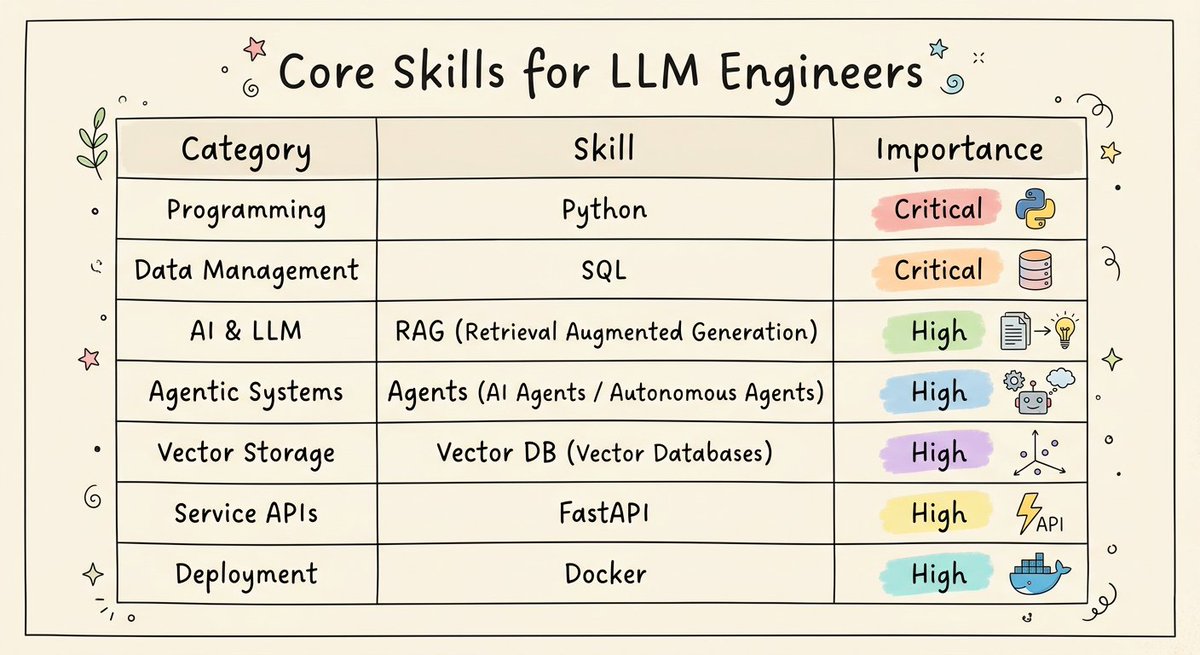 Many people get confused between these three closely related roles. Here’s a clear comparison: Summary: - ML Engineer → Focuses heavily on model training and data. - AI Engineer → Focuses on building reliable AI systems at scale. - LLM Engineer → Specializes in language models, RAG systems, agents, and intelligent applications. The LLM Engineer role currently offers some of the highest demand and compensation in the AI field because of the rapid adoption of generative AI across industries. ## Core Technical Skills Required To become an LLM Engineer, you need a balanced combination of foundational and modern skills. Here’s a detailed breakdown: Focus more on RAG, Agents, and Production skills rather than spending excessive time on training models from scratch. ## Modern LLM-Specific Skills in 2026 These are the skills that truly differentiate strong LLM Engineers from average ones: 1. Retrieval-Augmented Generation (RAG) RAG remains the most important technique for building reliable LLM applications. Key areas to master include: - Advanced chunking strategies (semantic chunking, hierarchical chunking, late chunking) - Embedding models and similarity search techniques - Hybrid search and reranking methods - Evaluation of RAG systems using frameworks like RAGAS and DeepEval - Handling large document collections efficiently - Implementing memory and conversation history in RAG systems 2. Agent Development Agents allow LLMs to take actions and use tools. Important skills include: - Building agents with tool-calling capabilities - Creating multi-agent systems with clear roles and responsibilities - Implementing memory and state management across agents - Designing supervisor-worker and hierarchical architectures - Handling agent failures, retries, and fallback mechanisms 3. Evaluation and Monitoring Production LLM systems require robust evaluation and monitoring: - Measuring hallucination, relevance, and faithfulness - Cost and latency tracking across different models - A/B testing different prompts, models, and retrieval strategies - Setting up observability and logging for LLM applications 4. Fine-tuning and Customization While RAG is often preferred, fine-tuning is still valuable in specific cases: - Parameter-efficient fine-tuning (LoRA, QLoRA) - Instruction tuning for domain-specific behavior - Creating custom evaluation datasets - Domain adaptation using continued pretraining ## The 4-Phase Learning Roadmap 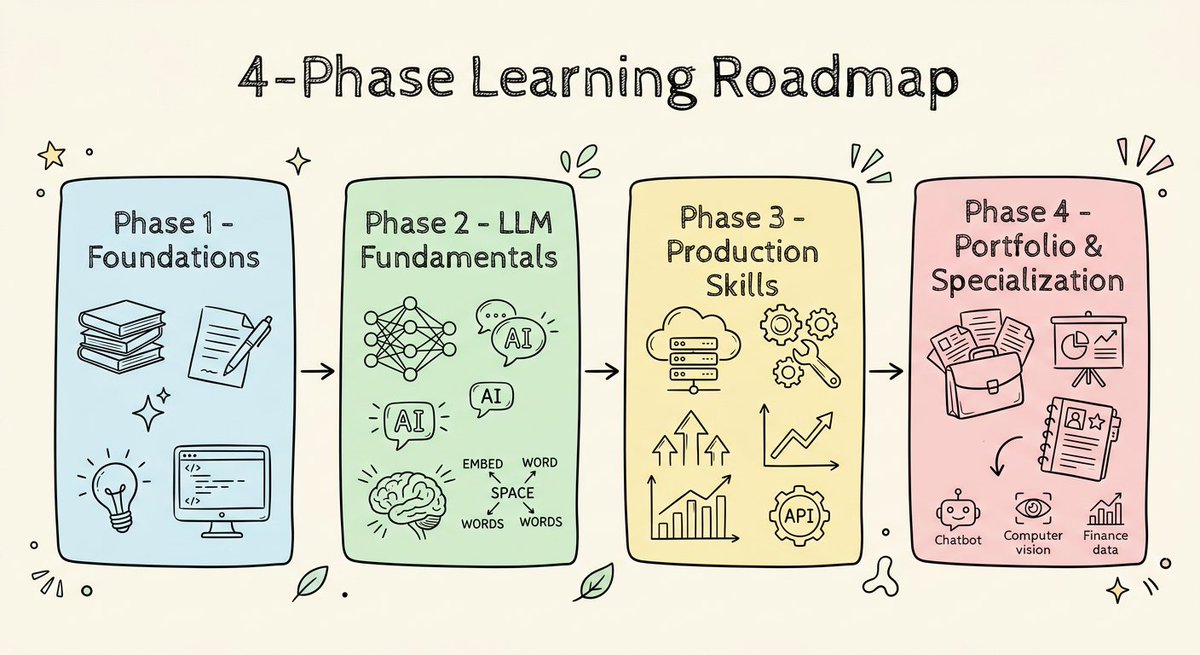 Here’s a practical and structured learning path to become an LLM Engineer: Phase 1: Strong Foundations (4–6 Weeks) - Master Python programming (especially data handling and object-oriented programming) - Learn SQL and basic data analysis - Understand core Machine Learning concepts (supervised learning, evaluation metrics, overfitting) - Build 2–3 small projects to solidify fundamentals Phase 2: LLM Fundamentals (6–8 Weeks) - Deep dive into RAG systems (chunking, embeddings, retrieval, generation, evaluation) - Learn agent development using CrewAI or LangGraph - Understand memory, tools, context management, and function calling - Build 2–3 RAG and agent-based projects Phase 3: Production & Engineering Skills (6–8 Weeks) - Learn FastAPI for building APIs - Master Docker for containerization - Understand basic cloud deployment (AWS or GCP) - Learn monitoring, logging, and cost optimization - Deploy at least one LLM application to production Phase 4: Portfolio & Specialization (Ongoing) - Build 4–5 high-quality, well-documented projects - Choose one area of specialization (RAG systems, Multi-agent systems, LLMOps, Evaluation, etc.) - Document your work clearly on GitHub and LinkedIn - Prepare for technical interviews ## Must-Know Tools & Frameworks in 2026 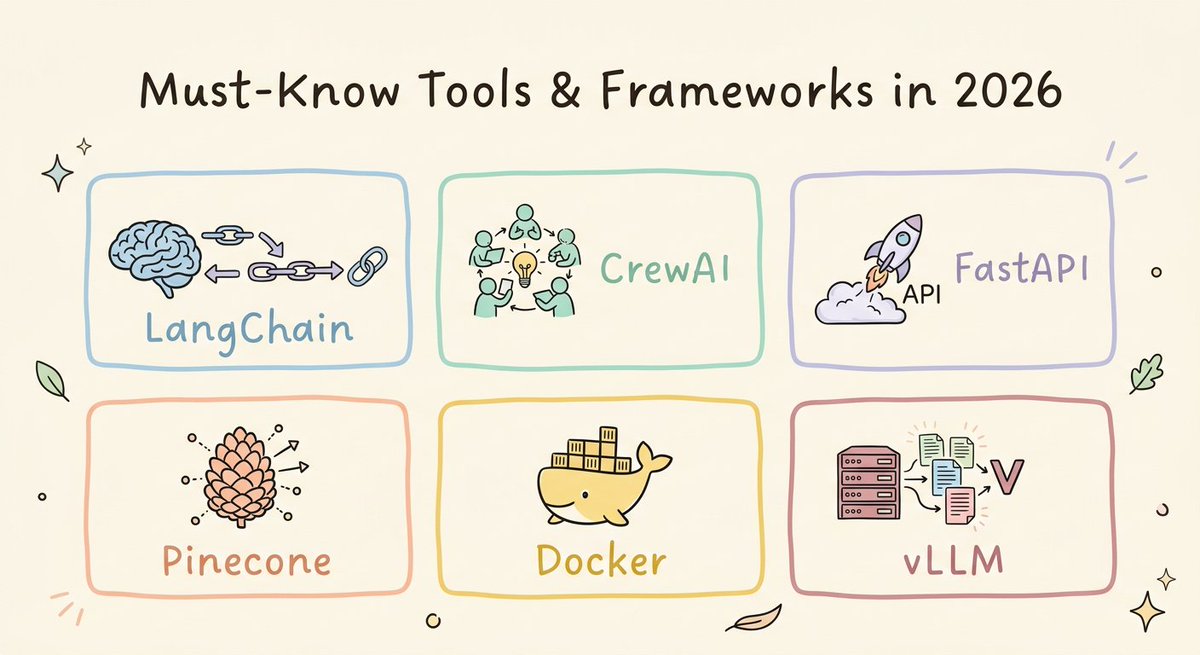 Recommended starting stack: Python + LangChain + CrewAI + Chroma or Pinecone. ## Must-Build Projects for LLM Engineers 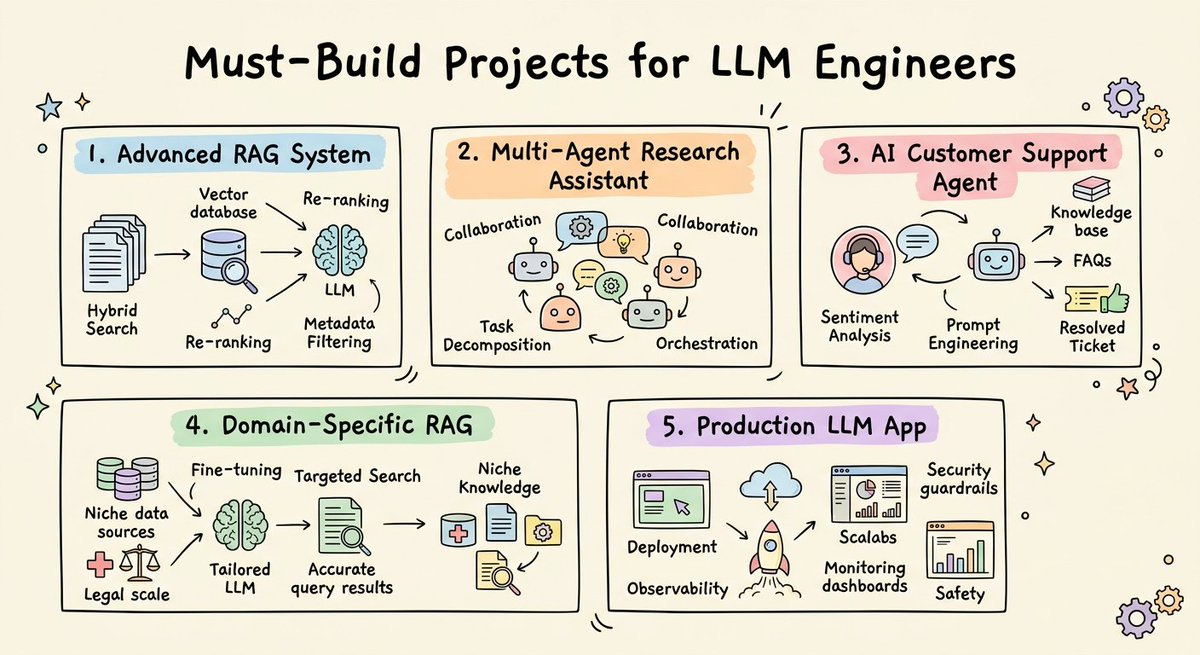 Strong projects are one of the best ways to demonstrate your skills. Here are five recommended projects: For each project, focus on clean code, proper documentation, and clear explanations of the problem you solved. ## Portfolio & Personal Branding Strategy A strong portfolio is essential for landing high-paying LLM Engineer roles. Best practices include: - Build 4–5 high-quality, well-documented projects and host them on GitHub - Write detailed READMEs explaining the problem, approach, challenges, and results - Share your projects and learnings on LinkedIn - Write technical blog posts about challenges you faced and how you solved them - Explain your work in terms of business impact, not just technical details A well-documented portfolio with 4–5 strong projects is often more valuable than having 15 small tutorial-based projects. ## Common Mistakes to Avoid Many aspiring LLM Engineers make these mistakes: - Focusing too much on theory instead of building real systems - Ignoring RAG and agent development - Building projects that don’t solve meaningful real-world problems - Not learning deployment and production skills - Having a weak or poorly documented portfolio - Applying for jobs too early without enough practical experience - Not practicing system design and communication skills Avoiding these mistakes can significantly improve your chances of reaching your goal. ## Realistic Timeline & Next Steps 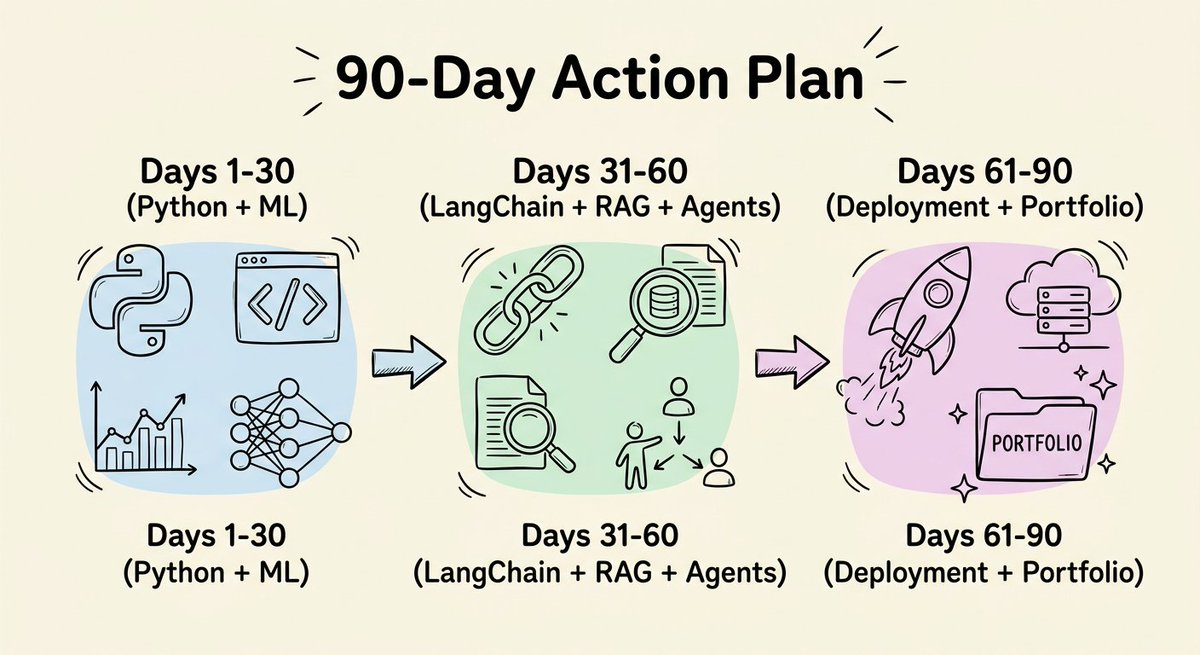 Here’s a realistic timeline based on different starting points: Recommended next step: Start with Python and RAG fundamentals, then move into agents and production deployment. If you're learning AI, this might help: • 1000+ AI prompts • Practical AI tools • Automation workflows • Productivity use cases • AI resources for work & learning https://bytebuilders.beehiiv.com/subscribe ## 相关链接 - [Swati Gupta](https://x.com/hrswatigupta) - [@hrswatigupta](https://x.com/hrswatigupta) - [121K](https://x.com/hrswatigupta/status/2077267903188205935/analytics) - [https://bytebuilders.beehiiv.com/subscribe](https://bytebuilders.beehiiv.com/subscribe) - [Upgrade to Premium](https://x.com/i/premium_sign_up) - [1:43 PM · Jul 15, 2026](https://x.com/hrswatigupta/status/2077267903188205935) - [121.8K Views](https://x.com/hrswatigupta/status/2077267903188205935/analytics) --- *导出时间: 2026/7/16 14:13:34* --- ## 中文翻译 # 如何成为一名 LLM 工程师 **作者**: Swati Gupta **日期**: 2026-07-15T05:43:56.000Z **来源**: [https://x.com/hrswatigupta/status/2077267903188205935](https://x.com/hrswatigupta/status/2077267903188205935) ---  一份在 2026 年成为 LLM 工程师的技术与实践指南,涵盖真正重要的技能、工具、项目和路线图。 ## 什么是 LLM 工程师? LLM 工程师是一类专业的软件工程师,专注于构建、部署和维护由大型语言模型驱动的生产级系统。与处理各种模型的传统机器学习工程师不同,LLM 工程师主要致力于语言模型以及使这些模型在现实应用中变得可靠、可扩展且有用所需的复杂基础设施。 在过去几年里,这一角色发生了显著演变。在生成式 AI 的早期,许多公司只需要简单的基于提示词的聊天机器人。到了 2026 年,公司的期望要高得多。他们想要能够推理、使用工具、检索准确信息、维持长期上下文,并且在最少人工干预下自主运行的智能系统。 LLM 工程师的主要职责包括: - 设计和构建 RAG(检索增强生成)管道 - 开发和编排 AI 智能体及多智能体系统 - 针对特定领域微调和评估语言模型 - 使用 API 和容器化技术部署 LLM 应用 - 实现记忆、上下文管理和工具集成 - 优化成本、延迟、准确性和可靠性 - 监控生产环境中的 LLM 系统并处理故障 - 确保符合数据隐私、安全和道德准则 - 与产品、数据和工程团队协作交付 AI 功能 简而言之,LLM 工程师负责将强大的语言模型转化为可靠、可投入生产的应用程序,以解决实际的业务问题。这一角色位于软件工程、机器学习和应用 AI 的交汇点。 ## LLM 工程师 vs AI 工程师 vs ML 工程师  许多人容易混淆这三个密切相关的角色。这里有一个清晰的对比: 总结: - ML Engineer → 重点关注模型训练和数据。 - AI Engineer → 专注于大规模构建可靠的 AI 系统。 - LLM Engineer → 专精于语言模型、RAG 系统、智能体和智能应用。 由于生成式 AI 在各行业的快速采用,目前 LLM 工程师这一角色在 AI 领域拥有最高的需求和薪资待遇之一。 ## 核心技术技能要求 要成为一名 LLM 工程师,你需要基础技能和现代技能的均衡结合。以下是详细拆解: 将更多精力放在 RAG、智能体和生产技能上,而不是花费过多时间从头开始训练模型。 ## 2026 年的现代 LLM 专属技能 这些技能是区分优秀 LLM 工程师与普通工程师的关键: 1. 检索增强生成 (RAG) RAG 仍然是构建可靠 LLM 应用最重要的技术。需要掌握的关键领域包括: - 高级分块策略(语义分块、层次分块、后期分块) - 嵌入模型和相似性搜索技术 - 混合搜索和重排序方法 - 使用 RAGAS 和 DeepEval 等框架评估 RAG 系统 - 高效处理大型文档集合 - 在 RAG 系统中实现记忆和对话历史 2. 智能体开发 智能体允许 LLM 采取行动并使用工具。重要的技能包括: - 构建具有工具调用能力的智能体 - 创建具有明确角色和职责的多智能体系统 - 跨智能体实现记忆和状态管理 - 设计监督者-工作者和分层架构 - 处理智能体故障、重试和回退机制 3. 评估与监控 生产级 LLM 系统需要强大的评估和监控: - 衡量幻觉、相关性和忠实度 - 追踪不同模型的成本和延迟 - 对不同的提示词、模型和检索策略进行 A/B 测试 - 为 LLM 应用设置可观测性和日志记录 4. 微调与定制 虽然通常首选 RAG,但在特定情况下微调仍然有价值: - 参数高效微调(LoRA, QLoRA) - 针对领域特定行为的指令微调 - 创建自定义评估数据集 - 使用持续预训练进行领域适应 ## 4 阶段学习路线图  这是一条成为 LLM 工程师的实用且结构化的学习路径: 第一阶段:坚实基础(4-6 周) - 掌握 Python 编程(尤其是数据处理和面向对象编程) - 学习 SQL 和基础数据分析 - 理解核心机器学习概念(监督学习、评估指标、过拟合) - 构建 2-3 个小项目以巩固基础 第二阶段:LLM 基础(6-8 周) - 深入研究 RAG 系统(分块、嵌入、检索、生成、评估) - 使用 CrewAI 或 LangGraph 学习智能体开发 - 理解记忆、工具、上下文管理和函数调用 - 构建 2-3 个基于 RAG 和智能体的项目 第三阶段:生产与工程技能(6-8 周) - 学习使用 FastAPI 构建 API - 掌握用于容器化的 Docker - 理解基础云部署(AWS 或 GCP) - 学习监控、日志记录和成本优化 - 将至少一个 LLM 应用部署到生产环境 第四阶段:作品集与专精(持续进行) - 构建 4-5 个高质量、文档完善的项目 - 选择一个专精领域(RAG 系统、多智能体系统、LLMOps、评估等) - 在 GitHub 和 LinkedIn 上清晰地记录你的工作 - 准备技术面试 ## 2026 年必须掌握的工具与框架  推荐入门技术栈:Python + LangChain + CrewAI + Chroma 或 Pinecone。 ## LLM 工程师必须构建的项目  优秀的项目是展示你技能的最佳方式之一。这里有五个推荐项目: 对于每个项目,重点关注代码整洁、文档完善,以及清晰地解释你解决的问题。 ## 作品集与个人品牌策略 一个强大的作品集对于获得高薪的 LLM 工程师职位至关重要。 最佳实践包括: - 构建 4-5 个高质量、文档完善的项目并托管在 GitHub 上 - 撰写详细的 README,解释问题、方法、挑战和结果 - 在 LinkedIn 上分享你的项目和心得 - 撰写关于你遇到的挑战及解决方法的技术博客文章 - 从业务影响的角度解释你的工作,而不仅仅是技术细节 一个包含 4-5 个强项目的文档完善的作品集,往往比拥有 15 个基于小教程的项目更有价值。 ## 需要避免的常见错误 许多有抱负的 LLM 工程师会犯这些错误: - 过于关注理论而不是构建实际系统 - 忽视 RAG 和智能体开发 - 构建不能解决有意义的现实世界问题的项目 - 不学习部署和生产技能 - 拥有薄弱或文档糟糕的作品集 - 在没有足够实践经验的情况下过早申请工作 - 不练习系统设计和沟通技巧 避免这些错误可以显著提高你实现目标的机会。 ## 现实的时间表与下一步  基于不同起点的现实时间表如下: 推荐的下一步:从 Python 和 RAG 基础开始,然后进入智能体和生产部署阶段。 如果你正在学习 AI,这或许能帮到你: • 1000+ AI 提示词 • 实用 AI 工具 • 自动化工作流 • 生产力用例 • 工作与学习所需的 AI 资源 https://bytebuilders.beehiiv.com/subscribe ## 相关链接 - [Swati Gupta](https://x.com/hrswatigupta) - [@hrswatigupta](https://x.com/hrswatigupta) - [121K](https://x.com/hrswatigupta/status/2077267903188205935/analytics) - [https://bytebuilders.beehiiv.com/subscribe](https://bytebuilders.beehiiv.com/subscribe) - [升级到 Premium](https://x.com/i/premium_sign_up) - [1:43 PM · Jul 15, 2026](https://x.com/hrswatigupta/status/2077267903188205935) - [121.8K Views](https://x.com/hrswatigupta/status/2077267903188205935/analytics) --- *导出时间: 2026/7/16 14:13:34*
A AI 工程师学习路线图:从核心技能到生产实践 文章基于 2000 余份职位描述,规划了一条务实的 AI 工程师学习路径。重点指出 AI 工程并非从零训练模型,而是构建以 LLM 为核心的系统。核心技能包括 LLM 基础、RAG 检索增强、Agent 智能体、测试评估及监控部署。此外,文章还梳理了 Python、Web 开发、云原生及数据库等支撑性技能,并推荐了学习优先级与主流技术栈,旨在帮助开发者构建可靠、可落地的生产级 AI 系统。 技术 › AI工程 ✍ Luffytaro🕐 2026-04-27 AI工程师学习路线LLMRAGAgent职业发展PythonLangChain评估体系生产部署
如 如何在6个月内成为代理AI工程师 本文提供了一个为期6个月的12阶段AI工程师学习路线图。文章首先阐述了代理工程师的核心是构建能自主决策的系统,而非编写固定逻辑。前两个阶段重点介绍了Python异步编程的基础(解决API调用阻塞问题)和LLM的基本原理(如上下文限制、成本控制和模型路由)。随后详细讲解了工具调用与结构化输出的实现方法,强调使用Pydantic验证数据及构建可恢复的Agent循环。 技术 › Agent ✍ Rahul🕐 2026-07-12 AIAgentLLMPython异步编程教程职业发展工具调用Pydantic学习路线
如 如何在 2026 年成为AI工程师 文章指出 2026 年 AI 工程师的门槛已变,不再看重学历,而是看重作品集与交付能力。作者拆解了 AI 工程师的三个核心能力:软件工程、LLM 使用及产品思维,并规划了一份为期 12 个月的六阶段实战路线图,涵盖 Python 基础、LLM API、RAG、Agent 系统开发、评估部署及求职准备。 技术 › LLM ✍ 路飞 AI 研究员🕐 2026-07-08 AI工程师职业发展学习路线RAGAgentLLMPythonPrompt实战指南求职
2 2026 年,如何成为一名 AI 工程师(不卡学历) 本文提供了 2026 年成为 AI 工程师的 12 个月路线图。作者区分了模型研究员与 AI 工程师,强调后者更看重实战能力而非高学历。路线图涵盖 Python 基础、大模型 API 调用、RAG 系统构建、Agent 开发以及 MLOps 评估与部署。通过完成三个核心项目(RAG 应用、多 Agent 系统、带监控的上线系统),建立能胜任工作的作品集,即使没有 CS 学位也能入行。 技术 › Agent ✍ 老白(每日 AI 干货)🕐 2026-07-02 AI工程师学习路线RAGLLMPython职业发展AgentMLOps编程实战教程
2 2026年非CS背景成为AI工程师的指南 文章指出,成为AI工程师无需计算机学位,作品集比文凭更重要。AI工程师是连接大模型与现实产品的构建者。文章提供了为期9个月的四阶段自学路径:掌握Python编程、精通LLM API(含工具调用)、构建RAG系统以及开发Agent。强调实战部署和解决实际问题的能力,而非深奥的数学研究。 技术 › LLM ✍ Khairallah AL-Awady🕐 2026-06-29 AI工程师学习路线PythonRAGAgentLLM API自学职业发展
如 如何在6个月内从零成为AI工程师(2026版) 本文针对2026年的行业现状,驳斥了通过传统机器学习理论入行的误区,提出了6个月速成AI工程师的实战路线图。作者强调无需深奥数学,而应从Python和API调用起步。核心路径涵盖:深入掌握LLM原理与提示工程,精通RAG(检索增强生成)及语义分块、重排序等进阶技术,最终构建结合Agent与生产级思维的复杂AI系统。文章指出,唯有动手解决实际问题、构建高可用系统,而非单纯考取证书,才是成为合格AI工程师的关键。 技术 › LLM ✍ Suryansh Tiwari🕐 2026-04-28 AI工程师职业发展LLMRAGAgent学习路线PythonOpenAIClaude教程
2 2026年AI工程师全攻略(无CS学位) 本文阐述了在2026年如何无需计算机学位成为一名AI工程师。文章指出,当前的招聘市场更看重实际构建能力而非学历背景,并明确区分了AI工程师(系统集成与落地)与机器学习研究员(模型训练)的区别。作者提供了一套完整的学习路径(技术栈),包括Python、SQL、API集成、向量搜索、RAG及Agent框架等,并建议通过构建RAG应用、工具使用Agent及全栈部署产品这三个具体项目来证明能力,从而获得工作机会。 技术 › LLM ✍ CyrilXBT🕐 2026-07-06 AI工程师学习路径RAGAgent职业发展PythonAPI集成LLM技能提升项目管理
2 2026年AI开发者从零到英雄的完整路线图 这是一份针对2026年AI开发者的完整学习指南。文章指出,成为AI开发者不再需要计算机学位,通过正确的路线图,个人即可构建AI应用和SaaS产品。指南分为十个阶段:首先理解AI生态系统的基本概念(AI、ML、LLM、Agent等);接着掌握Python基础、API调用及Git工具;然后通过现有AI工具(如OpenAI API、LangChain)快速动手实践;最后深入学习前端技术、提示工程、LLM原理(RAG、微调)及应用部署。文章强调“学习-构建-分享”的循环策略,并指出AI智能体、自动化及RAG系统是当前的高价值技能。 技术 › LLM ✍ Shabnam Parveen🕐 2026-05-23 AI开发学习路线图LLMAgentAutomationRAGPythonPrompt Engineering职业发展
从 从零构建邮件AI助手实战指南 介绍了LangChain官方开源的Agents From Scratch教程,手把手教开发者从零构建能处理邮件的AI助手。教程涵盖基础搭建、评估体系、记忆机制四个阶段,提供完整代码和测试方案,适合初学者快速上手。 技术 › Agent ✍ 孤桜ETH🕐 2026-07-29 LangChain邮件助手AI实战教程开源PythonGmail API
2 2026年如何成为AI工程师(无需CS学位) 文章指出2026年AI工程师角色已分化为机器学习工程师和应用AI工程师。对于非CS学位求职者,后者是主要机会。文章详细列出了必备技能(Python、LLM行为、RAG系统、评估观测),并提出了三个能替代学历证明的实战项目建议。 技术 › LLM ✍ Harman🕐 2026-07-24 AI工程师职业发展RAGLLMAgentPrompt无学位
2 2026 年下半年靠 AI 赚钱的逻辑变了 文章回顾了 2023 至 2026 年 AI 商业模式的演变,指出市场已从卖「会用」、卖「接起来」转向卖「结果」。AI 能力日益廉价,对具体业务结果负责则愈发昂贵。无论是企业服务还是自媒体,真正的机会在于深入具体业务,解决昂贵且可测量的问题,而非单纯贩卖工具或流量。 职场 › 职业发展 ✍ 艾略特🕐 2026-07-23 AI商业模式职业发展自媒体副业Agent咨询结果导向工作流变现
A Agent Wikis 的现状与发展 文章探讨了 LLM Wiki 模式的兴起,即通过在摄取时编译知识而非查询时检索,解决传统 RAG 无法积累知识的问题。介绍了 Cognition、FactoryAI、LangChain 等团队构建的 Agent Wiki 系统,分析了其架构原理及在维护成本上的优势。 技术 › Agent ✍ mem0🕐 2026-07-22 LLMAgentWikiRAGCognitionLangChainDeepWikiAutoWiki