AI 工程师学习路线图:从核心技能到生产实践 ✍ Luffytaro🕐 2026-04-27📦 6.1 KB 🟢 已读 𝕏 文章列表 文章基于 2000 余份职位描述,规划了一条务实的 AI 工程师学习路径。重点指出 AI 工程并非从零训练模型,而是构建以 LLM 为核心的系统。核心技能包括 LLM 基础、RAG 检索增强、Agent 智能体、测试评估及监控部署。此外,文章还梳理了 Python、Web 开发、云原生及数据库等支撑性技能,并推荐了学习优先级与主流技术栈,旨在帮助开发者构建可靠、可落地的生产级 AI 系统。 AI工程师学习路线LLMRAGAgent职业发展PythonLangChain评估体系生产部署 # The AI Engineer Learning Path **作者**: Luffytaro **日期**: 2026-04-26T11:38:23.000Z **来源**: [https://x.com/ParasVerma7454/status/2048366074169835559](https://x.com/ParasVerma7454/status/2048366074169835559) --- 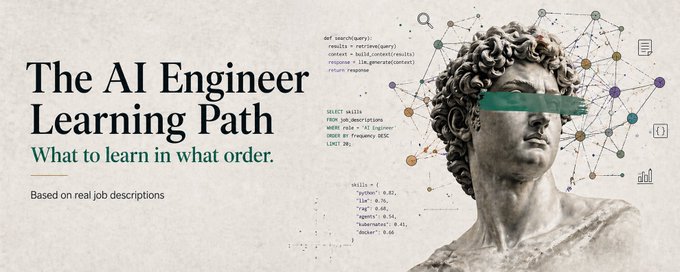 A practical roadmap on what to learn, in what order, based on real-world demand across ~2000 job descriptions. If you’re trying to break into AI engineering (not just ML theory), this is the path that actually maps to how systems are built in production. ## The Core: 20% Skills That Drive 80% of the Work This is the part most people get wrong. AI engineering is not about training models from scratch. It’s about building systems around LLMs. 1. LLM Fundamentals Start here. Everything builds on this. 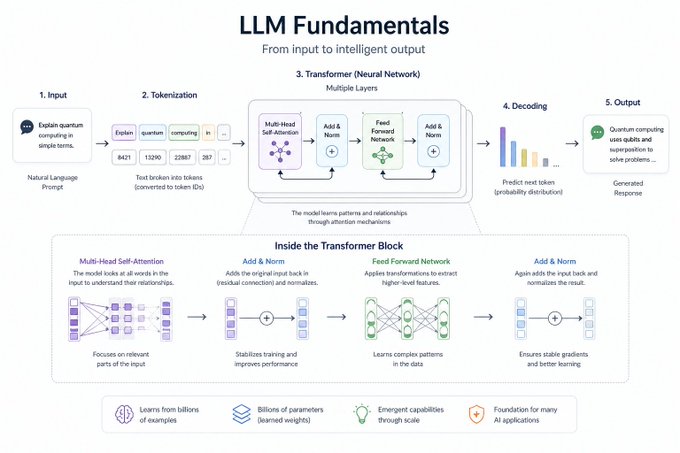 - How LLMs work (at a high level) - What they’re good at vs where they fail - Working with APIs like OpenAI and Anthropic - Structured outputs (JSON, schemas, tool responses) - Prompt engineering across different tasks Goal: Move from “chatting with models” to controlling them predictably 2. RAG (Retrieval-Augmented Generation) This is the backbone of most real-world AI systems. 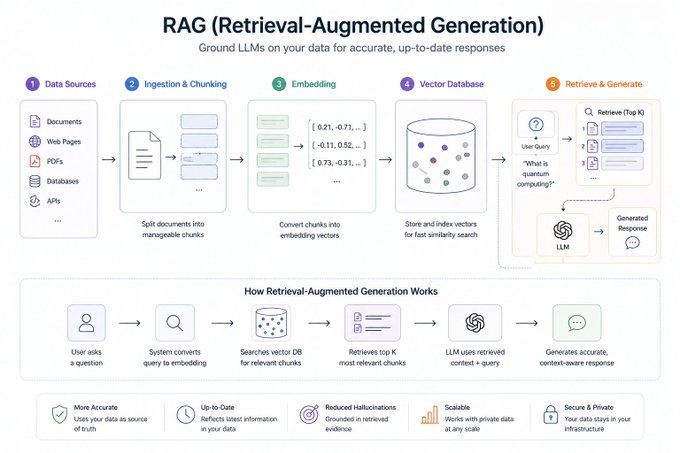 - Injecting custom data into LLMs - Vector search + semantic retrieval - Tools like Elasticsearch, Qdrant - Chunking strategies (this matters more than people think) - Handling real data: PDFs, web pages, transcripts 👉 Practice projects: - FAQ assistant - Document Q&A system - Internal knowledge search 3. AI Agents This is where things get interesting—and messy. 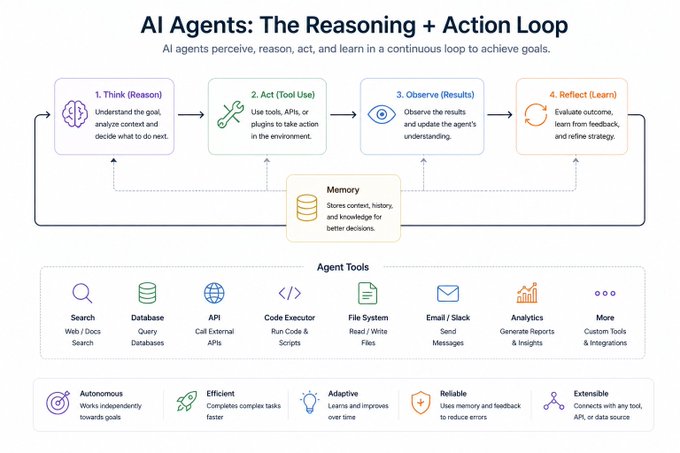 - Tool calling (LLMs that can act, not just respond) - Agent loop: think → act → observe → repeat - Frameworks: LangChain, PydanticAI, OpenAI Agents SDK, Google ADK - Model Context Protocol (MCP) - Multi-agent systems (routing, coordination, pipelines) 👉 Practice projects: - Web research agent - Data extraction pipeline - Multi-agent workflow 4. Testing AI Systems Underrated, but critical. - Testing tool usage and outputs - Evaluating consistency - Using LLMs as judges (yes, meta—but useful) 👉 Goal: Make AI systems reliable, not just impressive 5. Monitoring & Observability If you can’t see what your system is doing, you can’t fix it. 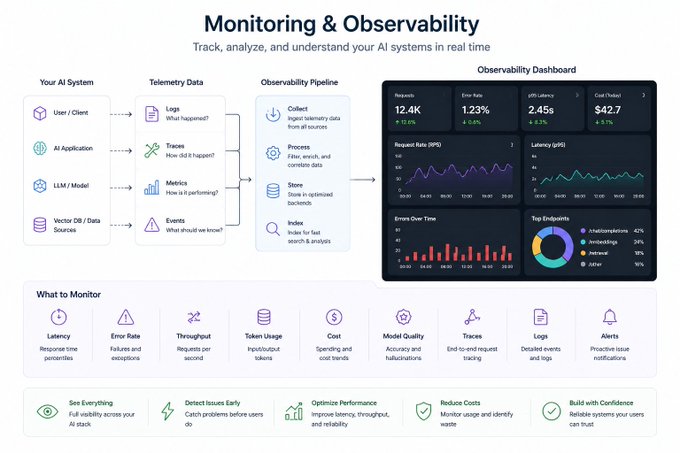 - Tracing agent workflows - Logging interactions - Cost tracking - Feedback loops - Dashboards (Grafana, OpenTelemetry) 👉 Real-world impact: This is what separates demos from production systems 6. Evaluation Most engineers skip this—and it shows. 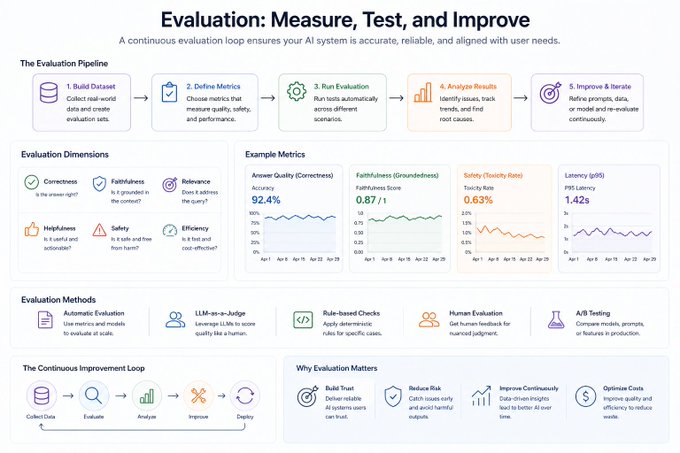 - Offline eval datasets - Measuring retrieval quality - Synthetic data generation - Prompt optimization based on results 👉 Goal: Move from “it feels good” → it’s measurable 7. Production Systems This is where AI engineers become valuable. 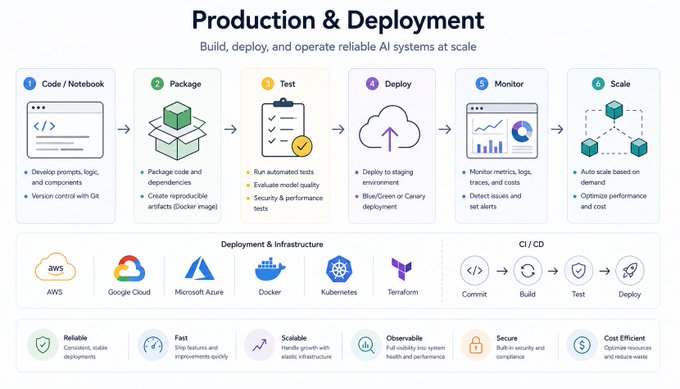 - Turning notebooks into real services - Deployment (Streamlit for quick prototypes) - Cloud platforms: AWS / GCP / Azure - Guardrails and safety layers - Parallel processing for scale ## The Supporting Skills (What Job Descriptions Actually Ask For) These aren’t optional—they show up everywhere. Python & Engineering Basics - Python (used in ~80%+ roles) - Testing, CI/CD, code quality - Git workflows Web Development (For Real Products) - FastAPI (backend standard for AI apps) - React / Next.js (frontend layer) - APIs: REST / GraphQL Cloud & Infrastructure - At least one: AWS, GCP, or Azure - Docker (non-negotiable) - Kubernetes (for scale) - Terraform (infra as code) Databases - PostgreSQL (default choice) - Vector DBs: Pinecone, Weaviate, Qdrant, pgvector - Redis (caching, sessions) ML Fundamentals (Just Enough) You don’t need to be a researcher—but you need context. - PyTorch basics - Embeddings (very important) - Fine-tuning (when APIs aren’t enough) - Model evaluation basics Data Engineering - ETL pipelines - Airflow, Spark, Kafka - Tools like Databricks, Snowflake Languages Beyond Python - TypeScript (huge for full-stack AI) - SQL (mandatory for real data work) - Java / Go (for backend-heavy roles) ## The Typical AI Engineering Stack A modern AI system usually looks like this: - Frontend: React / Next.js - Backend: FastAPI - AI orchestration: LangChain, LangGraph, PydanticAI - LLMs: OpenAI, Anthropic, Groq, local models - Vector DB: Pinecone / Weaviate / Qdrant - Infra: Docker + Kubernetes + Cloud - Monitoring: OpenTelemetry, Grafana - Evaluation: LLM judges, tools like Evidently ## Skill Priority (If You’re Short on Time) Must-Have - Python - Prompt engineering - RAG systems - One cloud platform - Docker High-Value - LangChain or PydanticAI - FastAPI - TypeScript - CI/CD - Kubernetes - PyTorch basics Differentiators (What Gets You Hired Faster) - Agent frameworks (LangGraph, CrewAI) - Fine-tuning models - Evaluation systems - Vector databases - Multi-agent architectures ## Final Take AI engineering is not about chasing hype tools. It’s about building reliable systems where LLMs are just one component. If you focus on: - RAG - Agents - Evaluation - Production systems You’ll already be ahead of most candidates. ## Credit This roadmap is heavily inspired by the original work from Alexey Grigorev: 👉 https://github.com/alexeygrigorev/ai-engineering-field-guide ## 相关链接 - [Luffytaro](https://x.com/ParasVerma7454) - [@ParasVerma7454](https://x.com/ParasVerma7454) - [1.9K](https://x.com/ParasVerma7454/status/2048366074169835559/analytics) - [https://github.com/alexeygrigorev/ai-engineering-field-guide](https://github.com/alexeygrigorev/ai-engineering-field-guide) - [Upgrade to Premium](https://x.com/i/premium_sign_up) - [7:38 PM · Apr 26, 2026](https://x.com/ParasVerma7454/status/2048366074169835559) - [1,920 Views](https://x.com/ParasVerma7454/status/2048366074169835559/analytics) --- *导出时间: 2026/4/27 09:17:00*
如 如何在 2026 年成为AI工程师 文章指出 2026 年 AI 工程师的门槛已变,不再看重学历,而是看重作品集与交付能力。作者拆解了 AI 工程师的三个核心能力:软件工程、LLM 使用及产品思维,并规划了一份为期 12 个月的六阶段实战路线图,涵盖 Python 基础、LLM API、RAG、Agent 系统开发、评估部署及求职准备。 技术 › LLM ✍ 路飞 AI 研究员🕐 2026-07-08 AI工程师职业发展学习路线RAGAgentLLMPythonPrompt实战指南求职
2 2026 年,如何成为一名 AI 工程师(不卡学历) 本文提供了 2026 年成为 AI 工程师的 12 个月路线图。作者区分了模型研究员与 AI 工程师,强调后者更看重实战能力而非高学历。路线图涵盖 Python 基础、大模型 API 调用、RAG 系统构建、Agent 开发以及 MLOps 评估与部署。通过完成三个核心项目(RAG 应用、多 Agent 系统、带监控的上线系统),建立能胜任工作的作品集,即使没有 CS 学位也能入行。 技术 › Agent ✍ 老白(每日 AI 干货)🕐 2026-07-02 AI工程师学习路线RAGLLMPython职业发展AgentMLOps编程实战教程
如 如何在6个月内从零成为AI工程师(2026版) 本文针对2026年的行业现状,驳斥了通过传统机器学习理论入行的误区,提出了6个月速成AI工程师的实战路线图。作者强调无需深奥数学,而应从Python和API调用起步。核心路径涵盖:深入掌握LLM原理与提示工程,精通RAG(检索增强生成)及语义分块、重排序等进阶技术,最终构建结合Agent与生产级思维的复杂AI系统。文章指出,唯有动手解决实际问题、构建高可用系统,而非单纯考取证书,才是成为合格AI工程师的关键。 技术 › LLM ✍ Suryansh Tiwari🕐 2026-04-28 AI工程师职业发展LLMRAGAgent学习路线PythonOpenAIClaude教程
H How to Become an LLM Engineer 本文是2026年成为LLM工程师的实用指南,涵盖核心技能(RAG、Agents、生产部署)、学习路线、推荐工具及项目构建建议,帮助读者系统掌握大模型应用开发与工程化能力。 技术 › LLM ✍ Swati Gupta🕐 2026-07-16 LLM工程师RAGAgent学习路线项目实战LangChainPython职业发展AI技能
2 2026年AI工程师全攻略(无CS学位) 本文阐述了在2026年如何无需计算机学位成为一名AI工程师。文章指出,当前的招聘市场更看重实际构建能力而非学历背景,并明确区分了AI工程师(系统集成与落地)与机器学习研究员(模型训练)的区别。作者提供了一套完整的学习路径(技术栈),包括Python、SQL、API集成、向量搜索、RAG及Agent框架等,并建议通过构建RAG应用、工具使用Agent及全栈部署产品这三个具体项目来证明能力,从而获得工作机会。 技术 › LLM ✍ CyrilXBT🕐 2026-07-06 AI工程师学习路径RAGAgent职业发展PythonAPI集成LLM技能提升项目管理
2 2026年非CS背景成为AI工程师的指南 文章指出,成为AI工程师无需计算机学位,作品集比文凭更重要。AI工程师是连接大模型与现实产品的构建者。文章提供了为期9个月的四阶段自学路径:掌握Python编程、精通LLM API(含工具调用)、构建RAG系统以及开发Agent。强调实战部署和解决实际问题的能力,而非深奥的数学研究。 技术 › LLM ✍ Khairallah AL-Awady🕐 2026-06-29 AI工程师学习路线PythonRAGAgentLLM API自学职业发展
2 2026年如何成为AI工程师(无需CS学位) 文章指出2026年AI工程师角色已分化为机器学习工程师和应用AI工程师。对于非CS学位求职者,后者是主要机会。文章详细列出了必备技能(Python、LLM行为、RAG系统、评估观测),并提出了三个能替代学历证明的实战项目建议。 技术 › LLM ✍ Harman🕐 2026-07-24 AI工程师职业发展RAGLLMAgentPrompt无学位
如 如何在6个月内成为代理AI工程师 本文提供了一个为期6个月的12阶段AI工程师学习路线图。文章首先阐述了代理工程师的核心是构建能自主决策的系统,而非编写固定逻辑。前两个阶段重点介绍了Python异步编程的基础(解决API调用阻塞问题)和LLM的基本原理(如上下文限制、成本控制和模型路由)。随后详细讲解了工具调用与结构化输出的实现方法,强调使用Pydantic验证数据及构建可恢复的Agent循环。 技术 › Agent ✍ Rahul🕐 2026-07-12 AIAgentLLMPython异步编程教程职业发展工具调用Pydantic学习路线
2 2026年AI开发者从零到英雄的完整路线图 这是一份针对2026年AI开发者的完整学习指南。文章指出,成为AI开发者不再需要计算机学位,通过正确的路线图,个人即可构建AI应用和SaaS产品。指南分为十个阶段:首先理解AI生态系统的基本概念(AI、ML、LLM、Agent等);接着掌握Python基础、API调用及Git工具;然后通过现有AI工具(如OpenAI API、LangChain)快速动手实践;最后深入学习前端技术、提示工程、LLM原理(RAG、微调)及应用部署。文章强调“学习-构建-分享”的循环策略,并指出AI智能体、自动化及RAG系统是当前的高价值技能。 技术 › LLM ✍ Shabnam Parveen🕐 2026-05-23 AI开发学习路线图LLMAgentAutomationRAGPythonPrompt Engineering职业发展
从 从零到 AI 工程师——没人真正讲清楚的路线图 本文为 AI 初学者提供了一份为期 14 周的实战路线图,旨在通过免费资源将新手培养成具备构建生产级 AI 系统能力的工程师。路线图包含六个阶段:环境搭建、AI 基础、机器学习基础、深度学习、现代 LLM 工程以及 Agent 与部署。文章强调动手实践,推荐了 OpenAI、Anthropic 官方教程及 GitHub 优质开源仓库,帮助学习者避开盲目刷证书的误区,真正掌握 AI 开发技能。 技术 › LLM ✍ 土豆本豆🕐 2026-05-18 AI工程师学习路线图LLMAgent深度学习RAGPython实战教程机器学习AI基础
Z Zero to AI Engineer — The Roadmap Nobody Explains Properly 本文提供了一个为期14周的实战型AI工程师学习路线图,旨在解决初学者“只学不做”的困境。文章从环境搭建开始,详细列出了从AI基础、机器学习、深度学习到现代LLM工程及Agent开发的最佳免费资源(如OpenAI/Anthropic官方课程、Karpathy的教程等)。路线强调通过GitHub项目实践来理解原理,最终掌握部署与评估技能,真正从零开始构建可用的AI系统。 技术 › LLM ✍ Shruti Codes🕐 2026-05-17 AI工程师学习路线LLMAgent深度学习RAG实战教程机器学习OpenAIAnthropic
A Agent Wikis 的现状与发展 文章探讨了 LLM Wiki 模式的兴起,即通过在摄取时编译知识而非查询时检索,解决传统 RAG 无法积累知识的问题。介绍了 Cognition、FactoryAI、LangChain 等团队构建的 Agent Wiki 系统,分析了其架构原理及在维护成本上的优势。 技术 › Agent ✍ mem0🕐 2026-07-22 LLMAgentWikiRAGCognitionLangChainDeepWikiAutoWiki