如何在 X 上实现病毒式产品发布 ✍ Fama🕐 2026-07-21📦 15.0 KB 🟢 已读 𝕏 文章列表 文章分享了如何在 X(Twitter)上实现病毒式产品发布的完整流程。作者强调成功并非运气,而是机械化的准备。核心步骤包括:确保产品前 30 秒展示价值、提前撰写新闻稿、制作简短直击痛点的视频、选定最佳发布时间并提前组织 50 名关键支持者互动。文章还指出,AI 新鲜感已过,需聚焦解决实际问题。 产品发布增长黑客营销策略社交媒体用户增长X运营创业 # How to do a viral launch on X **作者**: Fama **日期**: 2026-03-16T15:12:23.000Z **来源**: [https://x.com/fatimarizwan/status/2079225170175398083](https://x.com/fatimarizwan/status/2079225170175398083) ---  A viral launch looks like luck. It isn't. Every launch that looks effortless is usually the result of weeks, even months, of preparation, and the preparation is surprisingly very mechanical. I know because we've done it repeatedly: our launches have generated over 100 million views with no agency and no ad spend. When we launched Okara, the launch tweet did 14 million views in a day, and we got over 3M visitors during that launch. > **Okara@askOkara**: [原文链接](https://x.com/askOkara/status/2033562024651968657) > > Today we're introducing the world's first AI CMO. > Enter your website and it deploys a team of agents to help you get traffic and users. > Try it now at http://okara.ai/cmo But what if I told you just three weeks before this launch, we had another launch which got 70M views in 3 weeks, all organic. And just 6 weeks before this launch, we had done another launch with 1 million organic views. In 2025, we were going through the deepest hell of pivots and we were building in public. Our loop to test ideas was simple: build a product, do a launch, get feedback, decide on the fate of the product. A launch is everything on steroids, you get thousands of users and real feedback that without a launch would usually take months or years. That's why as a team we swear by public and direct launches. People assume there must be some secret behind a successful launch. There isn't. There's just a sequence of steps, most of which are unglamorous, and very tedious. In the initial days of these launches, I asked my teammate to write simple list of what are the things we need to do before a launch. Once the list is done, add sub-tasks and so on till you get to the atomic tasks. We have sweared by this process and it has helped us a lot. Here is my simple sequence of steps to a successful launch. ## the launch requisites. > product > press release > launch video > day and time > influencers, users, friends > copywriting skills > X thread > launch day > newsletter > afterward ## it starts with the product. > **Naval@naval**: [原文链接](https://x.com/naval/status/1946792401433161869) > > Most companies fail at product and distribution but it’s easier to blame distribution. > If you’re failing at distribution, check the product. No launch technique saves a product people don't want. Ask me, because we experimented with multiple product angles before Okara really landed. Our most viral launch got 70 million organic views but no product users. But even good products fail at launch anyway, for reasons that have nothing to do with the product's quality and everything to do with the first 60 seconds of using it. A launch sends thousands of strangers to your product in a short span of time. They arrive skeptical and impatient because they are coming from X and their attention span is hardly 30 seconds. You have to make a statement in 30 seconds. If they have to answer a survey, invite their team, and do multiple steps of onboarding before anything happens, they leave. So the rule is: show value in the first 30 seconds, and get to the "aha" within 60. At Okara, you type in your website, log in, and agents start working on it. We ask for nothing until the product has already demonstrated itself. If you want to know whether your product passes this test, don't guess. Watch five strangers use it and time them. If it takes them more than a minute to understand why the thing exists, fix that before you plan anything else.Your product is ready for the launch when you have nailed the first 30 seconds and 60 seconds experience. ## press release. At Amazon there is a culture of writing 1-page press releases and FAQs before the product is built. Before the launch, write that one-pager and FAQs: what exactly you're launching, what problem it solves (in the customer's words, not yours), who it's for, and what it costs. A one-page TLDR of the product, bells and whistles included. Write frequently asked questions related to the product. This page becomes the source of truth for everything downstream: the video, the thread, the influencer packet, the newsletter. It will keep the team and internal and external stakeholders aligned. It's also a test. If you can't write this page crisply, you're not ready to launch. You're not confused about marketing; you're confused about the product. This press release is exactly what you would pass on to a journalist if you were looking to get featured in press media. ## the video. The script is the life of the video, and this is where your press release earns its keep. Use it as the guide for what the video says. Then decide the outcome before you get to production: is this a product demo, awareness, conversions? A video made without a decided outcome ends up optimizing for nothing. We've done high production, animation, and plain screen recordings, and the surprising conclusion is that the format barely matters. What matters is the fit between the product, the problem, and the channel. If your product is solving a hair-on-fire problem in a novel way, a simple screen recording is enough to excite the users. If you do animate, keep it simple: a clean demo, music that fits, under 2 minutes. The moment viewers notice the animation or production instead of the product, you have lost.We did a high-production launch in the past and spent considerable time on the quality of the video. Guess what! There was more discussion on the quality of the video than the real product. Seeing all those comments piling up praising the video quality really made me uncomfortable, because the product was overshadowed by the ad. One warning if you're launching an AI product. Eighteen months ago, everything built with AI went viral, because anything made with AI looked novel. That novelty has worn off. "We added AI" is no longer a launch; it's a feature note. You now have to think deeply about the problem and the outcome, and lead with those. Our video doesn't open with agents. It opens with: enter your website, get traffic.Whatever the format, the first three seconds show the product or state the problem. No logo animation. No "hey guys." Get to the point. ## pick a day, and recruit before it. The first hour of the launch is the most important time, it defines whether your product's reach will expand or decay. If more people are engaging, the algorithm will show it to more people. If there is no engagement, the reach will contract. Algorithms reward early velocity, and early velocity comes from people who were aligned to participate in your launch. So weeks before, reach out to friends, power users, ex-colleagues, VCs, and influencers who are posting actively on X to participate in the launch. (The influencer part is the most time-consuming one. I'll talk about it in a separate section later.) You can email something like this: 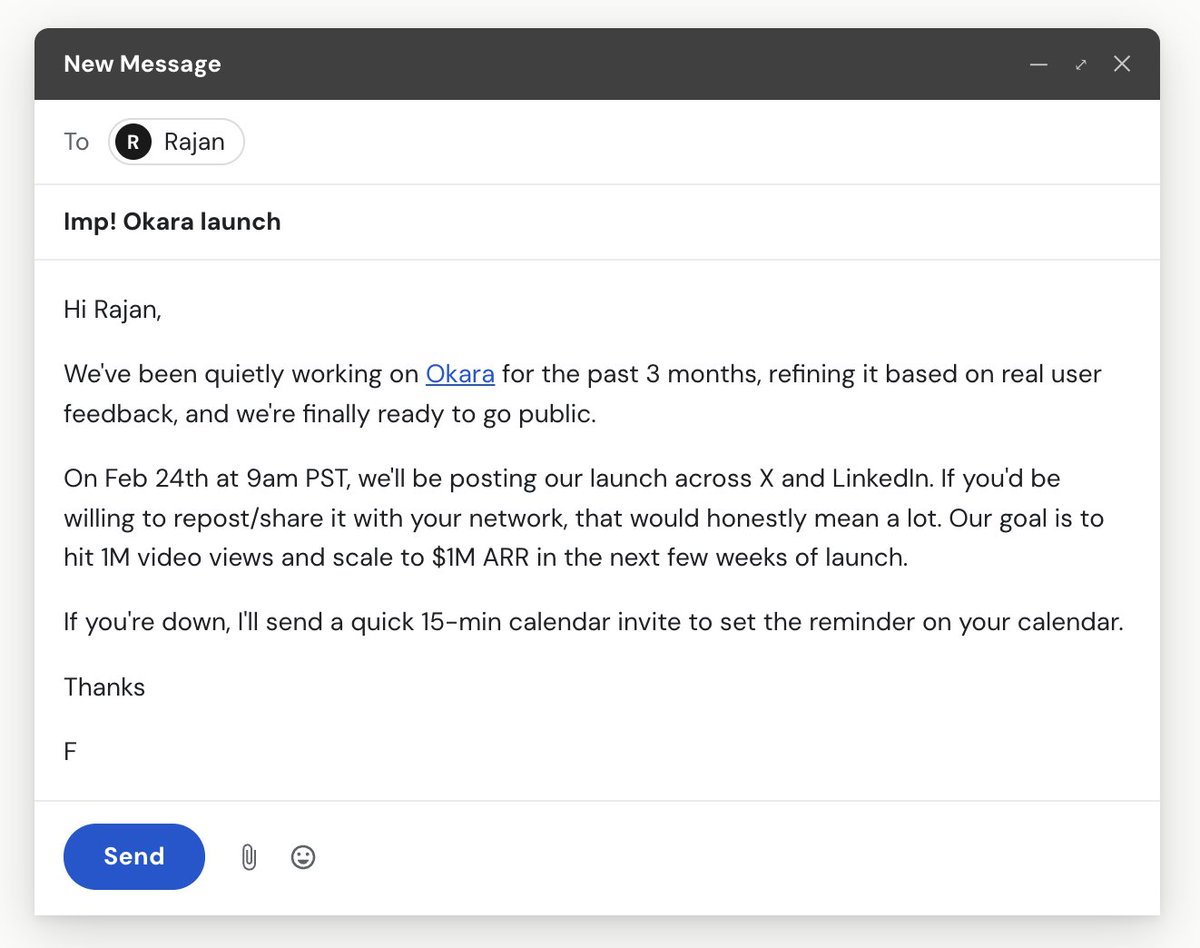 Anyone who says yes gets a calendar invite. This sounds absurdly small, but the calendar invite is half the trick. People aren't unwilling to help; they're busy. A notification at launch minute is the difference between a launch that goes viral and a launch that dies. Ask beforehand. Get commitment to participate in your launch. Organize about fifty people, influencers, friends, power users to retweet and quote-tweet within thirty minutes of launch. As for the day itself, launch when your target audience is awake and idle and don't volunteer to compete with the news. You can't control whether OpenAI or Anthropic announces something that day, but you can at least check the calendar. We personally feel Tuesday 9am EST is the best time to launch a product for the US audience, especially if you are in an early stage with no traction on social channels. ## recruit influencers. We have never outsourced recruitment of influencers to agencies. Firstly because the launch experience is very core to a product and we don't want to outsource that experience to an agency. Secondly, agencies are expensive: they charge a commission which is usually 15% to 30% of the campaign budget, they add extra pricing on top of influencer rates, and they take 4 to 6 weeks minimum to close influencers. We usually engage with X influencers who have more than 10K followers, are consistently posting related to our niches, and have a baseline reach of a couple of thousand consistently. In the initial few launches, we reached out to them directly, negotiated the rates, signed deals, followed up on launch day individually, and then cleared all payments one by one. This was a very time-consuming and boring process, but we had to do it because we wanted to own and control the narrative and outcome. We eventually automated this whole process into Okara's influencer agent, mostly out of exhaustion. > **Okara@askOkara**: [原文链接](https://x.com/askOkara/status/2066899565484413070) > > Today we're introducing the world's first influencer Agent. > Tell it what you want to promote and it finds creators, reaches out, manages campaigns, handles payments, and gets content live. > Try it now at http://okara.ai/influencer > > 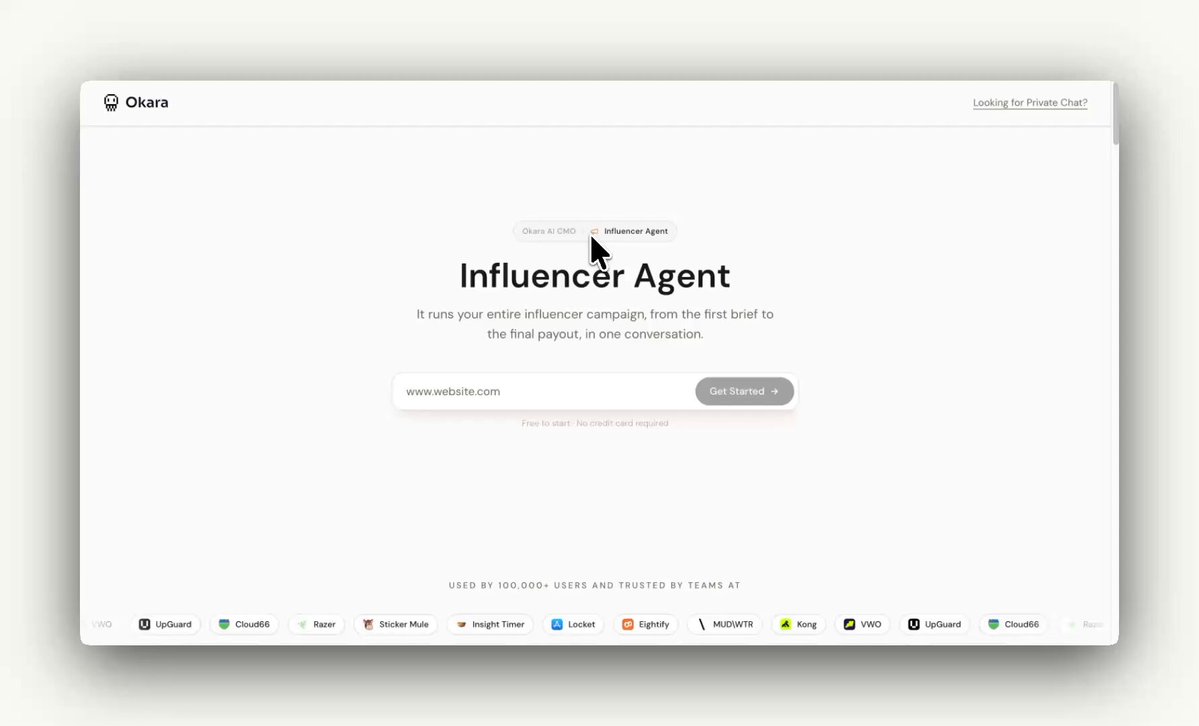 If you are doing it on your own, here is the process. 1. DM X accounts in your niche with 10K+ followers, who are active and getting minimum 3K reach per tweet. 2. Ask them to share rates for retweets and quote tweets. 3. Negotiate with them. 4. Important: follow the TOS of the X platform, add a sponsored tag to paid tweets. 5. Sign the deal. 6. Close at least 50 influencers, for this you will have to reach at least 500 accounts. 7. Share your product with them to use. 8. On launch day, individually DM all of them to tweet. 9. Once the launch is over, ask them to share proof of tweet. 10. Clear their payments one by one. Give these influencers access to the product a week early, so their posts are specific instead of generic; specific posts are the ones that perform. Tell them you want their honest review, and readers can smell coordinated copy from a mile away. > Tip: We're noticing that quote tweets with memes and brief one-line content increase reach. The most effective trick in the whole brief is to show what good looks like. Screenshot quote-tweets you saw going viral from other people's launches and paste them into the doc. People are bad at writing from instructions and good at writing from examples. "Something like this, in your voice" gets you ten times better posts than "please support our launch." ## the thread. This is where launches are won or lost, and within the thread, the hook is most of it. People decide whether to stop scrolling within the first few words. The attention span on X is extremely low. If the opening isn't bold and doesn't create curiosity, surprise, or emotion, nothing after it matters, because people will not engage with it. The way to learn hooks is not to be clever but to be empirical. Pull up the twenty biggest product launches of the past year and read only their first lines. Don't copy the wording; notice the patterns. A claim that sounds impossible. A number. A villain. A before and after. Then write twenty hooks of your own and kill nineteen. The copy should be cut-throat and straightforward, and it should be at least one of three things: 1. Emotional, so the reader feels the pain you're solving. 2. Divisive, so it takes a side. 3. Or a hot take, saying the thing people believe but won't post. These sound like risks. The actual risk is safety. If nobody could possibly disagree with your tweet, nobody will reply to it either, and replies are fuel. The first tweet of your launch will have the video attached and a CTA to your website. Keep the URL clean. Your link will be typed from memory by someone who saw a tweet an hour ago on their phone. ## launch day. Congrats! It's launch day, and if you've done everything above, 90% of the work is already behind you. Phew. The moment your launch tweet is live, ping your power users, friends, family, and influencers with the direct link. Over the next few hours, repost every quote tweet around the launch, ship the newsletter, and watch what's landing. ## the newsletter. If you have an email list, even a small one, use it. Email is the only channel where no algorithm sits between you and your audience. Keep the email short: what you launched, why it matters, one link. Ask your audience to engage with the launch tweet in the next hour. Your subscribers are your warmest audience. They just need to be told exactly what helps. Your newsletter is actually your one-page press release, but you attach your launch thread and ask people to support your launch if they like your product. ## afterward. Virality decays in 48 hours. Follow up with everyone who engages. And decide, before launch, what a visitor is supposed to become: a customer, a lead, a signup. A launch that produces 100,000 visitors and no revenue is a fireworks show. Ours convert because pricing is visible and signing up takes less than a minute. Which brings up the biggest misconception of all: that you get one launch. You don't. Every feature, milestone, and integration is a launch, and every launch makes the next one bigger, because the audience compounds. None of this is magic. The companies that win at distribution aren't the ones that launch well. They're the ones that launch constantly. > **Okara@askOkara**: [原文链接](https://x.com/askOkara/status/2075515973520752798) > > if you launch and no one notices, you can always launch again > > cursor launched 8 times > > airbnb launched 3 times > keep launching > > 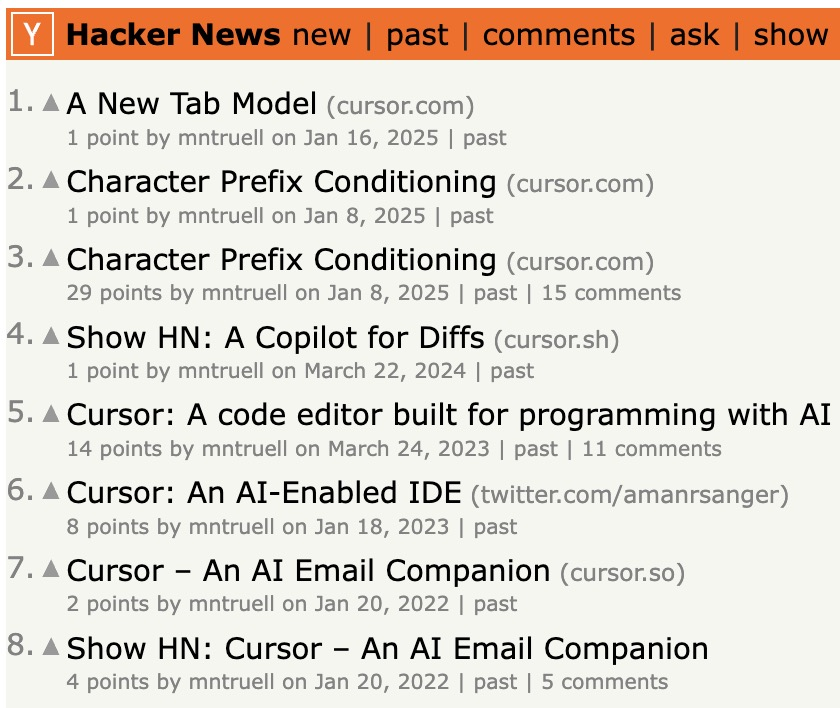 ## 相关链接 - [Fama](https://x.com/fatimarizwan) - [@fatimarizwan](https://x.com/fatimarizwan) - [161K](https://x.com/fatimarizwan/status/2079225170175398083/analytics) - [Okara](https://okara.ai/) - [Mar 16](https://x.com/askOkara/status/2033562024651968657) - [14M](https://x.com/askOkara/status/2033562024651968657/analytics) - [Jul 20, 2025](https://x.com/naval/status/1946792401433161869) - [544K](https://x.com/naval/status/1946792401433161869/analytics) - [Okara's influencer agent](https://bti-chat-git-feat-launch-handbook-okara-projects.vercel.app/agent/influencer) - [Jun 16](https://x.com/askOkara/status/2066899565484413070) - [2.3M](https://x.com/askOkara/status/2066899565484413070/analytics) - [Jul 10](https://x.com/askOkara/status/2075515973520752798) - [11K](https://x.com/askOkara/status/2075515973520752798/analytics) - [Upgrade to Premium](https://x.com/i/premium_sign_up) - [11:21 PM · Jul 20, 2026](https://x.com/fatimarizwan/status/2079225170175398083) - [161.6K Views](https://x.com/fatimarizwan/status/2079225170175398083/analytics) - [View quotes](https://x.com/fatimarizwan/status/2079225170175398083/quotes) --- *导出时间: 2026/7/21 13:09:18* --- ## 中文翻译 # 如何在 X 上进行病毒式发布 **作者**: Fama **日期**: 2026-03-16T15:12:23.000Z **来源**: [https://x.com/fatimarizwan/status/2079225170175398083](https://x.com/fatimarizwan/status/2079225170175398083) ---  病毒式发布看起来像运气。其实不然。每一次看似毫不费力的发布,通常是几周甚至几个月准备工作的结果,而且这些准备工作出人意料地非常机械化。我之所以知道,是因为我们反复这样做过:我们的发布在没有代理机构和没有广告支出的情况下,累计获得了超过 1 亿次观看。 当我们发布 Okara 时,发布推文在一天内就获得了 1400 万次观看,我们在那次发布中获得了超过 300 万访问者。 > **Okara@askOkara**: [原文链接](https://x.com/askOkara/status/2033562024651968657) > > 今天我们推出了世界上第一个 AI CMO。 > 输入你的网站,它就会部署一组代理来帮你获取流量和用户。 > 现在就去 http://okara.ai/cmo 试试吧 但是,如果我告诉你,就在这次发布的三周前,我们还有另一次发布,在三周内获得了 7000 万次观看,而且全都是自然流量。而在这次发布的六周前,我们还做过另一次发布,获得了 100 万次自然观看。 2025 年,我们正在经历转型的最艰难时期,我们在公开进行构建。我们测试想法的循环很简单:构建产品,进行发布,获取反馈,决定产品的命运。发布就是一切功能的放大版,你能在短时间内获得数千名用户和真实的反馈,而没有发布的话,这通常需要几个月或几年的时间。这就是为什么作为一个团队,我们笃信公开和直接的发布。 人们认为成功的发布背后一定有什么秘诀。其实没有。只有一系列步骤,其中大多数都不起眼,而且非常繁琐。 在这些发布的初期,我让我的队友写一个简单的清单,列出我们在发布前需要做的事情。一旦清单完成,就添加子任务,以此类推,直到细化到原子任务。我们一直信守这个过程,它帮了我们大忙。以下是我成功发布的简单步骤序列。 ## 发布先决条件。 > 产品 > 新闻稿 > 发布视频 > 日期和时间 > 影响者、用户、朋友 > 文案技巧 > X 话题串 > 发布日 > 新闻简报 > 后续 ## 一切从产品开始。 > **Naval@naval**: [原文链接](https://x.com/naval/status/1946792401433161869) > > 大多数公司死在产品和分销上,但怪罪分销更容易。 > 如果你死在分销上,检查一下产品。 没有任何发布技巧能挽救人们不想要的产品。问我怎么知道的,因为在 Okara 真正落地之前,我们尝试了多种产品角度。我们最具病毒性的发布获得了 7000 万次自然观看,但没有带来任何产品用户。 但即使是好产品,发布也会失败,原因与产品质量无关,而完全与使用它的前 60 秒有关。 发布会在短时间内把成千上万的陌生人带到你的产品面前。他们到来时带着怀疑和不耐烦,因为他们来自 X,他们的注意力持续时间几乎只有 30 秒。你必须在 30 秒内做出陈述。如果他们在做任何事情之前必须填写调查问卷、邀请团队并完成多个入职步骤,他们就会离开。所以规则是:在最初的 30 秒内展示价值,并在 60 秒内达到“顿悟”时刻。 在 Okara,你输入你的网站,登录,代理就开始工作了。在产品展示自己之前,我们什么都不要求。如果你想看看你的产品是否通过了这个测试,不要猜。看着五个陌生人使用它并给他们计时。如果他们花了一分多钟才明白这个东西为什么存在,在计划其他任何事情之前先修复这个问题。当你敲定了前 30 秒和 60 秒的体验时,你的产品就准备好发布了。 ## 新闻稿。 在亚马逊有一种文化,即在产品构建之前编写一页的新闻稿和常见问题解答。 在发布之前,写下那一页纸和常见问题解答:你到底在发布什么,它解决了什么问题(用客户的话,而不是你的话),它是为谁服务的,以及它要花多少钱。一份包含所有花哨功能的产品一页纸摘要。写下与产品相关的常见问题。 这个页面将成为所有下游内容的真实来源:视频、话题串、影响者资料包、新闻简报。它将使团队以及内外部利益相关者保持一致。这也是一个测试。如果你不能干脆利落地写出这一页,你还没准备好发布。你不是对营销感到困惑,你是对产品感到困惑。 这份新闻稿正是如果你想获得媒体报道时,会交给记者的内容。 ## 视频。 脚本是视频的生命,而这也是你的新闻稿发挥作用的的地方。把它作为视频内容的指南。然后在制作之前决定结果:这是产品演示、品牌认知还是转化?一个没有既定结果制作出来的视频,最后会什么都优化不了。 我们做过高制作水准的、动画的和简单的屏幕录制,令人惊讶的结论是格式几乎不重要。重要的是产品、问题和渠道之间的契合度。如果你的产品以一种新颖的方式解决了燃眉之急,一个简单的屏幕录制就足以让用户兴奋。 如果你做动画,保持简单:一个干净的演示,合适的音乐,控制在 2 分钟以内。一旦观众注意到动画或制作而不是产品本身,你就输了。我们在过去做过高制作水准的发布,在视频质量上花了相当多的时间。你猜怎么着!关于视频质量的讨论比实际产品还多。看到所有那些赞美视频质量的评论堆积如山,真让我感到不舒服,因为产品被广告掩盖了。 如果你发布的是 AI 产品,有一个警告。十八个月前,所有用 AI 构建的东西都会疯传,因为任何用 AI 制作的东西看起来都很新颖。那种新奇感已经消失了。“我们添加了 AI”不再是发布;它只是一个功能说明。你现在必须深入思考问题和结果,并以此作为引导。我们的视频不是以代理开始的。它是这样开始的:输入你的网站,获得流量。无论什么格式,前 3 秒都要展示产品或陈述问题。不要 logo 动画。不要“嘿大家好”。直奔主题。 ## 挑选一天,并在此之前招募人员。 发布的第一小时是最重要的时间,它决定了你产品的覆盖范围是会扩大还是衰减。如果有更多人参与,算法会把它展示给更多人。如果没有参与,覆盖范围就会收缩。算法奖励早期速度,而早期速度来自那些被协调好参与你发布的人。 所以在几周前,联系朋友、超级用户、前同事、风投人士和活跃在 X 上的影响者,让他们参与发布。(影响者部分是最耗时的。我稍后会在单独的章节中讨论。) 你可以发送类似这样的邮件:  任何说“是”的人都会收到一个日历邀请。这听起来微不足道,但日历邀请是成功的一半。人们不是不愿意帮忙,他们是太忙了。在发布那一刻收到通知,是决定你的发布是疯传还是消亡的关键。 事先请求。获得参与你发布的承诺。组织大约 50 人、影响者、朋友、超级用户在发布后 30 分钟内转发推文和引用推文。 至于具体的日子,当你的目标受众醒着且空闲时发布,不要主动去和新闻竞争。你无法控制 OpenAI 或 Anthropic 那天是否宣布什么,但你至少可以查一下日历。 我们个人认为美国东部时间周二上午 9 点是面向美国受众发布产品的最佳时间,特别是如果你处于早期阶段,在社交渠道上还没有任何影响力。 ## 招募影响者。 我们从未将影响者的招募外包给代理机构。首先是因为发布体验是产品的核心,我们不想把这种体验外包给代理机构。其次,代理机构很贵:他们收取的佣金通常是活动预算的 15% 到 30%,他们在影响者报价的基础上加价,而且他们至少需要 4 到 6 周的时间来敲定影响者。 我们通常与拥有超过 1 万粉丝、持续发布与我们要害领域相关内容、且持续拥有数千次基础触达率的 X 影响者合作。 在最初的几次发布中,我们直接联系他们,协商价格,签署协议,在发布日单独跟进,然后逐一清理所有付款。 这是一个非常耗时且无聊的过程,但我们不得不这样做,因为我们想要拥有并控制叙事和结果。最终,我们将整个过程自动化进了 Okara 的影响者代理中,主要是因为精疲力竭。 > **Okara@askOkara**: [原文链接](https://x.com/askOkara/status/2066899565484413070) > > 今天我们推出了世界上第一个影响者代理。 > 告诉它你想推广什么,它就能找到创作者、联系对方、管理活动、处理付款并把内容上线。 > 现在就去 http://okara.ai/influencer 试试吧 > >  如果你要自己做,以下是流程。 1. 给你所在领域拥有 1 万以上粉丝、活跃且每条推文至少获得 3000 次触达的 X 账号发私信。 2. 询问他们转发和引用推文的报价。 3. 与他们协商。 4. 重要:遵守 X 平台的服务条款,在付费推文上添加赞助标签。 5. 签署协议。 6. 至少敲定 50 位影响者,为此你必须至少联系 500 个账户。 7. 把你的产品分享给他们使用。 8. 在发布日,单独给所有人发私信请他们发推文。 9. 发布结束后,要求他们分享推文证明。 10. 一一结清他们的付款。 提前一周给这些影响者访问产品的权限,这样他们的帖子就会具体而不是泛泛而谈;具体的帖子才是那些表现好的。告诉他们你想要他们诚实的评论,读者能在一英里外闻出精心策划的文案味道。 > 提示:我们注意到带有表情包和简短一行内容的引用推文会增加触达率。 整个简报中最有效的技巧是展示什么是好的。 截取你在别人发布中看到的疯传的引用推文截图,粘贴到文档中。人们不擅长根据指令写作,但擅长根据示例写作。“像这样的东西,用你自己的语气”能让你得到比“请支持我们的发布”好十倍的帖子。 ## 话题串。 这是决定发布成败的地方,而在话题串中,钩子占了绝大部分。人们在最初的几个字里就决定是停止滚动还是继续。X 上的注意力持续时间极低。如果开头不够大胆,不能产生好奇心、惊喜或情绪,之后的一切都不重要了,因为人们不会与之互动。 学习钩子的方法不是耍小聪明,而是依靠实证。调出过去一年最大的 20 个产品发布,只读它们的第一行。不要照搬措辞;要注意模式。一个听起来不可能的声明。一个数字。一个反派。一个前后对比。然后写 20 个你自己的钩子,删掉 19 个。 文案应该犀利直白,并且至少是以下三种情况之一: 1. 情绪化,让读者感受到你正在解决的痛苦。 2. 引发争议,表明立场。 3. 或者是一个热点观点,说出人们相信但不会公开发布的话。 这些听起来像是在冒险。真正的风险是安全。如果没有人可能不同意你的推文,也就没有人会回复它,而回复就是燃料。 你发布的第一条推文会附上视频和你网站的 CTA(行动号召)。保持 URL 简洁。你的链接将由一个小时前在手机上看到推文的人凭记忆输入。 ## 发布日。 恭喜!今天是发布日,如果你已经完成了上述所有工作,90% 的工作已经在你身后了。呼。 你的发布推文上线的那一刻,用直接链接 ping 你的超级用户、朋友、家人和影响者。 在接下来的几个小时里,转发所有围绕发布的引用推文,发送新闻简报,观察什么正在着陆。 ## 新闻简报。 如果你有一个邮件列表,即使很小,也要使用它。邮件是唯一没有算法横在你和受众之间的渠道。保持邮件简短:你发布了什么,为什么重要,一个链接。要求你的受众在接下来的一小时内与发布推文互动。你的订阅者是你最热情的受众。他们只需要被告知什么能帮到你。 你的新闻简报实际上就是你的一页新闻稿,但你要附上你的发布话题串,并要求如果他们喜欢你的产品就支持你的发布。 ## 后续。 病毒传播会在 48 小时内衰减。跟进每一个互动的人。 并在发布之前决定,访问者应该变成什么:客户、潜在用户、注册用户。一个产生了 10 万访问者但没有收入的发布就是一场烟花表演。我们的发布能转化,因为价格是可见的,而且注册只需要不到一分钟。 这就引出了最大的误解:你只有一次发布机会。其实不然。每一个功能、里程碑和集成都是一次发布,每一次发布都会让下一次更大,因为受众是复合增长的。这一切都不是魔法。那些在分销上获胜的公司不是那些发布得好的公司。而是那些不断发布的公司。 > **Okara@askOkara**: [原文链接](https://x.com/askOkara/status/2075515973520752798) > > 如果你发布了却没人注意,你总可以再发布一次 > > cursor 发布了 8 次 > > airbnb 发布了 3 次 > 继续发布 > >  ## 相关链接 - [Fama](https://x.com/fatimarizwan) - [@fatimarizwan](https://x.com/fatimarizwan) - [161K](https://x.com/fatimarizwan/status/2079225170175398083/analytics) - [Okara](https://okara.ai/) - [Mar 16](https://x.com/askOkara/status/2033562024651968657) - [14M](https://x.com/askOkara/status/2033562024651968657/analytics) - [Jul 20, 2025](https://x.com/naval/status/1946792401433161869) - [544K](https://x.com/naval/status/1946792401433161869/analytics) - [Okara's influencer agent](https://bti-chat-git-feat-launch-handbook-okara-projects.vercel.app/agent/influencer) - [Jun 16](https://x.com/askOkara/status/2066899565484413070) - [2.3M](https://x.com/askOkara/status/2066899565484413070/analytics) - [Jul 10](https://x.com/askOkara/status/2075515973520752798) - [11K](https://x.com/askOkara/status/2075515973520752798/analytics) - [Upgrade to Premium](https://x.com/i/premium_sign_up) - [11:21 PM · Jul 20, 2026](https://x.com/fatimarizwan/status/2079225170175398083) - [161.6K Views](https://x.com/fatimarizwan/status/2079225170175398083/analytics) - [View quotes](https://x.com/fatimarizwan/status/2079225170175398083/quotes) --- *导出时间: 2026/7/21 13:09:18*
如 如何在一个周一早晨获得360万浏览量与9000个演示 本文分享了如何为AI产品Helena策划一场成功的发布活动,最终获得360万浏览量并成为当周最大发布。关键策略包括:重塑定位从“AI CMO”转向“自主AI营销人员”;避开拥挤时段选择周一发布;分层协调300个关键账号进行助推;利用公开比较制造话题争议;以及精确安排首小时的互动节奏以确保算法推荐。 职场 › 方法论 ✍ Subah Wadhwani🕐 2026-05-04 产品发布增长黑客营销策略X运营AI营销社交媒体流量增长创业
如 如何在 X 平台获得 3600 万浏览量并获取数千用户 文章分享了 Okara 通过 X(Twitter)平台实现 3600 万浏览量并获取大量用户的实战经验。策略包括:精准选择渠道、发布产品发布、教育性推文、演示视频、产品公告及热点评论等五类内容。通过不断测试不同钩子和形式,他们成功实现了病毒式传播,并验证了 B2B SaaS 在 X 平台的增长潜力。 技术 › Agent ✍ Okara🕐 2026-07-21 增长黑客营销策略社交媒体产品发布用户增长内容营销案例研究X平台AI Agent
如 如何将产品发布影响力提升 100 倍的 7 个策略 文章基于作者为多家估值数亿至十亿美元公司提供上市策略咨询的经验,指出大多数团队浪费了最大的增长机会——产品公告发布。作者提出了在 Twitter 上进行产品发布的 7 个实战策略,旨在通过系统性的设计而非单纯的运气来提升影响力。核心观点包括:优先优化总曝光量而非转化率、提前预热友好账号和投资者、设计互动激励机制、预热账号主页、积极回复高质量评论、优化帖子本身的视觉与文案,以及建立有目的的转化漏斗。 职场 › 管理 ✍ intern🕐 2026-05-06 营销策略增长黑客社交媒体Twitter产品发布创业市场推广转化率流量获取
W Why LinkedIn is the Biggest Opportunity in B2B History 文章指出LinkedIn目前拥有13亿用户和6500万决策者,是B2B领域仅存的高效低成本获客渠道。与其他渠道相比,Google Ads点击成本高昂,Meta受iOS隐私政策影响,冷邮件回复率极低,而LinkedIn算法仍扶持个人内容,且用户处于购买心智。作者将其比作2004-2008年的SEO红利期,强调建立系统性内容运营而非依赖AI生成或单次投放,是实现复利增长的关键。 职场 › 职业发展 ✍ Paolo Trivellato🕐 2026-07-29 LinkedInB2B营销获客内容策略SEO社交媒体增长黑客职场创业
拒 拒绝300万粉丝的疯子:靠卖Notion模板狂揽250万美金 本文讲述了Thomas Frank放弃运营多年的300万粉丝YouTube频道,转而在只有20万粉丝的新频道专注Notion教程的故事。他通过“广撒网,精收割”的Zapier策略、极致透明的教育型营销、基于价值的定价法以及将客服视为研发等策略,成功将Notion模板变现,狂揽250万美金。文章拆解了其可复制的四种操作,强调了封装经验和优质宣发在AI时代的价值。 职场 › 方法论 ✍ GoSail Lab | AI Influencer MCN🕐 2026-05-04 个人品牌变现Notion独立开发营销策略流量商业思维创业产品定价用户增长
D Distribution is the ONLY Moat: 在 AI 时代如何赢得分发超级周期 文章指出,随着 AI 将生产成本推向零,产品变得同质化,'分发'成为了唯一的护城河。作者解释了为何传统的广告渠道(如 Meta、电视、网红)正在失效,并阐述了为何以 UGC 和切片视频为代表的自然流量分发(类似于 2008 年的 Facebook 广告)是当下的高杠杆机会。最后,作者介绍了其构建的 AffiliateNetwork.com 平台,帮助品牌高效管理有机流量战役。 技术 › 工具与效率 ✍ Roman Khaves🕐 2026-04-17 分发营销护城河AIUGC流量变现增长黑客自然流量社交媒体创业
D Distribution 101: How to Sell Your Products 文章探讨了在产品构建日益简单的当下,分销与营销成为了关键技能。作者重点分享了在 X 平台进行有效产品销售的实战经验,包括如何设置个人资料、选择高价值利基市场、确立独特角度以及持续提供有价值的内容。 技术 › 营销 ✍ EP🕐 2026-07-29 营销分销增长X平台创业产品社交媒体个人品牌内容创作
我 我们运行的5种AI UGC格式及使用时机 文章探讨了内容格式对传播效果的重要性,详细介绍了五种常用的AI UGC格式:真人出镜、产品演示、前后对比、用户证言和幻灯片。文章分析了每种格式的运作机制、适用场景及制作要点,强调应根据内容和受众选择最合适的载体,以最大化内容的传播效率。 技术 › Agent ✍ Adrian Solarz🕐 2026-07-24 AIUGC内容营销视频生成社交媒体营销策略AIGC视频格式
如 如何制造病毒式传播内容:180亿次浏览背后的方法论 作者分享了通过180亿次浏览量总结的病毒式传播秘诀。文章指出流量并非随机,而是基于算法机制的工程化结果。核心包括:制造能力差距的钩子、高信息密度的视觉节奏以及完美的循环结构。此外,还介绍了四种内容框架和大规模的分发策略,强调一切皆在数据之中。 技术 › 工具与效率 ✍ Reece | Clipping Agency🕐 2026-07-24 病毒营销短视频算法增长黑客内容创作流量分发Hook用户心理学社交媒体数据驱动
O Okara 从 0 到 30 万月访问量的增长策略 本文分享了 Okara 如何通过精准选择营销渠道、持续发布产品、SEO 优化、网红合作及竞争对手比较等策略,将月访问量从 0 增长至 30 万的经验。重点强调了内容形式选择和定期复盘的重要性。 技术 › LLM ✍ Okara🕐 2026-07-23 增长策略SEO网红营销AI CMO社交媒体内容营销产品发布流量增长
每 每月4200美元的无面号运营指南 作者分享了如何在X(Twitter)上运营一个“无面”账号,通过提供高实用性内容实现月入4200美元。核心在于让身份变得无关紧要,专注于解决具体问题。成功的策略包括:发布带数字的单条推文而非长推文,追求“收藏”而非“点赞”的高权重互动,保持低频高质量发布(每周3次),以及在现有对话中插入深度见解而非单纯建立关系。 职场 › 职业发展 ✍ zack🕐 2026-07-23 独立变现自媒体X运营流量增长被动收入内容营销社交媒体运营策略
如 如何在不投广告的情况下实现6个月10万美元MRR 文章分析了5个通过创作者内容而非付费广告实现快速增长的应用案例,包括社交技能应用Gleam、修图应用WayShot、AI学习应用StudyFetch、番茄钟应用Focus Friend和机票应用AirClub,揭示了利用UGC、降低用户门槛和优化内容格式等策略。 技术 › 工具与效率 ✍ Lucas Patiri🕐 2026-07-19 增长黑客UGC移动应用案例研究变现营销策略TikTok