Why Some Startups Become "Everywhere" Overnight Juan 2026-09-03 8.9 KB 473K 1.2K ☆ 收藏 𝕏 文章列表 文章揭示了初创公司"一夜爆红"背后的系统化营销方法论。作者指出病毒式传播并非来自单一爆款帖子,而是精心设计的五层体系:1)一句易于传播的核心主张;2)一个令人想展示的产品魔力时刻(五秒内展示结果);3)可信声音分角色分波次介入对话;4)通过时间压缩将分散发布变成一个事件;5)最终让受众自发接管传播。作者强调优化触达重叠而非单纯追求曝光量,协调第一波、赢得第二波,才能真正营造"无处不在"的发布效果。 初创公司产品发布增长营销病毒传播品牌营销社交媒体创业内容营销 # Why Some Startups Become "Everywhere" Overnight **作者**: Juan **日期**: 2026-09-02T16:51:38.000Z **来源**: [https://x.com/0xfJuan/status/2095192939169234945](https://x.com/0xfJuan/status/2095192939169234945) --- 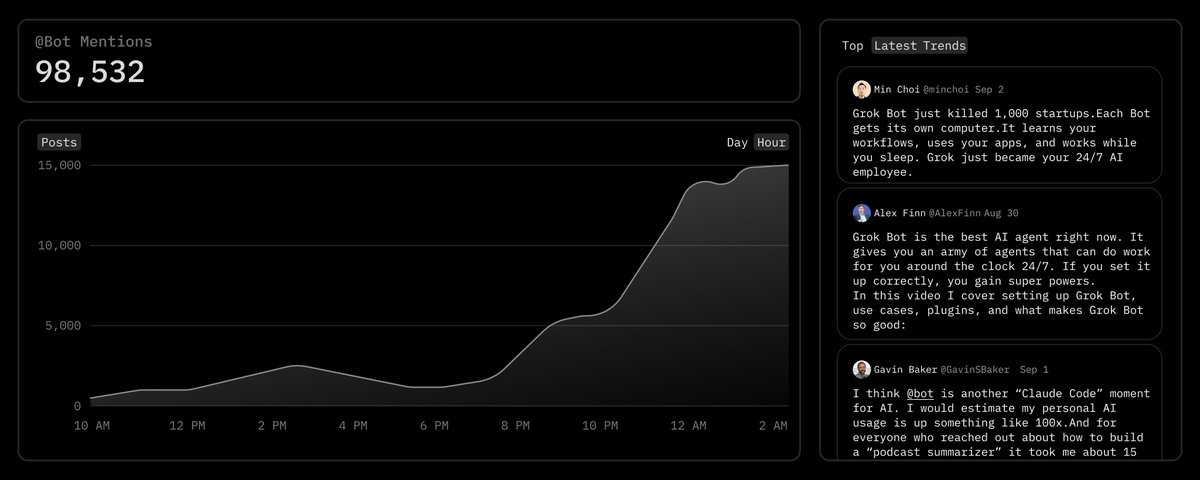 You open X in the morning and see a startup you've never heard of. An hour later, a founder you follow is posting about it. Then a friend sends it to you. Someone drops it into your team's Slack. By lunch, it feels like everyone in tech has been talking about this company for weeks. They haven't. That feeling, that this startup is suddenly everywhere, is engineered. I've built launches like this for years. In the last month alone, I've driven more than 6 million impressions and tens of thousands of reposts for tech startups. Almost none of that came from a single viral post. It came from a system most founders never even notice. This article breaks down: - Why some launches feel like they're everywhere, all at once. - The five layers teams actually build behind the scenes. - How you can run the same system for your own launch. (Bookmark this. You'll need it on launch day.) # One Viral Post Won't Make You "Everywhere" Most founders see a company take over their timeline and assume one post went viral and the rest just followed. That's almost never how it works.  A post with two million views is still something you see once and forget. But when the same startup shows up from a founder, a creator, and someone you trust, all in a few hours, you start to care. - The first time, you scroll past it. - The second time, you recognize the name. - The third time, you wonder why everyone is talking about it. - The fourth time, you click. Every touchpoint makes the next one hit harder. Most campaigns chase reach, hoping as many people as possible see the product once. The launches that feel everywhere do the opposite. They optimize for overlap. The right people see it several times, from sources they already trust. - Ten mentions across a month feel like marketing. - Ten mentions before lunch feel like an event. Once your launch feels like an event, people start spreading it for you. # The Five Layers Behind an "Everywhere" Launch Five layers need to work together: - A claim people can repeat. - A product moment people want to show. - Trusted voices entering the conversation in waves. - Timing that compresses those voices into one event. - An audience that eventually takes over. Miss one layer and the launch loses momentum. Strong message, no distribution? Nobody sees it. Distribution, no product moment? Empty reach. Even if you have the right message, product, and creators, if they show up too far apart, nobody feels like your launch is everywhere. Here's how each layer works. ## Layer 1: A Claim People Can Repeat Most founders launch with a product description: > An AI-powered platform for collaborative application development. Sure, it's accurate. Nobody repeats it. Ideas only spread when they're simple enough to pass over dinner: > Build an app by describing it. Your launch needs one portable claim that tells people what changed and why it matters. The strongest claims combine three things: > Familiar problem + surprising claim + visible proof Let every creator take a different angle, but make sure they all hammer the same core idea. If people can't explain why your launch matters in one sentence, it won't spread. ## Layer 2: A Product Moment People Want to Show A strong claim gets attention. A strong product moment drives shares. People don't repost feature lists. They repost the moment a product does something that looks new, hard, or impossible. I call this the magic moment. Most weak launch videos hide it behind a logo animation, a founder introduction, or a tour of the dashboard. By the time the product does something interesting, the audience has already scrolled away. The strongest launch assets do the opposite: - Show the result within the first five seconds. - Make it understandable without sound. - Focus on one impressive outcome. - Work even when shared without context. One clear result will travel further than ten explained features. The test is simple. Show the opening five seconds to someone outside your company; if they can't explain what happened and why it matters, the magic moment isn't clear enough. Your claim tells people what changed. Your demo makes them believe it. When those two travel together, creators don't have to explain why the product is interesting. They can simply show it. That makes the launch much easier to spread. ## Layer 3: Trusted Voices Enter the Conversation One founder post can start a launch. It can't make the company feel "everywhere." For that, the story needs to travel through people who already have the attention and trust of your target market. Each voice has a different job: - The founder gives the launch its story. - Large creators bring reach. - Niche experts make it relevant to buyers. - Customers provide proof. - Smaller accounts create repetition. - Team members and communities carry it beyond the original post. The biggest mistake is giving everyone the same copy. When 50 accounts use the same words, the audience sees a campaign. When they tell the same story from their own perspectives, the audience sees a conversation. Give each person the central claim, the product demo, the key facts, and several angles they can choose from. Then let them explain why it matters in their own voice. The goal isn't to make 50 accounts say the same thing. It's to make 50 accounts give people 50 reasons to care about the same thing. That creates the audience overlap behind every launch that suddenly feels impossible to miss. ## Layer 4: Timing Compresses the Attention The right voices won't create an event if they appear too far apart. Timing is what turns separate posts into one growing conversation. A typical launch window looks like this: - The founder and core supporters create the initial activity. - Large creators and niche experts enter during the first hour. - Customers and smaller accounts follow in waves over the next few hours. - Reactions, demos, and milestones keep the story moving throughout the day. - Screenshots, results, and founder updates extend it for another 48 hours. The goal isn't to make everyone post at the same minute. That looks coordinated. The conversation should build in waves, with each one making the launch feel bigger than the last. ## Layer 5: The Audience Takes Over The first wave is coordinated; the next one must be earned. People see the product more than once, click through, and then give it a go themselves. Some begin to post their reactions, demos, and opinions without having been asked. That organic content becomes proof for the next group of people discovering the launch. At this point, the team's job is to keep the momentum moving: - Reply to the conversations forming around the product. - Keep every update connected to the launch story. - Turn the best responses into new content. - Share strong customer reactions. - Post milestones as they happen. Eventually, the unplanned conversation becomes larger than the campaign that started it. That's the tipping point. You can coordinate the first wave. You can engineer the conditions for attention. But you can't force people to care. The product, claim, and proof still have to earn the second wave. # The "Everywhere" Launch Checklist Before your next launch, make sure you have: - One claim people can repeat after reading it once. - One product moment that makes the claim believable. - A demo that shows that moment within five seconds. - Creators grouped by the role they play: reach, trust, proof, or repetition. - Different angles built around the same central story. - A timeline that releases those voices in waves. - A team ready to reply, repost reactions, and publish milestones. - A plan for turning attention into signups, conversations, and customers. # One More Thing If your company is launching in the next 30 days and you'd rather have this system built for you, DM me and tell me what you're launching. If we're a fit, I'll show you exactly what your launch should look like, completely for free. And if you're running it yourself, bookmark this, build all five layers, and send me the results either way. I wrote this because I want to see more founders pull it off, and I mean that. ## 相关链接 - [Juan](https://x.com/0xfJuan) - [@0xfJuan](https://x.com/0xfJuan) - [62K](https://x.com/0xfJuan/status/2095192939169234945/analytics) - [Upgrade to Premium](https://x.com/i/premium_sign_up) - [12:51 AM · Sep 3, 2026](https://x.com/0xfJuan/status/2095192939169234945) - [62.1K Views](https://x.com/0xfJuan/status/2095192939169234945/analytics) - [View quotes](https://x.com/0xfJuan/status/2095192939169234945/quotes) --- *导出时间: 2026/9/3 09:39:23* --- ## 中文翻译 # 为什么有些创业公司能一夜之间“无处不在” **作者**: Juan **日期**: 2026-09-02T16:51:38.000Z **来源**: [https://x.com/0xfJuan/status/2095192939169234945](https://x.com/0xfJuan/status/2095192939169234945) ---  你早上打开 X,看到一个从未听说过的创业公司。一小时后,你关注的一位创始人在讨论它。接着一个朋友把它发给你。有人把它丢进了你们团队的 Slack。 到了午餐时间,感觉整个科技圈都已经谈论这家公司好几周了。其实并没有。那种“这家创业公司突然无处不在”的感觉,是刻意设计出来的。 我做这样的发布已经很多年了。 仅在过去一个月,我就为科技创业公司带来了超过 600 万次曝光和数万次转发。 其中几乎没有任何一条来自单一爆款帖子。它来自一套大多数创始人根本注意不到的系统。 本文将剖析: - 为什么有些发布让人感觉一下子无处不在。 - 团队幕后实际构建的五个层次。 - 你如何为自己的发布运行同样的系统。 (收藏这篇文章。发布日你会用得上。) # 一条爆款帖子不会让你“无处不在” 大多数创始人看到一家公司霸占了自己的时间线,就以为是某条帖子爆了,其他都是随之而来的。 事情几乎从来不是这样运作的。  一条两百万浏览量的帖子,你看过一次就忘了。但当同一家创业公司在几个小时内分别由一位创始人、一位创作者和你信任的人发布时,你开始在意了。 - 第一次,你划了过去。 - 第二次,你认出了这个名字。 - 第三次,你好奇为什么大家都在讨论它。 - 第四次,你点了进去。每一次触点都让下一次的冲击更强。 大多数营销活动追求覆盖面,希望尽可能多的人看一次产品。而那些感觉无处不在的发布恰恰相反:它们优化的是重叠度。让合适的人从他们已经信任的来源那里反复看到产品。 - 一个月内十次提及,感觉像营销。 - 午餐前十次提及,感觉像一个大事件。 一旦你的发布感觉像一个大事件,人们就会开始自发传播它。 # “无处不在”式发布背后的五个层次 五个层次需要协同运作: - 一个人们可以复述的主张。 - 一个人们想要展示的产品时刻。 - 受信任的声音分波次进入对话。 - 把这些声音压缩成一个事件的时机安排。 - 最终接管传播的受众。 缺了任何一层,发布就会失去势头。 信息很强,但没有分发渠道?没人看到。有分发渠道,但没有产品时刻?空洞的覆盖。即使你拥有合适的信息、产品和创作者,如果他们出现的时间间隔太长,也没人会觉得你的发布无处不在。下面是每个层次的工作原理。 ## 第一层:一个人们可以复述的主张 大多数创始人用产品描述来发布: > 一个用于协作式应用开发的 AI 驱动平台。 没错,这很准确。但没人会复述它。只有简单到能在饭桌上转述的想法才会传播: > 描述一下,就能构建一个应用。 你的发布需要一个便于传播的主张,告诉人们发生了什么变化、为什么重要。最有力的主张结合了三样东西: > 熟悉的问题 + 出人意料的主张 + 可见的证据 让每位创作者从不同角度切入,但确保他们都强调同一个核心理念。如果人们无法用一句话解释你的发布为什么重要,它就不会传播。 ## 第二层:一个人们想要展示的产品时刻 有力的主张能吸引注意。有力的产品时刻能驱动分享。人们不会转发功能列表。他们转发的是产品做出看起来新颖、困难或不可能之事的那一刻。 我称之为魔法时刻。 大多数乏味的发布视频把它藏在 logo 动画、创始人介绍或控制台导览之后。等产品做出有趣的事情时,观众早已划走了。 最有力的发布素材恰恰相反: - 在前五秒内展示结果。 - 不用声音也能看懂。 - 聚焦一个令人惊艳的成果。 - 即使脱离上下文被分享也能奏效。 一个清晰的结果比十个被解释的功能传播得更远。 测试方法很简单。把开头五秒展示给公司以外的人;如果他们无法解释发生了什么以及为什么重要,那说明魔法时刻还不够清晰。 你的主张告诉人们发生了什么变化。你的演示让他们相信这一点。当两者一起传播时,创作者就不必解释产品为什么有趣。他们只需展示出来即可。 这让发布容易传播得多。 ## 第三层:受信任的声音进入对话 一条创始人帖子可以开启一次发布。但它无法让公司感觉“无处不在”。要做到这一点,故事需要通过已经拥有目标市场注意力和信任的人来传播。 每种声音都有不同的职责: - 创始人为发布提供故事。 - 大创作者带来覆盖面。 - 细分领域专家让它与买家相关。 - 客户提供证据。 - 小账号制造重复曝光。 - 团队成员和社区把传播带出原始帖子。 最大的错误是给所有人同样的文案。当 50 个账号使用相同的措辞,观众看到的是一场营销活动。当他们从各自的视角讲述同一个故事时,观众看到的是一场对话。 给每个人核心主张、产品演示、关键事实,以及几个可供选择的角度。然后让他们用自己的声音解释为什么它重要。 目标不是让 50 个账号说同样的话。而是让 50 个账号给人们 50 个关心同一件事的理由。这就创造了每一次“突然无处不在”的发布背后的受众重叠。 ## 第四层:时机压缩注意力 如果合适的声音出现的时间间隔太长,就无法形成事件。时机是把分散的帖子变成一场不断壮大的对话的关键。 一个典型的发布窗口是这样的: - 创始人和核心支持者制造初始热度。 - 大创作者和细分领域专家在第一个小时内进场。 - 客户和较小账号在接下来的几个小时里分波次跟进。 - 反应、演示和里程碑让故事在全天持续推进。 - 截图、结果和创始人更新把热度再延续 48 小时。 目标不是让所有人同一分钟发帖。那样看起来太刻意协调了。对话应该一波一波地累积,每一波都让发布显得比上一波更盛大。 ## 第五层:受众接管传播 第一波是协调出来的;下一波必须靠自己赢得。 人们不止一次看到产品,点了进去,然后亲自试用。有些人开始自发地发布他们的反应、演示和观点,完全没人要求。 这些有机内容成为下一批发现这次发布的人眼中的证据。这时,团队的工作是保持势头: - 回复围绕产品形成的讨论。 - 让每一条更新都与发布故事相关联。 - 把最好的回应转化为新内容。 - 分享有力的客户反馈。 - 实时发布里程碑。 最终,自发的讨论会超过最初发起的营销活动。这就是引爆点。你可以协调第一波。你可以设计获得注意力的条件。但你无法强迫人们在意。产品、主张和证据仍然必须靠自己去赢得第二波。 # “无处不在”式发布清单 在下次发布之前,确保你拥有: - 一个人们读过一次就能复述的主张。 - 一个让主张可信的产品时刻。 - 一个在五秒内展示该时刻的演示。 - 按角色分组的创作者:覆盖面、信任、证据或重复曝光。 - 围绕同一核心故事构建的不同角度。 - 一条分波次释放这些声音的时间线。 - 一支随时准备回复、转发反应、发布里程碑的团队。 - 一个把注意力转化为注册、对话和客户的计划。 # 还有一件事 如果你的公司将在未来 30 天内发布产品,而你更希望有人为你搭建这套系统,私信我并告诉我你要发布什么。 如果彼此合适,我会免费为你完整展示你的发布应该是什么样子。 如果你打算自己做,收藏这篇文章,构建全部五个层次,无论结果如何都把成果发给我。我写这篇文章是因为我想看到更多创始人成功做到这一点,这话是真的。 ## 相关链接 - [Juan](https://x.com/0xfJuan) - [@0xfJuan](https://x.com/0xfJuan) - [62K](https://x.com/0xfJuan/status/2095192939169234945/analytics) - [升级到 Premium](https://x.com/i/premium_sign_up) - [12:51 AM · Sep 3, 2026](https://x.com/0xfJuan/status/2095192939169234945) - [62.1K 次浏览](https://x.com/0xfJuan/status/2095192939169234945/analytics) - [查看引用](https://x.com/0xfJuan/status/2095192939169234945/quotes) --- *导出时间: 2026/9/3 09:39:23*
如 如何在 LinkedIn 上做一场病毒式产品发布 作者指出大多数创始人从未在 LinkedIn 上真正做过产品发布,而平台上聚集了完整的潜在买家名单。文章以 AI 外呼工具 Leadpoet 的发布为例(视频约 100 万浏览、150+ 预约通话、六位数管道收入),系统讲解 LinkedIn 发布的完整流程:准备一页定位文档、原生上传演示视频、用评论式 CTA 代替外链以驱动算法飞轮、由创始人账号发布、选择工作日早晨上线,并提前协调创作者在最初 1-2 小时集中互动。强调发布频率、清晰定位和真实立场比精良制作更重要。 职场 › 营销 Logan Gott 2026-08-18 LinkedIn产品发布增长营销内容营销创始人CTA算法社交媒体B2BLeadpoet
H How to Engineer Virality on X 本文总结了如何在 X(Twitter)上策划病毒式传播的产品发布。作者基于多年帮助科技创业公司获得关注的经验,提出五个方法:1)给人们引用转发的理由,用具体案例代替空洞的官宣;2)为同一帖子设计不同角度,如创始人故事、产品影响、视频测评、争议观点、利益冲突等;3)为每个角度找到合适的创作者,给予足够的产品信息和表达空间;4)团队分工协作处理评论互动,收集反馈并沉淀为FAQ等资产;5)复盘哪些内容和渠道带来了真实转化,规划下一波传播。 职场 › 沟通 Juan 2026-10-28 病毒式传播社交媒体X产品发布内容营销创业公司Growth传播策略引用转发创作者营销
一 一支发布视频如何为浏览器扩展带来220万播放与3000用户 本文复盘了浏览器扩展 AgentCloak 的发布营销案例。AgentCloak 是一款免费隐私工具,可在数据发送到 ChatGPT、Claude 等 LLM 前将其替换为假数据。团队通过一支创始人用棒球棍砸 Mac Mini 的视频,在 X 上获得 220 万播放和 3000 下载。文章详细拆解了成功要素:脚本采用'最辣版本+降级备选'的双版本写法;拍摄时准备后备结局降低风险;通过分层 KOL 策略、创始人私有人脉预热、精心设计转发文案、选择周五早 7 点发布等放大手段,将流量转化为真实用户而非虚荣指标。 技术 › 产品营销 Subah Wadhwani 2026-10-22 产品发布营销策略浏览器扩展隐私保护LLM病毒式传播社交媒体X/Twitter创业
T The Psychology of a Premium Personal Brand 作者基于在 X 上通过个人品牌赚取超 1000 万美元、运营 60 多个创始人账号的经验,提出打造高端个人品牌的心理学框架。核心包括四个要素:1)Conviction(信念)——拥有可被记住的鲜明观点,通常来自多年实战积累;2)Archetype(原型)——构建清晰的人格架构,如教育者、操盘者、挑战者,保持一致性;3)Repetition(重复)——通过词语、视觉、内容格式的刻意重复,让市场将特定概念与你的名字关联;4)Proof(证明)——用自身结果、案例和数据持续验证信念,将内容积累为信任,使每一次销售与合作都始于既有信任。 职场 › 个人品牌 Mubbu 2026-10-21 个人品牌内容营销社交媒体X创业营销心理学信任积累定位影响力
如 如何把你的兴趣变成盈利的生活方式生意 作者分享了如何将多元兴趣转化为个人生意的完整课程。他指出传统建议要求'细分定位'(niche down)是错误的,因为人是可以被激发广泛兴趣的。他提出的商业模式很简单:用社交媒体作为免费流量来源,再加上基于自身知识的微型产品或服务快速变现。核心方法是构建'内容地图':先确定品牌使命,即读者想要逃离的现状(A点/反愿景)和你要帮助他们到达的目标生活(B点/愿景),然后选择2-3个足够宽泛的主题领域来吸引更广泛的受众。他强调内容应被视为拼图而非孤立的飞镖,每篇帖子都服务于更大的图景,这样即使没有爆款也能持续吸引受众并实现变现。 职场 › 职业发展 Dan Koe 2026-10-06 个人品牌内容创作社交媒体创业副业自媒体商业模式内容营销
为 为什么你的发布视频在2026年无法带来客户 文章分析了为什么大多数产品发布视频无法吸引真实客户:因为形式雷同、缺乏新鲜感。作者通过Lemma、Pocket、intelligence.co等成功案例以及自己18秒ASCII风格发布视频(37万播放,带来六位数收入和60+演示)的经验,总结出四个原则:任何形式最终都会失效;停车场法则(与众不同才能被注意到);从行业外借鉴创意形式(如恐怖片、律政剧);反其道而行之(当所有人都快节奏喧闹时,慢而安静的视频反而脱颖而出)。核心观点是注意力即金钱,被观看的发布才能带来转化。 职场 › 营销 Filippo Carnevale 2026-09-11 产品发布视频营销注意力经济内容营销品牌差异化增长创业营销策略
一 一次 Product Hunt 打榜,到底能为你的增长带来什么? 作者基于服务产品拿过 PH 日/周/月榜第一及金猫奖的经验,系统拆解了 PH 打榜能为产品增长带来的八个层面价值:发布当天流量(60% 集中在 Day 0,用户质量偏低)、徽章背书、媒体报道触发、KOL 传播钩子、SEO 长尾外链、投资人和合作方主动建联、强制完成定位校准(tagline、gallery、maker story)以及社区反馈分析。文章还以 Kuse 案例 detailed 说明 launch 前的准备、当天运营和后续资产复用,结论是 PH 最大价值不是单日流量,而是一套别人愿意讲你的传播资产。 其他 › 增长营销 Tiny 2026-08-26 Product Hunt出海增长营销独立开发者产品发布SEO品牌背书KOL营销创业SaaS
O Okara 从 0 到 30 万月访问量的增长策略 本文分享了 Okara 如何通过精准选择营销渠道、持续发布产品、SEO 优化、网红合作及竞争对手比较等策略,将月访问量从 0 增长至 30 万的经验。重点强调了内容形式选择和定期复盘的重要性。 技术 › LLM Okara 2026-07-23 增长策略SEO网红营销AI CMO社交媒体内容营销产品发布流量增长
如 如何在 X 平台获得 3600 万浏览量并获取数千用户 文章分享了 Okara 通过 X(Twitter)平台实现 3600 万浏览量并获取大量用户的实战经验。策略包括:精准选择渠道、发布产品发布、教育性推文、演示视频、产品公告及热点评论等五类内容。通过不断测试不同钩子和形式,他们成功实现了病毒式传播,并验证了 B2B SaaS 在 X 平台的增长潜力。 技术 › Agent Okara 2026-07-21 增长黑客营销策略社交媒体产品发布用户增长内容营销案例研究X平台AI Agent
如 如何在 X 上实现病毒式产品发布 文章分享了如何在 X(Twitter)上实现病毒式产品发布的完整流程。作者强调成功并非运气,而是机械化的准备。核心步骤包括:确保产品前 30 秒展示价值、提前撰写新闻稿、制作简短直击痛点的视频、选定最佳发布时间并提前组织 50 名关键支持者互动。文章还指出,AI 新鲜感已过,需聚焦解决实际问题。 职场 › 沟通 Fama 2026-07-21 产品发布增长黑客营销策略社交媒体用户增长X运营创业
如 如何将产品发布影响力提升 100 倍的 7 个策略 文章基于作者为多家估值数亿至十亿美元公司提供上市策略咨询的经验,指出大多数团队浪费了最大的增长机会——产品公告发布。作者提出了在 Twitter 上进行产品发布的 7 个实战策略,旨在通过系统性的设计而非单纯的运气来提升影响力。核心观点包括:优先优化总曝光量而非转化率、提前预热友好账号和投资者、设计互动激励机制、预热账号主页、积极回复高质量评论、优化帖子本身的视觉与文案,以及建立有目的的转化漏斗。 职场 › 管理 intern 2026-05-06 营销策略增长黑客社交媒体Twitter产品发布创业市场推广转化率流量获取
如 如何在一个周一早晨获得360万浏览量与9000个演示 本文分享了如何为AI产品Helena策划一场成功的发布活动,最终获得360万浏览量并成为当周最大发布。关键策略包括:重塑定位从“AI CMO”转向“自主AI营销人员”;避开拥挤时段选择周一发布;分层协调300个关键账号进行助推;利用公开比较制造话题争议;以及精确安排首小时的互动节奏以确保算法推荐。 职场 › 方法论 Subah Wadhwani 2026-05-04 产品发布增长黑客营销策略X运营AI营销社交媒体流量增长创业