# How To Generate $100,000 Digital Product Ideas
**作者**: Dickie Bush
**日期**: 2026-04-21T12:34:32.000Z
**来源**: [https://x.com/dickiebush/status/2046568266022441347](https://x.com/dickiebush/status/2046568266022441347)
---
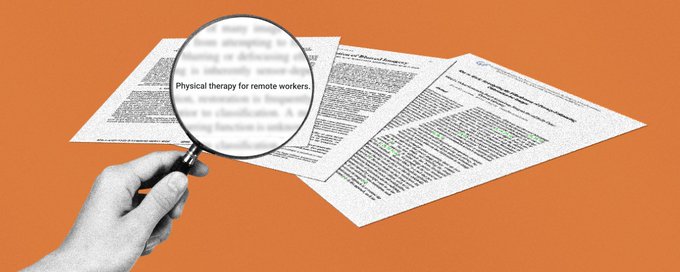
In this article, I’m going to walk the framework we use to come up with low-ticket digital product ideas.
Specifically:
- What makes a compelling, sellable digital product?
- How do you know which product idea to choose?
- Are all digital product ideas good ideas?
- How to pick the product idea that will lead to the most profit.
Let’s dive in!
Now, the honest answer is…
## Ideas come from anywhere—and when you get struck by a good idea, you should jump on it!
But if you want a very prescriptive, very actionable answer for how to come up with digital product ideas, I recommend doing this simple exercise.
Step 1: Pick an industry, then pick a niche, then pick a niche-within-a-niche.
The way we organize information in our human brains is categorically.
What this means is that everything starts at the mega-category level, and then gets more specific from there.
One of the challenges people have when it comes to creating digital products (and identifying meaningful problems to solve) is they start their brainstorming in a giant mega-category.
Things like:
- Healthcare
- Technology
- Productivity
- Financial Services
- Health & Wellness
- Etc.
But it’s worth recognizing these mega-categories are HUGE.
## And trying to pinpoint “a problem” (or even a list of problems) inside one of these mega-categories is very, very challenging.
Why?
Because inside each mega-category are:
- Different kinds of people
- Each of whom are faced with different problems
- Looking to achieve different goals
Take “healthcare” for example.
Inside “healthcare” we could be talking about/to:
- Doctors
- Physical therapists
- Healthcare executives
- Healthcare startup founders
- Healthcare insurance providers
- Etc.
And each of these different “audiences” has VERY different problems.
Which means the first step is to niche down.
Ideally:
- Mega-Category →
- Niche →
- Niche-Within-Niche
It’s a game of specificity.
## How To Niche Down
So, let’s make this as actionable as possible.
How do you niche down?
- By Industry: Take the mega-category and pick a sub-category within it. For example: “Healthcare” → “Physical Therapy.”
- By Demographic: Take the mega-category, pick a sub-category, and then pick a specific demographic. For example: “Healthcare” → “Physical Therapy” → “Physical Therapy For Remote Workers.”
- By Physical Location: Take the mega-category, pick a sub-category, and then pick a specific physical location or geography. For example: “Healthcare” → “Physical Therapy” → “Physical Therapists In Chicago.”
- By Digital Platform: Take the mega-category, pick a sub-category, and then pick a specific digital location or platform. For example: “Healthcare” → “Physical Therapy” → “Physical Therapists On LinkedIn.”
- By Price: Take the mega-category, pick a sub-category, and then pick a price range or socioeconomic status. For example: “Healthcare” → “Physical Therapy” → “Physical Therapy For Single Mothers On Food Stamps.”
- By Distribution: Take the mega-category, pick a sub-category, and then pick a specific form of delivery. For example: “Healthcare” → “Physical Therapy” → “Physical Therapy On Zoom.”
The point is, you will come up with WAY higher-quality digital product ideas if you go through this exercise and get more specific, first.
Whereas if you stay broad, all your ideas are going to be vague.
Step 2: List out the 10 Biggest Problems in your chosen niche/industry.
DO NOT BEGIN THIS STEP UNTIL YOU HAVE:
- Mega-Category →
- Niche →
- Niche-Within-Niche
I promise, if you skip this specificity exercise, you’re going to come up with low-quality ideas and then you’re going to come back and say, “Dickie! This framework doesn’t work for my industry! I’m a special snowflake and my situation is unique and nothing is ever going to work for me!”
Blah blah blah.
## Trust the process.
Once you have a SPECIFIC Niche-Within-Niche (pick something), the next step is to list out the 10 biggest problems you are aware of inside that niche-within-niche.
Pro Tip: Your “niche-within-niche” should be something you have personally experienced. This is the easiest place to start because chances are YOU have experienced these very same problems (and ideally found solutions to them for yourself).
## For example: Ship 30 for 30
When we started Ship 30 for 30, the first step was for us to get more specific.
Here’s what that looked like:
- Mega-Category: Writing
- Niche: Internet Writing (which we later coined as “Digital Writing”)
- Niche-Within-Niche: Internet Writing For Beginners
The mistake, and something that would have killed Ship 30 for 30 from the very beginning, would have been for us to say “we help ALL writers!”
We got specific, and we said “we help beginner writers start writing online.”
That’s Step 1.
Step 2 is that we then listed out the 10 biggest problems THAT SPECIFIC PERSON (Niche-Within-Niche) had and needed help with.
For us, that list looked like this:
- Problem #1: Distractions
- Problem #2: Over-Editing
- Problem #3: Perfectionism
- Problem #4: Procrastination
- Problem #5: Self-Confidence
- Problem #6: Generating Ideas
- Problem #7: Imposter Syndrome
- Problem #8: Writing Consistently
- Problem #9: Choosing A Platform
- Problem #10: Finding Time To Write
Now, are there more problems than just these 10?
Of course.
The game isn’t to list out “every possible problem” (although, there’s no harm in starting there—if that helps you).
The game is creating a list of the Top 10 Biggest Problems for this specific niche-within-niche.
(You’ll be using this later in your marketing materials!)
Step 3: List out the 10 Most Desirable Outcomes in this niche-within-niche.
Once you have your list of Top 10 Biggest Problems, now skip to the end.
- What does this specific person care most about?
- What do they want to achieve or accomplish?
- What milestone do they want to reach?
- How would their life be different if they solved each of these problems?
Three pro tips here:
First, again… the 10 Most Desirable Outcomes in this niche-within-niche should be outcomes you, yourself have wanted, strived for, and/or accomplished. (Otherwise, why are you selling a solution to a problem you haven’t even solved for yourself yet!?)
Second, if you want to make this exercise really easy, just take your list of 10 Biggest Problems and write “the desirable outcome” next to each one.
Third, I encourage you to write these Desirable Outcomes as “I” statements. Put yourself in the shoes of the customer.
For example:
- Problem #1: Distractions → “If I wasn’t distracted, I would be so much more productive.”
- Problem #2: Over-Editing → “If I wasn’t constantly over-editing, I would save myself hundreds of hours and publish way more often.”
- Problem #3: Perfectionism → “If I wasn’t such a perfectionist, I would get out of my own way, publish more, and maybe even live my dream of being a full-time writer.”
- Problem #4: Procrastination → “If I stopped procrastinating, I would finally start making progress toward my writing goals.”
- Problem #5: Self-Confidence → “If I had self-confidence, I would finally share the stories and insights and frameworks I think are valuable but have been afraid to write and publish.”
- Problem #6: Generating Ideas → “If I had a reliable system for generating ideas, I wouldn’t feel so reliant on my intuition and so easily talk myself out of writing anytime I was struggling to come up with things to say.”
- Problem #7: Imposter Syndrome → “If I didn’t have Imposter Syndrome, I would stop comparing myself to other people, publish more often, and just generally feel happier and more fulfilled with my path in life.”
- Problem #8: Writing Consistently → “If I was writing consistently, my audience would grow faster, my library would grow faster, and I would achieve my goals as a writer way faster.”
- Problem #9: Choosing A Platform → “If I knew which platform to write on, I could finally start my journey of writing online.”
- Problem #10: Finding Time To Write → “If I had more time to write, I would be able to write consistently, grow my audience and library faster, and feel like I was on the path to achieving my goals.”
Notice how revealing this exercise is!
Especially when written in “I” statements, you really put yourself in the mind of the target customer.
(And again, you’ll be using all of these in your marketing materials later!)
Step 4: Pick the most painful/expensive problem and create a digital product to solve it.
Now, here’s where it all comes together.
Ideally, if you picked a specific enough niche-within-niche, you should be able to find ways to help people solve all 10 of those Biggest Problems. (For example, in Ship 30 for 30, we actually speak to, provide education and templates, and do our best to help people solve all 10 of these problems!).
But when it comes to POSITIONING your product, leading with 10 problems doesn’t work.
The whole secret to positioning is to lead with ONE problem.
“But Dickie… even if your product helps them solve more than just that one problem?”
Yes.
The single problem you lead with is what allows you to take hold in the customer’s mind.
Said in the inverse: if you try to lead with all 10 problems, then the customer doesn’t know which one is the priority.
(If they’re “all” the priority, then “none of them” are the priority.)
So you HAVE to pick 1 single problem to position your digital product around.
Then, you can speak to the other problems you ALSO solve:
- On the landing page
- In your marketing materials
- In your emails and social content
- Etc.
Want more help creating (and selling) your own digital product?
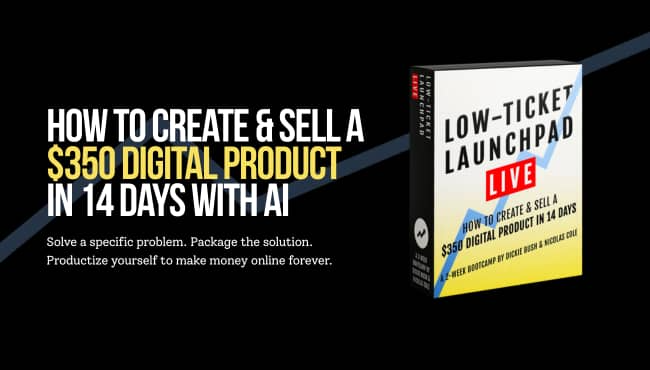
## On April 27th, we’re kicking off Low-Ticket Launchpad LIVE: How To Create & Sell A $350 Digital Product.
This is our Internal Playbook for how we build, launch, and sell our digital products.
It’s everything we’ve learned over the last 5 years about making 6 and 7-figure incomes from digital products all in one place—and for the first time, we're walking you through it live.
We cover everything you need to:
- Choose a profitable idea and build a sellable digital product—even if you think your niche is too small or no one would pay you $350 for what you know.
- Package and price your product into an offer so good people will be compelled to buy—these are the pricing, naming, and offer stacking frameworks we’ve used to generate over $15,000,000 in digital product sales.
- Build the backend tech engine to keep your digital product humming—with recommendations for product hosting, payment processing, and more (perfect for everyone—no matter your level of experience).
- Market your digital product—with all our “secret strategies” for attracting tens of thousands of customers organically, on X, LinkedIn, and YouTube.
- Sell your digital product—so you can convert traffic into customers and create a profitable revenue stream that pays you dividends for years into the future (think launch strategies, email sequences, and more).
In the live bootcamp, you'll move through the material at the same pace as everyone else, with homework between sessions and access to live Hot Seats where Cole workshops student questions, product ideas, and landing pages in real time.
You get the playbook.
You have me holding you accountable.
And you'll have your first product up for sale by the end of week one.
## Click here to save your spot and hop aboard.
## 相关链接
- [Dickie Bush](https://x.com/dickiebush)
- [@dickiebush](https://x.com/dickiebush)
- [15K](https://x.com/dickiebush/status/2046568266022441347/analytics)
- [Low-Ticket Launchpad LIVE: How To Create & Sell A $350 Digital Product.](https://www.lowticketlaunchpadlive.com/)
- [Click here to save your spot and hop aboard.](https://www.lowticketlaunchpadlive.com/)
- [Upgrade to Premium](https://x.com/i/premium_sign_up)
- [8:34 PM · Apr 21, 2026](https://x.com/dickiebush/status/2046568266022441347)
- [15.5K Views](https://x.com/dickiebush/status/2046568266022441347/analytics)
- [View quotes](https://x.com/dickiebush/status/2046568266022441347/quotes)
---
*导出时间: 2026/4/22 12:02:35*