# 1 Month with Hermes - I’ve been using Hermes wrong all along
**作者**: 0xJeff
**日期**: 2026-04-27T08:19:12.000Z
**来源**: [https://x.com/0xJeff/status/2048678335950311860](https://x.com/0xJeff/status/2048678335950311860)
---
For the past month, I have spent so much time talking to AI — to the point where my fiance threatened to leave me (jk but she got very very mad).
Most of the time was spent debugging, fixing errors, adjusting the right configs, and making sure Hermes do things properly without making the same mistakes twice.
Disclaimer: Again, I’m using both Hermes & Claude as learning augments — they help me shorten the time for me to consume information & make decision (for investment, for trading/predicting, and for everything else in life). Execution is done purely by me (because I don’t trust AI enough yet even with the guardrails)
## Here’s how my 1 month with Hermes went by
- Week 1: learning how to configure basic model/inference provider set up. Tried many openrouter model setup/anthropic API and learned that opencode-go is the best subscription to get started
- Week 2-3: learning how to properly delegate work, identifying clear tasks with clear end results. Learned that I have to be very specific in pointing out “remember”, “make sure to adjust [x] cron job” otherwise Hermes could forget or miss out on something. I also learned to implement health check to make sure to detect bugs ahead of cron jobs
- Week 4: my world shattered on week 4 because I realized I’ve been using Hermes wrong all along. Hermes is not a builder, he’s an operator
## Hear me out on this
What makes Hermes great is its persistent memory + self-learning loop — it remembers things across session, automatically setup skills if it thinks it’s necessary & can reduce time for the task next time (you can’t find this in Codex or Claude Code).
These characteristics make Hermes a perfect fit for recurring automated jobs like delivering reports/alerts that are tailored for your preference (i.e. a second brain that look out for you).
## What it’s not good at is being a Builder
At least if you’re a non-technical like me, it’s so much easier to use Claude to create artifacts, websites, dashboards, slides, excel, anything that you wanna build with an ok design. It might just be because of the frontier models but also spending $100/month for Claude subs get you more inference than paying $100/month for Opus 4.7 on Openrouter.
Because of this learning, I now nominate Claude to be “the Builder” and Hermes to be “the Operator”
The Builder: builds dashboard/websites with passable aesthetics, configure UI/UX change or any other change (i.e. the developer/engineer).
> Great for one-time building task.
The Operator: delivers report, analyze data, gleans & pulls data from the dashboard and learn from it (i.e. the analyst/assistant).
> Great for on-going tasks tailored to your preference.
Hermes could build stuff — but based on my experience, it takes a lot of time for Hermes to build and the result is not on par with Claude (unless you use frontier models ofc). Plus, both Claude and Codex have built-in features/products that make it easy for non-technical people to navigate the UI and build, Hermes has none of that.
Here’s a concrete example on a product I’ve built with Claude + Hermes and how their roles are structured
## PolyBond
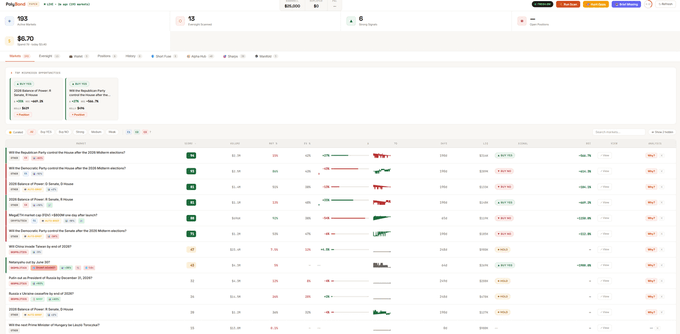
PolyBond is my personal prediction market dashboard that surfaces opportunities from multiple sources. It’s designed to
- Pick up aggregated sharp/whale signals
- Potential insiders betting big into a specific market
- Tracking LLM forecasters from predictionarena
- Tracking opportunities from other sources (SN6 Numinous, Manifold)
The ultimate goal for this is to be a one-stop shop to finding great near-certainty PM opportunities that could replace DeFi yields.
Initially I used Hermes to build this out and quickly realized how bad that decision was — slow, clunky build, sad aesthetics.
And then I switched to Claude, Claude built this 10x faster saving me a lot of time in debugging and giving extra commands to get to the end result that I want.
For PolyBond, Hermes takes on the role of prediction market analyst. Every morning and every couple of hours, Hermes look at the dashboard/data sources powering the dashboard — the agent then delivers a brief report on what to focus on.

If I don’t have time to go through the dashboard myself, I can ask Hermes to expand and it’ll expand & summarize the insights for me.
## What I’ve learnt so far
The flow of Claude as the Builder and Hermes as the Operator can be applied to any type of workflows.
For some, it might be easier to just have only Hermes deliver daily report/briefing instead of having a full blown dashboard (e.g. daily macro/tech/investment insights)
For others, it might be easier to just have a human-readable dashboard without the need of Hermes at all.
I’ve built several dashboards that I find useful — the best one that I like and constantly use a lot is “Bangkok This Weekend“.
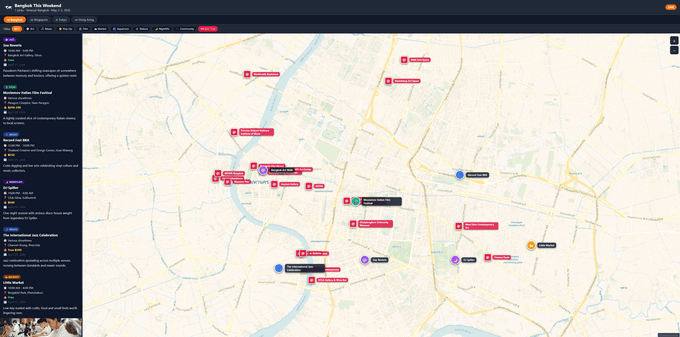
It’s a dashboard that tracks fun activities to do during the weekend. It updates itself every Friday based on latest events/exhibitions happening around the city.
I used Claude to create this dashboard because I found myself wondering what to do during the weekend. The dashboard now covers 4 of my fav capital cities (Bangkok, Singapore, Tokyo, Hong Kong)
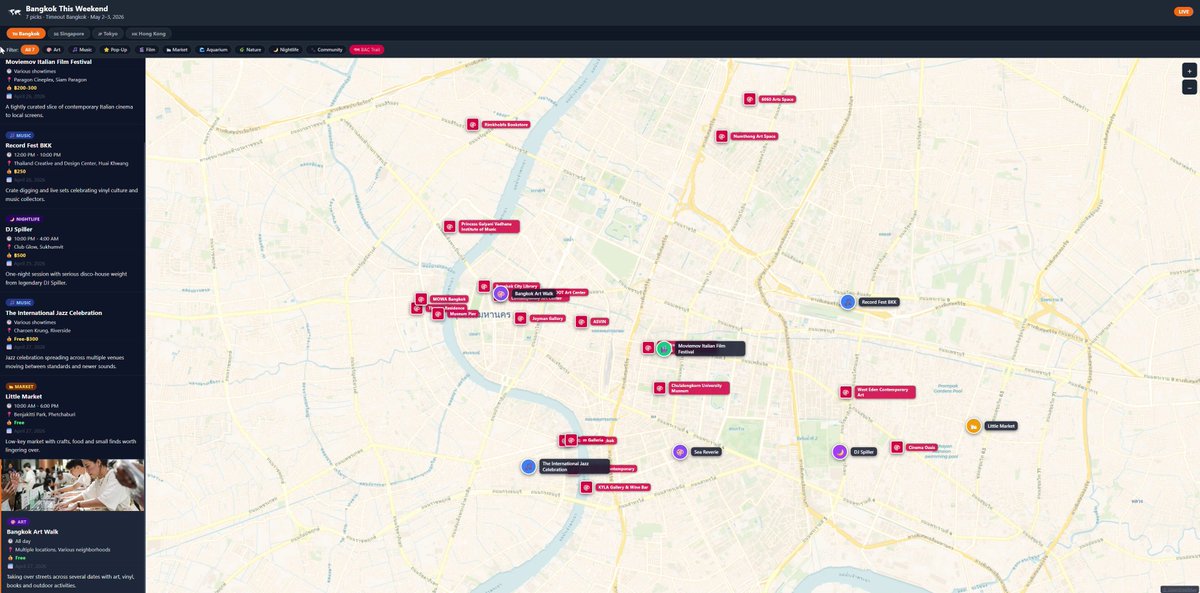
(There are usually a lot more events & more pictures during Fri - Sun)
Besides this one, I’ve also built a bunch of different things — personal x402 + 8004 dashboard, Bittensor dashboard that tracks subnet owner selling/buying back, travel dashboard. Most things are very easy to build BUT things with “premium” or useful data tend to cost $$$.
In the end, if you have a clear useful idea, it’s very easy to build things that bring value to yourself and to others (regardless of whether it’s a wrapper or a slop). So, I hope this article gives you an idea or an inspiration to get started!
Remember, you have to steer the AI. Not let it steer you.
Use the AI to augment learning. Not the other way around.
Thanks for reading and see you in the next one!
Personal Note: If you like something like this, let me know. Thinking of starting a sub-page on my Substack to share AI building resources + cool stuff I’ve built.
AND if you're looking for high signal/low noise prediction market opportunities/strategies that are replicable, I've gone over them in last week's the After Hour EP.52 — Gold in the Goose.
For any interesting questions you have dropped, I'll pick a few and answer them in-depth in Hermes article next week.
## 相关链接
- [0xJeff](https://x.com/0xJeff)
- [@0xJeff](https://x.com/0xJeff)
- [85K](https://x.com/0xJeff/status/2048678335950311860/analytics)
- [Upgrade to Premium](https://x.com/i/premium_sign_up)
- [4:19 PM · Apr 27, 2026](https://x.com/0xJeff/status/2048678335950311860)
- [85.7K Views](https://x.com/0xJeff/status/2048678335950311860/analytics)
- [View quotes](https://x.com/0xJeff/status/2048678335950311860/quotes)
---
*导出时间: 2026/5/4 19:22:48*
---
## 中文翻译
# 与 Hermes 相处的一个月 - 原来我一直在错误地使用 Hermes
**作者**: 0xJeff
**日期**: 2026-04-27T08:19:12.000Z
**来源**: [https://x.com/0xJeff/status/2048678335950311860](https://x.com/0xJeff/status/2048678335950311860)
---

在过去的一个月里,我花了大量时间与 AI 交流——以至于我的未婚妻威胁要离开我(开玩笑的,但她真的非常非常生气)。
大部分时间都花在了调试、修复错误、调整正确的配置,以及确保 Hermes 能正确地执行任务且不再重蹈覆辙。
免责声明:再说一次,我同时使用 Hermes 和 Claude 作为学习的辅助——它们帮助我缩短获取信息和做出决策的时间(无论是为了投资、交易/预测,还是生活中的其他一切)。但执行完全由我亲自完成(因为即便有防护栏,我仍不够信任 AI)。
## 我这一个月与 Hermes 相处的经历如下
- 第一周:学习如何配置基本的模型/推理提供商设置。尝试了许多 OpenRouter 模型设置/Anthropic API,并发现 opencode-go 是入门的最佳订阅选择。
- 第 2-3 周:学习如何正确地委派工作,明确具有清晰结果的任务。我学会了必须非常具体地指出“记住”、“确保调整 [x] 定时任务”,否则 Hermes 可能会遗忘或遗漏某些事情。我还学会了实施健康检查,以便在定时任务运行之前检测出 Bug。
- 第四周:我的世界观在第四周崩塌了,因为我意识到我一直以来都在错误地使用 Hermes。Hermes 不是一个建造者,他是一个操作员。
## 请听我解释
Hermes 的伟大之处在于它的持久记忆 + 自学习循环——它能跨会话记住事情,如果认为有必要会自动设置技能,并能在下次减少完成该任务的时间(你在 Codex 或 Claude Code 中找不到这一功能)。
这些特性使 Hermes 非常适合周期性的自动化工作,例如投递符合你偏好的报告/警报(即一个为你留意的“第二大脑”)。
## 它不擅长做的是“建造者”
至少如果你像我一样是非技术背景,使用 Claude 来创建工件、网站、仪表盘、幻灯片、Excel,以及任何你想用尚可的设计构建的东西都要容易得多。这可能只是因为使用了前沿模型,而且每月花费 100 美元订阅 Claude 获得的推理量,确实比在 Openrouter 上每月花费 100 美元使用 Opus 4.7 要多得多。
基于这个经验,我现在提名 Claude 为“建造者”,Hermes 为“操作员”。
建造者:构建具有尚可美感的仪表盘/网站,配置 UI/UX 变更或任何其他更改(即开发者/工程师)。
> 非常适合一次性构建任务。
操作员:投递报告、分析数据、从仪表盘中收集并提取数据并从中学习(即分析师/助手)。
> 非常适合为你量身定制的持续性任务。
Hermes 当然也能构建东西——但根据我的经验,Hermes 构建耗时很长,而且结果无法与 Claude 相提并论(除非你当然使用前沿模型)。此外,Claude 和 Codex 都有内置的功能/产品,让非技术人员也能轻松驾驭 UI 进行构建,而 Hermes 没有任何此类功能。
这里有一个具体的例子,是我用 Claude + Hermes 构建的产品,以及它们的角色是如何分工的。
## PolyBond

PolyBond 是我个人的预测市场仪表盘,它汇集了来自多个来源的机会。它的设计目标是:
- 捕捉汇总的敏锐/鲸鱼信号
- 潜在的内部人士对特定市场的大额押注
- 从 Predictionarena 追踪 LLM 预测者
- 从其他来源追踪机会(SN6 Numinous, Manifold)
其最终目标是成为一个寻找高确定性预测市场机会的一站式平台,这些机会可以替代 DeFi 收益。
最初我使用 Hermes 来构建它,但很快意识到这个决定有多糟糕——构建缓慢、笨拙,而且美学效果令人难过。
然后我转而使用 Claude,Claude 构建它的速度快了 10 倍,为我节省了大量调试和下达额外指令以获得理想最终结果的时间。
对于 PolyBond,Hermes 承担了预测市场分析师的角色。每天早上和每隔几个小时,Hermes 都会查看为仪表盘提供支持的仪表盘/数据源——然后该代理会投递一份关于重点关注内容的简报。

如果我没有时间亲自查看仪表盘,我可以让 Hermes 进行扩展,它会为我展开并总结这些见解。
## 我目前的收获
Claude 作为建造者、Hermes 作为操作员的流程可以应用于任何类型的工作流。
对某些人来说,可能只让 Hermes 投递每日报告/简报,而不是拥有一个功能齐全的仪表盘会更简单(例如每日的宏观/科技/投资见解)。
对另一些人来说,可能只拥有一个人类可读的仪表盘,而完全不需要 Hermes 会更简单。
我构建了几个我觉得很有用的仪表盘——我最喜欢且经常使用的最好的一个是“曼谷这周末”。

这是一个追踪周末有趣活动的仪表盘。它会在每周五根据城市周围发生的最新活动/展览自动更新。
我用 Claude 创建了这个仪表盘,因为我经常纠结周末该做什么。这个仪表盘现在涵盖了我最喜欢的 4 个首都城市(曼谷、新加坡、东京、香港)。

(在周五到周日通常会有更多的活动和图片)
除了这个,我还构建了一堆不同的东西——个人 x402 + 8004 仪表盘、追踪子网所有者回购/出售的 Bittensor 仪表盘、旅行仪表盘。大多数东西都很容易构建,但带有“优质”或实用数据的东西往往需要花费大价钱。
最后,如果你有一个清晰且有用的想法,很容易构建出对自己和他人有价值的东西(不管它是套壳还是拼凑)。所以,我希望这篇文章能给你一些启发或灵感去开始行动!
记住,你必须主导 AI。而不是让它主导你。
利用 AI 来增强学习。而不是相反。
感谢阅读,我们下期再见!
个人备注:如果你喜欢这类内容,请告诉我。我正在考虑在我的 Substack 上开辟一个子页面,分享 AI 构建资源 + 我构建的酷玩意。
另外,如果你正在寻找高信噪比、可复制的预测市场机会/策略,我在上周的 After Hour EP.52 — Gold in the Goose 中详细介绍了这些内容。
对于你们提出的有趣问题,我会挑选几个并在下周的 Hermes 文章中深入解答。
## 相关链接
- [0xJeff](https://x.com/0xJeff)
- [@0xJeff](https://x.com/0xJeff)
- [85K](https://x.com/0xJeff/status/2048678335950311860/analytics)
- [升级到 Premium](https://x.com/i/premium_sign_up)
- [2026年4月27日 下午4:19](https://x.com/0xJeff/status/2048678335950311860)
- [8.57万次观看](https://x.com/0xJeff/status/2048678335950311860/analytics)
- [查看引用](https://x.com/0xJeff/status/2048678335950311860/quotes)
---
*导出时间: 2026/5/4 19:22:48*