# Why Tech Companies Keep Opening Cafes: How Corgi, Cursor, and AngelList Actually Run Them
**作者**: EO
**日期**: 2026-06-22T13:09:47.000Z
**来源**: [https://x.com/eostudi0/status/2078234742269616147](https://x.com/eostudi0/status/2078234742269616147)
---
👉Read the full article at EO Magazine!
## None of them is a coffee company
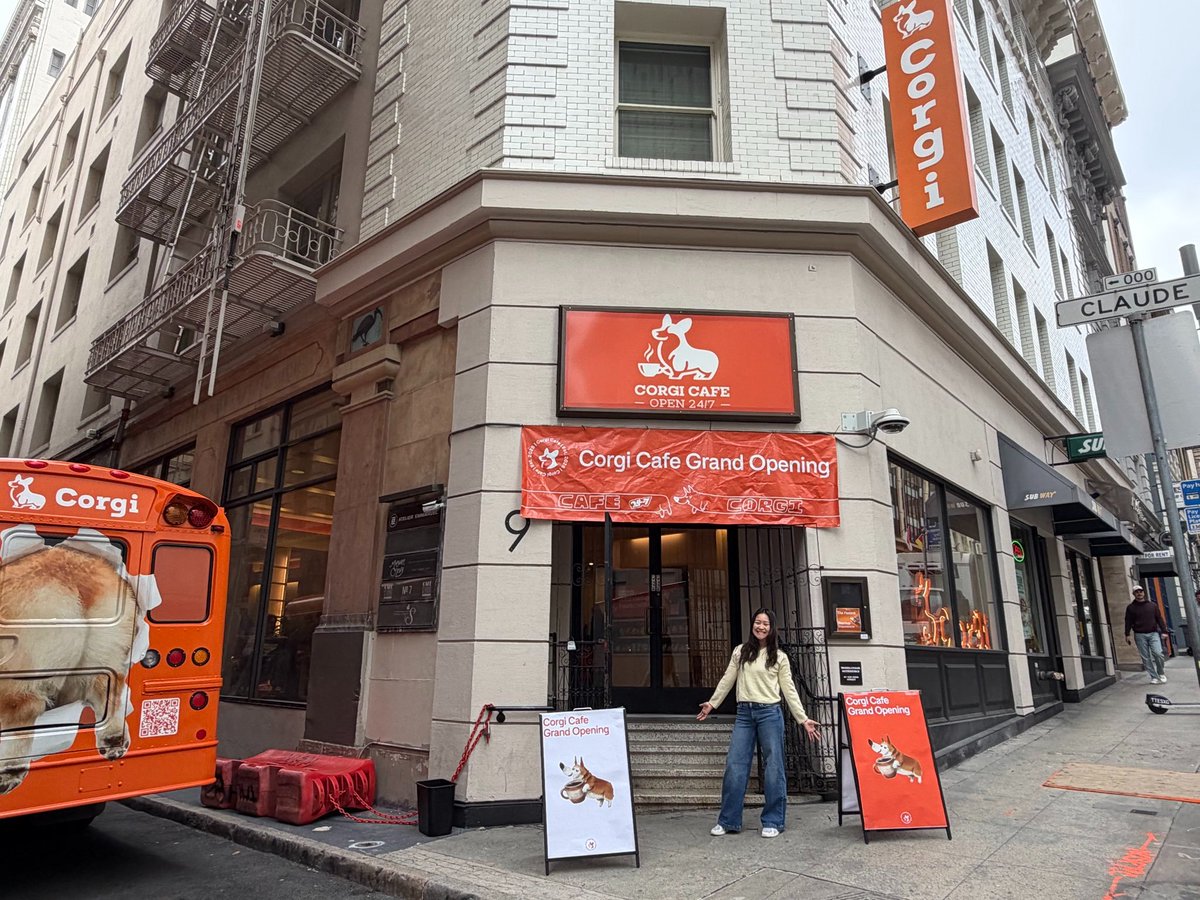
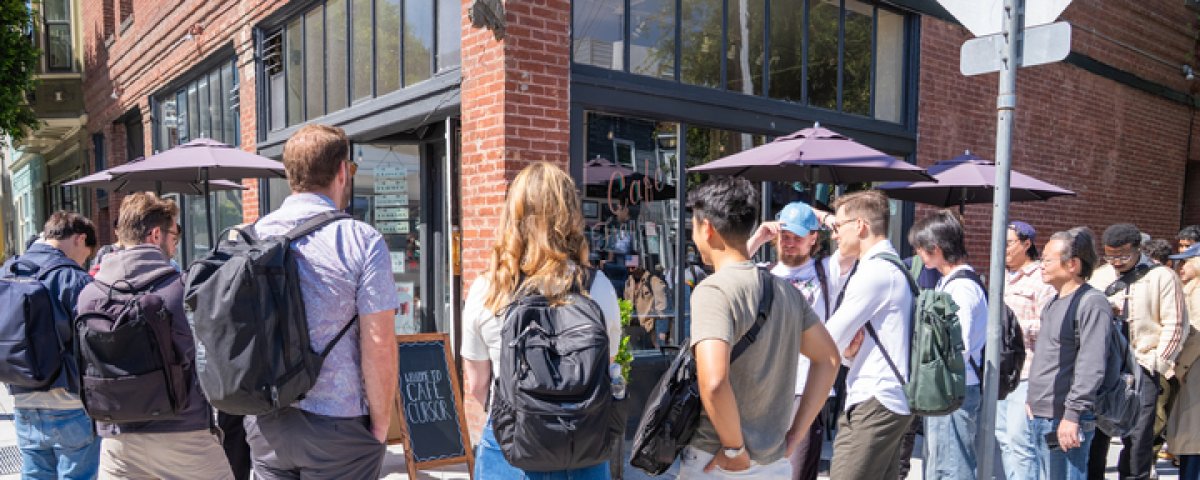
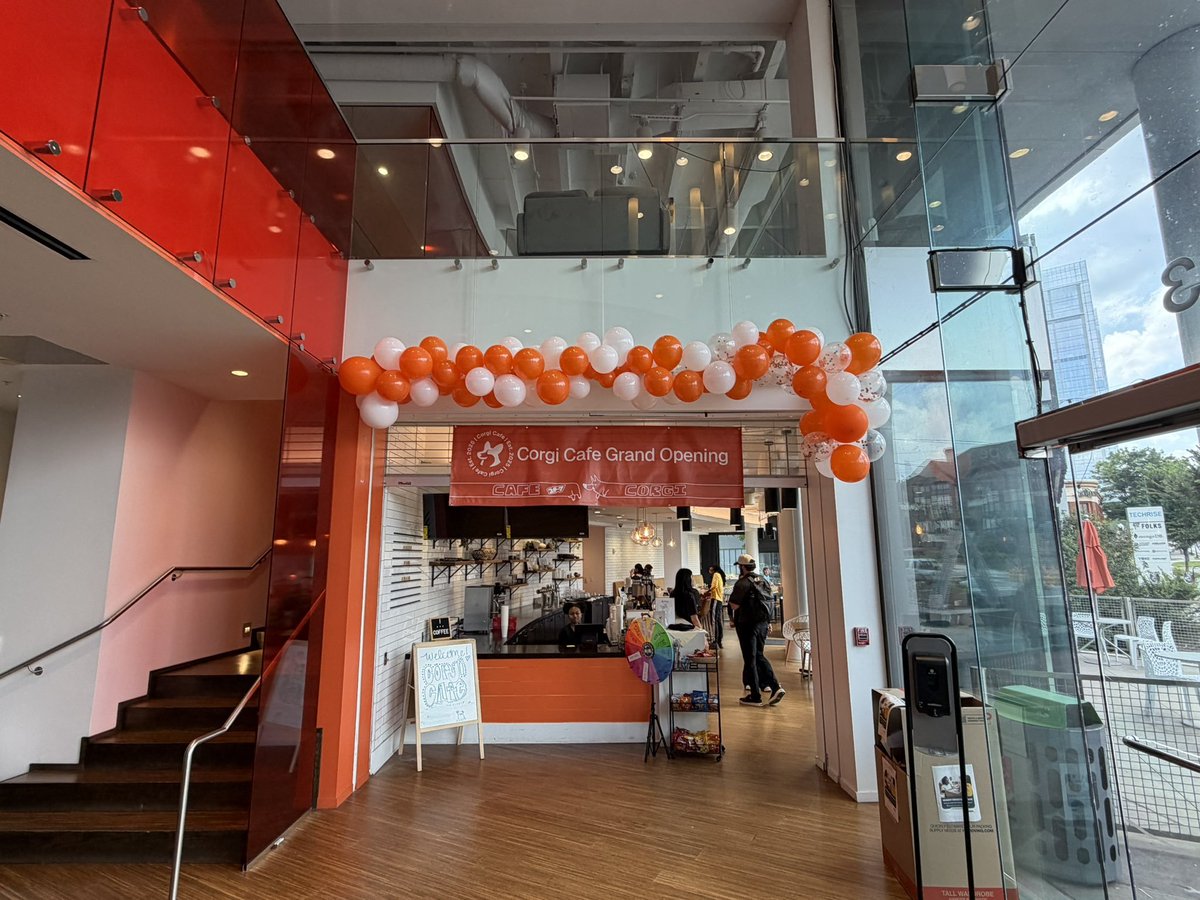
Corgi Cafe's grand opening. Source: Nico Laqua on X
The hottest cafe in San Francisco right now is run by an insurance company.
If you want to visit Corgi Cafe, be prepared to find it full. Walk in on a weekday afternoon and every table is already taken by builders hammering at their keyboards, some perched on chairs with laptops balanced on their knees, most of them slipping naturally into conversations about each other’s products. “Founder heaven,” as one recent visitor put it, is less hype than plain description.
Here is the strange part. Corgi does not sell coffee for a living. It is an AI insurance carrier valued at $2.6 billion, and the cafe, open only since February 2026, never closes.
> **Ben Lang@benln**: [原文链接](https://x.com/benln/status/2069045184063570378)
>
> Cursor community events in 200+ cities
> Reach out if your city's missing
>
> 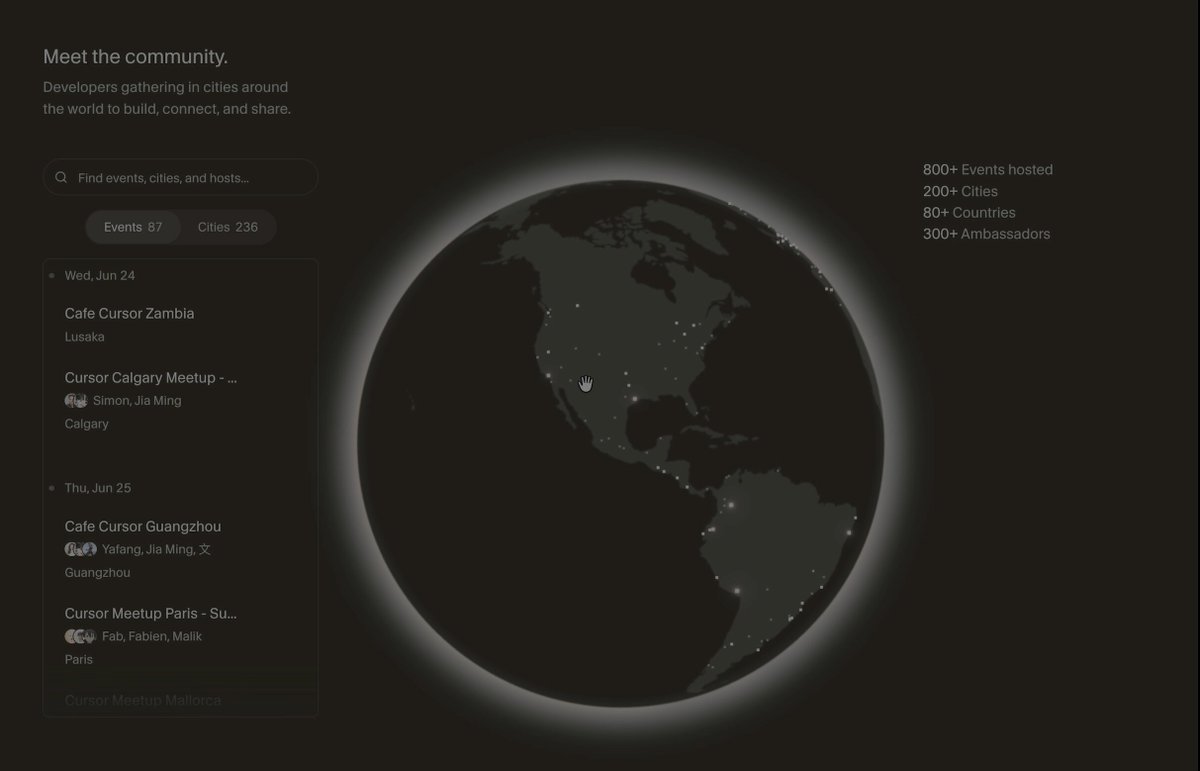
Corgi is not alone, either. Over the past several months, Cursor has been throwing one-day cafe pop-ups around the world in what looks like a relay race. What began in September 2025 as renting the cafe next to its SF office for a single day has grown to 176 takeovers across more than 130 cities. When Cafe Cursor returned to San Francisco in June, 2,000 people signed up, and the line stretched around the block before it opened. For a day, my entire feed was Cafe Cursor.
> **avlok@avlok**: [原文链接](https://x.com/avlok/status/1962976201510944832)
>
> AngelList San Francisco office has an open cafe-style area. Should we turn that into an actual cafe for founders to work out of?
> (ChatGPT rendering below - maybe needs a barista)
>
> 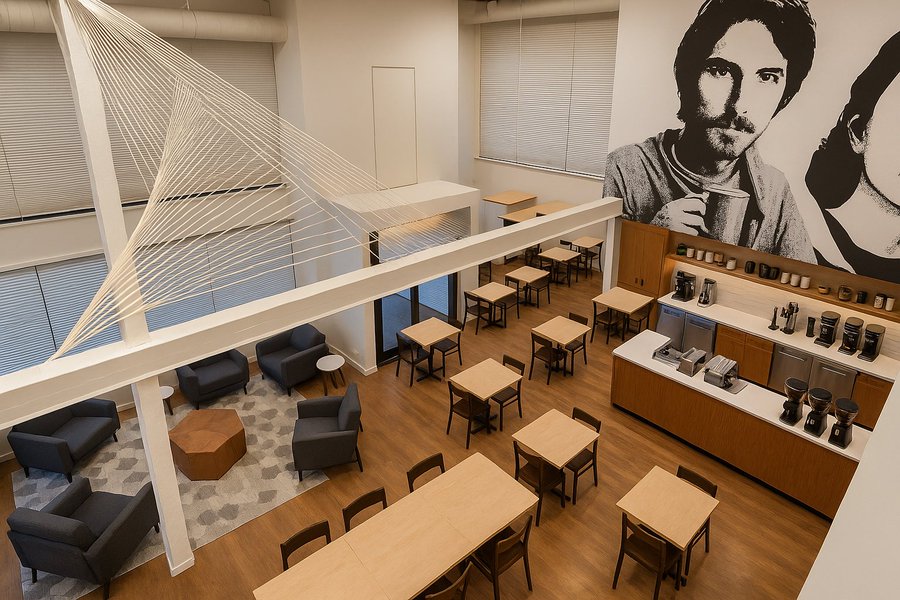
Around the same time those pop-ups began, in September 2025, another cafe started with a tweet. Avlok Kohli, CEO of AngelList, posted a poll asking whether the company should turn the open ground floor of its San Francisco office into an actual cafe for founders. Two weeks later, Founders Cafe existed. Not everyone can get in, but everyone in the scene knows it.
An insurance carrier, a code editor, an investment platform. None of them sell coffee for a living, yet all three now run “cafes.” But when I asked the people who run these spaces how they measure the payoff, the answers were not the ones a CMO would expect. I sat down with all three to find out why and how the spaces actually run.
## Why a cafe, of all things
Ask each operator why the space exists, and before anything else, you get the same diagnosis three times. San Francisco is full of builders and strangely short of places where they can comfortably be around each other.
Victoria Olaogun, who leads community and partnerships at Founders Cafe and is a former founder herself, described hunting for somewhere to work in the city and finding cafes without Wi-Fi, spaces that close early, and members’ clubs with fees and gatekeeping. "It’s a very lonely industry," she told me.
Erika Lee, Corgi’s Head of Brand, frames it around the clock: San Francisco simply runs out of open doors at night, so a room that never closes fills up on its own. And Ben Lang, who works on community at Cursor, frames it as appetite. People are starved for in-person connection, he said, and they want it without an agenda.
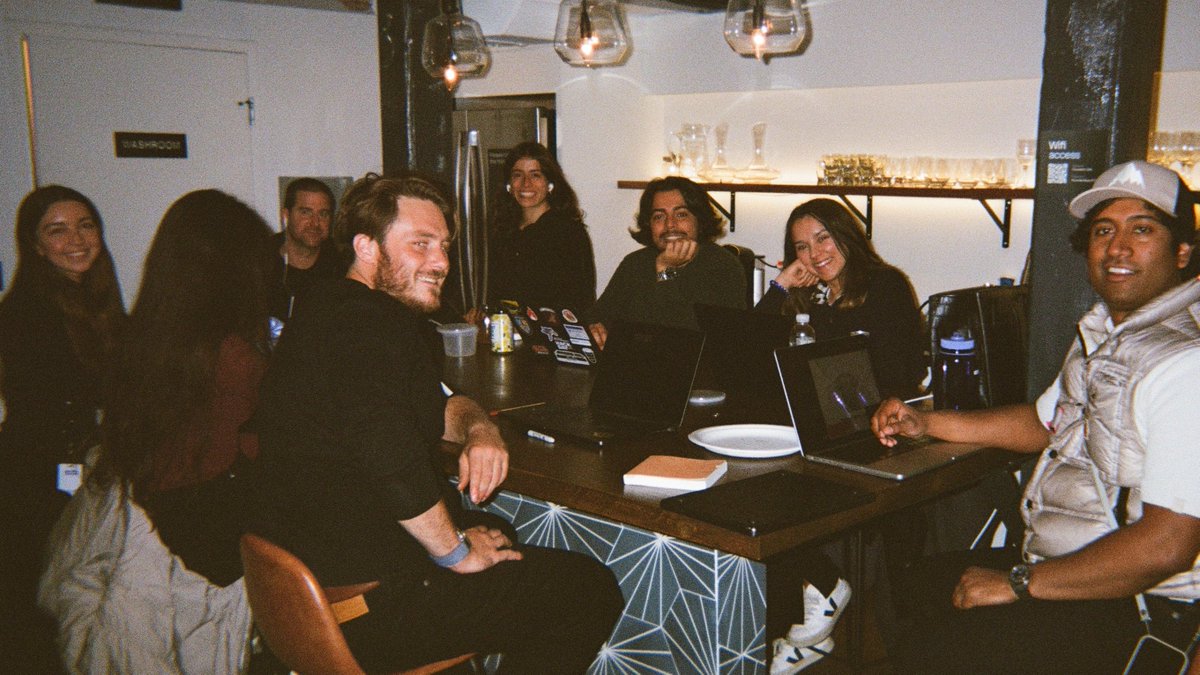
Founders gathered at Founders Cafe. Courtesy of AngelList
Why now is the fair follow-up, and the answers stack. Victoria points at AI: building has gotten easier, which frees founders to leave their desks, and distribution has gotten harder, which forces them to. Erika points to fatigue: after years of everything going digital, people miss analog, physical, real experiences. And beneath both sits the fact every marketer already knows, that paid digital channels no longer convert attention into affection the way they used to.
So why a cafe, and not a lounge, a club, or an event series? Victoria’s answer was disarmingly practical.
> "We all survive on coffee. That’s where people typically go when they’re working remotely and need a place to get work done." (Victoria Olaogun, Community & Partnerships Lead at AngelList)
A cafe is the one format that needs no explaining and no membership card; walking into one is among the lowest-commitment acts in urban life. It is also, not coincidentally, the format that feels least like being marketed to.
The idea has a theory behind it, if you want a theory: investor and writer Balaji Srinivasan has argued that “popups are the new startups,” physical spaces as the next expression of internet communities, and Avlok Kohli has cited that thinking around Founders Cafe. But you do not need the theory to see the logic. Coffee is the excuse. The room is the product.
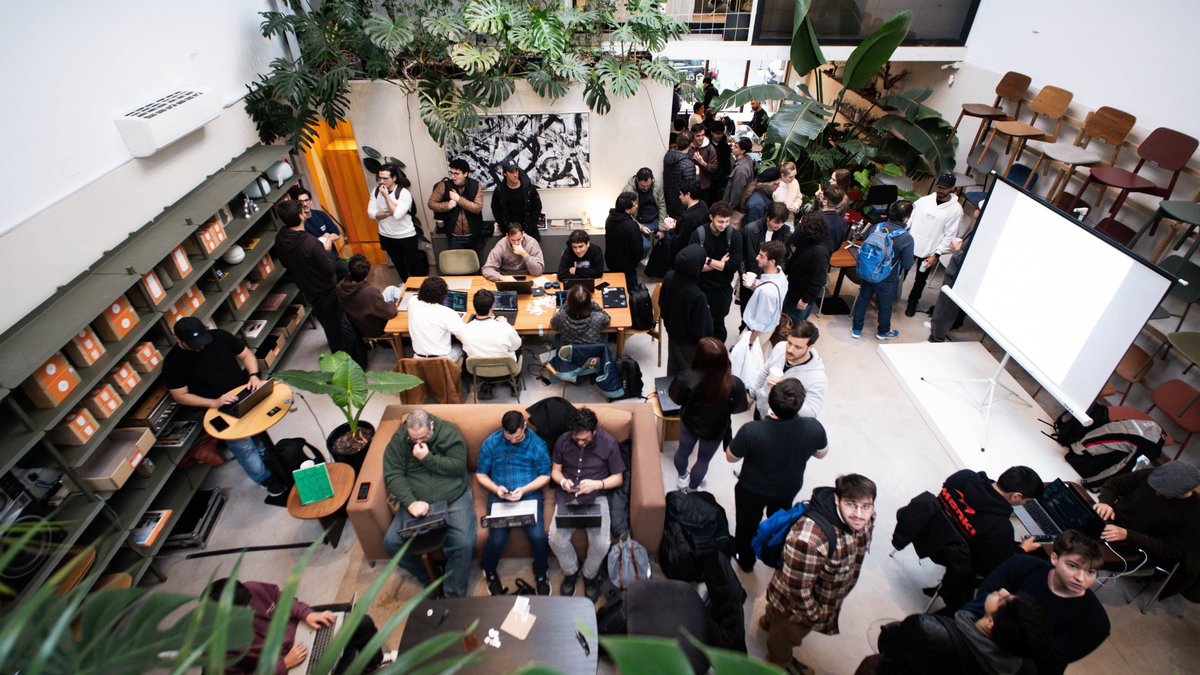
Cafe Cursor in Buenos Aires. Courtesy of Cursor
The more delicate question comes next: how does a room like this create value for the company paying for it?
At Founders Cafe, the answer is relationships. The route to them is one of the space’s core rules: nobody sells anything to anybody. The rule does not mean AngelList expects nothing back. It is how the value gets made. In a room with no pitch, trust builds. Inside that trust, relationships form between founders, investors, and the AngelList team.
And relationships, given time, turn into hires, partnerships, and closed deals for AngelList. AngelList employees get a place to work next to the founders they serve, the company meets talented people who may become future hires, and prospective venture fund clients get hosted in a room that proves how close AngelList sits to founders.
> "We don’t want people to feel like there is an ulterior motive when they walk in. The experience has to be valuable on its own. But when you create a trusted environment for founders, investors, and our team to spend time together, relationships naturally develop." (Victoria)
At Corgi, the answer is a funnel, and Erika is open about it: the cafe and the insurance business feed each other. People discover the cafe first and the insurance second, and she considers that the point. Her founder is blunter still: Nico Laqua has posted that the point of the cafe is that it is "the only place where I am 100% certain that there are billion-dollar companies being founded, probably several per month.".
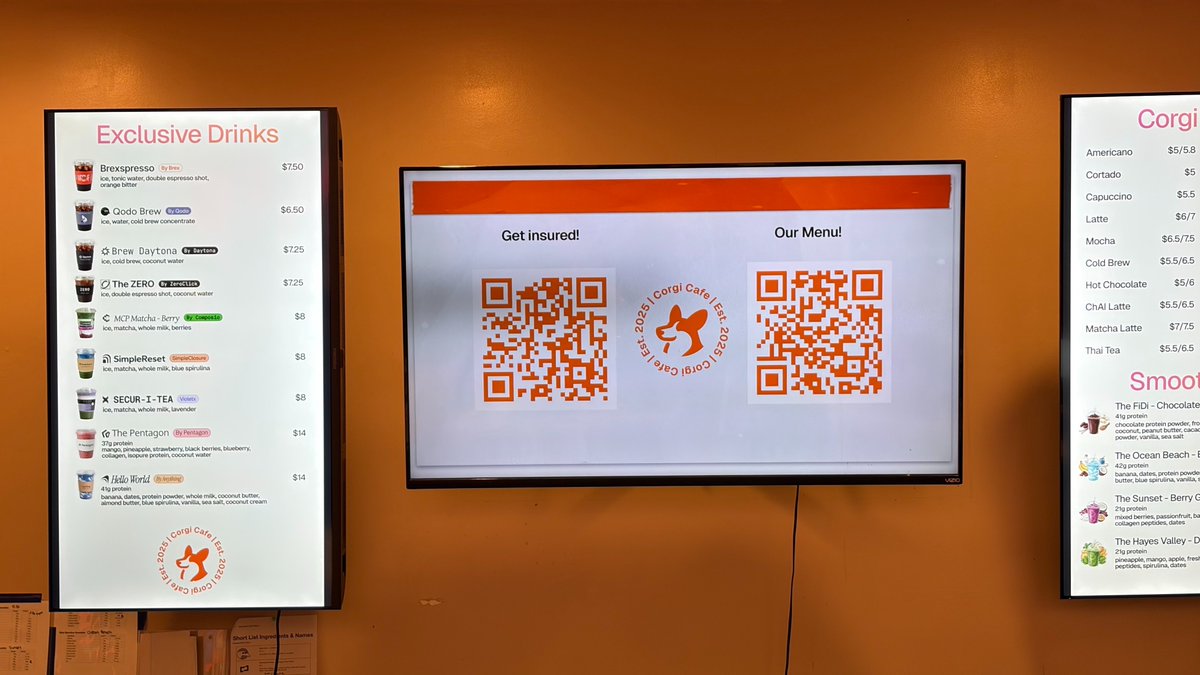
The menu and insurance QR codes behind Corgi Cafe's counter. EO
I saw that balance in the space itself. Behind the counter, a QR code for the menu hangs next to a QR code for insurance sign-ups. In all my time there, I never heard a barista mention insurance first.
And at Cursor, the answer is the community itself. Ben named the motive without any hedging when I asked: brand awareness, bringing power users together to meet each other, and collecting feedback in person when the team shows up. "Community is what makes products sticky," he told me. In his framing, community is not something adjacent to marketing. It is the marketing and the most durable kind.
Trust, funnel, fandom: three different routes from the same kind of room back to the business that pays for it. Yet all three converge on one operating conclusion, and it is the closest thing this trend has to a law. The moment a space feels like marketing, it stops working as marketing. The playbook that follows is how the three of them actually run these rooms. Read it with that law in mind; it sits behind more of the decisions than it first appears.
## The playbook
The three models differ. Founders Cafe is permanent and invite-only. Corgi Cafe is permanent and open to anyone, 24 hours a day. Cafe Cursor is a distributed one-day format that borrows from local cafes. But talk to the operators long enough, and the decisions they had to make line up in the same order.
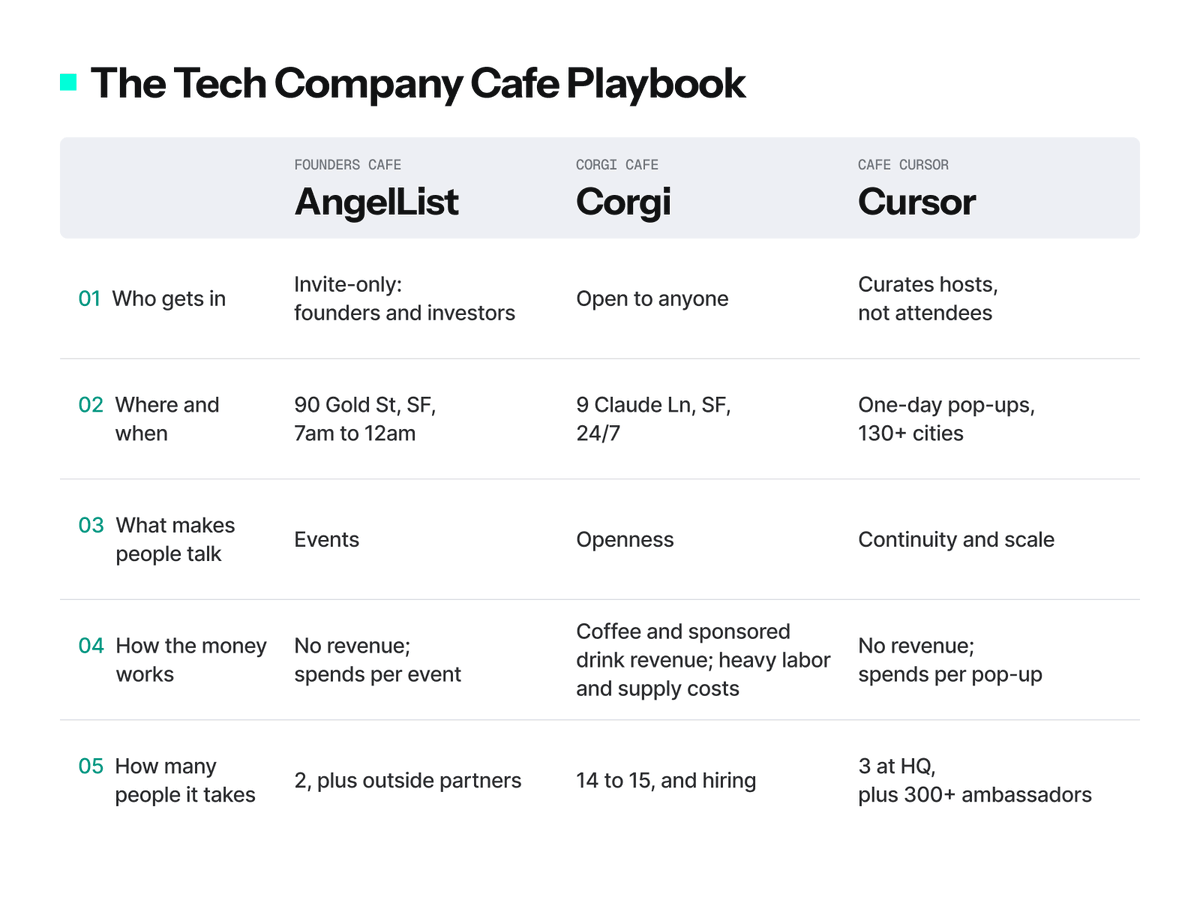
Table: The Tech Company Cafe Playbook
(1) Who gets in
Founders Cafe treats curation as the entire product. Victoria and Irin Son, AngelList’s Head of People, decide who joins from a long waitlist. The question Victoria says she hears most often is also the simplest one: "How do I get in?”
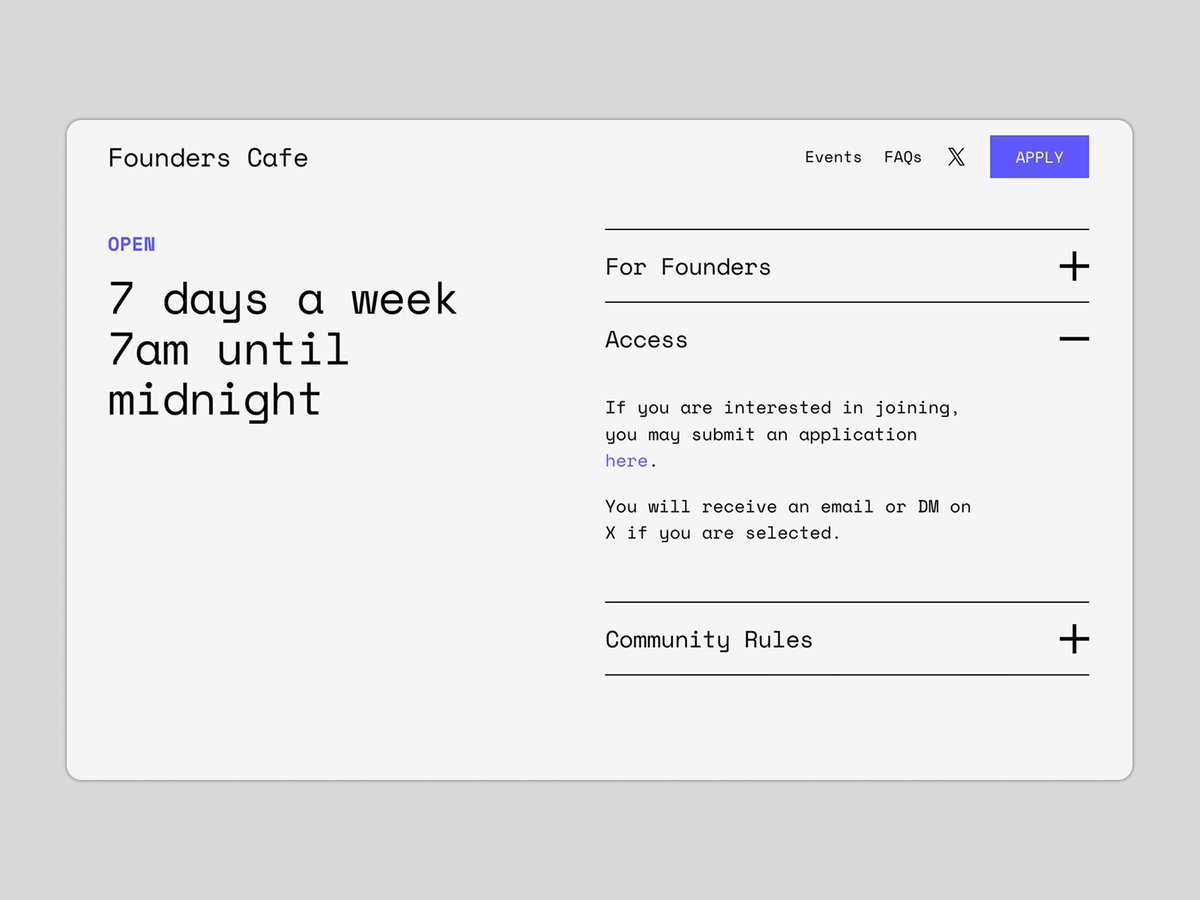
Founders Cafe's application page. Source: Founders Cafe website
There is no fixed rubric. They look at what a person is building, whether they show their work publicly, and whether they can give as much as they take. The community holds roughly 75 to 100 people cycling through per month, kept deliberately tight, at about an 80/20 ratio of founders to VCs.
Cursor applies the same filter one level up: it curates not attendees but hosts. More than 300 ambassadors run Cafe Cursor pop-ups worldwide, selected from thousands of applicants. Corgi is the outlier that curates nobody and compensates with the next decision instead.
(2) Where and when
Corgi’s differentiation is hours. Pop-up cafes come and go, Erika notes, so being the space that never closes is itself the brand. "There’s just nowhere else to go sometimes at night, so you just come here."
Cursor’s differentiation is a place. The team insists on real neighborhood cafes, never offices or event venues, chosen to feel like Cursor’s own space: sunlight, plants, cozy shelves. Convincing an owner to close to the public for a day is the hard part. Most cafes simply do not offer private rentals. What breaks the resistance is who does the asking: a local ambassador who knows the neighborhood’s culture, reaching out to a friend, or a friend of a friend.
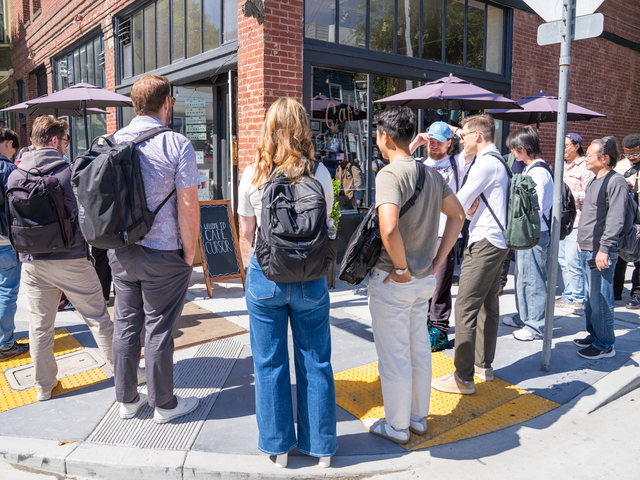
The line outside Cafe Cursor. Courtesy of Cursor
(3) What makes people talk
None of the three spaces advertises in any conventional sense. Instead, each engineered condition where word of mouth does the work. Victoria’s tool is events nobody else would think of: the space’s first event was mind-controlled drone racing, and her current favorite format is a game show where founders and VCs answer questions while vibe coding on stage.
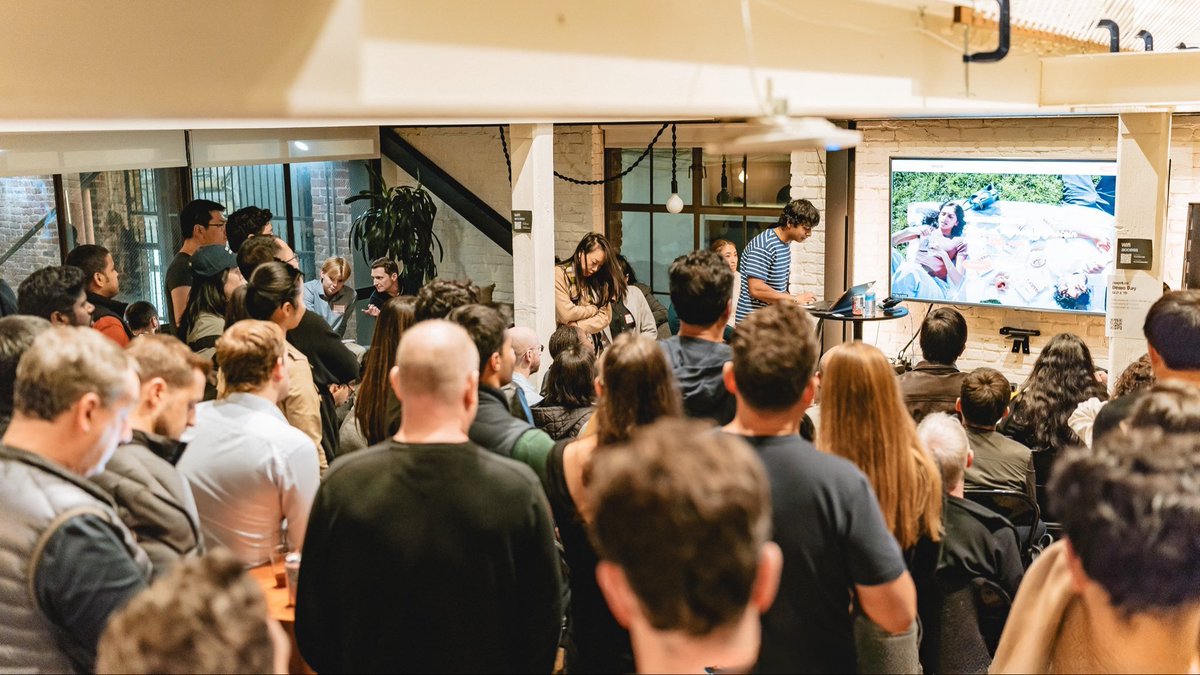
A Founders Cafe event. Courtesy of AngelList
Corgi’s tool is the space’s own openness. Because anyone can walk in at any hour, the cafe generates its own stream of tweets, photos, and "you have to go" recommendations without a single nudge from the company. The Corgi Times, an actual physical newspaper the company prints, extends the same instinct: give people something analog and unexpected, and they will do the posting for you.
At Cafe Cursor, the branding effect comes from continuity and scale. The pop-ups run as a rolling series across more than 130 cities worldwide, sometimes circling back to a city that already had one, and that rhythm gives builders something to anticipate. Visit one, and you might get coffee or a hat, but the giveaways are closer to a side note.
(4) How the money works
They may all be called cafes, but most of them are not actually in the coffee business, so what they spend varies wildly. AngelList takes in no revenue at all, by design. Costs shift with each event, and Victoria treats the absence of any transaction as the product itself. Cursor likewise manages each pop-up as a bounded, one-off spend.
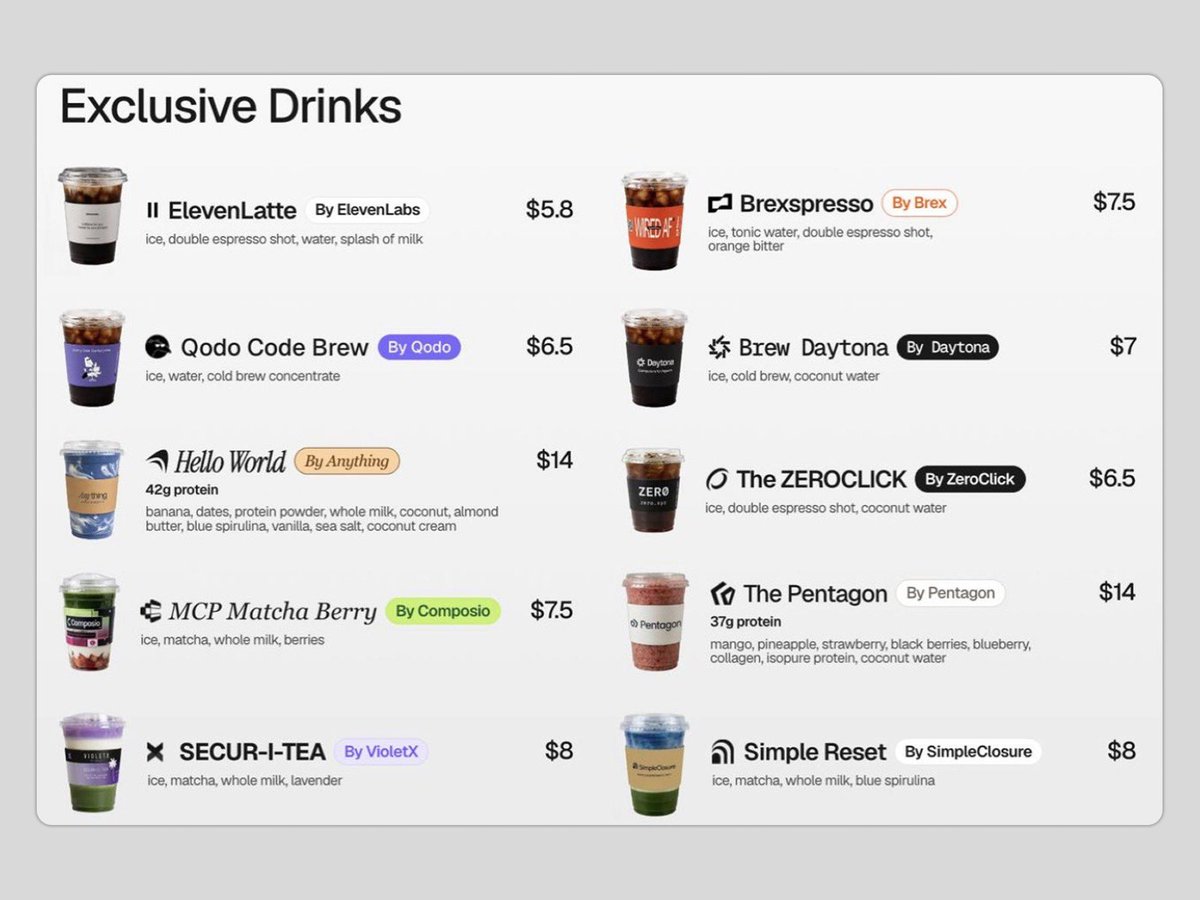
Corgi Cafe's sponsored drinks. Source: Corgi on X
Corgi, running a true 24-hour cafe, is the heaviest operation in money terms. It actually sells coffee to paying customers, which means real labor, ingredients, and operating costs. To support that cost structure, Corgi created sponsored drinks for startups, and the slots are popular enough to be sold out until September.
After founder Nico Laqua described the cafe as money-losing in one interview, plenty of people voiced doubts, but Erika told me the cafe has since swung fully into the black. Corgi has opened its Atlanta location, and the goal is 100 locations worldwide.
(5) How many people it takes
Fewer than you would guess. Founders Cafe runs two to three events a week on a core team of two, plus office helpers and TaskRabbit hands for setup. Cafe Cursor’s 176 pop-ups are supported by roughly three people at HQ, with ambassadors carrying the rest through a shared guide and a Loom video.
Corgi, the only one operating true retail around the clock, is the heavy one: around ten baristas, four to five people dedicated to cafe expansion, and new QSR hires brought in for the expansion.
The cafe expansion lead, Trevor, shows what hiring for a project this odd looks like. Erika had known him for years from her crypto days, when he was a GP at a crypto fund and had run his own cafe in Puerto Rico: a rare resume that reads startup on one line and espresso on the next. People like that surface through networks, not job boards.
(6) What not to do
Corgi Cafe Atlanta. Source: Corgi on X
Here the veterans converge. Brooke LeBlanc, who traveled to open Corgi’s Atlanta location, named the most common misconception directly: “if you build it, they will come.”
> "You must start with the end customer in mind. Customer first, brick-and-mortar second." (Brooke LeBlanc, Head of Community at Corgi)
Victoria’s version of the same warning holds two ideas in deliberate tension: be clear about what you are trying to accomplish, and make sure the people in the space never feel it. “It should be enjoyable first. People should have a good time while they’re there and not think that you’re just trying to sell them something all the time.”
## What they measure instead
If you brought this strategy to your CMO, the first question would be about ROI. Here is the honest answer from all three companies: the returns arrive first as demand and stories, not as conversions. Part of the reason is structural. The work these rooms do is awareness, the very front of the funnel, about as far from a purchase as marketing gets. A conversion dashboard is the last place that work would show up.
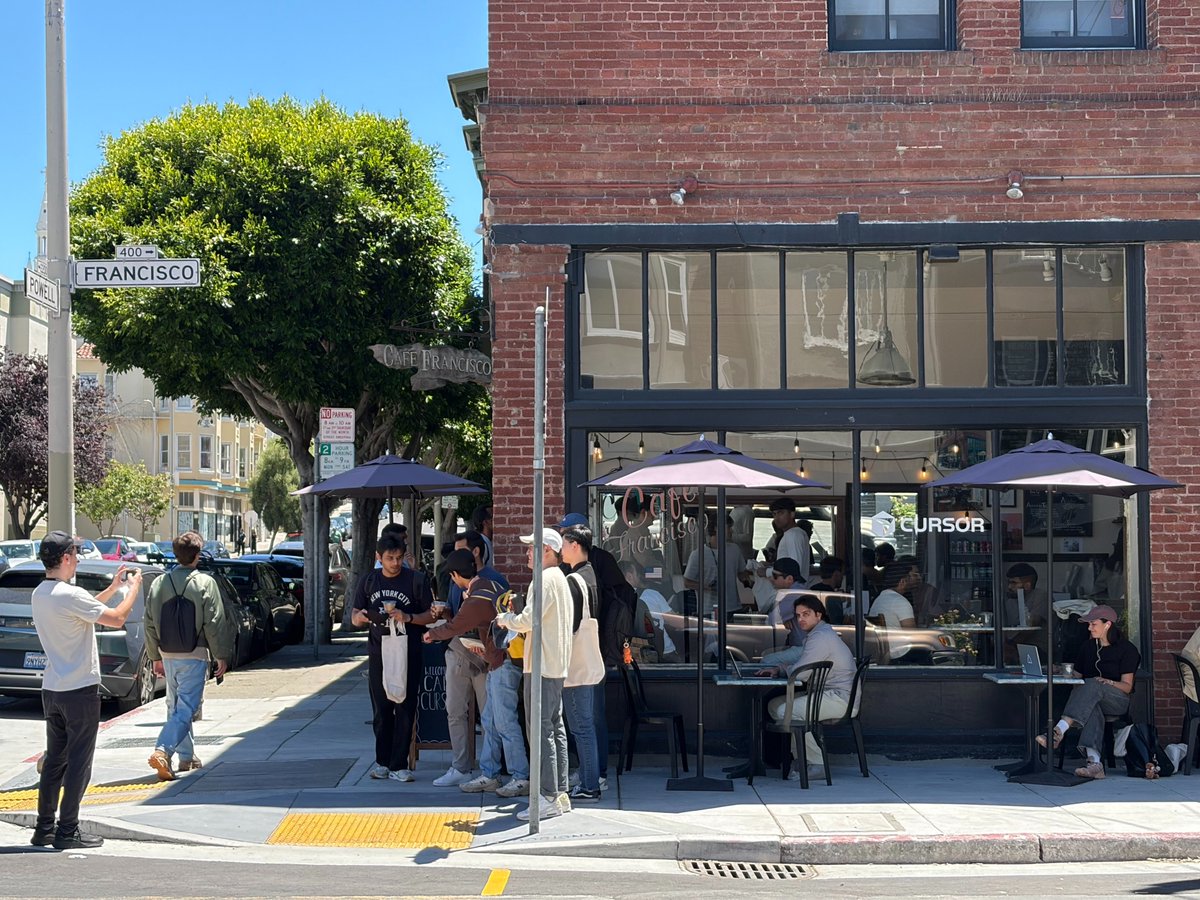
Cafe Cursor in San Francisco. EO
Cursor keeps close tabs on its pop-ups. Ben told me the team monitors NPS and "the basic things that people would track" after every pop-up, though he kept the details general. The reach numbers, on the other hand, are actively public: Cursor has shared running totals of 176 takeovers and 37,000 signups, and the signal Ben clearly savors most is people publicly asking when the next pop-up is coming to their city.
Notice who those people are. Every one of those 37,000 signups is a developer, which is to say a current or future Cursor user. Demand for the cafe is a direct proxy for demand for the product.
Corgi, it turns out, runs the cafe by the numbers.
> "Our cafe team is actively tracking orders and foot traffic to measure how effectively they convert into sales." (Brooke LeBlanc, Head of Community at Corgi)
The same discipline extends to the menu: the team tracks headcount, footprint, and sales to relay feedback to the startups behind each sponsored drink. But all of that counting stays behind the counter; nothing about it reaches the guest. The insurance returns, meanwhile, show up one level deeper. Laqua has said that more than 20 people told him they submitted their YC application or signed a term sheet inside the cafe.
Read that the way an insurance executive would: companies being founded inside your cafe are your sales pipeline, captured at the exact moment they start needing coverage. Keeping a room open to builders 24 hours a day is, at bottom, a bet on being there when your future customers begin.
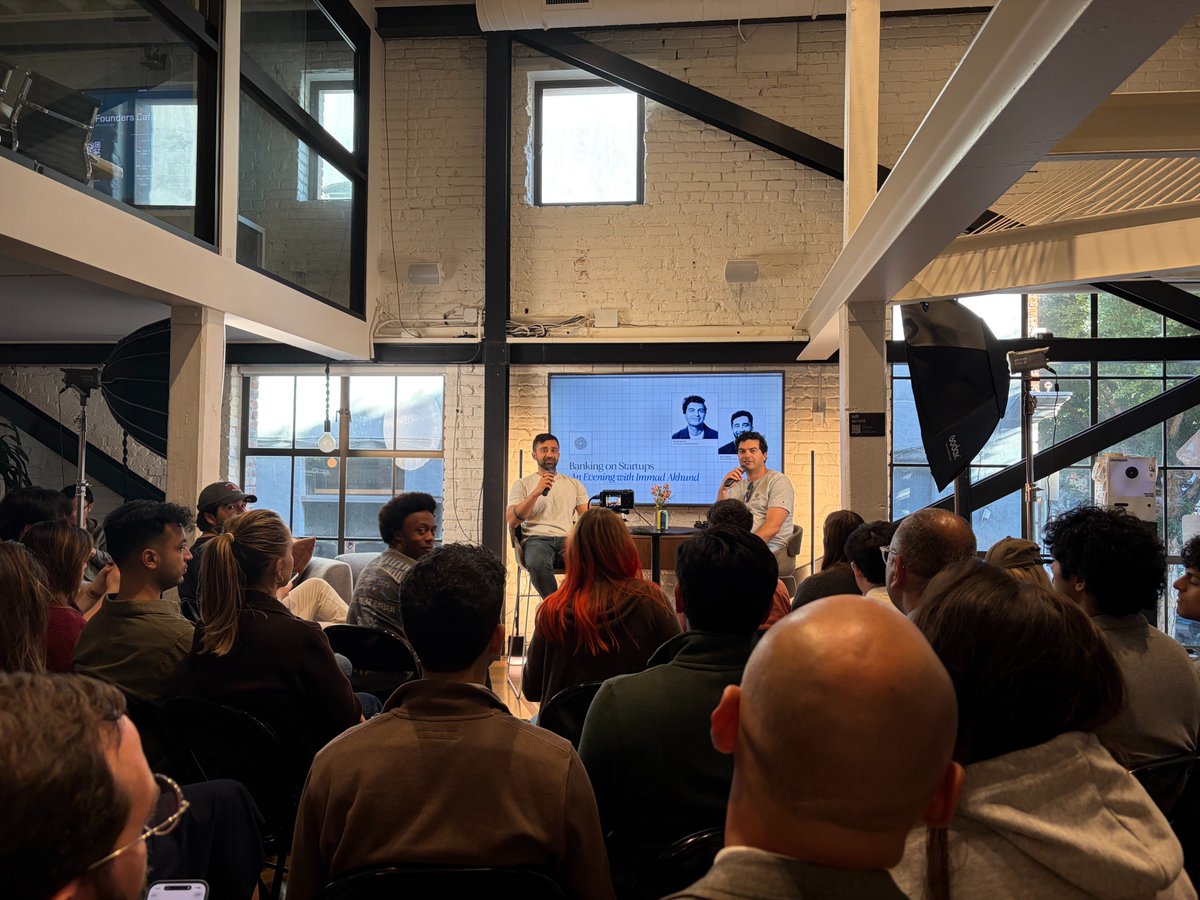
An event at Founders Cafe. EO
Victoria of AngelList says the returns on Founders Cafe lie in relationships and business outcomes that no immediate conversion metric would capture. Founders who met their co-founders in the room. A first check written after an event. A member who got into YC. Potential hires who built relationships with the AngelList team, and prospective fund clients who were brought into a space that reflects the community the company serves. And the tell, easy to miss in that list: funds closed on AngelList by people who work out of the room.
The regulars of Founders Cafe are, precisely, the customers of AngelList’s platform. Victoria calls it "relationship infrastructure." Add the 30 to 50 inbound event and partnership requests Victoria fields every month, and "there is a very clear return on investment that is happening," as she puts it, a return measured in relationships and deals rather than a single dashboard.
This is the part to internalize before you pitch a cafe internally. The honest version of that pitch is not a conversion forecast. It is a short list of leading indicators tied to your own customer base, things like signups, repeat visits, testimonials, and deals your customers strike with each other, plus a timeframe you are willing to wait.
Conversion data, when it arrives, is the receipt, not the steering wheel. And if your organization cannot defend a budget line without quarterly attribution, this is not your channel yet.
## So, should you copy it?
That the trend is real is not in question anymore. "It’s definitely becoming a trend," Victoria told me, pointing out that fashion and consumer brands proved decades ago that real-life activations outperform selling online.
Erika’s answer to the same question was one word: "Absolutely," before rattling off a list that ran from Cursor to a16z Speedrun to prediction markets opening pop-up grocery stores.
And the demand side is obvious to anyone who has spent a week in San Francisco, a city where everything is being automated and a warm introduction is still the most valuable currency. Meetings are gold there, and these cafes mint them.
> "I think people are craving in-person connection." (Ben Lang, Community at Cursor)
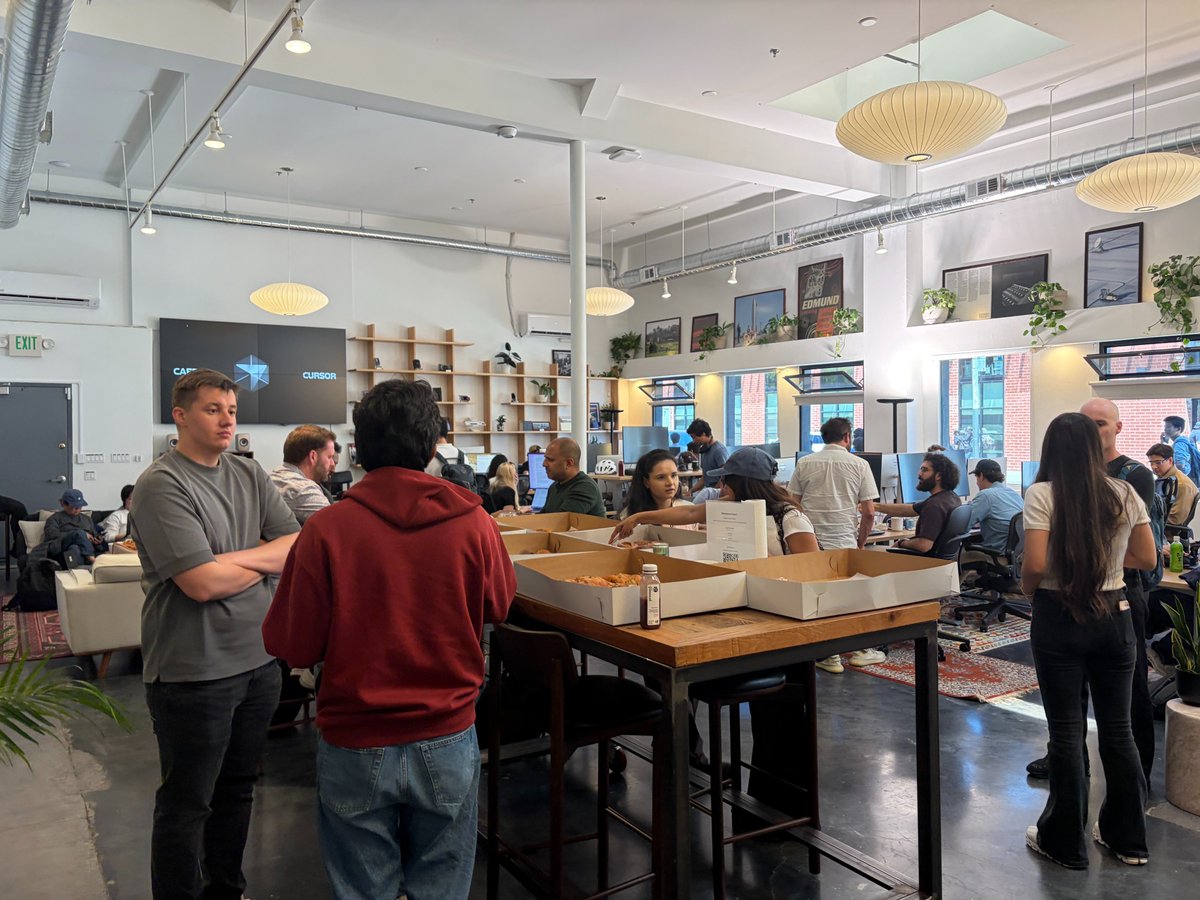
Networking at Cafe Cursor. EO
But wanting the results is not the same as being able to copy the method, and the bluntest thing anyone said to me in three interviews was Ben’s warning about exactly that. Cursor’s pop-ups work because Cursor has fans, a product people already talk about, and a brand people want to wear on a hat. Take away those preconditions, and the format is just an expensive coffee tab.
> "I wouldn’t say hey, just take this and copy it. I don’t think it would be that effective for many companies." (Ben)
His advice for companies that want what Cursor has: skip the cafe and go earlier in the chain. Spend time with your users, look for signals, and let things happen organically rather than top-down. Erika’s advice is to find the one thing that makes yours unique before signing a lease. Victoria’s is an open invitation: figure out what you actually want from the space, and, she added with a laugh, call her.
Put their answers together, and the headline question resolves into something simpler than a trend. Tech companies keep opening cafes because in-person serendipity became the scarcest resource in the industry, and a room of your own is how you own some of it. But every operator in this story had the same thing before they had a room: people who already wanted to be in it. The community came first. The cafe is where it finally got to sit down.
👉 Enjoyed the article? Read and subscribe to EO Magazine!
## 相关链接
- [@eostudi0](https://x.com/eostudi0)
- [8.4K](https://x.com/eostudi0/status/2078234742269616147/analytics)
- [EO Magazine](https://www.eomag.io/article/startup-cafe-playbook?utm_source=x&utm_medium=article)
- [“Founder heaven,”](https://x.com/Shubham_6x/status/2076903169385537802)
- [Corgi](https://www.corgi.insure/)
- [$2.6 billion](https://www.eomag.io/article/corgi-nico-emily)
- [February 2026](https://x.com/nico_laqua/status/2022570819613004063?s=20)
- [Jun 22](https://x.com/benln/status/2069045184063570378)
- [60K](https://x.com/benln/status/2069045184063570378/analytics)
- [Cursor](https://cursor.com/home)
- [around the world](https://cursor.com/ko/community)
- [176 takeovers across more than 130 cities](https://x.com/benln/status/2077082548795064558)
- [2,000 people signed up](https://x.com/ericzakariasson/status/2064759765079883986)
- [Sep 3, 2025](https://x.com/avlok/status/1962976201510944832)
- [301K](https://x.com/avlok/status/1962976201510944832/analytics)
- [another cafe](https://x.com/founders_cafe)
- [posted a poll](https://x.com/avlok/status/1962976201510944832)
- [Founders Cafe existed](https://x.com/avlok/status/1968061927898353814)
- [Victoria Olaogun](https://x.com/V4Victoria__)
- [Erika Lee](https://x.com/erikalee)
- [Ben Lang](https://x.com/benln)
- [Balaji Srinivasan](https://x.com/balajis)
- [are the new startups,”](https://balajis.com/p/popups-are-the-new-startups)
- [Nico Laqua](https://x.com/nico_laqua)
- ["the only place where I am 100% certain that there are billion-dollar companies being founded, probably several per month."](https://x.com/nico_laqua/status/2068210652926431324)
- [invite-only](https://90.gold/)
- [described the cafe as money-losing in one interview](https://www.theinsurer.com/ti/interview/corgis-laqua-i-want-to-build-the-most-important-company-in-the-world-2026-06-08/)
- [Trevor](https://x.com/TO)
- [Brooke LeBlanc](https://x.com/brookeleblanc)
- [running totals of 176 takeovers and 37,000 signups](https://x.com/benln/status/2077082548795064558)
- [more than 20 people told him they submitted their YC application or signed a term sheet inside the cafe.](https://finance.biggo.com/news/293f3f14473d7897)
- [EO Magazine](https://www.eomag.io/article/startup-cafe-playbook?utm_source=x&utm_medium=article)
- [Upgrade to Premium](https://x.com/i/premium_sign_up)
- [5:45 AM · Jul 18, 2026](https://x.com/eostudi0/status/2078234742269616147)
- [8,433 Views](https://x.com/eostudi0/status/2078234742269616147/analytics)
- [View quotes](https://x.com/eostudi0/status/2078234742269616147/quotes)
---
*导出时间: 2026/7/18 15:16:35*
---
## 中文翻译
# 为什么科技公司纷纷开设咖啡馆:Corgi、Cursor 和 AngelList 实际上是如何运作的
**作者**: EO
**日期**: 2026-06-22T13:09:47.000Z
**来源**: [https://x.com/eostudi0/status/2078234742269616147](https://x.com/eostudi0/status/2078234742269616147)
---

👉在 EO Magazine 阅读全文!
## 它们都不是咖啡公司

Corgi Cafe 盛大开业。来源:Nico Laqua 在 X 上
旧金山目前最火的咖啡馆由一家保险公司经营。
如果你想去 Corgi Cafe 逛逛,得做好客满的准备。在一个工作日的下午走进去,你会发现每个桌子都已经被在键盘上敲敲打打的建设者占满了,有些人坐在椅子上,把笔记本电脑平衡在膝盖上,大多数人自然而然地就开始聊起了彼此的产品。“创业者的天堂”,正如最近一位访客所言,这与其说是夸张宣传,不如说是平实描述。
奇怪的是,Corgi 并不靠卖咖啡为生。它是一家估值 26 亿美元的 AI 保险公司,这家自 2026 年 2 月才开放的咖啡馆,从不打烊。
> **Ben Lang@benln**: [原文链接](https://x.com/benln/status/2069045184063570378)
>
> Cursor 社区活动已在 200 多个城市举办
> 如果你的城市还没举办,请联系我们
>
> 
Corgi 并非孤例。在过去几个月里,Cursor 像接力赛一样在全球各地举办一日咖啡馆快闪活动。这始于 2025 年 9 月,当时他们只租用了旧金山办公室隔壁的咖啡馆一天,如今已发展到在 130 多个城市举办 176 场活动。当 Cafe Cursor 于 6 月回到旧金山时,有 2000 人报名,在开业前排队长龙绕了街区一整圈。整整一天,我的信息流里全是 Cafe Cursor。
> **avlok@avlok**: [原文链接](https://x.com/avlok/status/1962976201510944832)
>
> AngelList 旧金山办公室有一个开放的咖啡馆风格区域。我们应该把它变成一个真正的咖啡馆,供创业者办公吗?
> (下图是 ChatGPT 渲染图——也许还需要一个咖啡师)
>
> 
大约在那些快闪活动开始的同时,也就是 2025 年 9 月,另一家咖啡馆也是由一条推文诞生的。AngelList 的 CEO Avlok Kohli 发起了一项投票,询问公司是否应该将其旧金山办公室开放的底层空间改造成一个供创业者使用的真实咖啡馆。两周后,Founders Cafe 就诞生了。不是每个人都能进去,但在这个圈子里的人都知道它。
一家保险公司,一个代码编辑器,一个投资平台。它们都不靠卖咖啡为生,但现在都经营着“咖啡馆”。但当我询问这些空间的运营者如何衡量回报时,答案并不是首席营销官(CMO)预期的那样。我与这三家都进行了深入交流,以了解他们为什么以及实际上是如何运营这些空间的。
## 为什么偏偏是咖啡馆
询问每一位运营者这个空间为何存在,在回答任何其他问题之前,你会得到三次相同的诊断。旧金山充满了建设者,却奇怪地缺乏让他们能舒适地聚在一起的场所。
Victoria Olaogun 负责Founders Cafe 的社区和合作伙伴关系,她自己也是一位前任创始人。她描述了在城里寻找工作地点的经历:发现没有 Wi-Fi 的咖啡馆、早早关闭的空间,以及有费用门槛和守门人的会员俱乐部。“这是一个非常孤独的行业,”她告诉我。
Corgi 的品牌主管 Erika Lee 从时间的角度来阐述:旧金山晚上的营业场所实在太少了,所以一个永不关闭的房间自然就会爆满。而负责 Cursor 社区工作的 Ben Lang 则将其归结为需求。他说,人们渴望面对面的交流,而且他们希望这种交流不带任何目的。

创业者聚集在 Founders Cafe。图片由 AngelList 提供
“为什么是现在”是一个合理的后续问题,答案层层叠加。Victoria 指向了 AI:构建产品变得更容易了,这让创始人得以离开办公桌;而分发变得更难了,这又迫使他们离开办公桌。Erika 指向了疲劳感:在经历了多年的全面数字化之后,人们怀念模拟的、物理的、真实的体验。而在这两者之下,是每个营销人员都知道的事实:付费数字渠道不再像以前那样能将关注度转化为好感度。
那么,为什么是咖啡馆,而不是休息室、俱乐部或活动系列?Victoria 的回答坦诚得令人惊讶。
> “我们都要靠咖啡续命。当人们远程办公并且需要一个地方完成工作时,通常就会去那里。”(Victoria Olaogun,AngelList 社区与合作伙伴关系负责人)
咖啡馆是唯一一种不需要解释也不需要会员卡的形态;走进一家咖啡馆是城市生活中承诺最低的行为之一。并非巧合的是,这也是最不像在被营销的形态。
如果你需要一个理论,这个想法背后是有理论支撑的:投资人兼作家 Balaji Srinivasan 曾提出“快闪店是新创公司”,实体空间是互联网社区的下一个表现形式,Avlok Kohli 也曾引用这一理念来阐述 Founders Cafe。但你不需要这个理论也能看懂其中的逻辑。咖啡只是借口。空间本身才是产品。

布宜诺斯艾利斯的 Cafe Cursor。图片由 Cursor 提供
接下来是一个更微妙的问题:这样的房间如何为买单的公司创造价值?
在 Founders Cafe,答案是关系。通往关系的途径是该空间的核心规则之一:任何人不得向任何人推销。这条规则并不意味着 AngelList 不图回报。它是价值产生的方式。在一个没有推销的房间里,信任得以建立。在这种信任中,创始人、投资者和 AngelList 团队之间形成了关系。
而随着时间的推移,关系会转化为 AngelList 的招聘、合作伙伴关系和成交交易。AngelList 员工获得了一个在他们服务的创始人旁边工作的场所,公司结识了可能成为未来招聘对象的人才,潜在的风险投资基金客户也被接待在一个证明 AngelList 与创始人关系多么紧密的房间里。
> “我们不希望人们在走进来时感觉别有用心。这种体验本身必须是有价值的。但当你为创始人、投资者和我们的团队创造一个值得信赖的共处环境时,关系自然就会发展。”(Victoria)
在 Corgi,答案是漏斗,Erika 对此直言不讳:咖啡馆和保险业务相辅相成。人们先发现咖啡馆,后了解保险,她认为这就是重点。她的创始人表达得更直白:Nico Laqua 曾发帖称,咖啡馆的意义在于它是“唯一一个我能 100% 确信正在诞生价值数十亿美元公司的地方,可能每个月就有好几家。”。

Corgi Cafe 柜台后的菜单和保险二维码。EO
我在空间本身看到了这种平衡。在柜台后,菜单的二维码旁边挂着保险注册的二维码。我在那里的这段时间里,从未听到咖啡师先提及保险。
而在 Cursor,答案是社区本身。当我询问动机时,Ben 毫不犹豫地给出了答案:品牌知名度,让超级用户彼此见面,以及在团队到场时收集面对面反馈。“社区是让产品具有粘性的关键,”他告诉我。在他的框架中,社区不是营销的附属品。它就是营销,而且是最持久的一种。
信任、漏斗、粉丝效应:从同一种类型的房间回到买单公司的业务,有三种不同的路径。然而,这三者都得出一个运营结论,这也是这一趋势最接近定律的东西。一旦一个空间感觉像是在做营销,它作为营销手段就失效了。随之而来的操作指南就是这三家公司实际上如何运营这些房间。带着这一定律阅读这份指南;你会发现它背后的决策比乍看之下要多得多。
## 操作指南
这三种模式各不相同。Founders Cafe 是永久性的且仅限邀请。Corgi Cafe 是永久性的且对任何人开放,每天 24 小时。Cafe Cursor 是一种分布式的一日模式,借用当地的咖啡馆。但如果你与运营者聊得足够久,你会发现他们必须做出的决策顺序是一致的。

表:科技公司咖啡馆操作指南
(1) 谁能进入
Founders Cafe 将策划视为整个产品。Victoria 和 AngelList 的人力主管 Irin Son 从长长的候补名单中决定谁可以加入。Victoria 说她听到最频繁的问题也是最简单的一个:“我怎么才能进去?”

Founders Cafe 的申请页面。来源:Founders Cafe 网站
没有固定的评分标准。他们会看一个人在构建什么,是否公开展示自己的工作,以及是否能做到付出与索取相当。这个社区每月大约有 75 到 100 人流动,刻意保持紧凑,创始人与风投(VC)的比例约为 80/20。
Cursor 在更高一级应用了同样的筛选:它策划的不是参与者,而是主持人。全世界有 300 多位大使经营 Cafe Cursor 的快闪活动,他们是从数千名申请者中选出的。Corgi 是一个例外,它不筛选任何人,而是用下一个决策来弥补。
(2) 地点与时间
Corgi 的差异化在于时间。Erika 指出,快闪咖啡馆来去匆匆,因此成为一个永不关闭的空间本身就是品牌。“有时候晚上真的无处可去,所以你就来这里了。”
Cursor 的差异化在于地点。团队坚持选择真正的社区咖啡馆,绝不用办公室或活动场地,选址要感觉像是 Cursor 自己的空间:阳光充足,有植物,温馨的书架。说服店主停止对外营业一天是最难的部分。大多数咖啡馆根本不提供包场服务。打破阻力的是谁来询问:了解当地文化的地方大使,联系朋友,或者是朋友的朋友。

Cafe Cursor 门外的队伍。图片由 Cursor 提供
(3) 是什么让人们谈论
这三个空间都没有在任何传统意义上做广告。相反,每一个都创造了让口碑发挥作用的条件。Victoria 的工具是别人想不到的活动:该空间的第一个活动是意念无人机竞速,她目前最喜欢的形式是一个游戏节目,创始人和风投在舞台上进行氛围编码(vibe coding)的同时回答问题。

Founders Cafe 的一场活动。图片由 AngelList 提供
Corgi 的工具是空间本身的开放性。因为任何人都可以在任何时间走进来,咖啡馆自然产生推文、照片和“你必须去”的推荐流,而无需公司任何推波助澜。Corgi Times,公司印刷的一份实物报纸,延续了同样的本能:给人们一些模拟的、出乎意料的东西,他们就会替你发帖。
对于 Cafe Cursor,品牌效应来自于连续性和规模。快闪活动在全球 130 多个城市像滚动系列一样举办,有时会回到已经举办过的城市,这种节奏让建设者有所期待。去逛一次,你可能会得到咖啡或帽子,但这些赠品更像是次要的。
(4) 资金如何运作
它们可能都被称为咖啡馆,但大多数实际上并不从事咖啡生意,因此它们的支出差异很大。AngelList 有意不产生任何收入。成本随每次活动而变化,Victoria 将没有任何交易视为产品本身。Cursor 同样将每次快闪活动视为一项有界限的、一次性支出。

Corgi Cafe 的赞助饮品。来源:Corgi 在 X 上
Corgi 运营着真正的 24 小时咖啡馆,在资金方面是最重的运营。它确实向付费客户出售咖啡,这意味着真正的劳动力、原料和运营成本。为了支持这种成本结构,Corgi 为初创公司创建了赞助饮品,而且这些名额非常抢手,一直预订到 9 月。
在创始人 Nico Laqua 在一次采访中描述咖啡馆亏本后,许多人表示怀疑,但 Erika 告诉我,咖啡馆此后已全面扭亏为盈。Corgi 已开设其亚特兰大分店,目标是在全球开设 100 家分店。
(5) 需要多少人
比你想象的要少。Founders Cafe 核心团队只有两人,加上办公室帮手和 TaskRabbit 人员负责布置,每周举办两到三场活动。Cafe Cursor 的 176 场快闪活动由总部大约三人支持,其余由大使通过共享指南和 Loom 视频来完成。
Corgi 是唯一全天候运营真正零售业务的一家,也是最重的一家:大约十名咖啡师,四到五人专门负责咖啡馆扩张,还有新的快餐业(QSR)员工被招进来协助扩张。
咖啡馆扩张负责人 Trevor 展示了为这样一个奇怪的项目招聘是什么样子的。Erika 从她的加密货币时期就认识他多年,当时他是一家加密货币基金的普通合伙人(GP),并在波多黎各经营过自己的咖啡馆:一份罕见的简历,一行写着初创公司经验,下一行写着意式浓缩咖啡经验。这样的人是通过人脉网络出现的,而不是招聘网站。
(6) 不要做什么

Corgi Cafe 亚特兰大店。来源:Corgi 在 X 上
在这里,老兵们的观点趋于一致。前往开设 Corgi 亚特兰大分店的 Brooke LeBlanc 直接指出了最常见的误解:“如果你建好了,他们就会来。”
> “你必须从最终客户开始考虑。客户第一,实体店第二。”(Brooke LeBlanc,Corgi 社区主管)
Victoria 对同一警告的版本刻意保持了两个观点的张力:要清楚你想完成什么,并确保空间里的人永远感觉不到这一点。“首先应该是有趣的。人们在那里度过愉快的时光,而不应该觉得你只是想一直向他们推销东西。”
## 他们衡量什么
如果你把这一策略带给你的首席营销官(CMO),第一个问题将是关于投资回报率(ROI)。这是所有三家公司给出的诚实答案:回报首先以需求和故事的形式出现,而不是转化。部分原因是结构性的。这些房间所做的工作是知名度,处于漏斗的最前端,与购买的距离就像营销能达到的最远距离一样。转化仪表盘是最不可能显示这种工作效果的地方。

旧金山的 Cafe Cursor。EO
Cursor 对其快闪活动保持密切追踪。Ben 告诉我,团队在每次快闪后都会监控净推荐值(NPS)和“人们会追踪的基本指标”,尽管他对细节保持笼统。另一方面,触达数字是公开积极的:Cursor 分享了 176 场活动和 37,000 次注册的累计总数,而 Ben 显然最津津乐道的信号是人们公开询问下一次快闪何时来到他们的城市。
注意这些人是谁。这 37,000 名注册者中的每一位都是开发者,这意味着他们是 Cursor 的当前或未来用户。对咖啡馆的需求直接反映了产品的需求。
事实证明,Corgi 是靠数据来经营咖啡馆的。
> “我们的咖啡馆团队正在积极追踪订单量和客流量,以衡量它们转化为销售的效果。”(Brooke LeBlanc,Corgi 社区主管)
同样的纪律延伸到了菜单上:团队追踪人数、占地面积和销量,向每款赞助饮品背后的初创公司提供反馈。但所有这些计数都只保留在柜台后面;没有任何关于它