# Johnson Sheng: Kling 4.0 Was Definitely Worth the Wait!
**作者**: Kling AI
**日期**: 2026-10-02T11:41:19.000Z
**来源**: [https://x.com/Kling_ai/status/2105986483337167115](https://x.com/Kling_ai/status/2105986483337167115)
---
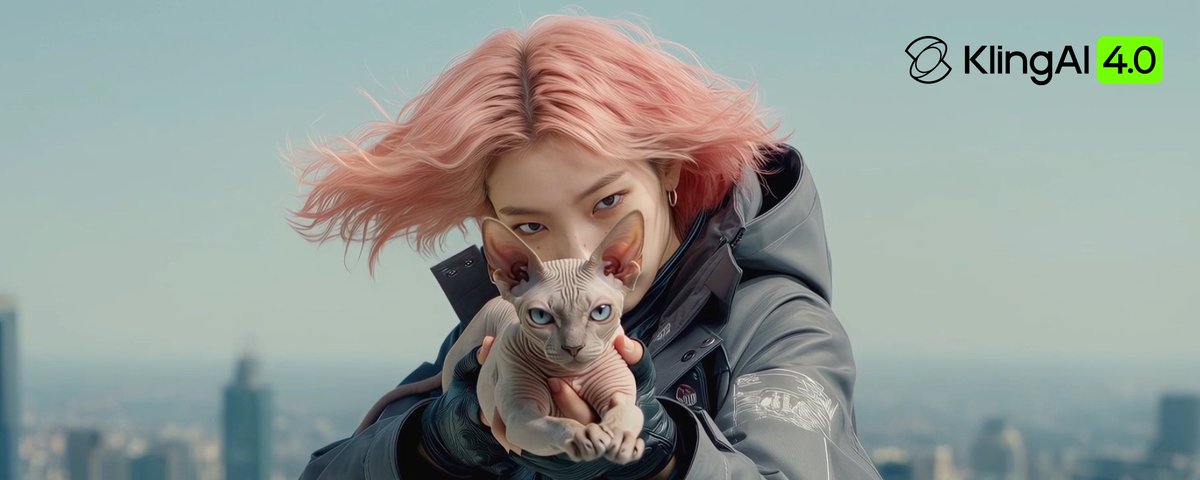
Kling 4.0 is now in closed beta, with an official launch coming this October.
Kling 4.0 brings video creation to a new level of visual realism, creative control, and narrative completeness, with upgraded audio and visuals, including stable dynamic motion, high-quality stereo audio, more accurate lip sync, up to 4K resolution, and 10-bit HDR output.
But specs only tell part of the story. What happens when you actually put Kling 4.0 to work?
To find out, we invited Johnson Sheng, Kling AI Creative Partner and Senior Creative Director at Ogilvy, to put Kling 4.0 through the lens of commercial production.
Let’s hear what he has to say.
## Notes from the Creator
Creator: Johnson Sheng
> Kling AI Creative Partner; Senior Creative Director at Ogilvy; Champion of WPP Future Readiness Shanghai. With 28 years of experience in advertising, film, and television production, he has long explored ways to integrate innovative technologies with traditional filmmaking expertise. He consistently evaluates AI video models against the standards of professional production and commercial delivery.
Ever since video generation models first emerged, Kling has stood in a league of its own, distinguished by its refined visual quality and richly layered dynamic performance.
Since the beginning of this year, the industry’s expectations for AI video generation have entered a new phase. Models are now expected not only to be more intelligent and better at understanding complex requirements, but also to support longer sequences and more stable multimodal references. As a result, omni-reference generation has become a mainstream approach.
After patiently waiting while the Kling team refined the model, Kling 4.0 is finally here. As a video creator, I couldn’t be more thrilled! With countless contenders showcasing their strengths and fierce competition unfolding across the industry, what an exciting time to be creating.
The moment I received access to test the model, I switched straight into strict-reviewer mode. Here is my hands-on assessment.
## 1. Cameras Move Boldly, Action Stays Steady
In my view, discussing a video model’s intelligence, aesthetics, understanding of editing, or multimodal editing capabilities before testing its stability during sweeping camera movements and dynamic motions is, frankly, a little disingenuous.
Stability is a non-negotiable benchmark—and one of the most critical factors in commercial delivery today. AI-generated video is already widely used in commercial advertising. Although it introduces a new production workflow, clients still judge the final content by traditional quality standards. Every AI-generated film intended for commercial release undergoes frame-by-frame review by both the agency and the client. Even the slightest blur is unacceptable.
In the past, producing commercial advertisements with AI often meant generating a huge number of takes and relying heavily on editing to piece together a sharp final cut from piles of unusable footage. To preserve visual quality, we frequently had to abandon ambitious dynamic-motion designs and compromise the story.
After using Kling 4.0, however, I found that creators no longer need to carry this concern. We can focus our energy entirely on refining the content. Let’s begin with a test clip.
<video controls preload="metadata" poster="/doc/7685/image/img_8a47e3eae29b.jpg" src="/videos/0994.mp4"></video>
The video shows a man performing a dodging motion while holding a “Cat Rifle.”
As you can see, the protagonist’s movements are crisp and decisive, without the slightest trace of ambiguity or blur. It is worth noting that this shot was not generated from an existing storyboard. Instead, it was created using only subject and scene assets. The model not only understood the physical relationship between the character and the cover in the environment, but also accurately rendered the character’s posture while holding the “Cat Rifle.” Kling’s comprehension has clearly reached another level.
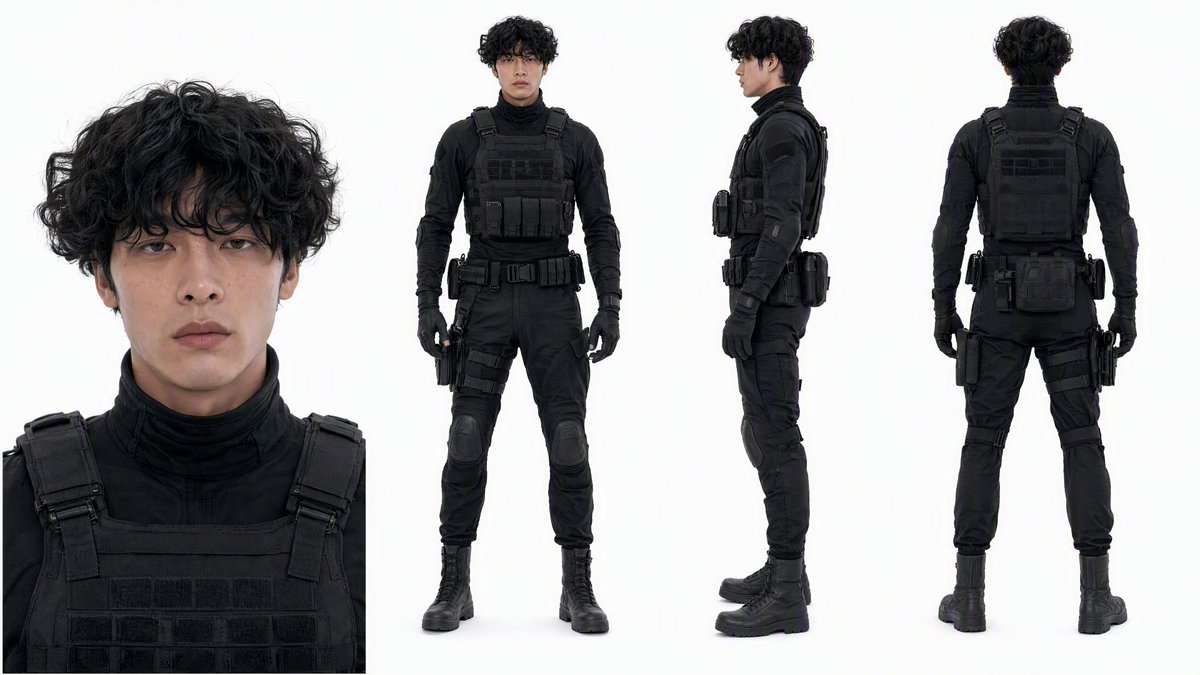
Subject and scene assets provided to the model
In another test scenario, the character’s movements remained stable even during a high-speed whip pan and a rapid handheld push-in. According to my setup, the character also had to fire the “Cat Rifle.” Many video models struggle to truly understand such unconventional props and the action logic associated with them, but Kling clearly understood exactly what I wanted. Here are the test results.
<video controls preload="metadata" poster="/doc/7685/image/img_d7ccf2430302.jpg" src="/videos/0995.mp4"></video>
In the high-speed whip pan shot, the character’s motion remains stable.
<video controls preload="metadata" poster="/doc/7685/image/img_b1f83dc59bd7.jpg" src="/videos/0996.mp4"></video>
In the handheld push-in shot, the character’s motion remains stable.
Of course, a few short clips are not enough to prove the point. The examples above are merely the basics. Next, it is time to turn up the intensity.
## 2. Long Takes Keep Flowing, Fight Scenes Stay Coherent
Kling 4.0 can now generate videos up to 30 seconds long. So, using just two subject assets and a single scene image, I put it straight to the test with a complete 30-second fight sequence.
<video controls preload="metadata" poster="/doc/7685/image/img_29b3246e4552.jpg" src="/videos/0997.mp4"></video>
Native 30s Fight Scene Video Generation
The result: stable from start to finish, with no visual breakdowns—and no slow motion used to disguise the difficulty of generation. More importantly, the fight is not simply a mechanical string of actions. It follows a clear logic: every move flows naturally into the next, while the characters continuously interact with their surroundings in real time—smashing bottles, vaulting over a sofa, crashing into a bookshelf, grabbing a book to use as a prop, and finally cracking the window glass under pressure.
The entire sequence was generated as a single, unedited take, and there is almost nothing to fault. The only minor hiccup is the eye-poking move at the end, which looks unintentionally amusing—but that has more to do with my prompt than the model itself.
The prompt used for this test was an 1,000-character prompt written with Skill. The model accurately interpreted the creative intent within such a long block of text while executing complex actions and spatial relationships. This demonstrates a clear improvement in its ability to understand long prompts and complex requirements. With the dynamic-motion test passed, the next thing to examine is another core capability that directly affects commercial viability: consistency.
## 3. Scenes Keep Changing, Faces Stay Consistent
Maintaining consistency has long been a major disadvantage in video generation. Once a subject library is established, Kling 4.0 performs exceptionally well at preserving consistency across characters, props, and environments. At the same time, its rendering of lighting and color within the same scene retains the nuanced quality for which Kling is known. For this test, I provided specific reference images of the environment and the prop, then had two characters move between scenes while fighting over a cross-shaped lockbox. Here are the results:

Reference images for the scene and prop
<video controls preload="metadata" poster="/doc/7685/image/img_cfe83523c21a.jpg" src="/videos/0998.mp4"></video>
Once again, the video was generated as a single, unedited take. The model independently worked out the different camera angles within the library setting. Meanwhile, the cross-shaped lockbox—the central prop driving the story—remained stable throughout, with no changes to its shape or details across shots.
You could replace this cross-shaped lockbox with a can of cola, a smartphone, or any hero product featured in a commercial. Omni Reference can reliably present a product from different angles while maintaining its consistency across shots. For commercial advertising, this is exactly the kind of model capability that is urgently needed—and one that delivers substantial value.
## 4. Lines Carry Emotion, Performances Feel Human
A commercial cannot rely on action and product shots alone. Whether a character’s delivery feels human and whether the emotion lands accurately directly determine the credibility of the entire film. Advertising lines, in particular, should never be delivered in a mechanical, hard-sell manner. Warm, enthusiastic, authoritative, rousing, or restrained with a clear sense of boundaries—each advertising scenario calls for a distinctly different attitude and tone.
Character performance and cinematic expression have always been among Kling’s strengths. As early as the Kling 3.0 era, its character performances were already excellent. So this time, I did not deliberately design an overly elaborate or in-depth test; I simply ran a few demos to validate the capability. With the same voice-over line, even slight adjustments to the prompt are enough to produce performances with distinctly different attitudes, emotions, and tones.
<video controls preload="metadata" poster="/doc/7685/image/img_a11e9c9c80f2.jpg" src="/videos/0999.mp4"></video>
Version 1: Original
<video controls preload="metadata" poster="/doc/7685/image/img_9e33538d2e36.jpg" src="/videos/1000.mp4"></video>
Version 1 with “the man suddenly smiles” added to the prompt
<video controls preload="metadata" poster="/doc/7685/image/img_740fc36d1f47.jpg" src="/videos/1001.mp4"></video>
Version 1 with “the woman remains still” added to the prompt
Generation in multiple languages is likewise already a fundamental capability and hardly needs further explanation. The demo below also highlights another detail: even when the scene changes, the model can maintain narrative continuity and preserve context across shots.
<video controls preload="metadata" poster="/doc/7685/image/img_4b49a7e568d5.jpg" src="/videos/1002.mp4"></video>
## Looking Ahead
Kling has always been my first choice for dialogue-driven scenes. Its strengths in character performance, cinematic expression, and nuanced emotion are unmistakable.
Now, Kling 4.0 has filled the gap in dynamic motions, making it undeniably compelling for creators. Kling 4.0 was truly worth the wait. As a creator, I could not be happier to work with it.
## 相关链接
- [Kling AI](https://x.com/Kling_ai)
- [@Kling_ai](https://x.com/Kling_ai)
- [11K](https://x.com/Kling_ai/status/2105986483337167115/analytics)
- [Upgrade to Premium](https://x.com/i/premium_sign_up)
- [7:41 PM · Oct 2, 2026](https://x.com/Kling_ai/status/2105986483337167115)
- [11.4K Views](https://x.com/Kling_ai/status/2105986483337167115/analytics)
- [View quotes](https://x.com/Kling_ai/status/2105986483337167115/quotes)
---
*导出时间: 2026/10/3 07:10:05*
---
## 中文翻译
# Johnson Sheng:Kling 4.0 绝对值得等待!
**作者**: Kling AI
**日期**: 2026-10-02T11:41:19.000Z
**来源**: [https://x.com/Kling_ai/status/2105986483337167115](https://x.com/Kling_ai/status/2105986483337167115)
---

Kling 4.0 现已进入封闭测试阶段,并将于今年 10 月正式发布。
Kling 4.0 将视频创作提升到了视觉真实感、创作控制力和叙事完整性的全新高度,音频与画面全面升级,包括稳定的动态动作、高质量立体声音频、更精准的口型同步、最高 4K 分辨率以及 10-bit HDR 输出。
但参数只能说明一部分问题。当你真正把 Kling 4.0 投入实际使用时,效果如何?
为了找到答案,我们邀请了 Kling AI 创作合伙人、奥美高级创意总监 Johnson Sheng,从商业制作的视角对 Kling 4.0 进行实测。
让我们听听他的评价。
## 创作者简介
创作者:Johnson Sheng
> Kling AI 创作合伙人;奥美高级创意总监;WPP Future Readiness 上海站冠军。他拥有 28 年广告、影视制作经验,长期探索如何将创新技术与传统影视制作经验相融合。他始终以专业制作和商业交付的标准来评判 AI 视频模型。
自从视频生成模型问世以来,Kling 一直独树一帜,以精致的画面质感和层次丰富的动态表现而著称。
今年以来,行业对 AI 视频生成的期待进入了新阶段。人们不仅要求模型更智能、更能理解复杂需求,还要求其支持更长的序列和更稳定的多模态参考。因此,全参考(omni-reference)生成已成为主流方向。
在耐心等待 Kling 团队打磨模型之后,Kling 4.0 终于来了。作为一名视频创作者,我激动不已!在无数竞争者各显神通、行业竞争激烈的当下,正是创作的黄金时代。
拿到测试权限的那一刻,我立刻切换到了严格评审模式。以下是我的实测心得。
## 1. 镜头大胆运动,动作依旧稳定
在我看来,如果还没有测试模型在大范围运镜和动态动作中的稳定性,就先谈论其智能程度、美学水平、剪辑理解或多模态剪辑能力,坦白说有些本末倒置。
稳定性是不可妥协的基准——也是当今商业交付中最关键的因素之一。AI 生成的视频已广泛应用于商业广告。虽然它引入了全新的制作流程,但客户仍然以传统的质量标准来评判最终内容。每一部用于商业发布的 AI 影片,都要经过代理公司和客户的逐帧审查。哪怕最轻微的模糊都是不可接受的。
过去,用 AI 制作商业广告往往意味着生成大量条次,并严重依赖剪辑,从一堆无法使用的素材中拼凑出一条清晰的成片。为了保证画面质量,我们经常不得不放弃雄心勃勃的动态动作设计,牺牲故事本身。
然而,使用 Kling 4.0 之后,我发现创作者不再需要为此担忧。我们可以把全部精力放在打磨内容上。先来看一段测试片段。
<video controls preload="metadata" poster="/doc/7685/image/img_8a47e3eae29b.jpg" src="/videos/0994.mp4"></video>
视频中,一名男子手持“猫步枪”做出闪避动作。
可以看到,主角的动作干脆利落,没有丝毫含糊或模糊。值得注意的是,这个镜头并非基于现有的分镜故事板生成,而是仅使用主体和场景素材创作的。模型不仅理解了角色与环境中遮蔽物之间的物理关系,还准确呈现了角色持“猫步枪”时的姿态。Kling 的理解力显然又上了一个台阶。

提供给模型的主体和场景素材
在另一个测试场景中,即使在高速甩镜和快速手持推近的镜头下,角色的动作依然保持稳定。按照我的设定,角色还必须开枪射击“猫步枪”。许多视频模型都难以真正理解这类非常规道具及其相关的动作逻辑,但 Kling 显然完全明白我想要什么。以下是测试结果。
<video controls preload="metadata" poster="/doc/7685/image/img_d7ccf2430302.jpg" src="/videos/0995.mp4"></video>
在高速甩镜镜头中,角色动作保持稳定。
<video controls preload="metadata" poster="/doc/7685/image/img_b1f83dc59bd7.jpg" src="/videos/0996.mp4"></video>
在手持推近镜头中,角色动作保持稳定。
当然,几个短片还不足以证明观点。上面的例子只是基础操作。接下来,是时候加大强度了。
## 2. 长镜头持续流动,打斗场景保持连贯
Kling 4.0 现在可以生成长达 30 秒的视频。于是,我仅使用两个主体素材和一张场景图,直接用一段完整的 30 秒打斗序列进行测试。
<video controls preload="metadata" poster="/doc/7685/image/img_29b3246e4552.jpg" src="/videos/0997.mp4"></video>
原生 30 秒打斗场景视频生成
结果是:从头到尾保持稳定,没有画面崩坏——也没有用慢动作来掩盖生成难度。更重要的是,这段打斗并不是机械的动作串联,而是遵循清晰的逻辑:每一招都自然衔接下一招,同时角色与周围环境实时互动——砸碎酒瓶、翻越沙发、撞上书架、抓起一本书作为道具,最后在压力下击碎窗户玻璃。
整个序列是一次性生成、未经剪辑的单个镜头,几乎无可挑剔。唯一的小瑕疵是结尾的戳眼动作,看起来有些莫名的滑稽——但这更多是我提示词的问题,而不是模型本身。
这次测试使用的提示词是用 Skill 编写的 1000 字长提示词。模型在执行复杂动作和空间关系的同时,准确理解了这么长文本中的创作意图。这表明它在理解长提示词和复杂需求方面的能力有了明显提升。动态动作测试通过之后,接下来要考察的是另一项直接影响商业可行性的核心能力:一致性。
## 3. 场景不断变换,面孔始终一致
保持一致性一直是视频生成领域的一大短板。建立主体库后,Kling 4.0 在保持角色、道具和环境的一致性方面表现出色。同时,它对同一场景中光影和色彩的呈现,依然保留了 Kling 一贯的细腻质感。在这次测试中,我提供了环境和道具的特定参考图,然后让两个角色在场景之间移动并争夺一个十字形保险箱。以下是结果:

场景和道具的参考图
<video controls preload="metadata" poster="/doc/7685/image/img_cfe83523c21a.jpg" src="/videos/0998.mp4"></video>
再次强调,这段视频是一次性生成、未经剪辑的单个镜头。模型独立完成了图书馆场景中不同机位的切换。与此同时,作为推动故事发展的核心道具——十字形保险箱——始终保持稳定,在不同镜头之间没有形状或细节的变化。
你可以把这个十字形保险箱换成一罐可乐、一部智能手机,或任何商业广告中的主角产品。全参考(Omni Reference)能够从不同角度可靠地呈现产品,同时保持其在各个镜头之间的一致性。对于商业广告而言,这正是迫切需要的模型能力——也是能带来巨大价值的能力。
## 4. 台词饱含情感,表演真实动人
一部商业广告不能只靠动作和产品镜头。角色的表达是否真实、情感是否准确,直接决定了整部影片的可信度。尤其是广告台词,绝不能以机械的硬广方式呈现。温暖、热情、权威、激昂,或克制而有分寸感——每一种广告场景都需要截然不同的态度和语气。
角色表演和电影化表达一直是 Kling 的强项。早在 Kling 3.0 时代,其角色表演就已经非常出色。所以这次,我没有刻意设计过于复杂或深入的测试,只是运行了几个示例来验证能力。使用同一条画外音台词,只需对提示词稍作调整,就能生成态度、情感和语气截然不同的表演。
<video controls preload="metadata" poster="/doc/7685/image/img_a11e9c9c80f2.jpg" src="/videos/0999.mp4"></video>
版本 1:原始版本
<video controls preload="metadata" poster="/doc/7685/image/img_9e33538d2e36.jpg" src="/videos/1000.mp4"></video>
在提示词中加入“男人突然微笑”后的版本 1
<video controls preload="metadata" poster="/doc/7685/image/img_740fc36d1f47.jpg" src="/videos/1001.mp4"></video>
在提示词中加入“女人保持静止”后的版本 1
多语言生成同样已是基础能力,无需多言。下面的演示还展示了另一个细节:即使场景发生变化,模型也能保持叙事的连贯性,并跨镜头保留上下文。
<video controls preload="metadata" poster="/doc/7685/image/img_4b49a7e568d5.jpg" src="/videos/1002.mp4"></video>
## 展望未来
对于以对话为主的场景,Kling 一直是我的首选。它在角色表演、电影化表达和细腻情感方面的优势毋庸置疑。
如今,Kling 4.0 补齐了动态动作方面的短板,对创作者而言无疑极具吸引力。Kling 4.0 真的值得等待。作为一名创作者,能与它合作,我感到无比欣喜。
## 相关链接
- [Kling AI](https://x.com/Kling_ai)
- [@Kling_ai](https://x.com/Kling_ai)
- [11K](https://x.com/Kling_ai/status/2105986483337167115/analytics)
- [升级至高级版](https://x.com/i/premium_sign_up)
- [2026年10月2日 晚上7:41](https://x.com/Kling_ai/status/2105986483337167115)
- [11.4K 次浏览](https://x.com/Kling_ai/status/2105986483337167115/analytics)
- [查看引用](https://x.com/Kling_ai/status/2105986483337167115/quotes)
---
*导出时间: 2026/10/3 07:10:05*