# Naval Ravikant: Apple is dead, SaaS is next, you have 18 months
**作者**: Mustufa Khan
**日期**: 2026-04-29T15:57:22.000Z
**来源**: [https://x.com/mustufa4socials/status/2049518414377480218](https://x.com/mustufa4socials/status/2049518414377480218)
---
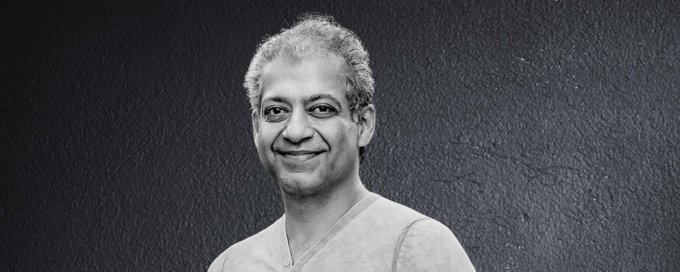
Apple is already dead. They just haven't filed the paperwork.
That's not a hot take. It's a structural read on what just happened in the last six months & what Naval Ravikant confirmed on his podcast last week. The most patient investor in tech & one of the sharpest capital allocators of the last 20 years just gave a verdict on the entire software industry: pure software is uninvestable.
If you're a founder reading this, the question isn't whether you believe it. The question is whether you have 18 months to reposition before the market notices.
For context: Naval founded AngelList, was an early investor in Twitter, Uber, Notion & roughly 200 other companies that shaped the last decade of tech. He doesn't post often. When he does, he picks his words like a man who knows they'll be quoted back at him for years. So when he says "pure software is uninvestable" with no qualifier, it's not commentary. It's a call.
Here's what he said & what it means for everyone building right now.
## No one can stop Apple's structural death
Apple isn't going bankrupt. Apple won't disappear from your pocket next year. The collapse Naval is describing isn't operational. It's economic.
Apple's entire $3 trillion valuation rests on one thing: premium hardware margins justified by superior software experience. Take that experience away & Apple becomes Samsung with better build quality. That's exactly what's happening.
The interface layer is commoditizing in real time. Within 24 months, most people won't open apps the way they do today. They'll talk to an agent. The agent will generate whatever interface they need on the fly. Apple's curated app store, the human interface guidelines, the design polish, the ecosystem lock-in - all of it becomes irrelevant when the interface itself is generated in real time by an AI that runs on any phone.
Apple's response to this transition? They licensed Gemini from Google. Their own AI bet underdelivered. The company that built its entire identity on owning the experience layer just outsourced the experience layer to its biggest competitor.
This is the Microsoft-after-mobile playbook running in fast-forward.
Microsoft missed mobile because they refused to build a touch-native OS from the ground up. Their dominance in the previous era convinced them the old paradigm would hold. By the time they accepted the new one, Apple had already won the next decade. Microsoft is still worth $3T today, but Microsoft Windows lost the consumer war they could have won.
Apple is making the exact same mistake right now with AI. They're betting their hardware-first identity will carry them through the agent transition. It won't. When the OS commoditizes, Apple's margins compress to commodity hardware levels. That's a structural revenue collapse in their highest-margin segment, the one that funds everything else.
You can hold Apple stock through this. Just don't pretend you're holding a growth company.
The most valuable hardware company in history is about to find out what its hardware is worth without the software moat.
## If your moat is software, you have 18 months
Now the harder part if you're a founder.
Naval said pure software is uninvestable. He's right. But he didn't unpack what that means for the tens of thousands of SaaS companies currently sitting on Series A & Series B valuations they raised in a different world.
It means most of them are already dead. They just don't know it yet.
Here's the math. Your SaaS company exists because building your product was hard. You raised capital because technical execution required a team. Your moat, whether you admit it out loud or not, is the difficulty of replicating what you built.
That difficulty just collapsed.
A 2-person team using Claude Code can now replicate 80% of most B2B SaaS products in under 90 days. Not a toy version. A working version. With proper architecture, basic security, room to scale. The remaining 20% - your specific integrations, your enterprise sales motion, your compliance stack - is real. But it's not a moat. It's friction. & friction gets compressed by the next generation of agents shipping every quarter.
Look at what's already happening. Adobe acquired Figma for $20B in 2022 because Figma's product was structurally hard to build. Today, design tools with 70% of Figma's core functionality are being shipped by solo developers in months. Salesforce is the most valuable SaaS company in history. AI-native CRMs that didn't exist 18 months ago are already eating its mid-market. Workday. ServiceNow. Atlassian. Asana. Every one of them is now a candidate for replacement by an AI-native alternative built by a team smaller than their HR department.
The companies that survive this transition won't be the ones with the best software. The software is going to zero. The companies that survive will be the ones that built something the AI cannot copy:
Distribution. Network effects. Data flywheels. Hardware integration. Brand. Community. Regulatory depth. These are the only durable defenses left in the new world.
If your honest answer to "what's our moat" is "our product is just better" - you have 18 months to find a real moat or you're going to watch your valuation compress by 70-90% on your next round.
The founders who survive this transition are the ones reading articles like this & taking the call seriously today. The ones who dismiss it as hype are the ones writing layoff posts on LinkedIn in 2027 wondering how it happened so fast.
Which one are you?
## The companies that win the next decade aren't building software
So if pure software is dead, what's actually investable? Naval was specific on the podcast: hardware, AI models & network effect businesses. Let me extend that into something founders can actually act on this quarter.
Distribution as the new moat.
The companies winning today aren't the ones with the best products. They're the ones with the most direct relationships with customers. The product is just the artifact through which you serve them. Your audience is your moat. Your email list is your moat. Your community is your moat. Your reputation is your moat.
If you're a founder who still thinks "marketing" is a phase you do after the product is ready, you've already lost. Marketing IS the product now. The product is downstream of attention.
Network effects compounding.
The businesses that survive AI commoditization are the ones where value comes from other users, not from features. Discord. Roblox. LinkedIn. Reddit. These are uncopyable not because their software is sophisticated, but because their users are locked in by other users.
If your product gets meaningfully better as more people use it, you're durable. If your product works the same whether you have 100 users or 100,000, you're cooked. AI agents can replicate features. They cannot replicate communities.
Data flywheels.
The companies that train better models, gather proprietary data through user interaction & build feedback loops competitors cannot replicate are durable. Tesla's autopilot data. Bloomberg's terminal data. The data compounds. Software wrappers around commodity data do not.
If your product generates unique data with every user interaction, you have something. If your product is a UI on top of public APIs, you don't.
Hardware integration.
The companies that own physical layers are protected longest. Tesla. Anduril. SpaceX. Apple's chip business (not Apple's app business). Boston Dynamics. Hardware is hard. AI doesn't manufacture chips or batteries or rockets. The physical world remains the longest-lasting moat in the entire economy.
Vertical depth.
The horizontal SaaS giants are exposed. The vertical specialists who own a specific industry's workflow, data & relationships are not. A general-purpose project management tool is dead. A construction-specific platform that owns the permitting workflow, the inspector network & the regulatory data is not. Going deep into one industry beats going broad across ten.
If you're rebuilding strategy right now, this is the question: which of these moats can you build into your business in the next 12 months? Not someday. Now. Because the founders who reposition first capture the survivors' market share when the rest fold.
## The other side of the collapse is the largest opportunity in history
Here's the part most founders miss when they read about software dying. They focus on what's being destroyed. They miss what's becoming possible.
Naval's most bullish frame on the podcast: software is entering a renaissance for individual creators. Not the death of software. The democratization of it.
The historical pattern was already there. Notch shipped Minecraft solo. Markus Frind ran Plenty of Fish to $10M in annual profit alone. The original Instagram team was 13 people when Facebook acquired them for $1B. WhatsApp had 55 employees at its $19B exit. Every one of these companies represented one person's uncompromised vision making it through to product without the dilution that comes from coordinating across a team.
Each was an outlier. They shouldn't have been possible at the scale they reached.
What changes now is the ceiling. Previously, a solo founder could build something interesting but would hit hard walls at scale. The team had to grow. The compromises started. The vision diluted. The thing that made the product special got sanded down by the same forces that sand down every product run by committee.
Naval's vision is a 1-person company that operates with the velocity of a 50-person team. Users report bugs through an in-app button. The agent reviews reports every 24 hours. The agent writes fixes, opens pull requests, runs tests. The founder reviews, approves, ships. Customer support is handled by an agent that can also write code to fix the underlying issues. Feature requests get voted on by users, the agent builds them, the founder gates quality.
No coordination overhead. No politics. No compromised vision. No engineers pushing back on edge cases that matter to the founder. No designers fighting over icon placement. No PMs watering down the bold version into the safe version.
The founder's vision goes from brain to ship without dilution.
This isn't theoretical. It's happening right now in pockets. Pieter Levels has built multiple 7-figure businesses as a solo operator. A growing list of indie hackers are running businesses that would have required Series A funding three years ago. The AI-native solo operator movement is producing outcomes the venture industry hasn't priced yet.
The next billion-dollar company might have one employee. The next decacorn might have under ten.
If you're a creator, operator, marketer or founder who has been waiting for permission to build, the permission just arrived. The technical bottleneck is gone. The activation energy collapsed. The only thing standing between you & a real business now is whether you have something to say, the taste to know what good looks like & the discipline to ship it.
This is either the worst time in history to be building generic software, or the best time in history to be building something with edge.
Both are true. Which one applies to you depends entirely on what you do in the next 18 months.
## The 18-month window is open right now
You have three options from here.
Option one: dismiss this as hype. Convince yourself Apple is too big to fail, your SaaS company is different, the AI coding agents are overhyped, this will all settle down. You'll be in good company. Most founders will choose this. Most founders will lose.
Option two: panic. Cut runway suddenly, fire your team, pivot wildly. This is what happens when the realization hits late. The founders who get destroyed by this transition aren't the ones who saw it coming. They're the ones who saw it 12 months too late & had to reposition under stress, with no runway, no time to test & no leverage.
Option three: take the 18-month window seriously. Audit your moat honestly. Build distribution before you need it. Find the angles AI cannot replicate. Position for the world that's coming, not the one you wish would stay.
Naval picked his words carefully. "Pure software is uninvestable. Full stop." That's not a man hedging. That's a call from someone who has spent two decades deciding what's worth funding & has now decided most of what's getting funded today isn't.
Apple is dead. Most SaaS founders are next. & the founders who survive will be the ones who heard this & did something before everyone else figured it out.
The window is open right now. It will not be open forever.
The question is whether you spend the next 18 months building the moat that survives, or watching the one you have erode in real time.
Most won't make it. Some will. The difference is what you do this quarter.
## 相关链接
- [Mustufa Khan](https://x.com/mustufa4socials)
- [@mustufa4socials](https://x.com/mustufa4socials)
- [801K](https://x.com/mustufa4socials/status/2049518414377480218/analytics)
- [$3T](https://x.com/search?q=%243T&src=cashtag_click)
- [$20B](https://x.com/search?q=%2420B&src=cashtag_click)
- [$10M](https://x.com/search?q=%2410M&src=cashtag_click)
- [$1B](https://x.com/search?q=%241B&src=cashtag_click)
- [$19B](https://x.com/search?q=%2419B&src=cashtag_click)
- [Upgrade to Premium](https://x.com/i/premium_sign_up)
- [11:57 PM · Apr 29, 2026](https://x.com/mustufa4socials/status/2049518414377480218)
- [801.7K Views](https://x.com/mustufa4socials/status/2049518414377480218/analytics)
- [View quotes](https://x.com/mustufa4socials/status/2049518414377480218/quotes)
---
*导出时间: 2026/4/30 11:29:33*
---
## 中文翻译
# Naval Ravikant:苹果已死,SaaS 是下一个,你只有 18 个月
**作者**: Mustufa Khan
**日期**: 2026-04-29T15:57:22.000Z
**来源**: [https://x.com/mustufa4socials/status/2049518414377480218](https://x.com/mustufa4socials/status/2049518414377480218)
---

Apple has already died. They just haven't filed the paperwork.
这并非博眼球的激进言论。这是对过去六个月发生之事的结构性解读,也是 Naval Ravikant 上周在他的播客中证实的观点。这位科技界最有耐心的投资者、过去 20 年里最敏锐的资本配置者之一,刚刚对整个软件行业做出了判决:纯软件不再值得投资。
如果你是一位正在阅读此文的创始人,问题不在于你是否相信这一点。问题在于,在市场察觉之前,你是否还有 18 个月的时间来重新定位。
作为背景:Naval 创立了 AngelList,是 Twitter、Uber、Notion 以及大约 200 多家其他塑造了过去十年科技格局的公司的早期投资者。他不经常发帖。当他发帖时,他斟词酌句,就像一个知道自己这些话会被在未来几年反复引用的人。因此,当他毫无保留地说“纯软件不再值得投资”时,这不仅仅是在发表评论。这是行动的号角。
以下是他所说的话,以及这对当下每一位建设者意味着什么。
## 没人能阻止苹果的结构性死亡
苹果不会破产。明年苹果也不会从你的口袋里消失。Naval 所描述的崩塌并非运营层面的,而是经济层面的。
苹果整个 3 万亿美元的估值建立在一件事之上:凭借卓越的软件体验来证明其硬件溢价是合理的。一旦这种体验被剥离,苹果就变成了做工更好的三星。而这正在发生。
交互层正在实时大众化。在 24 个月内,大多数人将不再像今天那样打开应用程序。他们将与一个智能体对话。智能体将即时生成他们所需的任何界面。苹果精心策划的应用商店、人机交互指南、设计打磨、生态系统锁定——当界面本身由运行在任何手机上的 AI 实时生成时,所有这些都将变得无关紧要。
苹果对这一转型的应对?他们授权使用了 Google 的 Gemini。他们自己在 AI 上的押注未能兑现。这家将整个身份建立在“拥有体验层”之上的公司,刚刚把体验层外包给了它最大的竞争对手。
这就是微软错失移动互联后的剧本,正在以快进的方式重演。
微软错失了移动时代,因为他们拒绝从头开始构建原生触摸操作系统。他们在旧时代的统治地位让他们确信旧范式依然有效。当他们接受新范式时,苹果已经赢得了下一个十年。微软今天的市值依然高达 3 万亿,但微软 Windows 输掉了本该赢得的消费者战争。
苹果此刻正在 AI 领域犯着完全相同的错误。他们赌上自己“硬件优先”的身份能帮助他们度过智能体的转型期。但这行不通。当操作系统大众化时,苹果的利润率将压缩至大众化硬件的水平。这是其利润率最高的板块——即资助其他所有业务的板块——结构性收入的崩塌。
你可以在这场转型中继续持有苹果股票。但不要自欺欺人地以为你持有的是一家成长型公司。
这家历史上最有价值的硬件公司将很快发现,当失去软件护城河时,其硬件到底值多少钱。
## 如果你的护城河是软件,你只有 18 个月
现在来说更难的部分,如果你是一位创始人。
Naval 说纯软件不再值得投资。他是对的。但他没有具体拆解这对数以千计的 SaaS 公司意味着什么,这些公司目前坐拥 A 轮和 B 轮的估值,却是在一个不同的世界里融到的资。
这意味着它们中的大多数已经死了。只是它们自己还不知道。
算一笔账。你的 SaaS 公司之所以存在,是因为构建你的产品很难。你融资是因为技术执行需要一个团队。你的护城河——无论你是否大声承认——是复制你所构建之物的难度。
这种难度刚刚崩塌了。
一个使用 Claude Code 的两人团队,现在可以在 90 天内复制 80% 的 B2B SaaS 产品。不是玩具版本。是可运行的版本。具备合理的架构、基本的安全性、以及扩展的空间。剩下的 20%——你特有的集成、你的企业销售机制、你的合规堆栈——是真实的。但这不是护城河。这是摩擦力。而摩擦力会被每个季度发布的下一代智能体压缩。
看看已经发生的事情吧。Adobe 在 2022 年以 200 亿美元收购了 Figma,因为 Figma 的产品在结构上很难构建。而今天,拥有 Figma 70% 核心功能的设计工具正由独立开发者在数月内发布。Salesforce 是历史上最有价值的 SaaS 公司。18 个月前还不存在的 AI 原生 CRM 已经在蚕食其中端市场。Workday。ServiceNow。Atlassian。Asana。它们中的每一个现在都面临着被 AI 原生的替代品取代的可能,而构建这些替代品的团队比它们的人力资源部门还要小。
能熬过这次转型的公司,不会是那些拥有最好软件的公司。软件正在归零。能生存下来的公司,是那些构建了 AI 无法复制的东西的公司:
分销渠道。网络效应。数据飞轮。硬件整合。品牌。社区。监管深度。这些是新世界中仅存的持久防御。
如果你对“我们的护城河是什么”的诚实回答是“我们的产品就是更好”——那你还有 18 个月的时间去寻找一个真正的护城河,否则你将眼睁睁看着你的估值在下一轮融资中缩水 70-90%。
能熬过这次转型的创始人,是那些正在阅读此类文章并在今天认真对待这一号角的人。那些将其斥为炒作的人,将是那些在 2027 年在 LinkedIn 上发裁员帖、纳闷这一切为何发生得如此之快的人。
你是哪一种?
## 赢得下一个十年的公司不再是在构建软件
那么,如果纯软件已死,到底什么才值得投资?Naval 在播客中明确指出:硬件、AI 模型和网络效应业务。让我将其扩展为创始人本季度即可付诸行动的方向。
作为新护城河的分销渠道。
如今获胜的公司,不是那些拥有最好产品的公司。它们是那些与客户拥有最直接关系的公司。产品只是你服务客户的载体。你的受众是你的护城河。你的邮件列表是你的护城河。你的社区是你的护城河。你的声誉是你的护城河。
如果你是一位仍然认为“营销”是产品准备好之后才进行的一个阶段的创始人,你已经输了。营销即产品。产品是注意力的下游。
网络效应的复利。
能在 AI 大众化中生存的业务,是那些价值来自其他用户而非功能的业务。Discord。Roblox。LinkedIn。Reddit。这些之所以无法被复制,不是因为它们的软件有多精妙,而是因为它们的用户被其他用户锁定了。
如果你的产品随着更多人的使用而变得更好,你就是持久的。如果你的产品无论有 100 个用户还是 10 万个用户都运行如一,你就完了。AI 智能体可以复制功能。它们无法复制社区。
数据飞轮。
那些能训练出更好的模型、通过用户交互收集专有数据并建立竞争对手无法复制的反馈回路的公司是持久的。特斯拉的自动驾驶数据。彭博的终端数据。数据会复利化。包裹在大众化数据之上的软件包装则不会。
如果你的产品在每次用户交互时都能产生独特数据,你就拥有了一些东西。如果你的产品只是公共 API 之上的一个用户界面,那你就没有。
硬件整合。
拥有物理层的公司受到的保护最长久。特斯拉。Anduril。SpaceX。苹果的芯片业务(不是苹果的应用业务)。波士顿动力。硬件很难。AI 不会制造芯片、电池或火箭。物理世界仍然是整个经济中最持久的护城河。
垂直深度。
横向的 SaaS 巨头暴露无遗。而拥有特定行业工作流、数据和关系的垂直专家则不然。通用的项目管理工具已死。而拥有许可流程、检查员网络和监管数据的建筑专用平台则不会。深耕一个行业胜过横跨十个行业。
如果你正在重建战略,现在的关键是:在未来 12 个月内,你能将这些护城河中的哪一个构建到你的业务中?不是“某一天”。而是“现在”。因为当其余公司倒闭时,最先重新定位的创始人将捕获幸存者的市场份额。
## 崩塌的另一面是历史上最大的机会
这是大多数创始人在读到软件消亡时会错过的部分。他们关注的是正在被毁灭的东西。他们错过了正在变得可能的东西。
Naval 在播客中最看多的框架:软件正在进入个人创作者的复兴。不是软件的消亡。而是软件的民主化。
历史模式已经存在。Notch 独自发布了 Minecraft。Markus Frind 独自运营 Plenty of Fish 达到了 1000 万美元的年利润。最初的 Instagram 团队只有 13 人,当时 Facebook 以 10 亿美元收购了他们。WhatsApp 在其 190 亿美元的退出时只有 55 名员工。这些公司中的每一家都代表了一个人的纯粹愿景,在没有团队协调带来的稀释的情况下,成功转化为产品。
每一个都是异类。在它们达到的规模上,本不应该可能。
现在的变化在于上限。过去,独立创始人可以构建有趣的东西,但在规模化时会遭遇硬壁。团队必须扩张。妥协开始了。愿景被稀释。让产品变得特别的东西,被同样的力量磨平了,就像每一个由委员会运营的产品一样。
Naval 的愿景是一个以 50 人团队速度运营的一人公司。用户通过应用内按钮报告错误。智能体每 24 小时审查报告。智能体编写修复代码,开启拉取请求,运行测试。创始人审查、批准、发布。客户支持由能编写代码修复底层问题的智能体处理。功能请求由用户投票,智能体构建它们,创始人把控质量。
没有协调开销。没有办公室政治。没有妥协的愿景。没有工程师在创始人关心的边缘情况上推诿。没有设计师为了图标位置争吵。没有产品经理将大胆的版本稀释为安全的版本。
创始人的愿景从大脑直达发布,没有任何稀释。
这不是理论。这正在 pockets 中发生。Pieter Levels 作为独立运营者建立了多个七位数业务。越来越多的独立黑客正在经营着三年前需要 A 轮融资才能支撑的业务。AI 原生的单人运营者运动正在产出风险投资行业尚未定价的成果。
下一个十亿美元的公司可能只有一名员工。下一个独角兽可能只有不到十名员工。
如果你是一名一直在等待许可去建设的创作者、运营者、营销人员或创始人,许可刚刚到来。技术瓶颈消失了。激活能量崩塌了。现在阻碍你拥有一家真实业务的唯一事情是:你是否有话要说,是否有品味知道什么是好的,以及是否有纪律去发布它。
这要么是历史上构建大众化软件最糟糕的时刻,要么是历史上构建有棱角东西最好的时刻。
两者都是真的。哪一个适用于你,完全取决于你在接下来 18 个月里的行动。
## 18 个月的窗口期现在正开启
从现在起,你有三个选择。
选项一:将其斥为炒作。说服自己苹果太大而不倒,你的 SaaS 公司与众不同,AI 编码代理被过度吹捧,一切都会平息。你会有很多同伴。大多数创始人会选择这个。大多数创始人会输。
选项二:恐慌。突然削减跑道,解雇你的团队,疯狂转型。这是当意识到危机太晚时发生的事情。被这次转型摧毁的创始人,不是那些看到它到来的人。是那些晚看到 12 个月的人,他们不得不在没有跑道、没有时间测试、没有筹码的压力下重新定位。
选项三:认真对待这 18 个月的窗口期。诚实地审计你的护城河。在需要之前建立分销渠道。找到 AI 无法复制的角度。为即将到来的世界定位,而不是你希望留下的那个世界。
Naval 谨慎地选择了他的措辞。“纯软件不再值得投资。句号。”这不是一个在打太极的人。这是一个花了二十年时间决定什么值得资助的人发出的号角,而他现在决定,今天大多数获得资助的东西并不值得资助。
苹果已死。大多数 SaaS 创始人是下一个。而生存下来的创始人,将是那些听到这一点并在其他人弄清楚之前就采取行动的人。
窗口期现在正开启。它不会永远敞开。
问题是,你是花费接下来的 18 个月构建能生存的护城河,还是看着你现有的护城河在实时中侵蚀。
大多数人做不到。有些人会。区别在于你这个季度的行动。
## 相关链接
- [Mustufa Khan](https://x.com/mustufa4socials)
- [@mustufa4socials](https://x.com/mustufa4socials)
- [801K](https://x.com/mustufa4socials/status/2049518414377480218/analytics)
- [$3T](https://x.com/search?q=%243T&src=cashtag_click)
- [$20B](https://x.com/search?q=%2420B&src=cashtag_click)
- [$10M](https://x.com/search?q=%2410M&src=cashtag_click)
- [$1B](https://x.com/search?q=%241B&src=cashtag_click)
- [$19B](https://x.com/search?q=%2419B&src=cashtag_click)
- [Upgrade to Premium](https://x.com/i/premium_sign_up)
- [11:57 PM · Apr 29, 2026](https://x.com/mustufa4socials/status/2049518414377480218)
- [801.7K Views](https://x.com/mustufa4socials/status/2049518414377480218/analytics)
- [View quotes](https://x.com/mustufa4socials/status/2049518414377480218/quotes)
---
*导出时间: 2026/4/30 11:29:33*