# I spent 1,000 hours building AI agents. This one setup changed everything.
**作者**: Shruti
**日期**: 2026-04-17T16:14:54.000Z
**来源**: [https://x.com/heyshrutimishra/status/2045174169814671804](https://x.com/heyshrutimishra/status/2045174169814671804)
---
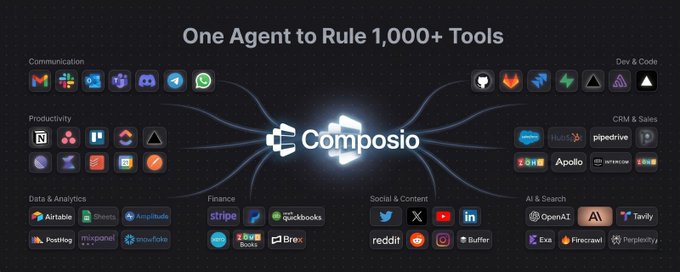
Your AI agent is only as powerful as what it can touch.
I have spent over 1,000 hours building AI agents. The models keep getting better. The same problem keeps showing up. And it has nothing to do with the model.
The real reason every agent project stalls
Most people think the hard part is the model. It is not. The model is the easy part.
The hard part is auth. Every tool your agent needs has its own OAuth setup, its own token system, its own permission model. That is one tool. You probably need fifteen.
For each one: register an app on their developer console, configure the OAuth client, build the token exchange flow, write refresh logic, manage permission scopes. Get any step wrong and your agent fails quietly. Get it right and you have built a mini token management system before any agent code exists.
Multiply that across Gmail, Slack, Notion, HubSpot, Linear. Each one is a separate developer console, a separate OAuth quirk. You stop building the agent and start becoming an auth engineer.
Three attempts. None of them worked.
First I built it myself: I spent far more time fixing auth issues than setting up the agent. Tokens kept expiring mid-run, and the agent would crash silently.
Then Zapier. Auth was handled. But every branch had to be pre-specified, the moment my agent needed to make a dynamic decision, Zapier could not follow.
Then API keys everywhere I could. Half the tools I needed were OAuth-only anyway. I was running a hybrid mess with no unified layer managing any of it.
Six hours of setup before anything useful happened. Every single project, rebuilt from scratch.
Then I found it
I found Composio through a tweet from someone with the same problem. One SDK, one auth layer. Every app is one-click for your user — no OAuth apps to register, no token refresh code to write, no developer console to touch.

I tested it on the integration that had cost me the most time: Google Calendar.
> Here is a live demo of how I connect Google Calendar in under 60 seconds.
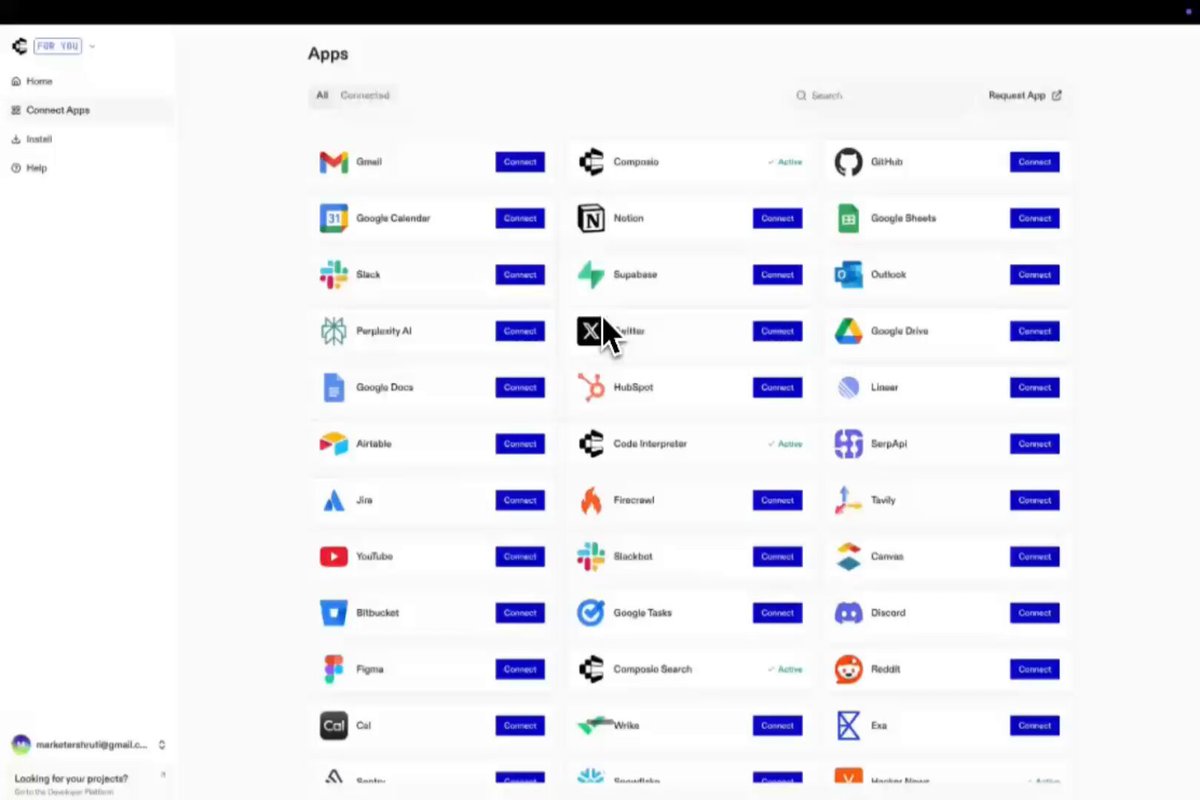
The same setup I had spent a full day on before — GCP app, OAuth consent screen, token refresh logic, credential debugging — done in 60 seconds. One auth layer. Every app in my stack is a single click away.
Every morning, instead of opening five tabs, I run one prompt:
> Check my sprint tasks and unread emails. Write a short brief: what is in progress, what needs my attention, and my top 3 priorities. Post it to Slack.
That is it. The agent reads my Notion sprints, scans my inbox, filters out the noise, writes the brief, and posts it formatted and ready before I have had my coffee.

Three tools. One prompt. Done in seconds.
This is not a chatbot. It is not copy-paste. The agent is actually reading live data, making decisions about what matters, and taking action across multiple apps simultaneously.
That is what execution looks like.
That was one workflow. Here is what opens up when your agent can reach everything.
What this unlocks
- Your product gets mentioned on Reddit or X. Your agent spots it, drafts a response matching your tone, and pings you on Slack for one-click approval.
- A candidate applies. Your agent scores the resume, checks their GitHub, drafts tailored interview questions, and creates a Notion entry. Before you open your inbox.
- Your PostHog data knows exactly where users are dropping off. Your agent reads it, figures out why, and files the fix as a Linear ticket before your PM even opens their laptop.
- You sent an important email 5 days ago. No reply. Your agent tracks it, sends a follow-up at the right time, and logs the thread. Deals stop dying in silence.
- AWS spike detected. Your agent pulls the logs, links it to the last GitHub deploy, writes an incident summary, and posts to Slack. You wake up to a full picture.
Where it falls short
I want to be honest about this because the honest review is always more useful.
- Your agent logic is still your problem. Composio handles auth and execution. If your agent makes a bad decision, sends the wrong email, or updates the wrong record, that is on you. Removing friction means mistakes happen faster too.
- Niche internal tools are not there yet. 1,000+ integrations covers most stacks. But if your workflow depends on a proprietary internal system or a very niche API, you still handle that yourself.
- It does not replace careful agent design. Just because your agent can write to every table in your Notion workspace does not mean it should. Access is easier now. That makes permission design more important, not less.
If I could change one thing: the observability layer. When something goes wrong mid-run, tracing exactly which tool call failed and why still takes more digging than it should. It is getting better. But for debugging complex multi-step agents, I want tighter logs out of the box.
The bigger picture
Step back from the tooling for a second.
For two years, AI got better at answering questions. Faster. Smarter. Cheaper.
But it still could not do the work.
You could ask your agent anything. It just could not act on the answer. You were still the one switching between apps, copying outputs, moving things forward manually.
The people who figure this out in the next 12 months will have an unfair advantage. One person doing what used to take a team. One founder running multiple businesses with an agent handling the execution while they sleep.
The bottleneck was never intelligence. It was execution. And execution is now solved. Give your agent hands.
> Most builders I know are still stuck on auth. Now you know why.
## 相关链接
- [Shruti](https://x.com/heyshrutimishra)
- [@heyshrutimishra](https://x.com/heyshrutimishra)
- [8.6K](https://x.com/heyshrutimishra/status/2045174169814671804/analytics)
- [Upgrade to Premium](https://x.com/i/premium_sign_up)
- [12:14 AM · Apr 18, 2026](https://x.com/heyshrutimishra/status/2045174169814671804)
- [8,662 Views](https://x.com/heyshrutimishra/status/2045174169814671804/analytics)
---
*导出时间: 2026/4/18 23:57:02*
---
## 中文翻译
# 我花了 1,000 小时构建 AI 智能体。这一种设置改变了一切。
**作者**: Shruti
**日期**: 2026-04-17T16:14:54.000Z
**来源**: [https://x.com/heyshrutimishra/status/2045174169814671804](https://x.com/heyshrutimishra/status/2045174169814671804)
---

你的 AI 智能体只能在其所能触及的范围内发挥作用。
我花了超过 1,000 小时构建 AI 智能体。模型变得越来越好。同样的问题却反复出现。这与模型本身毫无关系。
每个智能体项目停滞的真正原因
大多数人认为最难的部分是模型。其实不是。模型是简单的部分。
最难的部分是认证(auth)。你的智能体需要的每个工具都有自己的 OAuth 设置、自己的令牌系统、自己的权限模型。这只是一个工具。你可能需要十五个。
对于每一个工具:在他们的开发者控制台注册应用,配置 OAuth 客户端,构建令牌交换流程,编写刷新逻辑,管理权限范围。任何一步出错,你的智能体就会静默失败。即使做对了,你也得在编写任何智能体代码之前先构建一个迷你的令牌管理系统。
将这种情况乘以 Gmail、Slack、Notion、HubSpot、Linear。每一个都有独立的开发者控制台,各自独特的 OAuth 怪癖。你停止构建智能体,转而开始成为一名认证工程师。
三次尝试。无一奏效。
首先,我自己构建:我在修复认证问题上花费的时间远超设置智能体。令牌总是在运行中过期,智能体会悄无声息地崩溃。
然后是 Zapier。认证被处理了。但每个分支都必须预先指定,一旦我的智能体需要做出动态决策,Zapier 就无法跟进。
再然后是只要能用的地方都使用 API 密钥。但我需要的工具中有一半仅支持 OAuth。我运行着一个混杂的系统,没有统一的层来管理任何东西。
在做任何有用的事情之前,需要六个小时的设置。每一个项目,都要从零开始重建。
然后我找到了它
通过一条有同样问题的人发的推文,我发现了 Composio。一个 SDK,一个认证层。每个应用对用户来说都是一键完成——无需注册 OAuth 应用,无需编写令牌刷新代码,无需接触开发者控制台。

我在最耗时的集成上测试了它:Google Calendar。
> 下面是一个实时演示,展示了我如何在 60 秒内连接 Google Calendar。

以前我花了一整天时间才完成的设置——GCP 应用、OAuth 同意屏幕、令牌刷新逻辑、凭证调试——现在 60 秒搞定。一个认证层。我技术栈中的每个应用都只需点击一下。
每天早上,我不会打开五个标签页,而是运行一个提示词:
> 检查我的冲刺任务和未读邮件。写一份简报:进行中的工作、需要注意的事项以及我的前 3 个优先事项。将其发布到 Slack。
就这样。智能体读取我的 Notion 冲刺,扫描我的收件箱,过滤掉噪音,编写简报,并在我喝完咖啡之前将其格式化并发布。

三个工具。一个提示词。几秒钟内完成。
这不是聊天机器人。也不是复制粘贴。智能体实际上是在读取实时数据,对重要事项做出决策,并跨多个应用同时采取行动。
这就是执行的样子。
那只是一个工作流。当你的智能体能够触达一切时,以下是它所开启的可能性。
这解锁了什么
- 你的产品在 Reddit 或 X 上被提及。你的智能体发现它,起草一条符合你语气的回复,并通过 Slack ping 你进行一键批准。
- 一位候选人申请。你的智能体评估简历,检查他们的 GitHub,起草量身定制的面试问题,并创建一个 Notion 条目。这一切都在你打开收件箱之前完成。
- 你的 PostHog 数据准确知道用户在哪里流失。你的智能体读取它,找出原因,并在你的产品经理(PM)打开笔记本电脑之前将修复方案作为一个 Linear 工单提交。
- 你在 5 天前发送了一封重要邮件。没有回复。你的智能体跟踪它,在正确的时间发送跟进邮件,并记录线程。交易不再无声无息地死掉。
- 检测到 AWS 尖峰。你的智能体拉取日志,将其链接到最近的 GitHub 部署,编写事件摘要,并发布到 Slack。你醒来时看到的是全貌。
不足之处
我想对此坦诚相告,因为诚实的评论总是更有用。
- 你的智能体逻辑仍然是你自己的问题。Composio 处理认证和执行。如果你的智能体做出了错误的决策,发送了错误的邮件,或者更新了错误的记录,那是你的责任。减少摩擦意味着错误也会发生得更快。
- 小众的内部工具尚未支持。1,000 多个集成覆盖了大多数技术栈。但如果你的工作流依赖于专有的内部系统或非常小众的 API,你仍然需要自己处理。
- 它不能替代仔细的智能体设计。仅仅因为你的智能体可以写入 Notion 工作区中的每个表,并不意味着它应该这样做。现在访问更容易了。这使得权限设计更加重要,而不是相反。
如果我能改变一件事:可观测性层。当运行中途出现问题时,追踪究竟是哪个工具调用失败以及原因,仍需要比预期更多的挖掘工作。它正在变得更好。但对于调试复杂的多步骤智能体,我希望开箱即用的日志更紧密。
更大的图景
从工具本身退后一步。
两年来,AI 在回答问题方面变得越来越好。更快。更聪明。更便宜。
但它仍然无法做这项工作。
你可以向你的智能体询问任何事。但它只是无法对答案采取行动。你仍然是那个在应用之间切换、复制输出、手动推动事情进展的人。
在接下来的 12 个月内弄清楚这一点的人将拥有不公平的优势。一个人做以前需要团队才能做的事。一个创始人在智能体处理执行的同时运营多个业务,而他们甚至可以睡觉。
瓶颈从来不是智力。而是执行。而执行现在已解决。给你的智能体一双手。
> 我知道的大多数构建者仍然被困在认证上。现在你知道为什么了。
## 相关链接
- [Shruti](https://x.com/heyshrutimishra)
- [@heyshrutimishra](https://x.com/heyshrutimishra)
- [8.6K](https://x.com/heyshrutimishra/status/2045174169814671804/analytics)
- [Upgrade to Premium](https://x.com/i/premium_sign_up)
- [12:14 AM · Apr 18, 2026](https://x.com/heyshrutimishra/status/2045174169814671804)
- [8,662 Views](https://x.com/heyshrutimishra/status/2045174169814671804/analytics)
---
*导出时间: 2026/4/18 23:57:02*