# Most people don't know Claude can analyze YouTube videos and PDFs directly - no plugins needed
**作者**: Shelpid.WI3M
**日期**: 2026-05-16T11:43:54.000Z
**来源**: [https://x.com/Shelpid_WI3M/status/2055615221046149125](https://x.com/Shelpid_WI3M/status/2055615221046149125)
---
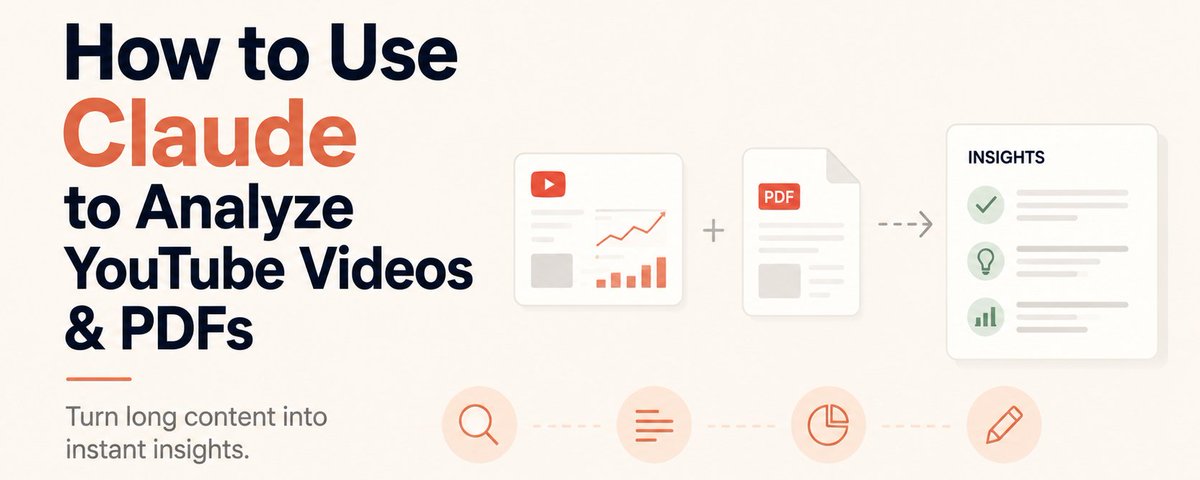
Learn it. Bookmark it.
As of mid-May 2026, Claude’s latest document and multimodal upgrades let you upload PDFs directly and drop in clean YouTube transcripts (or even thumbnail keyframes) for instant, high-precision cross-analysis — all inside one chat.
This isn’t a gimmick. Researchers, analysts, founders, and consultants are already using it daily to process mixed media at speeds that used to require entire afternoons.
Here is the exact playbook: how to analyze YouTube videos and PDFs with Claude, the three workflows that deliver the best results, and the pitfalls that waste your time.
# Why This Combo Crushes Traditional Research
Manually watching a 30–60 minute YouTube video, taking notes, then reading and cross-checking a 40-page PDF usually eats 50–120 minutes — and you still miss subtle connections.
Claude handles the entire job in 60–90 seconds. It reads the full transcript, scans every page of the PDF, and surfaces insights, contradictions, and opportunities you would never spot on your own.
The real power comes from context. Claude’s 200K+ token window holds the complete video transcript plus several PDFs at once. It doesn’t just summarize — it compares claims in the video against hard data in the PDF, flags inconsistencies, and generates exactly the output format you need (tables, reports, action lists, whatever).
# The Three Analysis Workflows That Actually Work
After running dozens of tests, three repeatable patterns stand out.
# Pattern 1: Video-First Breakdown
Best when the YouTube video is the core story and the PDF supplies backup evidence.
Paste the clean transcript first, upload the PDF second, then prompt Claude to treat the video as the primary source and the PDF as validation material.
It extracts the speaker’s main claims, checks them against the document, highlights gaps or supporting stats, and spits out a clean validation report. Perfect for keynotes, interviews, or tutorials paired with research papers or slide decks.
# Pattern 2: Balanced Cross-Check
Use this when both the video and PDF carry equal weight but approach the topic from different angles.
Upload the PDF(s) first so Claude indexes them properly.
Then paste the full transcript.
Ask for side-by-side analysis: key arguments from the PDF versus real-world examples and tone from the video.
Claude automatically builds comparison tables, merges insights, and flags where the video adds fresh context the document missed. This is the go-to for consultants comparing earnings calls with financial filings or product demos with technical specs.
# Pattern 3: Layered Expert Review
Ideal for complex or high-stakes work. You assign Claude temporary “roles” inside one prompt.
Example: “First act as Video Insight Extractor on the transcript. Then switch to PDF Data Miner on the uploaded files. Finally become a Strategy Synthesizer and combine everything into recommendations.”
Each role focuses on its strength before the final merge. The output is noticeably richer because the model isn’t juggling every task at once.
# Step 1: Clarify Your Objective Up Front
- Before uploading anything, write down: Exact goal (“Validate the 5 main predictions in this talk using the latest industry report”).
- Desired deliverables (executive summary, contradiction table, 3 actionable next steps, etc.).
- Which parts can run together versus in sequence. Clear intent prevents vague results and saves tokens.
# Step 2: Prepare Clean Inputs
YouTube: Open the video → click “Show transcript” → turn timestamps off → copy the plain text.
PDFs: Have the files ready (Claude handles direct uploads up to 30 MB each, multiple files per chat).
Clean inputs = dramatically better output.
# Step 3: Launch the Claude Session
Go to claude.ai (Claude 3.5 Sonnet or newer is ideal).
Start a fresh chat.
Upload PDFs first using the attachment icon.
Immediately paste the transcript below them.
Add a short role prompt at the top: “You are a precision research analyst. I have provided a YouTube transcript and PDF documents. Analyze them together to achieve this goal: [your goal].
# Step 4: Build Bulletproof Prompts
Strong prompts always contain:
> Precise role.
> Numbered instructions (“1. Extract claims from transcript. 2. Map them to PDF evidence. 3. Create a comparison matrix.”).
> Locked output format (“Deliver in this exact structure: Executive Summary → Insight Table → Recommendations → Open Questions”).
Consistent formatting turns one-off analyses into reusable systems.
# Step 5: Use Projects for Repeat Work
If you do this weekly (e.g., trend videos + new reports), create a Claude Project.
Upload your style guide or reference PDFs once.
Every new transcript you paste automatically inherits the project context.
Turns ad-hoc work into an always-running intelligence engine.
# Step 6: Iterate Fast
After the first answer, simply say:
“Focus only on pages 8–15 of the PDF and expand the recommendations with cost estimates.”
Or: “Re-check every video claim against the most recent data in the document and rate confidence 1–10.”
Long context means follow-ups stay accurate and lightning fast.
# Step 7: Export Ready-to-Use Output
Ask Claude to format as Markdown, CSV, or Notion-friendly blocks.
Copy straight into docs, slides, or dashboards — zero reformatting needed.
## What This Looks Like Live
Real workflow used this week:
Monthly Competitive Intelligence Brief
1. YouTube: 40-minute founder interview (transcript pasted).
2. PDFs: Two latest market reports (uploaded).
3. Prompt: “Cross-reference the founder’s growth claims with data from both reports. Output a 6-bullet insight deck with confidence scores.” Total Claude time: under 2 minutes. Old manual process: 3+ hours of watching, reading, and note-taking. The finished brief now drops into a shared folder every first Monday with zero extra work.
## Common Pitfalls and How to Dodge Them
Pitfall 1: Pasting transcripts with timestamps still attached.Fix: Always strip timestamps first — they eat context and confuse the model.
Pitfall 2: Generic prompts like “Analyze everything.”
Fix: Spell out the exact goal and output format every single time.
Pitfall 3: Uploading 100-page PDFs without direction.
Fix: Tell Claude exactly which sections matter (“Ignore everything before page 10 and after page 35”).
Pitfall 4: Starting a new chat and losing previous context.
Fix: Either stay in the same thread or paste a 1-sentence recap + re-upload key files.
Pitfall 5: Tackling ultra-long videos (>90 min) in one go.
Fix: Ask Claude to process the transcript in logical chapters first, then synthesize.
## The Road Ahead
Native video understanding is coming fast, but the current transcript + PDF workflow already beats most dedicated research tools. When full video-frame analysis lands, the same patterns will scale even further.
## The Straight Talk
Claude doesn’t magically “watch” videos — it crushes text transcripts and documents. The magic is in clean prep and sharp prompts.
This isn’t complicated. It’s just disciplined input → structured output → quick iteration.
One Pro subscription replaces days of grunt work every month and improves the more you use it.
We’re still early. Builders who lock in these simple YouTube + PDF analysis systems in May 2026 will turn raw content into high-signal intelligence while everyone else is still manually pausing and highlighting.
Most people will read this and bookmark it for “later.”
The ones who open Claude.ai right now, grab one video transcript and one PDF, and run their first session will instantly understand how straightforward — and powerful — it really is.
## 相关链接
- [Shelpid.WI3M](https://x.com/Shelpid_WI3M)
- [@Shelpid_WI3M](https://x.com/Shelpid_WI3M)
- [33K](https://x.com/Shelpid_WI3M/status/2055615221046149125/analytics)
- [claude.ai](https://claude.ai/)
- [Claude.ai](https://claude.ai/)
- [Upgrade to Premium](https://x.com/i/premium_sign_up)
- [7:43 PM · May 16, 2026](https://x.com/Shelpid_WI3M/status/2055615221046149125)
- [33.4K Views](https://x.com/Shelpid_WI3M/status/2055615221046149125/analytics)
- [View quotes](https://x.com/Shelpid_WI3M/status/2055615221046149125/quotes)
---
*导出时间: 2026/5/17 09:52:27*
---
## 中文翻译
# 大多数人不知道 Claude 可以直接分析 YouTube 视频和 PDF——无需插件
**作者**: Shelpid.WI3M
**日期**: 2026-05-16T11:43:54.000Z
**来源**: [https://x.com/Shelpid_WI3M/status/2055615221046149125](https://x.com/Shelpid_WI3M/status/2055615221046149125)
---

学会它。收藏它。
截至 2026 年 5 月中旬,Claude 最新的文档和多模态升级允许你直接上传 PDF 并放入整洁的 YouTube 转录文本(甚至是缩略图关键帧),以实现即时、高精度的交叉分析——所有这一切都在一个聊天窗口内完成。
这不是噱头。研究人员、分析师、创始人和顾问已经在日常工作中使用它,以极高的速度处理混合媒体,而以前这往往需要耗费整个下午。
这里有一份确切的实战指南:如何使用 Claude 分析 YouTube 视频和 PDF,三种效果最佳的工作流程,以及那些浪费你时间的陷阱。
# 为什么这种组合能碾压传统研究
手动观看一段 30-60 分钟的 YouTube 视频、做笔记,然后再阅读并交叉核对一份 40 页的 PDF,通常要消耗 50-120 分钟——而且你仍然会忽略其中微妙的联系。
Claude 可以在 60-90 秒内完成整个工作。它会阅读完整的转录文本,扫描 PDF 的每一页,并提取出你永远无法自己发现的见解、矛盾和机会。
真正的力量来自于上下文。Claude 超过 200K 的 token 窗口可以同时容纳完整的视频转录文本和多份 PDF。它不仅仅是总结——它还会将视频中的观点与 PDF 中的硬数据进行对比,标记不一致之处,并生成你需要的确切输出格式(表格、报告、行动清单等,随心所欲)。
# 三种真正有效的分析工作流程
在进行了几十次测试后,三种可重复的模式脱颖而出。
# 模式 1:视频优先拆解
当 YouTube 视频是核心故事,而 PDF 提供支持证据时,这是最佳选择。
首先粘贴整洁的转录文本,其次上传 PDF,然后提示 Claude 将视频作为主要来源,将 PDF 作为验证材料。
它会提取演讲者的主要观点,根据文档进行核对,突出差距或支持性统计数据,并输出一份整洁的验证报告。非常适合与研究论文或幻灯片搭配的主题演讲、访谈或教程。
# 模式 2:平衡交叉核对
当视频和 PDF 具有同等分量,但从不同角度探讨该主题时,请使用此模式。
先上传 PDF,以便 Claude 正确建立索引。
然后粘贴完整的转录文本。
要求进行并排分析:PDF 中的关键论点与视频中的现实案例和语调进行对比。
Claude 会自动构建对比表,合并见解,并标记视频补充了文档遗漏的新上下文的地方。这是顾问们将财报电话会议与财务报告进行对比,或将产品演示与技术规格进行对比时的首选方法。
# 模式 3:分层专家审查
适用于复杂或高风险的工作。你可以在一个提示词中为 Claude 分配临时的“角色”。
示例:“首先在转录文本上担任‘视频洞察提取者’。然后在上传的文件上切换为‘PDF 数据挖掘者’。最后成为‘战略综合者’,并将所有内容整合为建议。”
每个角色在最终合并前都专注于自己的优势。输出结果明显更加丰富,因为模型不会同时处理所有任务。
# 步骤 1:预先明确目标
- 在上传任何内容之前,写下:确切目标(“使用最新的行业报告验证本次演讲中的 5 个主要预测”)。
- 期望的交付成果(执行摘要、矛盾对照表、3 个可执行的后续步骤等)。
- 哪些部分可以一起运行,哪些必须按顺序运行。清晰的意图能避免模糊的结果并节省 token。
# 步骤 2:准备整洁的输入
YouTube:打开视频 → 点击“显示转录文本” → 关闭时间戳 → 复制纯文本。
PDF:准备好文件(Claude 可以处理每个聊天会话中最多 30 MB 的直接上传,支持多文件)。
整洁的输入 = 显著更好的输出。
# 步骤 3:启动 Claude 会话
前往 claude.ai(Claude 3.5 Sonnet 或更新版本是理想选择)。
开始一个新的聊天。
首先使用附件图标上传 PDF。
紧接着在它们下方粘贴转录文本。
在顶部添加一个简短的角色提示:“你是一名精准的研究分析师。我提供了 YouTube 转录文本和 PDF 文档。请结合分析它们以实现此目标:[你的目标]。”
# 步骤 4:构建无懈可击的提示词
强有力的提示词总是包含:
> 精准的角色。
> 编号指令(“1. 从转录文本中提取观点。2. 将它们映射到 PDF 证据。3. 创建对比矩阵。”)。
> 锁定的输出格式(“按此确切结构交付:执行摘要 → 见解表 → 建议 → 未决问题”)。
一致的格式能将一次性分析转化为可复用的系统。
# 步骤 5:使用项目处理重复性工作
如果你每周都做这件事(例如,趋势视频 + 新报告),请创建一个 Claude 项目。
一次性上传你的风格指南或参考 PDF。
你粘贴的每一条新转录文本都会自动继承项目的上下文。
这将临时工作转变为一个持续运行的智能引擎。
# 步骤 6:快速迭代
在得到第一个回答后,只需说:
“仅关注 PDF 的第 8-15 页,并扩展带有成本估算的建议。”
或者:“根据文档中的最新数据重新检查每一个视频观点,并按 1-10 分评级。”
长上下文意味着后续追问依然准确且快如闪电。
# 步骤 7:导出即用型输出
要求 Claude 将格式化为 Markdown、CSV 或 Notion 友好的代码块。
直接复制到文档、幻灯片或仪表板中——无需重新格式化。
## 实际操作案例
本周使用的真实工作流程:
每月竞争情报简报
1. YouTube:40 分钟的创始人访谈(已粘贴转录文本)。
2. PDF:两份最新的市场报告(已上传)。
3. 提示词:“将创始人的增长主张与两份报告中的数据进行交叉参考。输出一份包含 6 个关键要点的见解演示文稿,并附带信心评分。”
Claude 总耗时:不到 2 分钟。旧的手动流程:3 小时以上的观看、阅读和做笔记。现在,完成的简报会在每个月的第一个周一自动放入共享文件夹,无需额外工作。
## 常见陷阱及规避方法
陷阱 1:粘贴带有时间戳的转录文本。
解决方法:务必先去除时间戳——它们会占用上下文并困扰模型。
陷阱 2:使用“分析所有内容”这类通用提示。
解决方法:每次都要确切说明目标和输出格式。
陷阱 3:在没有指示的情况下上传 100 页的 PDF。
解决方法:告诉 Claude 确切哪些部分重要(“忽略第 10 页之前和第 35 页之后的所有内容”)。
陷阱 4:开始新聊天并丢失先前的上下文。
解决方法:要么留在同一个对话线程中,要么粘贴一句话的总结 + 重新上传关键文件。
陷阱 5:一次性处理超长视频(>90 分钟)。
解决方法:让 Claude 先按逻辑章节处理转录文本,然后再进行综合。
## 前方之路
原生视频理解即将到来,但目前“转录文本 + PDF”的工作流程已经击败了大多数专用研究工具。当全视频帧分析落地时,同样的模式将扩展得更远。
## 大实话
Claude 不会神奇地“观看”视频——它碾压的是文本转录文本和文档。魔法在于整洁的准备工作 and 犀利的提示词。
这并不复杂。这只是规范化的输入 → 结构化的输出 → 快速迭代。
一个 Pro 订阅每个月都能省下几天繁重的工作,而且你用得越多,效果越好。
我们依然处于早期。那些在 2026 年 5 月掌握了这些简单的 YouTube + PDF 分析系统的构建者,将能够把原始内容转化为高信噪比的情报,而其他人还在手动暂停和高亮。
大多数人读到这里,会把它收藏起来“以后再看”。
那些现在就打开 Claude.ai,抓取一份视频转录文本和一个 PDF,并运行第一次会话的人,会立刻明白这到底有多简单——以及多强大。
## 相关链接
- [Shelpid.WI3M](https://x.com/Shelpid_WI3M)
- [@Shelpid_WI3M](https://x.com/Shelpid_WI3M)
- [33K](https://x.com/Shelpid_WI3M/status/2055615221046149125/analytics)
- [claude.ai](https://claude.ai/)
- [Claude.ai](https://claude.ai/)
- [升级到 Premium](https://x.com/i/premium_sign_up)
- [7:43 PM · May 16, 2026](https://x.com/Shelpid_WI3M/status/2055615221046149125)
- [33.4K Views](https://x.com/Shelpid_WI3M/status/2055615221046149125/analytics)
- [View quotes](https://x.com/Shelpid_WI3M/status/2055615221046149125/quotes)
---
*导出时间: 2026/5/17 09:52:27*