# I've made 5000+ AI videos. These 3 formats got 114 Million Views. (Steal them)
**作者**: Frederik Feldt
**日期**: 2026-04-20T02:25:16.000Z
**来源**: [https://x.com/FrederikFeldt/status/2046052549292097807](https://x.com/FrederikFeldt/status/2046052549292097807)
---
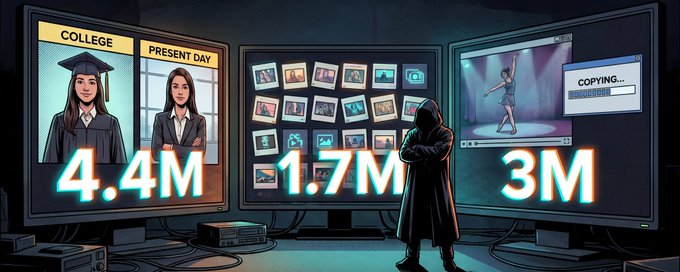
I've generated over 114M views in 28 days on a single AI-generated TikTok account. 65,000 followers. 4.4M likes on a single post.
Out of the hundreds of AI videos I've made, three formats outperform everything else. Every time.
Here's all three. Copy them.

Screenshot of my AI influencers analytics. (One account)
## Format 1: The before & after transition
This is the single highest-performing format I've ever used. My best one got 4.4M likes.
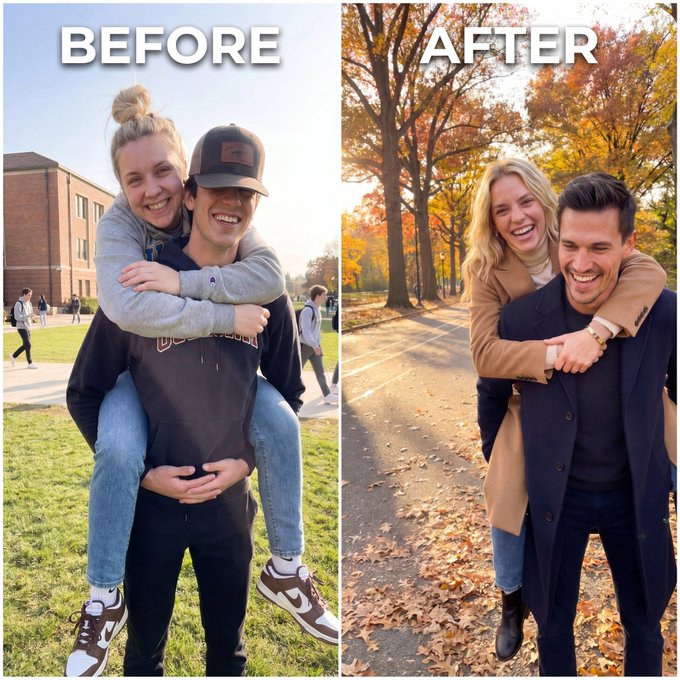
This post got 800k likes on TikTok.
The structure is dead simple:
First half: Old version of the character. College era. Messy hair, tired eyes, beat up sneakers, cheap apartment, struggle energy.
Second half: Present day. Put together, happy, kids, nice place, glowing.
Use a trending transition sound. The sound does 80% of the work. Find one that's already blowing up with before/after content and use it.
The reason this format works every single time: everyone romanticizes their own glow-up. When someone sees a before and after, they project their own journey onto it. "That's me. I was that broke college kid. I'm going to be that person on the other side."
That emotional projection is what drives shares. People don't share it because the content is good. They share it because it says something about them.
The technical execution:
You need two distinct visual identities for your character. Not just a different outfit. Different everything. Different hair texture, different skin quality, different posture, different lighting, different environment. Your reference image library needs a full "before" set and a full "after" set.
The transition itself has to be clean. Match the exact timing of whatever trending sound you're using. If the beat drops at 2.3 seconds, your transition hits at 2.3 seconds. Not 2.5. Not 2.1. Exact.
Generate each half separately in Seedance using the timestamp method, then stitch in CapCut. Trying to generate the full transition in one generation usually produces a messy cut.
## Format 2: The slideshow story arc
My best one got 1.7M likes. 27 slides. 80% of people swiped through every single one.

1.7M likes on a single 27-slide long post.
This is the format with the highest dwell time, which means the algorithm pushes it harder than almost anything else. Someone swiping through 27 slides is spending over a minute on your post. TikTok sees that and thinks "this content is keeping people on the app" and shows it to more people.
## The formula:
Start with an emotional hook. First slide needs the Snapchat text banner trick. "omg you guys are so cute" or "she's gonna kill me for posting this" or "i can't believe this was 4 years ago." This frames the entire slideshow as real content that got shared by a friend, not something that was produced.
Then tell a story with an arc. Not just pretty pictures. A narrative. Something happened, then something else happened, then it resolved. The ones that hit hardest are emotionally heavy. A pregnancy journey. Getting through a hard time. Building something from nothing.
The key detail nobody gets right: Every single slide needs at least one recognizable brand in it. A Starbucks cup. A Target bag. Nike shoes. An Amazon box by the door. A UCLA hoodie. A Taco Bell wrapper on the table. A Gatorade bottle.
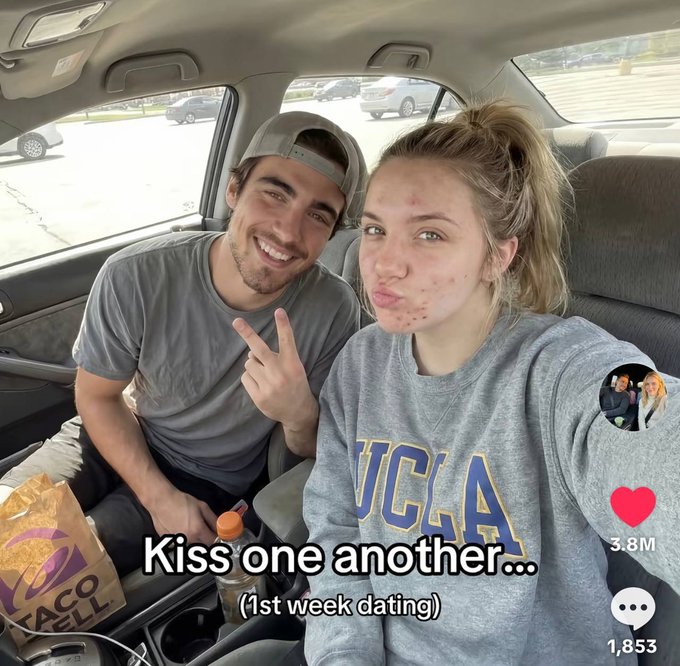
Example of using known brand logos in images.
This is non-negotiable. AI images without brands feel sterile and fake. Real life is covered in logos. Your content needs to be too.
Slide count matters. Anything under 15 slides doesn't build enough momentum. 20-30 is the sweet spot. You want people deep enough into the slideshow that their brain has already committed and they're going to finish it.
The caption is less important than people think. The hook is everything. If the first slide doesn't make someone swipe, the caption doesn't matter. If the first slide does make them swipe, they're not reading the caption anyway.
## Format 3: The viral copy with a product twist
This is the simplest format and probably the one most people should start with.
Find a video that is already going viral. Not trending. Viral. Millions of views, tens of thousands of likes, still climbing.
Copy it. Same sound. Same format. Same clip timing. Same transitions. Same energy. AI generated with your character.
One of my copies got 3M likes. The original barely hit 1M.
The twist: weave your product or brand into the character's story naturally. Don't make it an ad. Make it part of who the character is.
For my account, the character is a young mom who went through the struggle of college with a baby, came out the other side, and is now building a company based on her own pain points as a mother. The product isn't forced into content. It's part of her life story. When it shows up, it feels natural because the audience already knows her backstory.
This only works if you have a persona bible. Random AI girl holding random product = ad. Fully developed character with a 600-line backstory whose product is part of her narrative arc = content people actually care about.
You can read my other articles on how to construct persona bibles.
The execution method is fast:
See a viral video on your feed
Screenshot or save it
Send it to Claude: "remake this for my character"
Claude writes the Seedance prompt following your framework
Generate in Seedance using the original video as @Video1 for motion/camera reference
Stitch in CapCut
Post same day
Speed is everything. Trends have a 24-72 hour window. If you're remaking something 5 days later, the format is already oversaturated and you're posting into a graveyard.
## Why these three and nothing else
I've tested dozens of other formats. Talking head videos, reaction content, day-in-the-life vlogs, aesthetic compilations, tutorial style, GRWM, all of it.
Some of them work once. None of them work consistently.
These three work consistently because they all trigger the same psychological response: familiarity.
The before/after transition uses a format people have seen thousands of times. Familiar structure, new character, instant trust.
The slideshow story arc looks like something a real friend shared. Familiar context, emotional investment, high completion rate.
The viral copy literally is a format that already went viral. The audience has already proven they like this exact structure. You're just replacing the character.
Familiarity is not a shortcut. It's the whole game. People share what feels familiar and relatable. The algorithm pushes what people engage with. Engagement comes from trust. Trust comes from familiarity.
## Where to generate
I run all of this on Seedance 2.0. If you're using it through Higgsfield, YouArt, or Fal AI, you're paying 2.5-4x more than you need to.
I built a platform with direct ByteDance API access at a fraction of those prices.
Beta is open. Retweet this article and comment "SLOP" and I'll send you the link.
## Follow for more: @frederikfeldt
## 相关链接
- [Frederik Feldt](https://x.com/FrederikFeldt)
- [@FrederikFeldt](https://x.com/FrederikFeldt)
- [10K](https://x.com/FrederikFeldt/status/2046052549292097807/analytics)
- [@Video1](https://x.com/@Video1)
- [@frederikfeldt](https://x.com/@frederikfeldt)
- [Upgrade to Premium](https://x.com/i/premium_sign_up)
- [10:25 AM · Apr 20, 2026](https://x.com/FrederikFeldt/status/2046052549292097807)
- [10.7K Views](https://x.com/FrederikFeldt/status/2046052549292097807/analytics)
- [View quotes](https://x.com/FrederikFeldt/status/2046052549292097807/quotes)
---
*导出时间: 2026/4/20 21:23:30*