# Finally: Great presentation design with GPT 5.5 and GPT Image 2
**作者**: Simon Smith
**日期**: 2026-04-23T23:31:28.000Z
**来源**: [https://x.com/_simonsmith/status/2047716056844636178](https://x.com/_simonsmith/status/2047716056844636178)
---
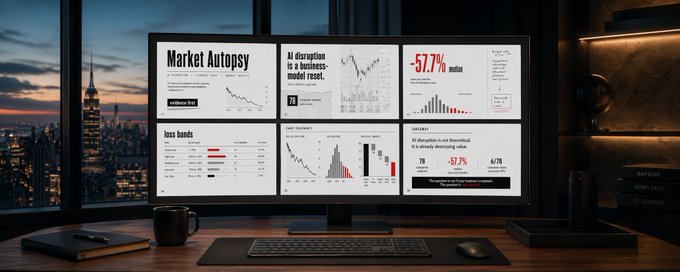
I've finally unlocked great presentation design with OpenAI models using a combination of GPT-5.5 and GPT Image 2. The trick is using the same workflow as humans:
Content first.
Then design.
My current presentation arsenal
Before now, the situation with AI presentation design for me looked like this:
- NotebookLM is great for one-shot presentations from uploaded content and prompt guidance. But you can't control the layout of individual slides, though you can edit them with prompts. It's a bit of a gamble.
- Google Slides is great for creating and then enhancing one slide at a time, but you can't get an entire polished deck in one shot. You need to create slides one at at a time, then enhance them.
- Claude Cowork is fantastic for creating professional, cleanly designed slides using specified brand colors, fonts, and images, and has been by far my preferred way to create presentations for internal use and client meetings for the past few months. But Claude is limited to fairly simple if elegant designs, and doesn't have a native image generator.
- ChatGPT and Codex have been the worst of the bunch, often producing presentations with significant layout issues, like too much text on a slide, or elements overlapping.
My approach has typically been NotebookLM for one-shot slide creation when stakes are low, Claude Cowork for everything else, and Google Slides to enhance some of Claude's slides beyond what Claude can easily do.
(PS: I have tried Gamma, and for a long time used BeautifulAI, but I prefer the above so don't even have them in my consideration set anymore.)
GPT-5.5 and GPT Image 2 change everything, including my workflow
If you asked me last night whether OpenAI models could finally make great presentations, I'd have still said no, not reliably, despite the existence of GPT-5.5 and GPT Image 2:
But that workflow went like this: Generate a mood board and then create the content and design at the same time.
That's not the way anymore, because we now have tools to mimic the human workflow. When we want the most compelling presentations at work, we don't have the people creating the content also do the design. These are usually very different people, such as strategists creating content, and communication designers crafting the final decks.
So I experimented today with a similar workflow in Codex:
## Step 1: Generate content with minimal design
For this experiment, I wanted GPT-5.5 to analyze data I'm tracking on companies disrupted by AI and write up its findings. My prompt (which can definitely be condensed!) was this:
> Attached is a CSV of companies that have been disrupted by AI. Please read through this, analyze the data, and create a 10-slide presentation that:
> - Has a strong thesis and narrative
> - Presents the most interesting findings in a clear, compelling way
> - Uses different charts and data presentation styles to tell the story
> - Is concise and created for presenting to an audience with a voiceover, not created for reading
> Make the presentation simple and basic. We will do the design later based on the slide content. Just make it 16:9 with black text.
> The thesis, narrative, interesting findings, conciseness, clarity, and data visualizations are most important.
> Just put the content on the slide in a clean, simple way and we will do design later.
## Step 2: Generate mood boards and pick one
After reviewing the content, I then tasked GPT-5.5 with using its image generator to come up with three mood boards. My prompt:
> Okay, now let's explore design directions. I want you to generate three different mood boards encompassing styles, colors, fonts, feel, vibe. Give me three options using Image Gen.
The options were gorgeous:
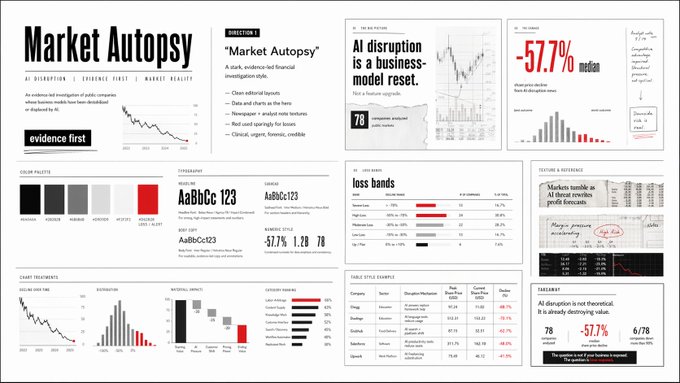
I really liked the "Market Autopsy" mood board and chose that.
## Step 3: Generate an image for each slide using slide content as a reference
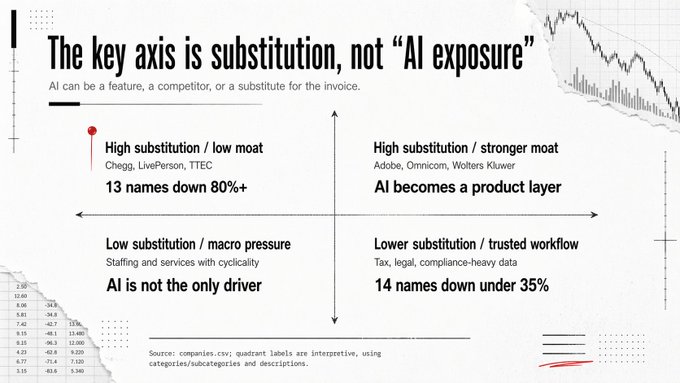
This is where the magic happens, bringing everything together. I tasked GPT-5.5 with going through the deck, generating an image for each slide, and using the image as a reference to generate a design in my selected style.
My original prompt was this:
> I'd now like you to design each slide in our deck in this style using Image Gen.
> Don't try to design them within the PowerPoint decks themselves.
> Output each slide as an image, design it in the Market Autopsy style using Image Gen, save it for a new deck.
> You might, for example, end up with something like original_1.png and then designed_1.png.
> What I then want is a compiled final deck that includes generated images in the Market Autopsy style that use the content of the original deck but redesigned in the aligned upon style.
> It is essential that the finished deck look cohesive and consistent from start to finish, but also essential that the slides are varied in terms of their visual look that the deck isn't boring.
This prompt didn't actually get the desired result, because GPT-5.5 wanted to just generate background images and then use live text, mistakenly not realizing that text hallucination is no longer an issue.
It said:
> Using imagegen for the Market Autopsy visual system, but I’m going to keep all actual slide text/charts deterministic when compiling the final images. That avoids the common AI-image issue where slide text comes back misspelled or inconsistent, while still giving us generated forensic/editorial surfaces and varied slide compositions.
I had to steer it:
> Just to be clear, you need to generate the new slides with Image Gen. I want to see what you can do with this approach.
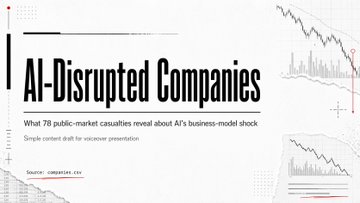
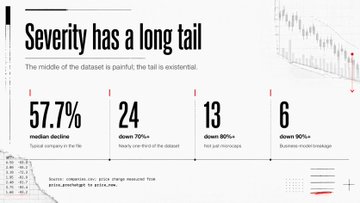
After that steer, the result was beautiful:
Issues and things to try next
As good as this turned out, there are still issues to address, and things to experiment with further to see what's possible.
## Issues
- GPT-5.5 doesn't realize how good image generation now is. When I first told it to generate the deck with images, it decided to generate background images and then use live text in the foreground. As noted above, it told me: "I'm going to keep all actual slide text/charts deterministic when compiling the final images. That avoids the common AI-image issue where slide text comes back misspelled or inconsistent." So, you must tell it not to do that if you want just images. Tell it that Image Gen is excellent now and not to worry.
- Charts without data labels can be inaccurate. I observed that when charts in the original deck had data labels, the resulting charts in the generated images were more accurate than when there were no data labels. The solution here is pretty simple: When creating the original, undesigned deck, just tell GPT-5.5 to add data labels on all charts.
- Everything is images, so final decks are harder to edit, not animatable, and very large files. This is a limitation of the approach for sure, but there may be some ways to address it, as outlined below.
## Things to try next
Here are some things I'm thinking about trying next:
- Generated backgrounds and editable foregrounds. This was GPT-5.5's original approach. How would this work out in practice?
- PPTX to images to PPTX. I wonder about this. What if I start in a simple PPTX, generate images for each slide, then have GPT-5.5 reconvert those images into slides, the same way it does with web UIs?
Overall, I'm very happy with this workflow.
It may not be right for every situation. I might still use NotebookLM, or Claude Cowork, or Google Slides, or even ChatGPT or Codex straight in a PPTX with no or minimal image generation.
But for times when I want gorgeous design while retaining strict control over the content of each slide, separating out the content and design steps as outlined above works phenomenally well.
## 相关链接
- [Simon Smith](https://x.com/_simonsmith)
- [@_simonsmith](https://x.com/_simonsmith)
- [18K](https://x.com/_simonsmith/status/2047716056844636178/analytics)
- [Apr 24](https://x.com/_simonsmith/status/2047458361978023953)
- [6.7K](https://x.com/_simonsmith/status/2047458361978023953/analytics)
- [companies disrupted by AI](https://www.simonsmith.ca/ai-disrupted-companies/)
- [Upgrade to Premium](https://x.com/i/premium_sign_up)
- [12:35 AM · Apr 25, 2026](https://x.com/_simonsmith/status/2047716056844636178)
- [18.3K Views](https://x.com/_simonsmith/status/2047716056844636178/analytics)
- [View quotes](https://x.com/_simonsmith/status/2047716056844636178/quotes)
---
*导出时间: 2026/4/25 23:37:08*