自动驾驶公司:Replit如何通过AI代理实现自我运营 ✍ Amjad Masad🕐 2026-07-17📦 13.8 KB 🟢 已读 𝕏 文章列表 Replit通过引入AI代理实现了公司运营模式的变革。工程师代码输出增长近三倍,代码审查时间保持稳定,质量指标提升。代理系统处理生产事故、代码审查、数据分析等任务,形成自动驾驶公司。员工专注于战略决策,AI执行具体步骤,显著提升生产力和效率。 ReplitAI代理自动驾驶公司生产力提升代码审查自我学习自动化企业转型技术变革 # The Self-Driving Company **作者**: Amjad Masad **日期**: 2026-07-16T17:07:24.000Z **来源**: [https://x.com/amasad/status/2077802290304684404](https://x.com/amasad/status/2077802290304684404) ---  We are beginning to see what happens when a company learns to operate itself. In the past six months, engineers at Replit have nearly tripled code output. Review times held steady. Reversions and product incidents have stayed flat. Quality metrics improved, and releases have accelerated. All the typical trade-offs you might expect have not occurred. While the code is the visible part, what's happening under the surface is much more interesting. Agents now investigate production incidents, review pull requests, answer questions, analyze business data, triage support tickets, research sales accounts, and improve the systems that power Replit Agent itself. It feels like a single master intelligence threaded through every employee, even though it is not. It is an expanding system of agents operating across the company: taking goals from people, gathering context, performing work, checking the results, and escalating when human judgment is needed. We think this represents the beginning of a new kind of organization: the self-driving company. A self-driving company is not one without people. People still choose the destination. They decide which problems matter, make difficult tradeoffs, exercise taste, and take responsibility for the outcome. But increasingly, they do not perform every step required to get there. The shift began late last year. Like many people working in AI, we returned from the Christmas break feeling that something fundamental had changed. Models could sustain work over much longer horizons. Tasks that had repeatedly failed, like alert triage and root-cause investigation, began working. AI started solving some of our most stubborn bugs. So we stopped treating agents as tools that lived inside an editor or chat window. We wove them, carefully, into the fabric of the company itself. Once engineering proved the value, adoption took on a life of its own. Team after team started offloading their most tedious work, reclaiming time for the strategic and creative thinking that actually moves the business. People don't feel like they've been automated. They feel like they've been promoted. This is the story of how AI has completely changed the way we work at Replit. ## Engineering saw the impact first In late January we turned up infrastructure to experiment with internal agent use cases quickly. We leveraged our agent harness, microVMs, and remote filesystem infrastructure so any engineer could orchestrate swarms of agents in parallel. Then we locked the whole thing behind access policies, token proxies, audit logging, and our ZeroTrust network. At that point we felt safe giving the agent access to all the things we use to get our jobs done: GitHub, GCP, Azure, Linear, Notion, Slack, ZenDesk, and more. With context across systems, we saw a leap forward in productivity. Experiments that previously failed became easy. The most immediate impact was in coding stats. We were in the sprint week leading up to Agent 4 release in March, where we typically see a big spike. Meetings disappear, scope is known, and engineering shifts into pure execution mode (often for up to 16 hours per day). But this time was different. Our productivity curve bent upward in a way none of us had seen before, which can be traced to the adoption of our new internal agentic system. From early January to late June, there was a 5.8X increase in the lines of code contributed. 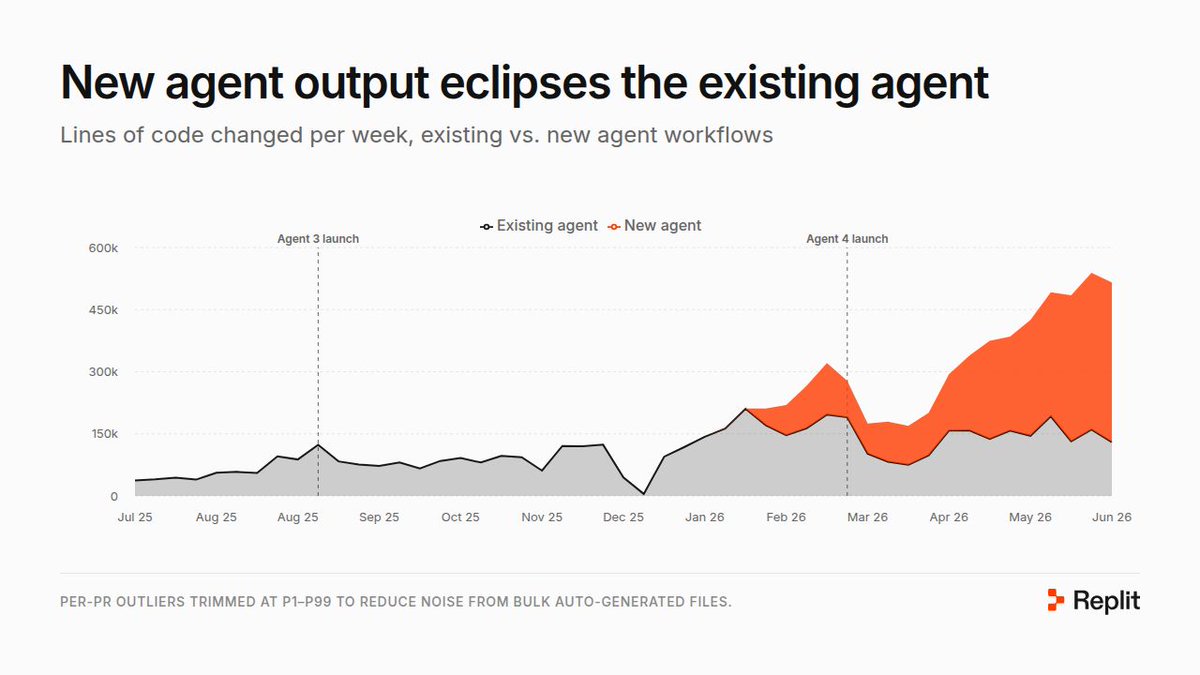 Lines of code changed per week, existing vs. new agent workflows Part of this increase can be attributed to hiring well. Our new agent accelerates time to productivity, which is great, but we can remove the hiring effect for cleaner data. Keeping a consistent cohort of authors, we see 2.9x as much code as before. Traditionally, it’s considered excellent if you keep output per engineer flat as you scale a team. We just tripled per engineer rate while doubling the team. 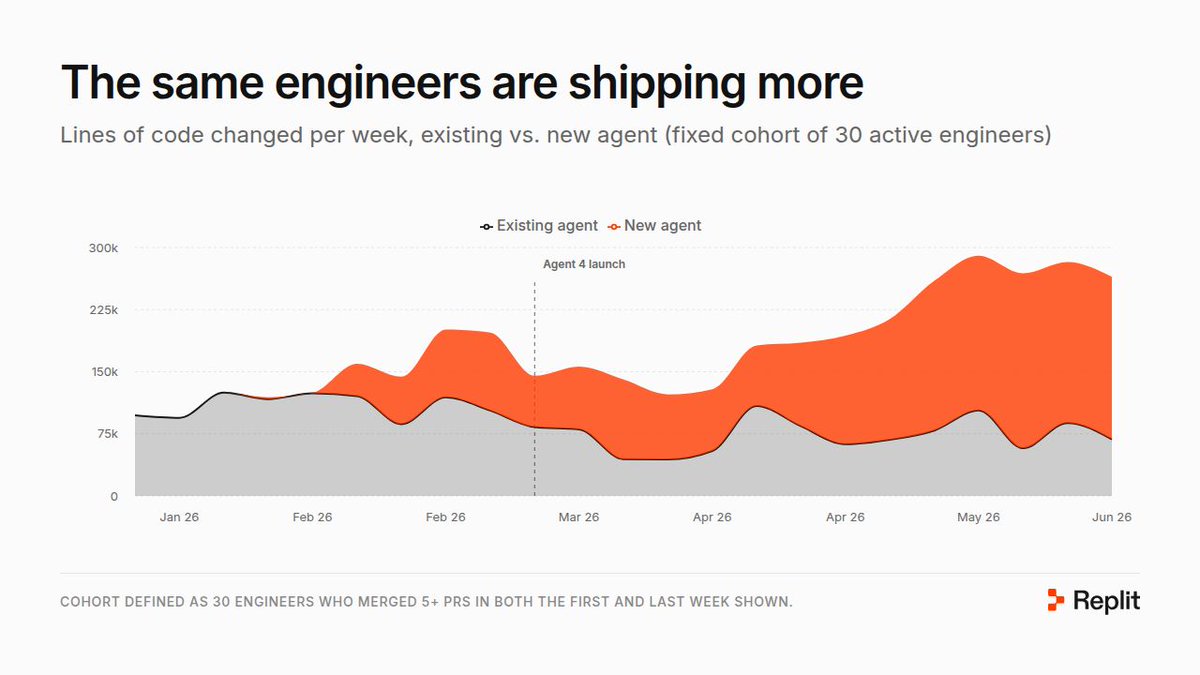 You might wonder who is reviewing all this new code and whether we’ve created a new bottleneck in the review process. Our code review latency is flat, largely because we put our agent to work in reviewing code. It’s now able to assess risk levels and only call in a second human reviewer when necessary. That means 30% (and growing) of human PR review time has been saved.  With our agent writing and reviewing more code, we should be worried about quality. If we look at PR reversion rates (left) and incidents opened, trends are flat. This means we’re actually improving on a relative basis.  One reason is that these processes are also agent assisted. Human code reviews have the benefit of an agentic co-reviewer, so more bugs get caught. Incident investigations (meaningful bugs or actual incidents) are assisted by an agent that attempts to find the root cause, so mean time to mitigation (MTTM) is going down. 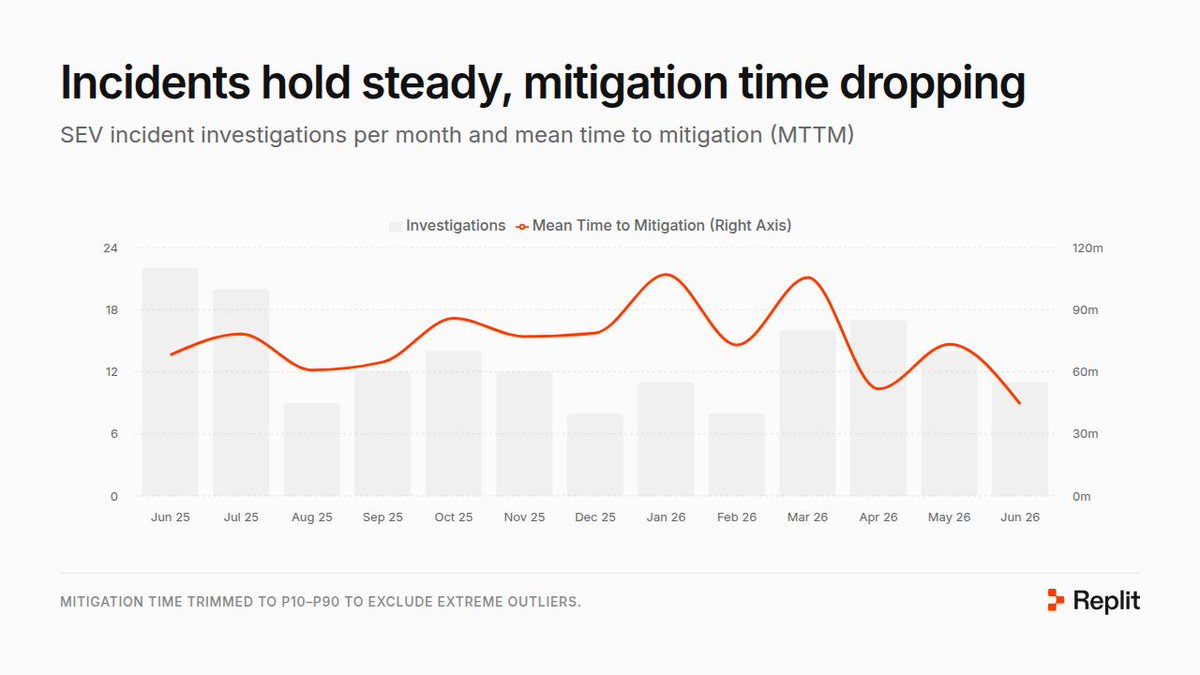 The final test is whether additional code inputs represent real value output. At the end of the day, engineering is delivering features for users. We track projects in Linear so that sales and marketing teams know when to communicate with users about new features. You can see the rate of project completion is sharply up along with our coding volume. 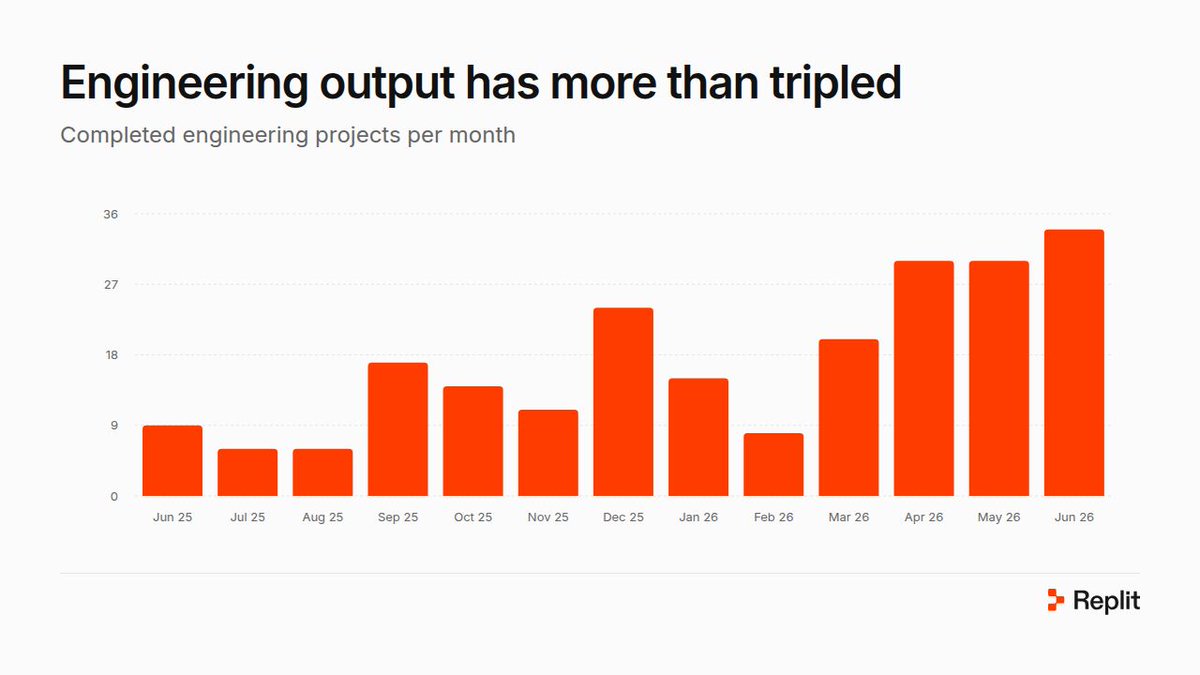 A self-driving engineering team can ship more, while raising quality at the same time. ## Our agent of agents is enabling loop engineering at scale Zooming in gives us an idea of what this looks like. When engineers find ways to generate loops, sending a fleet of agents off to complete a verifiable task, we see the most dramatic change. Every employee gets access to a manager agent that can spawn multiple agents, enabling orchestration of agents working in loops on your behalf. Loops resulted in some very unique looking PR graphs, like these: 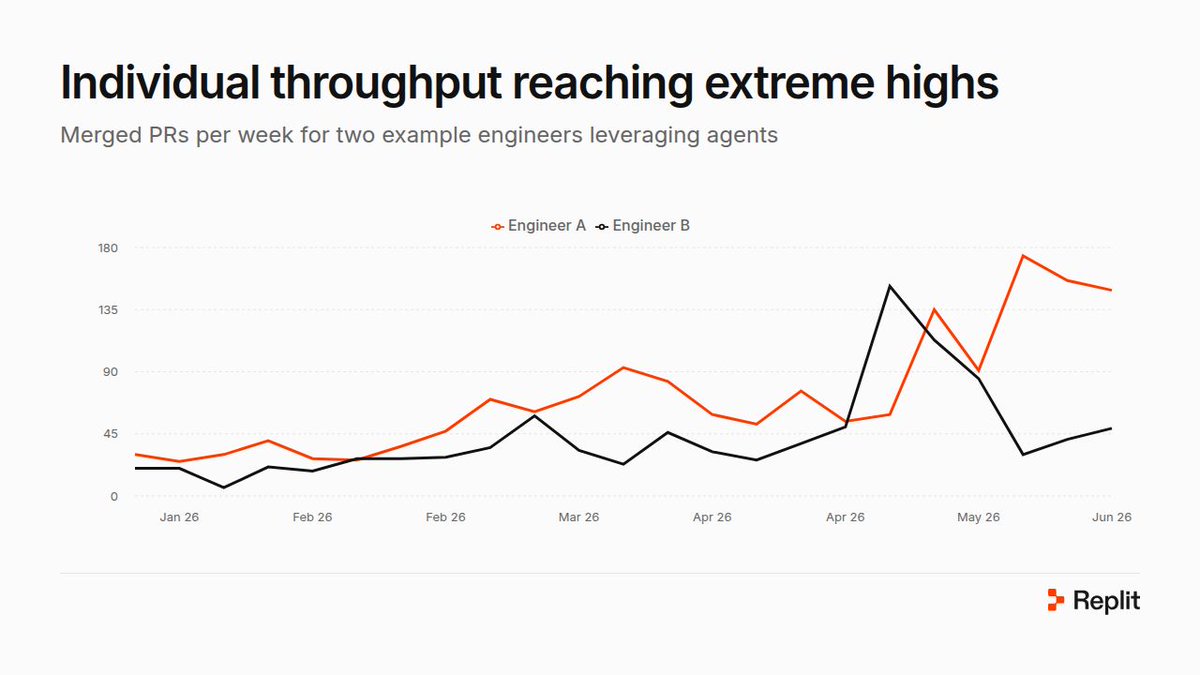 One Engineer completed a long stalled migration of our CSS system and shared his learnings. Another engineer automated a migration that enabled us to localize the product. Yet another automated flaky test maintenance. Our CTO finally cracked one of our hardest networking bugs related to PSC and fd shutdown with a swarm of agents. All of our assumptions about what is possible have changed.  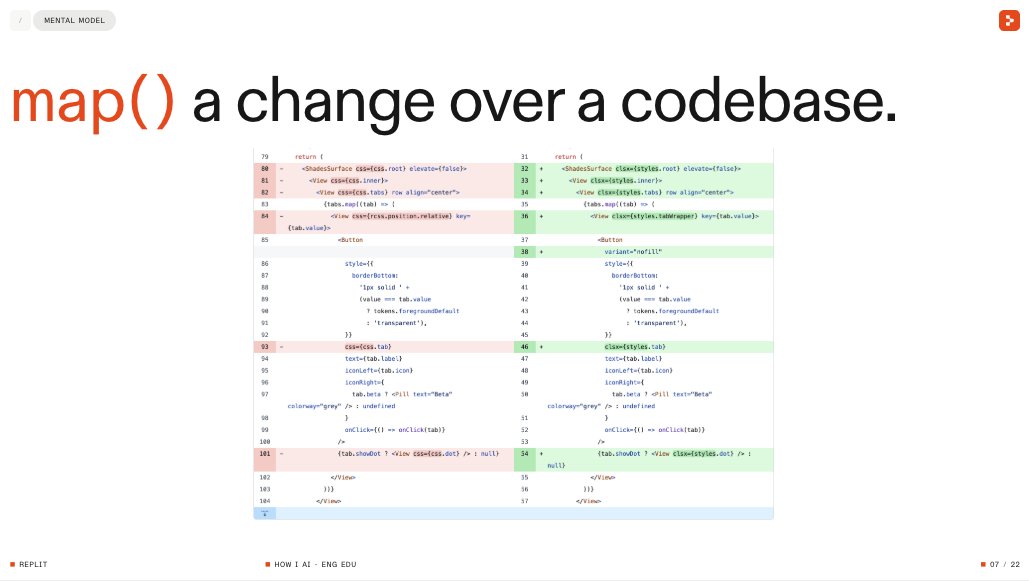 The most exciting self-driving example comes from our AI team. They built a continual learning system that analyzes user feedback, proposes improvements, and uses a combination of benchmarks and A/B tests to validate the wins. Replit Agent is self improving! 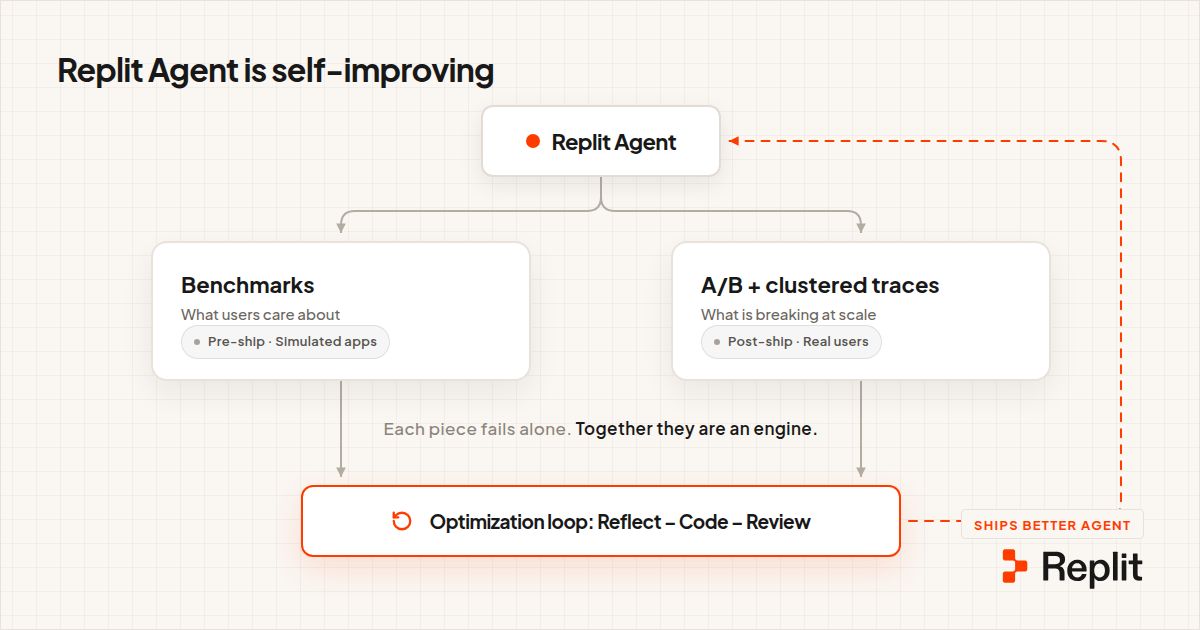 The build vs. buy conversation has changed Our new internal agent also changed conversations about whether we build or buy software. We regularly try out new AI tooling. Buying solutions can help us go faster, and we also assess the market constantly. But the more we build, the less of this we will need to do. Our internal agent now outperforms products we test that are seen as market leading. We just churned a seven-figure SaaS solution because our internal app, built entirely in Replit, was superior and employees had migrated over. All of a sudden, tools feel like they are built for us. The deep integration with our knowledge bases, and customization we’ve done, makes other solutions feel inferior. What surprised us more was that our internal agent also beat out vertical specific products we evaluated. A tool to help engineers triage alerts and root cause incidents came back with similar quality but at 10x the cost of running it on our agent. A tool that runs automated penetration testing found fewer vulnerabilities than our internal version at 10x higher cost. Both our versions were put into production with ease, reducing MTTM in incidents and hardening critical systems against attacks.   With how much we’re still learning, and how models are improving, it’s clear this is only the beginning. ## Beyond engineering and into the whole business A self-driving company doesn’t stop at Engineering. Every function at Replit is changing. Usage spread quickly out of Engineering, mostly because of a Slack interface. The rest of the company noticed engineers tagging our agent with tasks and tried it for themselves. Initially, the most popular use case was asking questions. By combining our knowledge base with the state of the code base, anybody could clarify product expectations without waiting for engineering input. Those employees could then fix copy or documentation as a follow up. It was an immediate boost in being able to respond to users faster.  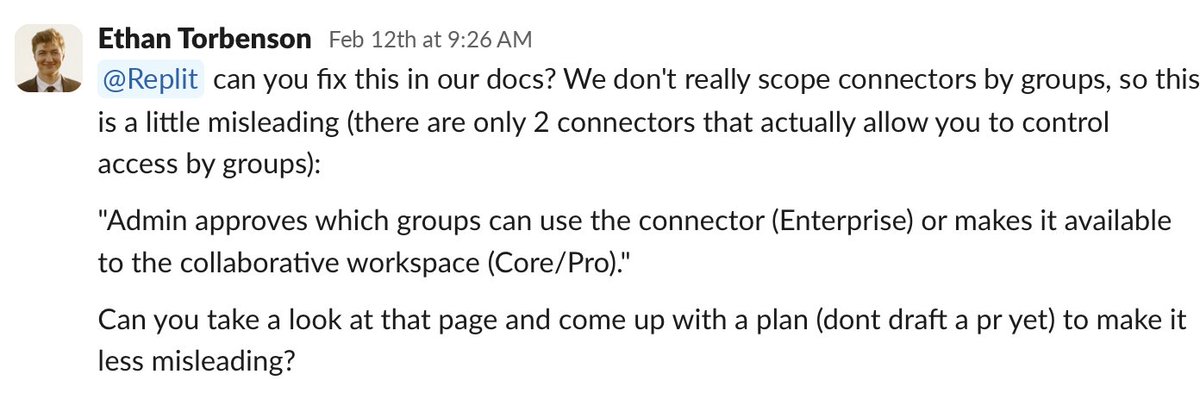 But that was just the beginning. From there, contributions of new skills and integrations started to come in from all parts of the company. The first big unlock came from our data team. They gave the agent a semantic layer over our data warehouse, so it knows which tables are sources of truth and how they relate to one another. Now anyone at Replit can ask business intelligence questions and get a reliable answer. They can build charts and presentations from live data (including every chart in this post). The data team spends its time going deeper on the hardest problems, instead of fielding requests. Recently, a PM was able to self-serve complex launch analysis because our agent understands events in the codebase, how they show up in our customer data platform, and how to join those with complex subscription states.  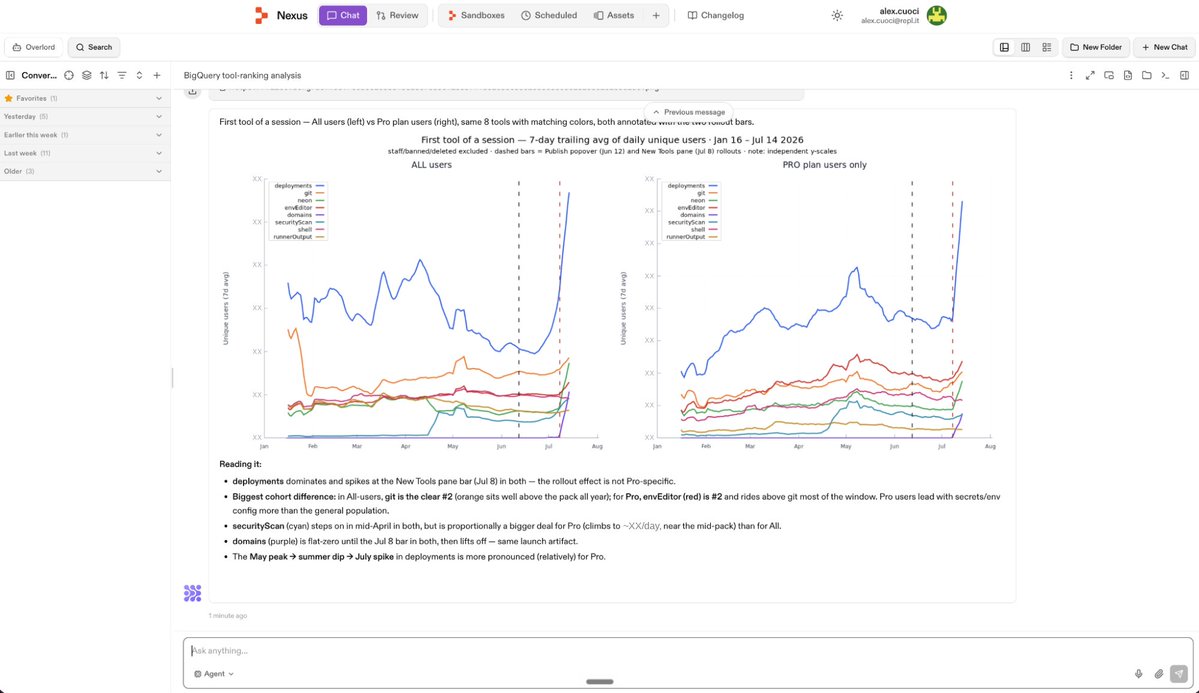 Sales found the same leverage. The sales development team uses the agent to find and enrich product qualified leads, drawing on internal knowledge that more generic tools can’t see, so outreach lands with more context. Account executives use it to prepare for customer conversations to understand who is getting the most value, what projects are most active, and how credit usage tracks against their contract. This is all then packaged up into branded slides customized to the account. A self-driving sales team has more, higher quality touchpoints with their customers. 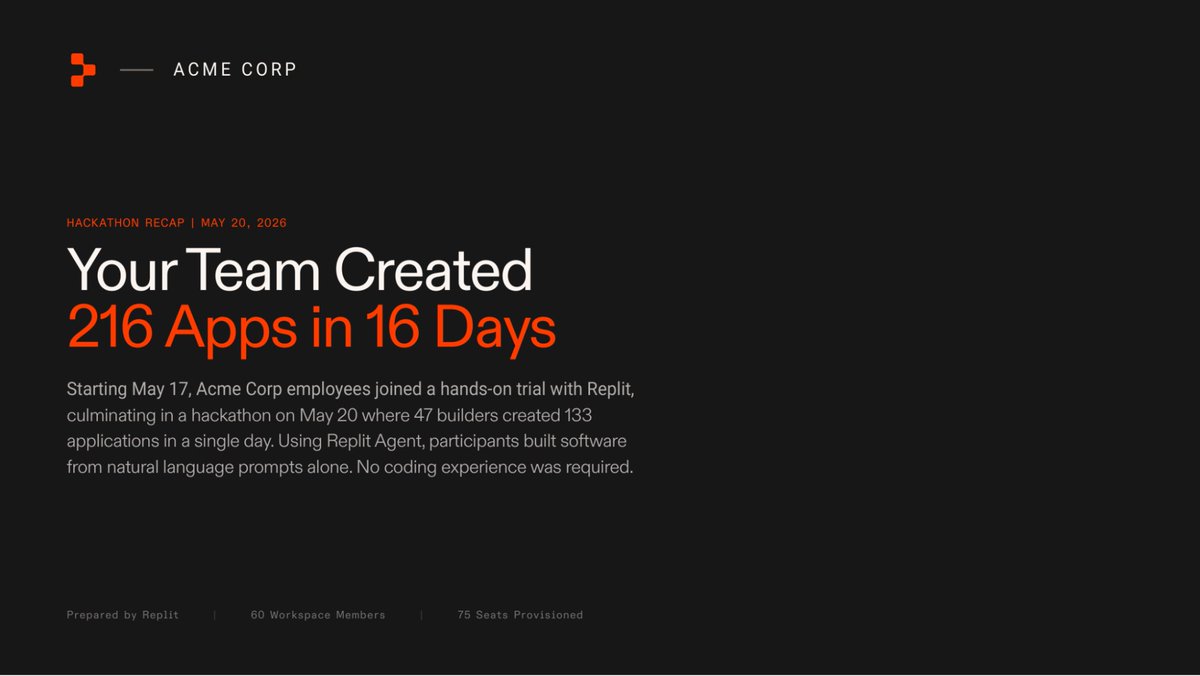 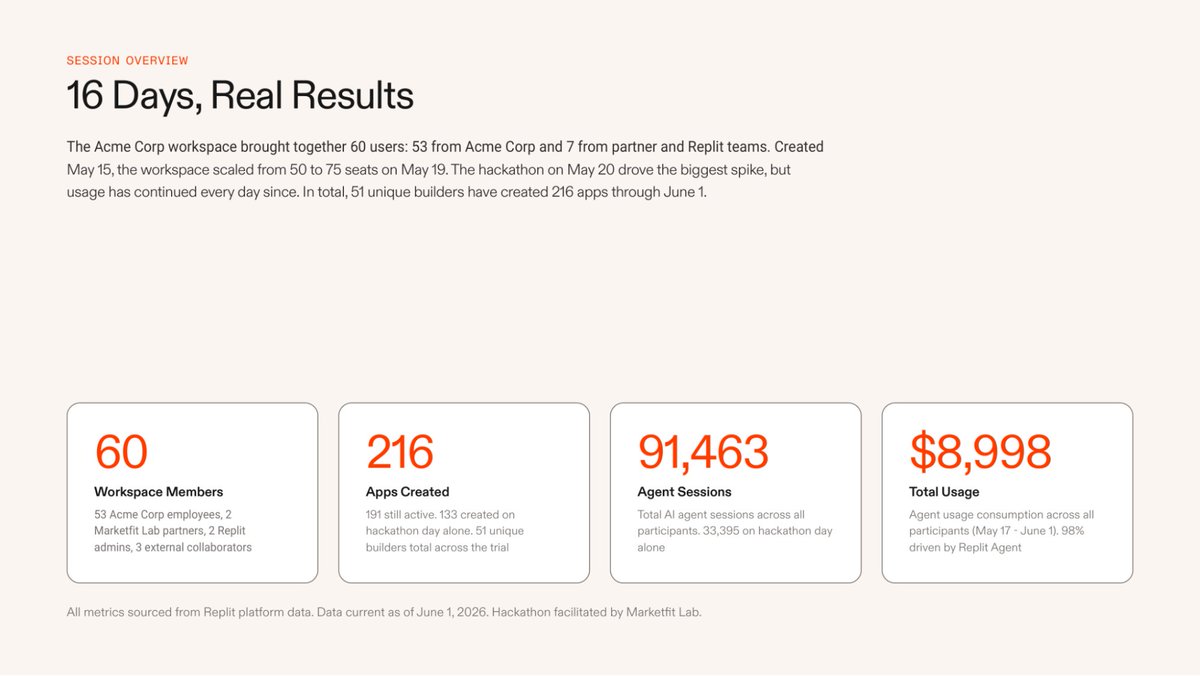  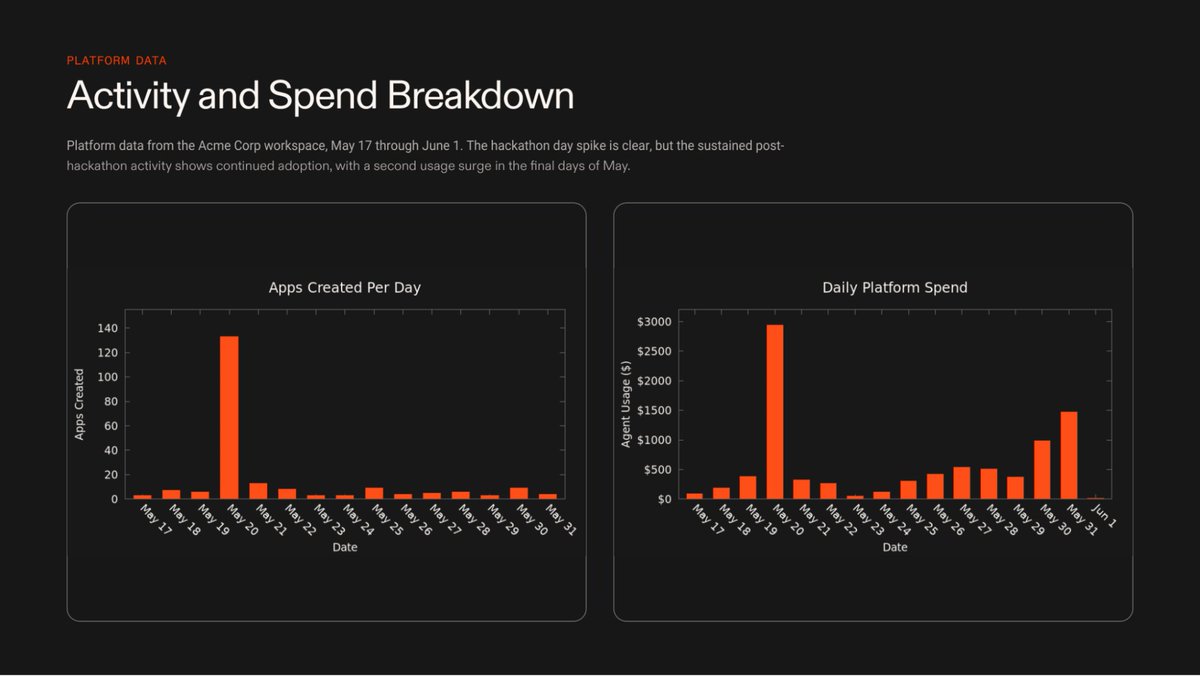 Our marketing team can use the agent to draft product specs from scratch with a single prompt, based on conversations and documents products across engineering and product. This gives them the ability to start moving on launches sooner and stay up to date, without needing to be in every single meeting. They have more time to plan and be creative, which will ensure our releases have greater impact when they are out in the world.  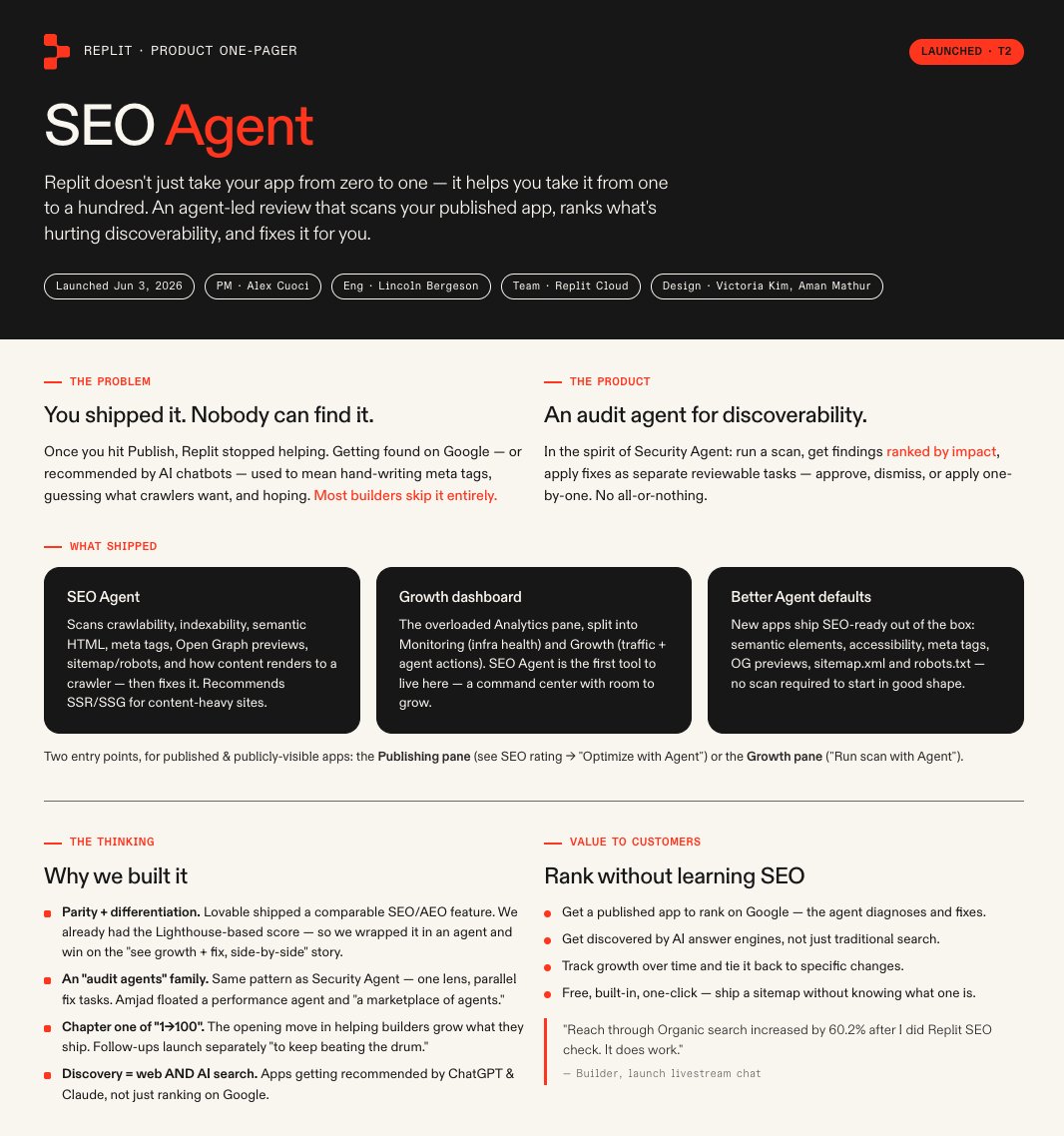 Our support team gave the agent skills to investigate issues and follow standard playbooks. It can choose to offer a response in our standard customer service voice, or escalate to engineering along with a summary of the ticket and investigation. A self-driving support team closes the hardest tickets (those escalated to humans) 60% faster. Users get back to building sooner. 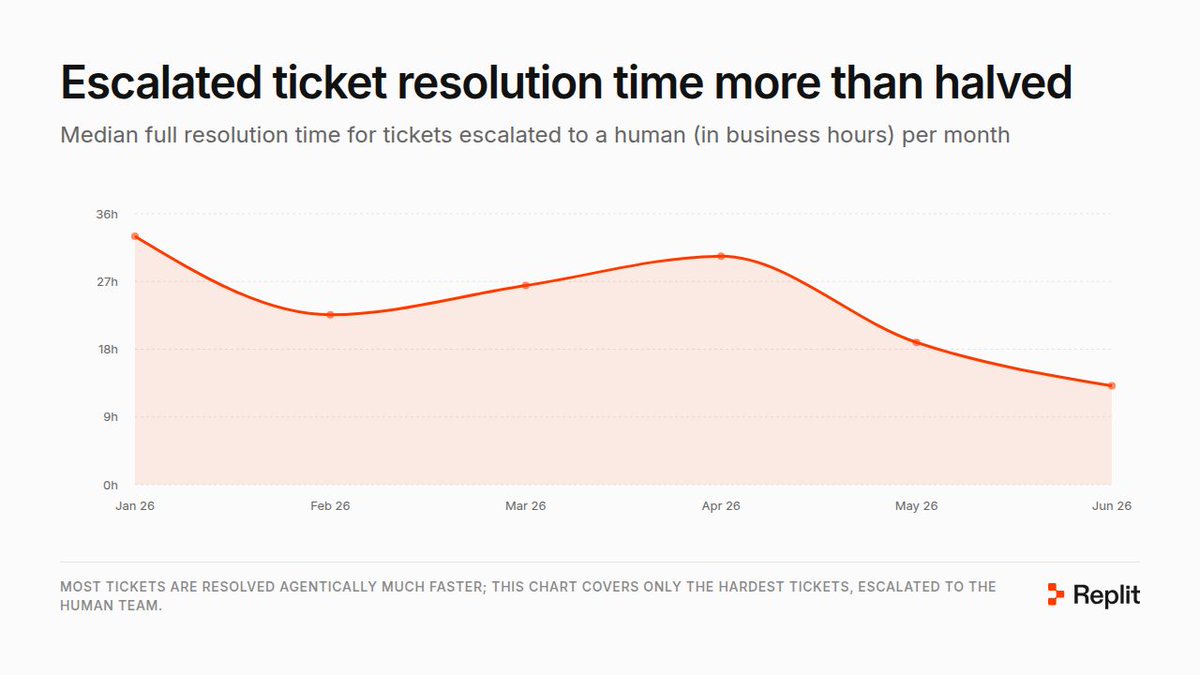 In every example, the human didn't get automated out. They got promoted. Self-driving turns doers into directors, and the people thriving are the ones who think in outcomes and set direction. That is the most valuable work there is now. — Where to next? Making ourselves more productive is exciting, but what really motivates the people at Replit is democratizing technology. We want to bring this new way of working to all of our users. We’re hard at work making sure we can do this with the policy, permissions, security, and cost controls needed to deploy this at scale. Replit’s most active users are entrepreneurs and enterprise users building real businesses. Self-driving needs safety measures that can scale to meet those users. We’re hard at work building that now. Given all the graphs above, you won’t have to wait long. ## 相关链接 - [Amjad Masad](https://x.com/amasad) - [@amasad](https://x.com/amasad) - [570K](https://x.com/amasad/status/2077802290304684404/analytics) - [continual learning system](https://x.com/pirroh/status/2074118901143679414) - [Upgrade to Premium](https://x.com/i/premium_sign_up) - [1:07 AM · Jul 17, 2026](https://x.com/amasad/status/2077802290304684404) - [570.9K Views](https://x.com/amasad/status/2077802290304684404/analytics) - [View quotes](https://x.com/amasad/status/2077802290304684404/quotes) --- *导出时间: 2026/7/17 10:57:19* --- ## 中文翻译 # 自动驾驶公司 **作者**: Amjad Masad **日期**: 2026-07-16T17:07:24.000Z **来源**: [https://x.com/amasad/status/2077802290304684404](https://x.com/amasad/status/2077802290304684404) ---  我们开始看到一家公司学会自我运营会发生什么。 在过去的六个月里,Replit 的工程师们的代码产出几乎增加了两倍。审查时间保持稳定。回滚和产品事故保持持平。质量指标有所提高,发布速度加快了。所有你可能预期的典型权衡都没有发生。 虽然代码是可见的部分,但表面之下发生的事情要有趣得多。 智能体现在可以调查生产事故、审查拉取请求、回答问题、分析业务数据、分类支持工单、研究销售账户,并改进驱动 Replit Agent 本身的系统。 感觉像是一种单一的主导智慧贯穿于每位员工之中,尽管事实并非如此。这是一个在公司范围内运作的、不断扩展的智能体系统:从人们那里获取目标,收集上下文,执行工作,检查结果,并在需要人类判断时升级处理。 我们认为这代表了一种新型组织的开端:自动驾驶公司。 自动驾驶公司并不是没有人的公司。人们仍然选择目的地。他们决定哪些问题重要,做出艰难的权衡,运用品味,并对结果负责。 但在越来越大的程度上,他们不再执行到达目的地所需的每一步。 这种转变始于去年年底。像许多从事 AI 工作的人一样,我们从圣诞节假期归来后,感觉到某些根本性的东西已经改变了。模型可以在更长的时间跨度内维持工作。 像警报分类和根本原因调查这样以前反复失败的任务,开始奏效了。AI 开始解决我们一些最顽固的 bug。所以我们不再将智能体视为存在于编辑器或聊天窗口中的工具。我们小心地将它们编织进了公司的肌理之中。 一旦工程团队证明了其价值,采用就开始有了自己的生命力。一个接一个的团队开始卸载他们最繁琐的工作,重新找回时间用于真正推动业务发展的战略性和创造性思考。人们不觉得他们被自动化取代了。他们觉得自己被提拔了。 这就是 AI 如何彻底改变我们在 Replit 工作方式的故事。 ## 工程团队首先看到了影响 1 月下旬,我们增加了基础设施,以便快速试验内部智能体用例。我们利用了我们的智能体束、微虚拟机和远程文件系统基础设施,以便任何工程师都可以并行编排大量智能体。然后,我们在访问策略、令牌代理、审计日志和我们的 ZeroTrust 网络后面锁定了整个系统。在那时,我们觉得可以安全地让智能体访问我们用来完成工作的所有工具:GitHub、GCP、Azure、Linear、Notion、Slack、ZenDesk 等等。 拥有了跨系统的上下文,我们的生产力看到了飞跃式的提升。以前失败的实验变得容易了。最直接的影响体现在编码统计数据上。 那是 3 月份 Agent 4 发布前的冲刺周,通常我们会看到大幅度的激增。会议消失了,范围已确定,工程部门转变为纯粹的执行模式(通常每天长达 16 小时)。但这次不同了。我们的生产力曲线以我们以前从未见过的方式向上弯曲,这可以归因于我们采用了新的内部智能体系统。从 1 月初到 6 月下旬,贡献的代码行数增加了 5.8 倍。  每周更改的代码行数,现有工作流与新智能体工作流对比 这种增长的一部分可以归功于良好的招聘。我们的新智能体加速了提升生产力的时间,这很棒,但我们可以消除招聘的影响以获得更干净的数据。保持作者群体的一致性,我们看到代码量是以前的 2.9 倍。传统上,如果你在扩大团队规模时保持每位工程师的产出持平,这被认为是非常出色的。我们在团队规模翻倍的同时,将每位工程师的产出率提高了两倍。  你可能会想谁在审查所有这些新代码,以及我们是否在审查过程中制造了新的瓶颈。我们的代码审查延迟是持平的,很大程度上是因为我们让智能体参与审查代码。它现在能够评估风险级别,并只在必要时呼叫第二名人类审查员。这意味着节省了 30%(而且还在增长)的人类 PR 审查时间。  随着我们的智能体编写和审查更多的代码,我们应该担心质量问题。如果我们查看 PR 回滚率(左图)和开启的事故,趋势是持平的。这意味着我们在相对基础上实际上正在改进。  原因之一是这些流程也有智能体辅助。人类代码审查受益于智能体联合审查员,因此能发现更多的 bug。事故调查(有意义的 bug 或实际事故)由试图找到根本原因的智能体协助,因此平均缓解时间(MTTM)正在缩短。  最终的测试是额外的代码投入是否代表了真正的价值产出。归根结底,工程是为用户交付功能。我们在 Linear 中跟踪项目,以便销售和营销团队知道何时与用户沟通新功能。你可以看到项目完成率随着我们的编码量急剧上升。  一个自动驾驶的工程团队可以在提高质量的同时发布更多内容。 ## 我们的智能体之智能体正在实现规模化的循环工程 放大视角可以让我们了解这看起来是什么样的。当工程师找到生成循环的方法,派遣一支智能体舰队去完成可验证的任务时,我们看到了最剧烈的变化。每位员工都可以访问一个管理器智能体,它可以生成多个智能体,从而能够编排代表你工作的循环中的智能体。循环导致了一些看起来非常独特的 PR 图表,比如这些:  一位工程师完成了我们 CSS 系统长期停滞的迁移工作,并分享了他的经验。另一位工程师自动化了一项迁移,使我们能够本地化产品。还有一位工程师自动化了不稳定测试的维护。我们的 CTO 终于利用一群智能体解决了一个与 PSC 和 fd 关闭相关的、最难的网络 bug。我们对可能性的所有假设都已经改变了。   最令人兴奋的自动驾驶例子来自我们的 AI 团队。他们构建了一个持续学习系统,可以分析用户反馈,提出改进建议,并使用基准测试和 A/B 测试的组合来验证这些改进。Replit Agent 正在自我改进!  自建与购买的对话已经改变 我们的新内部智能体也改变了关于我们自建还是购买软件的对话。我们会定期尝试新的 AI 工具。购买解决方案可以帮助我们更快地前进,我们也不断评估市场。但是我们自建得越多,我们就越不需要这样做。我们的内部智能体现在表现优于我们测试的被视为市场领先的产品。我们刚刚流失了一个七位数的 SaaS 解决方案,因为我们完全在 Replit 上构建的内部应用程序更胜一筹,而且员工已经迁移过去了。 突然之间,工具感觉像是为我们量身定制的。与我们知识库的深度集成,以及我们所做的定制化,让其他解决方案显得相形见绌。 更让我们惊讶的是,我们的内部智能体还击败了我们评估的垂直特定产品。一款帮助工程师分类警报和根本原因事故的工具,其质量相似,但运行成本是在我们的智能体上运行的 10 倍。一款运行自动化渗透测试的工具,发现的漏洞比我们的内部版本少,但成本却高出 10 倍。我们的两个版本都轻松投入了生产,缩短了事故的 MTTM 并强化了关键系统以抵御攻击。   考虑到我们仍在学习多少东西,以及模型正在改进,显然这仅仅是个开始。 ## 超越工程领域,进入整个业务 自动驾驶公司不会止步于工程部门。Replit 的每个职能都在发生变化。 使用情况迅速从工程部门蔓延开来,主要是因为 Slack 界面。公司其他部门注意到工程师标记我们的智能体来处理任务,并亲自尝试了一下。最初,最受欢迎的用例是提问。通过将我们的知识库与代码库的状态结合起来,任何人都可以在不等待工程部门投入的情况下澄清产品期望。这些员工随后可以跟进修复文案或文档。这在能够更快响应用户方面带来了立竿见影的提升。   但这仅仅是个开始。从那时起,新技能和集成的贡献开始来自公司的各个部分。 第一个重大突破来自我们的数据团队。他们为我们的数据仓库提供了一个语义层,因此智能体知道哪些表是事实来源,以及它们之间如何关联。 现在 Replit 的任何人都可以询问商业智能问题并获得可靠的答案。他们可以从实时数据构建图表和演示文稿(包括本文中的每个图表)。数据团队将时间花在深入研究最难的问题上,而不是处理请求。最近,一位产品经理能够自助进行复杂的发布分析,因为我们的智能体理解代码库中的事件、它们如何出现在我们的客户数据平台中,以及如何将这些与复杂的订阅状态结合起来。   销售团队发现了同样的杠杆。销售开发团队使用智能体来寻找并丰富产品合格线索,利用更通用的工具无法看到的内部知识,因此外联落地时带有更多的上下文。客户主管使用它来准备客户对话,了解谁获得了最大的价值、哪些项目最活跃,以及信用使用情况如何与他们的合同挂钩。然后,所有这些都被打包成针对该账户定制的品牌幻灯片。一个自动驾驶的销售团队与其客户有更多、更高质量的接触点。     我们的营销团队可以使用智能体,根据工程和产品跨部门的对话和文档,通过一个提示从头开始起草产品规格。这使他们能够尽早开始推动发布并保持最新,而无需参加每一次会议。他们有更多时间进行规划和发挥创造力,这将确保我们的发布在推向世界时产生更大的影响。   我们的支持团队赋予了智能体调查问题和遵循标准剧本的技能。它可以选择以我们标准的客户服务语气提供回应,或者连同工单摘要和调查一起升级给工程部门。一个自动驾驶的支持团队处理最难(升级给人类的)工单的速度提高了 60%。用户可以更快地回到构建工作中。  在每个例子中,人类都没有被自动化淘汰。他们被提拔了。自动驾驶将执行者变成了指挥者,而蓬勃发展的人是那些以结果为导向并设定方向的人。这是现在最有价值的工作。 — 下一步去向? 提高我们的生产力令人兴奋,但真正激励 Replit 员工的是技术的民主化。 我们希望将这种新的工作方式带给所有用户。我们正在努力确保我们可以做到这一点,并具备大规模部署所需的策略、权限、安全和成本控制。Replit 最活跃的用户是正在构建真实业务的企业家和企业用户。自动驾驶需要能够扩展以满足这些用户的安全措施。 我们目前正在努力构建这一目标。 鉴于上面的所有图表,你不会等太久。 ## 相关链接 - [Amjad Masad](https://x.com/amasad) - [@amasad](https://x.com/amasad) - [570K](https://x.com/amasad/status/2077802290304684404/analytics) - [continual learning system](https://x.com/pirroh/status/2074118901143679414) - [Upgrade to Premium](https://x.com/i/premium_sign_up) - [1:07 AM · Jul 17, 2026](https://x.com/amasad/status/2077802290304684404) - [570.9K Views](https://x.com/amasad/status/2077802290304684404/analytics) - [View quotes](https://x.com/amasad/status/2077802290304684404/quotes) --- *导出时间: 2026/7/17 10:57:19*
K Kimi K3 + Blender MCP: 可视化构建与修复3D场景 本文介绍了 Kimi K3 结合 Blender MCP 的工作流,它不仅生成3D资产,还能通过Python代码操作真实项目。AI能构建场景、检查渲染图并自主修复错误,将繁琐的准备工作自动化,让艺术家专注于视觉打磨。 技术 › Agent ✍ Rina🕐 2026-07-24 Kimi K3BlenderMCP3DAI代理视觉反馈Python自动化工具与效率
软 软件工厂:光明与黑暗 文章探讨了软件工厂的概念,分为人工介入的“轻工厂”和无人值守的“暗工厂”。作者分析了循环、harness和工厂的关系,指出仅靠harness工程不足以应对代码库质量挑战,并警示暗工厂可能加剧理解债务。 技术 › Harness Engineering ✍ Addy Osmani🕐 2026-07-21 软件工厂Agent暗工厂harness自动化代码审查
L LangChain 的开源软件工程代理工厂 LangChain 推出一套开源软件工程代理工具,包括本地编码的 dcode、云端自动作业的 OpenSWE、代码审查的 OpenSWE Review 以及维护文档的 OpenWiki。这些工具基于 Deep Agents 构建,支持开源模型和 LangSmith 追踪,旨在让团队在不同工作流中拥有对 AI 代理的完全控制与定制能力。 技术 › Agent ✍ Brace🕐 2026-07-19 LangChain开源代码审查OpenSWEdcodeAI代理
如 如何在 2026 年构建你的第一个 AI 循环 文章指出 AI 工程的杠杆点已从手动写提示词转向设计自动循环。通过引入 Slate 工具,文章详细演示了如何构建包含发现、执行、验证和迭代步骤的 AI 编程循环。涵盖了环境配置、技能定义、状态管理及队列文件的使用,旨在通过自动化闭环大幅减少人工干预,实现持续验证的任务完成机制。 技术 › Agent ✍ 淘沙者🕐 2026-07-14 AI代理自动化编程工具SlateDevOps工程实践LLM工作流CI/CD
T The 9-Step Loop That Turns Claude Code Into a Senior Engineer 文章指出大多数开发者像使用初级工程师一样使用 Claude Code,缺乏有效的流程。作者提出了一套利用 Claude Code 内置原语(Plan Mode、Subagents、Hooks 等)构建的 9 步闭环流程,旨在模拟资深工程师的工作方式。该流程强调在编写代码前先探索代码库并制定计划,使用 CLAUDE.md 固化标准,利用 Hooks 强制执行不可协商的规则,并通过独立 Agent 进行代码审查,从而实现高质量、自动化的代码交付。 技术 › Claude Code ✍ 0xMorty🕐 2026-06-16 Claude Code工作流自动化代码审查Subagent工程化LLMAgent最佳实践Hooks
A Anthropic 官方插件库全解析:36 个第一方插件,哪些值得你今天就装 Anthropic 发布了 Claude Code 官方插件市场,提供 36 个由官方维护的第一方插件。文章详细解析了这些插件的功能与使用场景,涵盖代码审查、开发工作流、项目配置、插件开发工具及语言智能服务等,并针对不同使用需求推荐了安装搭配方案。 技术 › Claude Code ✍ 雪糕🕐 2026-05-27 Claude CodeAnthropic插件代码审查Agent开发工具LSP安全审查自动化编程效率
让 让 Codex 在你睡觉时自己写代码 文章分享了作者利用 Codex 进行夜间代码自动化的实战经验。核心观点是:不能将 Codex 视为可随意许愿的全能工程师,而应通过清晰的任务边界、明确的范围限制和严格的验收标准(如 AGENTS.md),将其转化为高效执行者。文章详细列举了适合夜间运行的任务(如安全审计、补测试、更新文档)和应避免的任务(如产品判断、大重构),并提供了具体的 Prompt 模板和验收流程。 技术 › Codex ✍ 老金🕐 2026-05-19 Codex自动化工程实践Prompt EngineeringAgent夜班工作流代码审查最佳实践
C Claude Code 斜杠命令全解:14 条实用指南 本文详细介绍了 Claude Code 的 14 条斜杠命令,将其分为一次性设置、日常高频、进阶优化和故障恢复四类。文章深入讲解了 /init、/compact、/btw、/review 等核心命令的功能与用法,并探讨了 Slash 命令与 Hook 的协同工作机制,旨在帮助开发者从简单的补全工具进阶为高效的提效神器。 技术 › Claude Code ✍ Vince 聊开发🕐 2026-05-18 Claude Code斜杠命令提效开发工具教程CLAUDE.mdHook自动化代码审查LLM
T The Claude Code Starter Kit for New Projects (All Config Files Included) 文章介绍了一个 Claude Code 的启动工具包,旨在将每个新项目的配置时间从 2-3 小时缩短至 5 分钟。该工具包包含 4 个配置文件和 9 个斜杠命令,涵盖了项目上下文(CLAUDE.md)、权限与钩子配置、.gitignore 规则以及代码审查、提交和部署检查等自动化技能。通过预设的规则和权限管理,解决了 Claude 默认配置下缺乏项目认知、频繁请求权限及可能读取敏感文件的问题。 技术 › Claude ✍ darkzodchi🕐 2026-05-06 Claude Code配置自动化开发工具Slash Commands工作流AIDE配置管理工程效能代码审查
C Claude Code 实战精选:6 大必备技能与插件推荐 作者基于 400 小时的实际使用经验,总结了在房地产、HVAC 等多个行业中反复证明有效的 6 个 Claude Code 技能。这些工具虽然简单枯燥,但能显著解决实际业务中的效率问题。重点介绍了 Skill Creator(快速生成技能)、Superpowers(强制规范开发流程)、GSD(防止上下文污染)、/review(代码审查)以及 Context Mode(上下文压缩)等工具,它们共同构建了一个从构建到交付的高质量自动化开发工作流。 技术 › Claude Code ✍ Nate Herk🕐 2026-05-03 Claude CodeAgent自动化开发效率SuperpowersGSD代码审查Context Mode
大 大多数公司根本未准备好迎接 AI 文章指出,大多数公司在采用 AI 时面临的核心阻碍并非技术不成熟,而是缺乏清晰的愿景、目标和自我认知。AI 无法执行未被明确定义的任务。成功利用 AI 的公司往往是那些已经清楚自己在做什么、如何运作以及面临何种挑战的企业。混乱且无法清晰描述自身业务流程的公司将被高效且认知清晰的小型公司取代。 技术 › LLM ✍ Daniel Miessler🕐 2026-05-03 AI企业转型管理战略自动化LLM
2 2026年我实际使用的30个Claude Code子代理 文章分享了作者在2026年作为Claude Code全操作系统用户时,通过构建和测试100个子代理后筛选出的30个最佳子代理。这些代理拥有独立的系统提示词和工具访问权限,能显著提升工程、DevOps及产品设计等领域的效率,涵盖了代码审查、Bug捕获、数据库迁移验证及规格编写等具体场景。 技术 › Claude Code ✍ Nav Toor🕐 2026-05-01 Claude CodeAgentLLMDevOps编程效率Sub-Agents自动化代码审查工作流技术分享