# Everything Goldman Sachs Taught Me About AI
**作者**: Nate Herk
**日期**: 2026-08-24T14:35:14.000Z
**来源**: [https://x.com/nateherk/status/2091897123860050090](https://x.com/nateherk/status/2091897123860050090)
---
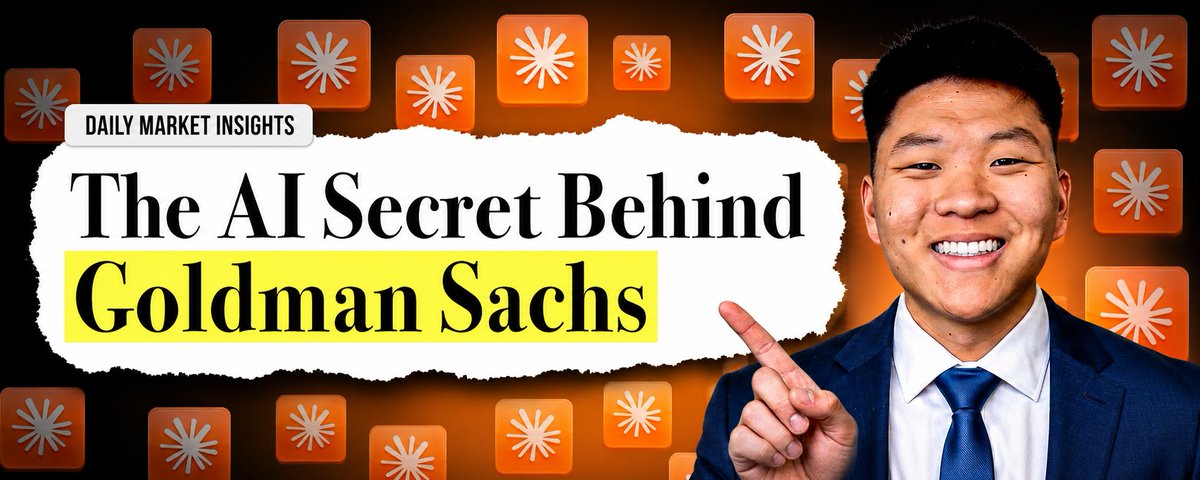
Before I started my own businesses, I spent part of my career in business intelligence at Goldman Sachs.
The tools have changed since then, but the principles I learned still shape how I use and think about AI every single day.
I turned those principles into a five-part framework called VAULT.
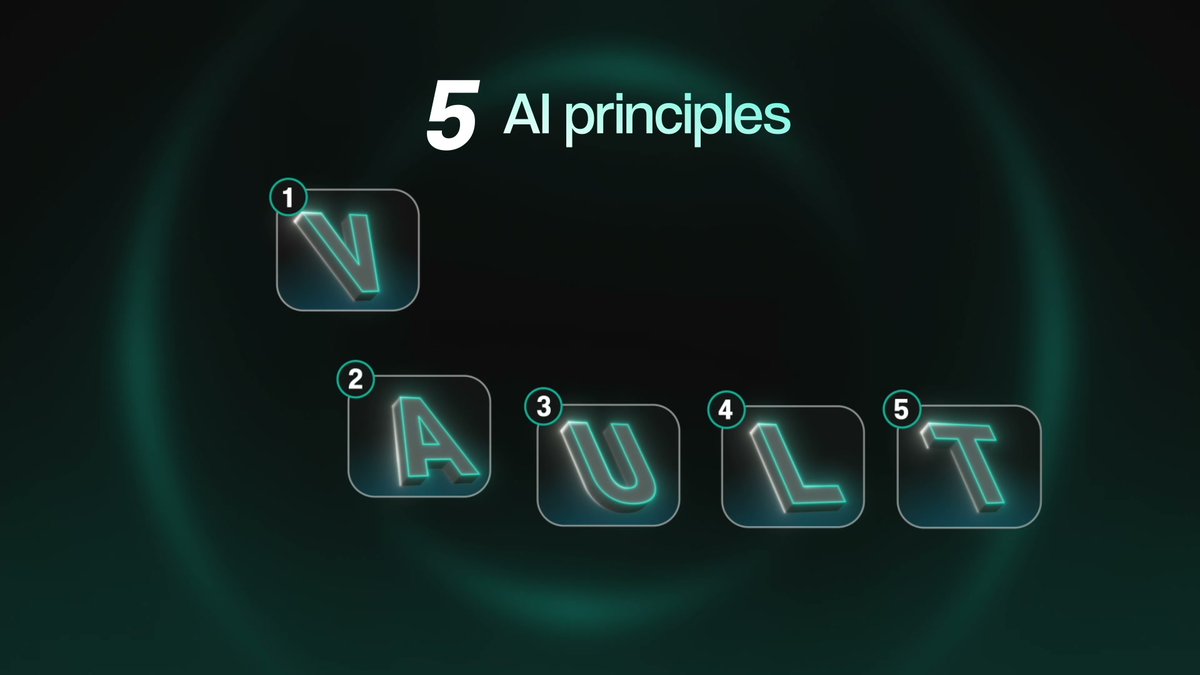
TL;DR
→ Verify the data going in and the important outputs coming out
→ Augment systems that already work instead of forcing AI into every step
→ Understand the problem and the outcome before choosing a tool
→ Loop humans in whenever an action can create a meaningful consequence
→ Keep the system transparent enough to inspect, fix, and hand off
## V: Verify The Output
AI is very good at giving you something that looks finished.
The answer is confident, formatted perfectly, and ready in 30 seconds. But something that looks finished and something that is correct are two very different things.
Marco Argenti, Goldman's CIO, has made a useful distinction between a model's reasoning process and its final output. The way a model breaks down a problem can still help you even when the final answer is wrong, but you still need to verify the result.
Verification starts before the model generates anything.
Every business intelligence analyst in my role at Goldman had to pass Data School. We learned how data gets pulled in, cleaned, updated, and turned into something another person can use to make a decision.
That foundation mattered because every report, dashboard, automation, and AI system is only as good as the data powering it.
Your company's data might be one of its biggest advantages. Nobody else has your exact customers, sales history, internal processes, or support tickets.
But if that data is outdated, duplicated, messy, or wrong, AI does not fix it. It gives you the wrong answer faster.
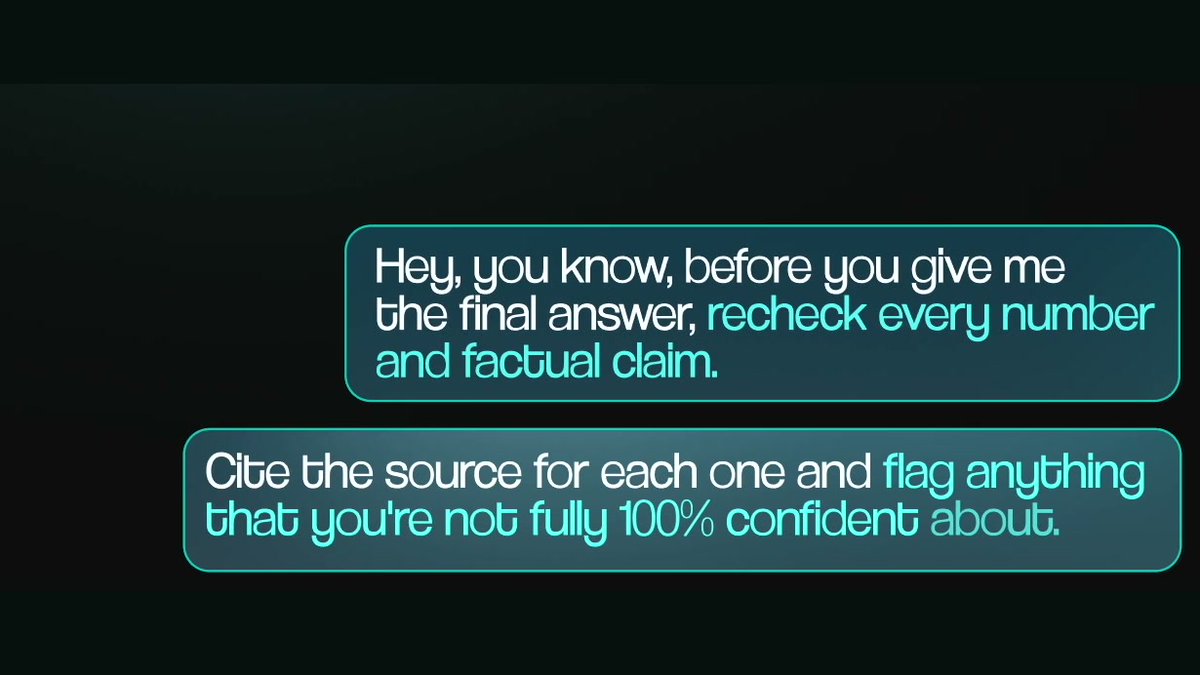
I like to build verification directly into the workflow with instructions such as:
→ Recheck every number and factual claim before giving me the final answer
→ Cite the source for each important claim
→ Flag anything you are not fully confident about
You do not need to manually verify every word.
If a report contains two or three numbers that could change the decision, have the model cite those numbers and spot-check the original sources yourself.
For higher-stakes work, I might add a separate AI reviewer or a small team of review agents before the output reaches me. Those extra reviews help, but important claims still need original sources, deterministic tests, or human judgment.
Verify the inputs, verify the decision-driving outputs, and build review into the process.
## A: Augment, Don't Replace
My full-time job at Goldman was building automations, reports, dashboards, and systems that made teams more efficient.
This work existed long before the current wave of AI agents.
Manual reports took hours. Data had to move between systems. Teams waited on information from other people. Someone would fat-finger an entry, skip a step, or follow a process slightly differently from the person beside them.
Humans are inconsistent because we get tired, miss steps, and make mistakes.
A properly tested deterministic automation runs the same process the same way every time. If you build the logic incorrectly, it will repeat the mistake perfectly, but predictable systems are easier to test, audit, and fix.
My rule is simple:
→ Use normal automation when the steps and the correct answer are already known
→ Use AI when the work requires judgment, interpretation, flexibility, or messy information
Sometimes the best AI system is the one that uses less AI.
If a problem can be solved more cheaply, quickly, and reliably without a model, that is valuable information.
The strongest systems often combine both approaches.
For a weekly business report, a normal automation can pull numbers from a database, clean them, run calculations, and verify the result. Then an AI model can look at those verified numbers and explain what changed in plain English.
The deterministic system handles the facts, and AI helps tell the story.
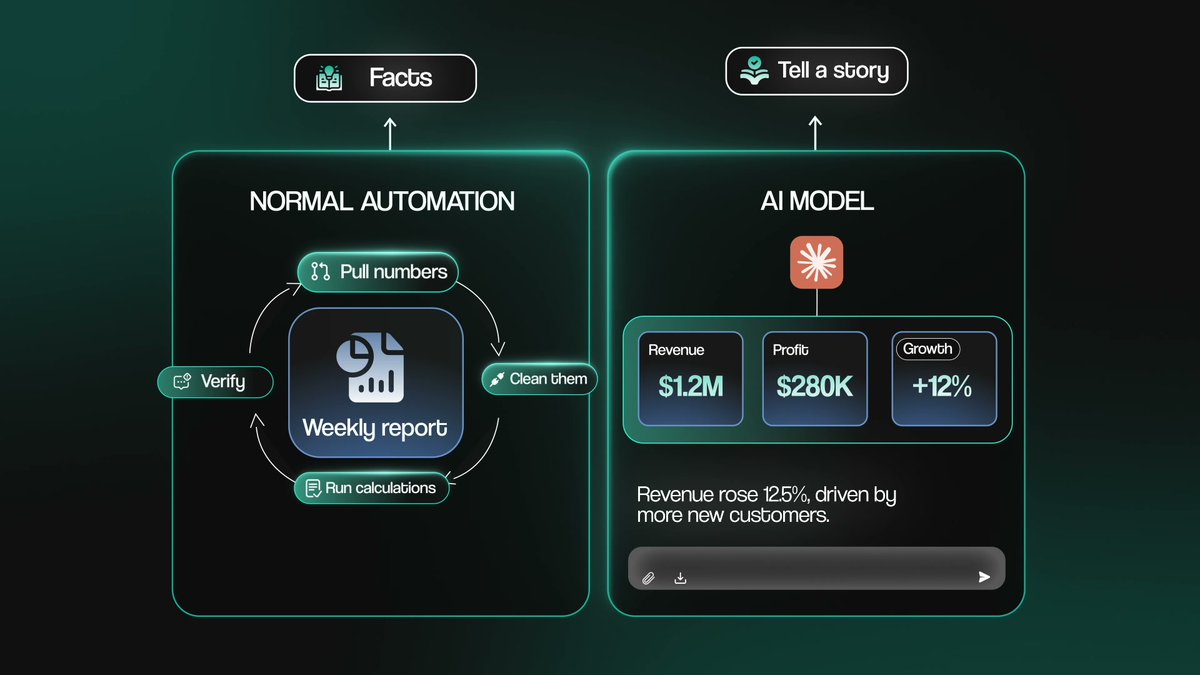
Augmentation means taking a process that already works, breaking it into steps, and improving only the steps where AI genuinely helps.
## U: Understand The Why
One of Goldman's engineering principles is called Build With Purpose.
Argenti's explanation is that engineers cannot focus only on how to build something. They also need to understand why it should exist.
I see people reverse that order with AI all the time. They decide to build an agent, create a workflow, or try the new tool everyone is talking about before they define the problem.
You can spend a week getting an impressive agent to work perfectly, but if it does not save time, make money, reduce mistakes, or improve an actual outcome, the build has no useful target.
Before opening an AI tool, write one sentence:
→ The problem I am trying to solve is [blank], and a good result would look like [blank].
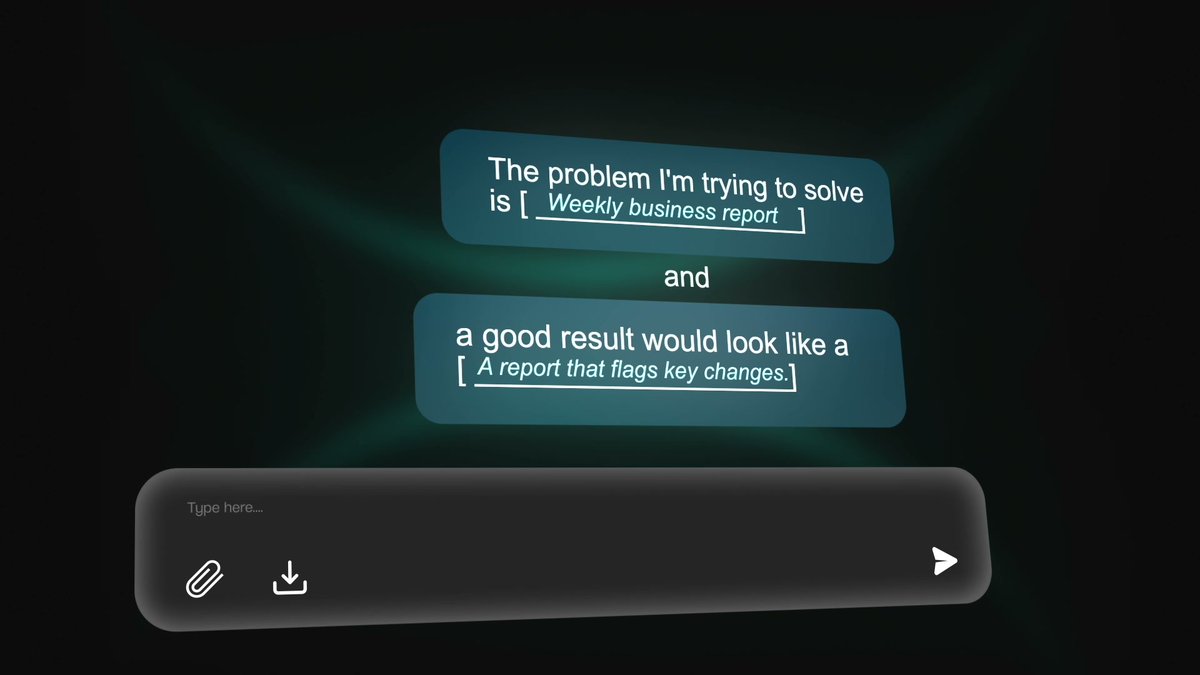
If you cannot complete that sentence, you probably are not ready to start prompting.
AI can still help while you figure it out. Give it the context, explain the bottleneck, and ask it to help you find the simplest solution.
This matters even more when you are trying to make money with AI.
Inside my communities, I have watched people build every workflow imaginable and still struggle to get clients because they started with the technology. I have also watched complete beginners focus on one painful problem, build one useful system, and replace their job income within months.
The problem they chose made the difference.
## L: Loop Humans In
Think of AI like a megaphone.
Whatever you give it can be amplified across an entire workflow, including your mistakes.
An unclear instruction might produce one slightly wrong answer in a chat. Connect that instruction to an autonomous agent and it could send the wrong email, update the wrong record, publish something publicly, or message an entire client list before you see it.
We learned this the painful way.
One of our autonomous agents looked at a task list, interpreted an item incorrectly, and sent a discount code to almost 200,000 people on our email list.
The level of oversight should match the consequence of the action.
If an AI tool is organizing your personal notes, you can probably let it run. If it is preparing client work, changing important data, spending money, or communicating with a large group, add an approval step.
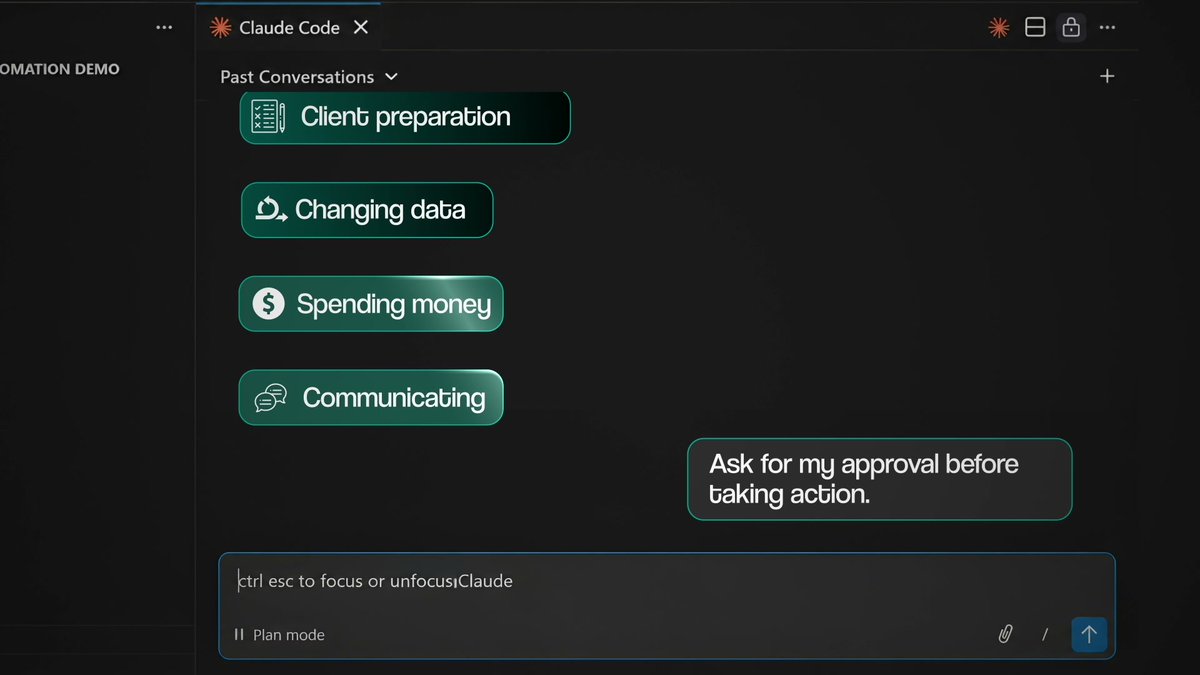
One of the easiest controls is to set automations to draft instead of send.
→ Put AI-written emails in Gmail drafts
→ Put proposed replies in a document for review
→ Show the plan before changing important files or deploying anything
→ Pause before any action that is difficult to undo
You still get most of the speed, but one weird output does not immediately become a much bigger problem.
The more people an action can affect, the more important the checkpoint becomes.
Our team uses a blunt rule: if an agent could potentially do something, assume that it eventually will. It can behave correctly 999 times, but that one bad execution might be the only one people remember.
## T: Keep It Transparent
A human cannot properly approve an output if the system does not show how it reached the result.
At Goldman, systems that touch important data, reporting, or risk need to show where the information came from, what happened to it, and how the final result was produced. Regulators, clients, managers, and other teams may all need to review the decision.
You cannot defend a system you do not understand.
An agent that works but nobody understands becomes a nightmare when something breaks, the data changes, or another person takes over the project. You will not know what to fix, which step failed, or whether the result can be repeated.
Ask the AI to document the system as it builds.
Every execution should be logged with:
→ Data sources
→ Assumptions
→ Tools and actions
→ Validation checks
→ Important decisions
If the system produces a report, show which source supports each conclusion.
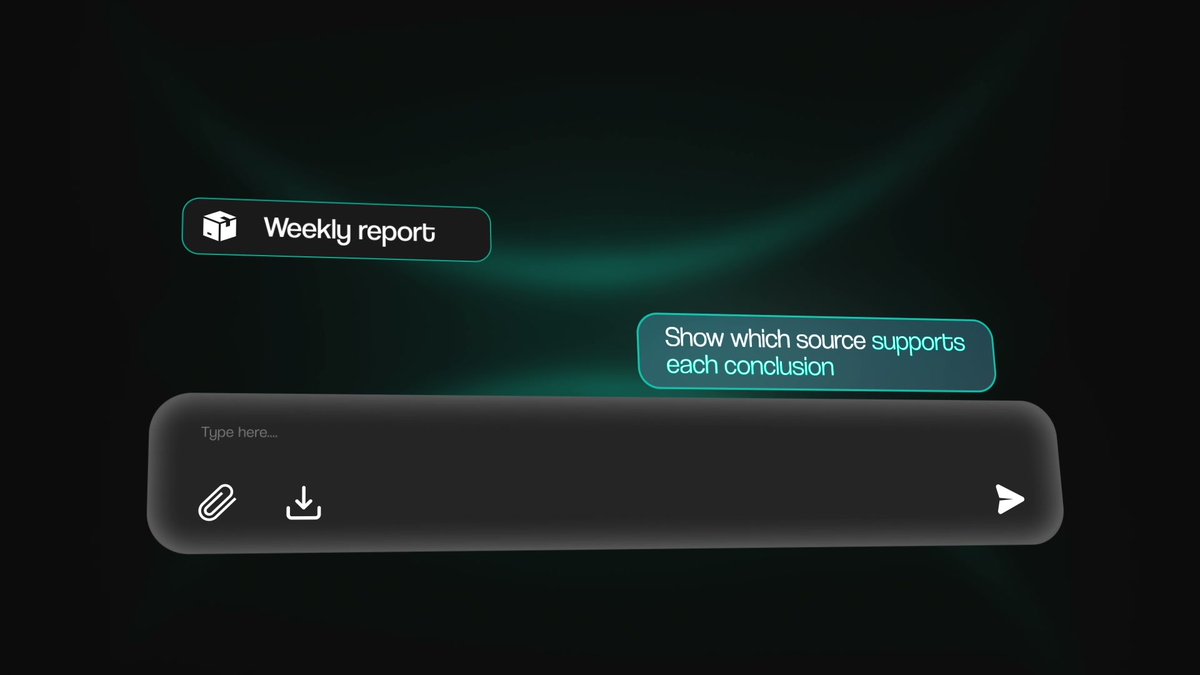
If it creates an automation, document the trigger, what happens at each step, and where a human needs to approve something.
Transparency does not mean asking a model to reveal a hidden internal thought process. You need evidence you can inspect: the sources, inputs, actions, assumptions, and checks it ran.
That record makes the system easier to trust, improve, and hand off.
## The VAULT Standard
The biggest lesson I took from Goldman is that you do not need to make everything an AI agent.
Understand the problem, protect the data, use the simplest system that works, and keep control over the actions that carry real consequences.
That is how I build AI systems I can trust.
I walk through all five principles in the full video. Link in the first reply.
Which part of your current AI workflow needs a checkpoint?
## 相关链接
- [Nate Herk](https://x.com/nateherk)
- [@nateherk](https://x.com/nateherk)
- [788](https://x.com/nateherk/status/2091897123860050090/analytics)
- [Upgrade to Premium](https://x.com/i/premium_sign_up)
- [10:35 PM · Aug 24, 2026](https://x.com/nateherk/status/2091897123860050090)
- [788 Views](https://x.com/nateherk/status/2091897123860050090/analytics)
---
*导出时间: 2026/8/24 23:29:00*
---
## 中文翻译
# 高盛教会我的关于 AI 的一切
**作者**: Nate Herk
**日期**: 2026-08-24T14:35:14.000Z
**来源**: [https://x.com/nateherk/status/2091897123860050090](https://x.com/nateherk/status/2091897123860050090)
---

在创办自己的企业之前,我职业生涯中有一段时间在高盛从事商业智能工作。
从那以后,工具已经改变了,但我学到的原则仍然每天都在影响我使用和思考 AI 的方式。
我把这些原则整理成了一个五部分的框架,叫做 VAULT。

TL;DR
→ 验证输入的数据和重要的输出结果
→ 增强已经有效的系统,而不是强行把 AI 塞进每一个步骤
→ 在选择工具之前,先理解问题和期望的结果
→ 每当一个行动可能产生重大后果时,让人类参与进来
→ 保持系统足够透明,便于检查、修复和交接
## V:验证输出(Verify The Output)
AI 非常擅长给你一些看起来已经完成的东西。
答案很自信,格式完美,30 秒内就能给出。但看起来完成的东西和正确的东西是两回事。
高盛的 CIO Marco Argenti 对模型的推理过程和最终输出做了一个有用的区分。即使最终答案是错的,模型分解问题的方式仍然可以帮到你,但你仍然需要验证结果。
验证在模型生成任何内容之前就开始了。
在高盛担任我这个角色的每一位商业智能分析师都必须通过 Data School。我们学习了数据是如何被提取、清洗、更新,并转化为可供他人做决策的东西。
这个基础很重要,因为每一份报告、仪表板、自动化流程和 AI 系统的质量都取决于支撑它的数据。
你公司的数据可能是它最大的优势之一。没有其他人拥有和你完全相同的客户、销售历史、内部流程或客服工单。
但如果这些数据是过时的、重复的、混乱的或错误的,AI 并不能修复它。它只会更快地给你错误的答案。
我喜欢在工作流程中直接内置验证,使用这样的指令:
→ 在给我最终答案之前,重新检查每一个数字和事实性陈述
→ 为每一个重要论断引用来源
→ 标记出任何你没有完全把握的内容

你不需要手动验证每一个字。
如果一份报告中有两三个可能影响决策的数字,就让模型标注这些数字,然后你自己抽查原始来源。
对于风险更高的工作,我可能会在输出到达我这里之前,增加一个独立的 AI 审查者或一个小的审查代理团队。这些额外的审查有帮助,但重要的论断仍然需要原始来源、确定性测试或人工判断。
验证输入,验证影响决策的输出,并把审查纳入流程之中。
## A:增强,而非取代(Augment, Don't Replace)
我在高盛的全职工作是构建自动化、报告、仪表板和各种系统,让团队更高效。
这类工作在当前这波 AI 智能体浪潮出现之前就早已存在。
手工报告要花好几个小时。数据需要在系统之间流转。团队要等待其他人提供的信息。有人会输错条目、跳过步骤,或者和旁边的人用略有不同的方式执行流程。
人类之所以不一致,是因为我们会疲劳、遗漏步骤、犯错误。
一个经过充分测试的确定性自动化,每次都会以同样的方式运行同样的流程。如果你把逻辑写错了,它会完美地重复这个错误,但可预测的系统更容易测试、审计和修复。
我的规则很简单:
→ 当步骤和正确答案已知时,使用普通自动化
→ 当工作需要判断、解释、灵活性或处理混乱信息时,使用 AI
有时候,最好的 AI 系统是那个用更少 AI 的系统。
如果一个问题不用模型就能更便宜、更快速、更可靠地解决,那本身就是有价值的信息。
最强大的系统往往是两种方法的结合。
比如一份每周商业报告:普通自动化可以从数据库中提取数字、清洗数据、执行计算并验证结果。然后 AI 模型可以查看这些已验证的数字,并用通俗的语言解释发生了什么变化。
确定性系统负责事实,AI 负责讲故事。

增强的意思是:把一个已经有效的流程拆解成步骤,只在 AI 真正有帮助的步骤上进行改进。
## U:理解为什么(Understand The Why)
高盛的工程原则之一叫做“有目的地构建”(Build With Purpose)。
Argenti 的解释是,工程师不能只关注如何构建某个东西,还需要理解它为什么应该存在。
我经常看到人们在 AI 上把顺序颠倒过来。他们决定构建一个智能体、创建一个工作流,或者尝试大家都在谈论的新工具,然后才去定义问题。
你可能会花整整一周让一个令人印象深刻的智能体完美运行,但如果它不能节省时间、赚钱、减少错误或改善实际结果,这个构建就没有有用的目标。
在打开 AI 工具之前,先写一句话:
→ 我要解决的问题是【空白】,一个好的结果应该是【空白】。

如果你无法完成这句话,那你可能还没准备好开始写提示词。
在你想清楚的过程中,AI 仍然可以帮忙。把背景信息给它,解释瓶颈所在,请它帮你找到最简单的解决方案。
当你想用 AI 赚钱时,这一点更加重要。
在我的社群里,我看到有人构建了你能想到的所有工作流,却依然难以获得客户,因为他们是从技术出发的。我也看到完全的新手聚焦于一个痛点问题,构建一个有用的系统,几个月内就取代了工作收入。
他们选择的问题决定了结果的不同。
## L:让人类参与进来(Loop Humans In)
把 AI 想象成一个扩音器。
无论你给它什么,都会在整个工作流程中被放大——包括你的错误。
一条不清晰的指令在聊天中可能只会产生一个稍有偏差的答案。但把这条指令接入一个自主智能体,它可能会在你看到之前发出错误的邮件、更新错误的记录、公开发布某些内容,或者向整个客户名单群发消息。
我们付出了惨痛的代价才学到这一点。
我们的一个自主智能体查看任务列表时,错误地解读了其中一项,然后向邮件列表中近 20 万人发送了折扣码。
监督的力度应该与行动的后果相匹配。
如果一个 AI 工具只是在整理你的个人笔记,你可以放手让它运行。但如果它在准备客户工作、修改重要数据、花钱,或者与一大群人沟通,就要增加一个审批步骤。

最简单的控制方法之一是把自动化设置为“草稿”而不是“发送”。
→ 把 AI 写的邮件放进 Gmail 草稿箱
→ 把建议的回复放进文档以待审查
→ 在修改重要文件或部署任何东西之前,先展示计划
→ 在任何难以撤销的行动之前暂停一下
你仍然能获得大部分速度优势,但一个奇怪的输出不会立即变成更大的问题。
一个行动影响到的人越多,检查点就越重要。
我们团队用一条直白的规则:如果一个智能体有可能做某件事,就要假设它最终会做。它可以正确运行 999 次,但那一次糟糕的执行可能是人们唯一记得的一次。
## T:保持透明(Keep It Transparent)
如果系统不展示它是如何得出结果的,人类就无法恰当地审批输出。
在高盛,接触重要数据、报告或风险的系统必须展示信息来自哪里、经历了什么处理、最终结果是如何产生的。监管机构、客户、管理层和其他团队都可能需要审查这个决策。
你无法为一个你不理解的系统辩护。
一个能正常运行但没人理解的智能体,在出问题、数据变化或别人接手项目时,就会变成一场噩梦。你不会知道该修什么、哪一步失败了,或者结果能否复现。
让 AI 在构建系统的同时进行文档记录。
每一次执行都应该记录:
→ 数据来源
→ 假设
→ 工具和行动
→ 验证检查
→ 重要决策
如果系统生成报告,要展示每个结论由哪个来源支持。

如果它创建自动化,要记录触发条件、每一步发生什么,以及人类需要在哪些地方审批。
透明并不意味着要求模型揭示隐藏的内部思考过程。你需要的是可以检查的证据:它使用的来源、输入、行动、假设和检查。
这样的记录让系统更容易被信任、改进和交接。
## VAULT 标准
我从高盛学到的最重要的一课是:你不需要把一切都做成 AI 智能体。
理解问题,保护数据,使用可行的最简单系统,并对具有真正后果的行动保持控制。
这就是我构建可以信任的 AI 系统的方式。
我在完整视频中详细讲解了全部五个原则,链接在第一条回复中。
你目前的 AI 工作流程中,哪个部分需要一个检查点?
## 相关链接
- [Nate Herk](https://x.com/nateherk)
- [@nateherk](https://x.com/nateherk)
- [788](https://x.com/nateherk/status/2091897123860050090/analytics)
- [Upgrade to Premium](https://x.com/i/premium_sign_up)
- [10:35 PM · Aug 24, 2026](https://x.com/nateherk/status/2091897123860050090)
- [788 Views](https://x.com/nateherk/status/2091897123860050090/analytics)
---
*导出时间: 2026/8/24 23:29:00*