# Mapping the Brain with Connectomics
**作者**: Google AI
**日期**: 2026-07-29T14:00:39.000Z
**来源**: [https://x.com/GoogleAI/status/2082466336228122711](https://x.com/GoogleAI/status/2082466336228122711)
---
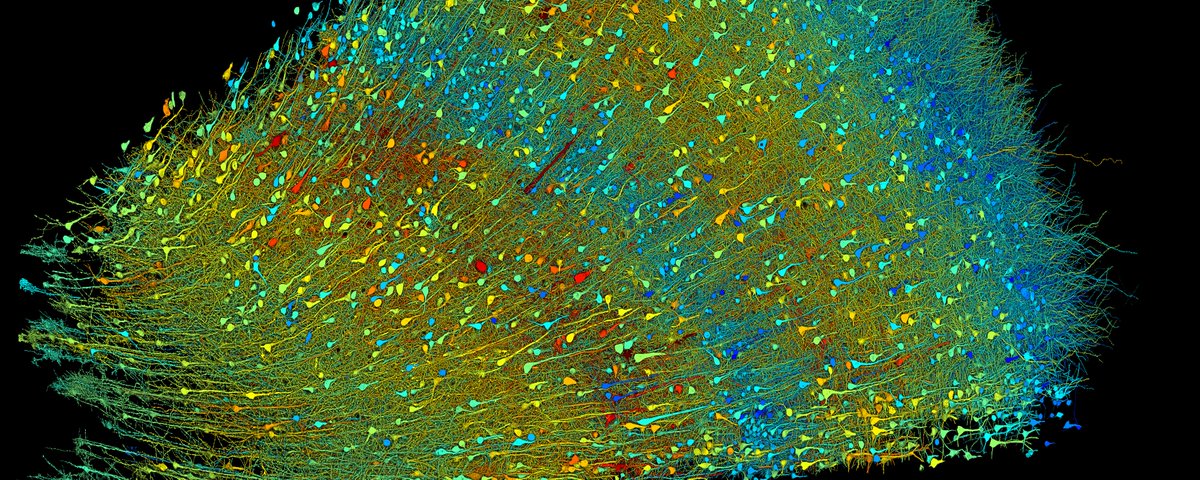
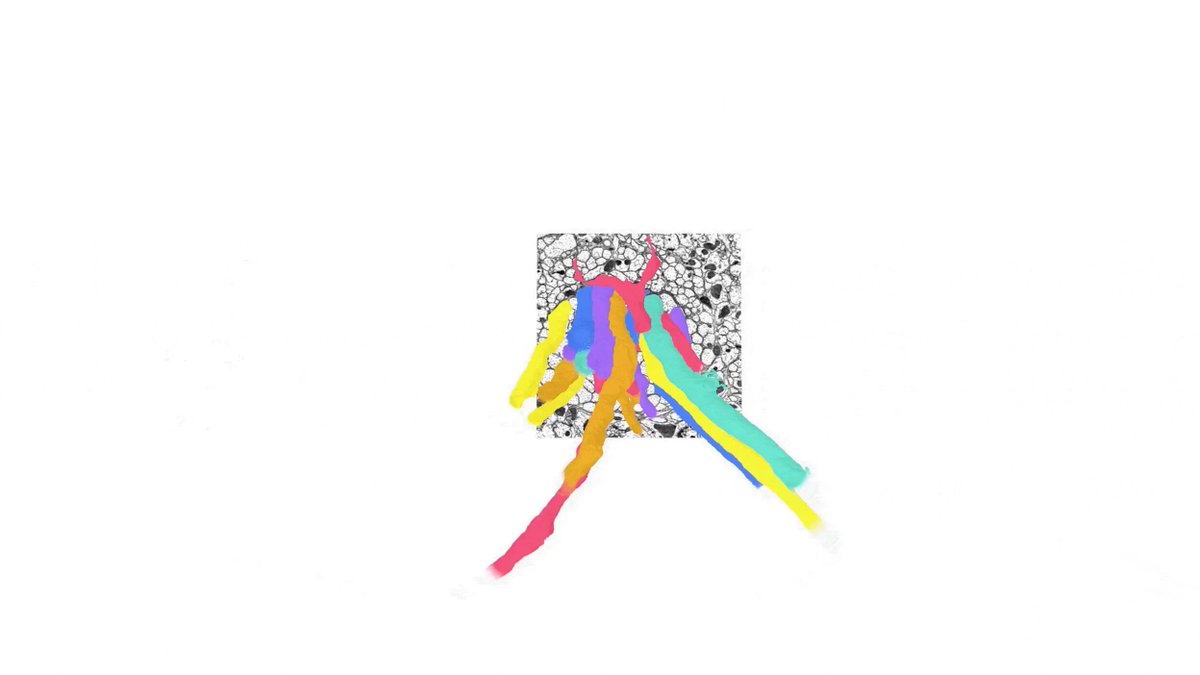
Fly brain neural map.
Did you know that mapping a speck of the human brain (smaller than a grain of rice) revealed never-before-seen structures, like single neurons connected by up to 50 synapses? This offers us brand-new clues into how the brain processes information, forms memories, and what happens when those networks fail.
Mapping these intricate networks is a field called connectomics and it’s critical to helping scientists understand how the brain works.
@GoogleResearch is developing advanced technology and AI tools to accelerate connectomics research. Here’s a quick history of connectomics and how it’s evolved over the past 40 years:
— The Roundworm: In 1986, researchers completed the first connectome for the C. elegans roundworm (302 neurons). It took 16 years of using markers to manually trace paths on enlarged photographs!
— The Fruit Fly: In 2020, our team mapped roughly half a fruit fly brain (25,000 neurons). That connectome database and its visualization reframed the way neural circuits are studied and understood in the fly brain.
— The First Human Sample: In 2021, the H01 dataset was released, showing a 1.4-petabyte 3D rendering of one cubic millimeter of human brain tissue. This marked the first-ever human connectome map and offered new insights into the human cortex.
— Mapping the Mouse Brain: In 2023, an NIH-supported project to map 2–3% of the mouse brain was launched, focusing on the memory- and navigation-encoding hippocampal region as a key step toward mapping a whole mouse brain.
— Complete Fruit Fly and Fish: Coming soon, complete connectomes of the male fruit fly (166,000 neurons) as well as the larval zebrafish. The larval zebrafish will mark the first full brain map for a vertebrate!
Learn what Google Research has already revealed about the brain.
Explore more of our research here: https://sites.research.google/gr/neural-mapping/
## 相关链接
- [Google AI](https://x.com/GoogleAI)
- [@GoogleAI](https://x.com/GoogleAI)
- [98K](https://x.com/GoogleAI/status/2082466336228122711/analytics)
- [@GoogleResearch](https://x.com/@GoogleResearch)
- [https://sites.research.google/gr/neural-mapping/](https://sites.research.google/gr/neural-mapping/)
- [Upgrade to Premium](https://x.com/i/premium_sign_up)
- [10:00 PM · Jul 29, 2026](https://x.com/GoogleAI/status/2082466336228122711)
- [98.9K Views](https://x.com/GoogleAI/status/2082466336228122711/analytics)
- [View quotes](https://x.com/GoogleAI/status/2082466336228122711/quotes)
---
*导出时间: 2026/7/30 10:02:38*
---
## 中文翻译
# 利用连接组学绘制大脑图谱
**作者**: Google AI
**日期**: 2026-07-29T14:00:39.000Z
**来源**: [https://x.com/GoogleAI/status/2082466336228122711](https://x.com/GoogleAI/status/2082466336228122711)
---


果蝇大脑神经图谱。
你知道吗?绘制一小块人类大脑(比一粒米还小)的图谱揭示了前所未见的结构,例如由多达50个突触连接的单个神经元。这为我们提供了全新的线索,帮助我们了解大脑如何处理信息、形成记忆,以及当这些网络出现故障时会发生什么。
绘制这些复杂的网络是一个被称为连接组学的领域,它对于帮助科学家理解大脑的工作原理至关重要。
@GoogleResearch 正在开发先进的技术和AI工具以加速连接组学的研究。以下是连接组学及其在过去40年演变历程的简要回顾:
— 秀丽隐杆线虫:1986年,研究人员完成了秀丽隐杆线虫(302个神经元)的第一个连接组图谱。这项工作耗时16年,研究人员使用标记物在放大的照片上手动追踪路径!
— 果蝇:2020年,我们的团队绘制了大约半个果蝇大脑(25,000个神经元)的图谱。该连接组数据库及其可视化工具重塑了人们研究和理解果蝇大脑神经回路的方式。
— 第一个人类样本:2021年,H01数据集发布,展示了一立方毫米人类脑组织的1.4 PB(拍字节)3D渲染图。这标志着首个人类连接组图谱的诞生,并提供了关于人类大脑皮层的新见解。
— 绘制小鼠大脑图谱:2023年,一项由美国国立卫生研究院(NIH)支持、旨在绘制2-3%小鼠大脑图谱的项目启动,该项目专注于负责记忆和导航编码的海马体区域,这是绘制完整小鼠大脑图谱的关键一步。
— 完整的果蝇和鱼类图谱:即将推出雄性果蝇(166,000个神经元)以及斑马鱼幼体的完整连接组图谱。其中,斑马鱼幼体将标志着首个脊椎动物的全脑图谱!

了解谷歌研究已经揭示的关于大脑的发现。
在此探索更多我们的研究:https://sites.research.google/gr/neural-mapping/
## 相关链接
- [Google AI](https://x.com/GoogleAI)
- [@GoogleAI](https://x.com/GoogleAI)
- [98K](https://x.com/GoogleAI/status/2082466336228122711/analytics)
- [@GoogleResearch](https://x.com/@GoogleResearch)
- [https://sites.research.google/gr/neural-mapping/](https://sites.research.google/gr/neural-mapping/)
- [升级到 Premium](https://x.com/i/premium_sign_up)
- [10:00 PM · 2026年7月29日](https://x.com/GoogleAI/status/2082466336228122711)
- [98.9K 次观看](https://x.com/GoogleAI/status/2082466336228122711/analytics)
- [查看引用](https://x.com/GoogleAI/status/2082466336228122711/quotes)
---
*导出时间: 2026/7/30 10:02:38*