神经营销时代到来:Meta开源工具Tribe V2引发营销革命 ✍ Karlo🕐 2026-04-17📦 30.8 KB 🟢 已读 𝕏 文章列表 文章深入探讨了营销领域的范式转移,指出传统社交媒体营销正在衰退,而神经营销成为新趋势。作者详细介绍了Meta开源的AI模型Tribe V2,该模型基于MRI人脑扫描数据,能精确预测大脑对视频内容的反应。文章还分析了为何AI动画广告在电商和宣传中极具效力,揭示了其利用大脑处理娱乐内容机制的原理,并警告这一强大工具需被负责任地使用。 神经营销AI动画MetaTribe V2营销策略人工智能电商脑科学社交媒体广告优化 # social media marketing is dead, neuromarketing is next **作者**: Karlo **日期**: 2026-04-09T18:22:26.000Z **来源**: [https://x.com/karlocreates/status/2044737952140398898](https://x.com/karlocreates/status/2044737952140398898) ---  Meta just quietly released the most dangerous marketing tool ever made. I've been in ecom for the last 5 years. We've scaled multiple ecom brands past $100k/day, and we've spent millions of dollars on paid ads testing literally every variable you can think of. In all that time, I've never seen something with the potential to change how marketing works as much as what I'm about to show you. Two weeks ago, Meta open-sourced an AI model called Tribe V2. It simulates how the human brain reacts to video, frame by frame. 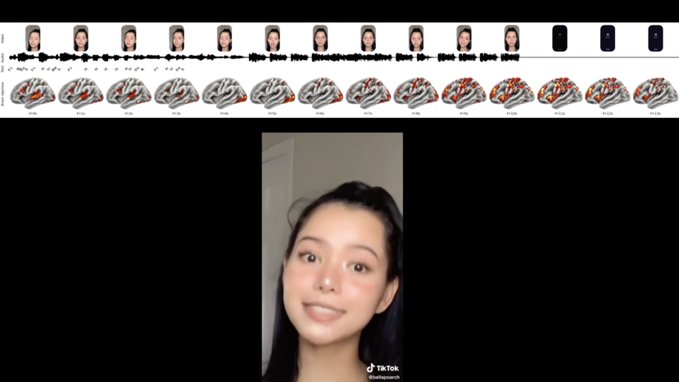 They built it by wiring 720 real human brains to MRI scanners for thousands of hours while those people consumed social media, podcasts, movies, and ads. The output is a model that predicts, with brain-scan accuracy, how any piece of content will hit a viewer. What they'll feel. What they'll ignore. What makes them scroll. What makes them stop. This is called neuromarketing. It's been around since the early 2000s. But it used to cost millions of dollars to actually do it properly. Real MRI machines, real research labs, real academic credentials. Meta just took all of that and made it free for anyone with an internet connection. If you actually read this article all the way through, take the time to understand how Tribe V2 works, why it matters, and how to apply it to your ads and your content - you're gonna run laps around everyone else in your space. That's the entire point of this article. Here's what I'll be covering: ## Table of Contents: Why you need to read this responsibly before you do anything else Why AI animation ads are currently taking over your feed How entire countries are using this exact format to push propaganda on their citizens The neuroscience of why your brain scrolls past 99% of content before you even process it Everything I've learned so far about Tribe V2 and what it can actually do How to start applying all of this to your ads, your content, and your brand starting tomorrow Exactly how I'm educating myself on this (and the free tool I'm using to go deep) I'm gonna break down everything I've learned so far about Tribe V2, and how to start applying all of this to your own marketing starting tomorrow. 1. Why you need to read this responsibly Before we go any further, I feel the responsibility to say something. What I'm about to share with you is genuinely the most powerful marketing information I've ever come across. And because Meta open-sourced it, literally anyone can access it. That includes governments, corporations, political campaigns, scammers, and people with agendas you'd never agree with. That's the problem with powerful tools. They don't care who's holding them. When you have something that can predict how a human brain will react to a piece of content before a single person sees it, you can use it two ways. You can use it to build better products, tell better stories, and actually serve your customers by creating content that genuinely resonates with them. Or you can use it to manipulate people into buying things they don't need, believing things that aren't true, and acting against their own interests. Some of you reading this are going to use this information for the wrong reasons. I can't stop that. But if you take anything from this article, please use it to build something real. The marketers who win over the next decade aren't going to be the ones who manipulate the hardest. They're going to be the ones who understand the human brain the best, apply that understanding to better products and better stories, and earn trust at scale while everyone else burns their audience out chasing short-term wins. That's the game we should all be playing. Now let's get into it. 2. Why AI animation ads are taking over your feed right now Open your Instagram right now. Scroll for 60 seconds. I guarantee you will see at least one AI animation ad / piece of content. You know the ones I'm talking about. Animated ingredients with googly eyes explaining what they do. Cartoon characters acting out problems and solutions. AI-generated scenes with simple shapes moving across the screen. A voice narrating over the top in that specific cadence that's somehow both corny and hypnotic.  These ads are everywhere. And I can confirm they're printing. We spent more than $100k last 7 days on 1 single AI animation ad we made for 1 brand, and we have multiple running across other brands as well (But this one is absolutely ripping, shoutout to our creative team 👨🏻🍳) 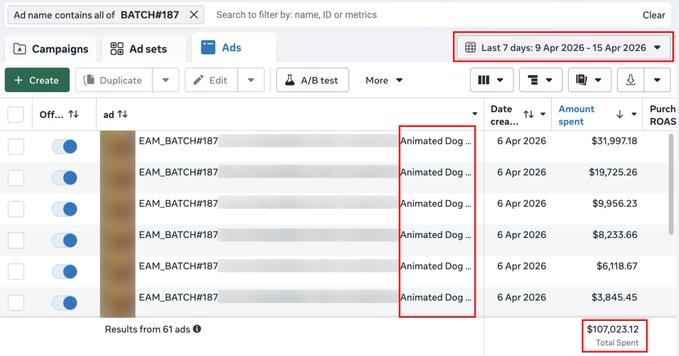 btw you can learn how to make ads like this one in ecomtalent 😁 This isn't a niche thing either. These ads are currently working in hair loss, dog health, skincare, men's health, cleaning products, vitamins, dental, pet nutrition - you name it. Every major ecom niche right now has at least one brand crushing it with AI animation creatives. The easy explanation is that it's just a trend. "AI animation is hot right now." "It's the new meta." Whatever. But that's not actually what's happening. Most of the agencies and brands using them don't even know why they're working. They just know they're working, so they keep making them. What's happening is that AI animation ads are the first creative format in a long time that accidentally hit on something deep about how the human brain processes content. And once you understand the real reason behind it, you stop seeing these ads as a trend. You start seeing them as the first visible example of neuromarketing winning at scale. But what really blew my mind is that it's not just ecom brands and marketers catching on. Entire countries are using this exact format right now to push propaganda. 3. How entire countries are using this format to push propaganda Governments don't pick content formats randomly. They have behavioural research budgets most ecom brands could only dream of lol. They have propaganda departments that have been studying mass manipulation since before social media existed. They test. They measure. They iterate. When an establishment like that picks a specific format to push their narratives on millions of people, there's a reason. It's not because it's trending. It's not because it looks cool. It's because when they tested it against every other format available to them, this one won. It won because it doesn't feel like an ad. It doesn't feel like propaganda. It doesn't even feel like content trying to sell you something. It just feels like entertainment. And your brain processes entertainment completely differently than it processes anything that feels like it's trying to convince you of something. Once your brain locks into a visual that reads as entertainment, it stops evaluating critically and just starts absorbing. It's not on guard anymore. It's relaxed. It's in receive-mode. And that's exactly when your defenses are at their lowest and you're most susceptible to whatever message is being delivered underneath. Whether that message is "buy our protein powder" or "distrust this political figure" - the mechanism is the exact same. The brain can't distinguish between the two when the format is this effective. That's why a dog health brand and a state-sponsored propaganda team are both using the exact same creative format in 2026. They're exploiting the same piece of neuroscience. And that is exactly what I'm going to break down next. ## 4. The neuroscience of why your brain scrolls past 99% of content Your brain runs on glucose. Literal sugar. Every time you think, focus, or process information, your brain is burning fuel to do it. And your brain hates burning fuel. It's lazy by design. It evolved over millions of years to conserve energy whenever possible, because in nature, energy was scarce. If you wasted too much energy thinking about things that didn't matter, you died. So your brain developed a ruthless filter: only spend glucose on things that are either survival-relevant or impossibly easy to process. Everything else gets ignored before you're even aware of it. That filter is still running today. Except now, instead of filtering out which berry to eat, it's filtering out which post to stop on while you're scrolling Instagram. And this is where it gets wild. Your brain makes the decision to scroll or stop before you've consciously seen the content. By the time "you" look at a post, your brain has already decided whether it's worth processing. If the visual looks complicated, if the text is dense, if the message isn't instantly clear - your brain flags it as "expensive to process" and your thumb moves before you even know why. You're not choosing what to watch. Your brain is choosing for you, based on how much glucose it would cost to understand it. And it's choosing "next" 99% of the time. There was a study my team and I recently looked at that broke this down visually. It measured what people actually see as a post enters their field of view during scrolling.  The finding: the brain is making scroll-or-stop decisions based on just the top portion of a post, before the full thing has even fully entered the screen. If that top portion doesn't immediately register as easy to process, the decision is already made. You scroll. The post is dead before you've read a word of it. This is why headlines and visual hierarchy in your ads matters so much. It's why the hook of your video has to land in the first half-second (and why you need a hook text on your video ads). It's why text-heavy ads get crushed by simple, visual ones. It's not about attention spans getting shorter. It's about the brain making survival-era decisions on every single piece of content you've ever seen. And now apply this to AI animation ads. Think about what those ads actually look like. Simple shapes. Clear characters. Obvious problems and obvious solutions. A voice narrating in a cadence that's nearly impossible to misinterpret. Everything about them is engineered (accidentally or not) to be stupidly, almost embarrassingly easy for the brain to process. Your brain sees an animated ingredient with a face explaining what it does, and instead of flagging it as "expensive to process," it flags it as "basically a cartoon - zero work to understand." Your brain relaxes. Your defenses drop. And now whatever message is embedded in that cartoon gets through. Every other format on the internet is competing for attention. AI animation ads aren't competing for attention. They're slipping past the filter entirely. That's why they work. That's why governments use them. That's why we spent $100k last 7 days on 1 single ad. Not because the content is better. Because the brain doesn't have to work to process it. And now we're getting to the craziest part of this entire article: Everything I just explained to you about the brain - the glucose, the lazy filter, the subconscious scroll decisions - has been theoretical for most marketers for decades. You could read about it. You could guess at it. But you couldn't see it. You can now. Two weeks ago, Meta made it possible to watch the human brain consume a piece of content in real time with an AI model. Frame by frame. Region by region. At a level of detail that used to require a literal MRI machine and a research scientist. They called it Tribe V2. And they gave it away for free. 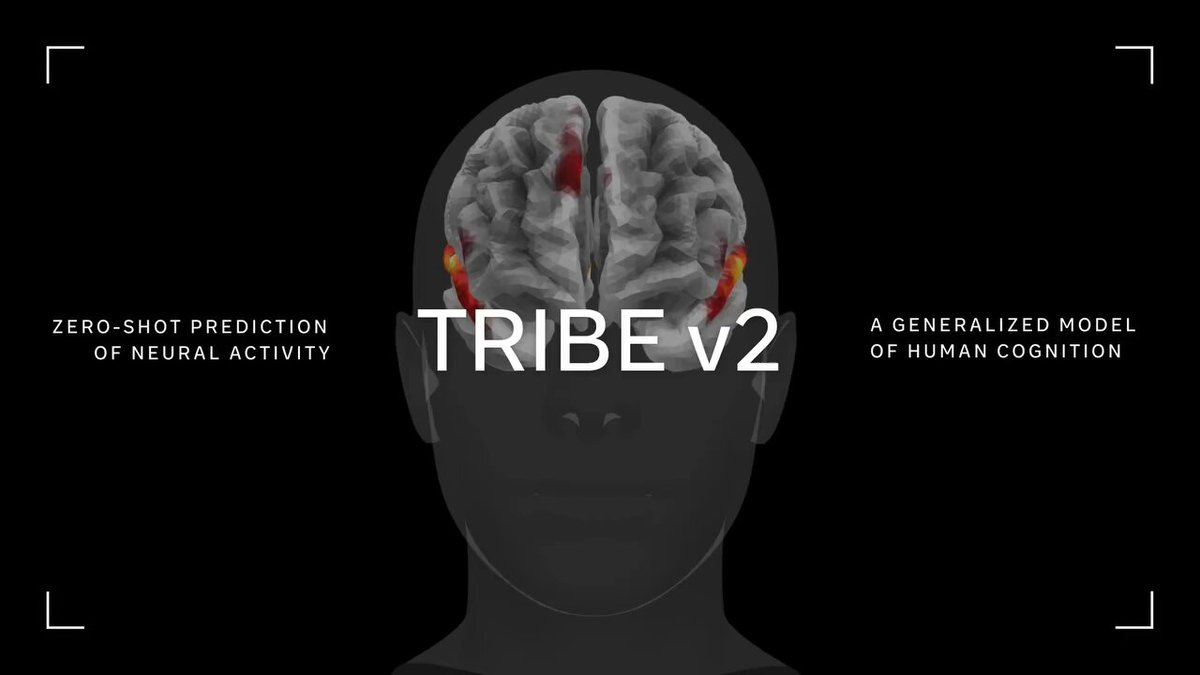 This is the part of the article where everything you just read about neuroscience stops being theory and becomes a tool you can actually use. 5. Everything I know about Tribe V2 (so far) Before I break this down, I want to be upfront I'm still learning this. I've spent a solid couple of hours going deep on Tribe V2 since it dropped, and I'm nowhere near where I need to be to be able to talk about it at a truly expert level. What I'm about to share is everything I've pieced together so far from the research paper, Meta's own documentation, and some smart people I've seen talking about it online. More will come as I go deeper. But this is enough to understand why this changes everything. ## 5a. What Tribe V2 actually is Tribe V2 is an AI model that simulates how the human brain reacts to video. Not "predicts engagement." Not "estimates watch time." It actually simulates, second by second, what's happening inside a human brain as it consumes a piece of content. You upload a video. The model gives you back what is essentially a brain scan for every second of that video. You can see which regions of the brain light up at which moments, how active they are, and what that activity means emotionally and cognitively. It's not an engagement predictor dressed up in fancy language. It's a synthetic viewer. One that has a brain. One that reacts to your content the way a real human would, before a single real human ever sees it. 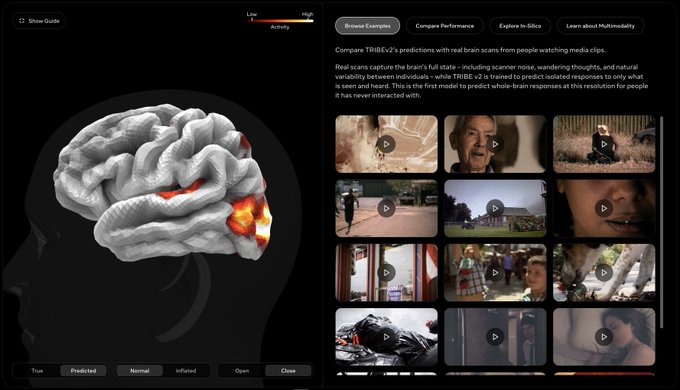 The craziest part is that Meta released Tribe V2 as an open-source model. Anyone can download it and run it locally. You upload a video, you get a brain scan back for every second of the video. I've linked the model and the documentation at the bottom of this article so you can set it up yourself. ## 5b. How Meta built this Meta took 720 real humans. They wired them to MRI scanners. They had them consume thousands of hours of content - social media posts, movies, podcasts, ads, video clips of every possible format. And while those people were watching, the MRI scanners were capturing what was happening inside their brains in real time. That's the training data. Then Meta fed all of that data into an AI model and trained it to predict, based on a piece of content, what the brain would do when it saw it. That's Tribe V2. It's the compressed neural reaction pattern of 720 people who lived inside an MRI machine for a combined lifetime of hours, rolled into a model anyone with an internet connection can now run. Take a moment to understand how insane this is Actual academic neuromarketing studies often involve 30 to 50 participants because each one costs thousands of dollars to run through an MRI. Meta ran 720. And then gave the output away for free. ## 5c. What Tribe V2 can actually do This is where it gets wild. Because Tribe V2 doesn't just tell you "this content is engaging" or "this content isn't." It shows you exactly where and why. You can see the second-by-second brain response to any video you upload. You can see which frames spike activity in the regions associated with emotion, attention, memory formation, or decision-making. You can see where people mentally check out. You can see where they lean in. A youtube creator recently ran a split test using Tribe V2 on YouTube thumbnails. He took five thumbnails from videos that had gone completely viral, and five thumbnails from videos that had flopped. He ran both groups through the model.  The viral thumbnails? Barely any brain activity. The brain was essentially passive. No spikes, no noise, no cognitive work happening. The flop thumbnails? The brain lit up everywhere. Tons of activity. Lots of cognitive processing trying to figure out what was going on. 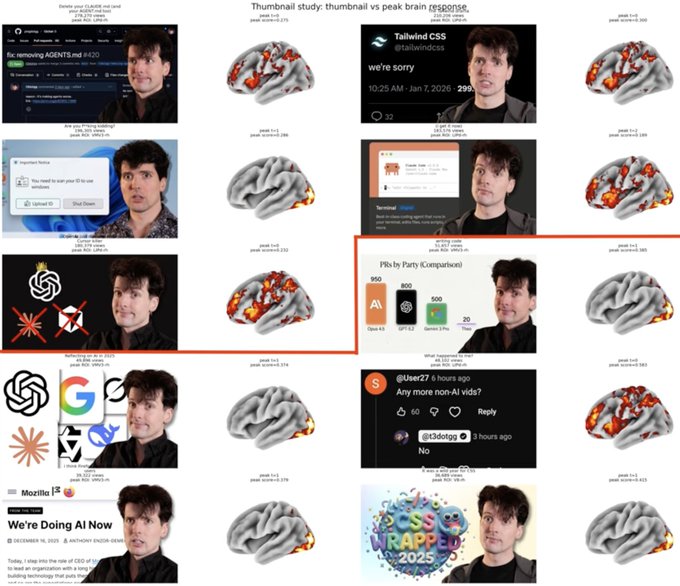 Which is the exact opposite of what most marketers would predict. But it lines up perfectly with what I explained in the last section. The viral thumbnails didn't make the brain work. They were processed instantly, effortlessly, and the click happened before conscious thought got involved. The flop thumbnails forced the brain to actually think - and the brain hates that. So it scrolled. This is the unlock. Tribe V2 lets you see, in advance, whether your content is going to trigger that "easy to process" response or that "expensive to process" rejection. Before you spend a dollar on ads. Before you post a single video. And it goes even deeper than that. Tribe V2 can differentiate between different types of brain activity. It can tell the difference between physical pain and emotional pain. Between surface-level discomfort like a headache and deep psychological pain like depression. Between different emotions, different intensities, different mental states. That's how granular this gets. It's not reading your brain at the level of "happy or sad." It's reading it at the level of "this specific type of sadness, in this specific region, at this specific intensity." Like I said at the start of this section - I'm still learning this. We're still in the very early days of figuring out what Tribe V2 can actually do and how marketers should be using it. I'll have a lot more to share as I go deeper. But what I do know is that Meta didn't release this in a vacuum. And they're not the only ones pushing neuromarketing into the mainstream right now. While I was researching Tribe V2, I noticed that Shopify published a full article on neuromarketing recently. https://www.shopify.com/blog/neuromarketing What it is, why it matters, how ecom brands should be thinking about it. Meta and Shopify are both pushing their users toward neuromarketing at almost the same time. You think it's a coincidence? I don't. Now let's talk about how to actually apply this. 6. How to apply this to your ads, your content, and your brand starting tomorrow Before I break this section down, I want to be clear about something. You can absolutely use Tribe V2 yourself. It's open-source. Anyone with an internet connection has access to it. At the end of this article I'm going to link the model, Meta's research paper, their official documentation, and every other resource I've been using to educate myself. If you want to go set this up and run your own content through it, you can, and I'd encourage it. But what I'm going to do in this section is break down the key learnings I've pulled from all of this so far, and how you can apply them to your marketing starting tomorrow. No tools needed. Just a better understanding of how the brain actually consumes content, and the discipline to apply it consistently. Every piece of content you make comes down to one question: How hard does the human brain have to work to understand this? That's it. That's the whole game. Answer that question correctly and your content wins. Get it wrong and your audience scrolls past you before they even know you existed. Here's where this shows up the most in the ads and content you're making every single day. ## 6a. Fix your visual hierarchy Every piece of visual content has a top. And that top is the most expensive real estate you have. Because of how the brain processes the scroll, your audience's brain is making the scroll-or-stop decision based on what it sees at the top of your post, before the rest has even fully entered the screen. If your hook isn't up there, if your headline isn't up there, if your most important visual isn't up there - you're dead. Open your ad account right now. Look at your last 10 ads. Is the most important piece of information at the very top of every single one? If the answer is no, you have work to do. - Headlines at the top of every static ad. Non-negotiable. - Hook text at the top of every video ad. Non-negotiable. - The most important visual element in the top 25% of every thumbnail, carousel, or post. (Btw, we also started split testing thumbnails for video ads on Meta and are seeing very interesting results, don't have enough data yet to make any claims confidently) ## 6b. Clear always beats clever You want your ad to be witty. You want your headline to be a little mysterious. You want your video to have that cool narrative twist. I get it. I've been there. Every marketer who gets into this thinks cleverness is the edge. It's not. Cleverness is the trap. Because every second your audience spends trying to figure out what you're saying is a second their brain is burning glucose - and the moment that starts happening, they're gone. The best marketers in the world aren't clever. They're embarrassingly clear. They say exactly what the product does. They show exactly who it's for. They communicate the benefit in language a 7-year-old could understand. The reason they win isn't because their audience is dumb. It's because their audience's brain is lazy. Every ad, every video, every post should pass a simple test. A stranger looks at it for half a second. Can they instantly tell: - What they're looking at - Who it's for - What problem it solves If the answer to any of those is no, rewrite it. Keep rewriting until it is. ## 6c. Never confuse intrigue with confusion This is a distinction most marketers don't understand, and it costs them a lot of money. Intrigue is when you say something that challenges the viewer's beliefs and makes them want to know more. "People are losing 20 lbs while still eating pizza every other day." Your brain hears that and thinks, "wait, what? I need to know how." That's good. That makes the brain lean in. That earns the click. Confusion is different. Confusion is when the viewer sees your ad and doesn't know what they're looking at. They can't figure out what the product is. They can't figure out who it's for. They can't figure out what problem you're solving. That's bad. That makes the brain flag it as "expensive to process" - and they're gone. Intrigue wants them to think about the answer. Confusion wants them to think about the question. Master the difference. ## 6d. The format you wrap your message in is just as important as the message itself The brands that win over the next few years are going to be the ones who take their messaging seriously AND put the same amount of effort into figuring out what format will get that message past the filter. So here's what you should actually do: Go do deep, deep research on what your audience is already consuming for fun. Not ads. Not direct response content. Actual entertainment. What shows are they watching? What creators are they following? What kind of videos are they sending to their friends? What formats are they binging on TikTok, Instagram, and YouTube when they're not even thinking about buying anything? Go find all of it. Study it. Understand why it works. And then figure out how to deliver your message inside that exact format. This is also why AI animation ads are currently printing across every single demographic. Gen Z loves them. Millennials love them. Even boomers love them. It's one of the very few formats right now that works universally across age groups, across niches, across price points. Because a format that feels like entertainment bypasses the filter for literally everyone. There's no generation on earth whose brain is built to reject content that's genuinely easy to process and fun to watch. Your competitors are still arguing over which hook template to use. The winners are already studying what their audience is watching on a Friday night and reverse-engineering the format. Do that work. Most marketers won't. And that's your edge. ## 6e. What we're building next Some of you have probably noticed I've been pretty quiet on X for the last few months. There's a reason for that. My team and I have been heads-down building a bunch of backend systems for a vision that's going to shape everything we do over the next year. And Tribe V2 just dropped in the middle of all of that, which changes some of what we're building and accelerates the rest. I'm going to share one thing we're working on specifically, because laying it out might spark some ideas for whatever you're building on your end. We're building an AI Ad Review System - that is now also going to include Tribe V2 (Which will soon be available in EVOLVE and ecomuniversity.com, IYKYK @shauneng @spencepawliw) The plan is to take every winning ad we've ever produced, run each one through the model, and generate a brain scan for every single one. Then we average all of those scans into one composite profile - basically, the neural fingerprint of what a winning ad looks like inside the human brain. Over time, we'll be able to break those winning profiles down by niche, by audience, by product type. And this is going to help massively when doing learnings on ads. The possibilities here are honestly endless. This is just one use case, and it's already enough to completely change how our creative process works. If you run a brand, an agency, or you're making content of any kind, think about how you could apply this same logic to your own work. What's your version of a "winning profile"? What's already proven in your business? And what would happen if you could pre-screen every new piece of work against the neural pattern of what's already won? This is exactly what I meant earlier when I said neuromarketing is going to completely rewrite how marketing works. We're not there yet. But we're close. 7. Exactly how I'm educating myself on this (and the free tool I'm using to go deep) Everything in this article is based on roughly a couple of hours of research. I'm nowhere near done learning this. I don't think anyone is and will be any time soon. Tribe V2 dropped two weeks ago, the research paper behind it is dense, and the implications for marketing are so big that I genuinely believe figuring all of this out is going to be a full-time pursuit for the next year at least. So here's what I've been doing to go deep on this as fast as possible. It might save you weeks of fumbling around. Google has a free tool called NotebookLM. Here's how it works: You dump every source you can find on a topic into it - research papers, articles, documentation, YouTube videos, X threads, whatever. It reads all of it. Then it lets you ask questions across everything you uploaded, and it answers based on the actual sources. No hallucinations. No made-up stats. Just synthesized answers from the material you gave it. But the best feature, the one that actually changed my learning speed, is that it can take everything you uploaded and generate a podcast from it. Two AI hosts discussing the material, asking each other questions, making connections between different sources. You can listen to it on a walk, in the gym, driving, wherever. That's been the move for me. I took every source I could find on Tribe V2 and neuromarketing. Dumped it all into NotebookLM. Generated a podcast. Listened to it on repeat. Went back to the original sources for anything that was unclear. Asked NotebookLM follow-up questions to dig deeper on specific topics. That's how I went from knowing nothing to writing this article in a matter of week. It's the closest thing I've found to a learning accelerator that actually works. If you want to go deep on this, or honestly on any topic you're trying to master quickly, start there. ## The sources I've been using Here's everything I've been pulling from while researching this article. I'm linking all of it so you can go run the same process yourself. - The @fuckgrowth article that first put this on my radar: [https://x.com/fuckgrowth/status/2041580077826371733?s=20] (Have to give credit where credit's due 🤝) - Meta's Tribe V2 documentation and model access [https://ai.meta.com/blog/tribe-v2-brain-predictive-foundation-model/] - The scrolling viewability study our graphic designer found for the team: [https://www.tandfonline.com/doi/full/10.1080/00913367.2025.2524186#abstract - YouTube Creator doing thumbnail study: [https://www.youtube.com/watch?v=VER-F4wdA9Q] - Shopify's neuromarketing article: https://www.shopify.com/blog/neuromarketing - NotebookLM (the tool I've been using to learn this): [https://notebooklm.google.com/] Drop all of this into NotebookLM. Generate the podcast. Start listening. Ask questions. You'll know more than 99% of marketers within a week. ## One last thing If you made it this far, thank you. I know this article was long. I know some of it probably got technical. But if you actually read the whole thing, you now understand something about marketing and the human brain that the overwhelming majority of people in this industry are not going to catch onto for another 6 to 12 months, if ever. That's a real head start. Don't waste it. Start small. Pick one thing from this article. Apply it to your next ad, your next post, your next video. See what happens. Then apply the next thing. Then the next. Keep stacking the unfair advantages until the gap between you and your competitors is too wide to close. This is going to be a massive shift. Social media marketing as we've known it for the last 15 years is on its way out. Neuromarketing is what's replacing it. And the marketers who start building an edge now are going to look back in a few years and realize this article was the starting gun. I'll have a lot more on this as I go deeper. If you liked this article and you want to read more about my story and what I do, I suggest reading this one Thank you for reading. Another day another trench. - Karlo ## 相关链接 - [Karlo](https://x.com/karlocreates) - [@karlocreates](https://x.com/karlocreates) - [9.6K](https://x.com/karlocreates/status/2044737952140398898/analytics) - [Apr 10](https://x.com/DropSiteNews/status/2042307162265784680) - [1.1M](https://x.com/DropSiteNews/status/2042307162265784680/analytics) - [https://www.shopify.com/blog/neuromarketing](https://www.shopify.com/blog/neuromarketing) - [ecomuniversity.com](https://ecomuniversity.com/) - [@shauneng](https://x.com/@shauneng) - [@spencepawliw](https://x.com/@spencepawliw) - [@fuckgrowth](https://x.com/@fuckgrowth) - [https://x.com/fuckgrowth/status/2041580077826371733?s=20](https://x.com/fuckgrowth/status/2041580077826371733?s=20) - [https://ai.meta.com/blog/tribe-v2-brain-predictive-foundation-model/](https://ai.meta.com/blog/tribe-v2-brain-predictive-foundation-model/) - [https://www.tandfonline.com/doi/full/10.1080/00913367.2025.2524186#abstract](https://www.tandfonline.com/doi/full/10.1080/00913367.2025.2524186#abstract) - [https://www.youtube.com/watch?v=VER-F4wdA9Q](https://www.youtube.com/watch?v=VER-F4wdA9Q) - [https://www.shopify.com/blog/neuromarketing](https://www.shopify.com/blog/neuromarketing) - [https://notebooklm.google.com/](https://notebooklm.google.com/) - [May 10, 2025](https://x.com/karlocreates/status/1921207525443023203) - [104K](https://x.com/karlocreates/status/1921207525443023203/analytics) - [Upgrade to Premium](https://x.com/i/premium_sign_up) - [7:21 PM · Apr 16, 2026](https://x.com/karlocreates/status/2044737952140398898) - [9,653 Views](https://x.com/karlocreates/status/2044737952140398898/analytics) - [View quotes](https://x.com/karlocreates/status/2044737952140398898/quotes) --- *导出时间: 2026/4/17 00:21:55*
我 我们运行的5种AI UGC格式及使用时机 文章探讨了内容格式对传播效果的重要性,详细介绍了五种常用的AI UGC格式:真人出镜、产品演示、前后对比、用户证言和幻灯片。文章分析了每种格式的运作机制、适用场景及制作要点,强调应根据内容和受众选择最合适的载体,以最大化内容的传播效率。 技术 › Agent ✍ Adrian Solarz🕐 2026-07-24 AIUGC内容营销视频生成社交媒体营销策略AIGC视频格式
如 如何在 X 平台获得 3600 万浏览量并获取数千用户 文章分享了 Okara 通过 X(Twitter)平台实现 3600 万浏览量并获取大量用户的实战经验。策略包括:精准选择渠道、发布产品发布、教育性推文、演示视频、产品公告及热点评论等五类内容。通过不断测试不同钩子和形式,他们成功实现了病毒式传播,并验证了 B2B SaaS 在 X 平台的增长潜力。 技术 › Agent ✍ Okara🕐 2026-07-21 增长黑客营销策略社交媒体产品发布用户增长内容营销案例研究X平台AI Agent
如 如何在 X 上实现病毒式产品发布 文章分享了如何在 X(Twitter)上实现病毒式产品发布的完整流程。作者强调成功并非运气,而是机械化的准备。核心步骤包括:确保产品前 30 秒展示价值、提前撰写新闻稿、制作简短直击痛点的视频、选定最佳发布时间并提前组织 50 名关键支持者互动。文章还指出,AI 新鲜感已过,需聚焦解决实际问题。 职场 › 沟通 ✍ Fama🕐 2026-07-21 产品发布增长黑客营销策略社交媒体用户增长X运营创业
全 全平台AI绘图提示词指南 本文针对X、小红书、公众号、电商、教程及PPT等10大常见场景,解析不同平台的视觉逻辑,并提供可复用的中文提示词模板与微调建议,助你生成高质量图片。 技术 › 工具与效率 ✍ 多肉🕐 2026-07-21 AI绘图提示词小红书电商公众号PPT设计社交媒体营销运营
如 如何将产品发布影响力提升 100 倍的 7 个策略 文章基于作者为多家估值数亿至十亿美元公司提供上市策略咨询的经验,指出大多数团队浪费了最大的增长机会——产品公告发布。作者提出了在 Twitter 上进行产品发布的 7 个实战策略,旨在通过系统性的设计而非单纯的运气来提升影响力。核心观点包括:优先优化总曝光量而非转化率、提前预热友好账号和投资者、设计互动激励机制、预热账号主页、积极回复高质量评论、优化帖子本身的视觉与文案,以及建立有目的的转化漏斗。 职场 › 管理 ✍ intern🕐 2026-05-06 营销策略增长黑客社交媒体Twitter产品发布创业市场推广转化率流量获取
如 如何在一个周一早晨获得360万浏览量与9000个演示 本文分享了如何为AI产品Helena策划一场成功的发布活动,最终获得360万浏览量并成为当周最大发布。关键策略包括:重塑定位从“AI CMO”转向“自主AI营销人员”;避开拥挤时段选择周一发布;分层协调300个关键账号进行助推;利用公开比较制造话题争议;以及精确安排首小时的互动节奏以确保算法推荐。 职场 › 方法论 ✍ Subah Wadhwani🕐 2026-05-04 产品发布增长黑客营销策略X运营AI营销社交媒体流量增长创业
M Mapping the Brain with Connectomics 文章介绍了连接组学的发展历程及其在脑科学研究中的重要性。Google Research利用AI技术加速该领域研究,从1986年首次绘制线虫连接组,到2021年发布首个人类样本连接组图谱,未来还将完成果蝇和斑马鱼的全脑图谱。 技术 › AI工具 ✍ Google AI🕐 2026-07-30 连接组学脑科学GoogleAI神经图谱研究
中 中国风投生态运作机制 文章分析了中国风险投资生态的独特性,指出尽管中国在开源AI、生物技术和机器人领域具有优势,但其资本市场对创始人更为严苛。文章解释了为何中国初创公司倾向于IPO而非被收购,并详细介绍了人民币基金、美元基金和外资基金这三种资本池的特点与差异。 投资 › 宏观经济 ✍ Bohan🕐 2026-07-29 中国风投IPO资本生态人工智能机器人生物科技
D Distribution 101: How to Sell Your Products 文章探讨了在产品构建日益简单的当下,分销与营销成为了关键技能。作者重点分享了在 X 平台进行有效产品销售的实战经验,包括如何设置个人资料、选择高价值利基市场、确立独特角度以及持续提供有价值的内容。 技术 › 营销 ✍ EP🕐 2026-07-29 营销分销增长X平台创业产品社交媒体个人品牌内容创作
W Why LinkedIn is the Biggest Opportunity in B2B History 文章指出LinkedIn目前拥有13亿用户和6500万决策者,是B2B领域仅存的高效低成本获客渠道。与其他渠道相比,Google Ads点击成本高昂,Meta受iOS隐私政策影响,冷邮件回复率极低,而LinkedIn算法仍扶持个人内容,且用户处于购买心智。作者将其比作2004-2008年的SEO红利期,强调建立系统性内容运营而非依赖AI生成或单次投放,是实现复利增长的关键。 职场 › 职业发展 ✍ Paolo Trivellato🕐 2026-07-29 LinkedInB2B营销获客内容策略SEO社交媒体增长黑客职场创业
真 真香!都去用Codex搞闲鱼店铺 本文介绍了如何利用Codex将闲鱼运营从凭感觉转变为可执行的赚钱系统。通过选品、文案、话术、执行和复盘五个方面,详细拆解了AI在降低判断成本和优化流程中的应用,帮助新手建立结构化的运营能力。 技术 › Codex ✍ SakuAI🕐 2026-07-28 闲鱼运营AI应用选品文案复盘电商副业流程化
大 大脑对长周期 Agent 的启示 文章通过对比人脑的双速学习机制(海马体与皮层),指出当前 AI Agent 仅依赖大模型权重的局限性。真正的长周期智能需要将预测模型与经验状态结合。现有的外部记忆存储实则是模拟海马体的快速捕获功能,未来的关键在于实现高效的记忆筛选机制。 技术 › Agent ✍ Yohei🕐 2026-07-28 Agent架构设计脑科学长周期记忆CLSM理论