# What 10 months in production taught us about the robotics “bubble”
**作者**: York Yang
**日期**: 2026-05-04T14:24:08.000Z
**来源**: [https://x.com/YorkYang5050/status/2051306890991415507](https://x.com/YorkYang5050/status/2051306890991415507)
---
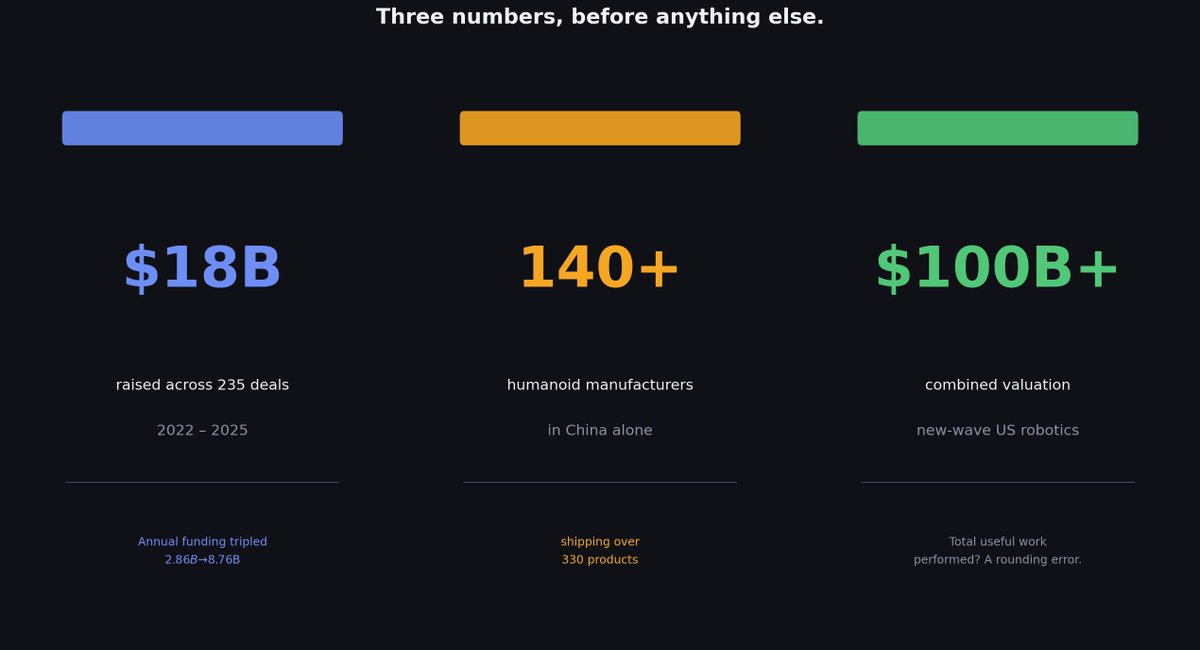
Three numbers, before anything else.
- The robotics industry raised over $18 billion across 235 equity deals between 2022 and 2025. Annual funding tripled from $2.86B in 2022 to $8.76B in 2025.
- China alone has more than 140 humanoid manufacturers shipping over 330 products.
- Combined valuation of new waves of US robotics companies comfortably exceeds $100+ billion.
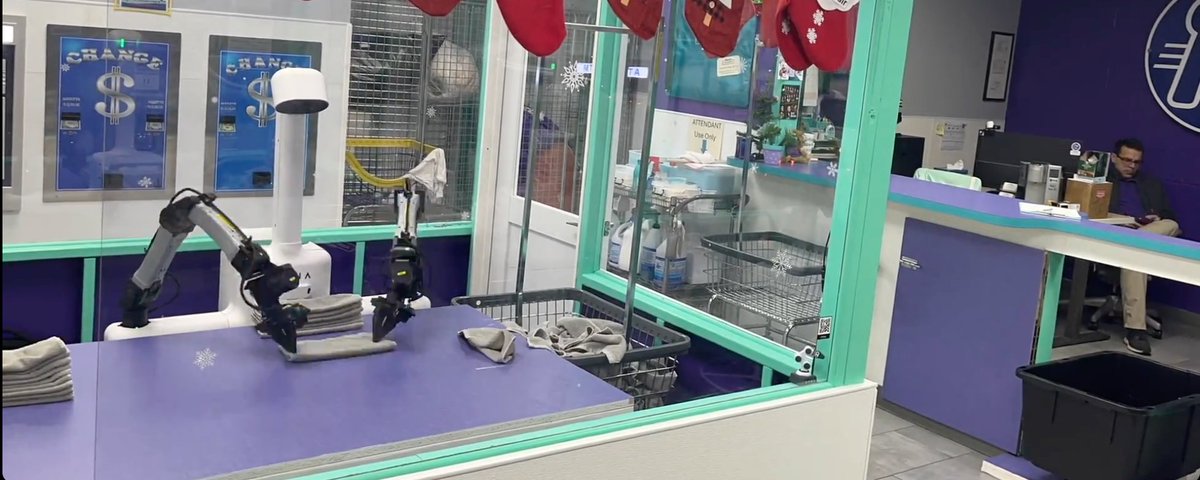
Total useful work performed by humanoid robots in 2025? A rounding error.
In January 2026, Elon Musk acknowledged on Tesla's earnings call that zero Optimus robots were doing useful work in Tesla's factories.
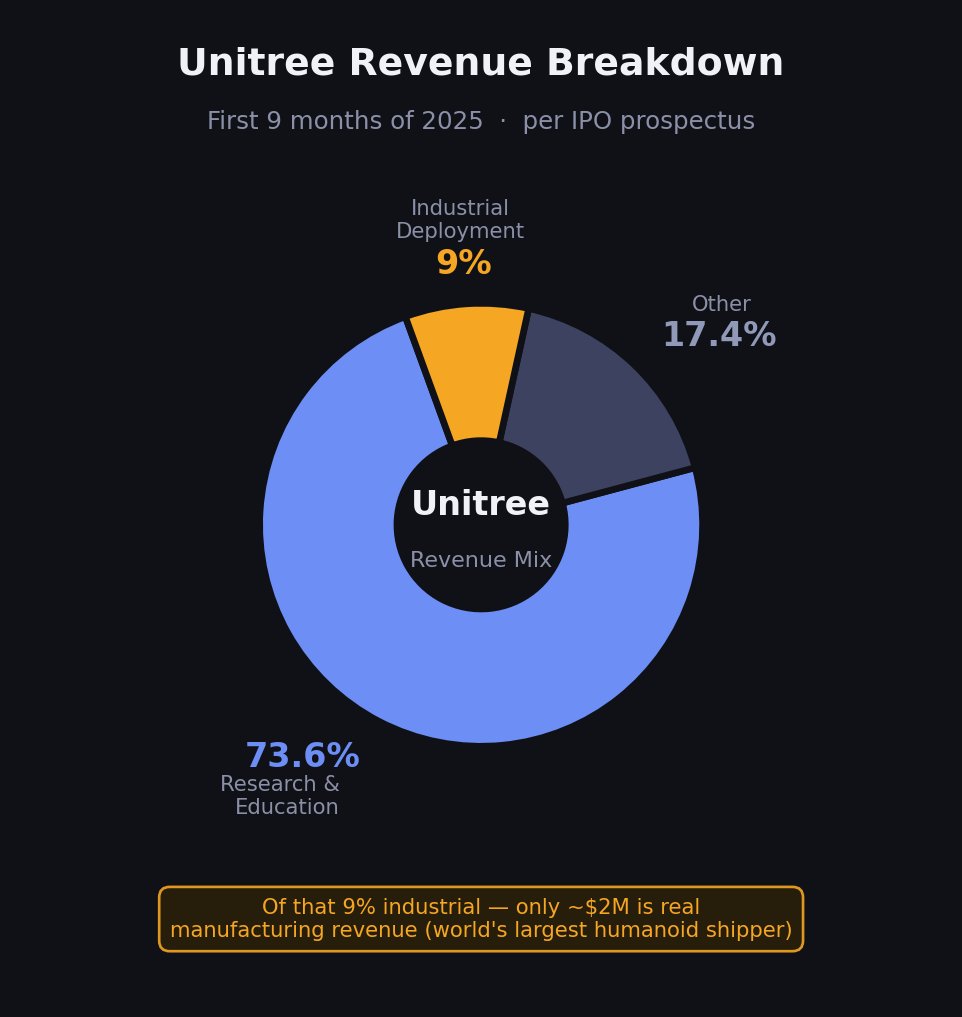
Unitree's IPO prospectus, filed in March, disclosed that 73.6% of its humanoid revenue in the first nine months of 2025 came from research and education, and only ~9% was true industrial deployment. Within that 9%, most is "enterprise reception and tour-guide" work. Real industrial-manufacturing revenue from the world's largest humanoid shipper: roughly $2M.
This is the gap I want to talk about.
Not because I want to "pop the bubble" — that phrase has become its own marketing genre. I want to talk about it because at Dyna we've spent the last year putting robots into real customer environments, and what we've seen has changed how we think about the entire stack. I'm writing this for the people building, funding, and selling into this market.
# What "bubble" actually means
Bubble is a loaded word. In tech, it isn't always a bad thing. The most useful definition I've found, after watching this industry up close:
> A bubble is the gap between current technical capability and human expectations, multiplied by time.
If the gap closes in a year, it isn't really a bubble. If it takes a decade, then for the first five years it is — because capital has time value. A return in year one and a return in year ten aren't the same return, even at the same nominal value.
So the right question isn't "is robotics overhyped?" The right question is:
> Can current robotics capability produce commercially meaningful value in a reasonable time, and is that value linearly tied to underlying technical progress?
If yes, it isn't a bubble. If no, it is.
By that measure, large parts of the current robotics market are bubbles — not because the technology won't get there, but because the timeline between current capability and meaningful commercial value is longer than current funding levels assume.
# Robotics is not LLMs. Robotics is not autonomous driving.
A lot of bad robotics strategy comes from importing the wrong analogy.
LLMs scaled exponentially because they're pure software. The browser is the distribution layer, and it reaches every connected human on Earth in milliseconds. Pre-internet, no business in history had that. LLM growth has been an internet-shaped curve.
Robots are physical, so they look more like autonomous driving — but they're harder. Cars are useful even without autonomy. A non-autonomous car is still a thing people buy, drive, and replace. The car was a finished distribution channel waiting for AI to plug into. Even that hasn't been enough: AV is bottlenecked on the combination of reliable model + reliable vehicle + reliable channel, not on any one piece.
Robots have none of that. A non-intelligent humanoid is a 60-pound machine with 28 degrees of freedom and no purpose. It has no built-in user base, no reason to be plugged in, and no distribution layer. Outside of industrial arms and Roombas, robots are barely deployed at all today. There is no installed base to upgrade. There is no "iPhone moment" infrastructure waiting for the right software.
The implication: robotics will not have an LLM-shaped takeoff curve. It will not even have an AV-shaped takeoff curve. It will have a robotics-shaped curve, and we don't yet fully know what that looks like — but importing the wrong reference class is one of the most expensive mistakes in this market.
# Three things the market keeps getting wrong
## 1. Hardware ≠ channel.
This is the most expensive misconception in the field: getting hardware out the door is not the same as building a channel.
The car analogy fails here, and a lot of robotics strategy depends on missing that.
The mistake is intuitive. Cars work as a channel because cars are useful. So if I get my robot into the customer's facility, the thinking goes, the channel takes care of itself.
But this only holds when the underlying product creates enough recurring value that the user keeps coming back. If a robot enters a facility, performs a flashy demo, and then sits idle three weeks later because it cannot meet the actual ROI bar, you do not have a channel. You have a deployment that decayed.
A real channel in robotics is not a sales motion. It is an entire deployment system: scene assessment, task boundary definition, data capture and feedback, on-site debugging, remote diagnostics, continuous updates, reliability maintenance, and the engineering tooling that turns each deployment into a reusable artifact for the next one. Without this stack, the flywheel does not spin. Each new customer is a one-off project, not a compounding asset.
The test of a channel is whether the next deployment is faster than the last one. If it is not, you have not built a channel. You have built inventory and PR.
This is what AR/VR taught us. Hardware can sell without becoming a high-frequency, high-stability, growing distribution layer. If the device gets touched once a month or once a year, it isn't a channel — it's inventory.
## 2. Model ≠ foundation model ≠ pre-training-only.
The second misconception is more technical.
Every robotics conversation in 2025 was about pre-training scale. "How many hours of data?" was often the only metric anyone tracked.
But pre-training is not the whole game, even in LLMs. The reason today's LLM’s coding capability has got so much better is not ONLY that pre-training got bigger. It is that the loop between pre-training and post-training is being run aggressively, on domain-specific data, with task-specific evaluation.
The performance frontier moves from “scale + data” to “scale + data + iterated post-training feedback”.
Robotics has barely begun this loop. Most teams are still optimizing pre-training as if more hours of data automatically translate to downstream capability. The post-training signal has to come from real deployments.
The gap between a model that works on a benchmark vs what ships value on a customer's floor can only be closed by teams that have a real production loop.
To go one layer deeper, the scaling-law conversation in robotics is more confused than the field admits.
LLM scaling laws hold because pre-training and post-training share a relatively unified evaluation surface — perplexity and its descendants — that lets both phases optimize toward a common target.
Robotics has nothing of the kind.
Downstream tasks have explicit requirements for speed, output quality, and reliability. None of those are unified across today's training datasets in any rigorous way.
Scaling matters. However, saying "more data" without saying "data measured how, against what target, for which downstream metric" is, at best, an act of faith.
## 3. Channel construction is the most underestimated lever in the stack.
By "channel," I don't mean sales pipeline. I mean the full deployment infrastructure:
- Scenario evaluation and task-boundary definition
- On-site setup and debugging
- Data collection and routing back to training
- Remote diagnostics and reliability monitoring
- Continuous model and system updates
Turning each deployment into reusable engineering tooling for the next one
- This is the flywheel. Without it:
- The robot doesn't enter real environments.
- The model doesn't get real post-training signal.
- The pre-train ↔ post-train loop doesn't close.
- The capability curve flattens, regardless of pre-training compute.
When people ask "where's the robotics bubble?", most of it lives in the gap between teams that have understood this and teams still optimizing for benchmark numbers and demo videos.
# Three paths, three bets
Faced with the gap above, the field has split into roughly three camps.
Model-first. Build the foundation model. Hardware will be commoditized; channel will sort itself out. Bet: the model is the hardest part and creates the most defensible value.
Hardware-first. Get the body right, and models will commoditize the way open-source software always does. Bet: hardware is the constraint, and once you have a great body, software will catch up.
Integration. Build all of it — model, hardware, deployment, channel — and control the loop end-to-end until the industry matures enough for clean specialization. Bet: in robotics today, no single layer is mature enough to specialize around.
I'd argue the model-first and hardware-first paths rest on assumptions that haven't been validated — and the assumptions hide some structural traps.
Each road is internally coherent. In a more mature field, the model-first or hardware-first paths might be the right answer. But the metrics at every layer of robotics today are still being defined.
A model team optimizing for benchmark performance has no way to know whether its gains translate downstream. A hardware team shipping units has no way to know whether the units will be used six months later. Specialization works when the interfaces between layers are stable. The interfaces in robotics are not stable yet.
DYNA is in the integrated camp. We did not arrive at that position because vertical integration is fashionable. We arrived at it because the deployment work made the alternative impossible.
# What we learned at Dyna in the last year
Most of what I just described, we learned the hard way.
When we shipped DYNA-1 in April 2025 — a foundation model running 24+ hours autonomously at 99%+ success on tasks like napkin folding — we thought the hardest part was behind us. Strong model, real ROI on a real task. Twelve months later:
Our longest-running deployment is now around 10 months of daily usage at one customer. The system is still creating value. But getting from "sale" to "running reliably without us" took weeks-to-months of on-site engineering, and most of that work didn't transfer cleanly to the next customer.
Deployment didn't self-accelerate. It was supposed to follow the standard pattern: research and deployment teams separate, deployment becomes process-driven, each new customer faster than the last. That hasn't happened — and as far as we can tell from peers, it hasn't happened anywhere in the industry yet.
The failure isn't in deployment teams. It's that the underlying primitives — model, hardware, deployment system — aren't yet good enough to let deployment run as an independent loop. The loop has to close across research, hardware, and deployment simultaneously, or it doesn't close at all.
This is NOT Dyna-specific.It’s the central problem in robotics today, and it's largely invisible from the outside because demos hide it.
# DYNA’s Convictions
We have decided that model and data are a first-class research problem, not a solved input. The primitives that failed us on customer floors were not only the deployment system and the hardware — the foundation model itself had capability gaps that pre-training scale alone couldn’t close. The post-training loop, fed by real deployment data and measured against task-specific metrics, is where the model actually matures. We are investing in that loop as a core research capability, not treating it as a handoff from pre-training.
We have decided that deployment-system engineering is as much a research problem as model architecture. Significant effort has gone into building the tooling that turns deployment know-how into compounding infrastructure. Without it, the data the model needs never reaches it. The loop doesn’t close.
We have decided that hardware is in scope. We have hardware design, manufacturing, and production capability, closely paired with research. People didn’t fly by getting smarter. They flew by inventing airplanes. Vertical integration is more capital-intensive and slower in the short term, but we believe it’s the only path that closes the loop today.
The proof of all of this is repeated, durable production deployment, not demos. Whether the second deployment is faster than the first, and the tenth faster than the ninth. No one in the industry has shown that yet at scale, including us. The first team that does will define the next phase.
# What I would say to the field
The bubble isn't where the noise is.
It isn't dancing humanoids or marathon-running quadrupeds — those are real engineering achievements, and we admire the teams doing them.
The bubble is in the assumption that capability will turn into commercial value on an LLM-shaped curve. It won't.
The fastest way to shorten the gap is not better demos. It is harder, more honest engineering against real customer ROI, and the patience to let the deployment flywheel compound before declaring victory.
That is the work in front of us. It is in front of everyone else, too. More to come. Stay tuned.
— York
## 相关链接
- [York Yang](https://x.com/YorkYang5050)
- [@YorkYang5050](https://x.com/YorkYang5050)
- [196K](https://x.com/YorkYang5050/status/2051306890991415507/analytics)
- [$2M](https://x.com/search?q=%242M&src=cashtag_click)
- [Dyna-specific.It](https://dyna-specific.it/)
- [Upgrade to Premium](https://x.com/i/premium_sign_up)
- [10:24 PM · May 4, 2026](https://x.com/YorkYang5050/status/2051306890991415507)
- [196K Views](https://x.com/YorkYang5050/status/2051306890991415507/analytics)
- [View quotes](https://x.com/YorkYang5050/status/2051306890991415507/quotes)
---
*导出时间: 2026/5/6 10:06:49*
---
## 中文翻译
# 在生产环境投入10个月教会了我们关于机器人“泡沫”的什么
**作者**: York Yang
**日期**: 2026-05-04T14:24:08.000Z
**来源**: [https://x.com/YorkYang5050/status/2051306890991415507](https://x.com/YorkYang5050/status/2051306890991415507)
---

首先,来看三个数字。
- 2022年至2025年间,机器人行业通过235笔股权交易筹集了超过180亿美元资金。年度融资额从2022年的28.6亿美元增长至2025年的87.6亿美元,翻了三倍。
- 仅中国就有140多家人形机器人制造商,发货产品超过330款。
- 美国新一代机器人公司的总估值已轻松超过1000亿美元。

而2025年人形机器人实际完成的有用工作量?几乎可以忽略不计。
2026年1月,埃隆·马斯克在特斯拉财报电话会议上承认,零台Optimus机器人在特斯拉工厂从事有用的工作。
宇树科技3月提交的IPO招股书披露,2025年前9个月,其人形机器人收入的73.6%来自科研和教育领域,仅约9%为真正的工业部署。在这9%中,大部分是“企业接待和导游”工作。这家全球最大人形机器人发货商在真正的工业制造领域的收入:大约200万美元。

这就是我想谈论的差距。
我谈论这个并不是因为我想“刺破泡沫”——这个词本身已经变成了一种营销套路。我谈论它是因为在Dyna,过去一年我们一直在将机器人投入到真实的客户环境中,所见所闻改变了我们要对整个技术栈的思考方式。我写下这些文字是写给那些正在构建、投资和向该市场销售的人看的。
# “泡沫”的实际含义
泡沫是一个带有强烈色彩的词。在科技领域,它并不总是坏事。在近距离观察这个行业后,我发现了最有用的定义:
> 泡沫是当前技术能力与人类期望之间的差距,再乘以时间。
如果差距在一年内缩小,那它就不是一个真正的泡沫。如果需要十年,那么在前五年它就是——因为资本具有时间价值。第一年回报和第十年回报不是一回事,即使名义价值相同。
所以,正确的问题不是“机器人行业是否过度炒作?”。正确的问题是:
> 当前的机器人能力能否在合理时间内产生具有商业意义的价值,且该价值是否与底层技术进步呈线性关系?
如果是,那就不是泡沫。如果不是,那就是。
以此衡量,当前机器人市场的很大一部分都是泡沫——这并不是因为技术无法达到目标,而是因为从当前能力到产生有意义的商业价值的时间线,比当前资金水平所假设的要长得多。
# 机器人不是大语言模型(LLM)。机器人也不是自动驾驶。
许多糟糕的机器人战略源于导入了错误的类比。
LLM呈指数级扩展,因为它们是纯软件。浏览器是分发层,它能在毫秒内触达地球上每一个联网的人。在互联网之前,历史上从未有过这样的商业。LLM的增长是一条互联网形状的曲线。
机器人是物理实体,所以它们看起来更像自动驾驶——但它们更难。即使没有自动驾驶,汽车也是有用的。非自动驾驶汽车仍然是人们购买、驾驶和更换的东西。汽车是一个成熟的分发渠道,等待AI接入。即便如此,这仍然不够:自动驾驶(AV)的瓶颈在于可靠的模型+可靠的车辆+可靠的渠道的组合,而不仅仅是其中某一部分。
机器人一无所有。一个非智能的人形机器人是一台28个自由度、没有用途的60磅机器。它没有内置的用户群,没有理由插电,也没有分发层。除了工业机械臂和扫地机器人之外,如今机器人几乎没有部署。没有现有的安装基础可供升级。没有等待合适软件的“iPhone时刻”基础设施。
这意味着:机器人不会有LLM形状的起飞曲线。它甚至不会有自动驾驶形状的起飞曲线。它将有一条机器人形状的曲线,我们尚不完全清楚那是什么样子的——但导入错误的参考类别是这个市场中最昂贵的错误之一。
# 市场一直搞错的三件事
## 1. 硬件 ≠ 渠道。
这是该领域代价最大的误解:把硬件送出门不等于建立渠道。
汽车的类比在这里失效了,许多机器人战略正是因为忽略了这一点而建立。
这种错误很直观。汽车之所以能成为渠道,是因为汽车有用。因此,逻辑是,如果我把我的机器人放进客户的设施里,渠道自然会水到渠成。
但这只有在基础产品创造足够的经常性价值、让用户不断回头的条件下才成立。如果一个机器人进入设施,进行了精彩的演示,然后在三周后闲置,因为它无法达到实际的投资回报率(ROI)门槛,那么你就没有拥有渠道。你拥有的只是一个已经衰减的部署。
机器人领域真正的渠道不是销售动作。它是一整套部署系统:场景评估、任务边界定义、数据采集和反馈、现场调试、远程诊断、持续更新、可靠性维护,以及将每次部署转化为下一次部署的可复用工件的工程工具。没有这个堆栈,飞轮就不会转动。每个新客户都是一次性项目,而不是复合资产。
检验渠道的标准是下一次部署是否比上一次更快。如果不是,你就没有建立渠道。你建立的只是库存和公关(PR)。
这是AR/VR教给我们的。硬件可以销售,而不必成为高频、高增长、稳定的分发层。如果设备一个月或一年才被摸一次,它就不是渠道——它是库存。
## 2. 模型 ≠ 基础模型 ≠ 仅靠预训练。
第二个误解更具技术性。
2025年,每一次关于机器人的对话都是关于预训练规模。“多少小时的数据?”往往是每个人追踪的唯一指标。
但预训练不是全部,即使在LLM中也是如此。今天的LLM编码能力之所以变得如此强大,不仅仅是因为预训练变大了。是因为在特定领域的数据上,针对特定任务的评估,预训练和后训练之间的循环正在被积极运行。
性能的前沿从“规模+数据”转移到了“规模+数据+迭代的后训练反馈”。
机器人领域几乎没有开始这个循环。大多数团队仍在优化预训练,似乎更多的数据时间会自动转化为下游能力。后训练的信号必须来自真实的部署。
一个在基准测试上工作的模型与在客户现场产生价值的模型之间的差距,只能由拥有真实生产循环的团队来弥合。
更深入一点,关于机器人扩展定律的讨论比该领域愿意承认的更加混乱。
LLM扩展定律之所以成立,是因为预训练和后训练共享一个相对统一的评估表面——困惑度及其衍生指标——这让两个阶段都能朝着一个共同目标进行优化。
机器人领域完全没有这种东西。
下游任务对速度、输出质量和可靠性有明确要求。这些要求在今天的数据集中都没有以任何严谨的方式统一起来。
扩展很重要。然而,只说“更多数据”而不说“如何衡量数据,针对什么目标,为了哪个下游指标”,充其量只是一种信仰行为。
## 3. 渠道建设是堆栈中最被低估的杠杆。
我所说的“渠道”,不是指销售管道。我指的是完整的部署基础设施:
- 场景评估和任务边界定义
- 现场设置和调试
- 数据采集并回传至训练
- 远程诊断和可靠性监控
- 持续的模型和系统更新
将每次部署转化为下一次部署的可复用工程工具
- 这是飞轮。没有它:
- 机器人无法进入真实环境。
- 模型无法获得真实的后训练信号。
- 预训练 ↔ 后训练 的循环无法闭合。
- 无论预训练算力如何,能力曲线都会趋于平缓。
当人们问“机器人泡沫在哪里?”时,大部分泡沫存在于理解了这一点的团队与仍在追求基准测试数字和演示视频的团队之间的差距中。
# 三条路径,三种赌注
面对上述差距,该领域大致分为三个阵营。
模型优先。建立基础模型。硬件将被商品化;渠道会自行解决。赌注:模型是最难的部分,能创造最可防御的价值。
硬件优先。把身体做对,模型会像开源软件一样被商品化。赌注:硬件是约束,一旦你有了优秀的身体,软件就会迎头赶上。
集成。构建所有部分——模型、硬件、部署、渠道——并端到端控制循环,直到行业成熟到可以进行明确的专业分工。赌注:在今天的机器人领域,没有任何单一层级足够成熟以供专业化。
我认为模型优先和硬件优先的路径依赖于尚未验证的假设——而这些假设隐藏着一些结构性陷阱。
每条道路在内部逻辑上都是自洽的。在一个更成熟的领域,模型优先或硬件优先可能是正确答案。但今天机器人技术每一层的指标仍在定义中。
一个优化基准测试性能的模型团队无法知道其收益是否能转化为下游效果。发货硬件的硬件团队无法知道这些设备是否会在六个月后仍被使用。当层级之间的接口稳定时,专业化才有效。机器人领域的接口尚未稳定。
DYNA处于集成阵营。我们之所以持这种立场,并不是因为垂直整合很流行。我们之所以这样,是因为部署工作使得替代方案变得不可能。
# 我们过去一年在Dyna学到了什么
我刚才描述的大部分内容,我们都学得很艰难。
当我们在2025年4月推出DYNA-1时——一个基础模型,在折叠餐巾等任务上实现了24小时以上自主运行,成功率99%以上——我们认为最困难的部分已经过去了。强大的模型,真实任务上的真实ROI。十二个月后:
我们要运行时间最长的部署现在在一个客户处进行了大约10个月的日常使用。系统仍在创造价值。但从“销售”到“在没有我们介入的情况下可靠运行”花费了数周到数月的现场工程工作,而且这些工作大部分没能干净地转移到下一个客户。
部署没有自我加速。它本应遵循标准模式:研究和部署团队分离,部署变成流程驱动,每个新客户都比上一个更快。但这没有发生——据我们从同行那里了解到的,这在行业中任何地方都还没有发生。
失败不在于部署团队。而在于底层的原语——模型、硬件、部署系统——还不够好,无法让部署作为一个独立的循环运行。循环必须同时跨越研究、硬件和部署闭合,否则根本无法闭合。
这不是Dyna特有的问题。这是当今机器人领域的核心问题,而且从外部很大程度上是看不见的,因为演示掩盖了它。
# DYNA 的信念
我们认定模型和数据是一等的研究问题,而不是现成的输入。在客户现场让我们失望的原语不仅仅是部署系统和硬件——基础模型本身也存在仅靠预训练规模无法弥合的能力差距。后训练循环,由真实部署数据提供支持并针对特定任务指标进行衡量,才是模型真正成熟的地方。我们将该循环作为核心研究能力进行投资,而不是将其视为预训练的交接。
我们认定部署系统工程与模型架构一样,都是研究问题。我们投入了大量精力构建工具,将部署经验转化为复合型基础设施。没有它,模型所需的数据永远不会到达它那里。循环无法闭合。
我们认定硬件在范围内。我们拥有硬件设计、制造和生产能力,与研究紧密配合。人类不是通过变得更聪明而飞行的。他们是通过发明飞机飞行的。垂直整合在短期内资本密集度更高、速度更慢,但我们相信这是今天唯一能闭合循环的路径。
所有这些的证明是重复的、持久的生产部署,而不是演示。第二次部署是否比第一次快,第十次是否比第九次快。业内没有人(包括我们)在大规模上展示了这一点。第一个做到的团队将定义下一个阶段。
# 我想对该领域说些什么
泡沫不在于喧嚣之处。
它不在于跳舞的人形或跑马拉松的四足机器人——那些是真正的工程成就,我们敬佩这样做的团队。
泡沫在于假设能力会沿着LLM形状的曲线转化为商业价值。它不会。
缩短差距的最快方法不是更好的演示。是针对真实客户ROI的更艰难、更诚实的工程,以及在宣布胜利之前对部署飞轮复利效应的耐心。
这就是我们要面对的工作。这也是每个人面前要面对的工作。更多内容即将推出。敬请关注。
— York
## 相关链接
- [York Yang](https://x.com/YorkYang5050)
- [@YorkYang5050](https://x.com/YorkYang5050)
- [196K](https://x.com/YorkYang5050/status/2051306890991415507/analytics)
- [$2M](https://x.com/search?q=%242M&src=cashtag_click)
- [Dyna-specific.It](https://dyna-specific.it/)
- [升级到 Premium](https://x.com/i/premium_sign_up)
- [10:24 PM · May 4, 2026](https://x.com/YorkYang5050/status/2051306890991415507)
- [196K 次观看](https://x.com/YorkYang5050/status/2051306890991415507/analytics)
- [查看引用](https://x.com/YorkYang5050/status/2051306890991415507/quotes)
---
*导出时间: 2026/5/6 10:06:49*