# A Primer On The Agentic AI Economy
**作者**: Chamath Palihapitiya
**日期**: 2026-05-13T19:34:08.000Z
**来源**: [https://x.com/chamath/status/2054646394867364143](https://x.com/chamath/status/2054646394867364143)
---
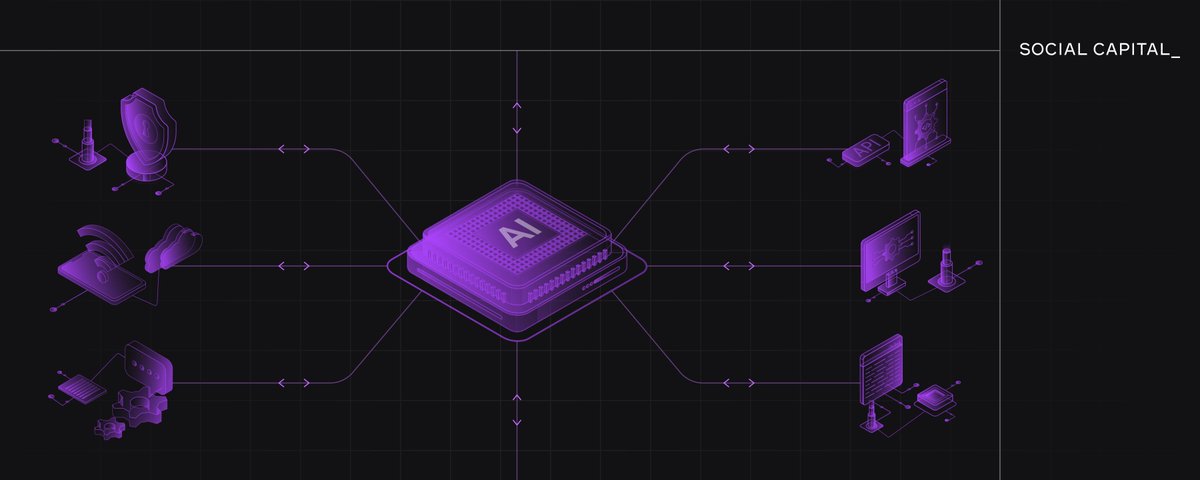
On a Friday evening in November 2025, Peter Steinberger built the first version of OpenClaw.
The prototype only took about an hour, yet within weeks, OpenClaw surpassed 145,000 GitHub stars, making it the fastest-growing open-source software project in GitHub history.
The platform was largely built by AI agents, and it marked a shift from chatbots to autonomous, task-oriented AI.
And this shift is accelerating. AI now generates 75% of Google’s new code and up to 30% of Microsoft’s new code. Daily Claude Code commits on GitHub surpassed 134,000 in early 2026, up from near zero at its March 2025 launch.
This is a structural change in how software, and increasingly how knowledge work, gets done.
AI agents are building the frontier of that change.
So what is an AI agent, exactly, and how is it different from a chatbot or an LLM? What makes this structural rather than a passing phase? And as the stack matures, where does value accrue, and where does it commoditize?
These are the questions we set out to answer.
The result is a five-layer framework for what an agent actually is, where the technology is going, and who is positioned to win at each layer.
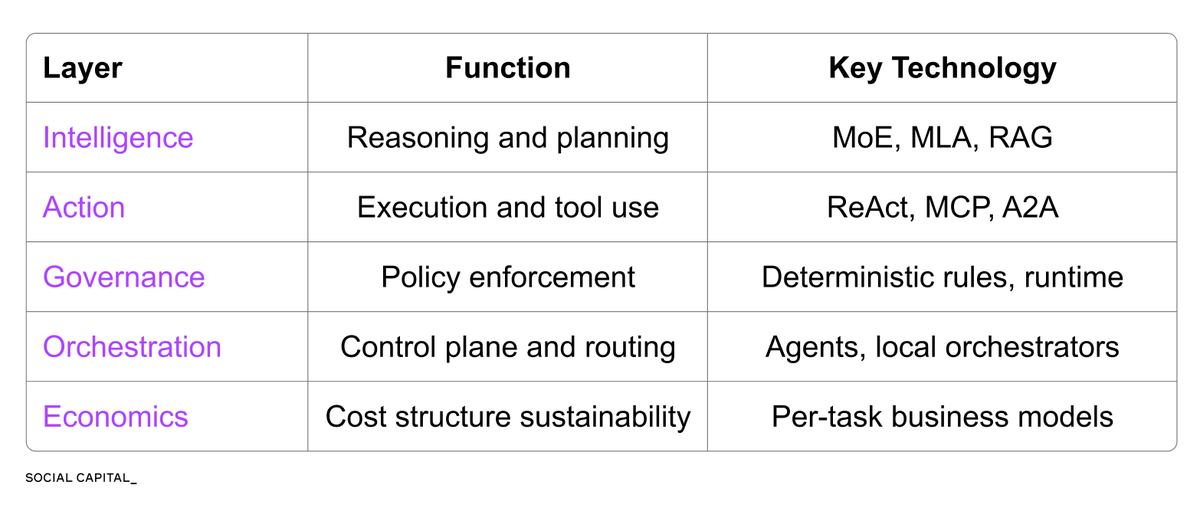
Some of the answers are already visible in the numbers. Anthropic went from $1B to $44B in annualized revenue in seventeen months, almost entirely on coding agents. At the same time, open-source agent harnesses are now processing tens of trillions of tokens per month. Both numbers seem to point to the same place: the harness layer.
But agents still routinely make obvious mistakes. In December 2025, an Amazon coding agent autonomously deleted and recreated a live production environment, taking AWS in China offline for 13 hours. In April 2026, a Cursor agent powered by Claude deleted an entire company database in 9 seconds.
Four failure modes show up repeatedly in production, and most never appear on a vendor pricing sheet.
McKinsey’s 2025 State of AI survey found that fewer than 10% of organizations have agents deployed at a meaningful scale. Most are not using them at all.
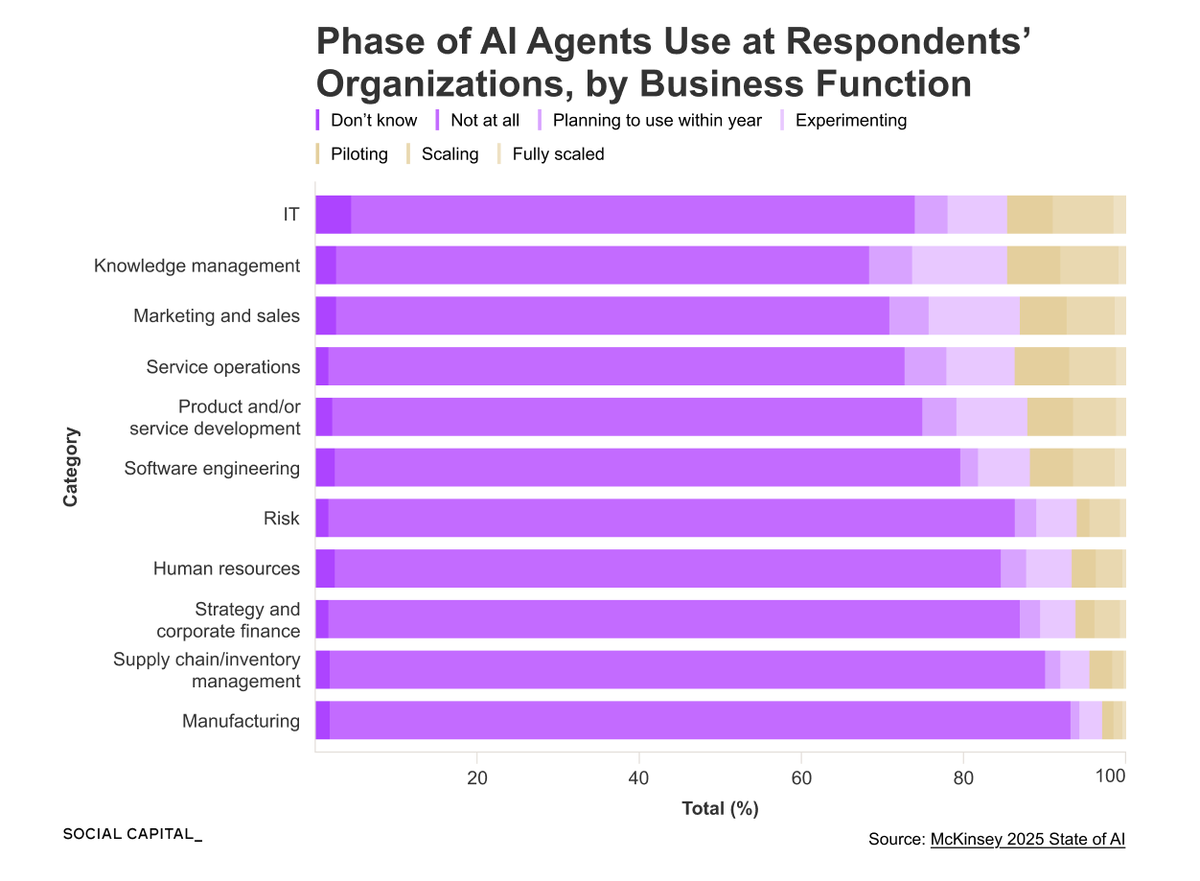
The gap between what is technically possible and what is operationally deployed is the opportunity.
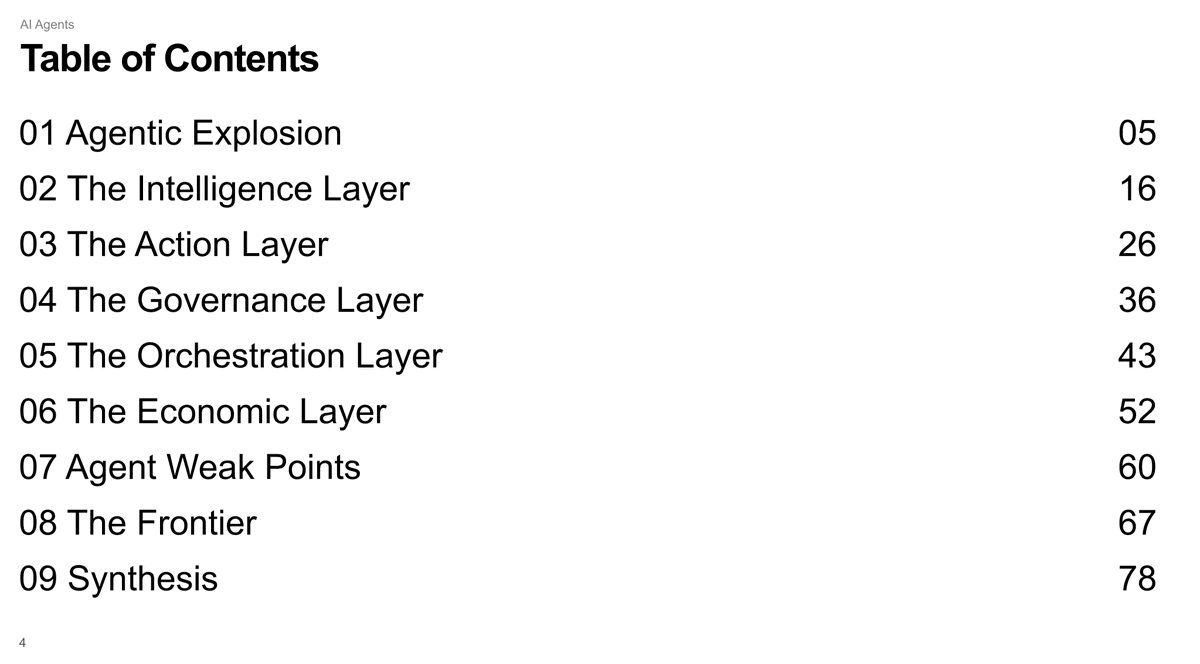
The 84-page primer on our Substack is our effort to hopefully provide a map. Here is what you will find inside:
- The five layers of an agent, and how they fit together
- Six case studies of how early adopters are deploying agents today, including my company, 8090
- The four ways agents reliably break in production
- The layer we expect to accrue the most durable value as models commoditize
- Who is positioned to control each of the five layers
Subscribe to read and let me know what you think in the group: https://chamath.substack.com/p/ai-agents-primer
## 相关链接
- [Chamath Palihapitiya](https://x.com/chamath)
- [@chamath](https://x.com/chamath)
- [166K](https://x.com/chamath/status/2054646394867364143/analytics)
- [https://chamath.substack.com/p/ai-agents-primer](https://chamath.substack.com/p/ai-agents-primer)
- [Upgrade to Premium](https://x.com/i/premium_sign_up)
- [3:34 AM · May 14, 2026](https://x.com/chamath/status/2054646394867364143)
- [166.7K Views](https://x.com/chamath/status/2054646394867364143/analytics)
- [View quotes](https://x.com/chamath/status/2054646394867364143/quotes)
---
*导出时间: 2026/5/14 17:50:42*
---
## 中文翻译
# 代理型 AI 经济入门
**作者**: Chamath Palihapitiya
**日期**: 2026-05-13T19:34:08.000Z
**来源**: [https://x.com/chamath/status/2054646394867364143](https://x.com/chamath/status/2054646394867364143)
---

2025 年 11 月的一个周五晚上,Peter Steinberger 构建了 OpenClaw 的首个版本。
这个原型只花了大约一个小时,然而在几周内,OpenClaw 的 GitHub 星标数就超过了 145,000,成为 GitHub 历史上增长最快的开源软件项目。
该平台主要由 AI 代理构建,它标志着从聊天机器人向自主的、面向任务的 AI 的转变。
这种转变正在加速。AI 目前生成了谷歌 75% 的新代码以及微软高达 30% 的新代码。2026 年初,GitHub 上每天的 Claude Code 提交量超过 134,000 次,而在 2025 年 3 月推出时该数字几乎为零。
这是软件开发,乃至日益增长的知识工作完成方式的结构性变革。
AI 代理正在构建这一变革的前沿。
那么,究竟什么是 AI 代理?它与聊天机器人或大语言模型(LLM)有何不同?是什么让它成为一种结构性变革而不仅仅是一个稍纵即逝的阶段?随着技术栈的成熟,价值将在哪里积累,又将在哪里变得商品化?
这些就是我们着手回答的问题。
其成果是一个包含五层的框架,用于解释代理究竟是什么、该技术将走向何方,以及谁有潜力在每一层中胜出。

一些答案已经从数据中显现。Anthropic 的年化收入在十七个月内从 10 亿美元增长到 440 亿美元,这几乎完全归功于代码代理。与此同时,开源代理套件目前每月处理的 Token 数已达数万亿。这两个数字似乎都指向同一个位置:套件层。
但是,代理仍然会频繁犯下明显的错误。2025 年 12 月,一个亚马逊代码代理自主删除并重建了一个实时生产环境,导致 AWS 中国服务离线 13 小时。2026 年 4 月,一个由 Claude 驱动的 Cursor 代理在 9 秒内删除了整个公司的数据库。
在生产环境中,四种失效模式反复出现,而其中大多数从未出现在供应商的价目表上。
麦肯锡 2025 年的 AI 状况调查发现,只有不到 10% 的组织在有意义规模上部署了代理。大多数组织根本没有使用它们。

技术可能性与实际部署之间的差距,就是机会所在。
我们在 Substack 上发布的这份 84 页的入门指南,旨在希望能提供一张路线图。以下是其中的内容:
- 代理的五个层次及其契合方式
- 六个关于早期采用者当前如何部署代理的案例研究,包括我的公司 8090
- 代理在生产环境中可靠崩溃的四种方式
- 随着模型商品化,预计能积累最持久价值的那一层
- 谁有潜力控制这五个层次中的每一层

订阅以阅读全文,并在群组中告诉我您的想法:https://chamath.substack.com/p/ai-agents-primer
## 相关链接
- [Chamath Palihapitiya](https://x.com/chamath)
- [@chamath](https://x.com/chamath)
- [166K](https://x.com/chamath/status/2054646394867364143/analytics)
- [https://chamath.substack.com/p/ai-agents-primer](https://chamath.substack.com/p/ai-agents-primer)
- [升级到 Premium](https://x.com/i/premium_sign_up)
- [2026 年 5 月 14 日 凌晨 3:34](https://x.com/chamath/status/2054646394867364143)
- [16.67 万次浏览](https://x.com/chamath/status/2054646394867364143/analytics)
- [查看引用](https://x.com/chamath/status/2054646394867364143/quotes)
---
*导出时间: 2026/5/14 17:50:42*