# How I Turned Claude Into My Personal Assistant
**作者**: Miles Deutscher
**日期**: 2026-05-19T14:54:07.000Z
**来源**: [https://x.com/milesdeutscher/status/2056750252175364388](https://x.com/milesdeutscher/status/2056750252175364388)
---
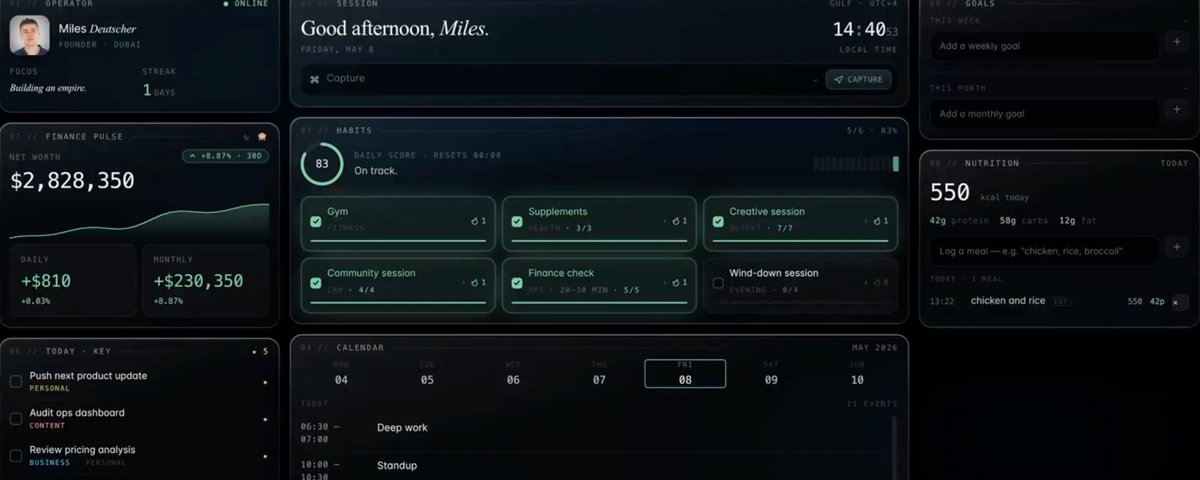
I spent two weeks building a personal OS with Claude Code, which has completely revolutionized my life.
It tracks ALL the most important data in my life in real-time.
I'm talking: my admin tasks, to-do list, calendar, finances, business growth, and much more.
It's like having an app designed specifically for me where I can edit/add features at any time.
The best part is that I can prompt it completely remotely, it has a custom cloud memory system, and it self-evolves over time.
In this guide, I'm going to walk you through my entire personal OS build and show you the exact steps to build one for yourself.
It took me weeks to get this right, and at the end of this article, I've attached a Google Drive with everything I personally used to build this (coding prompts, design system, etc.).
Stay until the end, and I'll send it to you directly!
This OS system has hands down been the biggest upgrade to my life in the past few months - let's dive right in!
## What It Does (mini intro)
This is my Personal OS, and once you see what it can do, I guarantee you'll want to build one yourself.
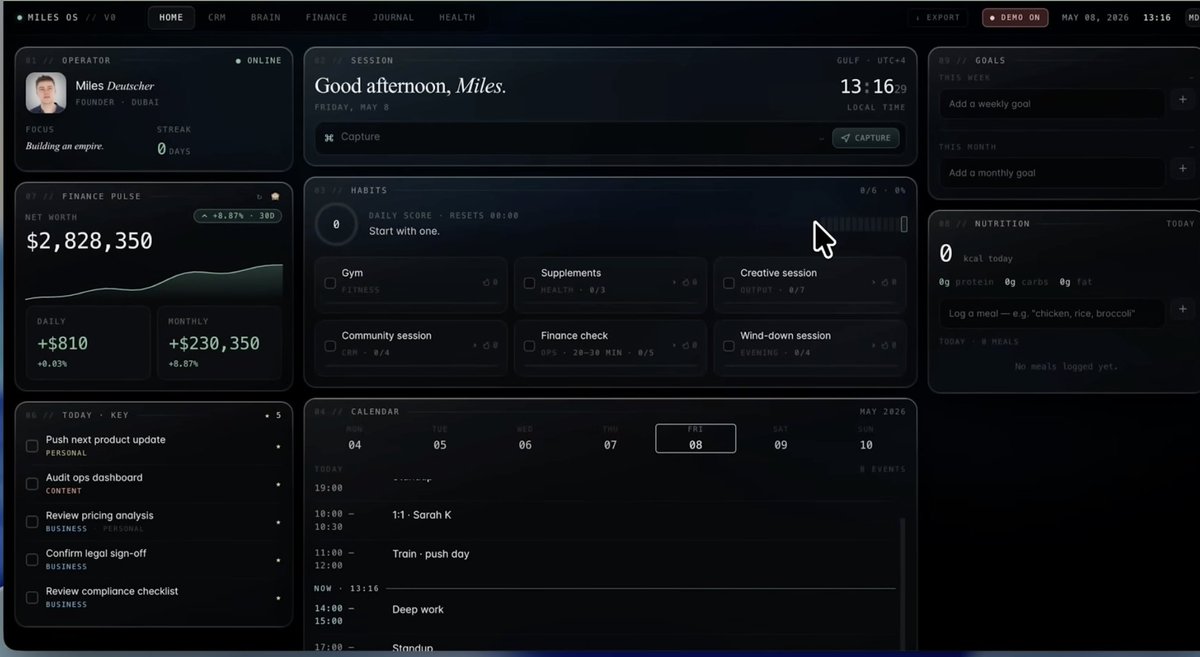
My Personal OS
The Homepage above collates all my most important data into an easy-to-read visual.
Data like:
- My networth (dummy data)
- Daily tasks
- Finances
- Business growth/projections
Every single morning, I scan my OS homepage to make sure things are on track and I'm aligned for the day.
It essentially serves as my home base where I've connected all my external apps (Google Calendar, Notion, etc.) to create one "mega app."
One of my favorite features of this OS build is that I can control it completely remotely via Telegram.
This means I can literally open TG, send a voice prompt, and the personal OS system will track whatever I just sent.
Example: If I want to add a task to my to-do list, I just open Telegram and send a prompt to BotFather that connects to my OS.
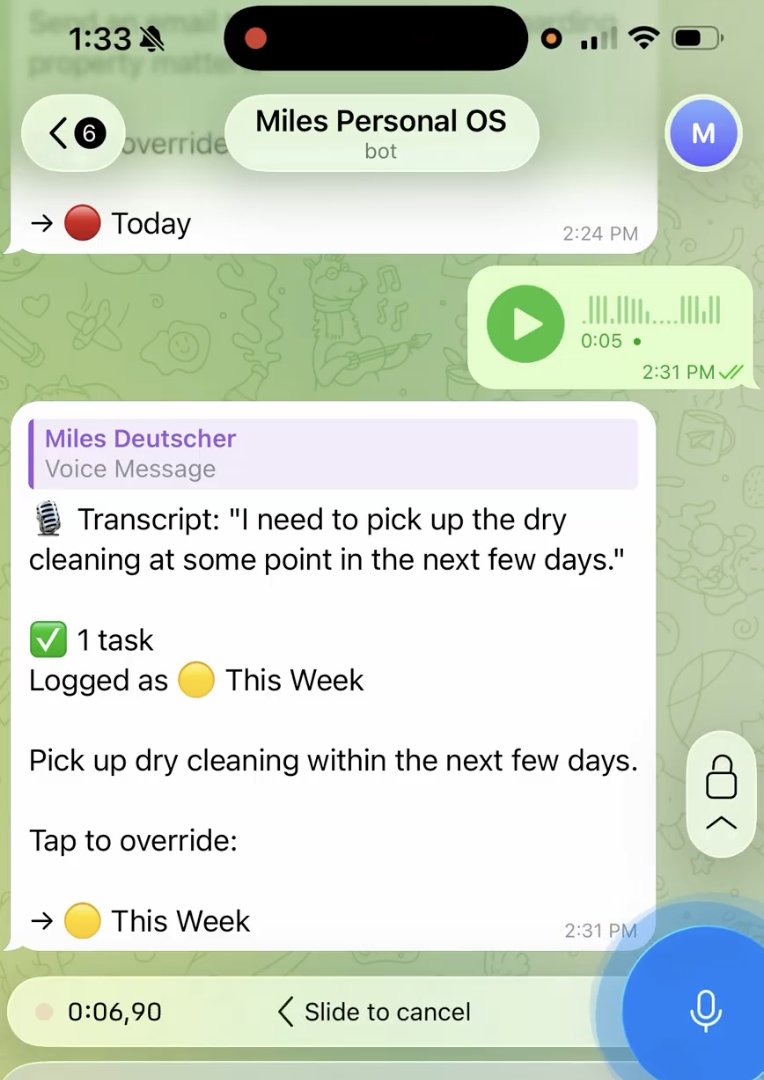
Prompting the OS via TG
This system works by sending data through Whispr and connecting to Supabase in the cloud, which is then populated in the front-end of my personal app.
If you don't have a system like this, you're reliant on apps like Apple Notes/Notion to log and organise tasks, which, for me personally, became a bit of a headache since I have so many daily tasks.
With this OS, my tasks are automatically sorted by priority, and the CRM is managed with zero manual intervention.
Finances
The next thing this OS system does is collate all my finances into one easy-to-read format.
Before this system, my finances were all over the place.
I had exchanges, bank accounts, and finance documents completely scattered.
Now, I have a Google Sheet on the backend that pulls all my financial data live (via APIs), and the OS system reflects that data in real time.
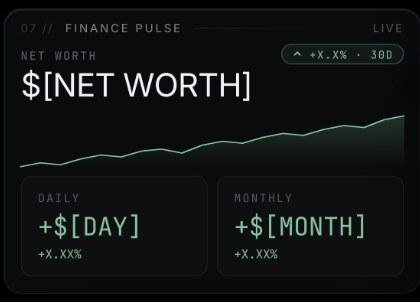
Finance Pulse
For me, finances + task management were two huge pain points that I solved with this system, but it has many more features, like:
- My gym routine
- Nutrition goals
- Health goals
- Journaling function
- Habit tracker
- Calendar/upcoming meetings
- To-do list blockers
and a few more miscellaneous features.
Of course, you can customize this build to contain any feature you'd like, so let me show you how I actually built it (and how you can customise it to add anything you need).
## How I Built the OS
Building this functional OS took dozens of hours to get right, but I'm going to condense all my mistakes/trials into 8 simple steps to help you build yours:
1. Design Mockups
Before jumping into Claude Code to code the build, I used Claude Design to get an exact mockup of the design I wanted.
In the file below, I'll leave you with the design system I personally built, but if you want to design your own, you'll need to spend some time in Claude Design picking out color schemes/palettes.
You'll need to come up with three things:
- The general theme
- Color palette (first/secondary/tertiary colors)
- Insert logos and any other design assets (PFPs, images you want in the app, wallpapers, etc.).
Claude Design can help you with this entire process with this prompt:
```
"I'm building a personal OS system with Claude Code, help me design the general theme and color palette needed to execute."
```
2. Export to Claude Code
Once you're happy with the design, export it to a new Claude Code project and send a prompt saying that you're trying to build a personal OS.
(again, the entire prompt I used to execute on Claude Code is included in the file at the end of this article).
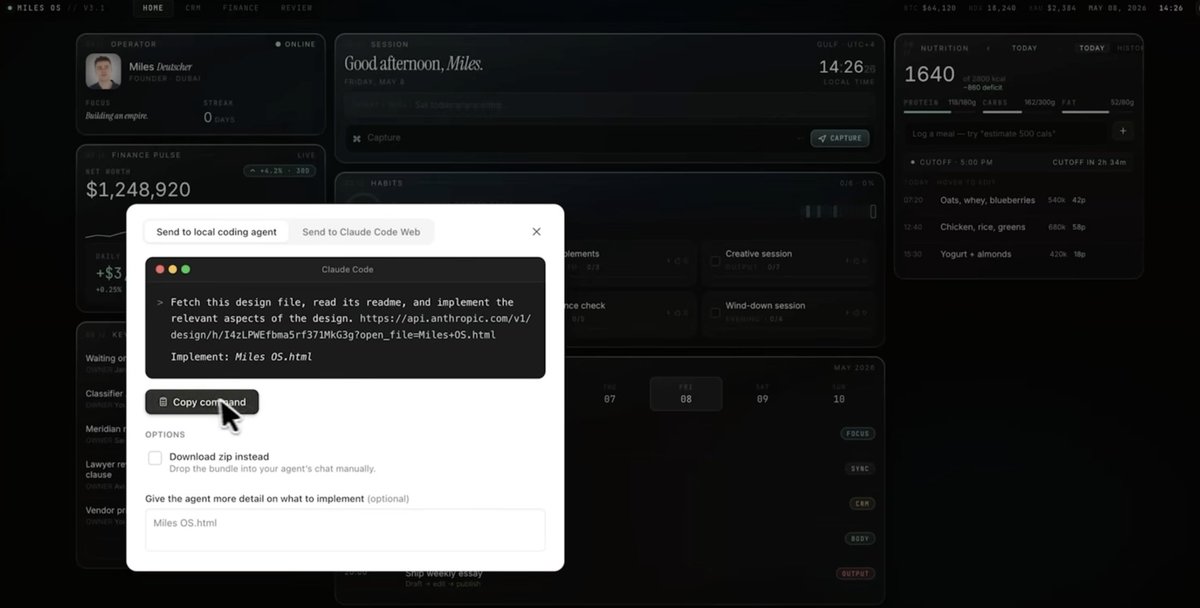
Export Claude Design system to Claude Code
3. Memory System
Next, you'll need to pick a cloud-based memory system.
I opted for Supabase, but you can use other solutions like Supermemory, too.
The point is to create a cloud-based memory system where all your data is stored, and then you can link to the app's front end via Claude Code.
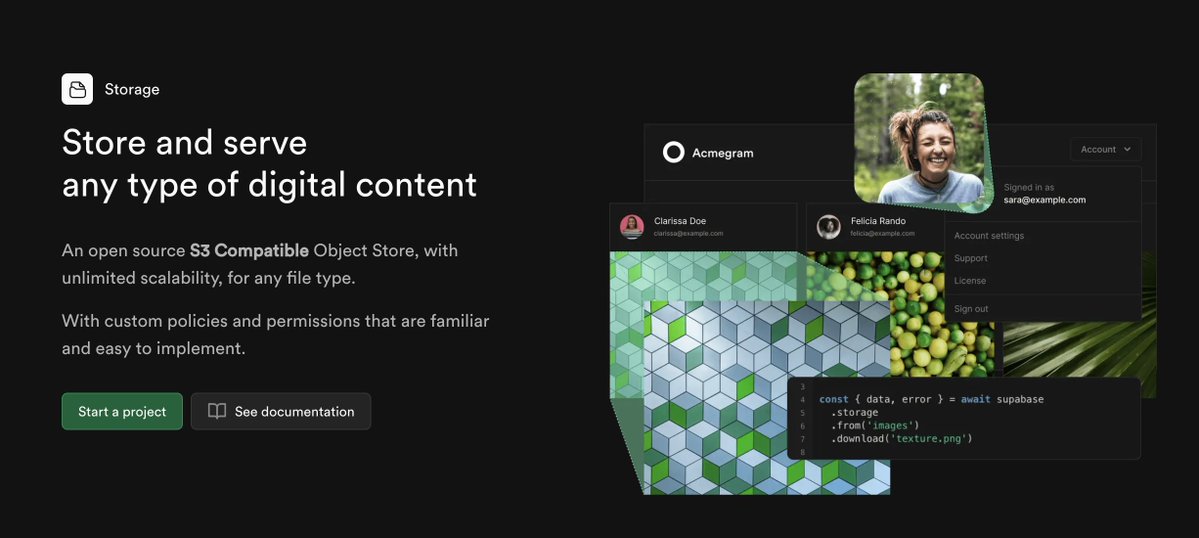
Supabase
4. Anthropic API Key
After picking your memory system, head to https://platform.claude.com/ and generate an Anthropic API key.
5. Data Schema
Next, I wrote the data schema in Claude Code, which essentially told Claude how I wanted my data organised within the app.
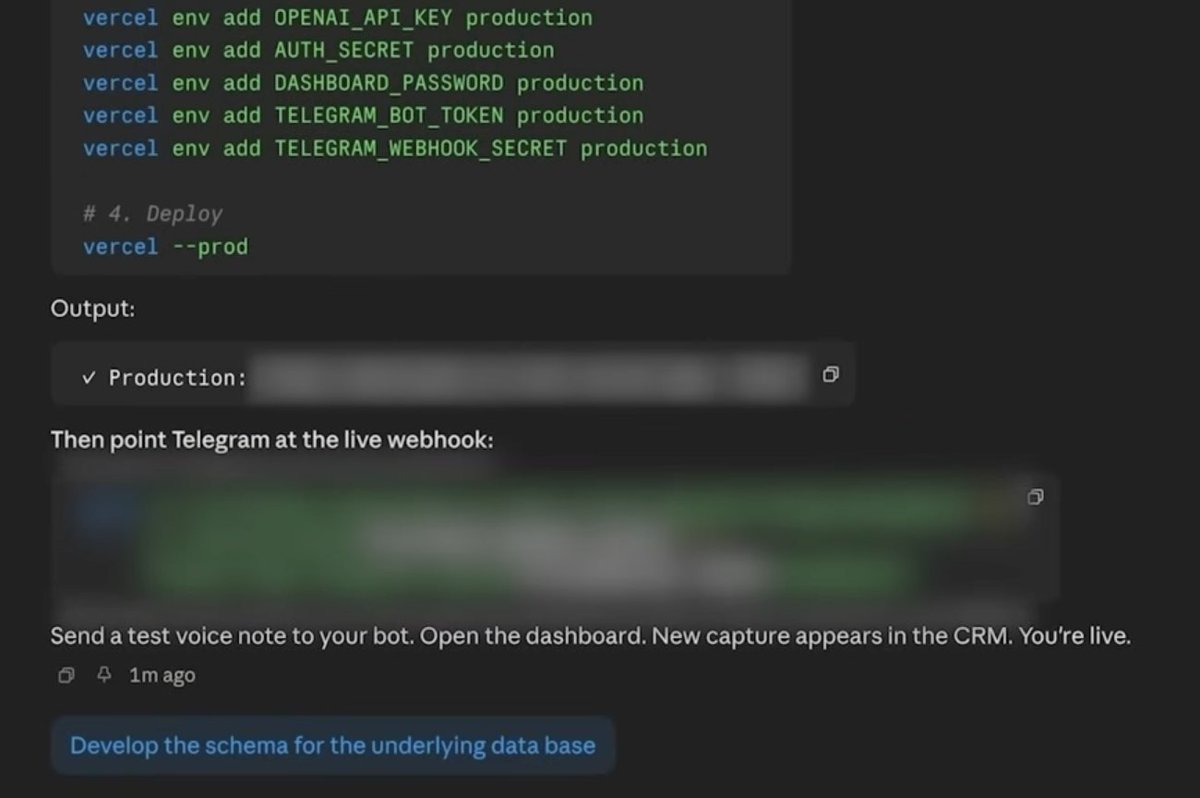
Data Schema
6. Voice Capture
Personally, I wanted a way to voice-activate the OS, so I connected a Telegram system.
If you don't want this feature, this can be considered an optional step.
Claude Code can help you set this up, but the TLDR is these steps:
Create a new bot with BotFather on Telegram → Webhook into Claude Code → Push to Vercel → Test
7. Security
At this point, the build was pretty much complete, so I ran a couple of basic Claude Code security prompts.
Things like:
"Double check for bugs, vulnerabilities, etc., and help me make edits."
8. Core Features
Lastly, I took some time to connect the core features.
Things like connecting my Google Calendar, adding a journaling function, a habit tracker, and a few other core features that I wanted in the OS.
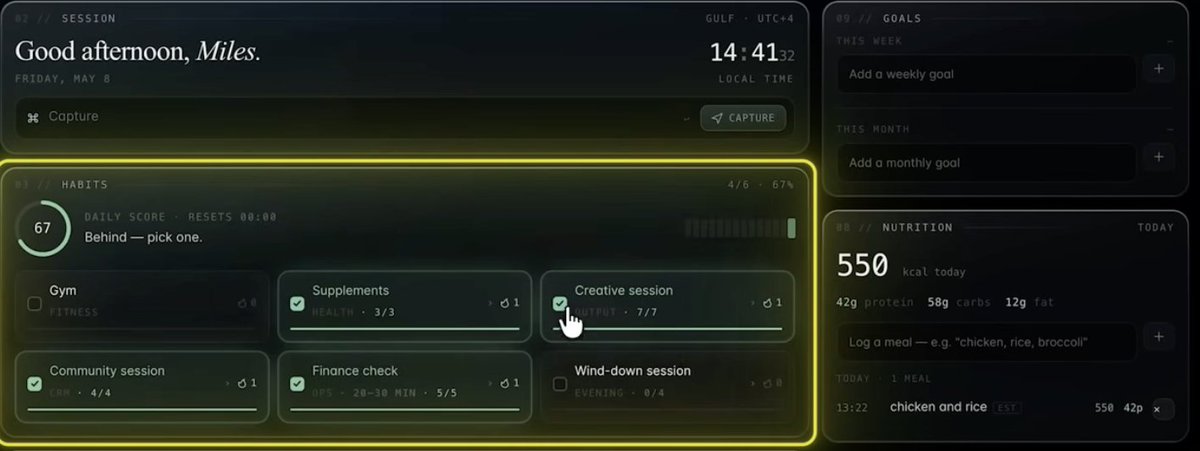
Core Features
This last step is really the fun part, and where you can customise exactly what you want in the OS.
If you run into any trouble during these 8 steps, just paste this entire article into Claude Code, and it can reverse-engineer the steps necessary.
## Complete Dashboard Walkthrough
A complete walkthrough of my personal dashboard build
Homepage - contains the most important daily data as discussed above.
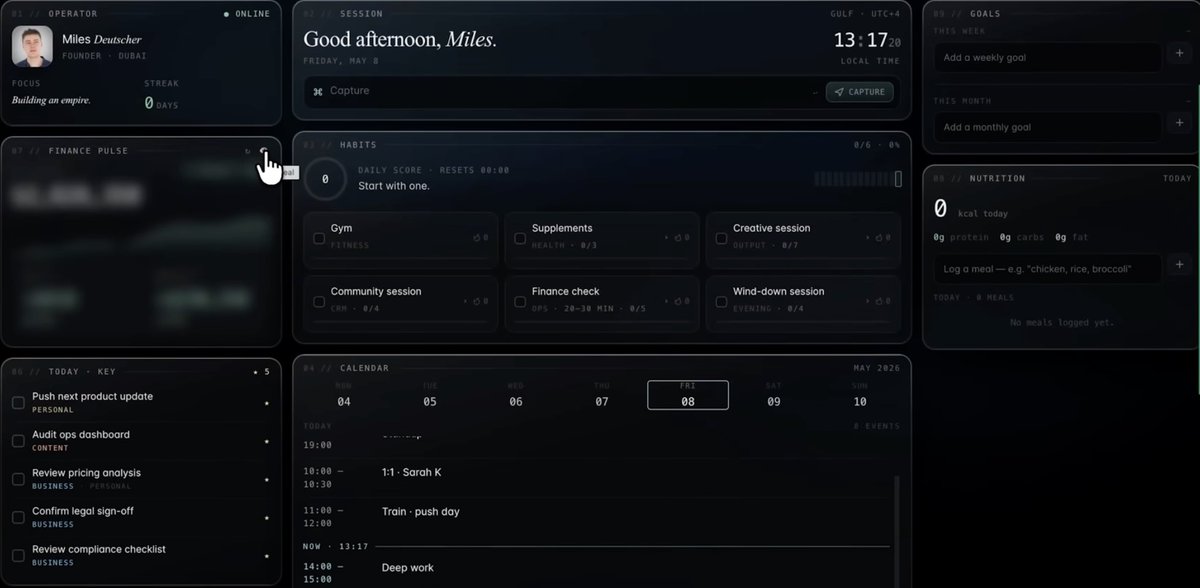
Homepage
Task CRM - organises my tasks by top priority every day (also has a board view like Notion).
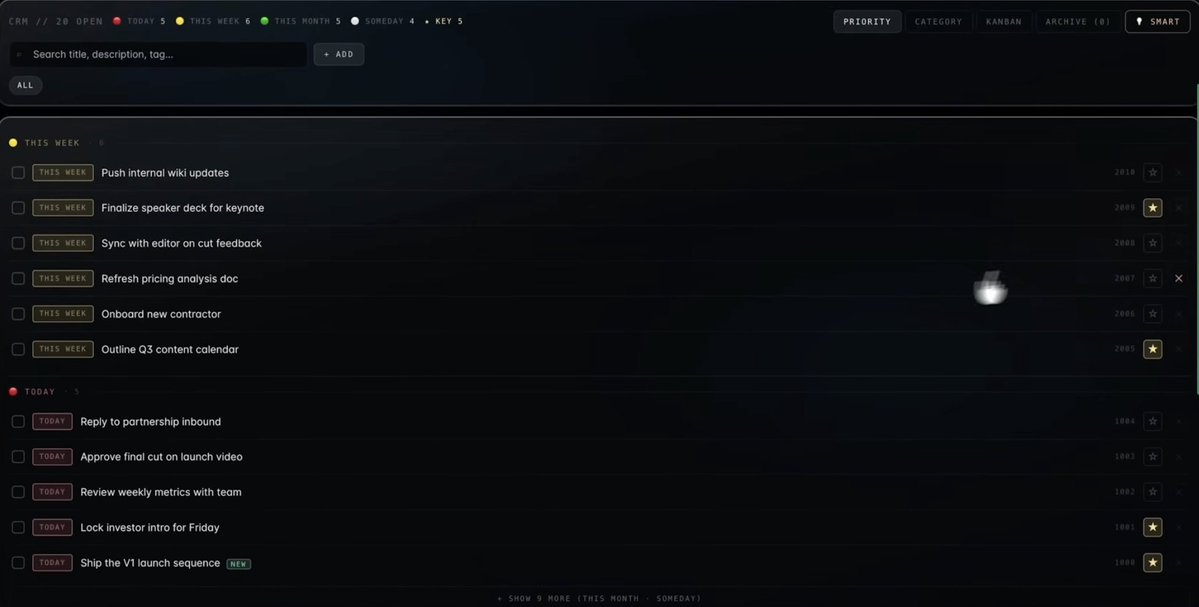
CRM/Task Tracker Page
Habit tracker - a gamified version of my daily habits (finance check, health checks, wind down routine).
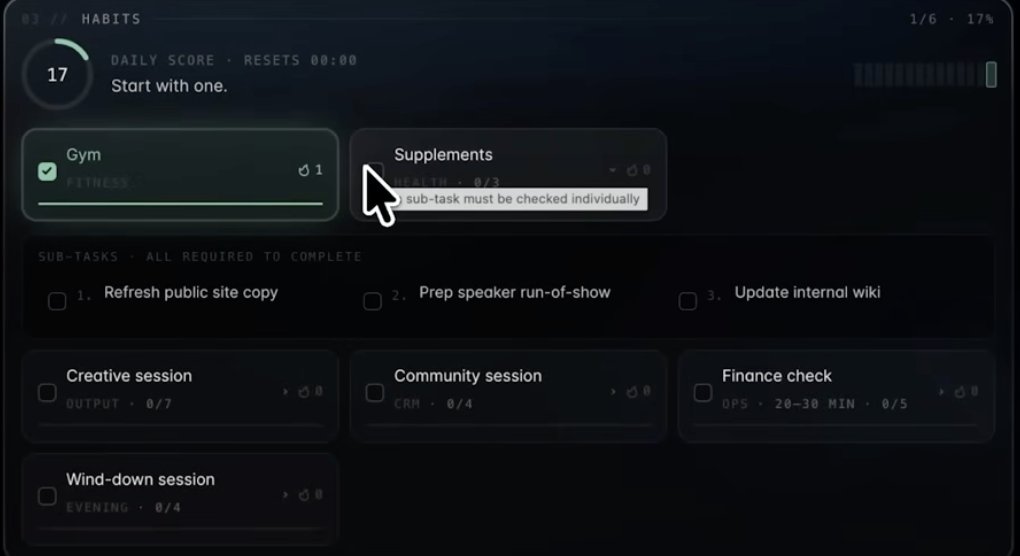
Habit Tracker
Nutrition Tracker - a centralised hub to track all my nutrition data.
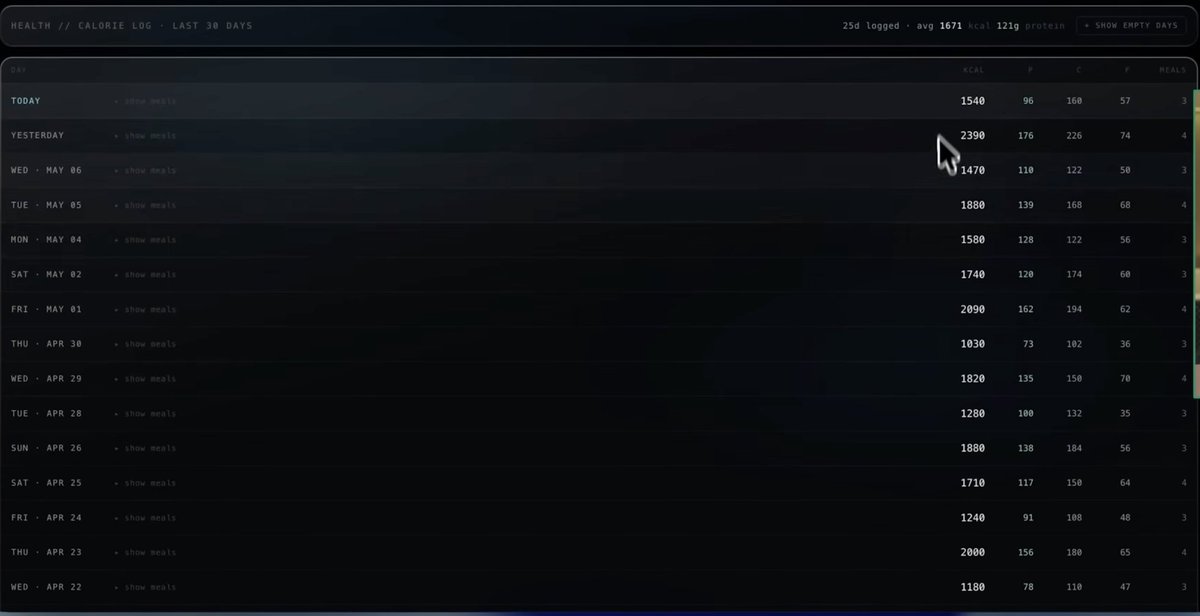
Nutrition/Health Tracker
Calendar - calendar overview.
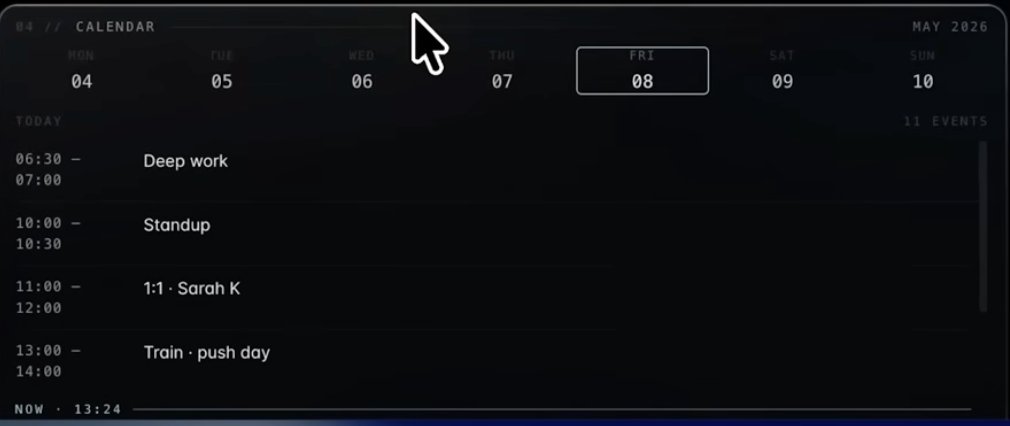
Calendar Overview
Brain - my "AI second brain" tab, where all my personal notes are stored (content, personal, legal, business ops).
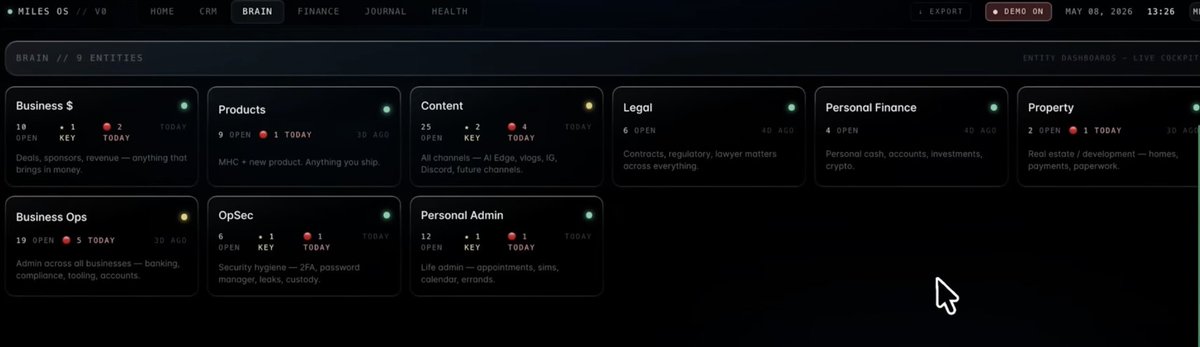
Second-Brain
Second-Brain Pages - within each second-brain category, I built separate pages for individual topics.
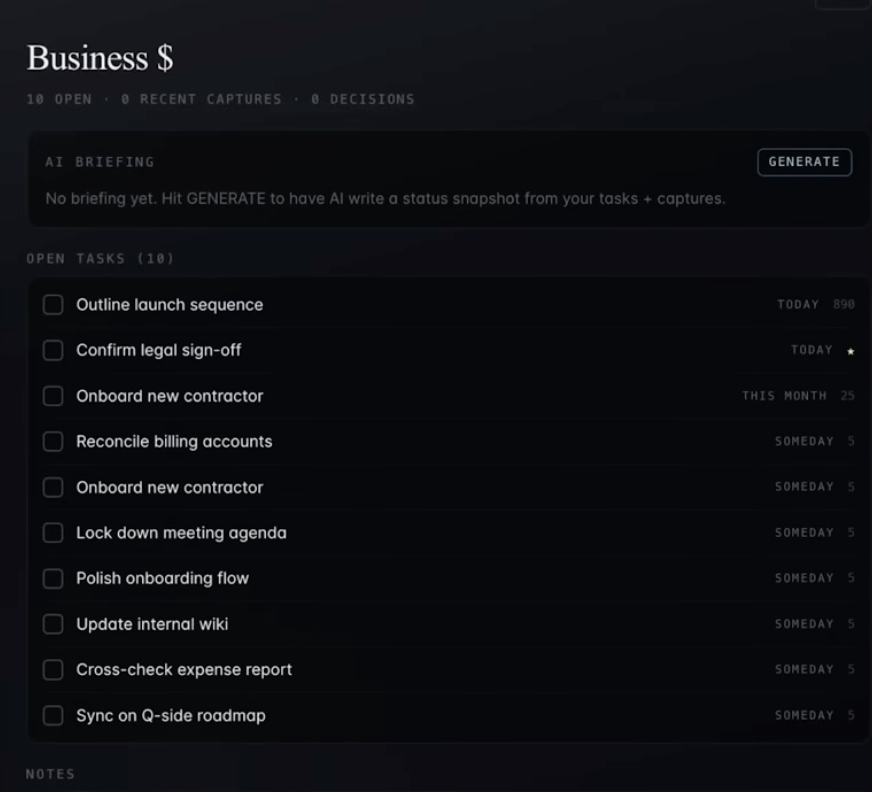
Second-Brain-Pages
The real sauce with this system isn't the cool front-facing app.
It's the backend memory system that you'll create with Supabase.
You can take all your data and apply it to any front-end system you'd like, or even apply it to AI platforms like ChatGPT or Claude.
For example, if you create a journaling feature in your personal OS and it saves to Supabase in the cloud, you can export all those journal entries to any AI platform to extract insights (imagine doing this with a market trading journal, business plans, etc.).
The memory system is the real sauce here, and it's essentially like creating a better/more visually appealing version of an Obsidian AI second-brain.
## How I Use This Every Day
Personally, I run three monitors (you don't need three monitors for this), but here's how my setup looks so you can adapt it to yours:
On monitor one (my left screen), I have the dashboard open at all times.
This has my Homepage with my calendar, key tasks, habits, and finance pulse.
On monitor two (my middle screen), I do my actual daily work (writing, reviewing proposals, taking meetings, etc.)
And on my third screen (right monitor), I have Claude and ChatGPT open - if I need to make a tweak to the dashboard, or log a task/input data, I send it to Claude Code there. Essentially, monitor three is the "management" monitor on my setup.
I also use WhisperFlow when I'm at my desk, and if I'm on the go, I hit the action button on my phone, which I've set to open Telegram, and I voice-record various tasks directly in TG via the BotFather setup discussed above.
## Closing Thoughts (+ claim your assets to build this workflow)
So, there you have it - my personal OS build that has genuinely revolutionized my life.
If you found this valuable, be sure to follow me @milesdeutscher - I post regular deep dive guides about how I actually use AI in my daily life and across my three businesses.
For deeper AI insights, follow me over on @aiedge_.
As promised, I created a free Google Drive that contains all the resources you need to build this yourself - my exact design spec, Claude Code prompt & more.
To grab it, follow these two steps:
1. Sign up for the AI Edge newsletter:
https://www.aiedgehq.co/
100% free, no spam ever, and unsub anytime
https://www.aiedgehq.co/
2. Join my free Instagram community
After signing up for the newsletter, you'll get a link to my free Instagram community, where I've posted the Google Drive!
Thank you all for reading, and I hope to continue bringing you valuable AI content like this!
## 相关链接
- [Miles Deutscher](https://x.com/milesdeutscher)
- [@milesdeutscher](https://x.com/milesdeutscher)
- [78K](https://x.com/milesdeutscher/status/2056750252175364388/analytics)
- [https://platform.claude.com/](https://platform.claude.com/)
- [@milesdeutscher](https://x.com/@milesdeutscher)
- [@aiedge_](https://x.com/@aiedge_)
- [https://www.aiedgehq.co/](https://www.aiedgehq.co/)
- [https://www.aiedgehq.co/](https://www.aiedgehq.co/)
- [Upgrade to Premium](https://x.com/i/premium_sign_up)
- [10:54 PM · May 19, 2026](https://x.com/milesdeutscher/status/2056750252175364388)
- [78K Views](https://x.com/milesdeutscher/status/2056750252175364388/analytics)
- [View quotes](https://x.com/milesdeutscher/status/2056750252175364388/quotes)
---
*导出时间: 2026/5/20 11:23:06*
---
## 中文翻译
# 我如何将 Claude 变成我的私人助理
**作者**: Miles Deutscher
**日期**: 2026-05-19T14:54:07.000Z
**来源**: [https://x.com/milesdeutscher/status/2056750252175364388](https://x.com/milesdeutscher/status/2056750252175364388)
---

我花了两周时间使用 Claude Code 构建了一个个人操作系统(OS),这彻底改变了我的生活。
它能实时追踪我生活中所有最重要的数据。
我说的是:我的行政任务、待办事项清单、日历、财务、业务增长以及更多内容。
这就像拥有一个专门为我设计的应用程序,我可以随时编辑或添加功能。
最棒的是,我可以完全通过远程提示词来控制它,它拥有自定义的云端记忆系统,并且会随着时间自我进化。
在本指南中,我将带你了解我构建整个个人 OS 的过程,并向你展示为自己构建一个系统的确切步骤。
我花了几周时间才把它做对,在文章末尾,我附上了谷歌网盘链接,里面包含我个人构建此系统所使用的所有资源(编码提示词、设计系统等)。
请坚持读到最后,我会直接发送给你!
这个 OS 系统绝对是过去几个月中我生活中最大的升级——让我们开始吧!
## 它的功能简介(迷你介绍)
这是我的个人 OS,一旦你看到它能做什么,我保证你会想为自己构建一个。

我的个人 OS
上面这个主页将我所有最重要的数据汇总到一个易于阅读的可视化界面中。
数据包括:
- 我的净资产(模拟数据)
- 每日任务
- 财务状况
- 业务增长/预测
每天早上,我都会浏览我的 OS 主页,以确保一切正常,并为我的一天做好准备。
它本质上充当我的大本营,我在这里连接了所有外部应用程序(Google Calendar、Notion 等),以创建一个“超级应用”。
这个 OS 构建中最喜欢的功能之一是,我可以完全通过 Telegram 远程控制它。
这意味着我实际上可以打开 TG,发送语音指令,个人 OS 系统就会追踪我刚才发送的内容。
例如:如果我想在待办清单中添加一个任务,我只需打开 Telegram 并向连接到我 OS 的 BotFather 发送一条指令。

通过 TG 提示 OS
该系统通过 Whispr 发送数据并连接到云端的 Supabase 来工作,然后数据会填充到我的个人应用程序前端。
如果你没有这样的系统,你就不得不依赖 Apple Notes/Notion 等应用程序来记录和组织任务,对我个人来说,由于日常任务繁多,这变得有些令人头疼。
有了这个 OS,我的任务会按优先级自动排序,CRM(客户关系管理)也在零人工干预的情况下运行。
财务
这个 OS 系统做的下一件事是将我所有的财务汇总到一个易于阅读的格式中。
在这个系统之前,我的财务状况一团糟。
我的交易所、银行账户和财务文档完全分散在各处。
现在,我在后端有一个 Google Sheet,它通过 API 实时提取我所有的财务数据,OS 系统则实时反映这些数据。

财务脉搏
对我来说,财务 + 任务管理是我用这个系统解决的两大痛点,但它还有更多功能,例如:
- 我的健身房例行公事
- 营养目标
- 健康目标
- 日记功能
- 习惯追踪器
- 日历/即将到来的会议
- 待办事项阻碍因素
以及其他一些杂项功能。
当然,你可以自定义这个构建,以包含你想要的任何功能,所以让我向你展示我实际上是如何构建它的(以及如何自定义它以添加你需要的任何东西)。
## 我是如何构建这个 OS 的
构建这个功能完善的 OS 花费了数十个小时才做好,但我会把所有的错误/尝试浓缩为 8 个简单的步骤,以帮助你构建你的系统:
1. 设计模型
在跳进 Claude Code 进行编码构建之前,我使用了 Claude Design 来获得我想要的设计的精确模型。
在下面的文件中,我会留给你我个人构建的设计系统,但如果你想设计自己的,你需要花点时间在 Claude Design 中挑选配色方案/调色板。
你需要想出三件事:
- 通用主题
- 色板(主色/辅色/第三色)
- 插入标志和任何其他设计资产(头像、你想要在应用程序中的图片、壁纸等)。
Claude Design 可以通过以下提示词帮助你完成整个过程:
```
"I'm building a personal OS system with Claude Code, help me design the general theme and color palette needed to execute."
```
(我正在用 Claude Code 构建一个个人 OS 系统,帮我设计执行所需的通用主题和色板。)
2. 导出到 Claude Code
一旦你对设计感到满意,将其导出到一个新的 Claude Code 项目,并发送一条提示词,说明你正在尝试构建一个个人 OS。
(同样,我在 Claude Code 上执行所使用的完整提示词包含在本文末尾的文件中)。

将 Claude 设计系统导出到 Claude Code
3. 记忆系统
接下来,你需要选择一个基于云端的记忆系统。
我选择了 Supabase,但你也可以使用其他解决方案,比如 Supermemory。
关键是要创建一个基于云端的记忆系统,存储你所有的数据,然后你可以通过 Claude Code 将其链接到应用程序的前端。

Supabase
4. Anthropic API 密钥
选择了记忆系统后,前往 https://platform.claude.com/ 并生成一个 Anthropic API 密钥。
5. 数据架构
接下来,我在 Claude Code 中编写了数据架构,这基本上是告诉 Claude 我希望我的数据如何在应用程序中组织。

数据架构
6. 语音捕获
就我个人而言,我想要一种语音激活 OS 的方法,所以我连接了一个 Telegram 系统。
如果你不想要这个功能,这一步可以看作是可选的。
Claude Code 可以帮助你设置,但简而言之就是这些步骤:
在 Telegram 上通过 BotFather 创建一个新的机器人 → Webhook 接入 Claude Code → 推送到 Vercel → 测试
7. 安全性
此时,构建基本完成了,所以我运行了一些基本的 Claude Code 安全性提示词。
比如:
“再次检查错误、漏洞等,并帮我进行编辑。”
8. 核心功能
最后,我花了一些时间连接核心功能。
比如连接我的 Google Calendar、添加日记功能、习惯追踪器以及我想要在 OS 中的其他一些核心功能。

核心功能
这最后一步真的是有趣的部分,你可以在这里自定义你在 OS 中想要的确切内容。
如果你在这 8 个步骤中遇到任何麻烦,只需将整篇文章粘贴到 Claude Code 中,它可以反向推导出必要的步骤。
## 完整仪表盘演练
我的个人仪表盘构建的完整演练
主页 - 包含上述讨论的最重要的日常数据。

主页
任务 CRM - 每天按最高优先级组织我的任务(也有类似 Notion 的看板视图)。

CRM/任务追踪器页面
习惯追踪器 - 我日常习惯的游戏化版本(财务检查、健康检查、放松程序)。

习惯追踪器
营养追踪器 - 追踪我所有营养数据的中心枢纽。

营养/健康追踪器
日历 - 日历概览。

日历概览
大脑 - 我的“AI 第二大脑”标签页,存储我所有的个人笔记(内容、个人、法律、业务运营)。

第二大脑
第二大脑页面 - 在每个第二大脑类别中,我为各个主题构建了单独的页面。

第二大脑页面
这个系统的真正精华不在于这个炫酷的前端应用。
而是你将用 Supabase 创建的后端记忆系统。
你可以获取所有数据并将其应用于你想要的任何前端系统,甚至应用于 AI 平台,如 ChatGPT 或 Claude。
例如,如果你在个人 OS 中创建了一个日记功能并将其保存到云端的 Supabase,你可以导出所有这些日记条目到任何 AI 平台以提取洞察力(想象一下用市场交易日记、商业计划等来做这件事)。
记忆系统才是真正的精华所在,它本质上就像是创建了一个更好/更具视觉吸引力的 Obsidian AI 第二大脑版本。
## 我每天如何使用它
就我个人而言,我使用三台显示器(你不需要三台显示器),但这里是我的设置外观,你可以根据自己的情况进行调整:
在显示器一(我的左屏)上,我始终打开仪表盘。
这里有我的主页,上面有我的日历、关键任务、习惯和财务脉搏。
在显示器二(我的中间屏幕)上,我处理我实际的日常工作(写作、审查提案、开会等)。
而在我的第三块屏幕(右侧显示器)上,我打开了 Claude 和 ChatGPT——如果我需要调整仪表盘,或者记录任务/输入数据,我会在那里通过 Claude Code 发送。本质上,显示器三是我设置中的“管理”监视器。
当我在办公桌前时,我也使用 WhisperFlow;如果我在外出,我会按下手机上的操作按钮,我将其设置为打开 Telegram,并通过上述 BotFather 设置直接在 TG 中语音记录各种任务。
## 结语(+ 领取构建此工作流的资产)
好了,这就是我的个人 OS 构建,它确实彻底改变了我的生活。
如果你觉得这很有价值,请务必关注我 @milesdeutscher——我定期发布深度指南,介绍我在日常生活中和三家跨国公司中实际如何使用 AI。
如需更深入的 AI 见解,请在 @aiedge_ 上关注我。
按照承诺,我创建了一个免费的 Google Drive,其中包含你自己构建此系统所需的所有资源——我的精确设计规范、Claude Code 提示词等等。
要获取它,请执行以下两个步骤:
1. 注册 AI Edge 时事通讯:
https://www.aiedgehq.co/
100% 免费,永远没有垃圾邮件,随时可以退订

https://www.aiedgehq.co/
2. 加入我的免费 Instagram 社区
注册时事通讯后,你会获得一个链接,加入我的免费 Instagram 社区,我已经在那里发布了 Google Drive!
感谢大家的阅读,我希望继续为大家带来像这样有价值的 AI 内容!
## 相关链接
- [Miles Deutscher](https://x.com/milesdeutscher)
- [@milesdeutscher](https://x.com/milesdeutscher)
- [78K](https://x.com/milesdeutscher/status/2056750252175364388/analytics)
- [https://platform.claude.com/](https://platform.claude.com/)
- [@milesdeutscher](https://x.com/@milesdeutscher)
- [@aiedge_](https://x.com/@aiedge_)
- [https://www.aiedgehq.co/](https://www.aiedgehq.co/)
- [https://www.aiedgehq.co/](https://www.aiedgehq.co/)
- [升级到 Premium](https://x.com/i/premium_sign_up)
- [10:54 PM · May 19, 2026](https://x.com/milesdeutscher/status/2056750252175364388)
- [78K 次观看](https://x.com/milesdeutscher/status/2056750252175364388/analytics)
- [查看引用](https://x.com/milesdeutscher/status/2056750252175364388/quotes)
---
*导出时间: 2026/5/20 11:23:06*