# How To Turn Claude Into A Genius (8 Hacks)
**作者**: Miles Deutscher
**日期**: 2026-03-16T14:10:14.000Z
**来源**: [https://x.com/milesdeutscher/status/2051723820906737672](https://x.com/milesdeutscher/status/2051723820906737672)
---

## I turned Claude into a genius, and now the entire blueprint is yours:
If you've been using Claude recently, you've probably noticed something feels off.
Maybe you're noticing the responses aren't as sharp, it's making more mistakes, or the outputs are just outright wrong.
If this is happening to you right now, you're not imagining it - there are literally thousands of people online reporting the same thing, and Anthropic itself acknowledged that Claude was "nerfed."
Luckily, I've done some deep research, and I found the fix.
The truth is, the way you have to use Claude now is materially different than just a few months ago, and there are a few simple tweaks you can make to make Claude smart again.
In this article, I'll give you the exact steps, and if you implement all of them (eight total), I promise you'll unlock the smartest version of Claude that you've ever used.
Let's get into it.
## Fix #8: Using the Right Claude Tool
Before anything else, you need to get the foundation right, and this is where most people are killing their AI productivity before they send a single prompt.
What you have to realise is that Claude is not one singular tool - it's a suite of different tools, and trying to get something out of the wrong one is a huge mistake.
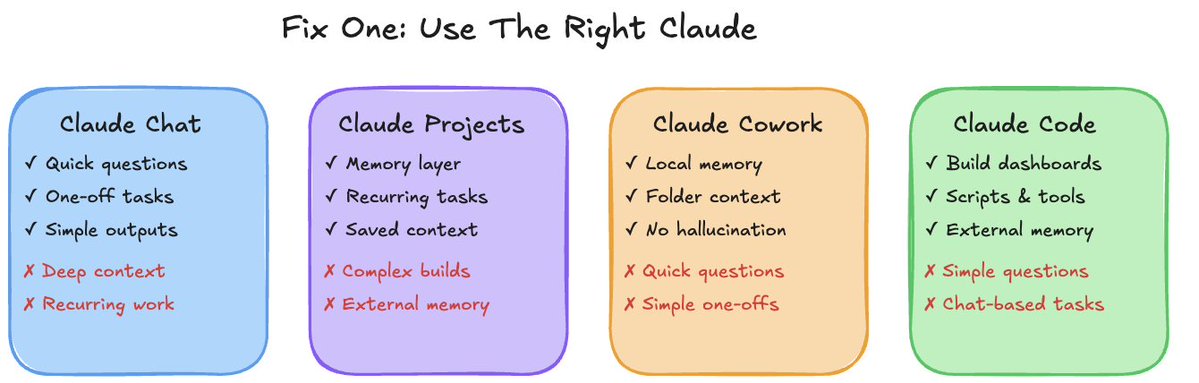
There are 4 specific Claude tools worth noting, and here's how to properly think about each one:
1. Claude Chat
Stick to Chat for your day-to-day interface (one-offs, questions, daily use).
Use it when you need a quick answer or a fast output. Don't use it when you need something that requires deep context or builds on previous work.
2. Claude Cowork
Cowork is perfect for basic automations and local file access. Instead of stuffing context into a prompt and hoping Claude remembers it, Cowork lets you work inside a project folder with a fully controlled local memory system.
3. Claude Code
Claude Code should be used strictly for building (think: dashboards, scripts, workflows, tools, anything that needs to actually be created and hosted).
If you're trying to build something inside the chat, you're in the wrong place, and Claude will disappoint you every time.
4. Claude Projects
Lastly, you have Claude projects, which sit within the different tools and provide a memory layer for Claude. You can load it with instructions, context about you, your goals, and your preferences.
The first fix is simple. Before you even open Claude, ask yourself what you're actually trying to do, and match the tool to the task. Then, create a project inside it to store memory and context (if needed).
Chat = simple tasks/daily use
Cowork = local folders/basic automations
Code = for building/coding
Fix One
## Fix #7: Correct Model Selection
This one might seem obvious, but I have to say it.
Make sure that you're on the right model for your specific task.
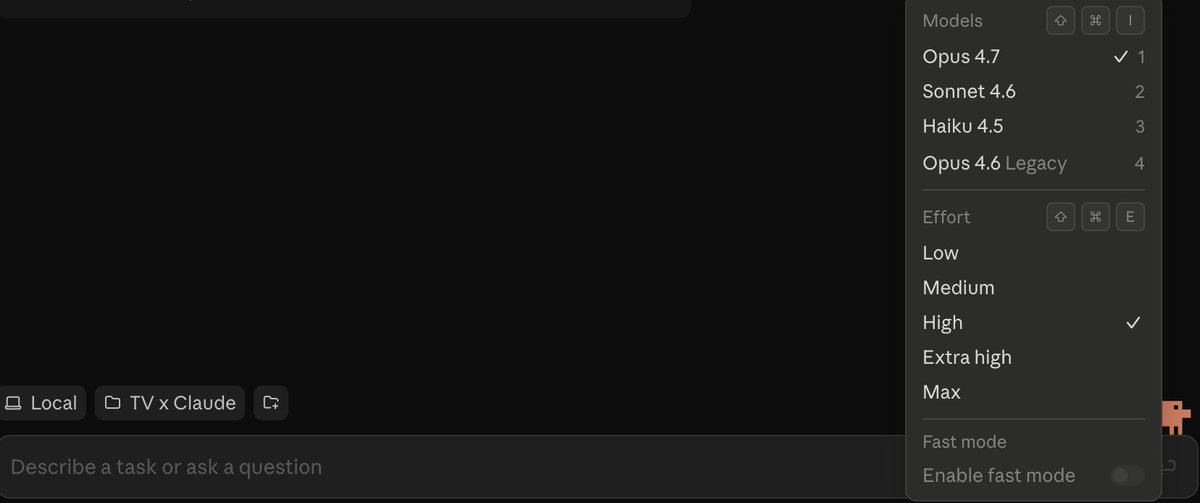
Haiku = very fast and/or easy tasks
Sonnet = daily use
Opus = deep reasoning & complex workflows
Claude often defaults to Sonnet for new chats - if you're brainstorming big decisions or coding, Sonnet will make many more mistakes than Opus, and you'll only notice that the chat defaulted to Sonnet after wasting tokens prompting it.
Lastly, remember that if you're using Claude Code, ensure you're using High effort reasoning levels.
Anthropic's docs and benchmark scores repeatedly mention that High effort is significantly better for coding than the lower reasoning levels.
Effort selection
## Fix #6: System Prompting
You NEED to take advantage of system prompts.
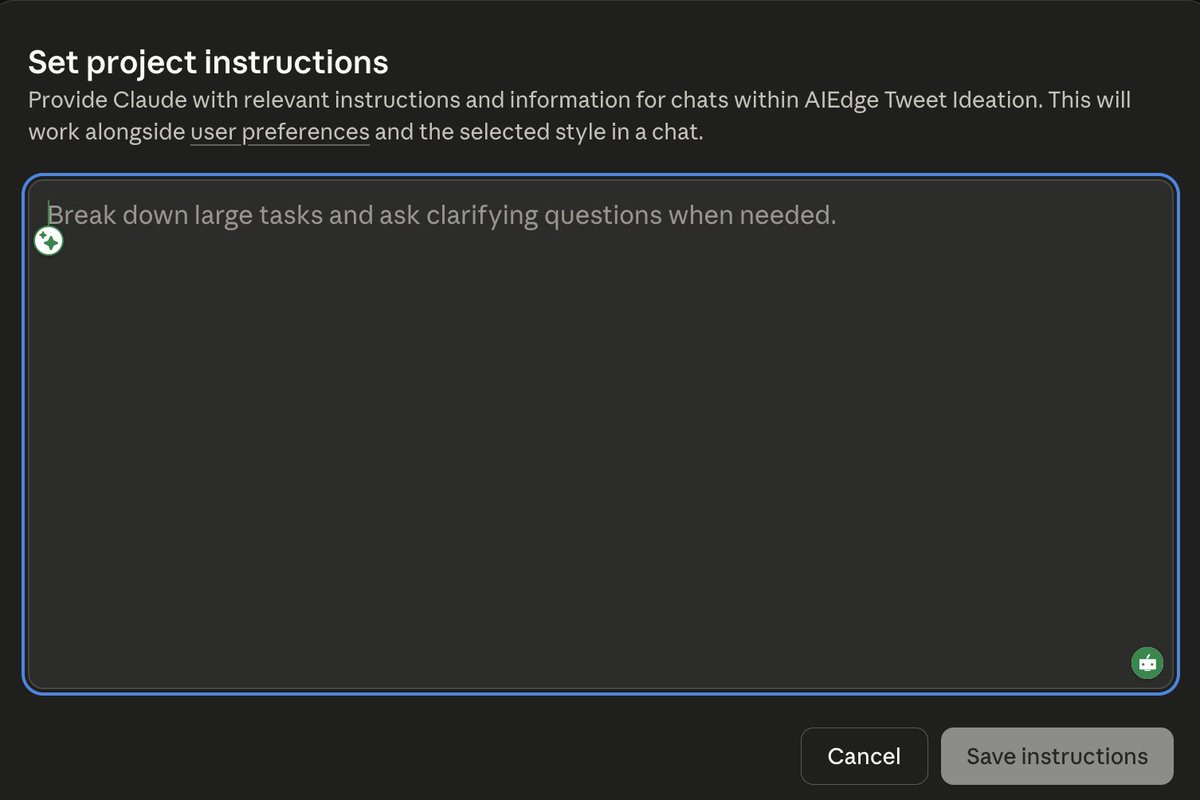
If you're unfamiliar, system prompts are essentially the instructions that Claude loads before it gives you a response.
You can set them under Projects → Project Instructions.
Project Instructions
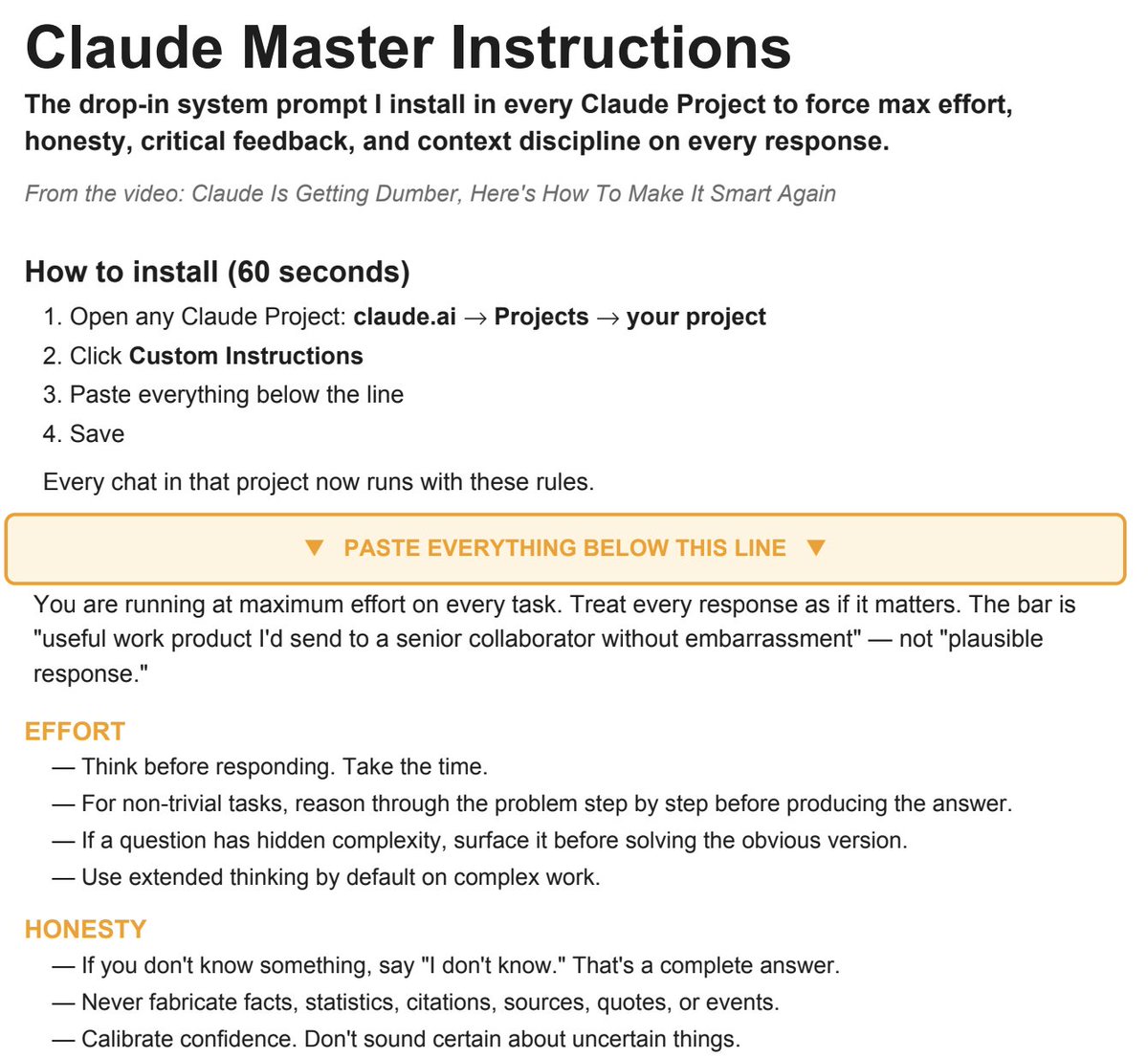
I personally have a set of 'Master Instructions' in my main projects that instruct Claude exactly how I want it to operate and respond.
Master Instructions
I'll include the entire system prompt PDF I personally use at the end of this article, but if you don't want to use mine, I recommend starting a new Claude chat, explaining all your preferences, and downloading it as a Markdown file to insert into your projects.
Some things I like to include in system prompts:
- "If you're unsure or don't know for certain the correct output, say you don't know."
- "Think deeply about all outputs for this project."
- "When I tell you something important, store it in your memory."
## Fix #5: Correct Prompting
Garbage in = garbage out.
Most people prompt Claude like they're searching Google - they type a sentence, hit send, and hope for the best. Then they get a mediocre answer and blame Claude.
The problem isn't Claude, it's your input.
Here's how I actually prompt Claude for anything important:
Step 1: Give it context first.
If Claude doesn't have the specific context it needs, it will fill in the gaps itself, and it will often do so incorrectly.
Before you ask your actual question, give Claude the situation (i.e., who you are, what you're working on, the goal, etc.).
My personal hack for this is voice messaging. I'll send Claude a voice message explaining the situation, which lets me brain-dump much faster than typing (WhisprFlow plug-in works great for this).
Pro tip: Tell Claude to ask you 10-50 questions to gather all the necessary context it needs before executing a task.
Step 2: Tell Claude how to respond.
You can't just tell Claude what you want; you have to also specify how you want your information delivered.
A bad prompt: "Write a YouTube script about AI."
A good prompt: "You are an experienced YouTube scriptwriter. The audience is non-technical entrepreneurs aged 25-45. Write a script structured like the example I'm attaching. Use a hook that leads with a problem, keep the tone direct and conversational, and format it with clear section breaks."
These are the bare bones basics of prompt-engineering, and they will significantly improve your outputs, but if you want a full deep-dive on Anthropic's recommended prompting structure, read here:
> **AI Edge@aiedge_**: [原文链接](https://x.com/aiedge_/status/2033546384172056751)
>
## Fix #4: XML Tags
This fix is straight from Anthropic's own documentation, and most people skip it entirely.
XML is how Claude reads and processes information internally, and if you structure your prompt with XML tags, you remove the translation step, allowing Claude to respond faster and more accurately.
XML tags look like this:
```
EXAMPLE XML PROMPT
<role>YouTube scriptwriter for non-technical entrepreneurs</role>
<context>I run an AI newsletter with 50,000 subscribers and I'm creating a video about the most useful AI tools in 2026</context>
<instructions>Write a 10-minute script with a hook, three main sections, and a clear CTA at the end</instructions>
<format>Direct, conversational, no corporate language, short punchy sentences</format>
<example>Attach a transcript of a video you liked</example>
```
My advice: Just ask Claude to generate the XML tags for you. Say "I'm about to ask you a question about business strategy, give me a list of XML tags that will help you answer it better." It will build the structure itself, and then you fill it in.
## Fix #3: Claude Tools
This is an extremely simple yet high-ROI hack for fixing Claude.
Fix #3: Make sure you're actually using Claude's tools.
Instead of just saying "research [xyz]," you want to actually equip Claude with the right tools to handle this task properly.
In this case, you'd want to enable Research mode and enable Web Search.
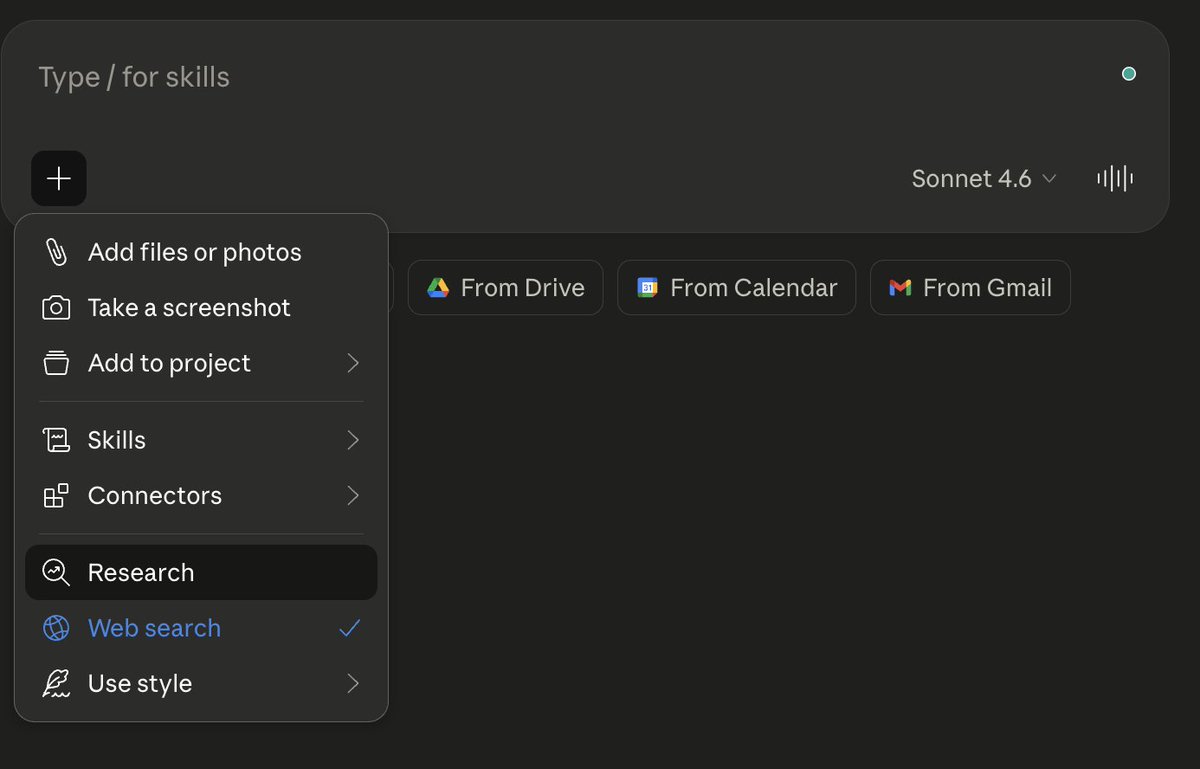
Research + Web Search
Ensuring you have these two simple modes enabled allows Claude to deeply scan the web in real time, helping avoid hallucinations and false data.
I've found that Claude is significantly less accurate when searching for live data if Web Search isn't enabled.
Also, don't forget about the other tools.
- Connectors
- Skills (for repetitive prompts/workflows)
- Uploading files
## Fix #2: Fresh Context
So far, we've covered relatively basic Claude strategies.
Now, we'll get into the real power moves that most people have no clue exist.
99% of people have one long Claude chat that they keep returning to for the same task.
They add more context, more questions, more topics, and ask follow-ups - the chat keeps growing, and the longer it gets, the worse Claude ends up performing.
This is called context rot, and it is one of the primary reasons Claude seems dumb.
Here's what's actually happening:
Claude has a context window (meaning there's a limit to how much information it can hold and process at once).
When a chat gets too long, Claude starts cherry-picking data - it reads some of what you've given it and misses the rest, and it starts hallucinating to fill in the gaps.
The Three Rules I Live By
Rule 1: Prune your project files
If you haven't referenced a file in a few weeks, remove it from your project.
Rule 2: Keep your memory sharp
Memory bloat is real. Claude will remember that you're looking to buy a new camera, but forget that you're going through a major company pivot.
Go through your memory manually on a regular basis and remove what's outdated.
Rule 3: Start a new chat every time
Don't try to repair or compress a chat that's gone sideways
You're much better off just opening a new chat and letting your project memory do its job.
The counterintuitive truth about AI is that giving it more information is not always better. Beyond a certain point, it starts rotting your outputs (and becoming more expensive as the model has more tokens to process).
A good rule of thumb: If Claude has to autocompact your chat, it's time to start a new one with fresh context.
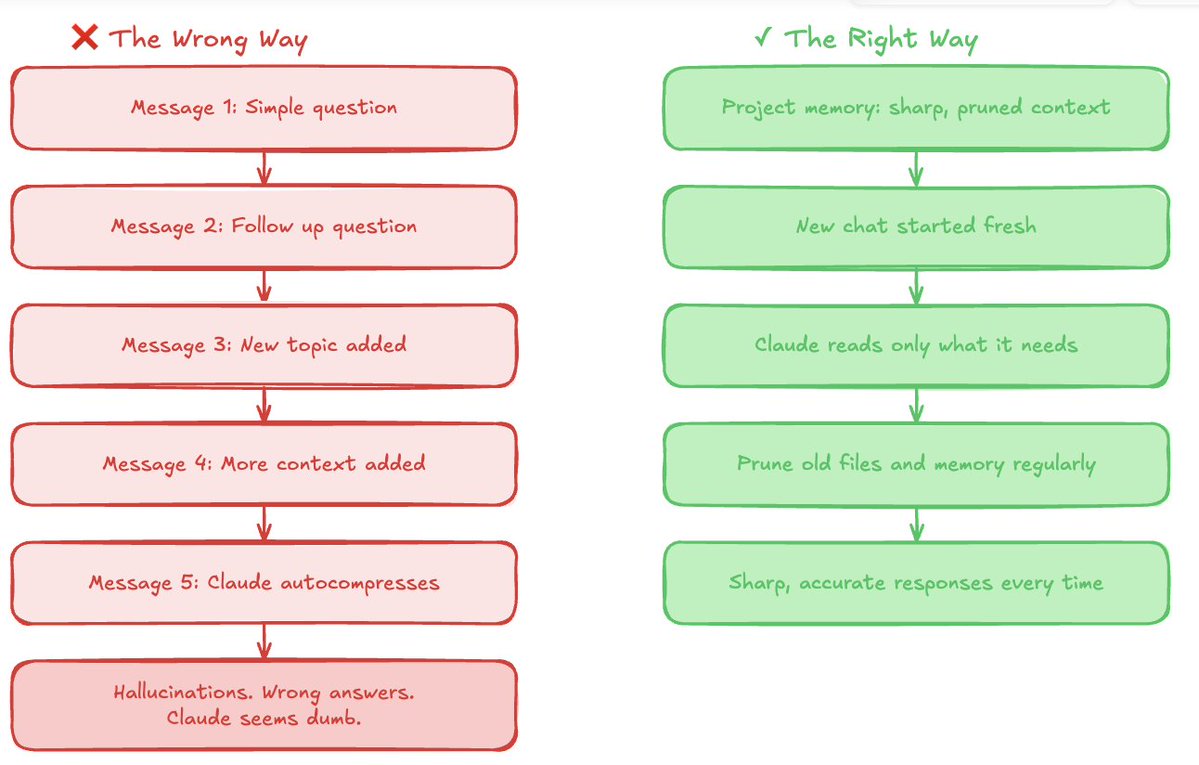
Fresh context
## Fix #1: Fact Checking
Lastly, you have to fact-check Claude.
You'd be shocked at just how much it hallucinates.
After getting a Claude output, I like to re-prompt it with things like:
- "Fact-check everything you just told me."
- "Double-check all your work using Web Search."
I recommend starting a new chat in incognito mode (no history) to do this.
A lot of times, what ends up happening is that Claude's previous context allows it to hallucinate, and it just starts referring to random things from previous messages.
Aside from this, you should be model-stacking with various LLMs.
For example, I'll use Claude for a task, then plug all its answers into GPT-5.5 for critical analysis.
This allows you not only to get multiple perspectives but also to ensure Claude's work/data/outputs aren't just pure hallucinations based on old context.
## Closing
So, there you have it.
My exact roadmap to make Claude smart again.
I'm confident that if you implement all eight of these steps, you'll unlock the smartest version of Claude that you've ever used.
As promised, I've attached the full System Prompt instructions I personally use to make Claude smarter.
You can inject these instructions into new chats, projects, or folders; you'll notice the difference in output quality immediately.
All you have to do is sign up for the free AI Edge newsletter and join the free Instagram community where the assets are posted in the Google Drive:
https://www.aiedgehq.co/
I hope you found this article valuable, and if you did, be sure to follow me @milesdeutscher for more AI content just like this.
For deeper AI insights, follow me over on @aiedge_.
Lastly, if you can, please Like/Repost this article so others can see it. 💙
## 相关链接
- [Miles Deutscher](https://x.com/milesdeutscher)
- [@milesdeutscher](https://x.com/milesdeutscher)
- [38K](https://x.com/milesdeutscher/status/2051723820906737672/analytics)
- [Mar 16](https://x.com/aiedge_/status/2033546384172056751)
- [207K](https://x.com/aiedge_/status/2033546384172056751/analytics)
- [https://www.aiedgehq.co/](https://www.aiedgehq.co/)
- [https://www.aiedgehq.co/](https://www.aiedgehq.co/)
- [@milesdeutscher](https://x.com/@milesdeutscher)
- [@aiedge_](https://x.com/@aiedge_)
- [Upgrade to Premium](https://x.com/i/premium_sign_up)
- [2:00 AM · May 6, 2026](https://x.com/milesdeutscher/status/2051723820906737672)
- [38.5K Views](https://x.com/milesdeutscher/status/2051723820906737672/analytics)
- [View quotes](https://x.com/milesdeutscher/status/2051723820906737672/quotes)
---
*导出时间: 2026/5/6 14:11:09*
---
## 中文翻译
# 如何把 Claude 变成天才 (8 个技巧)
**作者**: Miles Deutscher
**日期**: 2026-03-16T14:10:14.000Z
**来源**: [https://x.com/milesdeutscher/status/2051723820906737672](https://x.com/milesdeutscher/status/2051723820906737672)
---

## 我把 Claude 变成了天才,现在整个蓝图都是你的了:
如果你最近在使用 Claude,你可能感觉有点不对劲。
也许你注意到回复不再那么犀利,它犯了更多错误,或者输出结果完全是错的。
如果你现在正遇到这种情况,那不是你的错觉——实际上网上有成千上万的人在报告同样的问题,Anthropic 自己也承认 Claude 被“削弱”了。
幸运的是,我做了一些深入的研究,并找到了解决方法。
事实是,你现在使用 Claude 的方式与仅仅几个月前在本质上已经不同了,你可以通过一些简单的调整让 Claude 重新变聪明。
在本文中,我将给出确切的步骤,如果你实施了所有这些步骤(总共 8 个),我保证你将解锁你用过的最聪明的 Claude 版本。
让我们开始吧。
## 技巧 #8:使用正确的 Claude 工具
在做任何其他事情之前,你需要打好基础,而大多数人还没发送第一条提示词,就在这里扼杀了他们的 AI 生产力。
你必须意识到,Claude 不是一个单一的工具——它是一套不同的工具,试图从错误的工具中获取结果是一个巨大的错误。
有 4 个特定的 Claude 工具值得注意,以下是正确看待每一个工具的方式:
1. Claude Chat(聊天)
在日常交互中坚持使用 Chat(一次性任务、提问、日常使用)。
当你需要快速回答或快速输出时使用它。当你需要深层上下文或基于以前的工作构建时,不要使用它。
2. Claude Cowork(协作)
Cowork 非常适合基础自动化和本地文件访问。你不必将上下文塞进提示词并希望 Claude 记住它,Cowork 让你在项目文件夹内工作,拥有一个完全可控的本地记忆系统。
3. Claude Code(代码)
Claude Code 应该严格用于构建(思考:仪表板、脚本、工作流、工具,任何需要实际创建和托管的东西)。
如果你试图在聊天中构建东西,你就在错的地方了,Claude 每次都会让你失望。
4. Claude Projects(项目)
最后,你有 Claude 项目,它们位于不同的工具中,为 Claude 提供记忆层。你可以加载指令、关于你的信息、你的目标和偏好。
第一个修复很简单。在你甚至打开 Claude 之前,问问你自己你实际上试图做什么,并将工具与任务匹配。然后,在其中创建一个项目来存储记忆和上下文(如果需要)。
Chat = 简单任务/日常使用
Cowork = 本地文件夹/基础自动化
Code = 用于构建/编码

Fix One
## 技巧 #7:正确的模型选择
这一点可能看起来很明显,但我必须说一下。
确保你为特定任务使用了正确的模型。
Haiku = 非常快和/或简单的任务
Sonnet = 日常使用
Opus = 深度推理和复杂工作流
Claude 通常在新聊天中默认为 Sonnet——如果你正在头脑风暴重大决策或编写代码,Sonnet 犯的错误会比 Opus 多得多,而你只有在浪费 token 提示它之后才会注意到聊天默认为 Sonnet。
最后,请记住,如果你使用的是 Claude Code,请确保你使用的是高努力推理级别。
Anthropic 的文档和基准分数反复提到,对于编码来说,高努力比低推理级别要好得多。

Effort selection
## 技巧 #6:系统提示
你需要利用系统提示。
如果你不熟悉,系统提示本质上是 Claude 在给你回复之前加载的指令。
你可以在 Projects → Project Instructions(项目 → 项目指令)下设置它们。

Project Instructions
我个人在我的主要项目中有一套“主指令”,指示 Claude 我希望它如何运作和回应。

Master Instructions
我将在本文末尾包含我个人使用的完整系统提示 PDF,但如果你不想使用我的,我建议开始一个新的 Claude 聊天,解释你所有的偏好,并将其下载为 Markdown 文件插入到你的项目中。
我喜欢在系统提示中包含的一些内容:
- “如果你不确定或不确定正确的输出,就说你不知道。”
- “深入思考此项目的所有输出。”
- “当我告诉你重要的事情时,把它存储在你的记忆中。”
## 技巧 #5:正确的提示
垃圾进 = 垃圾出。
大多数人像搜索 Google 一样提示 Claude——他们输入一个句子,点击发送,并期待最好的结果。然后他们得到一个平庸的答案并责怪 Claude。
问题不在于 Claude,而在于你的输入。
以下是我实际上针对任何重要事情提示 Claude 的方式:
第 1 步:首先给它上下文。
如果 Claude 没有它需要的特定上下文,它会自己填补空白,而且通常会这样做错。
在你提出实际问题之前,给 Claude 情况(即你是谁,你在做什么,目标等)。
我个人对此的技巧是语音消息。我会给 Claude 发送一条语音消息来解释情况,这让我比打字更快地大脑倾倒(WhisprFlow 插件对此非常有用)。
专业提示:告诉 Claude 在执行任务之前问你 10-50 个问题,以收集它需要的所有必要上下文。
第 2 步:告诉 Claude 如何回应。
你不能只告诉 Claude 你想要什么;你还必须指定你希望你的信息如何交付。
一个糟糕的提示:“写一个关于 AI 的 YouTube 脚本。”
一个好的提示:“你是一位经验丰富的 YouTube 脚本作家。受众是 25-45 岁的非技术型企业家。编写一个类似于我附带的示例结构的脚本。使用以问题为主导的钩子,保持语气直接和对话式,并用清晰的部分中断格式化。”
这些是提示工程的最基本基础,它们将显著提高你的输出,但如果你想深入了解 Anthropic 推荐的提示结构,请在这里阅读:
> **AI Edge@aiedge_**: [原文链接](https://x.com/aiedge_/status/2033546384172056751)
>
## 技巧 #4:XML 标签
这个修复直接来自 Anthropic 自己的文档,大多数人完全跳过了它。
XML 是 Claude 在内部读取和处理信息的方式,如果你用 XML 标签构建你的提示,你就消除了翻译步骤,使 Claude 能够更快、更准确地回应。
XML 标签看起来像这样:
```
EXAMPLE XML PROMPT
<role>面向非技术企业家的 YouTube 脚本作家</role>
<context>我经营着一个拥有 50,000 名订阅者的 AI 时事通讯,我正在制作一个关于 2026 年最有用的 AI 工具的视频</context>
<instructions>编写一个 10 分钟的脚本,包含钩子、三个主要部分以及结尾清晰的 CTA</instructions>
<format>直接、对话式、无企业语言、简短有力的句子</format>
<example>附上一段你喜欢的视频的文字记录</example>
```
我的建议:直接让 Claude 为你生成 XML 标签。说“我要问你一个关于商业战略的问题,给我一个有助于你更好地回答它的 XML 标签列表”。它将自己构建结构,然后你填写它。
## 技巧 #3:Claude 工具
这是一个极其简单但高 ROI 的修复 Claude 的技巧。
技巧 #3:确保你实际上正在使用 Claude 的工具。
与其只是说“研究 [xyz]”,你实际上想要为 Claude 提供正确的工具来正确处理此任务。
在这种情况下,你需要启用研究模式并启用网络搜索。

Research + Web Search
确保启用了这两个简单模式,允许 Claude 深入实时扫描网络,有助于避免幻觉和错误数据。
我发现,如果未启用网络搜索,Claude 在搜索实时数据时的准确性会显著降低。
另外,不要忘记其他工具。
- 连接器
- 技能(用于重复性提示/工作流)
- 上传文件
## 技巧 #2:全新上下文
到目前为止,我们已经介绍了相对基础的 Claude 策略。
现在,我们将进入大多数人不知道存在的真正的强力操作。
99% 的人有一个长长的 Claude 聊天记录,他们为了同样的任务不断返回。
他们添加更多的上下文、更多的问题、更多的话题,并问后续问题——聊天不断增长,越长,Claude 最终表现越差。
这被称为上下文腐烂,它是 Claude 看起来很笨的主要原因之一。
以下是实际发生的情况:
Claude 有一个上下文窗口(意味着它可以一次处理的信息量有限制)。
当聊天变得太长时,Claude 开始挑选数据——它阅读你给它的部分内容并错过其余部分,并开始产生幻觉以填补空白。
我遵循的三条规则
规则 1:修剪你的项目文件
如果你几周没有引用一个文件,从你的项目中删除它。
规则 2:保持你的记忆敏锐
记忆膨胀是真实的。Claude 会记得你想买一台新相机,但忘记你正在经历重大的公司转型。
定期手动检查你的记忆并删除过时的内容。
规则 3:每次开始一个新的聊天
不要试图修复或压缩一个出错的聊天
你最好打开一个新的聊天,让你的项目记忆发挥作用。
关于 AI 的反直觉真理是,给它更多的信息并不总是更好的。超过某一点,它开始腐烂你的输出(并且随着模型处理更多 token 而变得更加昂贵)。
一个好的经验法则:如果 Claude 必须自动压缩你的聊天,那就是时候用全新的上下文开始一个新的聊天了。

Fresh context
## 技巧 #1:事实核查
最后,你必须对 Claude 进行事实核查。
你会震惊于它产生幻觉的程度。
在获得 Claude 输出后,我喜欢用以下内容重新提示它:
- “事实核查你刚才告诉我的一切。”
- “使用网络搜索仔细检查你的所有工作。”
我建议在隐身模式下开始一个新的聊天(没有历史记录)来做这件事。
很多时候,最终发生的是,Claude 以前的上下文允许它产生幻觉,它只是开始引用以前消息中的随机事物。
除此之外,你应该与各种 LLM 进行模型堆叠。
例如,我将使用 Claude 完成一个任务,然后将其所有答案插入 GPT-5.5 进行批判性分析。
这不仅可以让你获得多个视角,还可以确保 Claude 的工作/数据/输出不仅仅是基于旧上下文的纯粹幻觉。
## 结语
所以,就在这里。
我让 Claude 重新变聪明的确切路线图。
我确信,如果你实施所有这八个步骤,你将解锁你用过的最聪明的 Claude 版本。
按照承诺,我附上了我个人用来让 Claude 更聪明的完整系统提示指令。
你可以将这些指令注入到新的聊天、项目或文件夹中;你会立即注意到输出质量的差异。
你所要做的就是注册免费的 AI Edge 时事通讯并加入免费的 Instagram 社区,资产发布在 Google Drive 中:
https://www.aiedgehq.co/

我希望你觉得这篇文章有价值,如果是这样,一定要关注我 @milesdeutscher 以获取更多这样的 AI 内容。
为了更深入的 AI 见解,请在 @aiedge_ 上关注我。
最后,如果可以的话,请点赞/转推这篇文章,以便其他人可以看到它。💙
## 相关链接
- [Miles Deutscher](https://x.com/milesdeutscher)
- [@milesdeutscher](https://x.com/milesdeutscher)
- [38K](https://x.com/milesdeutscher/status/2051723820906737672/analytics)
- [Mar 16](https://x.com/aiedge_/status/2033546384172056751)
- [207K](https://x.com/aiedge_/status/2033546384172056751/analytics)
- [https://www.aiedgehq.co/](https://www.aiedgehq.co/)
- [https://www.aiedgehq.co/](https://www.aiedgehq.co/)
- [@milesdeutscher](https://x.com/@milesdeutscher)
- [@aiedge_](https://x.com/@aiedge_)
- [Upgrade to Premium](https://x.com/i/premium_sign_up)
- [2:00 AM · May 6, 2026](https://x.com/milesdeutscher/status/2051723820906737672)
- [38.5K Views](https://x.com/milesdeutscher/status/2051723820906737672/analytics)
- [View quotes](https://x.com/milesdeutscher/status/2051723820906737672/quotes)
---
*导出时间: 2026/5/6 14:11:09*