# 12 Layers Every AI User Should Understand in 2026
**作者**: Vox
**日期**: 2026-05-23T16:25:34.000Z
**来源**: [https://x.com/Voxyz_ai/status/2058222816474919343](https://x.com/Voxyz_ai/status/2058222816474919343)
---
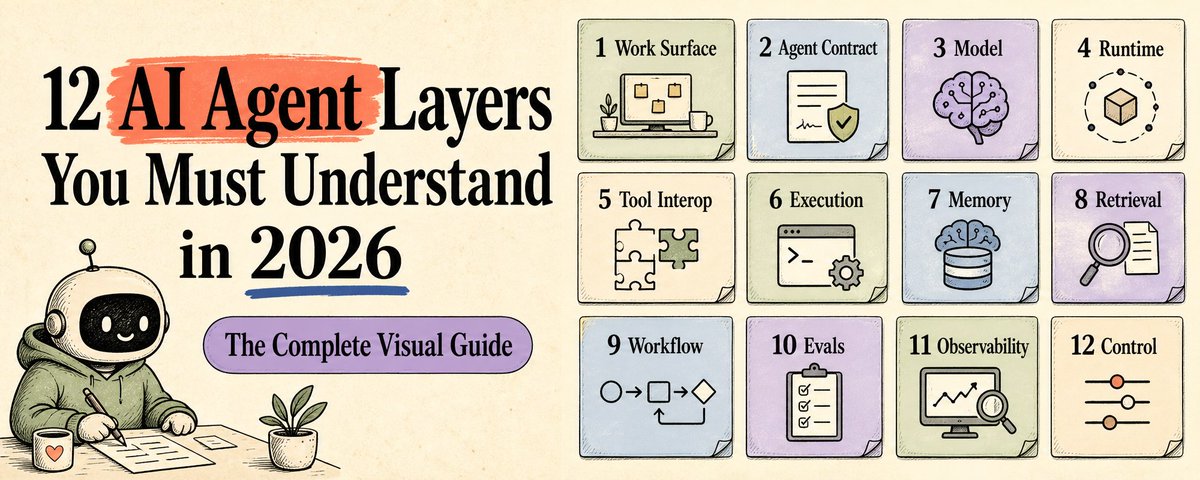
See where each layer fails, and you'll know where real work breaks.
You use AI every day.
ChatGPT for answers, Claude Code or Codex for code, Perplexity for research.
More and more people now have their own AI agent. It checks your email, crunches your data, builds memory about you.
But you've probably run into this:
→ The same tool answers sharply today, then talks complete nonsense tomorrow
→ Ask ChatGPT and Claude the same question, get completely different answers
→ New tools launch every week. They all sound impressive. You have no idea which one fits into real work
These problems all trace back to how AI tools are built.
Once you have the mental model below, agents stop feeling so complicated.
An AI agent is built from 12 layers. Each layer does something different. Each layer can fail in its own way.
No code required. One read is enough. For each layer, one question: if it's missing, where does real work break?
Save this. Next time you see a new tool, you'll know where it fits.
## PART 1: The Foundation (where it lives, who it is, what brain it uses)
1. Work surface (where humans meet it)

Where people send tasks, check results, edit drafts, give approvals.
The ChatGPT chat box, Claude desktop app, Cursor editor, agent comments inside Linear / Notion-style work tools.
These are all work surfaces.
→ Chat box = generic entry point
→ Editor = where you write code
→ Ticket system = team workflow
→ Browser extension = embedded in what you're already doing
Without it, the agent looks smart in demos but never enters real work.
Whether an agent actually enters your daily life starts here.
2. Agent contract / spec (the job description)
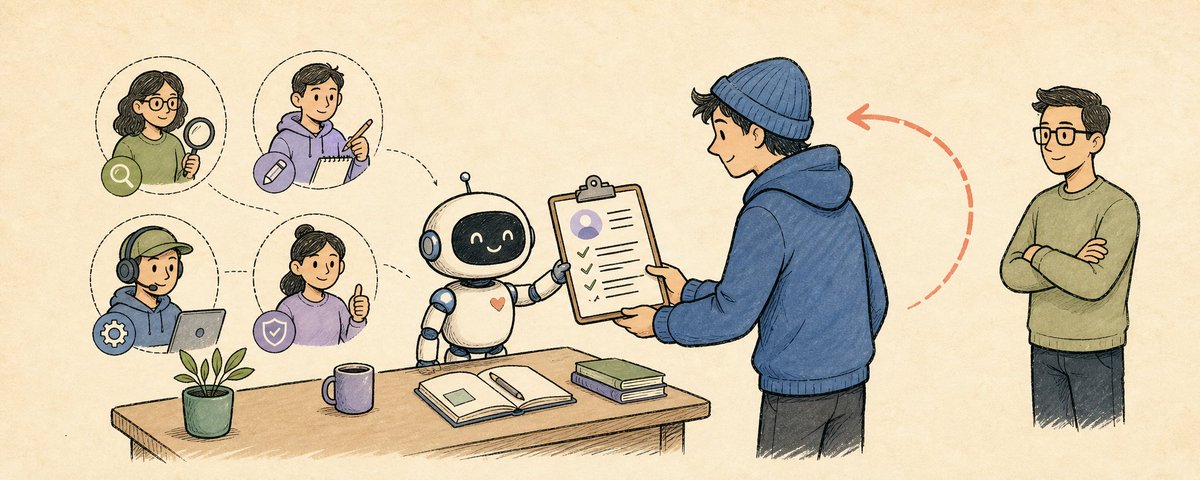
The easiest layer to skip.
Also the one that most directly decides whether an agent can be trusted.
It defines who the agent is:
→ Its role (researcher / editor / operator / approver)
→ What it owns, what it doesn't
→ What the output should look like
→ When it must hand back to a human
→ How to handle failure
Without this layer, the agent always feels like a temp worker. It gets things done, but its responsibilities drift.
The OpenAI Agents SDK docs also treat "define one specialist cleanly" as the explicit starting point of agent design.
Concrete example. OpenClaw (an open-source agent framework) puts an agent's personality into its own file: SOUL.md. It spells out how the agent should talk (short over long, take a stance, call out bad ideas directly) and how it shouldn't (filler openers, over-politeness, fence-sitting).
The difference looks like this:
→ Weak version: Maintain professionalism and provide comprehensive assistance.
→ Strong version: Just answer. No "happy to help" opener. One sentence if one sentence works. Call out bad ideas early.
That's what a contract looks like in practice. Write it line by line, and the agent becomes steady.
Contract is the bridge from "useful once" to "trustworthy repeatedly."
3. Model (the brain)
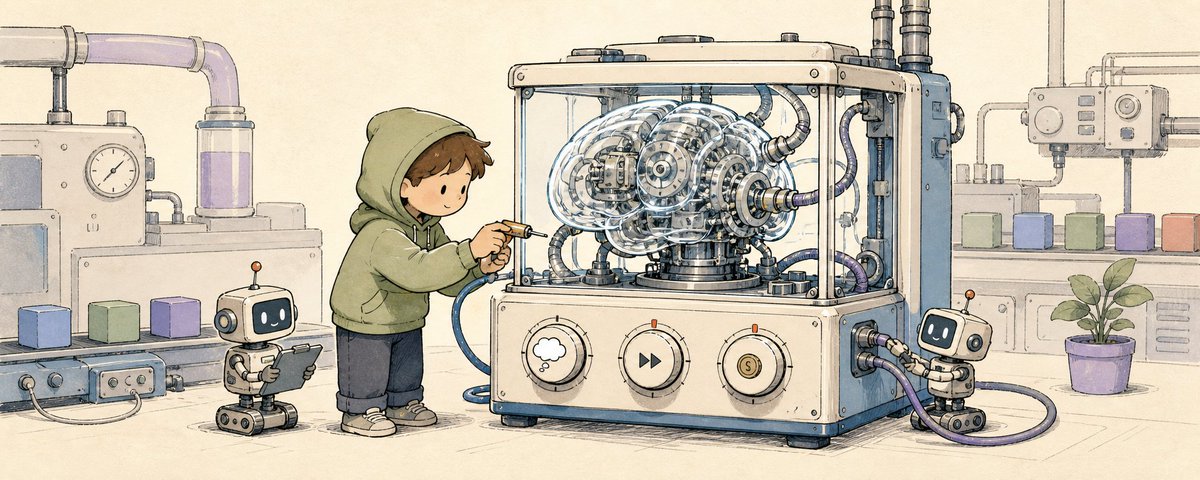
Reasoning, coding, multimodality, speed, cost.
GPT-5 / GPT-5.5, Claude 4.x, Gemini 3.x, Llama 4 all live in this layer.
→ Stronger model: higher ceiling on complex tasks
→ Faster model: lower cost, runs in more places
→ Weak model: you'll blame the AI when the real issue is how you're using it
But a strong model doesn't mean the system is trustworthy.
How the agent runs, how it remembers, who controls it: the model layer doesn't decide any of that.
Most agent failures hide in the other layers.
## PART 2: How It Actually Runs (runtime + the outside world)
4. Runtime / state (loop and state)
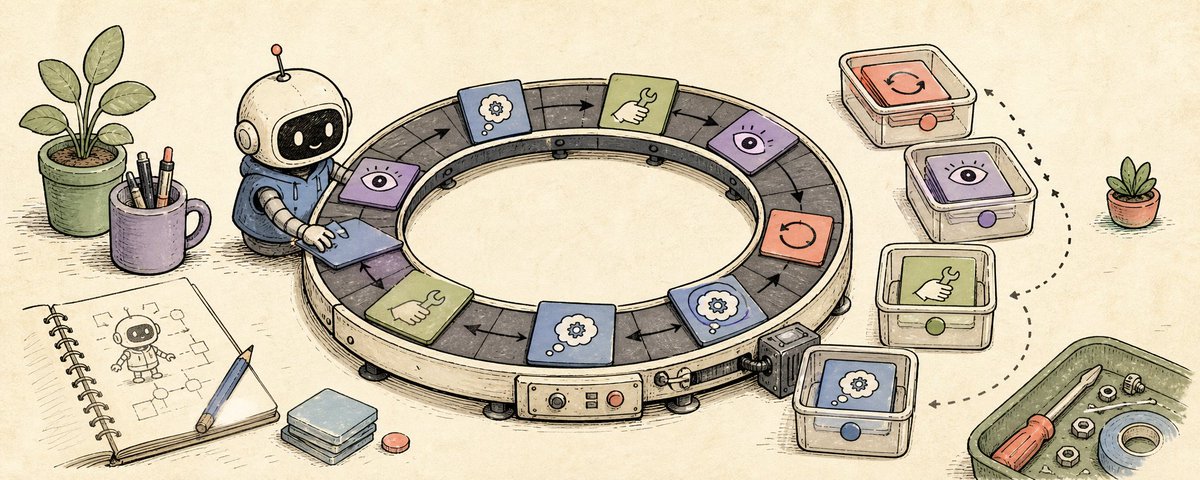
A single LLM call is just one generation.
An agent has to chain many generations, tool calls, and saved state into a loop: think → act → observe → repeat.
Runtime is that loop.
→ Plan (break down the task)
→ Act (call tools)
→ Observe (look at results)
→ Retry (on failure)
→ Handoff (pass to another agent)
→ State (persist all of the above)
Without it, an agent is a one-shot helper. It can answer once but can't finish a real task.
Examples: OpenAI Agents SDK, LangGraph, Claude Agent SDK.
5. Tool & agent interop (the protocol layer)
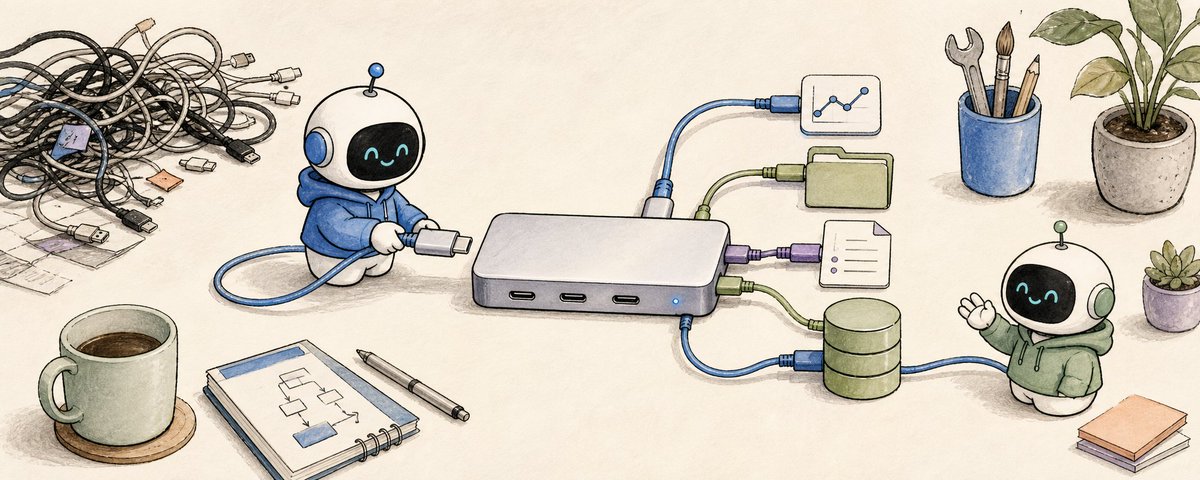
An agent can't do everything by itself.
It needs to call external tools, read external data, collaborate with other agents.
Think of the world before USB-C: every device had its own connector, you carried a bag of cables. Agents connecting to tools used to feel the same way. Every integration was a one-off script.
In 2026, this layer is entering its own USB-C moment:
→ MCP (Model Context Protocol): the agent ↔ tools/data/resources protocol. Now under the Linux Foundation's Agentic AI Foundation, with 10,000+ public servers, adopted by ChatGPT, Cursor, Gemini, Copilot, and VS Code.
→ A2A (Agent-to-Agent): the agent agent collaboration protocol. Google donated it to the Linux Foundation in 2025; by 2026 the Linux Foundation reports 150+ organizations participating or supporting.
Without this layer, every integration becomes glue code built from scratch.
At scale, tool discovery breaks, identity gets confused, permissions slip, and agents can't cooperate.
MCP lets agents plug into tools. A2A lets agents plug into other agents.
Two different lines. In 2026, neither can be skipped.
6. Execution surface (where the agent acts)
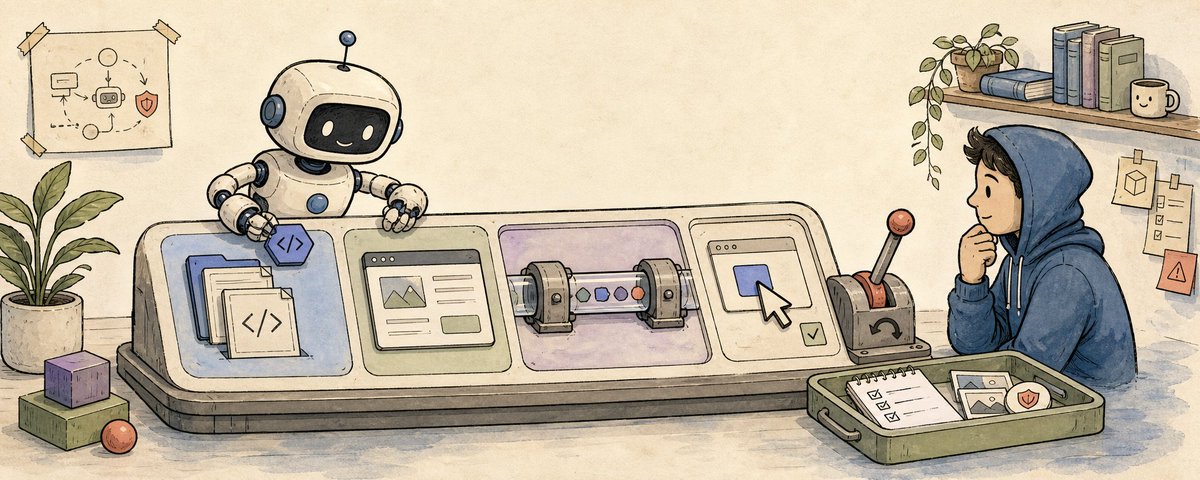
Where the agent actually takes action.
→ Code (repos, files, command line)
→ Browser (web pages, web apps)
→ API (calling external services)
→ Desktop operations (click, type)
Without it, the agent can only suggest, never act. It becomes a very expensive chatbot.
But fuzzy boundaries are worse. Can act + no rollback + no logs = real incidents.
Examples: Claude Code, ChatGPT computer use, Browser Use, Cursor edit.
Whenever an agent takes action, always read this layer together with layer 12 (control plane).
## PART 3: What It Remembers, Looks Up, Ships
7. Memory (what it keeps for itself)

LLMs themselves don't have long-term memory.
ChatGPT and Claude can remember your preferences now, but that's something the product layer added on top. An agent has to design this layer itself.
Memory is where the agent stores your preferences, project state, past decisions, long-term facts.
It's like a person's notebooks: today's sticky note, this week's to-do list, the journal from three years ago. Mix them up and everything gets messy.
It comes in at least 6 layers:
→ Hot session (working memory for this task)
→ Day-state (today's whiteboard of actions)
→ Project memory (long-running lessons)
→ Retrieval index (candidate material)
→ Canonical policy (long-term rules)
→ Direct instruction (the user's latest input)
Without it, the agent loses its memory every time.
And just having memory isn't enough. When it breaks, it's worse: old memory overrides new decisions. A preference you stated three months ago is still steering today's output, even though you changed your mind last month.
The test: can it layer, cite sources, and expire.
All three, and memory becomes an agent's asset. Miss any one, and it's an invisible bug.
(Wrote about how to design this layer last week: A Framework for Agent Memory.)
8. Knowledge / retrieval (what it goes to find)
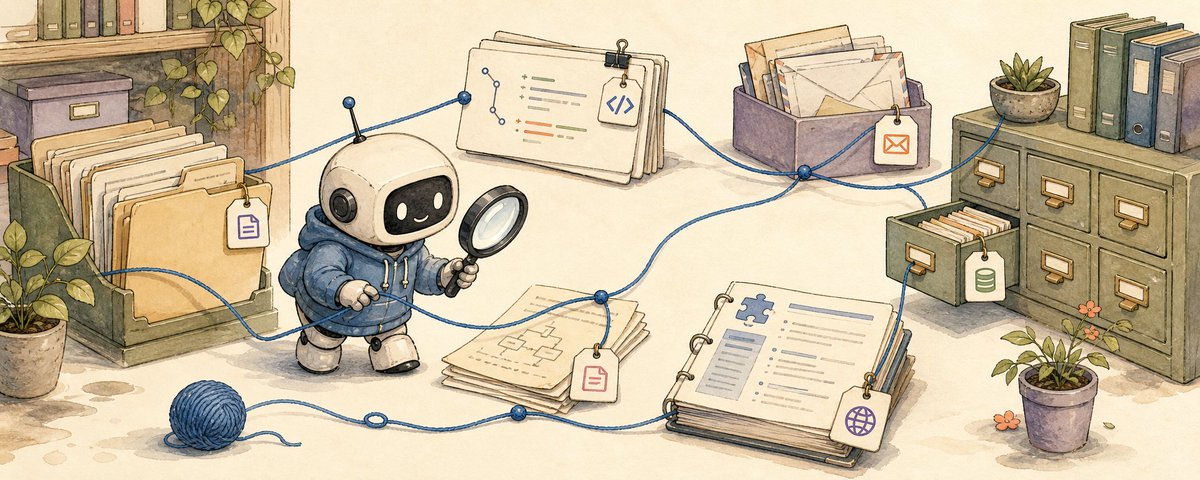
Memory is what the agent keeps itself.
Knowledge is what it goes to find.
→ Docs, wikis, notes
→ Code repos, PRs, commits
→ Slack, email, transcripts
→ Company databases, Notion, Linear
Without it, the agent answers with confidence but can't back any of it up.
RAG, vector search, graph search, keyword search: all tools in this layer.
Finding is just step one. Finding the right thing + citing the source is what makes the answer trustworthy.
Examples: Pinecone, Qdrant, Weaviate, pgvector, plus open-source projects like GBrain that mix memory + retrieval.
9. Durable workflow / orchestration (long flows you can resume)
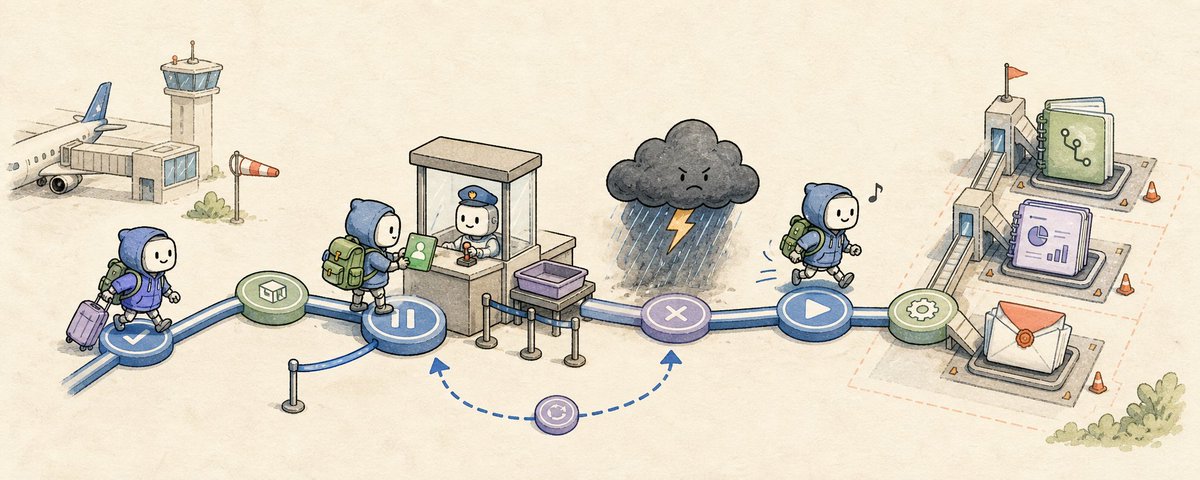
Running an agent once is easy. Running it reliably is hard.
It's like flight rescheduling: bad weather grounds your plane, but you don't restart from the original airport. You pick up at the nearest one. Agents running long tasks need the same thing.
In real work, agent tasks often need to:
→ Run for hours or days (not seconds)
→ Pause for human approval mid-flight
→ Resume after a dropped connection
→ Retry after partial failure, not start over from scratch
→ Produce concrete artifacts (code PRs, reports, draft emails)
→ Pick up previous state on the next run
That's the durable workflow / orchestration layer.
Temporal announced the OpenAI Agents SDK + Temporal Python SDK integration GA in March 2026, emphasizing that agent workflows survive rate limits, network issues, and crashes.
Without it, an agent can finish one task for you, but it's hard to schedule, reuse, recover, or audit.
Examples: Temporal, Inngest, Restate, Trigger.dev, Cloudflare Workflows.
## PART 4: Why You Can Trust It (the boring layers that decide everything)
10. Evals (the pre-launch health check)
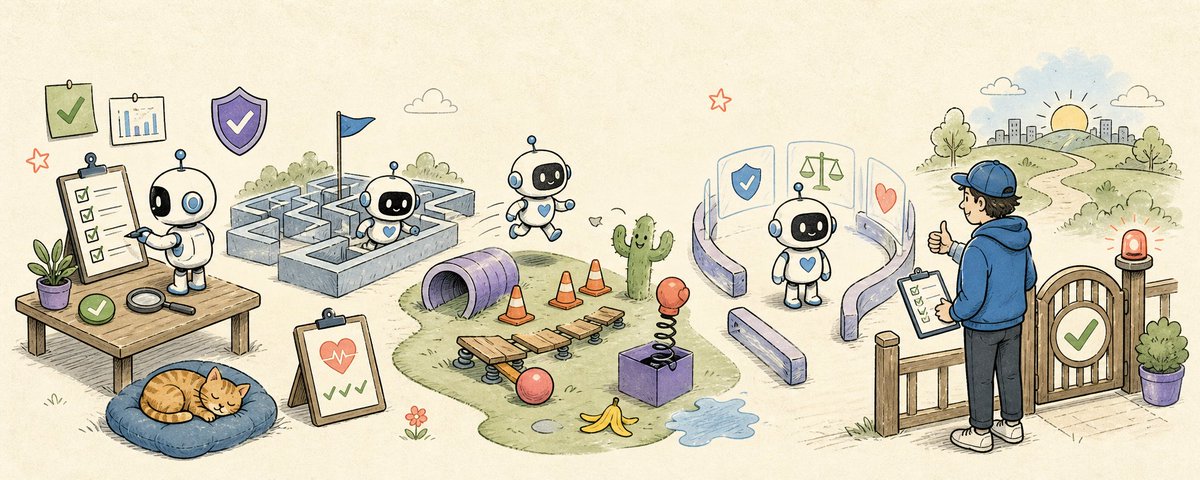
Agents that pass demos collapse the moment they touch real work.
The gap is eval.
→ Offline eval (pre-launch: fixed question set, measure accuracy, cost, error patterns)
→ Online eval (post-launch: real-user A/B, shadow traffic, regression monitoring)
→ Policy tests (deliberate hard cases: forbidden actions, weird inputs, jailbreak attempts)
→ Edge cases (the corner scenarios you worry about, auto-run them)
LangChain's 2026 State of Agent Engineering report surveyed 1,300+ professionals: quality is the biggest blocker for deploying agents in production, and about a third of companies name it the primary barrier.
Eval is the pre-launch health check. Without it, you don't know whether the agent is actually stable, or whether the demo just happened to work.
Examples: Braintrust, LangSmith eval, OpenAI evals, Promptfoo.
11. Observability / artifacts (the security camera)
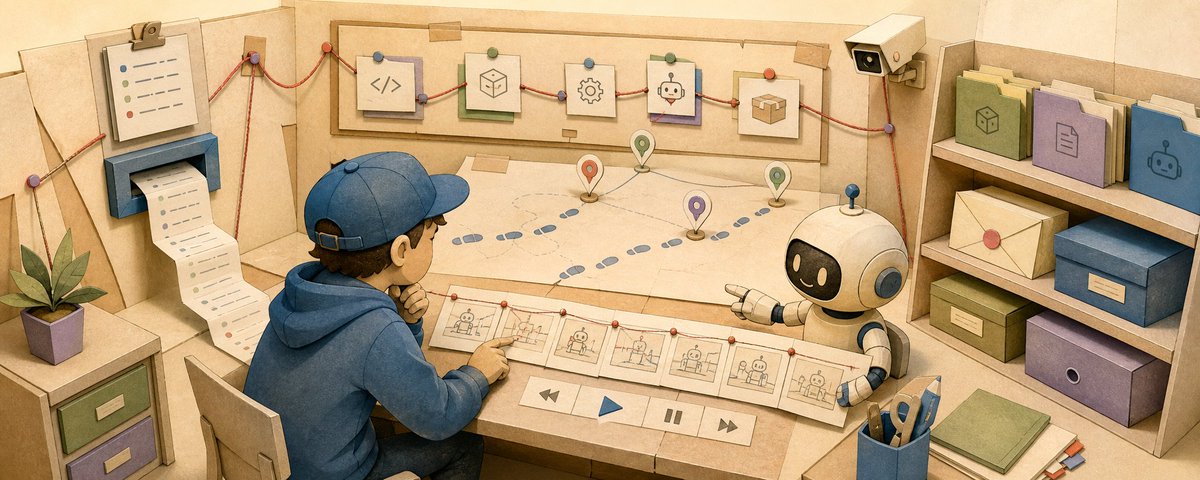
When an agent goes wrong, can you reconstruct what happened?
The agent itself may not remember. The LLM forgets the moment its loop ends, so you need an outside camera to see what happened.
That's the problem observability solves.
→ Trace (which tools were called this run, which path it took)
→ Logs (each step's input, output, cost, latency)
→ Artifacts (files it produced, emails it sent, PRs it touched)
→ Decisions (where it retried, where it handed off, where it aborted)
→ Source chain (where each conclusion came from)
Without it, the agent is a black box. Nobody can debug it. Nobody dares to use it.
In the same LangChain survey, 89% of responding organizations had some form of observability on their agents. Among agent builders, this layer is already baseline.
Examples: LangSmith, Arize, Helicone, Logfire, Phoenix.
12. Control plane / governance (the keycard)
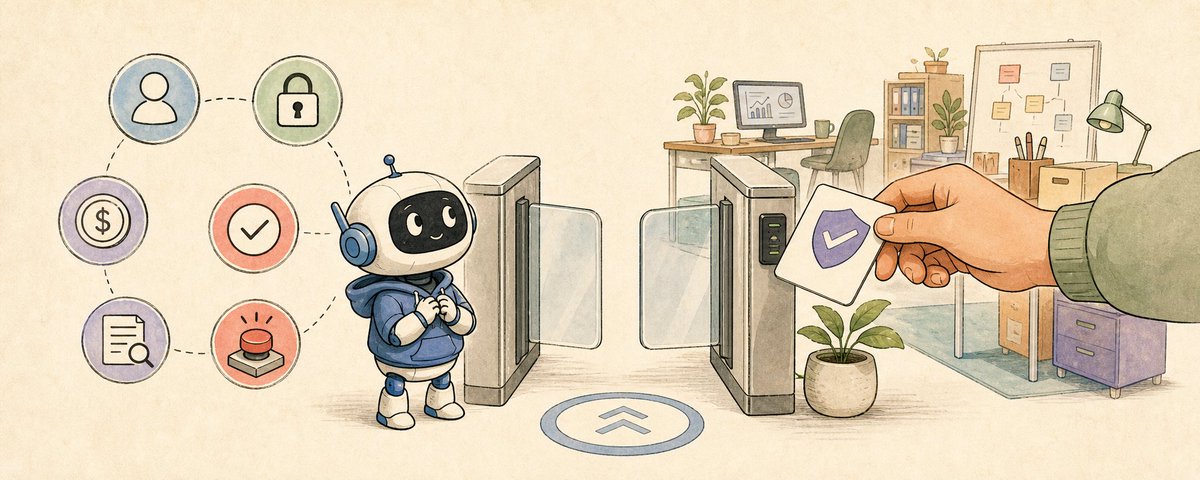
The last layer, and the most underrated.
Control plane decides who the agent acts on behalf of, what it can read, what it can write, what it can run, how much it can spend, where it can publish.
→ Identity (whose identity the agent uses)
→ Permissions (which tools it can call, which data it can touch)
→ Secrets (how API keys and login credentials are given to it)
→ Budget (how much one run can spend)
→ Tenant boundary (the agent can't cross into another customer's data)
→ Approval (which actions require a human)
→ Audit (after the fact, who did what when)
→ Kill switch (one button to stop)
Anthropic added auto mode to Claude Code in 2026 for exactly this reason: approving every step causes approval fatigue; skipping permission checks entirely is unsafe. The middle path is a layer that judges risk automatically.
Control plane is part of the agent product itself. Treat it as a settings page and you'll have incidents.
Without it, capability outruns responsibility. The demo is pretty. The incidents are frequent.
Screenshot this section. Next time a new AI tool shows up, just check it against these 12 layers.
## The 12 Layers in One Line Each
PART 1: The Foundation (people / identity / brain)
→ 1. Work surface (where the human meets it)
→ 2. Agent contract (the job description)
→ 3. Model (the brain)
PART 2: How It Runs (loop + protocols + execution)
→ 4. Runtime (loop and state)
→ 5. Tool & agent interop (MCP + A2A)
→ 6. Execution surface (where it acts)
PART 3: What It Remembers, Looks Up, Ships
→ 7. Memory (kept itself)
→ 8. Knowledge / retrieval (looked up)
→ 9. Durable workflow (long flows you can resume)
PART 4: Why You Can Trust It (boring but decisive)
→ 10. Evals (the pre-launch check)
→ 11. Observability (the security camera)
→ 12. Control plane (the keycard)
That's all 12 layers.
Capability is not trust.
An agent that can call tools doesn't mean it belongs in your real workflow.
Trust in real work comes from source chain, eval, trace, permission, and a human's final vote.
Next time a new AI tool shows up, you'll already know where it fits.
If this was useful:
→ Repost it to a friend who's still bookmarking every new AI tool
→ Follow @Voxyz_AI. Next piece digs into one of these layers
→ Bookmark this as reference
Everything I'm writing as I build: voxyz.ai/insights.
## 相关链接
- [Vox](https://x.com/Voxyz_ai)
- [@Voxyz_ai](https://x.com/Voxyz_ai)
- [SOUL.md](https://docs.openclaw.ai/concepts/soul#the-molty-prompt)
- [Trigger.dev](https://trigger.dev/)
- [@Voxyz_AI](https://x.com/@Voxyz_AI)
- [voxyz.ai/insights](https://voxyz.ai/insights)
- [Upgrade to Premium](https://x.com/i/premium_sign_up)
- [12:25 AM · May 24, 2026](https://x.com/Voxyz_ai/status/2058222816474919343)
- [9,077 Views](https://x.com/Voxyz_ai/status/2058222816474919343/analytics)
---
*导出时间: 2026/5/24 09:33:44*
---
## 中文翻译
# 2026年每位AI用户都应理解的12个层级
**作者**: Vox
**日期**: 2026-05-23T16:25:34.000Z
**来源**: [https://x.com/Voxyz_ai/status/2058222816474919343](https://x.com/Voxyz_ai/status/2058222816474919343)
---

看懂每一层在哪里出错,你就知道真正的工作会在哪里断裂。
你每天都在使用AI。
用ChatGPT找答案,用Claude Code或Codex写代码,用Perplexity做研究。
越来越多的人现在拥有了自己的AI智能体。它会检查你的邮件,处理你的数据,并建立起关于你的记忆。
但你可能也遇到过这种情况:
→ 同一个工具今天回答得很犀利,明天就开始胡说八道
→ 问ChatGPT和Claude同一个问题,得到完全不同的答案
→ 每周都有新工具发布。它们听起来都很厉害。但你完全不知道哪一个适合真正的工作
这些问题都归结于AI工具的构建方式。
一旦你建立了下面的思维模型,智能体就不再显得那么复杂了。
一个AI智能体由12个层级构成。每一层都有不同的作用。每一层都有它独特的失效方式。
不需要代码。读一遍就够了。针对每一层,只需问一个问题:如果缺少了它,真正的工作会在哪里断裂?
收藏这篇文章。下次看到新工具时,你就会知道它属于哪个层级。
## 第一部分:基础(它在哪里,它是谁,它用什么大脑)
1. 工作界面(人类与它相遇的地方)

人们发送任务、检查结果、编辑草稿、给予批准的地方。
ChatGPT的聊天框、Claude的桌面应用、Cursor编辑器、Linear/Notion风格的工作工具里的智能体评论。
这些都是工作界面。
→ 聊天框 = 通用入口
→ 编辑器 = 你写代码的地方
→ 工单系统 = 团队工作流
→ 浏览器插件 = 嵌入到你正在做的事情中
没有它,智能体在演示中看起来很聪明,但永远无法进入真正的工作。
智能体是否真正进入你的日常生活,始于此处。
2. 智能体契约/规范(职位描述)

最容易跳过的一层。
也是直接决定智能体是否值得信赖的一层。
它定义了智能体是谁:
→ 它的角色(研究员/编辑/操作员/审批者)
→ 它拥有什么,不拥有什么
→ 输出应该是什么样
→ 何时必须交还给人类
→ 如何处理失败
如果没有这一层,智能体总感觉像一个临时工。它能把事做完,但它的职责是漂移的。
OpenAI Agents SDK的文档也将“清晰地定义一个专家”作为智能体设计的明确起点。
具体的例子。OpenClaw(一个开源智能体框架)将智能体的个性放入自己的文件中:SOUL.md。它明确规定了智能体应该如何说话(简短胜过长篇,表明立场,直接指出糟糕的想法)以及不应该如何(填充式的开场白,过度礼貌,骑墙)。
区别看起来是这样的:
→ 弱版本:保持专业并提供全面的协助。
→ 强版本:直接回答。不要“乐意效劳”式的开场白。一句话能解决就用一句话。尽早指出糟糕的想法。
这就是契约在实践中的样子。逐行写下来,智能体就会变得稳定。
契约是从“有用一次”到“反复值得信赖”的桥梁。
3. 模型(大脑)

推理、编码、多模态、速度、成本。
GPT-5 / GPT-5.5、Claude 4.x、Gemini 3.x、Llama 4 都位于这一层。
→ 更强的模型:复杂任务的上限更高
→ 更快的模型:成本更低,能在更多地方运行
→ 弱模型:你会责怪AI,而真正的问题在于你如何使用它
但强模型并不意味着系统值得信赖。
智能体如何运行、如何记忆、谁控制它:模型层不决定其中的任何一项。
大多数智能体的故障都隐藏在其他层级中。
## 第二部分:它实际上如何运行(运行时 + 外部世界)
4. 运行时/状态(循环与状态)

单次LLM调用只是一次生成。
智能体必须将许多生成、工具调用和保存的状态串联成一个循环:思考 → 行动 → 观察 → 重复。
运行时就是那个循环。
→ 计划(分解任务)
→ 行动(调用工具)
→ 观察(查看结果)
→ 重试(失败时)
→ 移交(传递给另一个智能体)
→ 状态(持久化上述所有内容)
没有它,智能体就是一次性助手。它能回答一次,但无法完成一个真正的任务。
例子:OpenAI Agents SDK、LangGraph、Claude Agent SDK。
5. 工具与智能体互操作性(协议层)

智能体无法独自完成所有事情。
它需要调用外部工具、读取外部数据、与其他智能体协作。
回想USB-C之前的世界:每个设备都有自己的连接器,你得带一包线。智能体连接工具以前也是这种感觉。每次集成都是一次性的脚本。
到了2026年,这一层正在迎来它的USB-C时刻:
→ MCP(模型上下文协议):智能体 ↔ 工具/数据/资源的协议。现在归于Linux基金会的Agentic AI Foundation旗下,拥有10,000+个公共服务器,被ChatGPT、Cursor、Gemini、Copilot和VS Code采用。
→ A2A(Agent-to-Agent):智能体 ↔ 智能体的协作协议。Google在2025年将其捐赠给Linux基金会;到2026年,Linux基金会报告有150多个组织参与或支持。
没有这一层,每次集成都变成了从零开始构建的胶水代码。
在规模化时,工具发现会失效,身份会混淆,权限会泄露,智能体无法合作。
MCP让智能体即插即用工具。A2A让智能体即插即用其他智能体。
两条不同的线。在2026年,两者都不可或缺。
6. 执行表面(智能体行动的地方)

智能体真正采取行动的地方。
→ 代码(仓库、文件、命令行)
→ 浏览器(网页、Web应用)
→ API(调用外部服务)
→ 桌面操作(点击、打字)
没有它,智能体只能建议,永远无法行动。它就变成了一个非常昂贵的聊天机器人。
但模糊的边界更糟。能行动 + 无回滚 + 无日志 = 真实的事故。
例子:Claude Code、ChatGPT computer use、Browser Use、Cursor编辑。
每当智能体采取行动时,务必将这一层与第12层(控制平面)结合起来看。
## 第三部分:它记住什么,查找什么,交付什么
7. 记忆(它为自己保留的内容)

LLM本身没有长期记忆。
ChatGPT和Claude现在能记住你的偏好,但那是产品层附加在上面的功能。智能体必须自己设计这一层。
记忆是智能体存储你的偏好、项目状态、过去决策、长期事实的地方。
这就像一个人的笔记本:今天的便利贴、本周的待办清单、三年前的日记。把它们混在一起,一切都会变得乱糟糟。
它至少分为6层:
→ 热会话(此任务的工作记忆)
→ 日状态(今天的行动白板)
→ 项目记忆(长期的经验教训)
→ 检索索引(候选材料)
→ 规范策略(长期规则)
→ 直接指令(用户的最新输入)
没有它,智能体每次都会失去记忆。
而且仅仅有记忆是不够的。当记忆出错时,情况更糟:旧的记忆覆盖新的决定。你三个月前陈述的偏好仍在主导今天的输出,即使你上个月已经改变了主意。
测试标准:它能否分层、引用来源并过期。
三者兼备,记忆就成了智能体的资产。缺一不可,它就是看不见的Bug。
(上周写了关于如何设计这一层的文章:《智能体记忆框架》。)
8. 知识/检索(它去查找的内容)

记忆是智能体自己保留的。
知识是它去查找的。
→ 文档、wiki、笔记
→ 代码仓库、PR、提交记录
→ Slack、邮件、文字记录
→ 公司数据库、Notion、Linear
没有它,智能体回答得很自信,但无法证实任何内容。
RAG、向量搜索、图搜索、关键词搜索:都是这一层的工具。
找到只是第一步。找到正确的东西 + 引用来源,才能让答案值得信赖。
例子:Pinecone、Qdrant、Weaviate、pgvector,以及像GBrain这样混合了记忆+检索的开源项目。
9. 持久工作流/编排(可以恢复的长流程)

运行一次智能体很容易。可靠地运行很难。
这就像航班改签:恶劣天气停飞了你的飞机,但你不会从原始机场重新开始。你在最近的机场继续。运行长任务的智能体也需要同样的东西。
在真正的工作中,智能体任务通常需要:
→ 运行数小时或数天(而不是几秒)
→ 在中途暂停以等待人工批准
→ 在连接断开后恢复
→ 在部分失败后重试,而不是从头开始
→ 产生具体的工件(代码PR、报告、邮件草稿)
→ 在下次运行时拾取之前的状态
这就是持久工作流/编排层。
Temporal在2026年3月宣布了OpenAI Agents SDK + Temporal Python SDK集成正式发布,强调智能体工作流能够在速率限制、网络问题和崩溃中幸存。
没有它,智能体可以为你完成一个任务,但很难调度、重用、恢复或审计。
例子:Temporal、Inngest、Restate、Trigger.dev、Cloudflare Workflows。
## 第四部分:为什么你可以信任它(决定一切的无聊层级)
10. 评估(发布前的健康检查)

通过演示的智能体一接触真正的工作就崩溃。
差距就在于评估。
→ 离线评估(发布前:固定问题集,测量准确性、成本、错误模式)
→ 在线评估(发布后:真实用户A/B测试、影子流量、回归监控)
→ 策略测试(刻意的难题:禁止的操作、奇怪的输入、越狱尝试)
→ 边缘情况(你担心的角落场景,自动运行它们)
LangChain的2026年智能体工程状况报告调查了1300多位专业人士:质量是在生产环境中部署智能体的最大障碍,约有三分之一的公司将其命名为主要障碍。
评估是发布前的健康检查。没有它,你不知道智能体是否真的稳定,还是演示刚刚碰巧成功了。
例子:Braintrust、LangSmith eval、OpenAI evals、Promptfoo。
11. 可观测性/工件(监控摄像头)

当智能体出错时,你能重建发生了什么吗?
智能体自己可能不记得。LLM在循环结束的那一刻就遗忘了,所以你需要一个外部摄像头来查看发生了什么。
这就是可观测性解决的问题。
→ 追踪(这次运行调用了哪些工具,走了哪条路径)
→ 日志(每一步的输入、输出、成本、延迟)
→ 工件(它生成的文件、发送的邮件、触及的PR)
→ 决策(它在哪里重试、在哪里移交、在哪里中止)
→ 来源链(每个结论来自哪里)
没有它,智能体就是一个黑盒。没人能调试它。没人敢使用它。
在同一份LangChain调查中,89%的受访组织对其智能体采取了某种形式的可观测性。在智能体构建者中,这一层已经是基线。
例子:LangSmith、Arize、Helicone、Logfire、Phoenix。
12. 控制平面/治理(门禁卡)

最后一层,也是最被低估的一层。
控制平面决定了智能体代表谁行动、它能读什么、能写什么、能运行什么、能花多少钱、能在哪里发布。
→ 身份(智能体使用谁的身份)
→ 权限(它可以调用哪些工具,可以接触哪些数据)
→ 密钥(如何将API密钥和登录凭据传递给它)
→ 预算(一次运行可以花多少钱)
→ 租户边界(智能体不能跨越到另一个客户的数据)
→ 批准(哪些操作需要人工介入)
→ 审计(事后,谁在何时做了什么)
→ 终止开关(一键停止)
Anthropic在2026年给Claude Code添加自动模式正是出于这个原因:批准每一步会导致批准疲劳;完全跳过权限检查则不安全。中间的道路是一个自动判断风险的层级。
控制平面是智能体产品本身的一部分。把它当作设置页面处理,你就会出事故。
没有它,能力就会跑在责任前面。演示很漂亮。事故很频繁。
截屏这一节。下次出现新的AI工具时,只需对照这12层检查一下。
## 12层各一行总结
第一部分:基础(人/身份/大脑)
→ 1. 工作界面(人与智能体相遇的地方)
→ 2. 智能体契约(职位描述)
→ 3. 模型(大脑)
第二部分:它如何运行(循环 + 协议 + 执行)
→ 4. 运行时(循环与状态)
→ 5. 工具与智能体互操作性(MCP + A2A)
→ 6. 执行表面(它行动的地方)
第三部分:它记住什么,查找什么,交付什么
→ 7. 记忆(自己保留的)
→ 8. 知识/检索(去查找的)
→ 9. 持久工作流(可以恢复的长流程)
第四部分:为什么你可以信任它(无聊但具有决定性)
→ 10. 评估(发布前检查)
→ 11. 可观测性(监控摄像头)
→ 12. 控制平面(门禁卡)
这就是全部12层。
能力不等于信任。
能调用工具的智能体并不意味着它适合你的真正工作流。
真正工作中的信任来自于来源链、评估、追踪、权限,以及人类的最终投票。
下次出现新的AI工具时,你已经知道它属于哪里了。
如果这对你有用:
→ 转发给那些还在收藏每一个新AI工具的朋友
→ 关注 @Voxyz_AI。下一篇文章将深入探讨其中某一层
→ 收藏本文以备参考
我在构建过程中写的所有内容:voxyz.ai/insights.
## 相关链接
- [Vox](https://x.com/Voxyz_ai)
- [@Voxyz_ai](https://x.com/Voxyz_ai)
- [SOUL.md](https://docs.openclaw.ai/concepts/soul#the-molty-prompt)
- [Trigger.dev](https://trigger.dev/)
- [@Voxyz_AI](https://x.com/@Voxyz_AI)
- [voxyz.ai/insights](https://voxyz.ai/insights)
- [Upgrade to Premium](https://x.com/i/premium_sign_up)
- [12:25 AM · May 24, 2026](https://x.com/Voxyz_ai/status/2058222816474919343)
- [9,077 Views](https://x.com/Voxyz_ai/status/2058222816474919343/analytics)
---
*导出时间: 2026/5/24 09:33:44*