# How to Build a Second Brain That Maintains Itself
**作者**: Axel Bitblaze
**日期**: 2026-05-25T23:24:41.000Z
**来源**: [https://x.com/Axel_bitblaze69/status/2059053069762228313](https://x.com/Axel_bitblaze69/status/2059053069762228313)
---
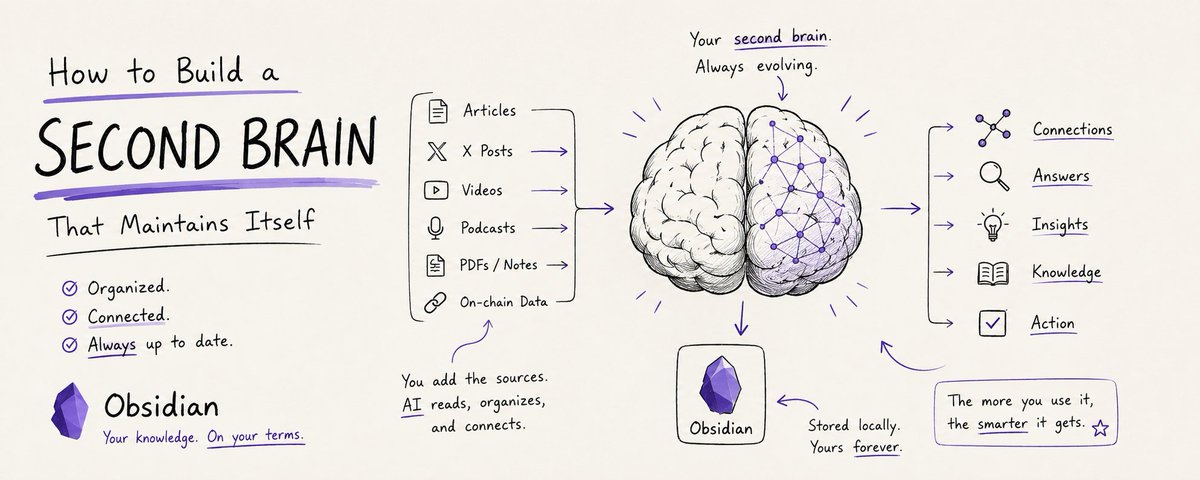
Your AI is brilliant. But every great answer it gives you dies in chat history.
Try finding what Claude told you 3 weeks ago about that token thesis. Try asking GPT what you discussed last quarter about anything. The conversation ends, the insight ends with it.
but there's a setup that fixes this.
This AI reads your sources, organizes them into a personal wiki on your machine, and keeps it current.. automatically. You stop losing the work AI does for you.
I went deep on this over the last two weeks and built a working setup from scratch. The graph view alone surfaces connections between articles I would have missed manually.
In this guide, I'll walk you through what this setup is, how to build it in under 10 minutes, the 5 workflows that make it self-maintaining, and what your knowledge stack looks like 90 days in.
By the time you're done, you'll have a personal knowledge base that gets sharper every time you use it.
Let's get into it.
𝗪𝗵𝗮𝘁 𝗶𝘀 𝗮 𝗦𝗲𝗹𝗳-𝗠𝗮𝗶𝗻𝘁𝗮𝗶𝗻𝗶𝗻𝗴 𝗦𝗲𝗰𝗼𝗻𝗱 𝗕𝗿𝗮𝗶𝗻?
𝗜𝗻 𝗼𝗻𝗲 𝗹𝗶𝗻𝗲: Obsidian is your second brain on disk. AI is the librarian that reads, organizes, and queries it for you.
Most AI chats are like talking to someone with amnesia. You explain something, they answer, the conversation ends, the knowledge disappears.
This setup is different. The AI reads your sources, builds a structured wiki of markdown files, and updates it every time you add something new. Knowledge gets compiled once and kept current.. not re-derived on every query.
For example: drop 6 months of articles, podcasts, and X posts about Ethereum into your vault.
The AI reads each one, creates pages for Restaking, Validators, Layer 2s, cross-references everything, and surfaces narrative shifts when you ask. A single ingest touches 10-15 pages in one pass.
Think of it this way: Obsidian is where you read. The AI is who writes. The wiki is what gets built.
𝗛𝗼𝘄 𝘁𝗼 𝗦𝗲𝘁 𝗨𝗽 𝗬𝗼𝘂𝗿 𝗩𝗮𝘂𝗹𝘁 𝗶𝗻 <𝟭𝟬 𝗠𝗶𝗻𝘂𝘁𝗲𝘀
This is the part to bookmark. Every working setup follows the same shape.
𝗦𝘁𝗲𝗽 𝟭: Download Obsidian (obsidian.md). Free, local-first, works offline.
𝗦𝘁𝗲𝗽 𝟮: Create a new vault on your desktop. Call it whatever fits.. research-vault, alpha-vault, brain.
𝗦𝘁𝗲𝗽 𝟯: Inside the vault folder, build this exact structure:
```
your-vault/
├── raw/ ← source files you collect
├── wiki/
│ ├── entities/ ← people, projects, tokens, accounts
│ ├── concepts/ ← frameworks, narratives, theses
│ ├── sources/ ← AI-written summaries of raw files
│ └── analysis/ ← your queries-turned-pages
├── hot.md ← rolling 500-char context cache
├── index.md ← live catalog of everything
├── log.md ← chronological action log
└── CLAUDE.md ← schema + rules for the AI
```
𝗦𝘁𝗲𝗽 𝟰: Inside CLAUDE.md, paste this template (this is the brain of your vault every AI session reads this first):
```
𝗖𝗟𝗔𝗨𝗗𝗘.𝗺𝗱 — 𝗠𝘆 𝗞𝗻𝗼𝘄𝗹𝗲𝗱𝗴𝗲 𝗩𝗮𝘂𝗹𝘁
𝗜𝗱𝗲𝗻𝘁𝗶𝘁𝘆
I work on AI tools and crypto markets. My focus:
- Daily alpha research from X and on-chain sources
- AI workflows (Claude, agents, prompting)
- Content creation and trading research
𝗩𝗮𝘂𝗹𝘁 𝗔𝗿𝗰𝗵𝗶𝘁𝗲𝗰𝘁𝘂𝗿𝗲
- raw/ — Source documents (immutable, never modify)
- wiki/entities/ — People, projects, tokens, X accounts
- wiki/concepts/ — Frameworks, narratives, theses
- wiki/sources/ — Your summaries of raw files
- wiki/analysis/ — Queries-turned-pages worth keeping
- hot.md — Rolling cache of recent context (500 chars max)
- index.md — Live catalog of all wiki pages
- log.md — Append-only record of all actions
𝗖𝗼𝗻𝘃𝗲𝗻𝘁𝗶𝗼𝗻𝘀
- Kebab-case filenames (andrej-karpathy.md, not "Andrej Karpathy.md")
- YAML frontmatter on every wiki page:
type: entity | concept | source | analysis
created: YYYY-MM-DD
tags: [tag1, tag2]
- Use [[wiki-links]] for every cross-reference. Non-negotiable.
- Every page ends with a ## Sources section linking back to raw/
𝗢𝗽𝗲𝗿𝗮𝘁𝗶𝗼𝗻𝘀
𝗜𝗻𝗴𝗲𝘀𝘁
When I drop a source in raw/:
1. Read carefully, extract entities + concepts
2. Create new pages for anything not yet in wiki/
3. Update existing pages with new claims
4. Create wiki/sources/[name].md summary
5. Update index.md and log.md
A single ingest touches 5-15 pages.
𝗤𝘂𝗲𝗿𝘆
1. Check hot.md first for recent context
2. Read index.md for relevant pages
3. Follow [[links]] to drill in
4. Synthesize with citations like (see [[entity-name]])
5. If non-trivial, save to wiki/analysis/
𝗟𝗶𝗻𝘁
- Find contradictions, orphans, stale claims, missing pages
- Output to wiki/analysis/[date]-lint-report.md
𝗛𝗼𝘁 𝗖𝗮𝗰𝗵𝗲 𝗨𝗽𝗱𝗮𝘁𝗲
After every meaningful session, update hot.md with:
[date] | [topic] | [key facts discussed in 500 chars max]
𝗢𝗽𝗲𝗿𝗮𝘁𝗶𝗻𝗴 𝗥𝘂𝗹𝗲𝘀
- Never delete files. Use status: archived in frontmatter.
- Never edit raw/ files. They are sources of truth.
- Always cite sources at the bottom of wiki pages.
- When uncertain about placement, use wiki/analysis/ and flag it.
𝗦𝘁𝘆𝗹𝗲 𝗳𝗼𝗿 𝗚𝗲𝗻𝗲𝗿𝗮𝘁𝗲𝗱 𝗖𝗼𝗻𝘁𝗲𝗻𝘁
- Concise. One claim per sentence.
- No corporate jargon. No "let's dive in."
- Parallel structure ("A. B. C.") liberally.
```
𝗦𝘁𝗲𝗽 𝟱: Install the Obsidian Web Clipper Chrome extension. Set the default folder to raw/. Now you can clip any web article into your vault with one click.
𝗦𝘁𝗲𝗽 𝟲: Open Claude Code in your terminal and cd into the vault folder. Run:
```
"Read my CLAUDE.md. Then guide me through ingesting my first source."
```
Claude reads your CLAUDE.md and walks you through the rest. Total setup time: under 10 minutes.
𝗧𝗵𝗲 𝟱 𝗪𝗼𝗿𝗸𝗳𝗹𝗼𝘄𝘀 𝗧𝗵𝗮𝘁 𝗠𝗮𝗸𝗲 𝗜𝘁 𝗦𝗲𝗹𝗳-𝗠𝗮𝗶𝗻𝘁𝗮𝗶𝗻𝗶𝗻𝗴
The vault only compounds if you actually run it. Five workflows handle everything.
Listed in reverse order. #1 is where the real leverage lives.
#𝟱: 𝗜𝗻𝗴𝗲𝘀𝘁
Drop a source into raw/. Tell the AI to process it.
The AI reads the source, extracts entities and concepts, creates new wiki pages, updates existing ones, and logs the action. A single ingest touches 10-15 wiki pages.
Try this:
```
"I just clipped a Vitalik post about staking economics
into raw/. Ingest it following the CLAUDE.md conventions."
```
#𝟰: 𝗤𝘂𝗲𝗿𝘆
Ask questions across the entire vault.
The AI checks hot.md for recent context, reads index.md for relevant pages, follows backlinks, and synthesizes an answer with citations. Good answers get filed back as new pages under wiki/analysis/.
Try this:
```
"What's the consensus on Restaking across my saved sources
in the last 30 days? Cite specific pages. Save the answer
to wiki/analysis/restaking-may-consensus.md."
```
#𝟯: 𝗟𝗶𝗻𝘁
Weekly health check on the vault.
The AI scans for contradictions between pages, orphan pages with no links, stale claims, and concepts mentioned in passing but lacking their own page. Output is a lint report.
Try this:
```
"Run a lint pass on the vault. Save findings to
wiki/analysis/2026-05-26-lint-report.md. Flag the top
3 most important gaps to fill this week."
```
#𝟭: 𝗧𝗵𝗲 𝗛𝗼𝘁 𝗖𝗮𝗰𝗵𝗲
The most underrated piece in the entire setup.
That hot.md file in your vault root is a rolling 500-character cache of your most recent context.. the topic you're focused on, the last thing you ingested, the question you just asked.
For routine queries, the AI checks hot.md first instead of crawling the full wiki. Cuts token usage on day-to-day queries by 80-90%.
The CLAUDE.md template above already has the "Hot Cache Update" rule baked in. The AI maintains it automatically after every meaningful session.
Stack the five. Ingest feeds Query. Query feeds Lint. Lint surfaces the next Ingest. Your vault sharpens itself.
𝗣𝗿𝗼 𝗧𝗶𝗽𝘀 𝗮𝗻𝗱 𝗖𝗼𝗺𝗺𝗼𝗻 𝗠𝗶𝘀𝘁𝗮𝗸𝗲𝘀
A few things worth knowing before you start.
𝗣𝗿𝗼 𝘁𝗶𝗽: One page = one claim. Atomic notes beat essays. Cross-referencing works 2-3x better when each page is tightly focused.
𝗣𝗿𝗼 𝘁𝗶𝗽: Install the Dataview plugin. Add YAML frontmatter to wiki pages. Dataview turns frontmatter into dynamic tables — "all active projects with deadlines this month" becomes a one-line query.
𝗣𝗿𝗼 𝘁𝗶𝗽: The vault is just a git repo. Run git init in the folder. Commit daily. Free version history and instant rollback when the AI does something weird.
𝗠𝗶𝘀𝘁𝗮𝗸𝗲: Never manually edit files inside wiki/. That's the AI's layer. If you want to add information, drop it in raw/ or update CLAUDE.md.
𝗠𝗶𝘀𝘁𝗮𝗸𝗲: One mega memory file. Split into one file per workflow.. memory-trading.md, memory-content.md, memory-research.md. Easier to inject only what's relevant.
𝗠𝗶𝘀𝘁𝗮𝗸𝗲: Skipping the weekly lint. Without it, your wiki silently rots. Set a Sunday calendar reminder.
𝗞𝗲𝗲𝗽 𝗶𝗻 𝗺𝗶𝗻𝗱: This setup works beautifully up to a few hundred notes. Past 500K total tokens, plain markdown search starts hitting a wall on multi-hop questions. When queries start returning generic answers or you find yourself searching for things you know are in the vault, that's the signal to graduate to a graph-based setup. But that's a problem for month 6, not day 1.
𝗪𝗵𝗮𝘁 𝟵𝟬 𝗗𝗮𝘆𝘀 𝗜𝗻 𝗔𝗰𝘁𝘂𝗮𝗹𝗹𝘆 𝗟𝗼𝗼𝗸𝘀 𝗟𝗶𝗸𝗲
Here's the timeline if you ship this weekend:
𝗗𝗮𝘆 𝟬 (𝘁𝗼𝗱𝗮𝘆): Set up the vault. 10 minutes.
𝗪𝗲𝗲𝗸 𝟭: Ingest 3-5 sources. Get used to dropping articles into raw/ and asking the AI to process them.
𝗪𝗲𝗲𝗸 𝟰: 30-50 sources. Patterns start emerging in the graph view. The AI starts surfacing connections you didn't know existed.
𝗗𝗮𝘆 𝟵𝟬: 200+ cross-referenced sources. Your daily alpha brief is generated from a knowledge network the AI maintains. Questions that used to take 30 minutes of scrolling take 30 seconds. The AI knows your voice, your watchlist, your trading biases. The vault is the smartest version of you that's ever existed.
That's the moat. not the markdown files, the network of relationships between them that you couldn't possibly maintain manually.
Build the foundation this weekend. The compounding starts the first time you ingest something.
I hope you found this guide valuable.
If you did, be sure to follow me @axel_bitblaze69 I post articles like this on AI and crypto 2-3x/week.
Lastly, if you can, please Like/Repost this article so others can find it. 💙
## 相关链接
- [Axel Bitblaze](https://x.com/Axel_bitblaze69)
- [@Axel_bitblaze69](https://x.com/Axel_bitblaze69)
- [7.3K](https://x.com/Axel_bitblaze69/status/2059053069762228313/analytics)
- [@axel_bitblaze69](https://x.com/@axel_bitblaze69)
- [Upgrade to Premium](https://x.com/i/premium_sign_up)
- [7:24 AM · May 26, 2026](https://x.com/Axel_bitblaze69/status/2059053069762228313)
- [7,306 Views](https://x.com/Axel_bitblaze69/status/2059053069762228313/analytics)
- [View quotes](https://x.com/Axel_bitblaze69/status/2059053069762228313/quotes)
---
*导出时间: 2026/5/26 17:23:51*
---
## 中文翻译
# 如何构建一个能够自我维护的“第二大脑”
**作者**: Axel Bitblaze
**日期**: 2026-05-25T23:24:41.000Z
**来源**: [https://x.com/Axel_bitblaze69/status/2059053069762228313](https://x.com/Axel_bitblaze69/status/2059053069762228313)
---

你的 AI 很强大。但它给出的每一个绝妙答案,最终都消失在聊天记录里。
试着找找 Claude 三周前关于那个代币理论跟你说了什么。试着问问 GPT 上季度你们讨论了什么。对话结束,洞见也随之消逝。
但有一个方案能解决这个问题。
这个 AI 会阅读你的来源资料,将其整理成你本地机器上的个人百科,并自动保持更新。你不再丢失 AI 为你完成的工作。
过去两周我深入研究了一下,并从零开始构建了一套可用的系统。光是图谱视图 就能呈现文章之间我可能会错过的联系。
在这篇指南中,我将带你了解这个方案是什么、如何在 10 分钟内构建它、使其自我维护的 5 个工作流,以及 90 天后你的知识栈 会是什么样子。
当你读完时,你将拥有一个个人知识库,每次使用它都会让它变得更聪明。
让我们开始吧。
𝗪𝗵𝗮𝘁 𝗶𝘀 𝗮 𝗦𝗲𝗹𝗳-𝗠𝗮𝗶𝗻𝘁𝗮𝗶𝗻𝗶𝗻𝗴 𝗦𝗲𝗰𝗼𝗻𝗱 𝗕𝗿𝗮𝗶𝗻?
什么是自我维护的第二大脑?
𝗜𝗻 𝗼𝗻𝗲 𝗹𝗶𝗻𝗲: Obsidian is your second brain on disk. AI is the librarian that reads, organizes, and queries it for you.
一句话概括:Obsidian 是你磁盘上的第二大脑。AI 是为你阅读、整理和查询它的图书管理员。
大多数 AI 聊天就像在跟一个失忆的人对话。你解释某事,它回答,对话结束,知识消失。
这个方案不同。AI 阅读你的来源资料,构建一个由 Markdown 文件组成的结构化 Wiki,并在你添加新内容时更新它。知识只需编译一次并保持更新……而不是每次查询都重新推导。
例如:将 6 个月以来关于以太坊的文章、播客和 X 帖子放入你的库。
AI 阅读每一份资料,为再质押、验证节点、Layer 2 等创建页面,交叉引用所有内容,并在你询问时呈现叙事变化。单次导入就能一次性触及 10-15 个页面。
这样想:Obsidian 是你阅读的地方。AI 是作者。Wiki 是构建的产物。
𝗛𝗼𝘄 𝘁𝗼 𝗦𝗲𝘁 𝗨𝗽 𝗬𝗼𝘂𝗿 𝗩𝗮𝘂𝗹𝘁 𝗶𝗻 <𝟭𝟬 𝗠𝗶𝗻𝘂𝘁𝗲𝘀
如何在 10 分钟内设置你的库
这一部分值得收藏。每个可用的系统都遵循同样的结构。
𝗦𝘁𝗲𝗽 𝟭: Download Obsidian (obsidian.md). Free, local-first, works offline.
第一步:下载 Obsidian (obsidian.md)。免费,本地优先,可离线工作。
𝗦𝘁𝗲𝗽 𝟮: Create a new vault on your desktop. Call it whatever fits.. research-vault, alpha-vault, brain.
第二步:在你的桌面上创建一个新的库。随便起个名字……research-vault、alpha-vault、brain。
𝗦𝘁𝗲𝗽 𝟯: Inside the vault folder, build this exact structure:
第三步:在库文件夹内,建立这样的结构:
```
your-vault/
├── raw/ ← 你收集的源文件
├── wiki/
│ ├── entities/ ← 人物、项目、代币、账户
│ ├── concepts/ ← 框架、叙事、论题
│ ├── sources/ ← AI 撰写的源文件摘要
│ └── analysis/ ← 你的查询转化的页面
├── hot.md ← 滚动的 500 字符上下文缓存
├── index.md ← 所有内容的实时目录
├── log.md ← 按时间顺序的操作日志
└── CLAUDE.md ← AI 的模式 + 规则
```
𝗦𝘁𝗲𝗽 𝟰: Inside CLAUDE.md, paste this template (this is the brain of your vault every AI session reads this first):
第四步:在 CLAUDE.md 内,粘贴这个模板(这是你库的大脑,每次 AI 会话都会先读取它):
```
𝗖𝗟𝗔𝗨𝗗𝗘.𝗺𝗱 — 𝗠𝘆 𝗞𝗻𝗼𝘄𝗹𝗲𝗱𝗴𝗲 𝗩𝗮𝘂𝗹𝘁
𝗜𝗱𝗲𝗻𝘁𝗶𝘁𝘆
我从事 AI 工具和加密货币市场工作。我的关注点:
- 来自 X 和链上资源的日常 Alpha 研究
- AI 工作流 (Claude, agents, prompting)
- 内容创作和交易研究
𝗩𝗮𝘂𝗹𝘁 𝗔𝗿𝗰𝗵𝗶𝘁𝗲𝗰𝘁𝘂𝗿𝗲
- raw/ — 源文档(不可变,永不修改)
- wiki/entities/ — 人物、项目、代币、X 账号
- wiki/concepts/ — 框架、叙事、论题
- wiki/sources/ — 你对源文件的摘要
- wiki/analysis/ — 值得保留的查询转化的页面
- hot.md — 最近上下文的滚动缓存(最多 500 字符)
- index.md — 所有 Wiki 页面的实时目录
- log.md — 仅追加记录的操作日志
𝗖𝗼𝗻𝘃𝗲𝗻𝘁𝗶𝗼𝗻𝘀
- 文件名使用短横线命名法 (andrej-karpathy.md,而不是 "Andrej Karpathy.md")
- 每个 Wiki 页面要有 YAML frontmatter:
type: entity | concept | source | analysis
created: YYYY-MM-DD
tags: [tag1, tag2]
- 对每个交叉引用使用 [[wiki-links]]。这是没得商量的。
- 每个页面以 ## Sources 部分结尾,链接回 raw/
𝗢𝗽𝗲𝗿𝗮𝘁𝗶𝗼𝗻𝘀
𝗜𝗻𝗴𝗲𝘀𝘁
当我把一个源文件放入 raw/ 时:
1. 仔细阅读,提取实体 + 概念
2. 为 wiki/ 中还没有的项目创建新页面
3. 用新的主张更新现有页面
4. 创建 wiki/sources/[name].md 摘要
5. 更新 index.md 和 log.md
单次导入会触及 5-15 个页面。
𝗤𝘂𝗲𝗿𝘆
1. 首先检查 hot.md 获取最近的上下文
2. 阅读 index.md 查找相关页面
3. 跟随 [[links]] 深入挖掘
4. 综合答案并引用,如 (see [[entity-name]])
5. 如果非琐碎,保存到 wiki/analysis/
𝗟𝗶𝗻𝘁
- 查找矛盾、孤立页面、陈旧的主张、缺失的页面
- 输出到 wiki/analysis/[date]-lint-report.md
𝗛𝗼𝘁 𝗖𝗮𝗰𝗵𝗲 𝗨𝗽𝗱𝗮𝘁𝗲
每次有意义的会话后,更新 hot.md:
[date] | [topic] | [关键事实,最多 500 字符]
𝗢𝗽𝗲𝗿𝗮𝘁𝗶𝗻𝗴 𝗥𝘂𝗹𝗲𝘀
- 永远不要删除文件。在 frontmatter 中使用 status: archived。
- 永远不要编辑 raw/ 文件。它们是真相来源。
- 始终在 Wiki 页面底部引用来源。
- 当不确定放在哪里时,使用 wiki/analysis/ 并标记出来。
𝗦𝘁𝘆𝗹𝗲 𝗳𝗼𝗿 𝗚𝗲𝗻𝗲𝗿𝗮𝘁𝗲𝗱 𝗖𝗼𝗻𝘁𝗲𝗻𝘁
- 简洁。每句话一个主张。
- 无企业行话。不要“let's dive in”。
- 大量使用平行结构 ("A. B. C.")。
```
𝗦𝘁𝗲𝗽 𝟱: Install the Obsidian Web Clipper Chrome extension. Set the default folder to raw/. Now you can clip any web article into your vault with one click.
第五步:安装 Obsidian Web Clipper Chrome 扩展。将默认文件夹设置为 raw/。现在你可以一键将任何网络文章剪裁到你的库中。
𝗦𝘁𝗲𝗽 𝟲: Open Claude Code in your terminal and cd into the vault folder. Run:
第六步:在你的终端中打开 Claude Code 并 cd 进入库文件夹。运行:
```
"Read my CLAUDE.md. Then guide me through ingesting my first source."
“阅读我的 CLAUDE.md。然后指导我导入我的第一个源文件。”
```
Claude 会阅读你的 CLAUDE.md 并引导你完成剩下的操作。总设置时间:不到 10 分钟。
𝗧𝗵𝗲 𝟱 𝗪𝗼𝗿𝗸𝗳𝗹𝗼𝘄𝘀 𝗧𝗵𝗮𝘁 𝗠𝗮𝗸𝗲 𝗜𝘁 𝗦𝗲𝗹𝗳-𝗠𝗮𝗶𝗻𝘁𝗮𝗶𝗻𝗶𝗻𝗴
使其实现自我维护的 5 个工作流
只有真正运行起来,库才会产生复利效应。五个工作流处理一切。
按倒序排列。#1 是真正的杠杆所在。
#𝟱: 𝗜𝗻𝗴𝗲𝘀𝘁
导入
将一个源文件丢入 raw/。告诉 AI 处理它。
AI 阅读源文件,提取实体和概念,创建新的 Wiki 页面,更新现有页面,并记录操作。单次导入触及 10-15 个 Wiki 页面。
试试这个:
```
"I just clipped a Vitalik post about staking economics
into raw/. Ingest it following the CLAUDE.md conventions."
“我刚把一篇 Vitalik 关于质押经济学的帖子剪裁到
raw/ 中。请遵循 CLAUDE.md 的约定将其导入。”
```
#𝟰: 𝗤𝘂𝗲𝗿𝘆
查询
在整个库范围内提问。
AI 检查 hot.md 获取最近的上下文,阅读 index.md 查找相关页面,跟随反向链接,并综合出带有引用的答案。好的答案会被归档为 wiki/analysis/ 下的新页面。
试试这个:
```
"What's the consensus on Restaking across my saved sources
in the last 30 days? Cite specific pages. Save the answer
to wiki/analysis/restaking-may-consensus.md."
“在过去 30 天我保存的源文件中,关于再质押的共识是
什么?引用具体页面。将答案保存到
wiki/analysis/restaking-may-consensus.md。”
```
#𝟯: 𝗟𝗶𝗻𝘁
检查
每周的健康检查。
AI 扫描页面间的矛盾、没有链接的孤立页面、陈旧的主张,以及顺带提及但缺乏独立页面的概念。输出是一份检查报告。
试试这个:
```
"Run a lint pass on the vault. Save findings to
wiki/analysis/2026-05-26-lint-report.md. Flag the top
3 most important gaps to fill this week."
“对库运行一次检查。将发现保存到
wiki/analysis/2026-05-26-lint-report.md。标出本周需要填补的
前 3 个最重要的缺口。”
```
#𝟭: 𝗧𝗵𝗲 𝗛𝗼𝘁 𝗖𝗮𝗰𝗵𝗲
热缓存
整个设置中最被低估的部分。
你库根目录下的 hot.md 文件是一个 500 字符的滚动缓存,存着你最近的上下文……你关注的主题、你最后导入的东西、你刚才问的问题。
对于常规查询,AI 会先检查 hot.md,而不是抓取整个 Wiki。这能将日常查询的 Token 使用量减少 80-90%。
上面的 CLAUDE.md 模板已经内置了“热缓存更新”规则。AI 会在每次有意义的会话后自动维护它。
叠加这五个流程。导入滋养查询。查询滋养检查。检查暴露下一次的导入。你的库在自我完善。
𝗣𝗿𝗼 𝗧𝗶𝗽𝘀 𝗮𝗻𝗱 𝗖𝗼𝗺𝗺𝗼𝗻 𝗠𝗶𝘀𝘁𝗮𝗸𝗲𝘀
专业技巧和常见错误
开始前有几件值得知道的事。
𝗣𝗿𝗼 𝘁𝗶𝗽: One page = one claim. Atomic notes beat essays. Cross-referencing works 2-3x better when each page is tightly focused.
专业技巧:一个页面 = 一个主张。原子笔记比长文更好。当每个页面高度聚焦时,交叉引用的效果会好 2-3 倍。
𝗣𝗿𝗼 𝘁𝗶𝗽: Install the Dataview plugin. Add YAML frontmatter to wiki pages. Dataview turns frontmatter into dynamic tables — "all active projects with deadlines this month" becomes a one-line query.
专业技巧:安装 Dataview 插件。给 Wiki 页面添加 YAML frontmatter。Dataview 能把 frontmatter 变成动态表格 —— “本月所有有截止日期的活跃项目” 变成了一行查询。
𝗣𝗿𝗼 𝘁𝗶𝗽: The vault is just a git repo. Run git init in the folder. Commit daily. Free version history and instant rollback when the AI does something weird.
专业技巧:库只是一个 Git 仓库。在文件夹中运行 git init。每天提交。免费获得版本历史,当 AI 搞出怪东西时可以瞬间回滚。
𝗠𝗶𝘀𝘁𝗮𝗸𝗲: Never manually edit files inside wiki/. That's the AI's layer. If you want to add information, drop it in raw/ or update CLAUDE.md.
错误:永远不要手动编辑 wiki/ 内的文件。那是 AI 的层级。如果你想添加信息,把它丢进 raw/ 或更新 CLAUDE.md。
𝗠𝗶𝘀𝘁𝗮𝗸𝗲: One mega memory file. Split into one file per workflow.. memory-trading.md, memory-content.md, memory-research.md. Easier to inject only what's relevant.
错误:只有一个巨大的记忆文件。拆分为每个工作流一个文件……memory-trading.md、memory-content.md、memory-research.md。这样更容易只注入相关的内容。
𝗠𝗶𝘀𝘁𝗮𝗸𝗲: Skipping the weekly lint. Without it, your wiki silently rots. Set a Sunday calendar reminder.
错误:跳过每周检查。没有它,你的 Wiki 会悄悄腐烂。设置一个周日日历提醒。
𝗞𝗲𝗲𝗽 𝗶𝗻 𝗺𝗶𝗻𝗱: This setup works beautifully up to a few hundred notes. Past 500K total tokens, plain markdown search starts hitting a wall on multi-hop questions. When queries start returning generic answers or you find yourself searching for things you know are in the vault, that's the signal to graduate to a graph-based setup. But that's a problem for month 6, not day 1.
请注意:这套设置在几百条笔记以内效果很棒。超过 50 万 Token 总量时,对于多跳问题,纯 Markdown 搜索开始碰壁。当查询开始返回通用答案,或者你发现自己明明知道东西在库里却还在搜索时,那就是升级到基于图数据库的设置的信号了。但那是第 6 个月的问题,不是第 1 天。
𝗪𝗵𝗮𝘁 𝟵𝟬 𝗗𝗮𝘆𝘀 𝗜𝗻 𝗔𝗰𝘁𝘂𝗮𝗹𝗹𝘆 𝗟𝗼𝗼𝗸𝘀 𝗟𝗶𝗸𝗲
90 天后的实际样子
如果你这周末搞定它,时间线是这样的:
𝗗𝗮𝘆 𝟬 (𝘁𝗼𝗱𝗮𝘆): Set up the vault. 10 minutes.
第 0 天(今天):设置库。10 分钟。
𝗪𝗲𝗲𝗸 𝟭: Ingest 3-5 sources. Get used to dropping articles into raw/ and asking the AI to process them.
第 1 周:导入 3-5 个源文件。习惯把文章丢进 raw/ 并让 AI 处理它们。
𝗪𝗲𝗲𝗸 𝟰: 30-50 sources. Patterns start emerging in the graph view. The AI starts surfacing connections you didn't know existed.
第 4 周:30-50 个源文件。图谱视图中开始浮现模式。AI 开始呈现你不知道存在的联系。
𝗗𝗮𝘆 𝟵𝟬: 200+ cross-referenced sources. Your daily alpha brief is generated from a knowledge network the AI maintains. Questions that used to take 30 minutes of scrolling take 30 seconds. The AI knows your voice, your watchlist, your trading biases. The vault is the smartest version of you that's ever existed.
第 90 天:200+ 交叉引用的源文件。你的日常 Alpha 简报由 AI 维护的知识网络生成。以前需要滚动查找 30 分钟的问题现在只需 30 秒。AI 知道你的语调、你的观察列表、你的交易偏见。这个库是有史以来最聪明的你。
这就是护城河。不是 Markdown 文件,而是它们之间你不可能手动维护的关系网络。
这周末打好基础。复利从你第一次导入东西时就开始了。
我希望你觉得这篇指南有价值。
如果有,请务必关注我 @axel_bitblaze69 我每周发布 2-3 篇关于 AI 和加密货币的文章。
最后,如果可以的话,请点赞/转发这篇文章,让更多人看到。💙