# I Spent 200+ Hours Explaining to AI Who I Am. Then I Found a Way to Do It Once - And Never Again Eve
**作者**: kai
**日期**: 2026-07-18T16:46:36.000Z
**来源**: [https://x.com/0xkkai/status/2078521831469023473](https://x.com/0xkkai/status/2078521831469023473)
---

Everyone who uses Claude or ChatGPT does the same thing. Open a new tab. Type who you are. What you do. What you're working on. AI answers. You close the tab. Tomorrow - start over. Like Groundhog Day, except you lose 10 minutes and the context of everything that came before.
I did the math: over a year that's roughly 200+ hours spent explaining to a machine what it should already know.
Then I found a setup that breaks this. One file on your computer - and AI never forgets you again. Doesn't guess. Doesn't hallucinate. Knows.
This isn't one guide - it's three viral articles (8M+ views combined), merged and improved into one document. Every prompt. Every command. Every trick. Even if you've never heard of Obsidian - you'll be set up in one evening.
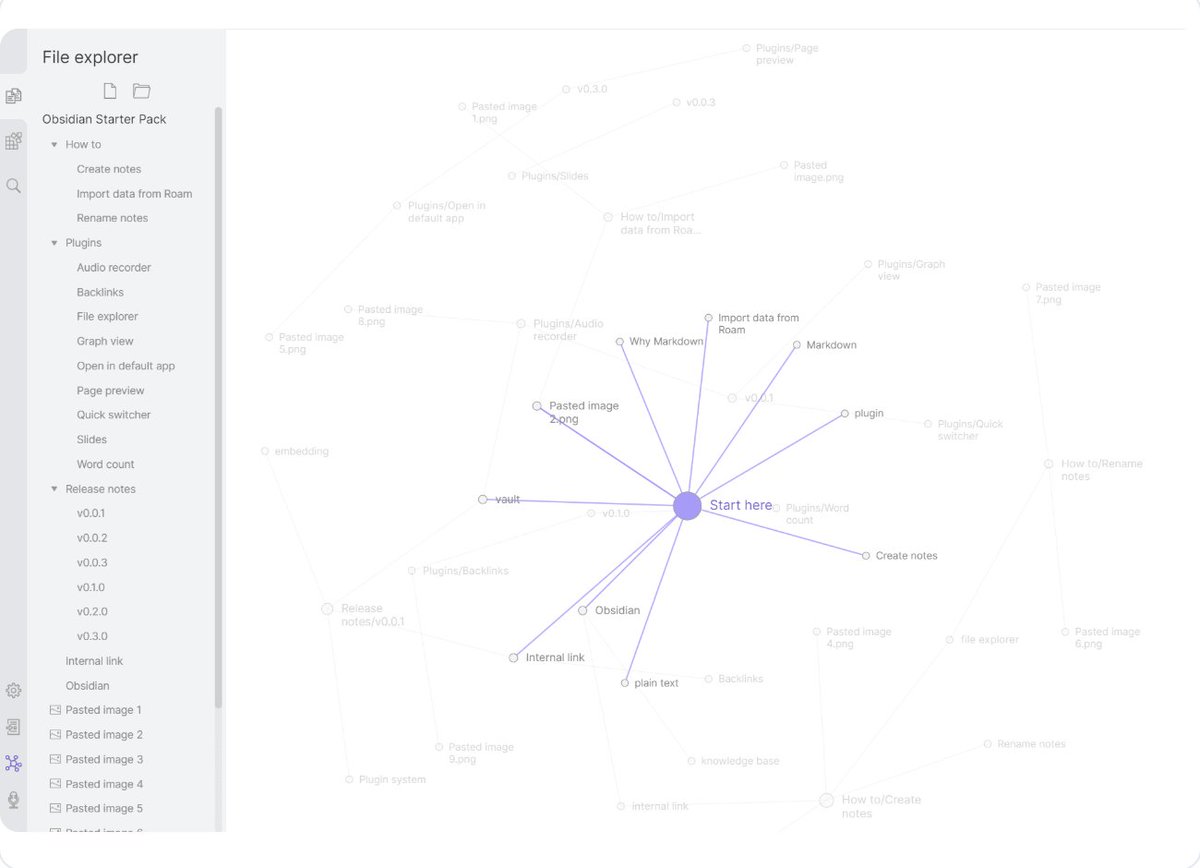
Obsidian Graph View - this is what your vault looks like after a month. Every dot is a note, every line is a connection
## First - why this matters at all
Right now you use AI like this: upload files, AI reads them, gives an answer. Close the tab - everything vanishes. Next time it reads the same files all over again. From scratch. Every time. Burning tokens on knowledge it already had yesterday.
Andrej Karpathy (ex-OpenAI, ex-Tesla AI) published a GitHub gist in April 2026 with a simple but powerful pattern. Called it LLM Wiki. 5,000+ stars in days.
The idea: AI cleans, structures, and links all your data once. Then it only works with the clean base. Never goes back to raw files.
His analogy: raw documents are source code. The wiki is the compiled product. You don't recompile a program every time you run it.
→ 70-90% fewer tokens on repeat queries
→ significantly better answers
→ automatic links between documents
→ visual knowledge graph
→ system that grows without you
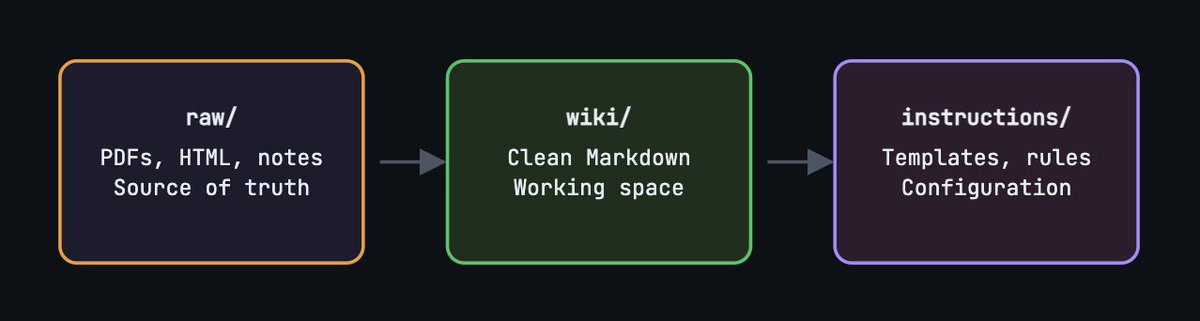
Karpathy's Wiki Layer: raw files → clean knowledge base → rules
## Step 1 - Install Claude Desktop and Obsidian
Claude Desktop: claude.com/download → install → Pro subscription $20/mo → click the Code tab
Obsidian: obsidian.md → free → Create new vault → name it "brain" → Create
Why Obsidian? It stores everything as plain .md files on your drive. Any AI can read them. Switch models anytime without migration. No lock-in.
## Step 2 - Connect Claude to your vault
Option A: Local REST API plugin
In Obsidian: Settings → Community plugins → Browse → Local REST API → Install → Enable. Copy the API key (without "Bearer"):
```
claude mcp add-json obsidian-vault '{
"type": "stdio",
"command": "uvx",
"args": ["mcp-obsidian"],
"env": {
"OBSIDIAN_API_KEY": "YOUR-KEY",
"OBSIDIAN_HOST": "127.0.0.1",
"OBSIDIAN_PORT": "27124"
}
}'
```
Option B: mcpvault (no plugin needed)
```
claude mcp add-json obsidian-vault '{
"type": "stdio",
"command": "npx",
"args": ["-y", "@bitbonsai/mcpvault@latest", "/шлях/до/твого/vault"]
}' --scope user
```
Test it: tell Claude "list every file in my Obsidian vault". If it reads your notes - you're connected.
## Step 3 - Upload yourself into the system
An empty brain is useless. Have Claude interview you and create CLAUDE.md:
> Prompt
> You are setting up my second brain. Interview me ONE question at a time to build my profile. Ask about: who I am and what I do, my goals for this year, how I want you to talk to me, my strengths and weaknesses, and my current projects. Wait for each answer before the next question. When finished, write everything into a file called CLAUDE.md at the vault root, structured with headers, so you load it automatically every session.
```
# CLAUDE.md - Second Brain Operating Instructions
## Who You Are
You are [name]'s AI agent. You are not a generic
assistant - you are a thinking partner with full context.
## My Profile
- Role: [what you do]
- Goals 2026: [your goals]
- Working style: [how you work]
## Current Projects
- [[project-1]] - description and status
## Wiki Knowledge Base
1. Read wiki/hot.md first
2. If not enough, read wiki/index.md
3. Drill into pages only when needed
```
Claude loads this file first every session. It never starts from zero again.
## Step 4 - Project structure
> Prompt
> Create a project folder in my vault called youtube-channel. Inside it, create four folders: Inputs, Process, Outputs, Feedback. Then write a CLAUDE.md inside that project folder describing what this project is, its one goal, and your specific role in helping me hit it.
```
brain/
├── CLAUDE.md ← your profile
├── raw/ ← raw materials
├── wiki/ ← clean knowledge base
├── hot.md ← context cache
└── index.md ← page index
├── youtube-channel/
├── CLAUDE.md ← project context
├── Inputs/ ← ideas, materials
├── Process/ ← working notes
├── Outputs/ ← finished work
└── Feedback/ ← metrics
├── freelance-clients/
```
The trick: when working on a project, open only its folder as a separate vault. Obsidian: vault name → Manage vaults → Open folder as a vault. Claude sees one project, not the chaos.
## Step 5 - 6 commands you'll use every day
At the end of every session Claude refreshes the hot cache. Next session starts with full context. No recap. No re-explaining.
## Step 6 - Skills and workflows
Anything you do more than once becomes a command:
> Create a skill
> I want to turn this into a reusable skill. Here is how I do [task], with an example: [example]. Save this as a markdown skill file inside this project's skills folder.
> Before a meeting
> I'm about to meet with [name] about [topic]. Pull relevant notes from /People/[name].md and any active projects linked to them.
> After a meetingFormat these meeting notes, extract action items with owners and deadlines, and append them to [name].md and the relevant project README.
> End of day
> Review today's Daily Note, extract any open tasks, link them to their relevant projects, and add a TL;DR summary at the top.
> Hard decisions
> /think should I [describe decision]?
The /think command runs a 10-step reasoning loop instead of a snap answer.
Official Obsidian skills by kepano (35,000+ stars):
```
claude plugin marketplace add kepano/obsidian-skills
claude plugin install obsidian@obsidian-skills
```
## Step 7 - One brain, every project
This is what 95% of people miss. Point every project at the same vault. Add to any project's CLAUDE.md:
```
## Wiki Knowledge Base
Path: ~/path/to/vault
When you need context not already in this project:
1. Read wiki/hot.md first
2. If not enough, read wiki/index.md
3. Only then drill into specific pages
Do NOT read the wiki for general coding questions.
```
Your code, content, research, finances - all drinking from one knowledge base. Read once, use everywhere.
## Step 8 - Live data
```
claude mcp add google-workspace uvx workspace-mcp --tools calendar
```
> Prompt
> Read my calendar for today, log what I committed to in each meeting into my tasks project, and flag anything without a clear next step.
> Safety rule
> Always grant read-only access. "Don't delete this" is advice, not a safeguard. If the agent can delete a file - eventually it will. Control at the permission level.
## Step 9 - Autopilot at 7am
In Claude Desktop: Schedule → + New task:
```
Frequency: Daily, 7:00am
Folder: your vault
Prompt: Check my vault. File anything new.
Link it. Flag stale notes.
Write 3-line summary of changes.
```
> Weekly audit
> Walk through the entire vault. Find notes that contradict each other. Flag stale content older than 90 days. Reconnect orphan pages. Surface contradictions as [!contradiction] callouts with both sources. Write a report to /Weekly-Review/[date].md.
## Step 10 - 5 hacks that change everything
1. PARA mode - Projects, Areas, Resources, Archives: bash bin/setup-mode.sh
2. Obsidian Web Clipper - browser extension. Article → .raw/ in one click. Sunday: ingest all of these
3. Lint weekly - lint the wiki finds contradictions as [!contradiction] callouts. Your brain tells you when it disagrees with itself.
4. Obsidian Git - auto-commits every 15 min. Full history. Roll back anything.
5. /think before decisions - 10-step reasoning loop: /think should I niche down or post broad?
## Ready-made solutions from GitHub
```
git clone https://github.com/AgriciDaniel/claude-obsidian
cd claude-obsidian && bash bin/setup-vault.sh
```
obsidian-second-brain - 43 commands. Works with Claude, Codex, and Gemini.
second-brain-starter - interviews you, generates a plan, builds from scratch.
Karpathy-LLM-Wiki-Stack - full architecture docs. Drop it to Claude: "Set up an LLM Wiki based on this blueprint."
Add to an existing vault:
> Prompt
> Read WIKI.md in this project. Then: 1. Check if Obsidian is installed. If not, install it. 2. Check if Local REST API plugin is on port 27124. 3. Configure the MCP server. 4. Ask me ONE question: "What is this vault for?" Then scaffold the full wiki structure.
## The honest timeline
Day 1 → 5 pages, a tiny graph. The system knows the basics about you.
Week 2 → 40+ sources. The graph becomes a web. Queries start citing things you forgot you read.
Month 2 → You stop googling things you already know. You ask your vault first. It answers in 2 seconds with sources. The brain starts feeding you.
Same subscription. Same price. Completely different machine.
People spent years searching for the perfect prompt. The answer turned out to be not how you ask AI. But what AI knows about you before you even open your mouth.
Most people will read this and build nothing. The ones who do will open their graph in a month and freeze - because it will know things they already forgot about themselves.

## 相关链接
- [kai](https://x.com/0xkkai)
- [@0xkkai](https://x.com/0xkkai)
- [20K](https://x.com/0xkkai/status/2078521831469023473/analytics)
- [claude.com/download](https://claude.com/download)
- [Upgrade to Premium](https://x.com/i/premium_sign_up)
- [12:46 AM · Jul 19, 2026](https://x.com/0xkkai/status/2078521831469023473)
- [20.1K Views](https://x.com/0xkkai/status/2078521831469023473/analytics)
- [View quotes](https://x.com/0xkkai/status/2078521831469023473/quotes)
---
*导出时间: 2026/7/19 11:31:09*
---
## 中文翻译
# 我花了200多小时向AI解释我是谁。然后我找到了一种方法,只需一次——再也不用重来了
**作者**: kai
**日期**: 2026-07-18T16:46:36.000Z
**来源**: [https://x.com/0xkkai/status/2078521831469023473](https://x.com/0xkkai/status/2078521831469023473)
---

每个使用 Claude 或 ChatGPT 的人都在做同样的事。打开一个新标签页。输入你是谁。你做什么。你在做什么项目。AI 回答。你关闭标签页。明天——从头开始。就像《土拨鼠之日》(Groundhog Day),只不过你浪费了 10 分钟,而且丢失了之前所有的上下文。
我算了一笔账:一年下来,大约要花 200 多个小时向一台机器解释它本该知道的事情。
然后我找到了打破这种循环的设置。你电脑上的一个文件——AI 再也不会忘记你。不猜测。不幻觉。就是知道。
这不是一个指南——而是三篇病毒式传播的文章(累计浏览量 800 万+),合并并改进成了一份文档。每一个提示词。每一个指令。每一个技巧。即使你从未听说过 Obsidian——你也能在一个晚上搭建完成。

Obsidian 关系图谱视图——这是一个月后的知识库样子。每一个点是一条笔记,每一条线是一个连接
## 首先——为什么这很重要
目前你使用 AI 的方式是这样的:上传文件,AI 读取它们,给出一个答案。关闭标签页——一切消失。下次它从头开始再次读取相同的文件。每次都是如此。在昨天已经掌握的知识上浪费 Token。
Andrej Karpathy(前 OpenAI,前特斯拉 AI)在 2026 年 4 月发布了一个 GitHub gist,包含一个简单但强大的模式。他称之为 LLM Wiki。几天内就获得了 5,000+ 星标。
其想法是:AI 一次性清理、结构化和链接你所有的数据。然后它只在这个干净的基础上工作。不再回头处理原始文件。
他的比喻:原始文档是源代码。Wiki 是编译后的产品。你不会每次运行程序时都重新编译它。
→ 重复查询减少 70-90% 的 Token
→ 显著更好的答案
→ 文档之间的自动链接
→ 可视化知识图谱
→ 无需你介入也能自动增长的系统

Karpathy 的 Wiki 层:原始文件 → 干净的知识库 → 规则
## 第1步 - 安装 Claude Desktop 和 Obsidian
Claude Desktop: claude.com/download → 安装 → Pro 订阅 $20/月 → 点击 Code 标签
Obsidian: obsidian.md → 免费 → 创建新知识库 → 命名为 "brain" → 创建
为什么选 Obsidian?它将所有内容以纯 .md 文件形式存储在你的驱动器上。任何 AI 都可以读取它们。随时切换模型而无需迁移。没有锁定。
## 第2步 - 将 Claude 连接到你的知识库
选项 A: Local REST API 插件
在 Obsidian 中: 设置 → 社区插件 → 浏览 → Local REST API → 安装 → 启用。复制 API 密钥(不带 "Bearer"):
```
claude mcp add-json obsidian-vault '{
"type": "stdio",
"command": "uvx",
"args": ["mcp-obsidian"],
"env": {
"OBSIDIAN_API_KEY": "YOUR-KEY",
"OBSIDIAN_HOST": "127.0.0.1",
"OBSIDIAN_PORT": "27124"
}
}'
```
选项 B: mcpvault(无需插件)
```
claude mcp add-json obsidian-vault '{
"type": "stdio",
"command": "npx",
"args": ["-y", "@bitbonsai/mcpvault@latest", "/шлях/до/твого/vault"]
}' --scope user
```
测试一下:告诉 Claude “列出我 Obsidian 知识库中的所有文件”。如果它读到了你的笔记——你就连接成功了。
## 第3步 - 将你自己上传到系统中
一个空空的大脑是无用的。让 Claude 采访你并创建 CLAUDE.md:
> 提示词
> 你正在设置我的第二大脑。一次问**一个问题**来建立我的档案。询问关于:我是谁以及我做什么,我今年的目标,我希望你如何与我交谈,我的优缺点,以及我当前的项目。在问下一个问题之前等待每个回答。完成后,将所有内容写入知识库根目录下一个名为 CLAUDE.md 的文件,用标题结构化,以便你每次会话时自动加载它。
```
# CLAUDE.md - 第二大脑操作指令
## 你是谁
你是 [name] 的 AI 代理。你不是通用的助手——你是一个拥有完整上下文的思维伙伴。
## 我的档案
- 角色: [what you do]
- 2026 目标: [your goals]
- 工作风格: [how you work]
## 当前项目
- [[project-1]] - 描述和状态
## Wiki 知识库
1. 首先阅读 wiki/hot.md
2. 如果不够,阅读 wiki/index.md
3. 仅在需要时深入特定页面
```
Claude 在每次会话时都会首先加载这个文件。它再也不会从零开始了。
## 第4步 - 项目结构
> 提示词
> 在我的知识库中创建一个名为 youtube-channel 的项目文件夹。在里面创建四个文件夹:Inputs, Process, Outputs, Feedback。然后在该项目文件夹内写入一个 CLAUDE.md,描述这个项目是什么,它的一个目标,以及你在帮助我实现目标时的具体角色。
```
brain/
├── CLAUDE.md ← 你的档案
├── raw/ ← 原始材料
├── wiki/ ← 干净的知识库
├── hot.md ← 上下文缓存
└── index.md ← 页面索引
├── youtube-channel/
├── CLAUDE.md ← 项目上下文
├── Inputs/ ← 想法、材料
├── Process/ ← 工作笔记
├── Outputs/ ← 完成的工作
└── Feedback/ ← 指标
├── freelance-clients/
```
诀窍在于:当处理一个项目时,只打开其文件夹作为一个单独的知识库。Obsidian: 知识库名称 → 管理知识库 → 打开文件夹作为知识库。Claude 看到一个项目,而不是混乱。
## 第5步 - 你每天会使用的 6 个命令
在每次会话结束时,Claude 会刷新热缓存。下次会话开始时拥有完整的上下文。无需回顾。无需重解释。
## 第6步 - 技能和工作流
任何你做了一次以上的事情都会变成一个命令:
> 创建一个技能
> 我想把它变成一个可复用的技能。这是我是如何做 [task] 的,有一个例子:[example]。将其保存为 markdown 技能文件放在该项目的 skills 文件夹中。
> 会议前
> 我即将与 [name] 会面讨论 [topic]。从 /People/[name].md 中提取相关笔记以及任何与它们相关的活跃项目。
> 会议后
> 格式化这些会议笔记,提取包含负责人和截止日期的行动项,并将它们追加到 [name].md 和相关的项目 README 中。
> 一天结束
> 审阅今天的每日笔记,提取任何未完成的任务,将它们链接到相关的项目,并在顶部添加一个 TL;DR 总结。
> 艰难的决定
> /think 我应该 [describe decision]?
/think 命令运行一个 10 步推理循环,而不是快速给出答案。
kepano 提供的官方 Obsidian 技能(35,000+ 星标):
```
claude plugin marketplace add kepano/obsidian-skills
claude plugin install obsidian@obsidian-skills
```
## 第7步 - 一个大脑,每个项目
这是 95% 的人都会忽略的地方。将每个项目都指向同一个知识库。添加到任何项目的 CLAUDE.md 中:
```
## Wiki 知识库
路径: ~/path/to/vault
当你需要此项目中不存在的上下文时:
1. 首先阅读 wiki/hot.md
2. 如果不够,阅读 wiki/index.md
3. 只有这样才深入到特定页面
对于一般性编码问题,请勿阅读 wiki。
```
你的代码、内容、研究、财务——都从一个知识库中汲取信息。读取一次,随处使用。
## 第8步 - 实时数据
```
claude mcp add google-workspace uvx workspace-mcp --tools calendar
```
> 提示词
> 阅读我今天的日历,将我在每次会议中承诺的内容记录到我的任务项目中,并标记任何没有明确后续步骤的事项。
> 安全规则
> 始终授予只读权限。“不要删除这个”是建议,不是保障。如果代理可以删除文件——它迟早会做的。在权限级别进行控制。
## 第9步 - 早上7点的自动驾驶
在 Claude Desktop 中: 计划 → + 新任务:
```
频率: 每天, 7:00am
文件夹: 你的知识库
提示词: 检查我的知识库。归档任何新内容。
链接它。标记陈旧的笔记。
写一份 3 行的变更总结。
```
> 每周审计
遍历整个知识库。找到相互矛盾的笔记。标记 90 天以上的陈旧内容。重新连接孤立的页面。将矛盾作为 [!contradiction] 标注呈现出来,并附上两个来源。将报告写入 /Weekly-Review/[date].md。
## 第10步 - 改变一切的 5 个技巧
1. PARA 模式 - 项目、领域、资源、归档: bash bin/setup-mode.sh
2. Obsidian Web Clipper - 浏览器扩展。文章 → .raw/ 一键完成。周日:摄取所有这些内容。
3. 每周 Lint - lint wiki 会发现矛盾并作为 [!contradiction] 标注。你的大脑会在它自相矛盾时告诉你。
4. Obsidian Git - 每 15 分钟自动提交。完整的历史记录。回滚任何内容。
5. 决策前 /think - 10 步推理循环: /think 我应该垂直细分还是广泛发布?
## 来自 GitHub 的现成解决方案
```
git clone https://github.com/AgriciDaniel/claude-obsidian
cd claude-obsidian && bash bin/setup-vault.sh
```
obsidian-second-brain - 43 个命令。适用于 Claude、Codex 和 Gemini。
second-brain-starter - 采访你,生成计划,从头开始构建。
Karpathy-LLM-Wiki-Stack - 完整的架构文档。将其拖入 Claude:“基于此蓝图设置一个 LLM Wiki。”
添加到现有知识库:
> 提示词
> 阅读此项目中的 WIKI.md。然后:1. 检查是否安装了 Obsidian。如果没有,安装它。2. 检查 Local REST API 插件是否在端口 27124 上。3. 配置 MCP 服务器。4. 问我**一个**问题:“这个知识库是做什么用的?”然后搭建完整的 wiki 结构。
## 真实的时间线
第 1 天 → 5 页,微小的图谱。系统了解你的基本情况。
第 2 周 → 40+ 来源。图谱变成了一张网。查询开始引用你忘记自己读过的东西。
第 2 个月 → 你停止搜索你已经知道的东西。你先问你的知识库。它在 2 秒内带着来源回答。大脑开始为你提供信息。
同样的订阅。同样的价格。完全不同的机器。
人们花了几年时间寻找完美的提示词。答案原来不在于你如何问 AI。而在于 AI 在你开口之前就对你了解多少。
大多数人读完这篇文章后什么也不会做。那些做的人会在一个月后打开他们的图谱然后呆住——因为它会知道他们已经忘记的关于自己的事情。

## 相关链接
- [kai](https://x.com/0xkkai)
- [@0xkkai](https://x.com/0xkkai)
- [20K](https://x.com/0xkkai/status/2078521831469023473/analytics)
- [claude.com/download](https://claude.com/download)
- [Upgrade to Premium](https://x.com/i/premium_sign_up)
- [12:46 AM · Jul 19, 2026](https://x.com/0xkkai/status/2078521831469023473)
- [20.1K Views](https://x.com/0xkkai/status/2078521831469023473/analytics)
- [View quotes](https://x.com/0xkkai/status/2078521831469023473/quotes)
---
*导出时间: 2026/7/19 11:31:09*