# tldraw Is Not Just a Whiteboard: 14 Things You Can Build
**作者**: mr-r0b0t
**日期**: 2026-07-20T00:32:06.000Z
**来源**: [https://x.com/mr_r0b0t/status/2079001367109382439](https://x.com/mr_r0b0t/status/2079001367109382439)
---
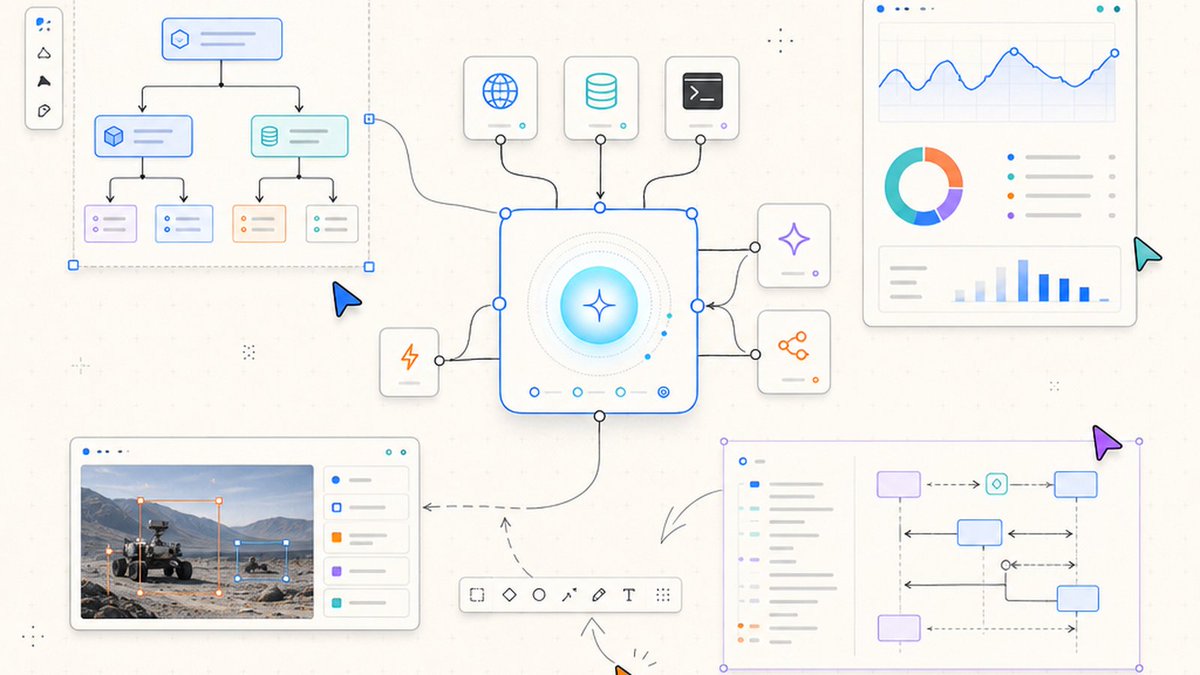
Most people meet tldraw as a polished online whiteboard. That is the least interesting way to think about it.
The public tldraw SDK is a programmable React-based infinite canvas. Its shapes can be live application components. Its editor can be driven through code. Its tools, bindings, storage, synchronization, files, and interface can all be extended. That makes it a foundation for an entire class of spatial software.
> If your product benefits from arranging interactive things in space, connecting them, collaborating on them, or letting an AI manipulate them visually, tldraw deserves a serious look.
## 1. Build serious whiteboards and diagram editors
The obvious starting point is still a strong one. tldraw gives you the interaction model expected from a modern canvas: pan, zoom, selection, grouping, snapping, alignment, resize, rotation, rich text, arrows, frames, pages, undo and redo, keyboard controls, drag and drop, and clipboard behavior.
- Products: collaborative whiteboards, flowchart tools, mind maps, architecture diagrams, project-planning boards, network maps, database designers, storyboards, and process editors
- Why it matters: you start from a mature editor instead of rebuilding years of difficult pointer, camera, selection, and geometry behavior
## 2. Turn React components into canvas shapes
This is the conceptual unlock. A custom tldraw shape can be a live React component rather than a painted rectangle. It can contain application state, controls, media, charts, status, or data from your backend while still participating in selection, movement, resizing, grouping, history, export, and collaboration.
- Custom shape ideas: database tables, code cards, workflow nodes, live dashboards, image viewers, maps, videos, forms, game pieces, server monitors, model endpoints, and mini application windows
- Deep control: custom geometry, resize behavior, handles, selection indicators, text extraction, accessibility descriptions, migrations, and exported appearance
At that point, the infinite canvas stops being a drawing surface and becomes a spatial application shell.
## 3. Invent entirely new tools
tldraw tools are state-machine interactions. You can create domain-specific ways of adding and manipulating content instead of forcing every workflow through the default pointer and drawing tools.
- Interaction patterns: click-to-place, drag-to-create, multi-step connectors, measurement, floor-plan walls, timeline authoring, port wiring, guided annotation, lasso analysis, and game controls
- Input: pointer, touch, keyboard, focus, edge scrolling, click detection, and camera behavior can participate in the experience
## 4. Model real relationships with bindings
Objects that only look connected will break the moment users move them. Bindings preserve semantic relationships between shapes.
- Examples: arrows attached to boxes, workflow edges attached to ports, UML relationships, anchored labels, parent-child systems, map annotations, constraints, dependencies, and electrical connections
Bindings let a canvas represent a real graph, not just a picture of one.
## 5. Build visual workflow and automation products
The official Workflow starter kit demonstrates drag-and-drop nodes, connections, routing, and a replaceable execution engine. It is a strong foundation for products in the territory of n8n, ComfyUI, Langflow, or Node-RED, especially when the domain needs a purpose-built interface.
- Use cases: AI agent pipelines, ETL systems, no-code automation, data transformations, deployment workflows, creative pipelines, and domain-specific visual programming
- Execution: the canvas can be the editor while your own engine validates and runs the graph
## 6. Give an AI eyes and hands on the canvas
A canvas can become structured visual context for an AI. Instead of producing a flat image, an agent can inspect objects and issue controlled actions that create, update, connect, move, group, or explain them.
- Experiences: prompt-to-diagram, prose-to-architecture, sketch recognition, automatic layout, diagram critique, visual planning, selection-based transformations, and canvas-aware assistants
- Official foundations: Agent, Chat, Branching Chat, Workflow, and Image Pipeline starter kits cover several of these patterns
Provider-backed behavior still depends on the model, credentials, quotas, and deployment environment. The SDK provides the visual foundation; it does not guarantee model quality.
## 7. Add real-time multiplayer
With tldraw sync, the same canvas can become a persistent multi-user room. Users can edit together while seeing cursors, presence, identities, camera-following behavior, and custom collaboration state.
- Products: shared whiteboards, remote classrooms, design reviews, incident rooms, planning boards, multiplayer tabletop surfaces, and living documentation
- Production concerns: room isolation, authentication, asset storage, explicit origins, persistence, permissions, and treating sync metadata as untrusted input
The production path is self-hosted. You do not need private tldraw.com internals to build it.
## 8. Treat the canvas as durable application data
The editor sits on a reactive store containing shapes, bindings, pages, assets, and other records. Applications can observe state, validate it, attach side effects, maintain history, and persist it locally or remotely.
- Persistence: IndexedDB-backed local persistence, cross-tab synchronization, backend storage, snapshots, room storage, and custom records
- Evolution: schema migrations let custom shapes and metadata survive product changes
- Navigation: deep links can target pages, shapes, or canvas positions
## 9. Use .tldr as a real document format
Applications can parse and serialize official .tldr documents using the active application schema. This supports import, export, backups, document libraries, and round trips through a fresh editor.
The important detail is to use tldraw's official serializers and parser rather than hand-writing JSON. A document containing custom shapes is only portable to another host that registers the same schema and shape utilities.
## 10. Turn Mermaid into editable native objects
The @tldraw/mermaid package converts Mermaid syntax into native tldraw shapes and connections instead of flattening it into a static SVG.
- What that enables: diagram-as-code editors, architecture documentation, sequence flows, paste-Mermaid-to-canvas, repository visualization, and AI-generated diagrams that humans can continue editing
Mermaid can be an interchange format while tldraw remains the interactive editing environment.
## 11. Export, present, and embed
Canvas content can become SVG or raster images for thumbnails, reports, previews, documentation, print workflows, and social graphics. Custom shapes can define how they appear in exports.
- Presentation modes: read-only viewers, controlled camera experiences, slide decks, fixed-camera presentations, and embedded interactive diagrams
- Product integration: the canvas can sit inside a larger React application with your own sidebars, inspectors, commands, dialogs, and data model
## 12. Build annotation and education tools
Spatial markup is useful wherever text alone is not enough.
- Examples: image annotation, screenshot feedback, PDF-page markup, exam grading, visual tutoring, design review, medical-image annotation, lesson planning, and remote classrooms
Custom shapes can expose semantic text and accessibility descriptions, making visual content more searchable and useful to assistive technology.
## 13. Replace the entire interface
You can keep the familiar canvas behavior while replacing the surrounding product UI. Menus, toolbars, context menus, overlays, actions, shortcuts, panels, and preferences can be customized or removed.
- Modes: minimal editor, read-only viewer, permission-aware workspace, branded SaaS product, focused annotation tool, or full domain-specific application
- Platform details: themes, internationalization, user preferences, reduced motion, focus, keyboard access, and custom UI primitives are part of the public feature surface
## 14. Make things that do not resemble whiteboards at all
The official examples are the best proof of how far the model can stretch. They include a D3 map, PDF editor pattern, image annotator, exam marking, slideshows, fog of war, tower defense, a gravity simulation, shader backgrounds, a snowstorm, a timeline scrubber, and hundreds of Mermaid diagrams.
tldraw is DOM-based, so it is not a replacement for a high-frame-rate game engine. It is exceptionally good, however, at spatial interfaces, simulations, tabletop systems, visual tools, and products where interactive objects matter more than raw rendering throughput.
## The opportunities I would build for local AI
- Agent trace debugger: visualize tool calls, handoffs, token use, latency, failures, and retries as a living graph
- Local AI architecture lab: drag models, GPUs, vector stores, routers, tools, and agents onto the canvas, then simulate requests through them
- Visual inference router: connect local and cloud models through conditional routing nodes and inspect execution live
- Benchmark arena: compare model outputs, metrics, prompts, and artifacts spatially instead of burying them in tables
- Training-data pipeline: connect ingestion, filtering, deduplication, scoring, review, and export stages
- DGX Spark control room: represent active models, ports, memory pressure, queues, and workloads as live shapes
- AI system-design board: let an agent read the architecture and identify missing dependencies, bottlenecks, or security boundaries
## Where the Hermes tldraw skill fits
I built a Hermes skill to give agents version-aware guidance for the public tldraw SDK. It covers project inspection, Editor and store APIs, custom shapes, tools, bindings, .tldr files, migrations, export, Mermaid, sync, browser automation, starter evaluation, security, and deployment boundaries.
Install it with: hermes skills install r0b0tlab/tldraw-skill/skills/tldraw
Repository: https://github.com/r0b0tlab/tldraw-skill
## The practical boundary
tldraw is strongest for React web applications whose core interaction is arranging and connecting interactive objects in space. Use documented public SDK APIs rather than private tldraw.com internals, inspect the version installed in your project, and test the complete browser experience rather than trusting types alone.
The SDK is source-available under the tldraw license, not MIT. Production projects need to review current license-key and attribution requirements. Official starter code may have its own license, but that does not relicense the SDK dependency.
## The takeaway
The infinite canvas is becoming a new application surface. It is where diagrams become executable, AI gets visual context, multiplayer becomes spatial, and application objects can be arranged as naturally as ideas on a wall.
> tldraw is not merely a place to draw software diagrams. It is a toolkit for turning diagrams into software.
## 相关链接
- [tldraw reposted](https://x.com/tldraw)
- [mr-r0b0t](https://x.com/mr_r0b0t)
- [@mr_r0b0t](https://x.com/mr_r0b0t)
- [7.4K](https://x.com/mr_r0b0t/status/2079001367109382439/analytics)
- [tldraw.com](https://tldraw.com/)
- [@tldraw/mermaid](https://x.com/@tldraw/mermaid)
- [https://github.com/r0b0tlab/tldraw-skill](https://github.com/r0b0tlab/tldraw-skill)
- [tldraw.com](https://tldraw.com/)
- [Upgrade to Premium](https://x.com/i/premium_sign_up)
- [8:32 AM · Jul 20, 2026](https://x.com/mr_r0b0t/status/2079001367109382439)
- [7,427 Views](https://x.com/mr_r0b0t/status/2079001367109382439/analytics)
- [View quotes](https://x.com/mr_r0b0t/status/2079001367109382439/quotes)
---
*导出时间: 2026/7/20 21:55:39*
---
## 中文翻译
# tldraw 不仅仅是一个白板:你可以构建的 14 种东西
**作者**: mr-r0b0t
**日期**: 2026-07-20T00:32:06.000Z
**来源**: [https://x.com/mr_r0b0t/status/2079001367109382439](https://x.com/mr_r0b0t/status/2079001367109382439)
---

大多数人把 tldraw 当作一个精美的在线白板来认识。这是看待它最无趣的方式。
公开的 tldraw SDK 是一个可编程的、基于 React 的无限画布。它的形状可以是实时的应用程序组件。它的编辑器可以通过代码驱动。它的工具、绑定、存储、同步、文件和界面都可以进行扩展。这使其成为一类全新空间软件的基础。
> 如果你的产品受益于在空间中排列交互式事物、连接它们、协作处理它们,或者让 AI 在视觉上操作它们,那么 tldraw 值得你认真考虑。
## 1. 构建专业的白板和图表编辑器
显而易见的起点依然是一个强有力的出发点。tldraw 为你提供了现代画布所预期的交互模型:平移、缩放、选择、分组、吸附、对齐、调整大小、旋转、富文本、箭头、框架、页面、撤销和重做、键盘控制、拖放以及剪贴板行为。
- 产品:协作白板、流程图工具、思维导图、架构图、项目规划板、网络地图、数据库设计器、故事板和流程编辑器
- 为何重要:你是从一个成熟的编辑器起步,而不是重新构建多年来困难的指针、相机、选择和几何行为
## 2. 将 React 组件转变为画布形状
这是概念上的解锁。一个自定义的 tldraw 形状可以是一个实时的 React 组件,而不是一个绘制的矩形。它可以包含应用程序状态、控件、媒体、图表、状态或来自后端的数据,同时仍然参与选择、移动、调整大小、分组、历史记录、导出和协作。
- 自定义形状构想:数据库表、代码卡片、工作流节点、实时仪表板、图像查看器、地图、视频、表单、游戏棋子、服务器监视器、模型端点和微型应用程序窗口
- 深度控制:自定义几何形状、调整大小行为、手柄、选择指示器、文本提取、可访问性描述、迁移和导出外观
在这一点上,无限画布不再是绘图表面,而变成了一个空间应用程序外壳。
## 3. 发明全新的工具
tldraw 工具是状态机交互。你可以创建特定于领域的添加和操作内容的方法,而不是强迫每个工作流都通过默认的指针和绘图工具。
- 交互模式:点击放置、拖拽创建、多步连接器、测量、平面图墙壁、时间轴创作、端口布线、引导式注释、套索分析和游戏控制
- 输入:指针、触摸、键盘、焦点、边缘滚动、点击检测和相机行为都可以参与体验
## 4. 使用绑定对真实关系进行建模
那些仅看起来相连的对象,在用户移动它们的那一刻就会断开。绑定保留了形状之间的语义关系。
- 示例:附加到框的箭头、附加到端口的工作流边缘、UML 关系、锚定标签、父子系统、地图注释、约束、依赖关系和电气连接
绑定让画布能够表示一个真实的图,而不仅仅是一张图片。
## 5. 构建可视化的工作流和自动化产品
官方的 Workflow 入门套件展示了拖放节点、连接、路由和可替换的执行引擎。它是 n8n、ComfyUI、Langflow 或 Node-RED 领域产品的坚实基础,特别是当该领域需要专门构建的界面时。
- 用例:AI 代理管道、ETL 系统、无代码自动化、数据转换、部署工作流、创意管道和特定领域的可视化编程
- 执行:画布可以是编辑器,而你自己的引擎负责验证和运行该图
## 6. 让 AI 在画布上拥有眼睛和双手
画布可以成为 AI 的结构化视觉上下文。代理可以检查对象并发出受控的操作,而不是生成一张扁平的图像,这些操作可以创建、更新、连接、移动、分组或解释对象。
- 体验:提示词生成图表、散文生成架构、草图识别、自动布局、图表批评、视觉规划、基于选择的转换以及具有画布感知能力的助手
- 官方基础:Agent、Chat、Branching Chat、Workflow 和 Image Pipeline 入门套件涵盖了其中的几种模式
提供商支持的行为仍然取决于模型、凭据、配额和部署环境。SDK 提供视觉基础;它不保证模型质量。
## 7. 添加实时多人游戏
使用 tldraw sync,同一个画布可以成为一个持久的多用户房间。用户可以在看到光标、在线状态、身份、跟随相机行为和自定义协作状态的同时一起编辑。
- 产品:共享白板、远程教室、设计评审、事故室、规划板、多人桌面游戏表面和活文档
- 生产注意事项:房间隔离、身份验证、资产存储、显式来源、持久性、权限以及将同步元数据视为不受信任的输入
生产路径是自托管的。你不需要私有的 tldraw.com 内部组件来构建它。
## 8. 将画布视为持久的应用程序数据
编辑器位于一个包含形状、绑定、页面、资产和其他记录的反应式存储之上。应用程序可以观察状态、验证状态、附加副作用、维护历史记录并在本地或远程持久化它。
- 持久性:支持 IndexedDB 的本地持久化、跨标签页同步、后端存储、快照、房间存储和自定义记录
- 演变:模式迁移让自定义形状和元数据可以在产品更改中幸存下来
- 导航:深度链接可以定位页面、形状或画布位置
## 9. 将 .tldr 用作真实的文档格式
应用程序可以使用活动的应用程序模式解析和序列化官方的 .tldr 文档。这支持导入、导出、备份、文档库以及通过全新编辑器进行的往返操作。
重要的细节是使用 tldraw 的官方序列化器和解析器,而不是手写 JSON。包含自定义形状的文档只能移植到注册了相同模式和形状实用程序的另一个主机。
## 10. 将 Mermaid 转变为可编辑的本机对象
@tldraw/mermaid 包将 Mermaid 语法转换为本机 tldraw 形状和连接,而不是将其扁平化为静态 SVG。
- 它启用了什么:图表即代码编辑器、架构文档、序列流、将 Mermaid 粘贴到画布、存储库可视化以及人类可以继续编辑的 AI 生成图表
Mermaid 可以成为一种交换格式,而 tldraw 仍然是交互式编辑环境。
## 11. 导出、演示和嵌入
画布内容可以变成 SVG 或栅格图像,用于缩略图、报告、预览、文档、打印工作流和社交图形。自定义形状可以定义它们在导出中的外观。
- 演示模式:只读查看器、受控的相机体验、幻灯片、固定相机的演示和嵌入的交互式图表
- 产品集成:画布可以位于更大的 React 应用程序内部,并带有你自己的侧边栏、检查器、命令、对话框和数据模型
## 12. 构建注释和教育工具
只要有单靠文本是不够的地方,空间标记就有用武之地。
- 示例:图像注释、屏幕截图反馈、PDF 页面标记、考试评分、视觉辅导、设计评审、医学图像注释、课程规划和远程教室
自定义形状可以暴露语义文本和可访问性描述,使视觉内容对辅助技术更具可搜索性和实用性。
## 13. 替换整个界面
你可以保留熟悉的画布行为,同时替换周围的产品 UI。菜单、工具栏、上下文菜单、覆盖层、操作、快捷键、面板和首选项都可以自定义或删除。
- 模式:最小编辑器、只读查看器、具有权限感知的工作区、品牌 SaaS 产品、专注的注释工具或完整的特定领域应用程序
- 平台细节:主题、国际化、用户首选项、减少动作、焦点、键盘访问和自定义 UI 基元是公共功能表面的一部分
## 14. 制作根本不像白板的东西
官方示例是该模式可以延伸多远的最佳证明。它们包括 D3 地图、PDF 编辑器模式、图像注释器、考试标记、幻灯片放映、战争迷雾、塔防、重力模拟、着色器背景、暴风雪、时间轴擦洗器和数百个 Mermaid 图表。
tldraw 是基于 DOM 的,因此它不是高帧率游戏引擎的替代品。然而,它在空间界面、模拟、桌面系统、可视化工具以及交互式对象比原始渲染吞吐量更重要的产品方面表现得异常出色。
## 我会为本地 AI 构建的机会
- 代理跟踪调试器:将工具调用、交接、令牌使用、延迟、失败和重试可视化为一个动态图
- 本地 AI 架构实验室:将模型、GPU、向量存储、路由器、工具和代理拖到画布上,然后通过它们模拟请求
- 可视化推理路由器:通过条件路由节点连接本地和云模型,并实时检查执行情况
- 基准竞技场:在空间上比较模型输出、指标、提示词和工件,而不是将它们埋在表格中
- 训练数据管道:连接摄取、过滤、去重、评分、审查和导出阶段
- DGX Spark 控制室:将活动模型、端口、内存压力、队列和工作负载表示为实时形状
- AI 系统设计板:让代理读取架构并识别缺失的依赖项、瓶颈或安全边界
## Hermes tldraw 技能的适用之处
我构建了一个 Hermes 技能,为代理提供针对公共 tldraw SDK 的具有版本感知的指导。它涵盖了项目检查、Editor 和 store API、自定义形状、工具、绑定、.tldr 文件、迁移、导出、Mermaid、同步、浏览器自动化、入门评估、安全和部署边界。
使用以下命令安装:hermes skills install r0b0tlab/tldraw-skill/skills/tldraw
代码库:https://github.com/r0b0tlab/tldraw-skill
## 实际边界
tldraw 最适用于核心交互是在空间中排列和连接交互式对象的 React Web 应用程序。使用记录在案的公共 SDK API,而不是私有的 tldraw.com 内部组件,检查项目中安装的版本,并测试完整的浏览器体验,而不仅仅是信任类型。
SDK 在 tldraw 许可证下是源代码可用的,而不是 MIT。生产项目需要审查当前的许可证密钥和归属要求。官方入门代码可能有自己的许可证,但这不会重新许可 SDK 依赖项。
## 结论
无限画布正成为一个新的应用程序表面。在这里,图表变得可执行,AI 获得视觉上下文,多人游戏变得空间化,应用程序对象可以像墙上的想法一样自然排列。
> tldraw 不仅仅是绘制软件图表的地方。它是将图表转化为软件的工具包。
## 相关链接
- [tldraw reposted](https://x.com/tldraw)
- [mr-r0b0t](https://x.com/mr_r0b0t)
- [@mr_r0b0t](https://x.com/mr_r0b0t)
- [7.4K](https://x.com/mr_r0b0t/status/2079001367109382439/analytics)
- [tldraw.com](https://tldraw.com/)
- [@tldraw/mermaid](https://x.com/@tldraw/mermaid)
- [https://github.com/r0b0tlab/tldraw-skill](https://github.com/r0b0tlab/tldraw-skill)
- [tldraw.com](https://tldraw.com/)
- [Upgrade to Premium](https://x.com/i/premium_sign_up)
- [8:32 AM · Jul 20, 2026](https://x.com/mr_r0b0t/status/2079001367109382439)
- [7,427 Views](https://x.com/mr_r0b0t/status/2079001367109382439/analytics)
- [View quotes](https://x.com/mr_r0b0t/status/2079001367109382439/quotes)
---
*导出时间: 2026/7/20 21:55:39*