如何(以及为何)构建 Agent First 应用 ✍ Steve (Builder.io)🕐 2026-07-29📦 13.4 KB 🟢 已读 𝕏 文章列表 文章介绍了如何使用 Agent-Native 框架构建 Agent First 应用。通过统一的前端动作与 Agent 工具,实现 UI 与 Agent 的双向同步。应用支持通过聊天交互、集成外部 Agent、A2A 通信及自动化任务,且完全开源。 AgentAgent-NativeClaude前端A2A开源自动化框架UI # How (and why) to build agent-first apps **作者**: Steve (Builder.io) **日期**: 2026-07-28T14:59:59.000Z **来源**: [https://x.com/Steve8708/status/2082118879002980730](https://x.com/Steve8708/status/2082118879002980730) --- 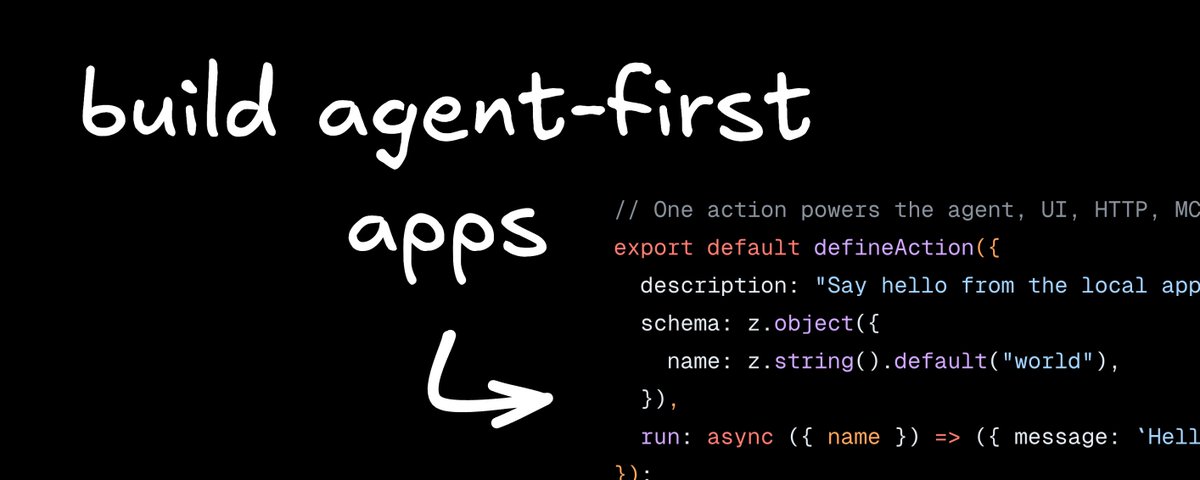 In 2026, you shouldn't be building a single application that's not agent first. But what does that mean, and how do I do it? Let me show you. To make things easy, I'm going to use the Agent-Native framework as a starting point, copying the `create` command from the homepage and running it in my terminal. ``` npx @agent-native/core@latest create todo-app --template chat ``` Once the starting point's created, we'll cd into our app and use Claude, or whatever you prefer, to add our first prompt. To make it a to-do app, I'll just say, "Make this a to-do app." 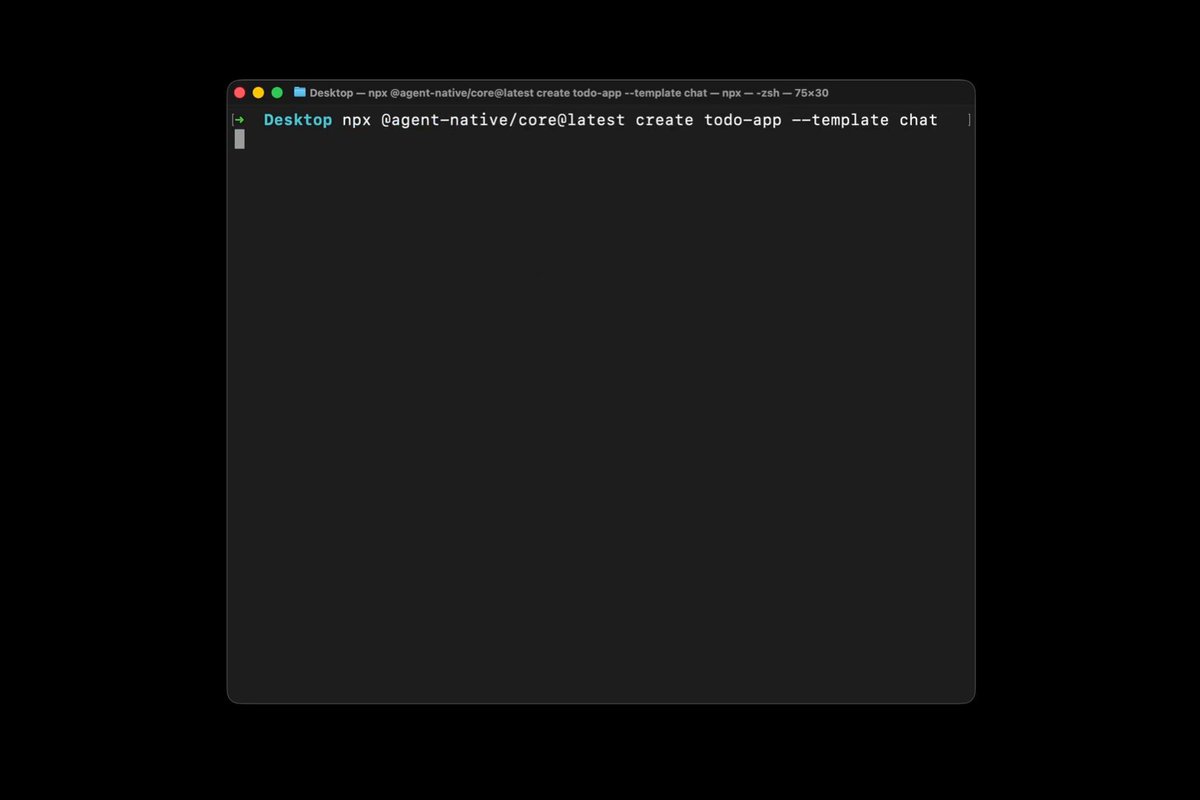 This framework comes with a bunch of skills and instructions built in, so just asking any agent to do what you want or make what you want should give you a good starting point. ## Anything the UI can do, an agent can do Now that Claude is done, we have this. 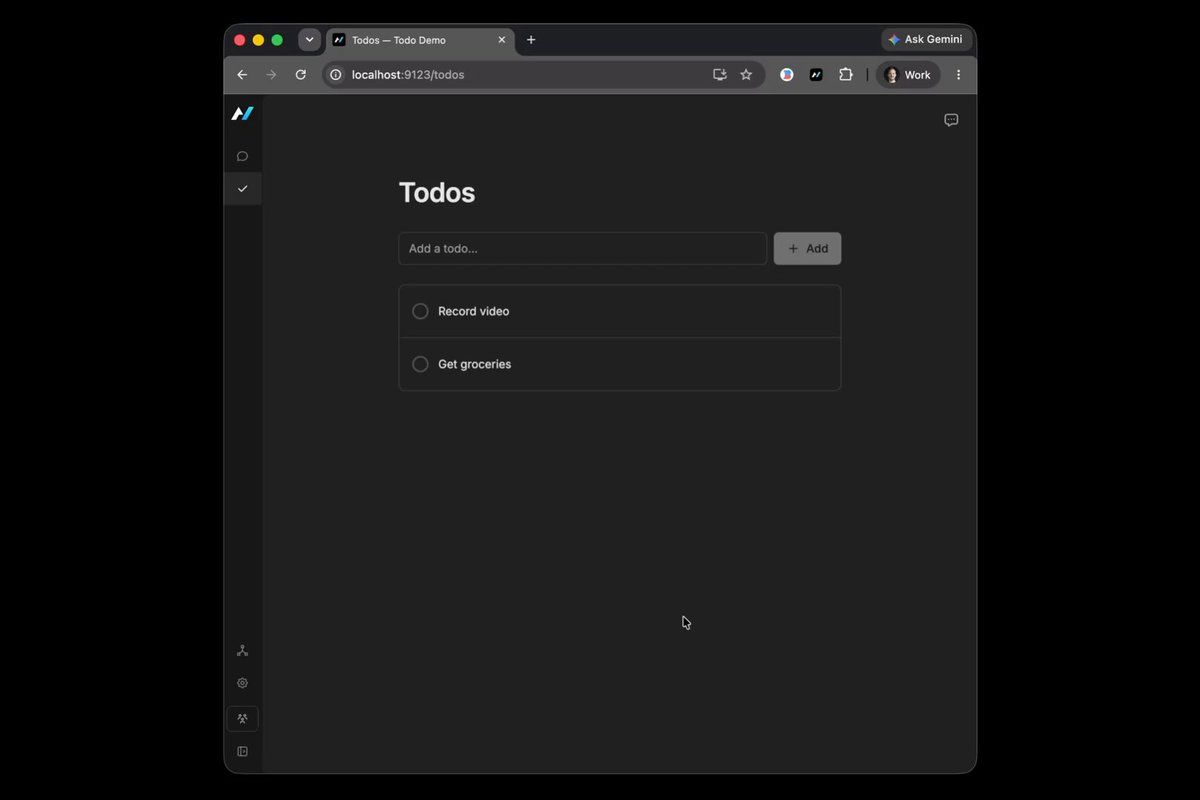 Looks like a to-do app, works like a to-do app. It seems basic on the surface, but here's the important part: by default in this application, anything the UI can do, an agent can do. So for instance, I can say "add a to-do to make my demo." Plug in any model that you want, any keys that you want, and ask anything of the app you want. If I update the UI, the agents are aware. And when I send commands to the agent, the changes reflect instantly in the UI. The agent and the UI are always in sync. 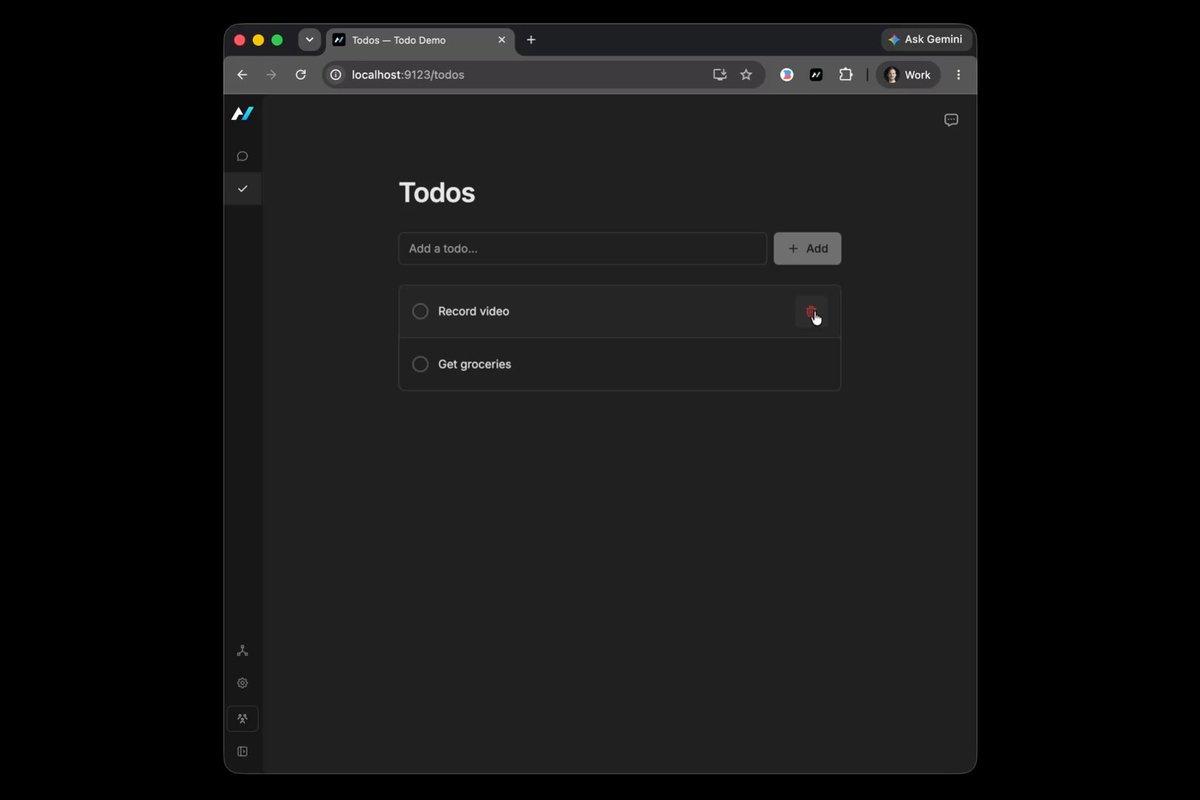 Anything the UI can do, the agent can do, no matter what. And so that means if you want a completely agent-first experience, you can just use the chat. From the chat, you can have it bring UI to you. For instance, if I say "show me my to-dos", it'll bring the full to-do UI right to me -inline in the chat, fully interactive. 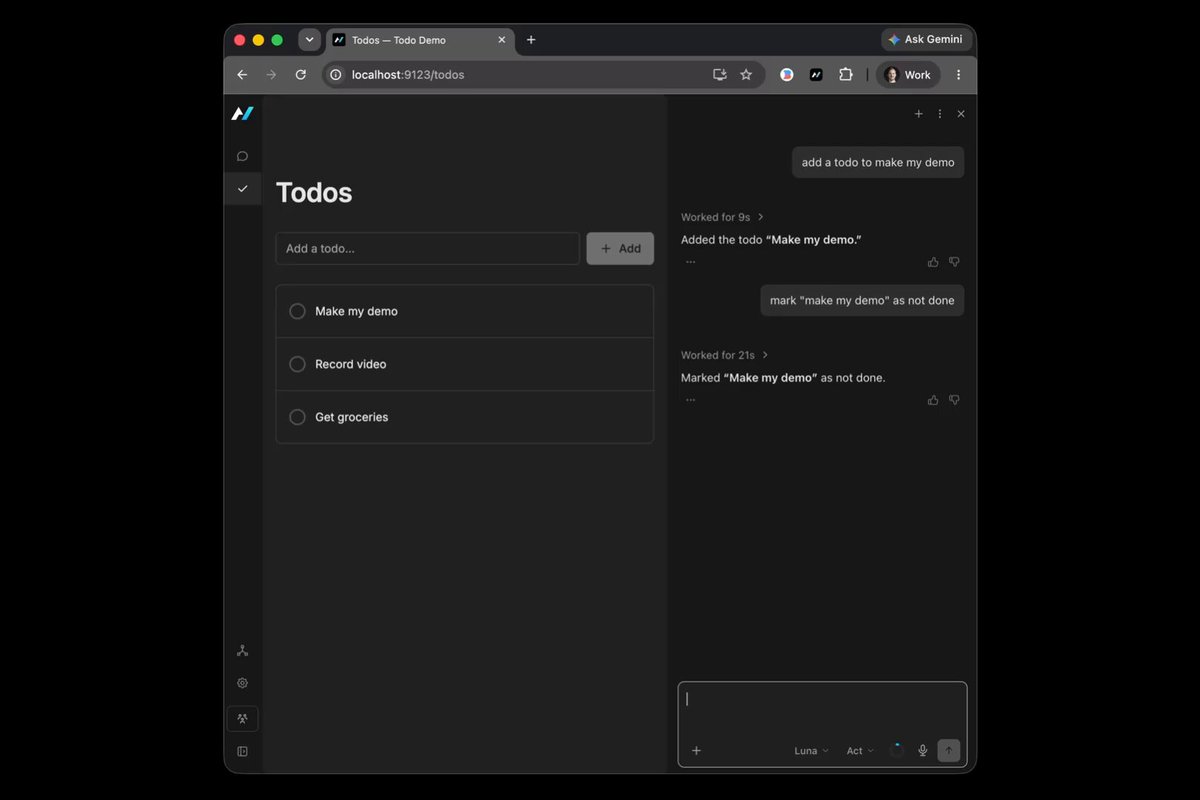 The agent can operate anything. I can ask it to take me to the todos page, and the app can move from chat on the side to chat as the focus. ## You don't have to use the built-in chat at all You can put /mcp at the end of any Agent-Native app URL and connect it to any agent. Now I can manage my tasks from Claude or ChatGPT, and say things like "mark my demo to-do as done." 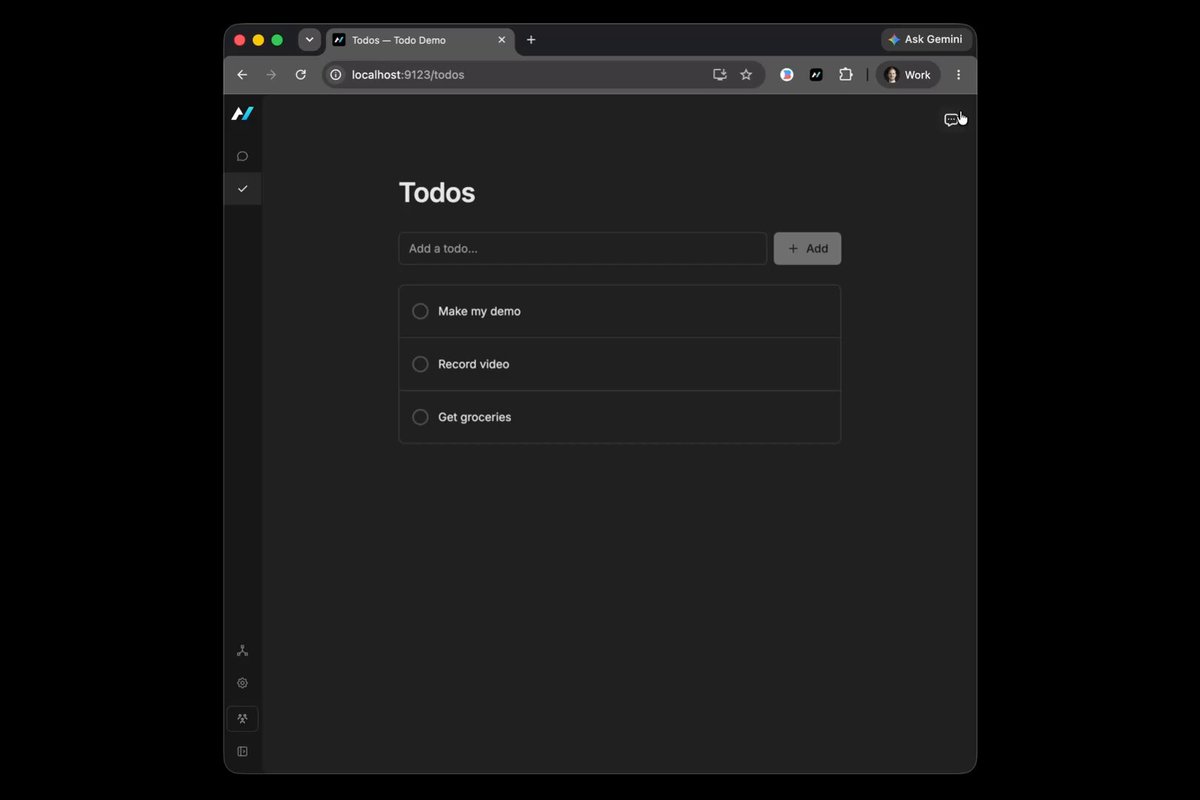 I can also talk to my agent using GPT Realtime voice. > How can I help you? > Please delete my "make my demo" to-do. > All set. I deleted "make my demo" from your to-do list. Just have a conversation with your app. 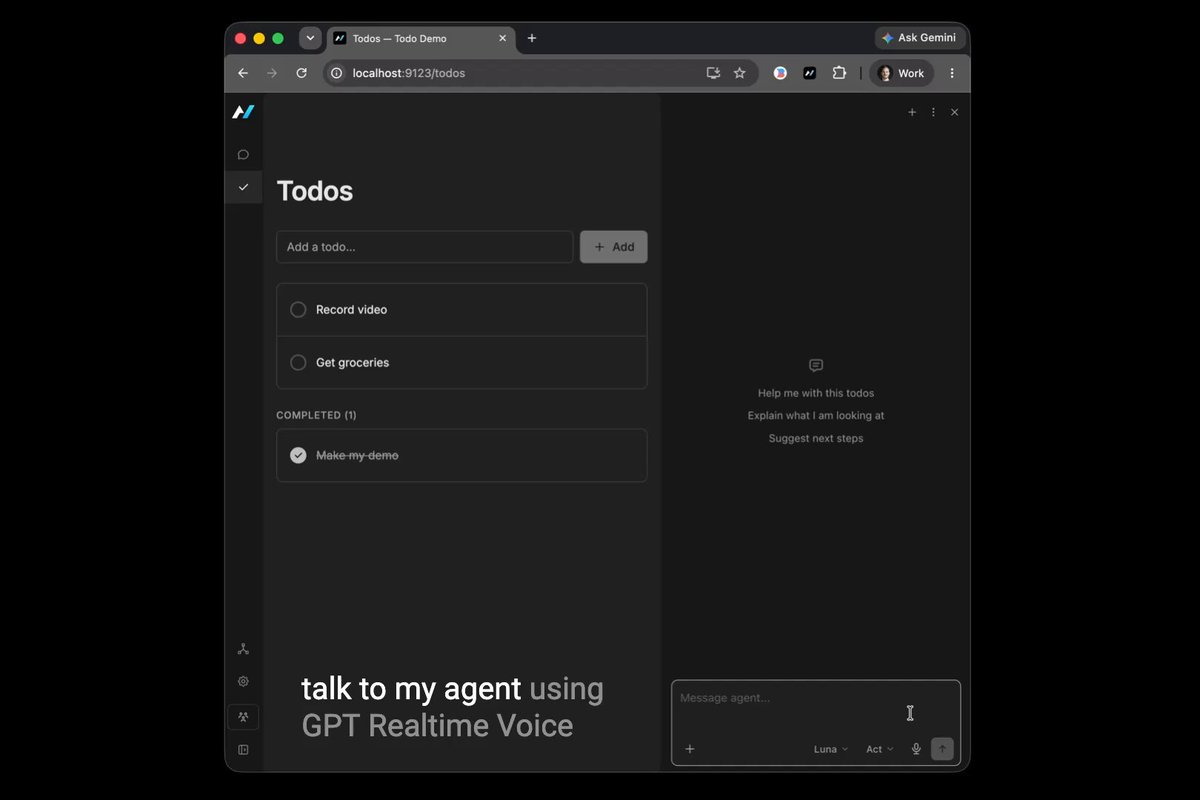 ## The toolkit In the case of using the Agent-Native framework, I got all these pieces for free. Claude didn't write all this from scratch. It assembled pieces from a toolkit. A toolkit is a bunch of these robust pieces like the chat UX, integrations, agent management, et cetera, and you build your app on top of that and integrate those pieces however you want. For instance, if I now tell Claude, "Let me edit each to-do in a Notion-style editor," what it'll do is borrow pieces from the toolkit. The toolkit has things like a very rich Notion-style editor that you can import or eject and customize. 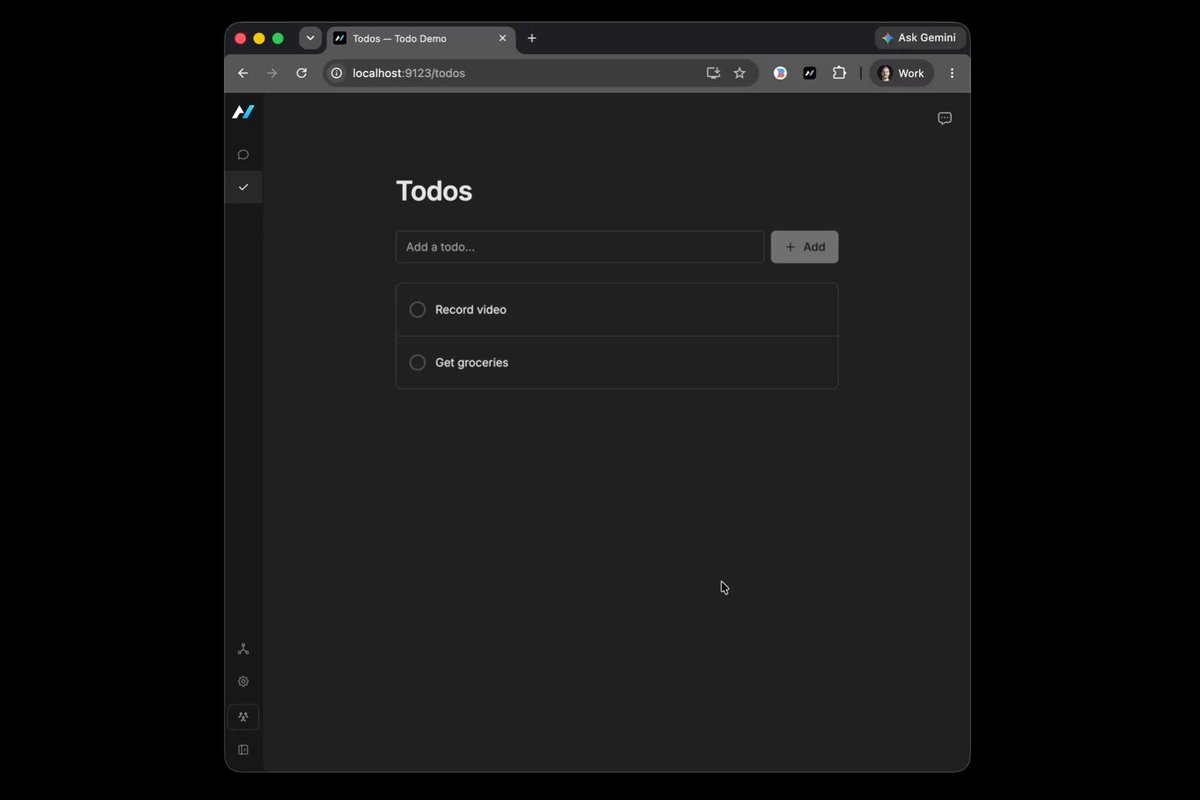 Ejection is a lot like how shadcn components work, where it copies the components to your code and you can edit any part. Now back in the app, I get buttons to open up a Notion-style editor. I can add sub items now - e.g. for apples, oranges, bread. I can add code snippets if I want, whatever you'd do in Notion you can now do here. It's effectively Notion's editor copy-pasted in here. ## Everything is built in terms of actions Under the hood, the framework builds everything in terms of actions. Actions are composable pieces that power your UI and the agent. It is why, if I say something like "add eggs to my get groceries detail list," the agent automatically can update anything. 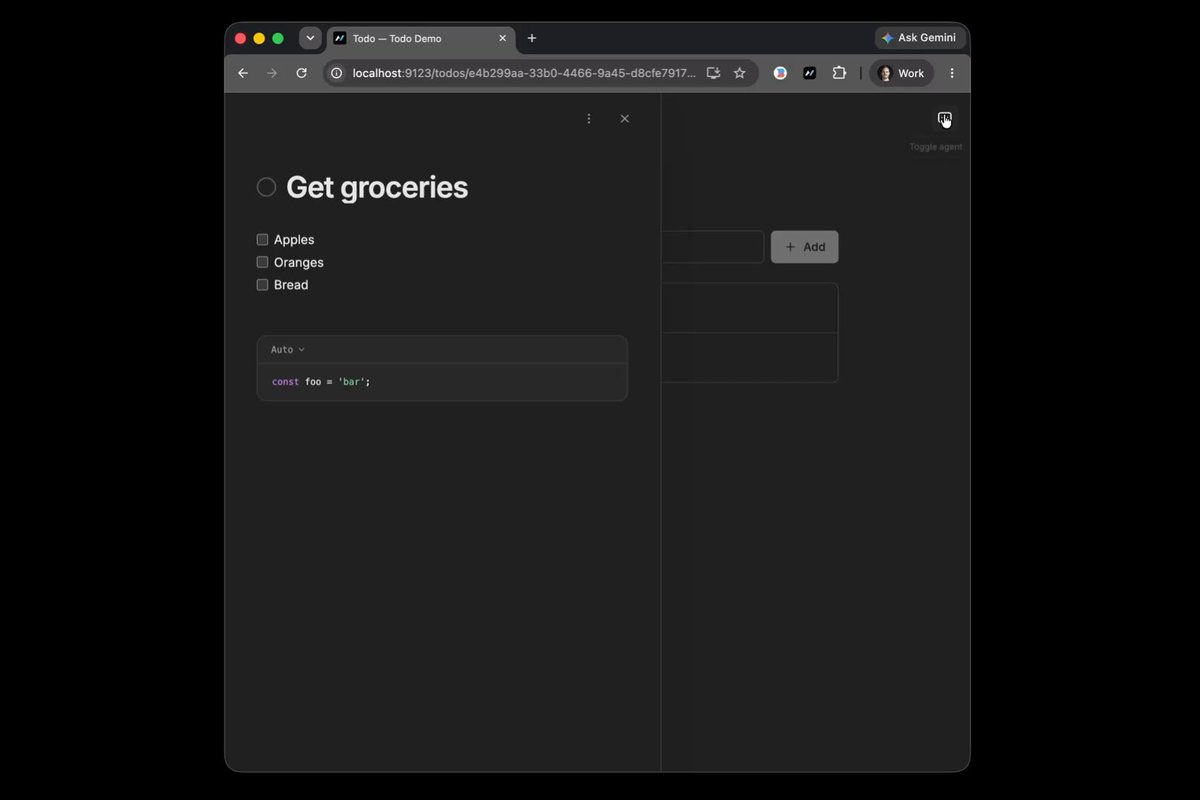 It is a unified system for agent tools and front-end actions, so you only have to worry about one or the other. If I build the front end and it has features, the agent can use every feature automatically. ``` // One action powers the agent, UI, HTTP, MCP, A2A, and CLI. export default defineAction({ description: "Say hello from the local app-agent loop.", schema: z.object({ name: z.string().default("world"), }), run: async ({ name }) => ({ message: `Hello, ${name}!` }), }); ``` That's what we mean by agent first. The unified abstraction makes things easy to build and debug with consistent behavior across the UIs and agents. And then when you only want to talk to it over agents or Telegram or Slack or Claude, that all just works out of the box. ## Agents can also talk to other agents Another use case I get for free is A2A (agents talking to other agents). I can say "Hey, ask our analytics agent for some data" and use that to create the to-do, like boosting our signups by 10% and what that number is. 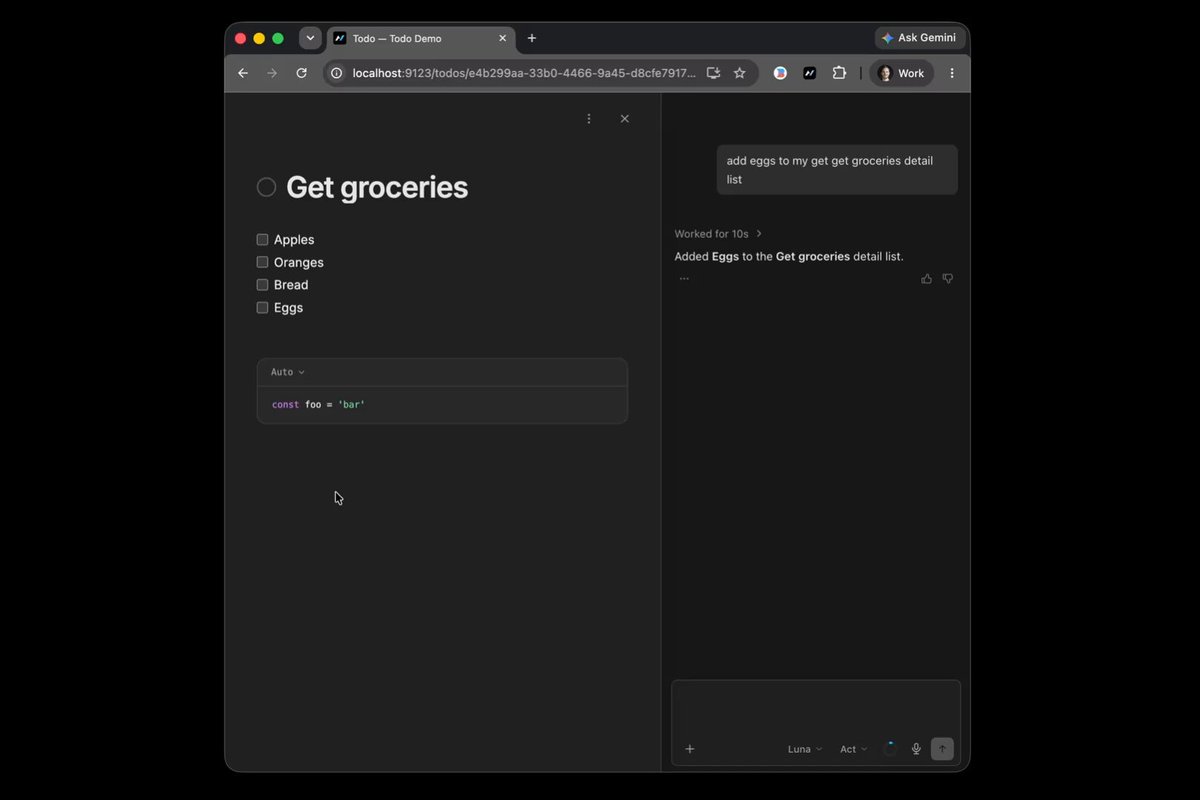 I generated this app inside a workspace. It's like a monorepo of multiple agents, or multiple agentic apps. By default, they discover each other and can talk to each other. So if I want to grab data and generate a slide deck off of it, I can. If I want to make a piece of content that references my to-do list, I can. You can make factories of knowledge work agents all within one monorepo, sharing code and skills and anything else, and each agent can have its own purpose-built UI too (like a google slides UI for slide viewing and editing, the Notion-style UI for content previewing and editing, etc) ## A full-featured agent out of the box The agent that comes out of the box here is also a full-featured agent, just like you'd use in Claude or Codex. So we can add automations, integrations, create skills, add scheduled tasks. For example, I can say, "Check my Granola once an hour for follow-up items and add them as tasks." It'll prompt me with a button to connect Granola, and then, when done with that, submit my prompt. After a few seconds, my hourly job was created for me. 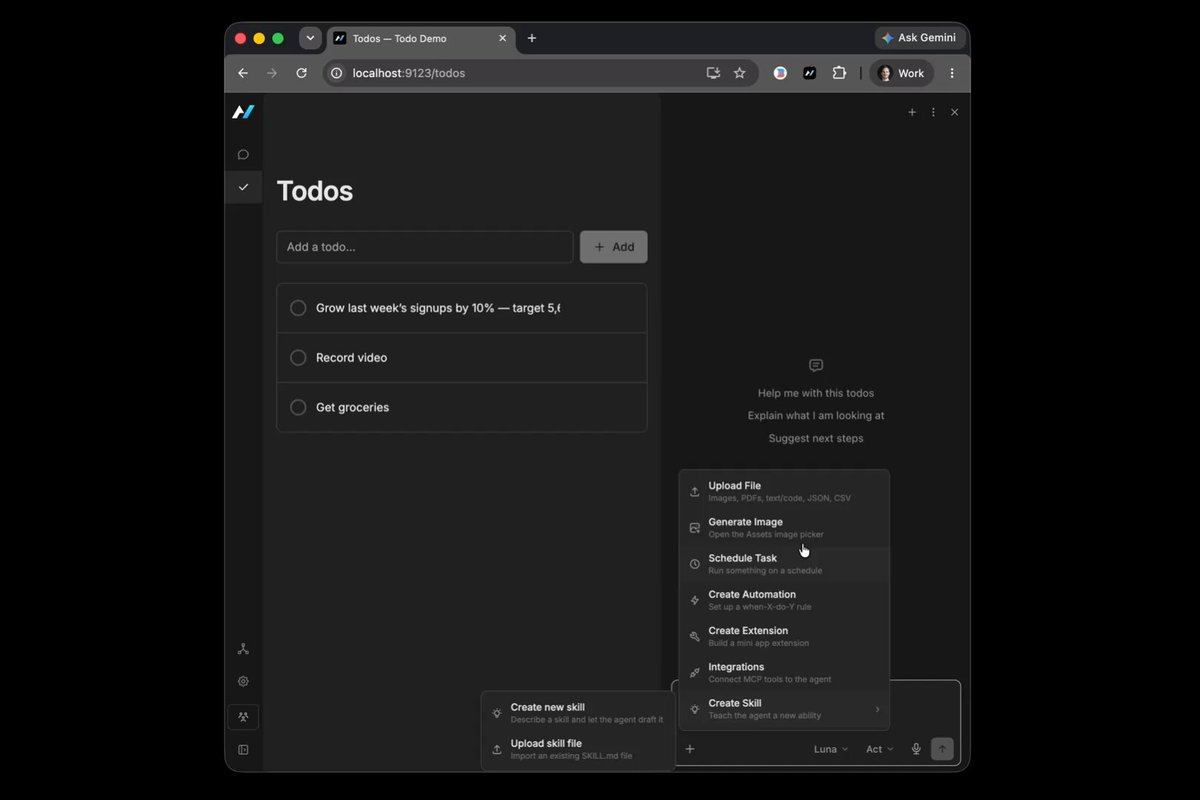 This runs in the cloud, so you can deploy it anywhere. For example, I'm using Netlify here. You don't need any special agent servers or anything like that. Wherever you deploy any app, you can deploy one of these. ## It's all open source And of course, the best part is this is all open source. It's MIT licensed. It's a foundation to build upon. So if you've ever wanted your own version of Claude, Codex, whatever, but something you can build applications on top of to add value around and inside the agent - agentic apps are the future, in my opinion. I like to call them agents with faces. You give up nothing from an agent, and you get everything from an app. And every moment, you can choose which you prefer, and interact with the agent from anywhere, from any agent, and to any agent. ## Under the hood Under the hood, these agentic apps are easy to build and maintain. Add as many apps as you want, or call them agents. I actually use those terms interchangeably now in this context. It could be a purely headless agent, something that looks just like an app and you only use remotely over MCP, or any combo in between like I showed you. 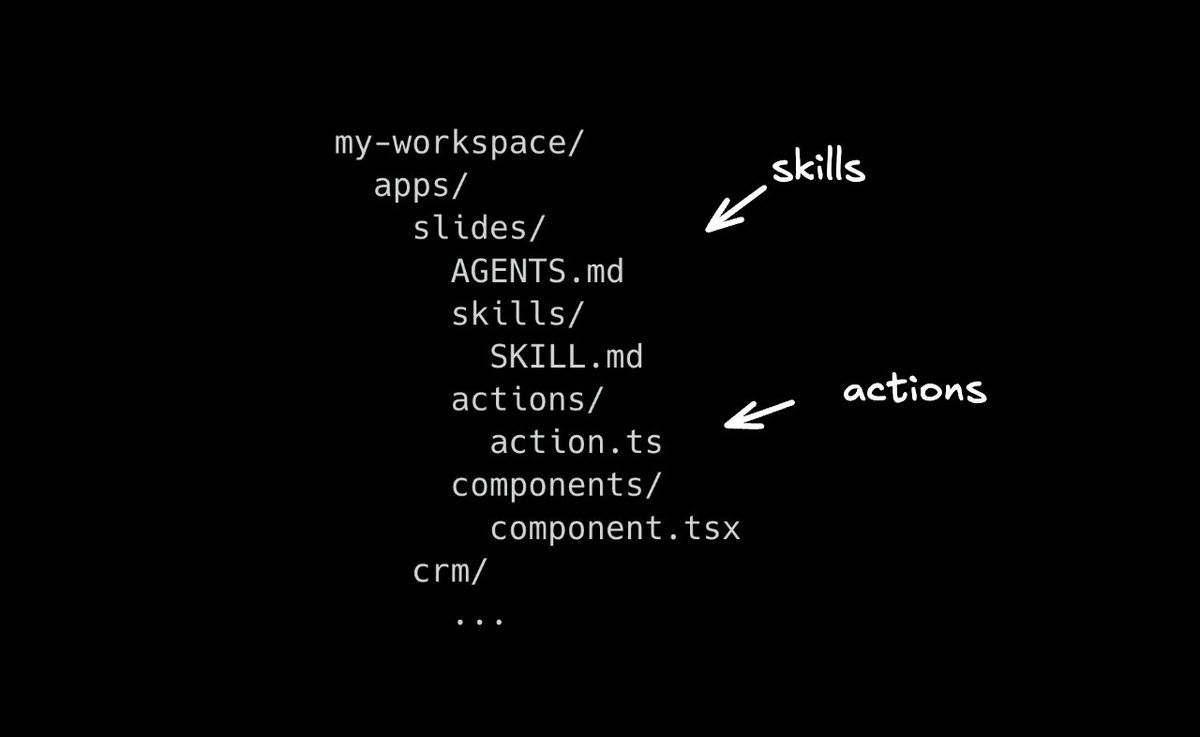 Add as many as you want in one monorepo. Add skills, instructions, components, and actions. Actions is one of the most core abstractions here. All business logic is built in actions, and that's how we guarantee by default that everything the UI can do, the agent can do, and vice versa. There's a core framework that keeps everything in sync and provides the foundation for it all. There's also a toolkit of parts and pieces like the chat interface, agent management, real-time editing, settings and configuration, multi-tenancy and organization management, and tons of other pieces you might need, but built in a robust enterprise-grade way that powers a bunch of applications already online today that you can use. 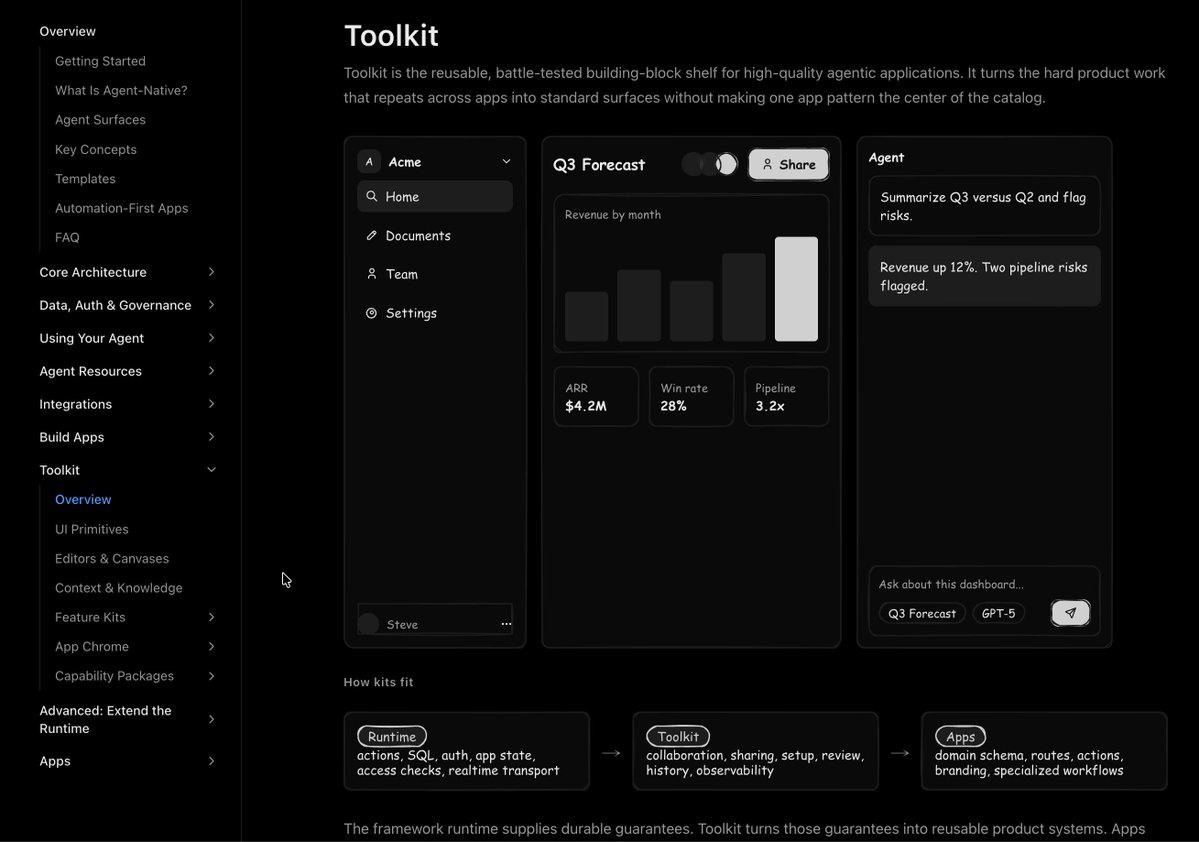 So rather than having your coding agent reinvent the wheel each time, you can use the Agent-Native framework, install or eject the pieces you want, plug in any SQL database, use your own keys, and host it anywhere, because you own the whole software. ## Clonable SaaS This is, in my opinion, the future of software. I like to call it clonable SaaS. Applications you can clone and customize, either from a full-feature template, and in building those, we create more pieces that you can use in your apps, or building apps from scratch. But in the future, in my opinion, Salesforce will be a UI you can clone and customize and work with as an agent, or via an interface, or via another agent talking to other agents, or any way you want. 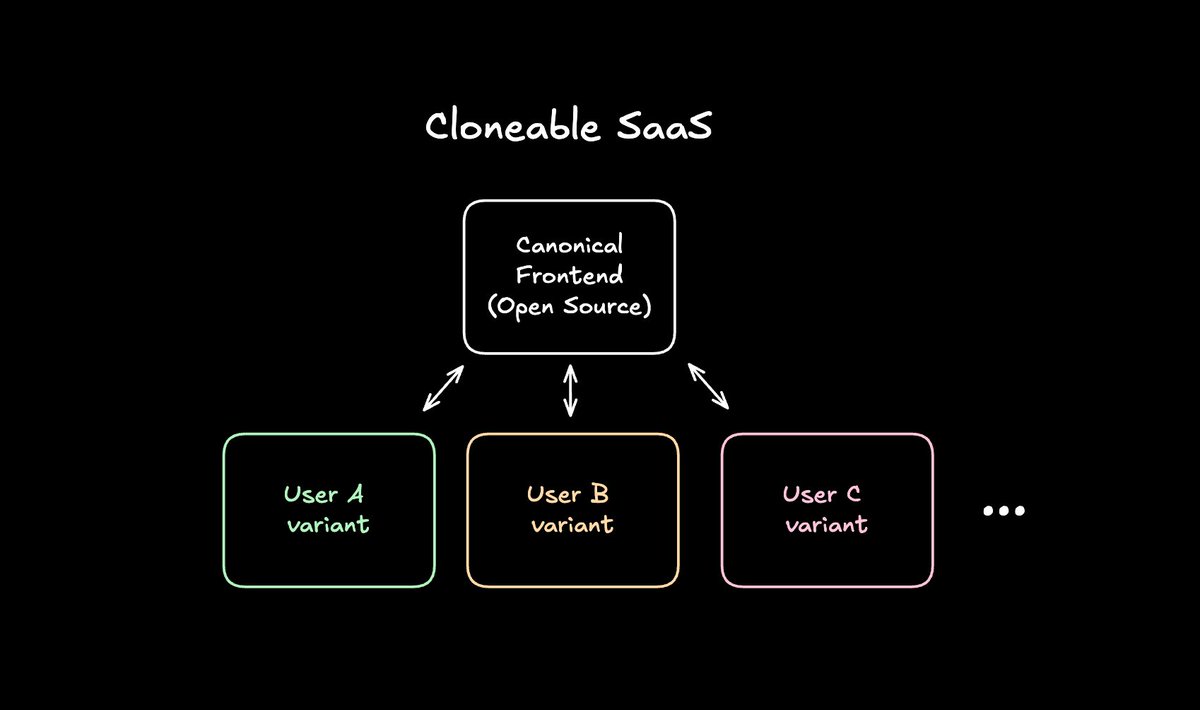 In the future, every application will talk to any other application, and in my opinion, we won't have a boundary or a difference between what is an app and what is an agent. Everything is both. And if you use frameworks and abstractions like this, you get all that stuff for free. So I can own my own software, I can own my own agents, I own my own IP, my own data. I'm in full control of the whole system, and humans and agents can edit any part anytime. The new abstraction, in my opinion, is a network of agents, call it an agent factory, but each agent has a UI. The UI is critical for visualizing and customizing what the agent has done, as well as all those moments where its just easier to drag the text position of a slide, type the correction to a sentence, etc rather than waste time and tokens on an agent making precision edits. ## Every team owns their agent The way we make our analytics agent so good is that our analytics team owns it. They create the dashboards and the data dictionary and use those for their own data work, so when someone else in the org needs data, to make a slide deck or a blog post or whatever else, their app or agent just talks to the analytics agent and gets it. The data's always high quality because it's the same corpus the data team uses every day, and the agent references the dashboards and examples they've already made. Our design team uses a design app. We have an image generation agent, so the team that makes image generation work great has an interface to upload images, create libraries, test out different generations, make sure they're on brand, see what others are doing, and tweak the instructions and the references. And it's all backed by code, so our engineers can customize every layer. 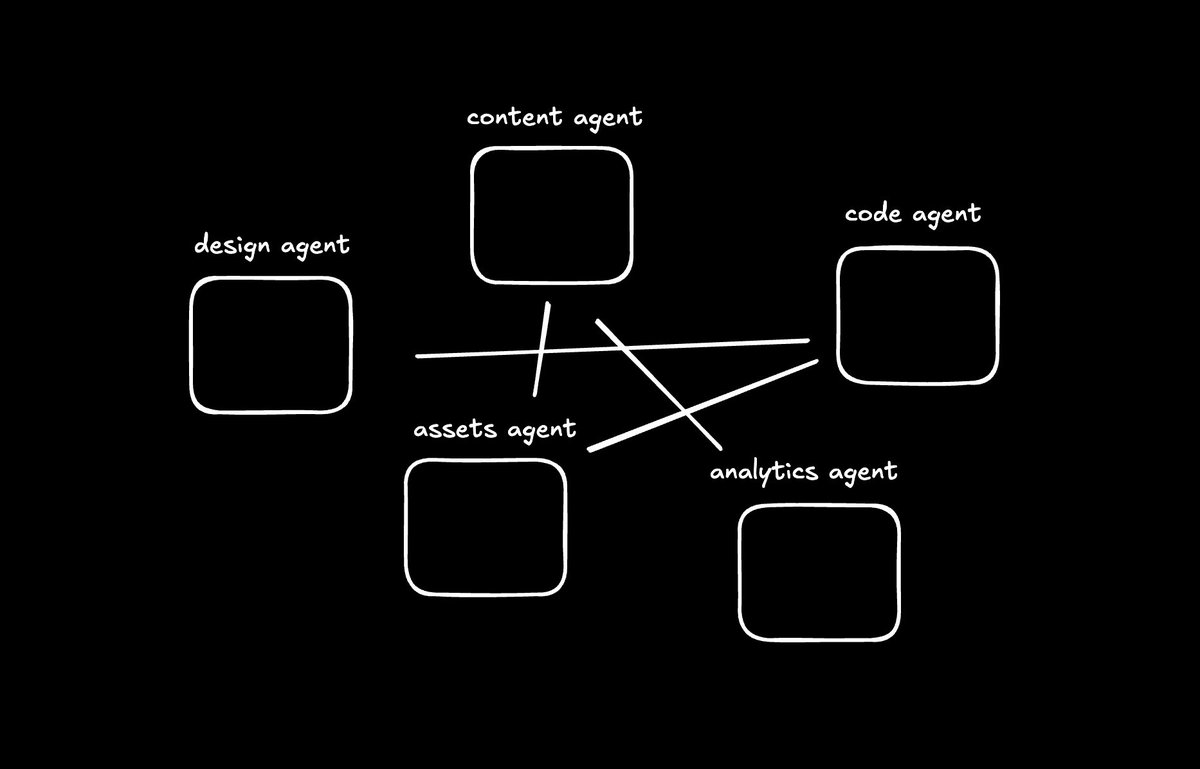 This is also why the agent abstraction works so well: you don't want one agent with every possible skill. You will bloat the context window. Too many tools, too many skills. Instead you make specialized agents. The analytics agent has all the skills, tools, and data sources to be fantastic at analytics, so we know every time we ask it an analytics question, it does a great job. When my blog post needs analytics, I don't reach for one super agent. I have the one that's great at writing content talk to the one that's great at working with data, get an answer just like a human talks to another human, and then give me my draft. ## Try it out If you want to try out the Agent-Native framework, the source is here. Or, if you want to try using an Agent-Native app for yourself, try out one here, and even fork and customize them too. ## 相关链接 - [Steve (Builder.io)](https://x.com/Steve8708) - [@Steve8708](https://x.com/Steve8708) - [27K](https://x.com/Steve8708/status/2082118879002980730/analytics) - [Agent-Native](http://github.com/builderio/agent-native) - [homepage](https://www.agent-native.com/) - [Agent-Native framework](http://github.com/builderio/agent-native) - [here](http://github.com/builderio/agent-native) - [Agent-Native app](https://www.agent-native.com/apps) - [here](https://www.agent-native.com/apps) - [Upgrade to Premium](https://x.com/i/premium_sign_up) - [10:59 PM · Jul 28, 2026](https://x.com/Steve8708/status/2082118879002980730) - [27.6K Views](https://x.com/Steve8708/status/2082118879002980730/analytics) - [View quotes](https://x.com/Steve8708/status/2082118879002980730/quotes) --- *导出时间: 2026/7/29 08:59:15* --- ## 中文翻译 # 如何(以及为何)构建以代理优先的应用 **作者**: Steve (Builder.io) **日期**: 2026-07-28T14:59:59.000Z **来源**: [https://x.com/Steve8708/status/2082118879002980730](https://x.com/Steve8708/status/2082118879002980730) ---  在 2026 年,你不应该构建任何一个不是“代理优先” 的单一应用程序。但这意味着什么,又该如何做到呢?让我向你展示。 为了方便起见,我将使用 Agent-Native 框架作为起点,从主页复制 `create` 命令并在我的终端中运行它。 ``` npx @agent-native/core@latest create todo-app --template chat ``` 一旦创建好起点,我们将进入 (`cd`) 我们的应用目录,并使用 Claude 或任何你喜欢的工具来添加我们的第一个提示词。 为了把它变成一个待办事项应用,我只需要说:“把这个做成一个待办事项应用。”  这个框架内置了一系列技能和指令,所以只需让任何代理做你想做的事或创建你想要的东西,就能为你提供一个很好的起点。 ## UI 能做的任何事,代理都能做 现在 Claude 完成了,我们有了这个成果。  看起来像待办事项应用,用起来也像待办事项应用。 表面上看起来很简单,但重要的一点是:在这个应用中,默认情况下,UI 能做的任何事,代理都能做。 因此,举个例子,我可以说“添加一个待办事项来制作我的演示”。你可以插入任何你想要的模型,任何你想要的密钥,并向应用询问任何你想问的内容。 如果我更新了 UI,代理会感知到。当我向代理发送命令时,更改会立即反映在 UI 中。代理和 UI 始终保持同步。  无论何种情况,UI 能做的任何事,代理都能做。 因此,如果你想要一个完全以代理优先的体验,你可以只使用聊天。在聊天中,你可以让它为你呈现 UI。 例如,如果我说“向我展示我的待办事项”,它就会将完整的待办事项 UI 直接带到我面前——内嵌在聊天中,并且是完全可交互的。  代理可以操作任何东西。我可以要求它带我去待办事项页面,应用可以从侧边栏聊天模式切换到以聊天为焦点的模式。 ## 你完全不必使用内置的聊天功能 你可以在任何 Agent-Native 应用 URL 的末尾加上 `/mcp`,并将其连接到任何代理。 现在我可以从 Claude 或 ChatGPT 管理我的任务,并说诸如“将我的演示待办事项标记为完成”之类的话。  我也可以使用 GPT 实时语音与我的代理交谈。 > 有什么我可以帮你的吗? > 请删除我的“制作我的演示”待办事项。 > 搞定了。我已经从你的待办事项列表中删除了“制作我的演示”。 只需与应用进行对话即可。  ## 工具包 在使用 Agent-Native 框架的情况下,我免费获得了所有这些组件。 Claude 并不是从头开始编写所有这些代码的。它是从工具包中组装组件。 工具包是大量健壮组件的集合,例如聊天 UX、集成、代理管理等,你在此基础上构建你的应用,并按你的意愿集成这些组件。 例如,如果我现在告诉 Claude,“让我在 Notion 风格的编辑器中编辑每个待办事项”,它就会从工具包中借用组件。 工具包包含诸如非常丰富的 Notion 风格编辑器之类的东西,你可以导入或弹出 并进行自定义。  弹出很像 shadcn 组件的工作方式,它将组件复制到你的代码中,你可以编辑任何部分。 现在回到应用中,我得到了打开 Notion 风格编辑器的按钮。我现在可以添加子项目了——例如苹果、橙子、面包。 如果我想,我还可以添加代码片段,凡是在 Notion 中能做的,你现在在这里也能做。这实际上就是把 Notion 的编辑器复制粘贴到了这里。 ## 一切都基于动作 构建 在底层,框架基于动作 构建一切。动作是驱动你的 UI 和代理的可组合组件。 这就是为什么,如果我说诸如“把鸡蛋加到我的杂货采购详细清单中”之类的话,代理可以自动更新任何内容。  这是代理工具和前端动作的统一系统,所以你只需要担心其中一个即可。 如果我构建了前端并且它具有功能,代理可以自动使用每一个功能。 ``` // 一个动作驱动代理、UI、HTTP、MCP、A2A 和 CLI。 export default defineAction({ description: "从本地应用代理循环中问好。", schema: z.object({ name: z.string().default("world"), }), run: async ({ name }) => ({ message: `Hello, ${name}!` }), }); ``` 这就是我们所说的代理优先。这种统一的抽象使得构建和调试变得容易,并且在 UI 和代理之间具有一致的行为。 然后,当你只想通过代理或 Telegram、Slack、Claude 与它交谈时,所有这些都是开箱即用的。 ## 代理也可以与其他代理对话 我免费获得的另一个用例是 A2A(代理与其他代理对话)。 我可以说“嘿,问问我们的分析代理要一些数据”,并用它来创建待办事项,例如将我们的注册量提高 10% 以及那个数字是多少。  我在一个工作区中生成了这个应用。它就像多个代理或多个代理应用 的 monorepo。 默认情况下,它们会互相发现并可以互相交谈。所以如果我想获取数据并基于此生成幻灯片,我可以。 如果我想创建一段引用我的待办事项列表的内容,我可以。你可以在一个 monorepo 中创建知识工作代理工厂,它们共享代码和技能以及任何其他东西,每个代理也可以有自己的专用 UI(例如用于幻灯片查看和编辑的 Google 幻灯片 UI,用于内容预览和编辑的 Notion 风格 UI 等) ## 开箱即用的全功能代理 这里开箱即用的代理也是一个全功能代理,就像你在 Claude 或 Codex 中使用的那样。 所以我们可以添加自动化、集成、创建技能、添加计划任务。 例如,我可以说,“每小时检查一次我的 Granola 里的后续项目并将它们作为任务添加。”它会提示我点击一个按钮来连接 Granola,然后,完成后,提交我的提示词。 几秒钟后,我的每小时任务就为我创建好了。  这在云端运行,所以你可以将其部署到任何地方。例如,我在这里使用的是 Netlify。 你不需要任何特殊的代理服务器或类似的东西。无论你部署任何应用的地方,你都可以部署其中之一。 ## 它完全开源 当然,最好的部分是这一切都是开源的。它是 MIT 许可的。它是构建的基础。 所以,如果你曾经想要你自己的 Claude、Codex 或任何东西,但是某种你可以构建应用程序以在代理周围和内部增加价值的东西——在我看来,代理应用 就是未来。 我喜欢称它们为有面孔的代理。 你不会放弃代理的任何功能,并且你获得了应用程序的所有功能。在每一刻,你都可以选择你更喜欢的方式,并从任何地方、任何代理向任何代理与代理交互。 ## 底层原理 在底层,这些代理应用易于构建和维护。根据需要添加任意数量的应用,或者称它们为代理。 实际上,在这个上下文中,我现在可以互换地使用这些术语。它可能是一个纯粹的无头代理,一个看起来就像一个应用并且你只能通过 MCP 远程使用的东西,或者像我向你展示的介于两者之间的任何组合。  在一个 monorepo 中添加任意数量的应用。添加技能、指令、组件和动作。 动作是这里最核心的抽象之一。所有业务逻辑都构建在动作中,这就是我们如何保证默认情况下 UI 能做的任何事,代理都能做,反之亦然。 有一个核心框架保持一切同步并提供一切的基础。 还有一个部件和组件工具包,例如聊天界面、代理管理、实时编辑、设置和配置、多租户和组织管理,以及你可能需要的大量其他组件,但是以一种健壮的企业级方式构建的,为当今在线的大量应用程序提供动力,你可以使用这些组件。  因此,与其让你的编码代理每次都重新发明轮子,你可以使用 Agent-Native 框架,安装或弹出你想要的组件,插入任何 SQL 数据库,使用你自己的密钥,并将其托管在任何地方,因为你拥有整个软件。 ## 可克隆的 SaaS 在我看来,这就是软件的未来。 我喜欢称之为可克隆的 SaaS。你可以克隆和自定义的应用程序,无论是从全功能模板,在构建这些模板时,我们创建了更多你可以在你的应用中使用的组件,还是从头开始构建应用。 但在未来,在我看来,Salesforce 将是一个你可以克隆和自定义的 UI,你可以作为代理与之交互,或者通过界面,或者通过另一个代理与其他代理对话,或者任何你想要的方式。  在未来,每个应用程序都将能够与任何其他应用程序对话,在我看来,我们将不再有什么是应用、什么是代理的界限或区别。一切既是应用也是代理。 如果你使用这样的框架和抽象,你可以免费获得所有这些东西。所以我可以拥有我自己的软件,我可以拥有我自己的代理,我拥有我自己的 IP,我自己的数据。 我完全控制整个系统,人类和代理可以随时编辑任何部分。在我看来,新的抽象是一个代理网络,称之为代理工厂,但每个代理都有一个 UI。 UI 对于可视化和自定义代理所做的事情至关重要,以及对于那些只是拖动幻灯片的文本位置、输入句子的更正等比浪费时间和让代理进行精确编辑更简单的时刻,也是如此。 ## 每个团队都拥有他们的代理 我们要让我们的分析代理如此出色的原因是我们的分析团队拥有它。 他们创建仪表板和数据字典并将其用于他们自己的数据工作,所以当组织中的其他人需要数据来制作幻灯片或博客文章或其他任何东西时,他们的应用或代理只需与分析代理交谈并获取数据。 数据总是高质量的,因为它是数据团队每天使用的相同语料库,并且代理引用他们已经制作的仪表板和示例。 我们的设计团队使用设计应用。我们有一个图像生成代理,所以使图像生成工作出色的团队有一个界面来上传图像、创建库、测试不同的生成、确保它们符合品牌、看看其他人在做什么,以及调整指令和参考。 而且这一切都由代码支持,所以我们的工程师可以定制每一层。  这也是为什么代理抽象效果如此之好的原因:你不希望拥有一个具有所有可能技能的代理。你会膨胀上下文窗口。太多的工具,太多的技能。 相反,你创建专门的代理。分析代理拥有所有出色的分析所需的技能、工具和数据源,所以我们知道每次我们问它一个分析问题时,它都会做得很好。 当我的博客文章需要分析数据时,我不会寻求一个超级代理。我有擅长编写内容的那个与擅长处理数据的那个交谈,就像人类与人类交谈一样获得答案,然后给我草稿。 ## 试试看 如果你想试试 Agent-Native 框架,源代码在这里。 或者,如果你想亲自尝试使用 Agent-Native 应用,在这里试用一个,甚至 fork 并自定义它们。 ## 相关链接 - [Steve (Builder.io)](https://x.com/Steve8708) - [@Steve8708](https://x.com/Steve8708) - [27K](https://x.com/Steve8708/status/2082118879002980730/analytics) - [Agent-Native](http://github.com/builderio/agent-native) - [homepage](https://www.agent-native.com/) - [Agent-Native framework](http://github.com/builderio/agent-native) - [here](http://github.com/builderio/agent-native) - [Agent-Native app](https://www.agent-native.com/apps) - [here](https://www.agent-native.com/apps) - [Upgrade to Premium](https://x.com/i/premium_sign_up) - [10:59 PM · Jul 28, 2026](https://x.com/Steve8708/status/2082118879002980730) - [27.6K Views](https://x.com/Steve8708/status/2082118879002980730/analytics) - [View quotes](https://x.com/Steve8708/status/2082118879002980730/quotes) --- *导出时间: 2026/7/29 08:59:15*
浪 浪费20亿Token之后,我做了一个帮自己定义目标的Skill 作者分享了一个名为Leader.skill的开源工具,旨在解决Agent交互中目标定义模糊的问题。该工具基于“目标七问”方法论,将模糊需求转化为清晰的目标任务书,支持多模型组合(如Claude规划、GPT执行),显著提升长程任务的完成率与Token利用率。 技术 › Skill ✍ 数字生命卡兹克🕐 2026-07-27 AgentGoal Engineering目标定义自动化开源LLM效率工具方法论ClaudeGPT
用 用 Skills 给 AI Agent 注入设计品味 介绍了开源技能库 emilkowalski/skills,它能为 AI 编程 Agent 注入设计品味,解决 AI 生成 UI 动画和交互时缺乏质感的问题。文章详解了其核心功能、安装方法、实操流程,并对比了 Taste-Skill、Hallmark 等类似工具的差异。 技术 › 前端 ✍ sitin🕐 2026-07-15 AI设计前端Agent工具Claude CodeCursor开源交互UI
开 开源CC+Obsidian打造LLM Wiki内容创作3.0系统 文章介绍了一套基于LLM Wiki方法论的内容生产3.0系统,解决了2.0版本中知识库信息垃圾化的问题。通过“三步编译法”(浓缩、质疑、对标)将原始文档编译为持久化Wiki结构,实现知识资产的自动积累与进化,大幅降低维护成本并提升了内容创作与知识管理的效率。 技术 › LLM ✍ 饼干哥哥AGI🕐 2026-07-07 ClaudeObsidian知识管理内容创作Agent提示词自动化开源RAG方法论
1 17个Hermes Agent提示词:在你睡觉时运行的高效自动化工作流 本文介绍了如何通过17个具体的Prompt配置,将Nous Research的开源Agent框架Hermes转化为强大的“夜间劳动力”。文章强调了Hermes作为持久化、可调度Agent的核心理念,即通过后台守护进程接管重复性工作(如通知摘要、代码审查、竞品监控、Inbox分流等),从而在用户离线时自动完成任务。作者分享了实战中的具体Prompt案例及其解决的实际痛点,并提供了关于模型选择、服务器配置及持久化运行的关键建议。 技术 › Hermes ✍ Mnimiy🕐 2026-06-08 AgentHermes自动化工作流开源PromptClaudeDevOps效率工具Nox Research
构 构建每日晨间简报的 Claude 研究助手 本文介绍了一个完整的构建方案,利用 Claude Desktop、N8N、Filesystem MCP 和 Brave Search 创建一个自动化研究助手。该助手每天早晨自动读取互联网信息,过滤噪音,并将结构化的 5 分钟简报存入 Obsidian,帮助用户节省时间并获取关键信息。 技术 › Agent ✍ CyrilXBT🕐 2026-05-26 ClaudeMCPN8NObsidian自动化工作流Brave SearchAgent效率开源
正 正式开源 html-anything:让 AI Agent 输出世界级设计水准的 HTML 文章宣布正式开源 AI 工具 html-anything。该工具历时 3 天开发,包含 1.5 万行代码,旨在解决 AI Agent 输出 HTML 设计差的问题。它内置 75 套技能模板,支持 18 种主流代码 Agent CLI(如 Claude Code、Cursor 等)的自动探测与会话复用,实现零 API Key 成本。同时支持 Markdown、数据及图像等 11 种文件格式转换,并可一键发布至社交媒体或导出高 DPI 图片。 技术 › 工具与效率 ✍ Tom Huang🕐 2026-05-17 开源AI AgentHTML前端Markdown效率工具ClaudeCursor自动化设计
开 开源「洁癖.Skill」,让你的Agent越用越聪明 文章介绍了一款名为“洁癖.Skill”的开源工具,旨在解决Agent长期使用后因上下文和文档混乱导致的“越用越笨”问题。该Skill通过自动审查和迭代项目的文档、记忆及配置文件(如CLAUDE.md),确保知识库的准确性,适用于Claude Code、Codex等多个平台。作者提出“合并优于追加,删除优于保留”的原则,强调在AI协作中保持信息纯净比信息海量更重要,这能让开发者通过“存档”机制实现Agent的持续进化。 技术 › Skill ✍ 数字生命卡兹克🕐 2026-04-29 AgentClaude开源工具与效率文档管理Claude Code洁癖.Skill提示工程上下文管理自动化
开 开源 AI 营销兵器库:6 个新技能与 32K 行生产级代码 作者分享了其开源的 AI 营销技能库,新增了 6 个实战技能(长视频切片、短视频生成、站点克隆、内容评估、线索档案、字幕生成)。这些工具均为经过真实商业环境验证的生产级代码,旨在通过开源建立信任和商业漏斗,而非提供简单的 Demo。 技术 › Agent ✍ ericosiu🕐 2026-04-24 AI营销自动化开源视频处理WhisperClaudeAgent商业策略效率工具技术栈
宝 宝玉老师开源Skills设计哲学:从提示词到Agent工程 文章介绍了宝玉老师开源的17个Agent Skills项目,该项目在GitHub获得9000星。文章详细拆解了其设计的四条核心哲学:从提示词起步、功能原子化拆分、持续迭代优化以及站在Agent视角设计。通过具体案例展示了如何利用Claude和Gemini构建高效的AI写作工作流。 技术 › Skill ✍ Jason Zhu🕐 2026-03-25 AgentWorkflow开源提示词工程Claude设计模式自动化GitHub
扫 扫了1000+个仓库,测了200+个技能,终于找到这90个真正能用的AI神器! 作者经过数周实测,从1000多个GitHub仓库和200多个Claude技能中筛选出90个真正实用的AI工具。文章详细介绍了22个Claude Skills(涵盖办公、设计、开发、SEO等领域)、3个改变工作流的MCP服务器(Tavily、Context7、Task Master),以及25个核心开源Agent项目(如OpenClaw、AutoGPT、Dify)。此外还列出了40个值得关注的新鲜仓库,涉及Agent编排、基础设施、记忆系统及开发工具。 技术 › 工具与效率 ✍ 纯棉短裤🕐 2026-03-22 ClaudeAgentMCPGitHubOpenAI技能推荐开源开发工具自动化AI评测
我 我写了个 Skill,让 Agent 自动给文章配图 文章介绍了作者开发的一个 Agent Skill,用于自动分析文章内容、匹配风格并生成配图。文章详细讲解了 Agent Skills 的核心机制(渐进式加载)、配图 Skill 的五步设计思路、SKILL.md 的编写规范以及提示词模板的设计。作者通过该工具将文章配图从耗时半小时缩短至几分钟,并强调了将工作流程转化为 Skill 的重要性。 技术 › Agent ✍ 宝玉🕐 2026-01-16 AgentSkillClaude自动化AIGC提示词工具效率工作流开源教程
让 让 Claude 半夜自己干活,只有两条路 文章探讨了让 Claude 无人值守工作的两种安全路径:一是使用隔离的闲置机器给予完全权限;二是在现有机器上通过严格参数限制权限。作者通过分析两种方案的适用场景和风险控制,提出了“爆炸半径”公式,并给出了具体的实施建议和避坑指南。 技术 › Agent ✍ 老金🕐 2026-07-30 ClaudeAgent自动化安全DevOpsClaude Code无人值守权限管理