17个Hermes Agent提示词:在你睡觉时运行的高效自动化工作流 ✍ Mnimiy🕐 2026-06-08📦 19.3 KB 🟢 已读 𝕏 文章列表 本文介绍了如何通过17个具体的Prompt配置,将Nous Research的开源Agent框架Hermes转化为强大的“夜间劳动力”。文章强调了Hermes作为持久化、可调度Agent的核心理念,即通过后台守护进程接管重复性工作(如通知摘要、代码审查、竞品监控、Inbox分流等),从而在用户离线时自动完成任务。作者分享了实战中的具体Prompt案例及其解决的实际痛点,并提供了关于模型选择、服务器配置及持久化运行的关键建议。 AgentHermes自动化工作流开源PromptClaudeDevOps效率工具Nox Research # 17 prompts that make Hermes run while you sleep (copy-paste inside) **作者**: Mnimiy **日期**: 2026-06-07T19:00:57.000Z **来源**: [https://x.com/Mnilax/status/2063697740526399833](https://x.com/Mnilax/status/2063697740526399833) --- 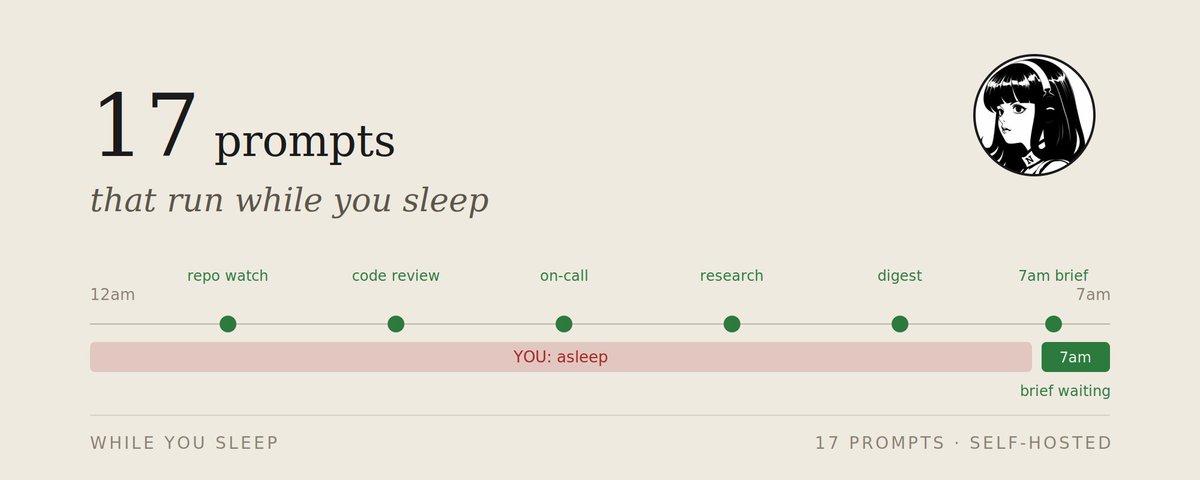 In February 2026, Nous Research released Hermes Agent: an open-source, self-hosted agent that doesn't live inside an IDE and doesn't forget when the tab closes. It runs as a daemon on your own box, keeps memory across sessions, takes scheduled jobs in plain language, and writes its own reusable skills from experience. It became one of the fastest-moving open-source agents of the year: a runaway GitHub star count and one of the most-used agents on OpenRouter. It recently went terminal-native with a new TUI. Then I ran it as my own standing infrastructure for 5 weeks, on a $5 VPS, with Claude as the model underneath. The tool is real. But a blank Hermes install does nothing on its own. It's a runtime, not a workflow. What turns it from "interesting repo i starred" into "thing that did 3 hours of my work overnight" is the prompts you give it on day one, and almost nobody shares those. So here are mine. Below: the 17 prompts and config lines i actually paste, the moments that earned the sharpest ones their place, and the 3 mistakes i made first so you can skip them. If you want to skip the explanations and just paste, the full set is at the end. # Why this matters Almost every AI tool you use is session-based. Claude Code, Cursor, the chat window: you open it, work, close it, and the context dies with the session. That's the right design for what they do, and Claude Code is still the better tool for coding inside a single project. But a whole class of work isn't session-shaped: the brief that should be ready before you wake, the build that should be watched whether you're looking or not, the inbox filling while you're heads-down. Session tools can't hold it, because they aren't running when it happens. That's the gap Hermes fills. It's persistent (memory survives the session), scheduled (it acts on a clock, not your attention), and reachable (Telegram, Discord, Slack, email, not a tab you forgot). The model thinks. Hermes keeps it pointed at your work when you're not there. 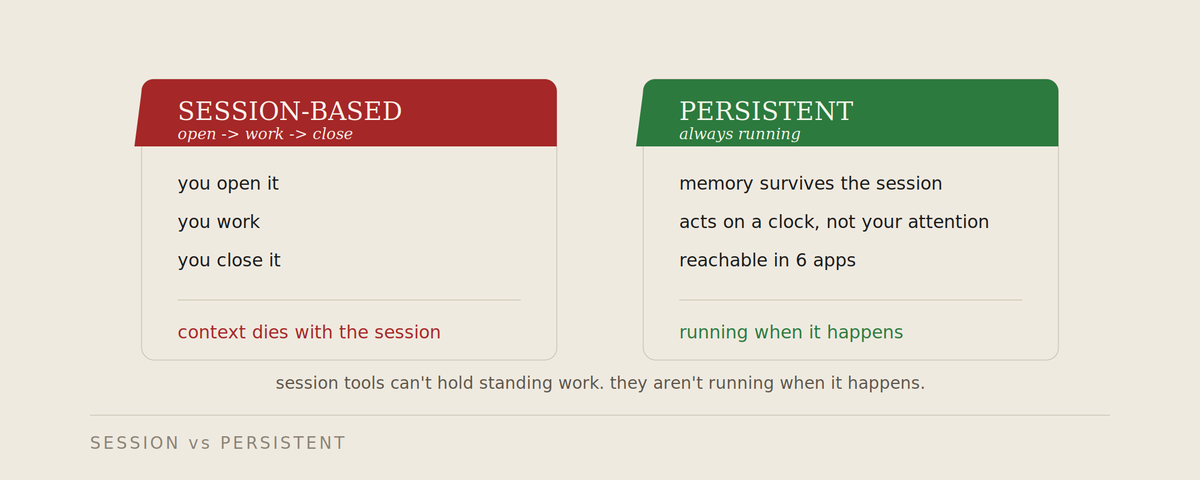 A blank install gives you all of that capability and zero of the workflow. The prompts below are the workflow. # The setup: three things before any prompt runs Before any prompt does anything, three things have to be true. Two are config commands (recipes 15 and 16 below); the third is just where you run it. Pulled up front so the rest makes sense: - A model with real context. A small local model drops tool calls mid-task on multi-step jobs. A frontier model has the headroom. Claude clears it easily. - A backend that doesn't bill you to sit idle. A serverless backend hibernates between jobs so a 24/7 agent isn't a 24/7 invoice. - A persistent home. Your laptop is not it. A $5 VPS is, because the lid closing shouldn't kill your 3am job. 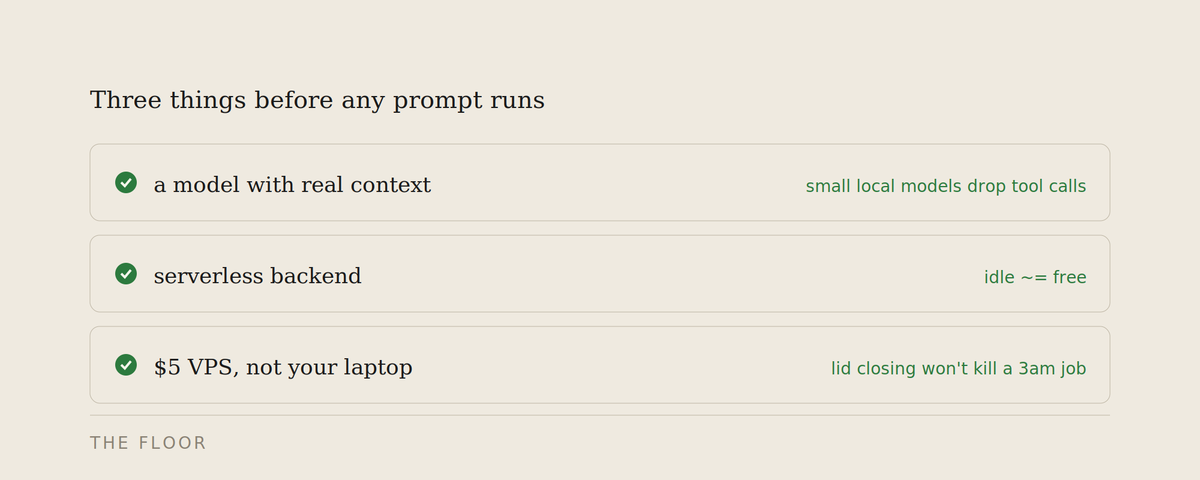 Get those three set and the 17 prompts below have something to run on. Skip them and recipe 1 dies the first night. # The 17 prompts I actually run Some of these earned their place with a specific failure. For those i'll show the moment; for the rest, just what it does and the prompt. ## 1. The 7am brief instead of a notifications pile The first job every persistent agent should own is the thing you do half-asleep before real work starts. ``` every weekday at 7am, pull my unread GitHub notifications and the open PRs across my repos, summarize what changed and what's blocking each one, then send it to me on Telegram as 3-5 bullets ``` The moment: I was spending the first 35 minutes of every morning doing this by hand across 6 repos, before a single line of real work. Five days a week, that's about 3 hours a week of triage i was doing at my most expensive time of day, on autopilot. Now it's waiting in Telegram before i sit down, and the 35 minutes is gone. ## 2. The repo watch that only speaks when it matters A monitor that pings you for everything gets muted in a day. The skill is in the silence. ``` watch [org/repo]. stay silent unless CI goes red or a new issue opens with the label "bug". when either happens, message me the failing job name or the issue body, and nothing else ``` The moment: a red CI on a Friday deploy i didn't see until Monday, three days of broken main behind a ten-minute fix. now it pings in ~90 sec and stays silent otherwise. ## 3. Inbox triage across every channel you own Hermes connects to Telegram, Discord, Slack, WhatsApp, Signal and email from one process, which means triage can finally happen in one place. ``` every hour, check my connected channels, group new messages by sender and urgency, auto-archive newsletters and notifications, and only escalate the ones that mention a deadline, a person waiting on me, or money ``` The moment: Roughly 120 messages a day across six platforms, and a client DM that sat unanswered for two days because it was buried under Discord noise. The escalation rule, deadline, a person waiting, or money, is the whole prompt. Everything else gets archived and i never see it. 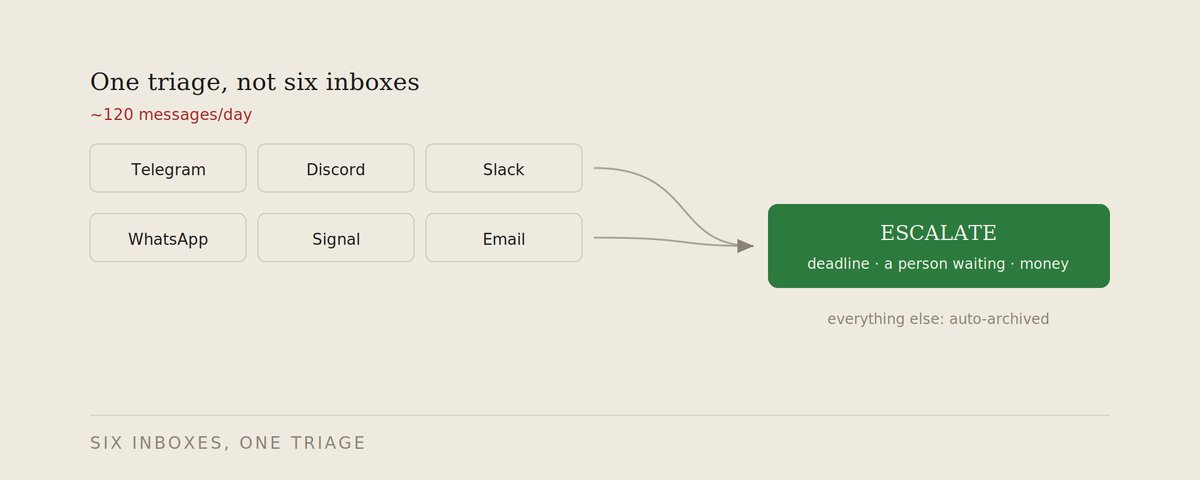 ## 4. The Friday research digest that dedupes itself ``` every Friday at 6pm, search for new releases and serious discussion in [your topic], dedupe against what you sent me last week, and deliver a 5-bullet digest with links to Telegram ``` Effect: ~2 hr of Friday feed-scrolling becomes a 5-bullet read. the dedupe clause is the trick: it remembers last week, so what lands is genuinely new. ## 5. "Make sense of this repo" in one message ``` clone [repo url], summarize the architecture in 5 bullets, find the main entrypoint and the single riskiest file, then draft a clean PR workflow for contributing to it ``` Effect: the cold-start day on an unfamiliar codebase compressed to a ~4 min map good enough to start from. not a substitute for understanding the code, a substitute for not knowing where anything is. ## 6. The long task you hand off at night ``` research [question], compare the top 3 options on price, limits, and lock-in, and send me the result when it's done tonight. don't wait on me for follow-ups, make reasonable assumptions and list them at the top ``` Effect: the "don't wait on me, make assumptions and list them" clause is what turns a 2am stall into a result waiting by morning. ## 7. Watch competitors' changelogs, not your feeds ``` every day at 9am, check the changelog and pricing pages of [product A], [product B], [product C], and only message me when something actually changed: a new feature, a price move, a deprecation. quote the exact diff ``` Effect: you hear about a competitor's move the morning it ships, not when a customer brings it up. ## 8. The nightly review of your own code ``` every night at 11pm, look at today's commits across my repos and flag anything risky: a TODO left in, a console.log shipped, a function over 80 lines, a changed path with no test. summarize as a short list i read with coffee ``` The moment: I shipped a console.log with a token in it and didn't notice for a week. The nightly pass now catches that class of thing before i'm awake, and the list is usually three lines, sometimes zero. It's the cheapest code review i run. ## 9. The stand-up it writes for you ``` every weekday at 9:55am, assemble my stand-up: what closed since yesterday, what's in progress, what's blocked, pulled from my repos and connected channels, formatted as three short bullets ``` Effect: you walk into stand-up with it already written, instead of reconstructing yesterday from memory. ## 10. A radar for your own name ``` once a day, search for new mentions of [my project or handle] across the web and the platforms i'm on, ignore the praise, and escalate bug reports, complaints, and anyone asking a question i haven't answered ``` Effect: the angry user and the quiet bug report find you, instead of you finding them three days late. ## 11. Turn a 90-minute talk into 5 bullets ``` take [video or podcast url], pull the transcript, and give me the argument in 5 bullets with timestamps for the parts worth watching in full. skip the intro and the sponsor read ``` Effect: the talk everyone's quoting, read in two minutes, with timestamps for the parts actually worth your 90. ## 12. "Explain this error and propose the fix" ``` here's a stack trace: [paste]. search my repo for the cause, explain what's actually failing in two sentences, and draft the smallest patch that fixes it without touching anything else ``` The moment: A production stack trace i'd normally lose an hour bisecting. I handed it over and got the failing line, a two-sentence cause, and a three-line patch back before i'd finished reading the trace myself. I still review the patch. I just don't hunt for the needle anymore. ## 13. Inbox-zero, but it drafts the replies ``` for routine emails (scheduling, intros, status pings), draft a reply in my voice and hold it in a queue for my one-tap approval. never send anything on your own. escalate anything that needs a real decision ``` Effect: the dozen "sounds good, Thursday works" replies are written and waiting for your yes, not your attention. Nothing leaves without your tap. ## 14. An on-call agent that diagnoses before it pages you ``` when a monitoring alert fires, don't just forward it. pull the last 50 lines of the relevant logs, check what deployed recently, and send me a one-paragraph first guess at the cause alongside the raw alert ``` Effect: the 3am page arrives with a hypothesis attached, not just a red light. A subagent with its own terminal does the log pull, so the diagnosis costs you nothing. ## 15. Point it at Claude (one line, no lock-in) ``` hermes config set model anthropic/claude-opus-4.8 ``` The moment: I started on a cheap local model to keep costs near zero. It dropped tool calls halfway through any multi-step job, because it couldn't hold the context a real workflow needs. Recipes 1 through 14 all quietly failed in ways that were hard to debug. Swapping the model to Claude in one line fixed every one of them at once, because the failures were never the prompts, they were the model underneath. You can swap back with the same command, there's no lock-in. ## 16. Serverless backend so idle costs almost nothing ``` hermes config set terminal.backend daytona ``` The moment: My first month ran on an always-on backend, and the idle compute, the 23 hours a day it sat doing nothing between jobs, quietly added up to more than the work itself cost. A serverless backend hibernates when idle and wakes on demand, which took the standing cost of a 24/7 agent down to pennies between jobs. ## 17. Turn a good run into a permanent skill ``` that worked. save it as a reusable skill called "morning-brief" so you run it the same way next time without me re-explaining the format ``` The moment: I re-explained the exact format of my morning brief four times before it occurred to me to make it permanent. Hermes writes its own SKILL.md from the run and reuses it after that, so the fifth time i just said "run the morning brief" and it knew. This is the compounding part: every prompt that works once becomes a capability you never type again. 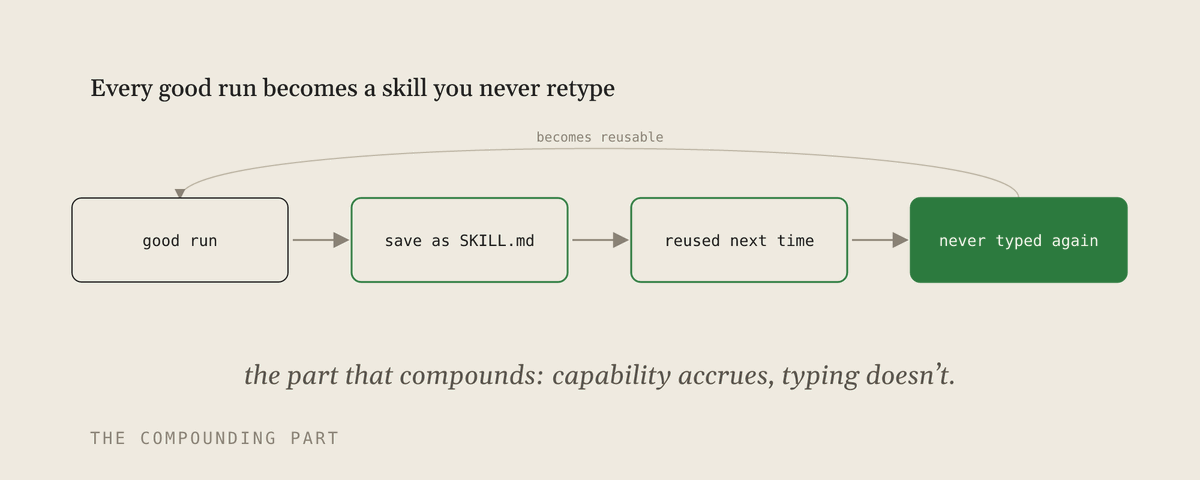 # The numbers I logged the same week of standing work twice: once done by hand the way i always had, once handed to Hermes running these prompts. Same week, same tasks. 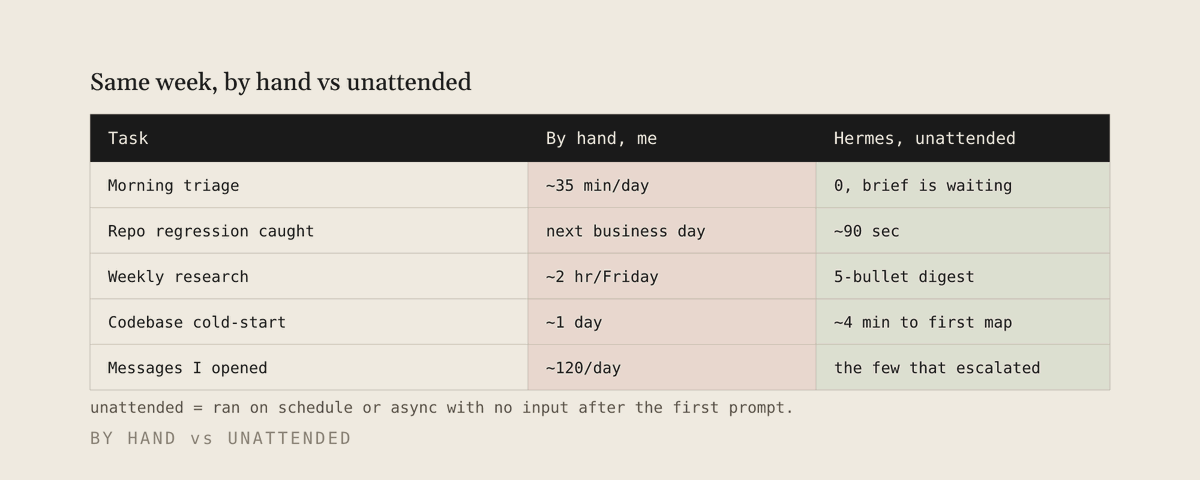 Unattended = ran on schedule or async with no input from me after the initial prompt. The headline isn't the hours saved, though there are several. It's that none of this work happened at a time i had to be awake for. The brief runs at 7 whether i'm up or not. The repo is watched on a weekend. The research lands Friday night. The scarce resource was never the time, it was my attention, and the point of a persistent agent is that the work stops competing for it. ## What didn't work The first two weeks were mostly me learning what a prompt to a standing agent has to contain that a prompt to a chat window doesn't. 1. Vague schedules. "Send me updates on my repos" produced a firehose. With no escalation rule, the agent reported everything, and a report you can't skim is a report you mute. Every scheduled prompt now carries an explicit "only tell me when X" clause. 2. No token budget on hourly jobs. A chatty hourly triage quietly spent more in a week than i'd planned for the month, because nothing capped it. Persistent plus unbounded is how you get a surprise bill. Scope the cadence to what you'll actually read, and check spend in the first week. 3. A cheap model to save money. Covered in recipe 15. Small local models drop tool calls mid-task and fail in ways that look like prompt bugs. The model is not the place to economize. ## Where this bites Three honest tradeoffs, because self-hosting an always-on agent isn't free of strings. You're the admin now. Updates, uptime, and the permission model are yours. An agent that remembers everything and acts on your machine has to be kept on a tighter leash than a chatbot that forgets when the tab closes. It runs shell commands on your behalf. Set a Docker or serverless backend with isolation before you give it real access, not after it's already touching your files. The sandbox is a day-one decision, not a later one. The hype is loud. Star counts swing wildly between blog posts and a lot of the "deployment guide" content is affiliate noise. Judge it by what it does for your week, not by the leaderboard. # The full set (copy-paste ready) Two config lines set once, then fifteen prompts pasted into the agent. That's the 17: fourteen jobs, plus the one that turns any good run into a permanent skill. ``` # config (set once) hermes config set model anthropic/claude-opus-4.8 hermes config set terminal.backend daytona ``` ``` # 1. morning brief every weekday at 7am, pull my unread GitHub notifications and open PRs, summarize what changed and what's blocking each, send to Telegram as 3-5 bullets # 2. repo watch watch [org/repo]. stay silent unless CI goes red or a new issue opens with label "bug". then message me the failing job name or the issue body, nothing else # 3. inbox triage every hour, check my connected channels, group by sender and urgency, auto-archive newsletters, only escalate ones mentioning a deadline, a person waiting on me, or money # 4. research digest every Friday at 6pm, search new releases and serious discussion in [topic], dedupe against last week, deliver a 5-bullet digest with links to Telegram # 5. repo cold-start clone [repo url], summarize the architecture in 5 bullets, find the main entrypoint and the single riskiest file, draft a clean PR workflow for contributing # 6. async research research [question], compare top 3 options on price, limits, lock-in, send the result tonight when done. don't wait on me, make reasonable assumptions and list them at the top # 7. competitor watch every day at 9am, check the changelog and pricing pages of [product A], [product B], only message me when something changed: a feature, a price move, a deprecation. quote the diff # 8. nightly code review every night at 11pm, look at today's commits and flag anything risky: a TODO left in, a console.log shipped, a function over 80 lines, a changed path with no test. short list # 9. stand-up every weekday at 9:55am, assemble my stand-up from my repos and channels: what closed, what's in progress, what's blocked, as three short bullets # 10. mention radar once a day, search for new mentions of [my project or handle] across the web and my platforms, ignore praise, escalate bug reports, complaints, and unanswered questions # 11. talk to bullets take [video or podcast url], pull the transcript, give me the argument in 5 bullets with timestamps for the parts worth watching. skip the intro and sponsor read # 12. explain this error here's a stack trace: [paste]. search my repo for the cause, explain what's failing in two sentences, draft the smallest patch that fixes it without touching anything else # 13. inbox-zero drafts for routine emails (scheduling, intros, status), draft a reply in my voice and hold it in a queue for my approval. never send on your own. escalate anything needing a real decision # 14. on-call diagnosis when a monitoring alert fires, pull the last 50 lines of the relevant logs, check what deployed recently, and send me a one-paragraph first guess at the cause with the raw alert # 17. make it permanent (after any good run) that worked. save it as a reusable skill called "[name]" so you run it the same way next time without me re-explaining ``` ## How to install One command for the runtime, then run the setup wizard: ``` curl -fsSL https://raw.githubusercontent.com/NousResearch/hermes-agent/main/scripts/install.sh | bash hermes setup ``` hermes setup walks you through connecting Telegram, Discord, Slack, WhatsApp, Signal or Email and runs it as a service. Then paste the config and prompts above. # The mental model A prompt to a chat window is a question. A prompt to a persistent agent is a job description: it needs a trigger (a schedule or an event), a body (what to do), and an escalation rule (when to bother you). Drop any of the three and the prompt either never fires, does the wrong thing, or buries you in noise. 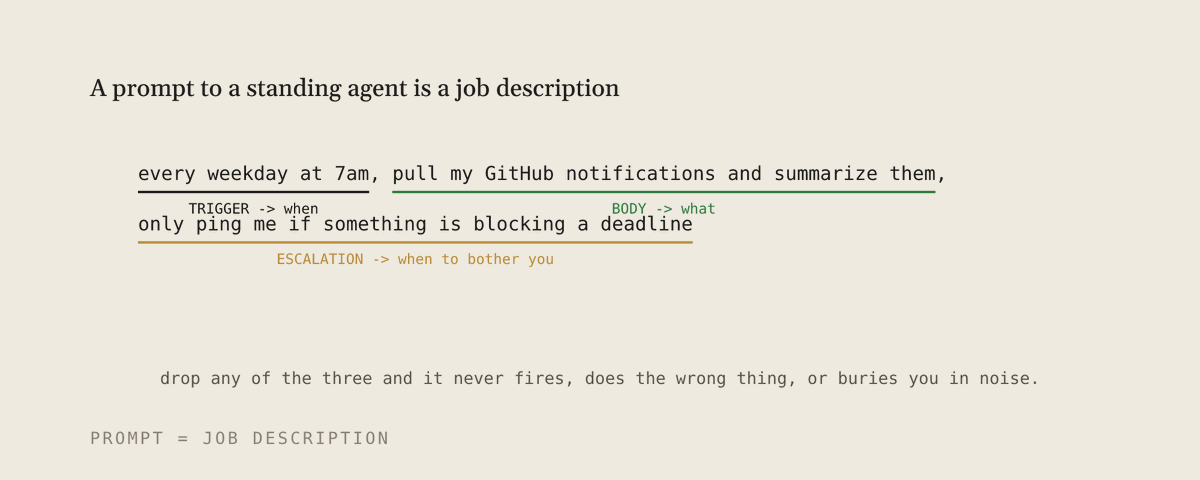 That's the whole shift. You stop thinking "what do i want to ask" and start thinking "what standing work do i want off my plate, and on what terms do i want to hear about it." Your week isn't my week. If you don't live across six chat platforms, skip recipe 3. If you never touch unfamiliar repos, skip recipe 5. Paste the 17, keep the ones that map to work you actually repeat, and delete the rest. Three recipes tuned to your real routine beat seventeen you set up once and never read. # Closing Nous Research shipped a runtime that a lot of people starred and a lot of people use. Most of them are still staring at a blank install, because the repo gives you the engine and not the route. The engine isn't the point. The point is that the brief is ready at 7, the build watches itself over the weekend, and the research lands while you sleep, none of it competing for your attention because none of it needs you in the loop. 17 prompts. 5 weeks on a $5 VPS. Three hours of my week that no longer happen while i'm awake. If this saved you a morning, repost it. Part 2 next week: the cron schedules and self-written skills that survived a month, and the three i deleted. > The work runs. You don't have to be awake. > bookmark -> paste the prompts into a fresh install tonight > repost -> if it saved you a morning of triage > more: t.me/aiXmnimi ## 相关链接 - [Mnimiy](https://x.com/Mnilax) - [@Mnilax](https://x.com/Mnilax) - [20K](https://x.com/Mnilax/status/2063697740526399833/analytics) - [t.me/aiXmnimi](https://t.me/aiXmnimi) - [Upgrade to Premium](https://x.com/i/premium_sign_up) - [3:00 AM · Jun 8, 2026](https://x.com/Mnilax/status/2063697740526399833) - [20.5K Views](https://x.com/Mnilax/status/2063697740526399833/analytics) - [View quotes](https://x.com/Mnilax/status/2063697740526399833/quotes) --- *导出时间: 2026/6/8 09:11:59* --- ## 中文翻译 # 17 个让 Hermes 在你睡觉时运行的提示词(可直接复制粘贴) **作者**: Mnimiy **日期**: 2026-06-07T19:00:57.000Z **来源**: [https://x.com/Mnilax/status/2063697740526399833](https://x.com/Mnilax/status/2063697740526399833) ---  2026 年 2 月,Nous Research 发布了 Hermes Agent:一个开源的、可自托管的代理,它不运行在 IDE 内部,也不会在标签页关闭时遗忘上下文。它作为守护进程运行在你自己的机器上,在会话之间保持记忆,接受自然语言描述的定时任务,并从经验中编写可复用的技能。 它成为了今年发展最快的开源代理之一:GitHub 星数飙升,也是 OpenRouter 上使用最多的代理之一。最近,它还推出了全新的 TUI(终端用户界面),实现了终端原生体验。 随后,我在一台 5 美元的 VPS 上,以 Claude 作为底层模型,将其作为我的常驻基础设施运行了 5 周。 这个工具是实打实的。但一个空白的 Hermes 安装包本身什么都做不了。它是一个运行时,而不是一个工作流。将它从“我收藏的那个有点意思的仓库”变成“一晚上替我干了 3 小时活的工具”的,是你第一天给它的提示词,而几乎没人分享这些。 所以,下面是我的。包括:我实际粘贴的 17 个提示词和配置行,那些让最犀利的提示词脱颖而出的时刻,以及我最初犯的 3 个错误(这样你就可以避开它们)。 如果你想跳过解释直接粘贴,完整的一套指令在文末。 # 为什么这很重要 你使用的几乎每个 AI 工具都是基于会话的。Claude Code、Cursor、聊天窗口:你打开它,工作,关闭它,上下文随会话消亡。对于它们的功能来说,这是正确的设计,而且对于在单个项目内编码,Claude Code 依然是更好的工具。 但有一大类工作不是“会话”形态的:应该在你醒来前准备好的简报、无论你看没看都在监控的构建、当你埋头苦干时仍在涌入的收件箱。基于会话的工具无法承载这些,因为在事件发生时它们并没有运行。 这就是 Hermes 填补的空白。它是持久化的(记忆在会话后依然存在)、可调度的(它按时钟行动,而不是看你的注意力)、且可触达的(通过 Telegram、Discord、Slack、邮件,而不是一个被你遗忘的标签页)。模型负责思考。Hermes 在你不在的时候,让它专注于你的工作。  一个空白安装提供了所有这些能力,却零工作流。下面的提示词就是工作流。 # 前置设置:在运行任何提示词之前的三件事 在任何提示词发挥作用之前,必须满足三个条件。其中两个是配置命令(即下方的第 15 和 16 条配方);第三个仅仅是你运行它的地点。把它们放在前面,这样剩下的内容就能讲得通: - 一个具有真实上下文能力的模型。小型本地模型会在多步骤任务的中途丢弃工具调用。前沿模型才有足够的余地。Claude 轻松胜任。 - 一个不会因为闲置而向你收费的后端。无服务器后端在任务之间休眠,因此一个 7x24 小时的代理不会变成一张 7x24 小时的账单。 - 一个永久的家。你的笔记本不是。一台 5 美元的 VPS 才是,因为合上盖子不应该终结你凌晨 3 点的任务。  把这三件事搞定,下面的 17 个提示词才有运行的基础。跳过它们,第 1 条配方在第一晚就会夭折。 # 我实际运行的 17 个提示词 其中一些是因为一次特定的失败才赢得了它的位置。对于这些,我会展示那个时刻;对于其余的,只说明它的作用和提示词。 ## 1. 早上 7 点的简报,而不是一堆通知 每个持久化代理应该拥有的第一个工作,就是你在真正开始工作前半梦半醒时做的事情。 ``` 每个工作日上午 7 点,拉取我未读的 GitHub 通知和我仓库中的开放 PR,总结变更内容和每个 PR 的阻碍因素,然后以 3-5 个要点的形式发给我 Telegram ``` 那个时刻:我之前每天早上都要花前 35 分钟手动在 6 个仓库里做这件事,然后才能开始写一行真正的代码。一周五天,这大约是一周 3 小时的分类工作,在一天中我时间成本最高的时候,像自动驾驶一样机械地进行。现在它在我坐下前就已经在 Telegram 等我了,这 35 分钟被节省下来了。 ## 2. 只有在重要时才说话的仓库监控 一个什么都 ping 你的监控器,一天内就会被静音。技能在于保持沉默。 ``` 监控 [org/repo]。保持静默,除非 CI 变红或有带有 "bug" 标签的新 issue 开启。当发生上述任一情况时,消息发送给我失败的任务名称或 issue 正文,除此之外什么都不要发 ``` 那个时刻:周五发布时的 CI 变红了,我一直没看到,到了周一才发现,三天主分支的损坏背后其实只需 10 分钟的修复。现在它会在约 90 秒内 ping 我,其他时间保持沉默。 ## 3. 跨越你所有频道的收件箱分诊 Hermes 从一个进程中连接到 Telegram、Discord、Slack、WhatsApp、Signal 和邮件,这意味着分类终于可以在一个地方发生了。 ``` 每小时检查我的连接频道,按发件人和紧急程度对新消息进行分组,自动归档新闻简报和通知,只提升那些提到截止日期、有人在等我回复或涉及金钱的消息 ``` 那个时刻:每天大约 120 条消息,横跨六个平台,还有一条客户 DM 被埋在 Discord 的噪音下两天没回。提升规则——截止日期、有人在等我、或涉及金钱——就是提示词的全部。其他所有东西都被归档,我再也看不到它们。  ## 4. 自动去重的周五研究摘要 ``` 每周五下午 6 点,搜索 [你的主题] 下的新发布和严肃讨论,与上周发给我的内容进行去重对比,然后发送一篇包含链接的 5 要点摘要到 Telegram ``` 效果:约 2 小时的周五信息流刷屏变成了 5 分钟的阅读。去重条款是关键:它记住了上周的内容,所以呈现出来的确实是真正的新东西。 ## 5. 用一条消息“搞懂这个仓库” ``` 克隆 [repo url],用 5 个要点总结架构,找到主入口点和风险最大的单个文件,然后起草一份清晰的 PR 工作流以便贡献 ``` 效果:在不熟悉的代码库上的冷启动日被压缩成了一张 ~4 分钟的地图,足以作为起点。这不是理解代码的替代品,而是不知道东西在哪里的替代品。 ## 6. 晚上交接出去的长任务 ``` 研究 [问题],比较前 3 个选项的价格、限制和锁定风险,并在今晚完成后发送结果给我。不要等我的追问,做出合理的假设并在开头列出它们 ``` 效果:“不要等我,做出合理的假设并列出它们”这一条款,将凌晨 2 点的停滞变成了早晨等待的结果。 ## 7. 监控竞争对手的更新日志,而不是你的信息流 ``` 每天上午 9 点,检查 [产品 A]、[产品 B]、[产品 C] 的更新日志和定价页面,只有当内容确实发生变化时才发消息给我:新功能、价格变动、废弃项。引用具体的差异 ``` 效果:竞争对手发布动作的当天早上你就会收到消息,而不是等到客户提出来。 ## 8. 对你自己代码的夜间审查 ``` 每晚 11 点,查看我今天在我的仓库中的提交,标记任何有风险的内容:留下的 TODO、带出去的 console.log、超过 80 行的函数、没有测试的变更路径。总结成我喝咖啡时读的简短清单 ``` 那个时刻:我曾经提交过一个带有 token 的 console.log,一周都没发现。现在的夜间检查会在我醒来之前捕捉到这类问题,清单通常只有三行,有时是零行。这是我最便宜运行的代码审查。 ## 9. 它替你写的站会 ``` 每个工作日上午 9:55,整理我的站会内容:自昨天关闭了什么、进行中什么、什么被阻塞了,从我的仓库和连接频道中提取,格式化为三个简短的要点 ``` 效果:你走进站会时,内容已经写好了,而不是凭记忆重构昨天的事情。 ## 10. 针对你名字的雷达 ``` 每天一次,在网上和我在的平台上搜索提及 [我的项目或 ID] 的新内容,忽略赞美,提升错误报告、投诉以及任何我尚未回答的问题 ``` 效果:愤怒的用户和安静的 Bug 报告会找到你,而不是你晚了三天才发现它们。 ## 11. 将 90 分钟的演讲转化为 5 个要点 ``` 获取 [视频或播客 url],拉取转录稿,用 5 个要点给我其论证思路,并标出值得完整观看部分的时间戳。跳过开场和赞助商口播 ``` 效果:每个人都在引用的演讲,用两分钟读完,并附上真正值得你花那 90 分钟的时间戳。 ## 12. “解释这个错误并提出修复方案” ``` 这是一个堆栈跟踪:[粘贴]。在我的仓库中搜索原因,用两句话解释实际失败的地方,并起草一个最小化的补丁来修复它,不要触碰其他任何东西 ``` 那个时刻:一个生产环境的堆栈跟踪,通常我会花一小时去二分查找。我把它交给 Hermes,在我自己读完跟踪之前,就收到了失败的那一行、两句话的原因,以及一个三行的补丁。我依然会审查补丁。我只是不再寻找那根针了。 ## 13. 收件箱清零,但它起草回复 ``` 对于常规邮件(安排、介绍、状态询问),以我的语气起草回复并将其放在队列中等待我的一键批准。永远不要擅自发送任何东西。任何需要真正决策的事情都提升给我 ``` 效果:十几封“听起来不错,周四可以”的回复已经写好并在等待你的确认,而不是你的注意力。没有你的点击,任何东西都不会发出去。 ## 14. 在呼叫他你之前进行诊断的值班代理 ``` 当监控警报触发时,不要只是转发它。拉取相关的最后 50 行日志,检查最近部署了什么,并发给我一段关于原因的首选猜测,连同原始警报一起 ``` 效果:凌晨 3 点的页面伴随着一个假设而来,而不仅仅是一个红灯。一个拥有自己终端的子代理负责拉取日志,所以诊断不需要你付出任何代价。 ## 15. 指向 Claude(一行代码,无锁定) ``` hermes config set model anthropic/claude-opus-4.8 ``` 那个时刻:我最初使用便宜的本地模型,想把成本控制在接近零。但在任何多步骤任务中,它都会中途丢弃工具调用,因为它无法承载真实工作流所需的上下文。配方 1 到 14 都以难以调试的方式悄悄失败了。 用一行代码将模型换成 Claude,一次性解决了所有问题,因为失败从来不是因为提示词,而是因为底层的模型。你可以用同样的命令换回来,这里没有锁定。 ## 16. 无服务器后端,闲置成本几乎为零 ``` hermes config set terminal.backend daytona ``` 那个时刻:我的第一个月运行在一个始终在线的后端上,闲置的计算能力——每天 23 小时在任务之间无所事事的时间——悄悄累积的成本甚至超过了工作本身的成本。无服务器后端在闲置时休眠,按需唤醒,这将 7x24 小时代理的常驻成本降到了任务之间仅需几分钱。 ## 17. 将一次成功的运行转化为永久技能 ``` 这个很管用。把它保存为一个名为 "morning-brief" 的可复用技能,这样下次你用同样的方式运行它,而无需我重新解释格式 ``` 那个时刻:在我想到把它变成永久技能之前,我重新解释了早间简报的确切格式四次。Hermes 从运行中编写自己的 SKILL.md 并在此后复用它,所以第五次我只是说“运行早间简报”,它就懂了。这就是复利部分:每个有效运行过一次的提示词都会变成你无需再输入的能力。  # 数据 我对同一周的常驻工作记录了两次:一次是我像往常一样手动完成的,一次是交给 Hermes 运行这些提示词完成的。同一周,同样的任务。  无人值守 = 按计划运行或异步运行,在初始提示词后无需我任何输入。 标题不仅仅是节省的小时数,虽然确实有好几个。而是这些工作没有一件发生在我必须清醒的时间段里。简报在 7 点运行,无论我是否起床。仓库在周末被监控。研究报告在周五晚送达。稀缺资源从来不是时间,而是我的注意力,而持久化代理的意义就在于,工作不再需要竞争你的注意力。 ## 什么没用 前两周主要是我在学习,发给常驻代理的提示词必须包含哪些内容,而发给聊天窗口的提示词则不需要。 1. 模糊的调度。“向我发送仓库的更新”产生了信息洪流。没有提升规则,代理报告了一切,而一份无法略读的报告就是一份会被静音的报告。现在,每个定时提示词都带有一个明确的“仅在 X 发生时告诉我”的条款。 2. 每小时任务没有 token 预算。一个喋喋不休的每小时分类任务,在一周内悄悄花费的额度超过了我为本月计划的数额,因为没有设置上限。持久化加上无限制,就是你收到意外账单的原因。将频率调整到你真正会阅读的程度,并在第一周检查支出。 3. 为了省钱使用廉价模型。这在配方 15 中涵盖了。小型本地模型会在任务中途丢弃工具调用,并以看起来像提示词 bug 的方式失败。模型不是该省钱的地方。 # 潜在的陷阱 三个诚利的权衡,因为自托管一个始终在线的代理并非没有代价。 你现在就是管理员。更新、正常运行时间和权限模式都归你管。一个记住一切并在你机器上行动的代理,必须比一个标签页关闭就遗忘的聊天bot 受到更严格的约束。 它代表你运行 shell 命令。在给它真实访问权限之前,先设置具有隔离性的 Docker 或无服务器后端,而不是在它已经接触你的文件之后。沙箱是第一天的决定,而不是事后的补救。 炒作的声音很大。星数在博客文章之间剧烈波动,很多“部署指南”的内容都是联属营销的噪音。根据它为你的一周带来的实际效果来判断,而不是看排行榜。 # 完整套装(准备复制粘贴) 两条配置行设置一次,然后十五条提示词粘贴进代理。这就是 17 条:十四个工作,加上一条将任何成功的运行转化为永久技能的指令。 ``` # config (set once) hermes config set model anthropic/claude-opus-4.8 hermes config set terminal.backend daytona ``` ``` # 1. morning brief every weekday at 7am, pull my unread GitHub notifications and open PRs, summarize what changed and what's blocking each, send to Telegram as 3-5 bullets # 2. repo watch watch [org/repo]. stay silent unless CI goes red or a new issue opens with label "bug". then message me the failing job name or the issue body, nothing else # 3. inbox triage every hour, check my connected channels, group by sender and urgency, auto-archive newsletters, only escalate ones mentioning a deadline, a person waiting on me, or money # 4. research digest every Friday at 6pm, search new releases and serious discussion in [topic], dedupe against last week, deliver a 5-bullet digest with links to Telegram # 5. repo cold-start clone [repo url], summarize the architecture in 5 bullets, find the main entrypoint and the single riskiest file, draft a clean PR workflow for contributing # 6. async research research [question], compare top 3 options on price, limits, lock-in, send the result tonight when done. don't wait on me, make reasonable assumptions and list them at the top # 7. competitor watch every day at 9am, check the changelog and pricing pages of [product A], [product B], only message me when something changed: a feature, a price move, a deprecation. quote the diff # 8. nightly code review every night at 11pm, look at today's commits and flag anything risky: a TODO left in, a console.log shipped, a function over 80 lines, a changed path with no test. short list # 9. stand-up every weekday at 9:55am, assemble my stand-up from my repos and channels: what closed, what's in progress, what's blocked, as three short bullets # 10. mention radar once a day, search for new mentions of [my project or handle] across the web and platforms i'm on, ignore praise, escalate bug reports, complaints, and unanswered questions ```
浪 浪费20亿Token之后,我做了一个帮自己定义目标的Skill 作者分享了一个名为Leader.skill的开源工具,旨在解决Agent交互中目标定义模糊的问题。该工具基于“目标七问”方法论,将模糊需求转化为清晰的目标任务书,支持多模型组合(如Claude规划、GPT执行),显著提升长程任务的完成率与Token利用率。 技术 › Skill ✍ 数字生命卡兹克🕐 2026-07-27 AgentGoal Engineering目标定义自动化开源LLM效率工具方法论ClaudeGPT
B Build Your Whole Team With Claude 文章介绍了如何将 Claude 转变为一个完整的虚拟团队,通过安装 42 个涵盖开发、设计、营销、财务和法律等部门的特定技能(Skills),构建一个类真实的组织架构。这改变了传统的使用 AI 的方式,从重复提示转变为向专业员工委托任务,极大提高了个人或小团队的工作效率。 技术 › Skill ✍ Hamza Khalid🕐 2026-07-18 ClaudeSkillAgent生产力团队构建自动化工作流效率工具虚拟团队
别 别再把收藏夹当知识库了:用 Hermes 和 AutoCLI 搭建自动整理链路 针对“收藏即遗忘”的痛点,文章提出了一套本地化知识管理方案。作者建议结合 AutoCLI(采集层)、Hermes Agent(处理层)和 Obsidian(存储层),构建一条自动化流水线。通过定时抓取网页、清洗摘要并生成 Markdown,将杂乱信息转化为可检索的本地知识库,从而提升资料利用率。 技术 › 工具与效率 ✍ AFei Liang🕐 2026-07-06 知识管理HermesAutoCLIObsidian自动化工作流AgentMarkdown效率工具
H Hermes Agent 实战指南:打造你的 7×24 小时 AI 私人助理 本文详细介绍了 Hermes Agent 的实战经验,包括从安装、部署到日常应用的全过程。作者分享了在 VPS 上搭建长期在线 Agent 的心得,探讨了如何通过模型接入(如 ChatGPT、Claude)实现 AI 资讯抓取、监控和自动化任务,并强调了 VPS 在 AI 时代作为云端工作台的重要价值。 技术 › Agent ✍ Lonely🕐 2026-06-13 HermesAgent部署教程自动化VPSAI资讯ChatGPTClaude实战经验效率工具
C Claude 动态工作流终极指南 本文深入介绍了 Anthropic 在 Claude Code 中推出的“动态工作流”功能。该功能通过编写 JavaScript 脚本,编排数十到数百个子智能体并行处理任务,实现了自动化的步骤拆解、执行与结果验证。文章详细解析了其工作原理、与 Skills 的区别、三种使用方式(自定义关键词、内置 /deep-research 及 UltraCode 模式),并展示了内容生产、市场调研等实际应用场景。 技术 › Agent ✍ AI Edge🕐 2026-06-04 ClaudeAgent工作流Claude Code自动化Subagents效率工具Anthropic教程
H Hermes Agent 推出 Bundle 功能:一键打包 Skills 与 MCP 本文介绍了 Hermes Agent 推出的 Bundle 功能,通过一条命令即可完成 Skills、MCP、Rules 和 Hooks 的配置。文章详细解析了 Bundle 包含的四大核心组件,展示了社区预设的 developer、content-creator 等技能包,并强调了其自进化能力,即 Agent 能在任务后自动生成新的 Skill,极大提升了 AI Agent 的落地效率。 技术 › Agent ✍ 知野🕐 2026-05-30 HermesAgentSkillsMCP工具链自动化自进化DevOps开源效率
A Anthropic 开源 22 个知识工作者插件,为 Claude 装上岗位技能包 Anthropic 官方开源了一套包含 22 个插件的 Claude 库,覆盖销售、产品、工程、财务等所有知识工作者角色。该插件库通过 MCP 连接器对接 Jira、Slack、HubSpot 等主流工具,将岗位技能打包为 Markdown 和 JSON,无需构建即可安装,旨在解决 Claude 缺乏具体业务领域上下文的问题。 技术 › Agent ✍ Jason Zhu🕐 2026-05-29 ClaudeAnthropicAgent开源MCP插件DevOps职场效率工具
构 构建每日晨间简报的 Claude 研究助手 本文介绍了一个完整的构建方案,利用 Claude Desktop、N8N、Filesystem MCP 和 Brave Search 创建一个自动化研究助手。该助手每天早晨自动读取互联网信息,过滤噪音,并将结构化的 5 分钟简报存入 Obsidian,帮助用户节省时间并获取关键信息。 技术 › Agent ✍ CyrilXBT🕐 2026-05-26 ClaudeMCPN8NObsidian自动化工作流Brave SearchAgent效率开源
S Skill 小白完整入门教程(做出你的第一个skill) 本文是一份针对 AI Agent Skills 的完整入门教程。文章首先区分了 Skill 与提示词、知识库、MCP 的本质区别,指出 Skill 是一种可跨工具(Claude, Cursor 等)复用的能力封装标准。接着详细讲解了 Skill 的文件结构、三层渐进式加载机制以及 YAML 元数据的编写原则,并提供了官方推荐的“五步开发法”。文章还包含了一个小红书风格改写的实战案例、安装指南以及进阶的多 Skill 协作架构与自动化评测体系,帮助读者从零构建高质量的 Agent Skills。 技术 › Skill ✍ 黄小木🕐 2026-05-24 AgentClaude教程SOP自动化DevOpsAI工程化PromptCursorClaude Code
S Superpowers:Claude Code 效率暴涨 10 倍的秘密 文章介绍了 Claude Code 的开源技能库 Superpowers,它如同 AI 的导航系统,通过头脑风暴、计划拆解、子代理驱动开发和测试驱动四大核心工作流,自动引导用户从构思到上线。该系统有效降低了认知负荷,并通过严格的审查机制确保代码质量,是提升企业 AI 交付效率的利器。 技术 › Skill ✍ Miles.🕐 2026-05-22 Claude CodeSuperpowers工作流Agent测试驱动自动化开源效率工具开发实践LLM
H How to Become a Hermes Agent Operator 本文介绍了由 Nous Research 开源的高杠杆 AI 框架 Hermes Agent。文章详细阐述了其架构(大脑、个性、技能集)、具备记忆与自学习能力的闭环机制,以及如何从单机部署扩展为 VPS 上的自动化营销团队。作者分享了将其作为营销基础设施的实际经验与配置指南。 技术 › Agent ✍ Shann³🕐 2026-05-16 HermesAgent营销自动化Nous ResearchDevOps工作流VPS开源LLM实战指南
H Hermes变印钞机的9种路径(附完整SOP+定价策略) 文章探讨了如何将 Hermes 工具转化为副业变现的9种具体路径,包括代安装服务、工作流定制、技能包销售、自动化账号运营等。作者详细分析了每种模式的门槛、定价策略及交付SOP,并建议从低门槛服务入手,逐步过渡到高客单价的产品与企业级服务,强调将工具转化为能解决实际问题的生产力资产。 技术 › Hermes ✍ - 大洋🕐 2026-05-07 Hermes副业变现自动化工作流SOP个人成长效率工具开源独立开发