如何用 Claude Opus 4.7 自动化制作 TikTok 幻灯片 ✍ Noah Frydberg🕐 2026-04-28📦 19.7 KB 🟢 已读 𝕏 文章列表 本文介绍了一种利用 Claude Opus 4.7 和开源工具构建的系统,用于自动化 TikTok 幻灯片内容的创作。该系统通过逆向工程爆款内容,使用脚本批量生成幻灯片,实现了低成本、高效率的规模化内容产出,避免了传统广告的高昂费用。 TikTokClaude自动化内容创作电商Node.jsCanvas实战教程 # How to Automate TikTok Slideshow Content Creation with Claude Opus 4.7 (Step-by-Step GUIDE) **作者**: Noah Frydberg | Tiktok Shop For Brands **日期**: 2026-04-27T14:31:03.000Z **来源**: [https://x.com/maverickecom/status/2048771914206777752](https://x.com/maverickecom/status/2048771914206777752) --- 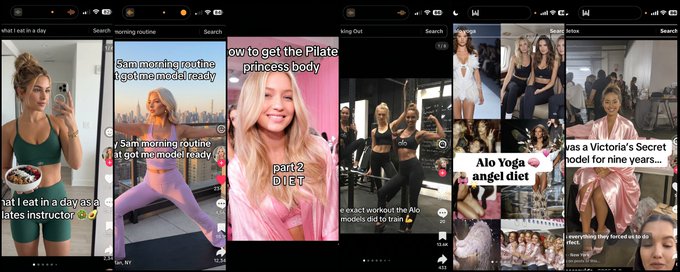 Most e-commerce brands are running TikTok the wrong way. They hire an influencer for a flat fee, cross their fingers, and watch the post die in 48 hours. They run Meta ads at $6 CPM and wonder why their CAC is through the roof. They treat content like a transaction instead of a system. There is a different approach — one that compounds rather than decays, scales without scaling your budget, and produces content that doesn't look like marketing. Because it isn't marketing. It's distribution disguised as content. That approach is TikTok slideshows. TikTok is actively pushing slideshows harder than almost every other format right now. The algorithm rewards them. And most brands still aren't taking them seriously — which is exactly why they work. Stack cost: ~$0/month. Once set up: 30 posts/week in under 2 hours. Here's the full system. ✦ THE PIPELINE — WHAT YOU'RE BUILDING [TikTok Scroll] → find viral formats in your niche ↓ [SnapTik Download] → save the slideshows for analysis ↓ [Claude Opus 4.7 — Hook Extraction] → reverse-engineer what made it work + generate variations ↓ [Pinterest] → source images at zero cost ↓ [Node.js Canvas Script] → generate all PNG slides programmatically ↓ [Postiz Agent CLI] → schedule as drafts ↓ [TikTok App] → open draft at peak time, tap Post manually Stack: TikTok · SnapTik · Claude Opus 4.7 · Pinterest · Node.js Canvas · Postiz Agent CLI Cost: ~$0 (almost entirely open source) ✦ WHY SLIDESHOWS BEAT EVERY OTHER FORMAT RIGHT NOW The swipe mechanic keeps viewers inside your content instead of passively watching it. Someone swiping through 6 slides is not scrolling past you. They're moving through your product story at their own pace. That shift in control changes how they receive your product. It stops feeling like an ad. It feels like stumbling onto something useful. Beyond the algorithm advantage, slideshows are dramatically cheaper and faster to produce than video. No shooting. No editing timeline. No voiceover. Just images and text. That means you can post at a volume that's completely unrealistic with video — and volume is what the algorithm rewards above almost everything else. One more thing most sellers miss: you don't need AI-generated images at all. Pinterest is a free, endless library of high-quality images across every aesthetic imaginable. Zero cost. No generation bottleneck. This is the sourcing method almost nobody talks about. ✦ STEP 1 — FIND WHAT'S ALREADY WORKING Don't try to invent a format. The algorithm has already told you what your audience wants to watch. Open TikTok. Search keywords in your niche — the problem your product solves, the lifestyle adjacent to your customer, the product category. Filter by Most Liked or Most Recent. Look specifically for slideshows. When you find something performing well, favorite it. This trains your For You page to show you more of the same. Within a few days your feed becomes a curated research library for your niche. A format is worth replicating when it passes all 4 of these: → More than 100,000 views — real validation, not a fluke → Posted within the last 30 days — format still active, not fading → Easy to recreate without advanced editing → Multiple videos use the same format — system, not a one-hit wonder When you find one that passes, download it. Use SnapTik or SSSTik. Paste the TikTok link, download without watermark, save locally. You'll use it in the next step. ✦ STEP 2 — EXTRACT THE HOOK WITH CLAUDE OPUS 4.7 This is the step most sellers skip. Instead of guessing what made a slideshow work, you reverse-engineer it using Claude — feeding in the actual content and asking it to break down the structure. Upload the downloaded slideshow images to Claude Opus 4.7 and use this prompt: Analyze this TikTok slideshow and: 1. Identify the main hook used in the first slide (text overlay, headline, visual framing) 2. Explain why this hook works (curiosity / pain point / surprise / relatability) 3. Break down the hook structure (number + outcome, negative framing, identity targeting, etc.) 4. Write 5 similar hook variations for the niche [YOUR NICHE] - Each hook under 10 words - Format: a question OR a strong statement - Avoid openers like "Did you know" ## Output as a numbered list, one hook per line. If you only have slide text (no images): Here is the content of a viral TikTok slideshow in the niche [NICHE]: [PASTE CONTENT HERE] - Identify the core hook from the first slide - Write 7 hook variations for a similar slideshow - Each hook must trigger one of 3 emotions: curiosity / FOMO / empathy - Max 8 words per hook - Include a short explanation of why each hook works Save every output. Build a hook library in Notion or Google Sheets. Over time you'll accumulate a database of proven angles — and creative ideation gets faster every single cycle. BONUS — Pull Pinterest Search Terms While You're Here While you still have the slideshow in Claude, run this: Based on this slideshow: 1. Describe the color palette, lighting, and overall aesthetic (dark/moody, bright/clean, luxury, minimal, etc.) 2. What kind of images would work as slideshow backgrounds for the hooks you just wrote? 3. Give me 5 specific Pinterest search queries to find those images - Format: short keyword phrases, 2-4 words each - Optimized for Pinterest search, not Google Copy these directly into Pinterest in the next step. No guessing what to look for. ✦ STEP 3 — SOURCE IMAGES FROM PINTEREST (COST: $0) Pinterest has millions of high-quality, aesthetically curated images across every niche and visual style. No AI generation required. No licensing headaches for organic social. Use the exact Pinterest queries Claude generated for you. When evaluating images, look for: → Portrait / 9:16 ratio (the script will crop landscape, but portrait is cleaner) → Bold, high contrast (soft pastels disappear in the TikTok feed) → Minimal existing text (you'll overlay your own text on top) → Emotional match to your hook (money hook = aspirational lifestyle; fitness hook = action shot; skincare hook = clean aesthetic close-up) For Amazon & Shopify sellers: match the image vibe to your product's aspirational outcome — not the product itself. The product shows up as the natural next step, not the hero of the slide. How to download: Option 1 — PinDown Chrome Extension: Install → Click image → Download full resolution Option 2 — Direct save: Open image full size → Right-click → Open in new tab → Save image as Option 3 — Bulk Python script: # pinterest_downloader.py import requests from pathlib import Path def download_image(url, filename, folder="pinterest_images"): Path(folder).mkdir(exist_ok=True) r = requests.get(url, stream=True) if r.status_code == 200: with open(f"{folder}/{filename}.jpg", "wb") as f: for chunk in r.iter_content(1024): f.write(chunk) urls = [ "https://i.pinimg.com/originals/...", ] for i, url in enumerate(urls): download_image(url, f"image_{i+1:03d}") Organize by niche: pinterest_images/ ├── skincare/ ├── fitness/ ├── amazon_products/ └── lifestyle/ ✦ STEP 4 — GENERATE THE SLIDES PROGRAMMATICALLY (NO CANVA NEEDED) This is where the pipeline becomes genuinely scalable. Instead of designing in Canva slide by slide, you define your content in a JSON config and a Node.js script generates all 1080×1920 PNG slides automatically. Change the config, re-run the script, get new slides. No design software open. Setup: mkdir tiktok-slide-gen && cd tiktok-slide-gen npm init -y npm install @napi-rs/canvas sharp The Slide Structure (every slideshow, every time): Slide 1: HOOK → the first 2 seconds that stop the scroll Slide 2: Problem → agitate the pain point Slide 3: Point 1 → first insight or tip Slide 4: Point 2 → second insight or tip Slide 5: Point 3 → third insight or tip Slide 6: CTA → Follow / Save / Comment / Shop link Drive all content from a JSON config: // slides-config.json [ { "imagePath": "./pinterest_images/skincare/image_001.jpg", "lines": [ { "text": "My skin was ruined for 3 years", "size": 88, "weight": "bold", "y": 860 }, { "text": "until I found this", "size": 72, "weight": "normal", "y": 970 } ] }, { "imagePath": "./pinterest_images/skincare/image_002.jpg", "lines": [ { "text": "I tried everything.", "size": 72, "weight": "bold", "y": 880 }, { "text": "Nothing worked.", "size": 64, "weight": "normal", "y": 970 } ] }, { "imagePath": "./pinterest_images/skincare/image_006.jpg", "lines": [ { "text": "Comment SKINCARE 👇", "size": 80, "weight": "bold", "y": 860 }, { "text": "I'll send you my full routine", "size": 52, "weight": "normal", "y": 960 } ] } ] The generation script: // generate-slides.js import { createCanvas, loadImage, GlobalFonts } from '@napi-rs/canvas' import { writeFileSync, mkdirSync, readFileSync } from 'fs' import { join } from 'path' const OUTPUT_DIR = './output' const W = 1080, H = 1920 const OVERLAY = 'rgba(0,0,0,0.52)' const slides = JSON.parse(readFileSync('./slides-config.json', 'utf-8')) function wrapText(ctx, text, maxWidth) { const words = text.split(' '), lines = [] let current = '' for (const word of words) { const test = current ? `${current} ${word}` : word if (ctx.measureText(test).width > maxWidth && current) { lines.push(current); current = word } else { current = test } } if (current) lines.push(current) return lines } async function generateSlide(slide, index) { const canvas = createCanvas(W, H) const ctx = canvas.getContext('2d') const img = await loadImage(slide.imagePath) const scale = Math.max(W / img.width, H / img.height) ctx.drawImage(img, (W - img.width*scale)/2, (H - img.height*scale)/2, img.width*scale, img.height*scale) ctx.fillStyle = OVERLAY ctx.fillRect(0, 0, W, H) for (const line of slide.lines) { ctx.font = `${line.weight} ${line.size}px sans-serif` ctx.fillStyle = '#ffffff' ctx.textAlign = 'center' ctx.textBaseline = 'middle' ctx.shadowColor = 'rgba(0,0,0,0.75)' ctx.shadowBlur = 12; ctx.shadowOffsetY = 4 const wrapped = wrapText(ctx, line.text, W - 160) wrapped.forEach((l, i) => ctx.fillText(l, W/2, line.y + i * line.size * 1.2)) } mkdirSync(OUTPUT_DIR, { recursive: true }) const out = join(OUTPUT_DIR, `slide_${String(index+1).padStart(2,'0')}.png`) writeFileSync(out, canvas.toBuffer('image/png')) console.log(`✓ ${out}`) } async function main() { for (let i = 0; i < slides.length; i++) await generateSlide(slides[i], i) console.log(`\nDone → ${OUTPUT_DIR}/`) } main().catch(console.error) Run it: node generate-slides.js ✓ output/slide_01.png ✓ output/slide_02.png ✓ output/slide_03.png ✓ output/slide_04.png ✓ output/slide_05.png ✓ output/slide_06.png Done → output/ POST-PRODUCTION — The 2 Minutes That Separate 10K Views From 1M Views These details consistently make the difference between content that gets pushed and content that gets buried: → Add 2–3% film grain in CapCut. Removes the "too clean" look. Blends naturally with real UGC. → Export at 1080p, not 4K. 4K signals produced content. Lower resolution reads as organic. → Compress through Telegram. Upload to Telegram, download it, upload that version to TikTok. Strips metadata, adds natural compression artifacts. The algorithm treats it as organic UGC. ✦ STEP 5 — SCHEDULE WITH POSTIZ AGENT CLI With your slides ready, Postiz handles the distribution calendar. Free when self-hosted. Unlimited posts — no caps like Buffer or Later. npm install -g postiz export POSTIZ_API_KEY=your_api_key_here postiz integrations:list Connect TikTok at app.postiz.com → Integrations → Add Channel → TikTok. Once connected, integrations:list returns your TikTok integration ID. You need it for every post command. Batch-schedule a full week from one command: // schedule.json [ { "slides": ["./output/mon_01.png", "./output/mon_02.png", "./output/mon_03.png", "./output/mon_04.png", "./output/mon_05.png", "./output/mon_06.png"], "caption": "I saved $5k in 6 months doing this 💰 #personalfinance", "scheduledAt": "2025-04-21T09:00:00Z" }, { "slides": ["./output/tue_01.png", "./output/tue_02.png", "./output/tue_03.png", "./output/tue_04.png", "./output/tue_05.png", "./output/tue_06.png"], "caption": "Stop putting money in these 3 things 🚫 #moneytips", "scheduledAt": "2025-04-22T09:00:00Z" } ] // batch-schedule.js import { execSync } from 'child_process' import { readFileSync } from 'fs' const INTEGRATION_ID = process.env.TIKTOK_INTEGRATION_ID const schedule = JSON.parse(readFileSync('./schedule.json', 'utf-8')) for (const post of schedule) { const slideFlags = post.slides.map(slide => { const result = JSON.parse(execSync(`postiz upload ${slide}`).toString()) return `-m "${result.path}"` }).join(' ') execSync( `postiz posts:create -c "${post.caption}" ${slideFlags} -s "${post.scheduledAt}" -i "${INTEGRATION_ID}"`, { stdio: 'inherit' } ) console.log(`✓ Scheduled: ${post.slides.length} slides at ${post.scheduledAt}`) } TIKTOK_INTEGRATION_ID=clx9abc123 node batch-schedule.js ✓ Scheduled: 6 slides at 2025-04-21T09:00:00Z ✓ Scheduled: 6 slides at 2025-04-22T09:00:00Z ... One command. Entire week scheduled. ✦ STEP 6 — POST FROM DRAFTS, NOT THE API DIRECTLY This is the most overlooked step. Skipping it is what kills accounts that are otherwise doing everything right. When you auto-publish via API on a scheduled timer, TikTok sees: → A server IP initiating the post → Consistent robotic posting intervals → No human interaction before it goes live On new accounts or at high volume, this pattern gets flagged. Reduced reach. Shadow restrictions. Full account flags. The fix is simple. The actual publish action needs to come from your phone. Everything else can be automated. This one step stays human. Push to Drafts. Publish manually from the app. postiz posts:create \ -c "Your caption #fyp" \ -m "$VIDEO_URL" \ -s "2025-04-21T09:00:00Z" \ -p tiktok \ --settings '{ "privacy_level": "SELF_ONLY", "content_posting_method": "UPLOAD" }' \ -i "your-tiktok-integration-id" The hybrid workflow that keeps your account healthy at scale: 1 → Set Postiz to Notify mode (not Direct Post). Manages your editorial calendar, sends a push notification at the scheduled time. 2 → Notification arrives. Open TikTok on your phone. Draft is waiting. 3 → Review it. Tap Post. From TikTok's perspective: a human published from a real device on a real network. No server fingerprint on the actual publish action. ✦ THE STRATEGY LAYER — MAKING IT ACTUALLY CONVERT All of the above is infrastructure. The creative strategy is what determines whether it drives revenue or just views. For Amazon sellers: your product listing link goes in the bio. Every slideshow drives profile visits. Bio drives clicks. For TikTok Shop sellers: pin the product directly to the video. The CTA slide becomes "Tap the link below." For Shopify sellers: use a link-in-bio tool. Every slideshow ends with a CTA to a landing page, not your homepage. Product Integration Is Everything There are only two ways a format fails: it goes viral but nobody converts, or it converts but nobody watches. Your product needs to live inside the content, not on top of it. A product bolted onto a trending format feels like an ad — the viewer watches, enjoys it, and scrolls on without ever connecting it to your brand. Millions of views. Zero sales. The target is a slideshow where the content is genuinely useful, and your product shows up as the natural next step. The viewer swipes to the last slide thinking: where do I get that? — not why am I being sold to? Write Copy That Sounds Human The biggest tell in AI-generated slideshow content isn't the visuals. It's the text. Default AI copy sounds like a marketer: "Discover the transformative power of..." Nobody on TikTok talks like that. The fix: feed Claude real comments pulled from viral videos in your niche. Tell it to write like someone who just discovered the product and is genuinely surprised. Add negative constraints: no words like game-changing, revolutionary, or must-have. The negative constraints matter as much as the positive direction. Track Revenue Per Million Views Views without conversion data mean nothing. Before scaling any format, calculate what one million views is actually worth in revenue. If the unit economics work, scale. If views are there but purchases aren't — the integration is wrong, not the format. Fix how the product enters the content and test again. $0.34 — Effective CPM on well-run slideshow campaigns $4–8 — Average Meta ads CPM for e-commerce 20x — Cost advantage over traditional paid social ✦ THE FULL PLAYBOOK AT A GLANCE → Find the format. Scroll your niche, favorite viral slideshows, download with SnapTik. → Extract the hook. Upload to Claude Opus 4.7, reverse-engineer the structure, generate 5–7 variations. → Pull Pinterest search terms. Ask Claude to generate 5 specific image queries while you have the slideshow loaded. → Source images from Pinterest. Zero cost, unlimited aesthetic variety, no generation required. → Generate slides with Node.js Canvas. Define content in slides-config.json, run the script, get production-ready PNGs. → Post-process the output. Film grain in CapCut, 1080p export, compress through Telegram. → Schedule with Postiz CLI. Define your week in schedule.json, run batch-schedule.js, everything queued in one command. → Post from Drafts, not the API. Use Notify mode. Publish manually from your phone at peak time. → Track revenue per million views. When unit economics work, scale. When they don't, fix the integration. ✦ The brands still running flat-fee influencer deals are doing the math wrong. One post, one shot, paid whether it performs or not. The brands that crack performance-based, systematic distribution early build a data and volume advantage that's nearly impossible for competitors to close. Slideshows are the entry point. Once you understand the underlying loop — find what's working, replicate with precision, produce at volume, measure relentlessly — you can run it on any format, any platform, any product. That's not a content strategy. That's a distribution machine. ## 相关链接 - [Noah Frydberg | Tiktok Shop For Brands](https://x.com/maverickecom) - [@maverickecom](https://x.com/maverickecom) - [472K](https://x.com/maverickecom/status/2048771914206777752/analytics) - [https://i.pinimg.com/originals/](https://i.pinimg.com/originals/) - [https://i.pinimg.com/originals/](https://i.pinimg.com/originals/) - [@napi](https://x.com/@napi) - [@napi](https://x.com/@napi) - [#ffffff](https://x.com/search?q=%23ffffff&src=hashtag_click) - [app.postiz.com](https://app.postiz.com/) - [$5k](https://x.com/search?q=%245k&src=cashtag_click) - [#personalfinance](https://x.com/search?q=%23personalfinance&src=hashtag_click) - [#moneytips](https://x.com/search?q=%23moneytips&src=hashtag_click) - [post.slides.map](https://post.slides.map/) - [#fyp](https://x.com/search?q=%23fyp&src=hashtag_click) - [Upgrade to Premium](https://x.com/i/premium_sign_up) - [10:31 PM · Apr 27, 2026](https://x.com/maverickecom/status/2048771914206777752) - [472.6K Views](https://x.com/maverickecom/status/2048771914206777752/analytics) - [View quotes](https://x.com/maverickecom/status/2048771914206777752/quotes) --- *导出时间: 2026/4/28 21:17:19*
如 如何使用 Claude Opus 4.7 自动化制作 TikTok 幻灯片内容(分步指南) 本文介绍了一套零成本的自动化工作流,利用 Claude Opus 4.7 分析 TikTok 爆款内容并提取 Hook,结合 Pinterest 获取素材,通过 Node.js Canvas 脚本批量生成幻灯片,最后使用 Postiz Agent 进行自动化分发,旨在解决手动内容制作耗时且低效的问题。 技术 › LLM ✍ Alex Nguyen🕐 2026-04-21 ClaudeTikTok自动化AI工作流内容创作Node.jsAgent教程
使 使用 Hermes Agent 自动化制作 TikTok 幻灯片内容指南 本文介绍如何利用 Hermes Agent 自动化 TikTok 幻灯片(Slideshow)内容的生成与发布流程。文章分析了幻灯片流量红利与手动制作痛点,详细讲解了 Hermes 的安装配置、基于 Skill 和 Cron 的管道模型设计,以及 Hook 研究、图片路由、Pinterest 爬取和合成等核心技能的实现方法。 技术 › Hermes ✍ Alex Nguyen🕐 2026-05-14 TikTok自动化Agent内容创作爬虫短剧流量红利CronOpenAIClaude
利 利用 Claude Opus 4.7 自动化 TikTok UGC 内容创作实战指南 文章探讨了电商品牌如何放弃低效的传统网红营销,转而利用 Claude Opus 4.7 构建 AI 自动化内容工厂。作者详细介绍了“权威人物法”和“播客格式”等策略,旨在通过 AI 批量生产高信任度的 UGC 视频,配合精准的脚本和转化链路,实现 TikTok Shop 的规模化增长。 技术 › AI ✍ Noah Frydberg🕐 2026-05-02 TikTokClaudeUGC自动化电商营销内容创作AI Agent短视频转化率营销策略
如 如何使用 Claude x MakeUGC 自动化抖音内容创作(分步指南) 本文介绍了一套利用 Claude Opus 4.7 和 MakeUGC 等工具实现 TikTok/抖音内容自动化生成的完整工作流。从爆款选题分析、脚本生成、素材获取到幻灯片制作与定时发布,作者详细拆解了如何以接近零的成本构建高转化率的内容生产系统,并强调了“草拟发布”策略对账号安全的重要性。 技术 › 工具与效率 ✍ loveabit🕐 2026-05-02 ClaudeAIGC自动化抖音内容创作MakeUGC工作流TikTokOpus效率工具
H How to Automate TikTok Slideshow Content Creation with Claude Opus 本指南介绍了如何利用 Claude Opus 4.7、Pinterest 和 Node.js 构建自动化的 TikTok 幻灯片内容工作流。流程包括使用 AI 分析病毒式传播的钩子、从 Pinterest 获取素材、通过脚本生成幻灯片,以及利用 Postiz Agent 进行自动化发布,旨在以零成本实现规模化内容生产。 技术 › LLM ✍ Alex Nguyen🕐 2026-04-20 Claude Opus自动化TikTokNode.js内容创作PromptAI工作流
O Obsidian+AI:如何搭建自动化内容生产线 本文介绍了如何利用 Obsidian 结合 AI(Copilot/Claude)搭建一套高效的内容生产流水线。通过“先积累后分类”的方法,利用本地文件确保数据安全,并借助插件和自动化脚本实现素材的自动归类、整理与选题生成。文章详细阐述了从零开始的安装步骤、避坑指南、实用分类法(PARA/Zettelkasten)以及具体的 AI 工作流配置,帮助内容创作者解决素材管理混乱和选题枯竭的问题。 技术 › 工具与效率 ✍ 宋宋🕐 2026-07-10 ObsidianAI知识管理内容创作DeepSeekClaude工作流笔记法自动化素材库
拆 拆解宝玉的 21 个 Skills:高手如何构建 AI 工作流 文章深入剖析了开发者宝玉的 baoyu-skills 仓库,认为这不是简单的提示词合集,而是一套工程化的 AI 工作流操作系统。作者将 21 个 Skills 划分为内容生产、视觉表达、平台发布、素材输入五大模块,通过对比“提示词玩家”与“资深工程师”的思维差异,揭示了高手利用 AI 的核心逻辑:将任务拆解为代码与模型的最优组合,注重确定性、复用性与上下文效率,而非单纯依赖模型能力。 技术 › Agent ✍ 锦鲤老湿🕐 2026-07-08 AI工作流SkillClaude宝玉PromptEngineering自动化内容创作系统设计工程化思维
开 开源CC+Obsidian打造LLM Wiki内容创作3.0系统 文章介绍了一套基于LLM Wiki方法论的内容生产3.0系统,解决了2.0版本中知识库信息垃圾化的问题。通过“三步编译法”(浓缩、质疑、对标)将原始文档编译为持久化Wiki结构,实现知识资产的自动积累与进化,大幅降低维护成本并提升了内容创作与知识管理的效率。 技术 › LLM ✍ 饼干哥哥AGI🕐 2026-07-07 ClaudeObsidian知识管理内容创作Agent提示词自动化开源RAG方法论
5 50 个 Claude 提示词:取代整个团队的秘密 文章介绍了50个结构化、工程化的 Claude 提示词,涵盖内容创作和商业策略等领域。通过设定角色、背景、格式和约束条件,这些提示词能让 AI 的输出达到专业团队的水准,大幅提升工作效率。 技术 › LLM ✍ Khairallah AL-Awady🕐 2026-05-25 ClaudePrompt提示词工程效率内容创作AI工具工作流自动化
如 如何把“AI 味”调成学术味、咨询味,或任何你想要的风格 文章探讨了“AI 味”产生的本质,即信号价值坍塌与身份保卫战,并将 AI 味拆解为词汇、结构、语义、语用四层。作者提出“文风工程化”概念,通过抽取高质量语料指纹并反向审计的原理,结合 Python 脚本和 Prompt,实现将文本调整为学术、咨询等具体风格的可复制方案。 技术 › 工具与效率 ✍ Roland.W🕐 2026-05-17 AI写作提示词工程文风工程Python学术写作内容创作自动化方法论ClaudeChatGPT
如 如何构建替代首批 3 名员工的 AI 智能体团队 (实战教程) 文章针对初创者面临的资源瓶颈,提出利用 Claude 和 MCP 服务器构建三类 AI 智能体来替代首批全职员工的解决方案:负责市场情报的研究 Agent、处理内容全生命周期的内容 Agent 以及管理日常运营的运营 Agent。文章详细拆解了这三者的构建方法、Prompt 架构及工作流,旨在帮助创业者将繁琐工作自动化,从而专注于核心决策。 技术 › Agent ✍ Khairallah AL-Awady🕐 2026-05-06 AI AgentClaudeMCP自动化创业工作流Prompt Engineering运营内容创作
3 35个杀手级 Claude 提示词:让你的业务策略与营销自动化 文章分享了作者过去6个月在商业策略、内容创作、自动化和研究中测试出的35个高价值Claude提示词。这些提示词旨在将Claude从单纯的搜索引擎转变为强大的思维工具,涵盖商业模式验证、竞品分析、决策框架、营销文案生成等多个实战场景,旨在通过AI提升企业ROI和个人效率。 技术 › LLM ✍ Corey Ganim🕐 2026-05-01 Claude提示词工程商业策略自动化营销AI工具效率职场内容创作决策辅助