为何大家突然讨厌梅西:一场宣传战解构 ✍ rosie🕐 2026-07-22📦 7.4 KB 🟢 已读 𝕏 文章列表 文章以梅西形象反转为例,分析了社交媒体如何通过算法推荐、虚假信息传播及付费营销操纵舆论。作者指出,随着AI生成内容的泛滥,这种重塑公众认知的效率将大幅提升,对政治、商业等领域构成严峻挑战。 梅西舆论社交媒体算法宣传心理学AI # why everyone suddenly hates messi: a propaganda breakdown **作者**: rosie **日期**: 2026-07-20T19:52:06.000Z **来源**: [https://x.com/therosieum/status/2079293289593741393](https://x.com/therosieum/status/2079293289593741393) --- 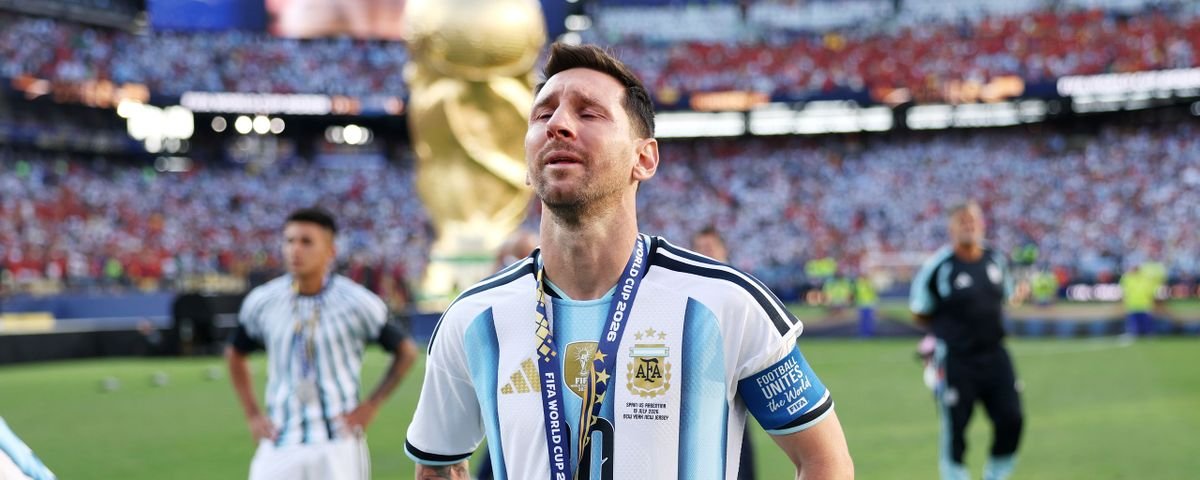 in december 2022 the whole planet celebrated messi lifting the world cup. this summer everyone is calling him a cheat and a villain (well, mostly people who never watch football and teenagers). i've watched football my whole life (so this is a sensitive topic to me), and i shape narratives for a living. marketing, positioning, making people feel things about things. i know what it costs to move public opinion, what the work looks like from the inside. this article is a breakdown: how these campaigns start, how they spread, why they work on your brain, and why the next one will run much faster. ## stage one: the flip four years ago, almost the entire football world wanted messi to win the world cup. when he finally did, it felt like the perfect ending to one of the greatest careers the sport has ever seen. four years later, social media has somehow turned him into the villain. 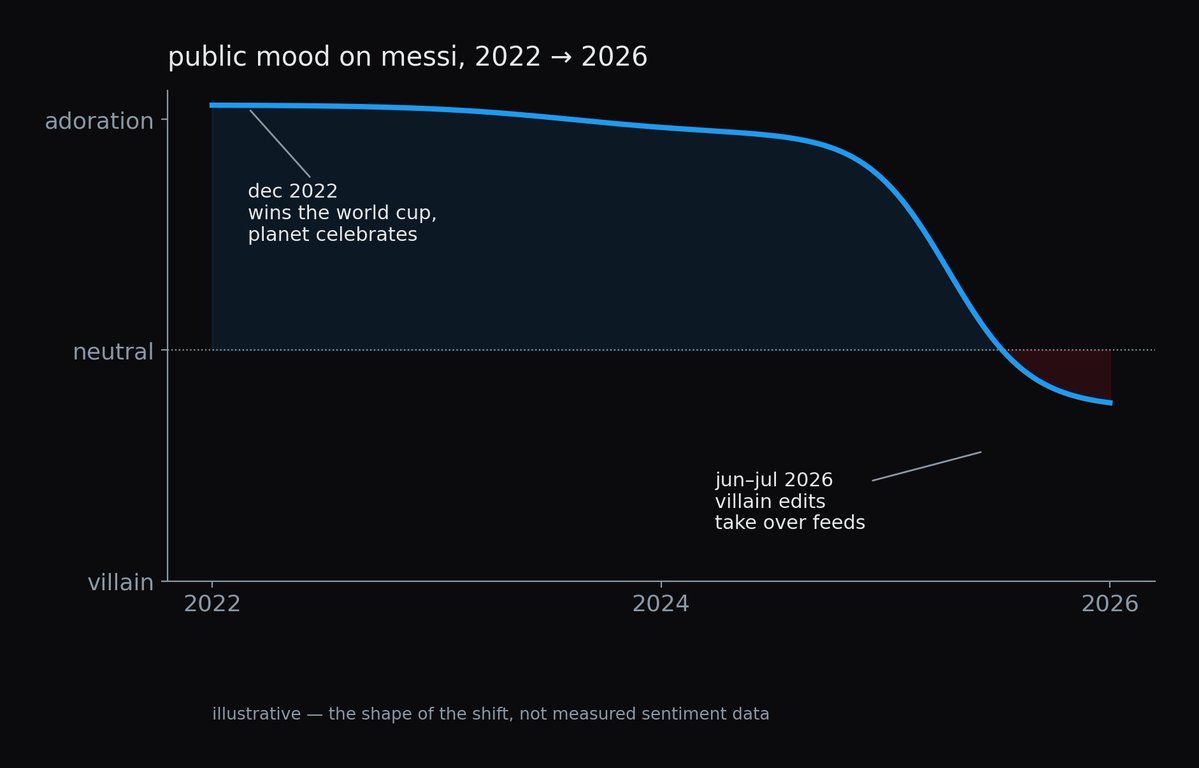 between then and now, almost nothing on the pitch really changed. the officiating is largely the same, the squad is mostly the same players, and messi is still the same guy playing the same football. almost every variable stayed constant, yet public opinion completely flipped. the only thing that really changed was the distribution layer: the algorithms behind instagram and tiktok, and whatever decided that messi-as-villain edits perform better this cycle than messi-as-legend edits did last time. ## stage two: how a campaign starts these things rarely start with an outright lie. they usually start with something real. a foul with the buildup cut out. a referee decision without the replay that explains it. a clip that's technically accurate, but missing just enough context to tell a completely different story. then the algorithm takes over. thousands of versions compete for attention, the ones that get the most engagement survive, and everything else disappears. after a while, the surviving clips stop feeling like isolated moments and start becoming talking points. eventually, they become "common knowledge". my friends who couldn't name a single midfielder suddenly hated messi around the same time. 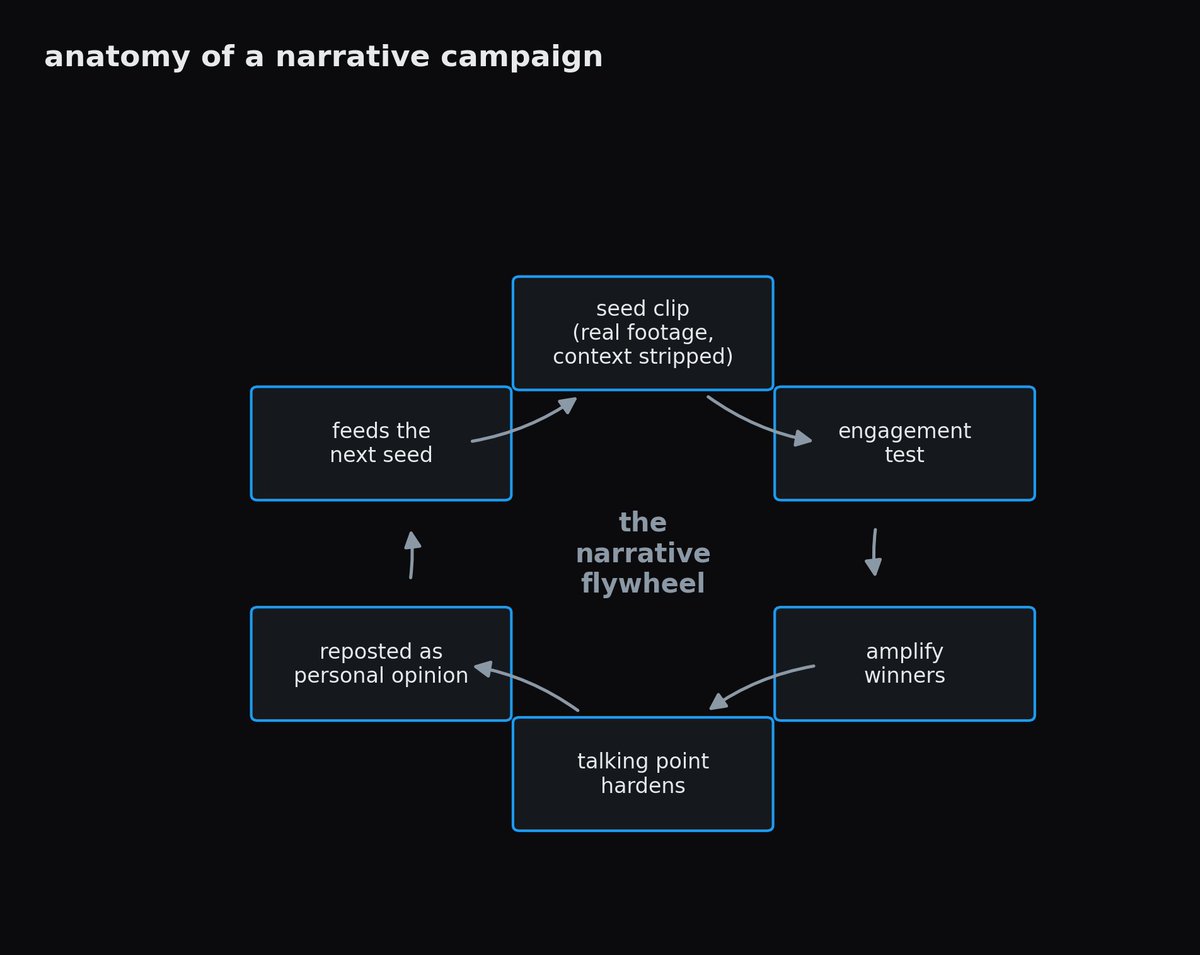 one MIT study looked at around 126,000 claims shared by roughly 3 million people on twitter over an eleven-year period. across every category they studied, false stories spread farther, faster, deeper and more broadly than true ones. on average, the truth took about six times longer to reach 1,500 people, while falsehoods were 70% more likely to be retweeted. it's not hard to see why. outrage, conflict and surprise are simply better at capturing attention than accuracy. 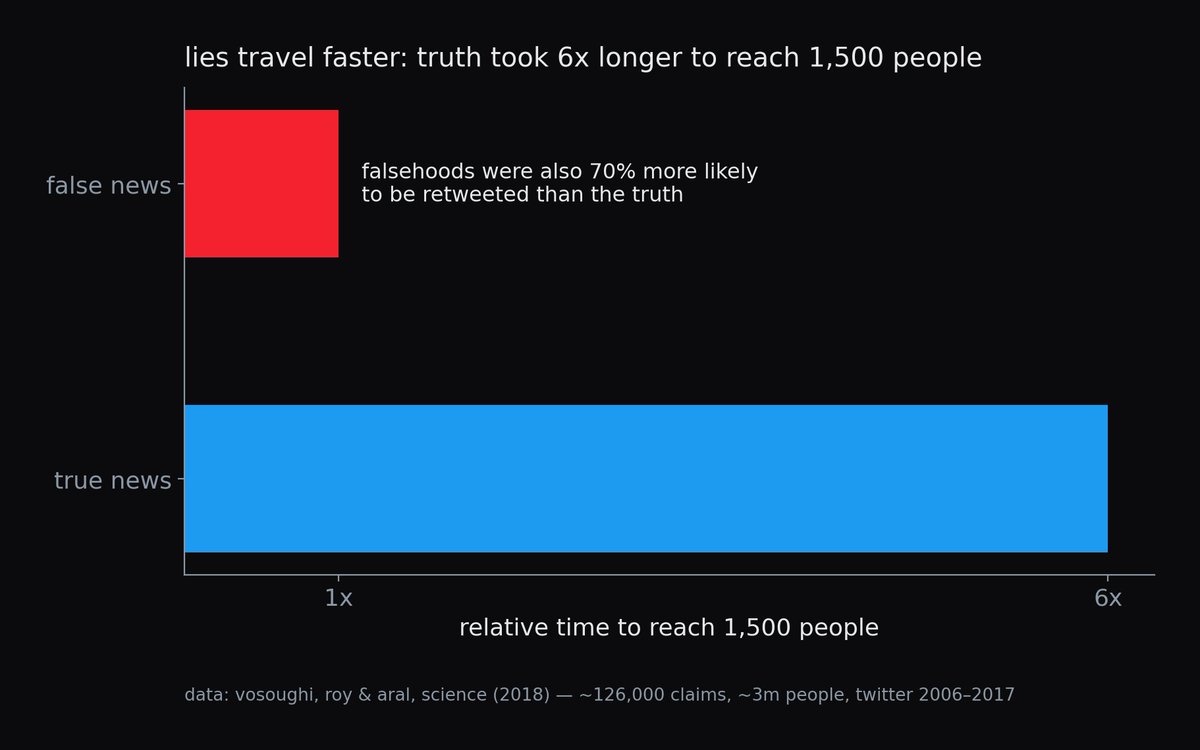 ## stage three: the paid layer a lot of what looks like organic fan content isn't actually organic. i'm obviously not going to make allegations about who funds the current wave but something similar already happened to this exact player and there was a police raid about it: 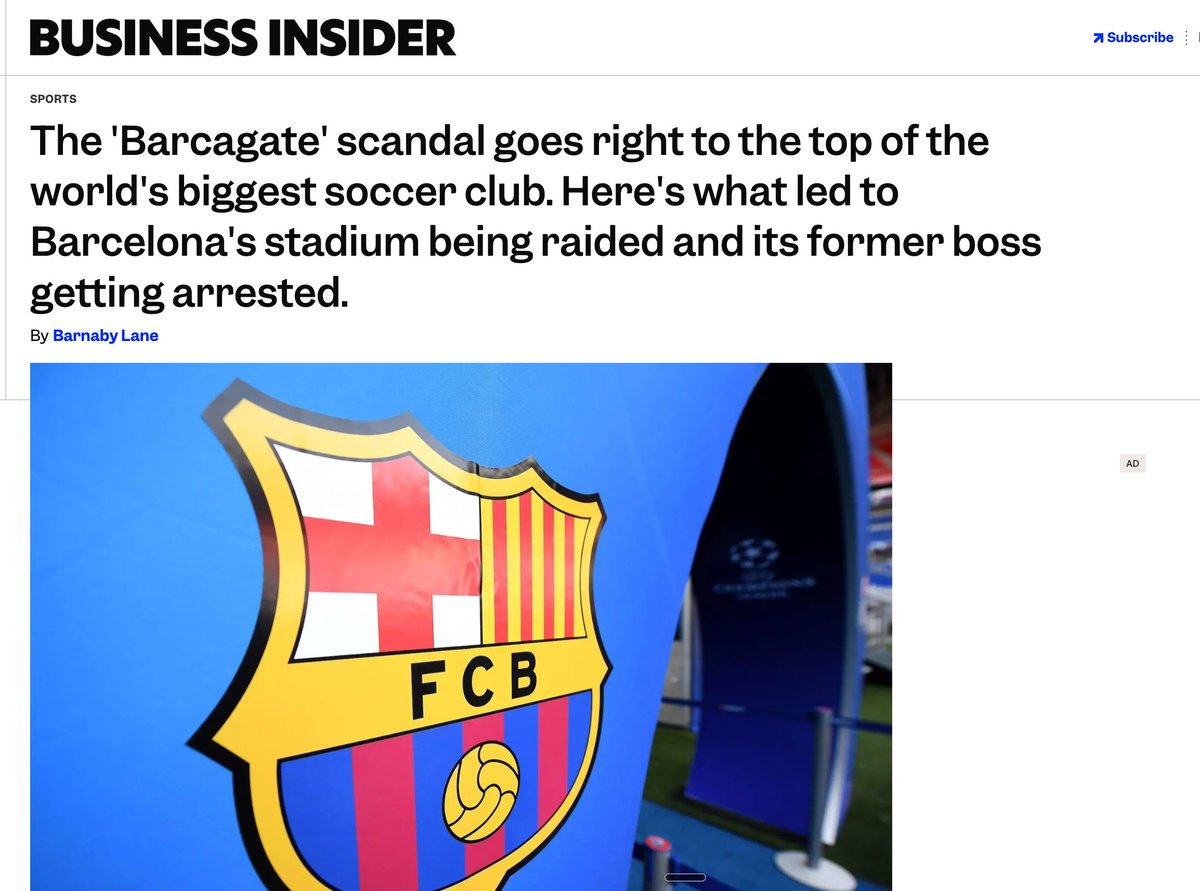 on the other hand, meta has been publishing quarterly takedown reports on coordinated inauthentic behavior since 2017, removing tens of thousands of fake accounts, pages and groups at a time, and researchers recently mapped a single operation running nearly 1,500 fake accounts across facebook and x. from doing this professionally i can tell you coordinated narrative campaigns are a normal, boring line item: content calendars, editing teams, creator networks, seeded talking points. this is how products launch, how tokens pump, how reputations get built and unbuilt. sport was never exempt. ## stage four: why it works on your brain back in 1922, walter lippmann argued in Public Opinion that people don't respond directly to reality. they respond to the "pictures in their heads." he was writing about newspapers. today those pictures are fifteen-second clips selected by algorithms. 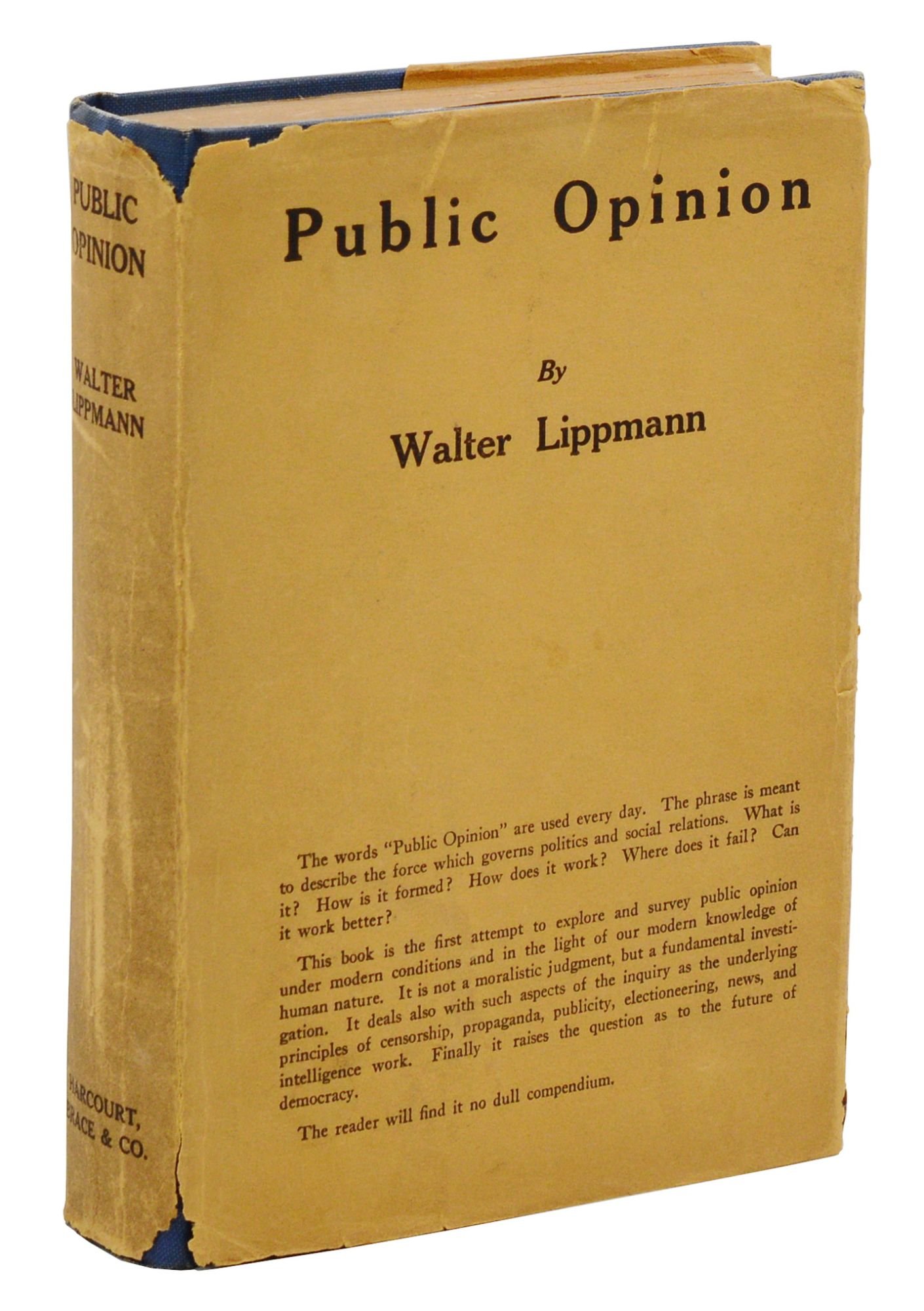 psychologists call part of this the illusory truth effect, one of the most consistently replicated findings in psychology. studies have shown that simply seeing a claim once makes people more likely to judge it as true later, even if it's false. the effect can last for days, survives fact-check labels, and shows up even when the claim contradicts something people already know. that's why these campaigns don't rely on a single viral edit. one clip rarely changes anyone's mind. dozens of similar clips, repeated over days or weeks, slowly become familiar. eventually they stop feeling like something you were told and start feeling like something you always believed. that's what makes them so effective. 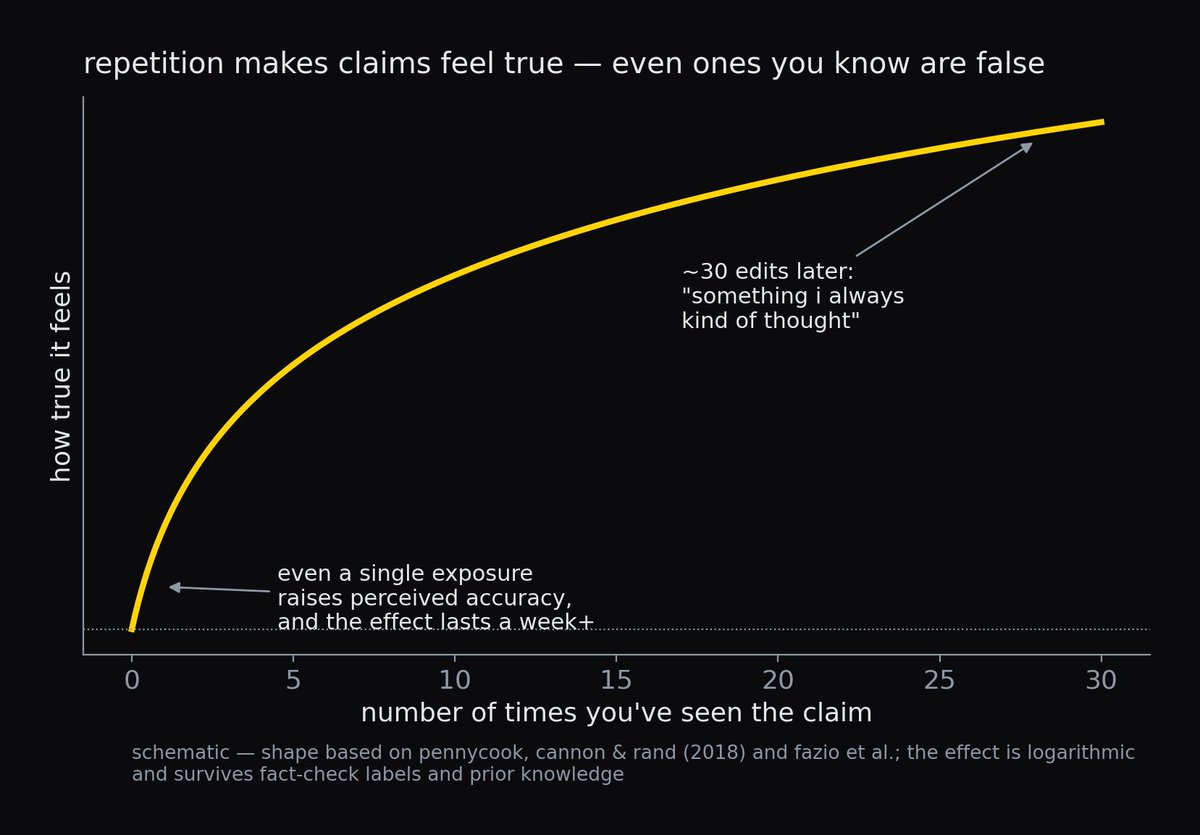 ## stage five: the control group football is one of the few things that's almost perfectly documented. there are twenty years of matches, interviews and clips online. almost every claim people make can be checked in under a minute. and yet, the narrative still beat the evidence. that's what makes it so interesting. if public opinion can shift this dramatically around arguably the most documented footballer in history, imagine how much easier it is in areas where most people can't verify anything for themselves. politics, wars, markets, even health. in those cases, you're usually relying on someone else's version of events. ## stage six: the acceleration everything above used to be expensive. running a narrative at scale meant studios, editors, media buys and distribution relationships. that's why this playbook mostly belonged to governments and large corporations. that constraint is disappearing. newsguard counted 49 AI-generated news sites in may 2023. by december there were 614. today they track more than 3,000 AI content farms, with hundreds more appearing every month. 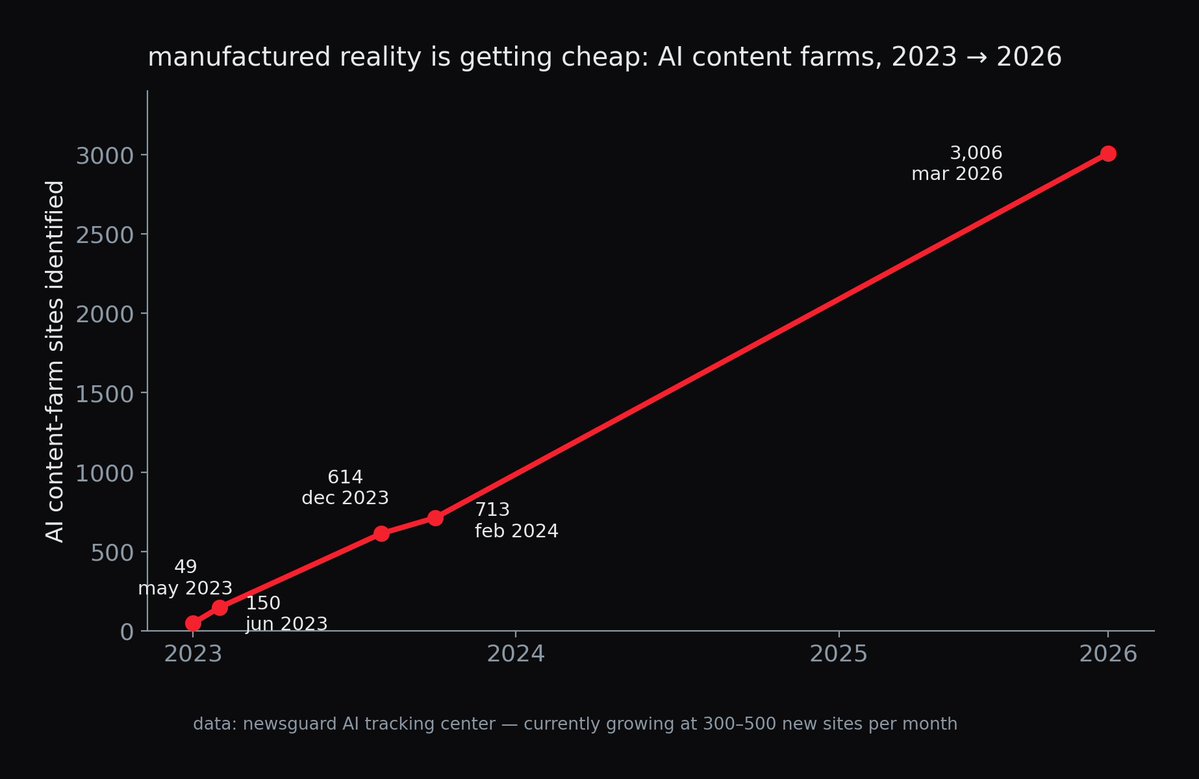 now imagine the same playbook in a world where convincing edits cost almost nothing to make. what used to take years can now happen in weeks, and soon probably days. not worried about messi at all. he'll be fine. he has every trophy that matters and two decades of footage behind him. what worries me is everything else. if the internet can reshape the reputation of arguably the most documented footballer in history, imagine what it can do in situations where there isn't twenty years of footage for people to check. politics, wars, business, or people you've never even heard of. in those cases, the narrative often becomes the only version most people ever see. ## 相关链接 - [rosie](https://x.com/therosieum) - [@therosieum](https://x.com/therosieum) - [13M](https://x.com/therosieum/status/2079293289593741393/analytics) - [Upgrade to Premium](https://x.com/i/premium_sign_up) - [3:52 AM · Jul 21, 2026](https://x.com/therosieum/status/2079293289593741393) - [13.4M Views](https://x.com/therosieum/status/2079293289593741393/analytics) - [View quotes](https://x.com/therosieum/status/2079293289593741393/quotes) --- *导出时间: 2026/7/22 08:58:31* --- ## 中文翻译 # 为什么大家突然讨厌梅西:宣传攻势拆解 **作者**: rosie **日期**: 2026-07-20T19:52:06.000Z **来源**: [https://x.com/therosieum/status/2079293289593741393](https://x.com/therosieum/status/2079293289593741393) ---  2022年12月,全世界都在庆祝梅西举起大力神杯。而今年夏天,所有人都在称他为骗子和反派(好吧,主要是那些从不看足球的人和青少年们)。 我这一生都在看足球(所以这对我来说是个敏感话题),而且我的工作就是塑造叙事。营销、定位,让人们对外界事物产生某种感觉。我知道改变舆论需要付出什么代价,知道这背后的工作是怎样的。这篇文章是一次拆解:这些活动如何发起,如何传播,为什么它们能对你的大脑产生影响,以及为什么下一次活动会快得多。 ## 第一阶段:反转 四年前,几乎整个足球世界都希望梅西赢得世界杯。当他终于如愿以偿时,感觉这就像是这项运动史上最伟大的职业生涯之一迎来了完美的结局。 四年后,社交媒体不知怎么把他变成了反派。  从那时到现在,球场上的情况几乎没有什么真正的改变。判罚大体相同,阵容里也大多是相同的球员,梅西还是那个人,踢着同样的足球。几乎每一个变量都保持不变,然而舆论却完全反转了。 唯一真正改变的是分发层:Instagram和TikTok背后的算法,以及那些决定在这个周期里“梅西作为反派”的剪辑比上一次“梅西作为传奇”的剪辑表现更好的决策机制。 ## 第二阶段:活动如何开始 这些事情很少以彻头彻尾的谎言开始。它们通常始于某些真实的事情。一段剪去了进攻过程的犯规视频。一段没有解释原因的裁判判罚。一段技术上准确但恰好缺少足够语境、从而讲述了一个完全不同故事的剪辑。 然后算法接管了一切。成千上万个版本争夺注意力,那些获得最多互动的存活了下来,其余的则消失了。过了一段时间,存活的剪辑不再感觉像是孤立的瞬间,而是开始变成谈资。最终,它们变成了“常识”。 我那些连一个中场球员名字都叫不上来的朋友,几乎在同一时间突然开始讨厌梅西。  麻省理工学院的一项研究调查了大约300万人在11年期间在Twitter(推特)上分享的约12.6万条声明。在他们研究的每个类别中,虚假故事都比真实故事传播得更远、更快、更深、更广。平均而言,真相触达1500人所需的时间大约是虚假消息的六倍,而假消息被转发的可能性要高出70%。 原因不难看出。比起准确性,愤怒、冲突和惊讶在捕捉注意力方面简直技高一筹。  ## 第三阶段:付费层 许多看起来像自然产出的粉丝内容,实际上并不是自然生成的。 我显然不会去指控谁资助了当前的这一波浪潮,但类似的事情已经发生在同一位球员身上,并且还因此引发了警方突击搜查:  另一方面,自2017年以来,Meta一直在发布关于协同造假行为的季度删除报告,每次删除数以万计的虚假账户、页面和群组,研究人员最近还绘制了一个在Facebook和X上运营近1500个虚假账户的单个行动。从专业角度来看,我可以告诉你,协同叙事活动是常规、无聊的项目:内容日历、剪辑团队、创作者网络、植入的谈资。这就是产品发布的方式,是代币拉盘的方式,是名声建立和被摧毁的方式。体育界从未被豁免。 ## 第四阶段:为什么它对你的大脑有效 早在1922年,沃尔特·李普曼在《公众舆论》中就提出,人们并不直接对现实做出反应。他们是对“脑海中的画面”做出反应。他写的是报纸。今天,这些画面是由算法挑选的15秒剪辑。  心理学家将这种现象的一部分称为“虚幻真相效应”,这是心理学中复制性最高的发现之一。研究表明,仅仅是看到一项声明一次,就会让人在后来更有可能判断它是真的,即使它是假的。这种效应可以持续数天,能挺过事实核查标签,甚至当该声明与人们已知的事实相矛盾时也会出现。 这就是为什么这些活动不依赖于单个病毒式传播的剪辑。一个剪辑很少能改变任何人的想法。几十个类似的剪辑,在几天或几周内重复出现,慢慢变得熟悉。最终,它们不再感觉像是别人告诉你的事情,而是开始感觉像是你一直相信的事情。这就是它们如此有效的原因。  ## 第五阶段:对照组 足球是几乎被完美记录的少数事物之一。网上有二十年的比赛、采访和剪辑。人们做出的几乎每一项声明都可以在一分钟内得到核实。 然而,叙事还是战胜了证据。 这正是它如此有趣的原因。如果公众舆论在围绕可以说是历史上被记录得最详尽的足球运动员时都能发生如此剧烈的转变,想象一下在大多数人都无法亲自核实任何事情的领域,这该有多容易。政治、战争、市场,甚至是健康。在那些情况下,你通常依赖的是别人提供的版本。 ## 第六阶段:加速 以上所有事情过去都很昂贵。大规模开展叙事活动意味着需要工作室、剪辑师、媒体购买和分发关系。这就是为什么这种策略主要属于政府和大公司。 这种限制正在消失。 NewsGuard在2023年5月统计了49个人工智能生成的新闻网站。到了12月,这一数字变成了614个。如今他们追踪超过3000个人工智能内容农场,而且每个月还会新增数百家。  现在想象一下,在一个制作令人信服的剪辑几乎不需要任何成本的世界里,运用同样的策略会怎样。 过去需要几年时间才能发生的事情,现在几周内就能发生,而且很可能很快只需要几天。 一点也不为梅西担心。他会没事的。他拥有所有重要的奖杯,还有二十年的影像资料作为支撑。 我担心的是其他一切事情。如果互联网能够重塑可以说是历史上被记录得最详尽的足球运动员的名誉,想象一下在没有二十年影像资料供人们查证的情况下,它能做些什么。政治、战争、商业,或者你甚至从未听说过的人。在那些情况下,叙事往往变成了大多数人唯一能看到的版本。 ## 相关链接 - [rosie](https://x.com/therosieum) - [@therosieum](https://x.com/therosieum) - [13M](https://x.com/therosieum/status/2079293289593741393/analytics) - [Upgrade to Premium](https://x.com/i/premium_sign_up) - [3:52 AM · Jul 21, 2026](https://x.com/therosieum/status/2079293289593741393) - [13.4M Views](https://x.com/therosieum/status/2079293289593741393/analytics) - [View quotes](https://x.com/therosieum/status/2079293289593741393/quotes) --- *导出时间: 2026/7/22 08:58:31*
T The Beliefs That Determine Whether You Succeed With AI 文章探讨了影响人们成功使用AI的五种常见信念,并通过研究数据和案例分析,揭示了如何通过改变思维模式来克服对AI的抵触情绪,从而更有效地利用AI提升工作效率。 技术 › LLM ✍ Nir Eyal🕐 2026-07-30 AI心理学工作效率信念实验研究
我 我们运行的5种AI UGC格式及使用时机 文章探讨了内容格式对传播效果的重要性,详细介绍了五种常用的AI UGC格式:真人出镜、产品演示、前后对比、用户证言和幻灯片。文章分析了每种格式的运作机制、适用场景及制作要点,强调应根据内容和受众选择最合适的载体,以最大化内容的传播效率。 技术 › Agent ✍ Adrian Solarz🕐 2026-07-24 AIUGC内容营销视频生成社交媒体营销策略AIGC视频格式
如 如何制造病毒式传播内容:180亿次浏览背后的方法论 作者分享了通过180亿次浏览量总结的病毒式传播秘诀。文章指出流量并非随机,而是基于算法机制的工程化结果。核心包括:制造能力差距的钩子、高信息密度的视觉节奏以及完美的循环结构。此外,还介绍了四种内容框架和大规模的分发策略,强调一切皆在数据之中。 技术 › 工具与效率 ✍ Reece | Clipping Agency🕐 2026-07-24 病毒营销短视频算法增长黑客内容创作流量分发Hook用户心理学社交媒体数据驱动
A AI 时代真正值钱的能力,是看懂人性背后的行为 文章探讨了在工具迭代极快的 AI 时代,真正核心的竞争力并非掌握某项具体技术,而是理解人性背后的行为逻辑。作者指出,无论工具如何变迁,人的欲望、恐惧和身份认同未变。真正值钱的能力是洞察用户为什么停留、相信和付费,以及如何通过共情而非操控来建立信任。 职场 › 方法论 ✍ Roland.W🕐 2026-07-08 AI人性认知职场发展内容创作心理学营销方法论
我 我拆了100条AI爆款内容:真正爆的不是技术,而是情绪 本文通过拆解100条AI爆款内容,指出内容的传播核心并非复杂的技术展示,而是情绪的触发。作者分析了视觉震撼、情绪共鸣、身份认同等六大爆款类型,强调AI只是外壳,好奇心、焦虑、共鸣等情绪才是传播的发动机。普通人做内容应先确定情绪钩子,再寻找技术实现。 技术 › LLM ✍ Stanley🕐 2026-05-21 AI内容创作爆款情绪价值自媒体营销LLM案例分析心理学
我 我把小红书限流当线上 bug 排查了 14 天:首页推荐从 1% 救到 56.5%(附 5 条反共识 SOP) 本文作者分享了其小红书账号遭遇限流后,通过逆向工程思维进行排查与修复的经历。作者将限流视为系统故障,经过14天的调整,成功将首页推荐占比恢复至56.5%。文章提出了5条反共识观点:精准诊断降权类型、停发优于改内容、隐藏优于删除、重视CES互动权重以及将账号视为可维护系统,并附带了详细的14天恢复SOP清单。 职场 › 方法论 ✍ MapleShaw🕐 2026-05-19 小红书运营限流算法SOP数据分析流量增长个人品牌复盘社交媒体
R Reddit 完整平台指南与起号养号技巧 本文是一份详尽的 Reddit 运营实操指南。文章首先从用户画像和心理层面分析了 Reddit 的商业价值,指出其用户具有高学历、高收入、厌恶营销的特征。接着,文章深入讲解了从账号防封(Shadowban 检查)、硬件隔离到 0-500 Karma 的分阶段养号策略(如“佛系活跃”、“抢前排借力”)。最后,作者分享了高阶运营技巧,强调克制发链接、通过主页简介(Bio)截流转化,以及利用 AI 辅助创作高质量干货内容,建立长期信任。 职场 › 职业发展 ✍ 0xCarlos🕐 2026-05-17 Reddit运营海外推广引流社交媒体营销账号安全跨境电商增长黑客AI
A AI 时代普通人社交媒体获客指南 文章指出生意失败的核心原因在于“被看见”。作者提出了利用社交媒体获客的 5 个关键策略:淘汰传统低效获客模式、紧抓用户注意力迁移红利、单平台深耕突破、利用 AI 降低内容生产门槛、以及抢占新平台流量红利。旨在帮助普通人通过 AI 与社交媒体的结合,实现低成本获客与生意的自动化增长。 职场 › 职业发展 ✍ 0x小师妹🕐 2026-05-17 AI社交媒体获客个人IP营销数字化转型增长黑客
D Distribution is the ONLY Moat: 在 AI 时代如何赢得分发超级周期 文章指出,随着 AI 将生产成本推向零,产品变得同质化,'分发'成为了唯一的护城河。作者解释了为何传统的广告渠道(如 Meta、电视、网红)正在失效,并阐述了为何以 UGC 和切片视频为代表的自然流量分发(类似于 2008 年的 Facebook 广告)是当下的高杠杆机会。最后,作者介绍了其构建的 AffiliateNetwork.com 平台,帮助品牌高效管理有机流量战役。 技术 › 工具与效率 ✍ Roman Khaves🕐 2026-04-17 分发营销护城河AIUGC流量变现增长黑客自然流量社交媒体创业
装 装完 Codex 不知道干什么?这 6 个 GitHub Skills 让你做视频搞钱 文章介绍了 6 个适用于 Codex 的 GitHub Skills,涵盖动效生成、视频剪辑、批量制作、AI 生成及中文剪辑等工具,帮助用户构建自动化视频工作流以提升效率。 技术 › Codex ✍ Kay🕐 2026-07-30 Codex视频制作AgentSkill自动化HyperFramesRemotionAI剪辑工作流
H How To Prompt Claude 5 Models 本文介绍了如何针对 Claude 5 系列模型(Fable, Opus & Sonnet)进行高效提示。文章涵盖了通用提示原则、Fable 的自主任务处理、Opus 的日常优化以及 Sonnet 的高效应用,帮助用户最大化模型生产力。 技术 › Claude ✍ AI Edge🕐 2026-07-30 Claude 5Prompt EngineeringFableOpusSonnetAnthropicAILLM
P Pragmatic Leverage in the Software Factory 文章探讨了在软件开发中如何通过AI实现杠杆效应。仅用AI写代码只能加速部分流程,而结合规划与对齐才能获得更大效率提升。作者通过“预期痛苦”公式分析前期投入与返工成本的关系,强调在多层次规划中保持实用主义,以最大化减少返工概率。 技术 › 工具与效率 ✍ dex🕐 2026-07-30 AI软件工厂杠杆效应规划效率DevOps方法论