# Herdr + Hermes: 3 Tricks I Use Daily in My Multi-Agent Setup
**作者**: tonbi
**日期**: 2026-07-27T05:42:50.000Z
**来源**: [https://x.com/tonbistudio/status/2081616282131247541](https://x.com/tonbistudio/status/2081616282131247541)
---
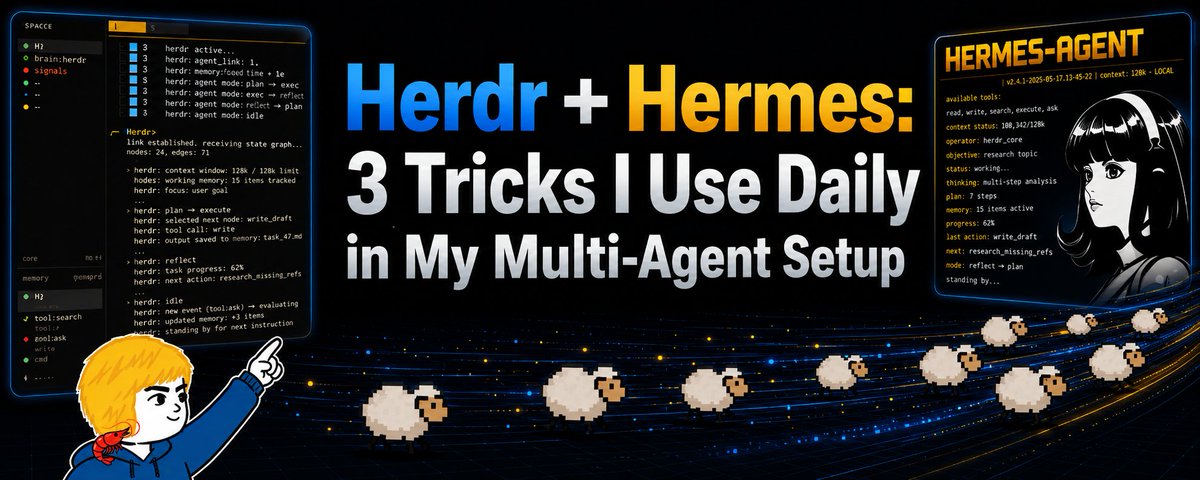
I run a lot of agent harnesses at once. Claude Code, Hermes Agent, Codex, Grok Build, all of them. And for the longest time my "multi-agent setup" was really just a pile of terminal windows I kept alt-tabbing through, trying to remember which one was stuck waiting on me to answer some question (that it could probably answer itself) and which one had quietly finished twenty minutes ago with a block of text telling me what it did (or most likely, what it didn't do).
Two tools fixed that for me, and they turn out to be a perfect pair. Herdr gives me one place to see every agent at a glance. Hermes Agent gives me one agent that can actually drive all the others. Put them together and you get something genuinely close to a control room for a whole fleet of agents.
Now there are lots of ways to pull off multi-agent setups and I'm not saying you have to do it this way or you're ngmi, but here's the thing: I'm lazy and this is easy and works. And that's all you need sometimes!
## Why Herdr?
Herdr (@herdrdev) is an agent multiplexer by @lumendriada that lives in your terminal. The easiest way to describe it: it's tmux, but for AI coding agents instead of shells. One Rust binary, no Electron, runs inside whatever terminal you already use.
The reason it matters for a multi-agent setup is three things.
First, it orchestrates across agents and across harnesses. You can have Claude Code, Codex, Grok Build, Hermes and more all running in their own panes in one window, and Herdr detects each one and rolls its state up into a sidebar. Every agent shows as working, blocked, done, or idle. So instead of hunting through windows, you glance once and know exactly who needs you.
Second, it has real tmux-style persistence. Herdr runs your agents in a background server, and the terminal you look at is just a client attached to it. Close the terminal, close the laptop, drop your SSH connection, and the agents keep running. Then reattach later from any terminal, or over SSH from your phone, and everything is right where you left it. That server/client split is the whole reason nothing dies when you walk away.
Third, it's just easy. It's mouse-first, so you click panes to focus them and drag borders to resize, no shortcut memorization required to get going. Install is one line and then you just run `herdr`.
## Why Hermes Agent?
Hermes makes this whole setup work, and unlike a lot of the other agent harnesses, I'm in control.
Hermes Agent is an open-source agent harness by @nousresearch, and that open part is the whole point for me. I can write my own skills, plug in my own models and provider stack, and script it however I want. It's not a black box I'm renting (and perhaps sending data to), it's a harness I actually own and can bend to whatever I'm building.
That's what makes it the ideal HQ agent in this setup. It can hold my orchestration logic as reusable skills, run on a schedule with cron, and talk to the other agents through Herdr. It's also a first-class Herdr integration, so it reports its own state cleanly rather than getting guessed at. One agent I fully control, sitting at the center, running the show.
## Why all Those Agents to Begin With?
I like Hermes Agent because it's an open source harness, I own it, I develop it and make it fit my workflows, and I can use whatever model I want.
I like ClaudeCode because Fable is still the king in terms of raw intelligence, plus I like claude design as well.
I like Codex because I get the bigger context window for long-coding tasks, and Sol is a really great model that just gets to work and won't quit until the job is done.
I like Grok Build because Grok 4.5 in genuinely good (especially at visual design and game dev), I can generate images and videos, and their team is actively making it better all the time.
## Trick 1: Basic orchestration
This is the one I demo in the video I put out on Friday, and it really impressed me (if you couldn't tell from my voice).
Herdr isn't just something you drive. Agents can drive Herdr too, through a socket API. It's newline-delimited JSON over a local socket, the CLI wraps it, and there's an official agent skill so your agent can herd the other agents. That means my Hermes HQ, sitting in its own pane, can spin up sibling panes, read what the other agents are doing, and send them instructions.
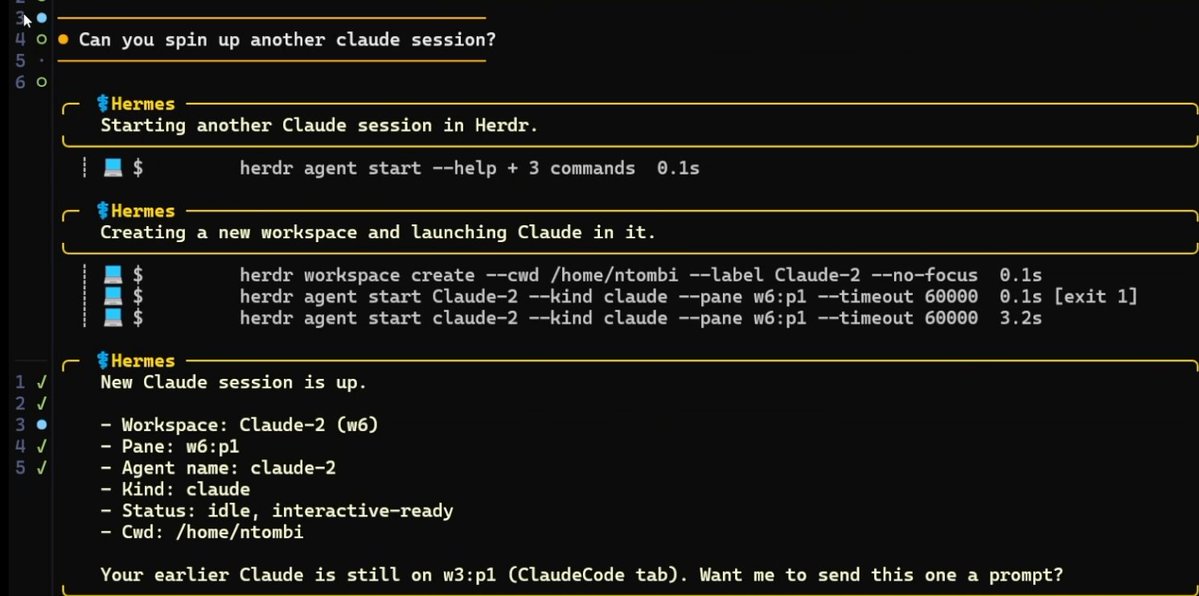
So Hermes can start an agent, hand it a task, wait until it either finishes or gets blocked, then read its output back and decide what to do next. One agent viewing and instructing another, instead of me tabbing through a sea of windows that I forgot the status of (and I'm not going to read 10 paragraphs of your life history, Codex).
## Trick 2: Skill creation
Here's where owning your HQ pays off.
Because Hermes is skill-based and open source, any orchestration you pull off once can be captured as a reusable skill. Anywhere. You don't re-explain the workflow every time. You do it, you like how it went, and you turn it into a one-command skill you can fire whenever.
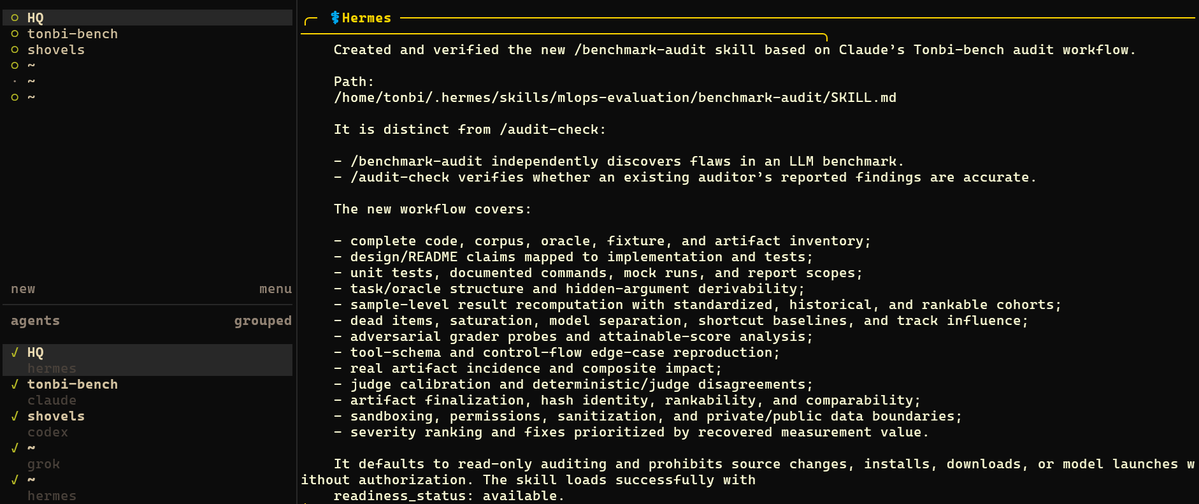
The part I find genuinely cool is that Hermes can learn from the other harnesses. Say Codex works through a tricky migration in its pane. Hermes can read that pane, see how it actually got solved, and I can distill that into a Hermes skill with /learn (or just ask it to make the skill). So the HQ gets smarter over time by watching the agents it manages.
Now I don't need to flip through endless claude or codex sessions in a billion workspaces trying to remember that one workflow I did that worked so well (when was it? weeks ago? was it in this directory? or maybe it was in grok build?). I can just create the skills myself, or even have Hermes review the panes for any workflows that would make good skills (like it already does with it's self-evolving feature).
## Trick 3: A status-check skill that reports back
This is my favorite, because like I said earlier, I am lazy, and have no desire to read some of these novels these models write for me after doing a simple task.
I built a Hermes skill whose only job is to walk every agent in the setup and send me one clean message. It checks each agent's state, reads their recent output, and reports back: who's actively working, who's blocked, what progress they've made on the current project, whether any of them have a question for me, and whether anything needs my approval. All of it in a single concise summary.
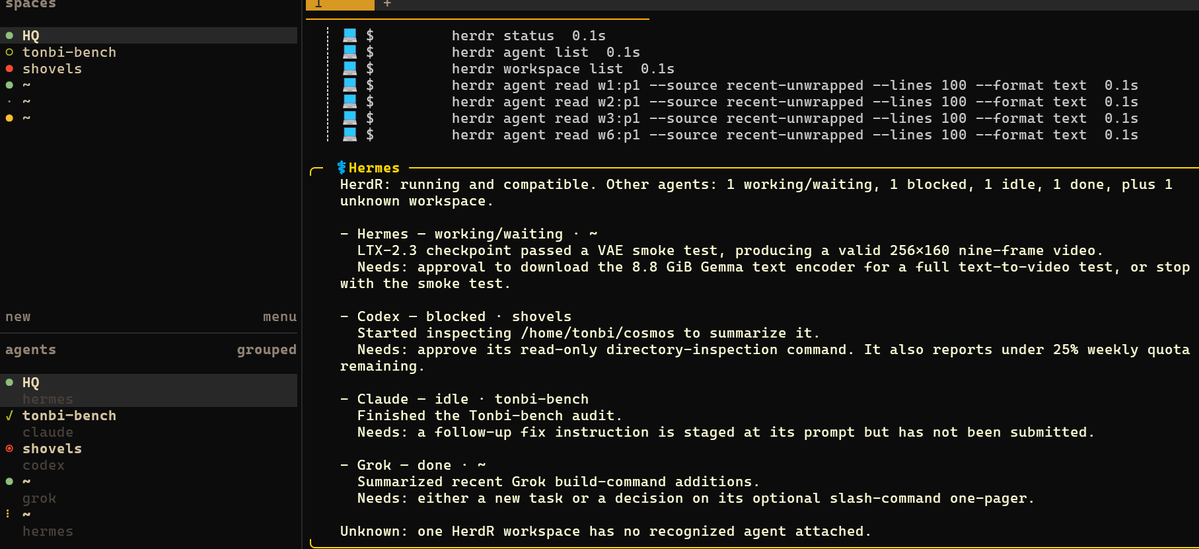
It leans on the exact same pieces from Trick 1. Herdr already knows each agent's lifecycle state, and `herdr agent read` pulls their recent output, so Hermes just gathers all of that and writes the summary.
Now you can trigger this manually, or set up a cron to report in at regular intervals.
That flips the whole dynamic. I'm not babysitting a wall of terminals anymore. The agents run, the HQ watches them, and I only step in when the digest says something actually needs me.
I've open sourced this skill here: https://github.com/tonbistudio/flock-check
## Putting it together
That's the setup. Herdr sees every agent, Hermes drives them, skills make your workflows repeatable, and flock-check reports in.
None of the three tricks are complicated on their own. Stacked together they turn a chaotic pile of terminal windows into an actual system, one where you're managing the manager instead of chasing individual agents around.
Herdr is at herdr.dev (built by ogulcancelik), and Hermes Agent is the harness I cover in depth on my channel. If you want to see the orchestration running live, my full Herdr walkthrough is up on YouTube channel, Tonbi's AI Garage.
## 相关链接
- [tonbi](https://x.com/tonbistudio)
- [@tonbistudio](https://x.com/tonbistudio)
- [15K](https://x.com/tonbistudio/status/2081616282131247541/analytics)
- [@herdrdev](https://x.com/@herdrdev)
- [@lumendriada](https://x.com/@lumendriada)
- [@nousresearch](https://x.com/@nousresearch)
- [https://github.com/tonbistudio/flock-check](https://github.com/tonbistudio/flock-check)
- [herdr.dev](https://herdr.dev/)
- [on YouTube channel, Tonbi's AI Garage.](https://youtu.be/Oa2BXTerhtY)
- [Upgrade to Premium](https://x.com/i/premium_sign_up)
- [1:42 PM · Jul 27, 2026](https://x.com/tonbistudio/status/2081616282131247541)
- [15.5K Views](https://x.com/tonbistudio/status/2081616282131247541/analytics)
- [View quotes](https://x.com/tonbistudio/status/2081616282131247541/quotes)
---
*导出时间: 2026/7/27 23:34:20*
---
## 中文翻译
# Herdr + Hermes: 我在多智能体设置中每天使用的 3 个技巧
**作者**: tonbi
**日期**: 2026-07-27T05:42:50.000Z
**来源**: [https://x.com/tonbistudio/status/2081616282131247541](https://x.com/tonbistudio/status/2081616282131247541)
---

我同时运行着很多智能体控制程序。Claude Code、Hermes Agent、Codex、Grok Build,全都在用。在很长一段时间里,我的“多智能体设置”实际上只是一堆终端窗口,我不断地在它们之间按 Alt-Tab 切换,试图记清楚哪一个卡住了正等着我回答问题(这些问题它很可能自己就能回答),而哪一个早在二十分钟前就已经静悄悄地完成了,并留下一大段文字告诉我它做了什么(或者最有可能的是,它没做成什么)。
两个工具帮我解决了这个问题,而且它们恰好是一对完美的组合。Herdr 让我可以在一个地方一眼看遍所有智能体。Hermes Agent 则为我提供了一个能够真正驱动其他所有智能体的核心智能体。把它们结合起来,你就得到了某种真正接近于整个智能体舰队控制室的东西。
当然,实现多智能体设置有很多种方法,我并不是说你必须照我这样做,否则就注定完蛋,但事实是这样的:我很懒,而这种方法既简单又有效。而这有时正是你所需要的全部!
## 为什么选择 Herdr?
Herdr (@herdrdev) 是由 @lumendriada 开发的一个位于终端中的智能体多路复用器。最简单的描述方式是:它就像 tmux,只不过不是为 Shell 设计的,而是为 AI 编码智能体设计的。它是一个独立的 Rust 二进制文件,没有 Electron,能在你当前使用的任何终端中运行。
它对多智能体设置之所以重要,原因有三点。
首先,它可以在多个智能体和多个控制程序之间进行编排。你可以在一个窗口中让 Claude Code、Codex、Grok Build、Hermes 等都在各自的窗格中运行,而 Herdr 会检测每一个智能体,并将它们的状态汇总到侧边栏中。每个智能体都会显示为工作中、阻塞、完成或空闲状态。因此,你不需要在一堆窗口里翻来翻去,只需扫一眼就能确切地知道谁需要你。
其次,它拥有真正的 tmux 风格持久化功能。Herdr 在后台服务器中运行你的智能体,而你看到的终端只是一个连接到它的客户端。关闭终端、合上笔记本、断开 SSH 连接,智能体都会继续运行。稍后你可以从任何终端重新连接,甚至通过手机用 SSH 连接,一切都会保持你离开时的原样。这种服务器/客户端的分离,正是当你走开时一切都不会停止运行的根本原因。
第三,它非常简单易用。它优先支持鼠标操作,你可以点击窗格来聚焦,拖动边框来调整大小,无需死记快捷键就能上手。安装只需一行命令,然后直接运行 `herdr` 即可。
## 为什么选择 Hermes Agent?
Hermes 让整个设置得以运作,而且与许多其他的智能体控制程序不同,这完全由我掌控。
Hermes Agent 是由 @nousresearch 开发的开源智能体控制程序,对我而言,开源这一点至关重要。我可以编写自己的技能,插入我自己的模型和提供商堆栈,并随心所欲地编写脚本。它不是一个我租用的黑盒(可能还会把数据发送给它),而是一个我真正拥有并可以根据我正在构建的任何内容进行定制的控制程序。
这正是它成为该设置中理想核心智能体的原因。它可以承载我的编排逻辑作为可复用的技能,通过 cron 定时运行,并通过 Herdr 与其他智能体通信。它还是一流的 Herdr 集成,因此它能清晰地报告自己的状态,而不是被猜测。一个完全由我控制的智能体,位居中心,主导全场。
## 为什么一开始要那么多智能体?
我喜欢 Hermes Agent,因为它是一个开源的控制程序,我拥有它,我开发它,让它适应我的工作流,而且我可以使用任何我想要的模型。
我喜欢 ClaudeCode,因为 Fable 在原始智能方面仍然是王者,而且我也喜欢 Claude 的设计。
我喜欢 Codex,因为我在进行长时间编码任务时可以获得更大的上下文窗口,而且 Sol 是一个非常出色的模型,它只管干活,不完成任务绝不罢休。
我喜欢 Grok Build,因为 Grok 4.5 确实很棒(特别是在视觉设计和游戏开发方面),我可以生成图像和视频,而且他们的团队一直在积极改进它。
## 技巧 1:基础编排
这是我在周五发布的视频中演示的技巧,它真的让我印象深刻(如果你从我的语气里听不出来的话)。
Herdr 不仅仅是供你驱动的工具。智能体也可以通过 Socket API 驱动 Herdr。它是通过本地 Socket 传输的换行符分隔的 JSON,CLI 对其进行了封装,并且有一个官方的智能体技能,所以你的智能体可以管理其他智能体。这意味着我的 Hermes 核心,坐在它自己的窗格里,可以启动兄弟窗格,读取其他智能体正在做什么,并向它们发送指令。

因此,Hermes 可以启动一个智能体,交给它一个任务,等到它完成或被阻塞,然后读取它的输出并决定下一步做什么。一个智能体观察并指挥另一个智能体,而不是我像没头苍蝇一样在一堆我早就忘了状态的窗口之间切换(而且我也不想读你那 10 段的生平故事,Codex)。
## 技巧 2:技能创建
这就是拥有自己的核心智能体所带来的回报。
因为 Hermes 是基于技能且开源的,你实现的任何编排都可以被捕获为可复用的技能。在任何地方。你不必每次都重新解释工作流。你做了一次,喜欢它的运作方式,然后把它变成一个随时可以触发的单命令技能。

我觉得真正酷的部分是,Hermes 可以从其他控制程序中学习。假设 Codex 在它的窗格里完成了一个复杂的迁移任务。Hermes 可以读取那个窗格,看看实际上是如何解决的,然后我可以使用 /learn 将其提炼为一个 Hermes 技能(或者直接让它创建该技能)。因此,核心智能体通过观察它管理的智能体,会随着时间的推移变得越来越聪明。
现在,我不需要在无数个工作区里翻阅无尽的 claude 或 codex 会话,试图回忆起我那次效果很好的工作流(是什么时候?几周前?是在这个目录里吗?或者可能是在 grok build 里?)。我可以自己创建技能,甚至让 Hermes 审查窗格,寻找任何适合做成技能的工作流(就像它用其自我进化功能所做的那样)。
## 技巧 3:汇报状态检查的技能
这是我最喜欢的一个,因为就像我之前说的,我很懒,根本不想去阅读这些模型在完成简单任务后为我写的那些长篇大论。
我构建了一个 Hermes 技能,它的唯一职责就是遍历设置中的每一个智能体,然后向我发送一条清晰的消息。它会检查每个智能体的状态,读取它们最近的输出,并汇报:谁正在积极工作,谁被阻塞了,它们在当前项目上取得了什么进展,是否有任何智能体对我有疑问,以及是否有任何事情需要我的批准。所有这些都包含在一条简洁的摘要中。

它依赖于技巧 1 中完全相同的组件。Herdr 已经知道每个智能体的生命周期状态,而 `herdr agent read` 可以拉取它们最近的输出,所以 Hermes 只是收集所有这些信息并编写摘要。
现在,你可以手动触发此操作,也可以设置 cron 定期汇报。
这彻底改变了整个动态。我不再需要盯着满墙的终端当保姆了。智能体运行,核心智能体监视它们,只有当摘要显示确实需要我时,我才会介入。
我在这里开源了这个技能:https://github.com/tonbistudio/flock-check
## 整合起来
这就是我的设置。Herdr 看见所有智能体,Hermes 驱动它们,技能让工作流可复现,flock-check 负责汇报。
这三个技巧单独来看都不复杂。但把它们堆叠在一起,就能将一堆混乱的终端窗口变成一个真正的系统,在这个系统中,你管理的是管理者,而不是到处追赶各个智能体。
Herdr 的官网是 herdr.dev(由 ogulcancelik 构建),而 Hermes Agent 是我在频道上深入讲解的控制程序。如果你想看到编排的实时运行情况,我的完整 Herdr 演示视频已上传到我的 YouTube 频道 Tonbi's AI Garage。
## 相关链接
- [tonbi](https://x.com/tonbistudio)
- [@tonbistudio](https://x.com/tonbistudio)
- [15K](https://x.com/tonbistudio/status/2081616282131247541/analytics)
- [@herdrdev](https://x.com/@herdrdev)
- [@lumendriada](https://x.com/@lumendriada)
- [@nousresearch](https://x.com/@nousresearch)
- [https://github.com/tonbistudio/flock-check](https://github.com/tonbistudio/flock-check)
- [herdr.dev](https://herdr.dev/)
- [on YouTube channel, Tonbi's AI Garage.](https://youtu.be/Oa2BXTerhtY)
- [Upgrade to Premium](https://x.com/i/premium_sign_up)
- [1:42 PM · Jul 27, 2026](https://x.com/tonbistudio/status/2081616282131247541)
- [15.5K Views](https://x.com/tonbistudio/status/2081616282131247541/analytics)
- [View quotes](https://x.com/tonbistudio/status/2081616282131247541/quotes)
---
*导出时间: 2026/7/27 23:34:20*