# Getting the most out of GPT-5.6: Sol, Terra, and Luna
**作者**: Cerebras
**日期**: 2026-07-27T19:44:39.000Z
**来源**: [https://x.com/cerebras/status/2081828128952095022](https://x.com/cerebras/status/2081828128952095022)
---
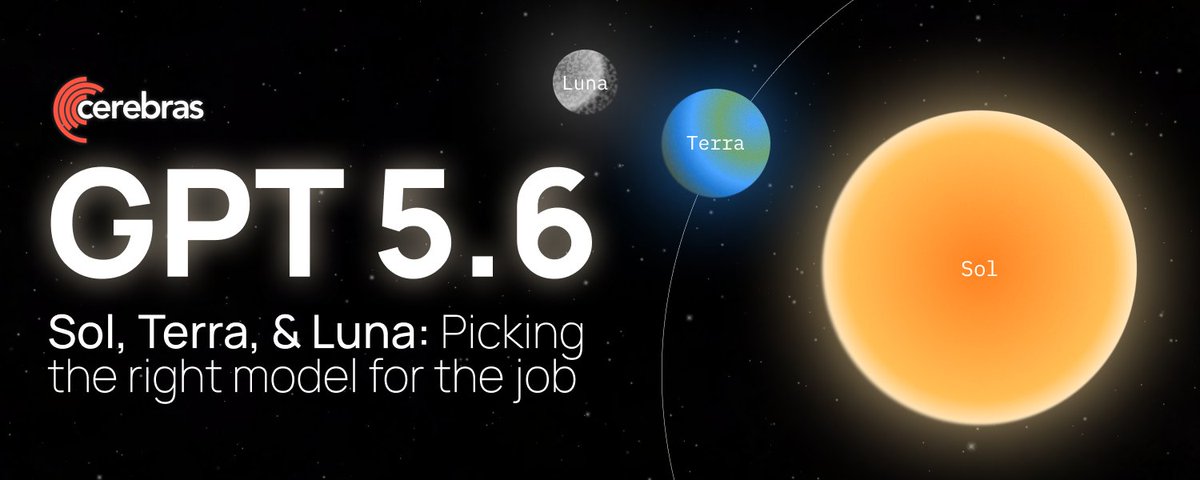
Authors: @0xSero & Zhenwei Gao (@zhennydez)
Your Codex subscription now comes with 3 main models, Sol, Terra, and Luna, each independently trained and served, with reasoning dials. Together, they let you choose a balance of speed, cost, and intelligence for each task.
## Price Comparison at a Glance (OpenAI developer pricing July 21 2026)
On price, Terra costs 1/2 as much as Sol, while Luna costs one-fifth as much, across both short- and long-context usage.
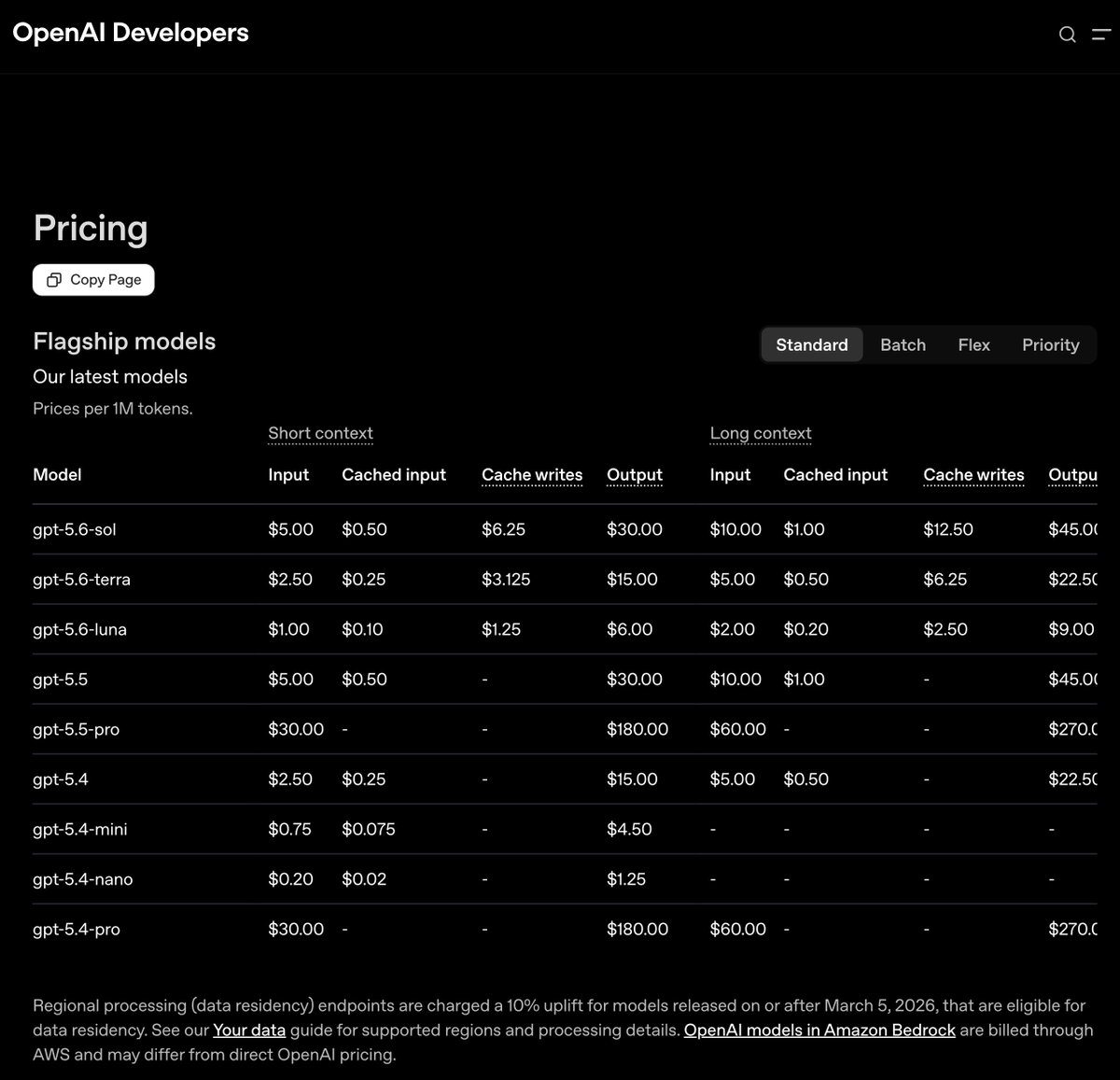
This pricing tracks pretty closely with intelligence and speed. In practice, each model is best suited to a different kind of work:
1. Sol is the smartest of the bunch. It’s best suited for long running tasks, complicated technical challenges, and personal assistance. That added capability comes with higher latency and cost, but Sol excels at coordinating subagents and tackling large projects across extended workflows.
2. Terra sits comfortably in the middle, providing most of the intelligence at half the price of Sol. It’s also moderately faster. Paired with Sol, Terra can be a strong subagent: Sol can weigh the options and set the direction, then hand off implementation to the faster, cheaper Terra.
3. Luna is the fastest and most affordable of the three, while still outperforming most models on the market, at just one-fifth the price of Sol. For most everyday AI tasks, Luna is more than capable, delivering reliable performance at an incredibly low cost. As of July 17, 2026, it ranks 16/576 of all models on Artificial Intelligence’ model intelligence index.
## Picking the Best Model for the Task
How do you decide which model should handle a request and how much reasoning it should apply? That choice must be made before any tokens are generated.
## Start with Luna, Then Escalate.
A simple way to approach any task is to choose the model that offers the best balance of speed and intelligence at the price you are willing to pay. Within the GPT-5.6 family:
1. GPT-5.6-Sol: Highest intelligence floor and ceiling
2. GPT-5.6-Luna: Highest speed floor and ceiling
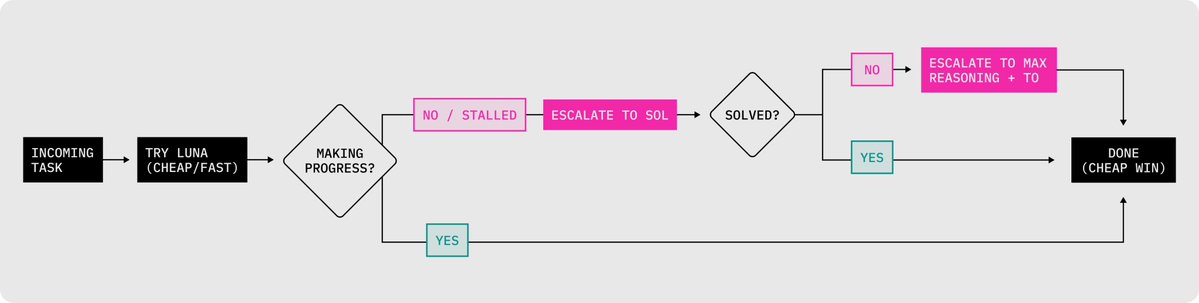
A good default is to start most tasks with Luna, then move up to Terra or Sol when progress stalls, such as when agents get stuck, fixes stop landing, or the model begins losing the thread. If you are willing to pay more for both speed and intelligence, you can run Sol on Cerebras at 750 tokens per second, which is up to 10x faster speed advantage than regular mode of Sol.
## Test-time Compute / Reasoning
Another way to tailor how the model handles a task is by adjusting its reasoning level. In Codex, you can choose from five options: “Light,” “Medium,” “High,” “Extra High,” and “Ultra”.
By using more computer processing time to increase the accuracy of the output, the model will produce tokens arguing with and questioning itself before giving the user an answer.
- Light: Amazing to get basic tasks completely quickly, finding files, cloning and configuring a repo, organizing your downloads, and more. This is the reasoning level you should choose for basically anything where the model knows what it needs to do and where the likelihood of failing is low.
- Medium: A good everyday default for tasks that require some interpretation, planning, or debugging, but not deep exploration. This could include summarizing across files, implementing a small feature, or troubleshooting a familiar issue.
- High and Extra-High: Best for difficult STEM and coding tasks, such as complex debugging, architecture decisions, large refactors, or problems with several plausible approaches. Most routine assistant tasks do not need this much, if any, reasoning.
- Ultra: Use the highest reasoning mode if you really know what you want and have detailed constraints, especially on work that spans multiple independent systems. For example, building interfaces and APIs to connect 2 APIs in a very specific way.
We typically reserve Ultra mode for our biggest research questions and novel challenges. Ultra mode has a tendency to drain your usage limits very quickly, but you can rest assured the model has used the full reasoning budget available to explore, verify, and refine its answer.
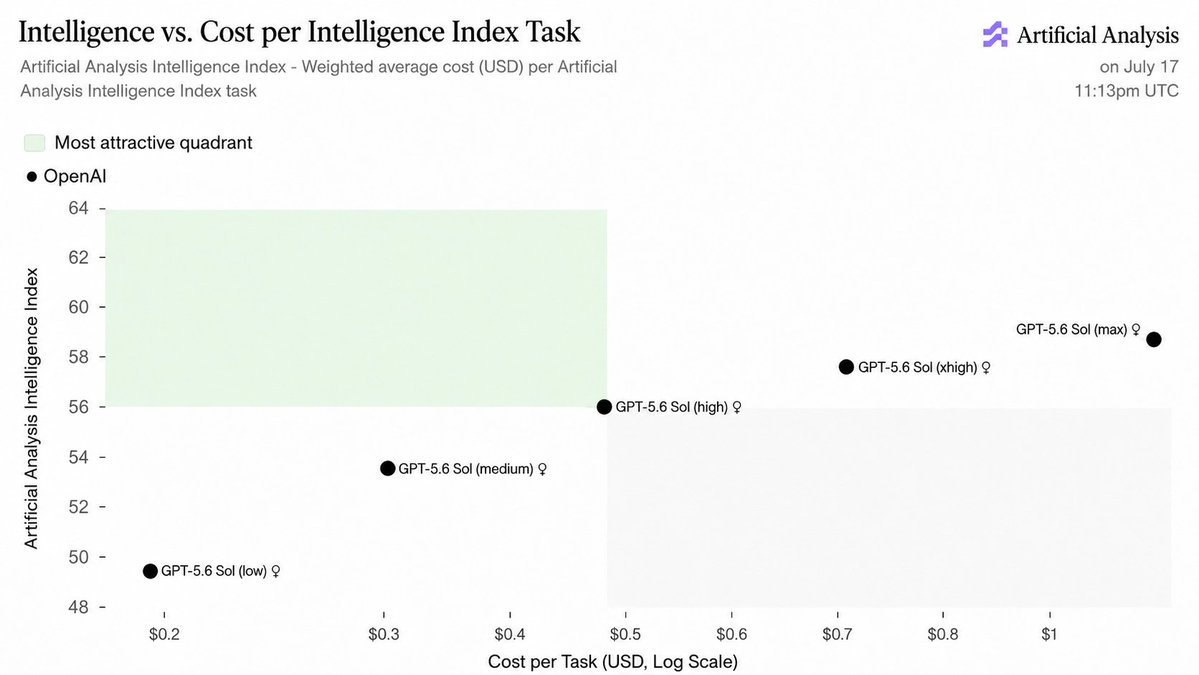
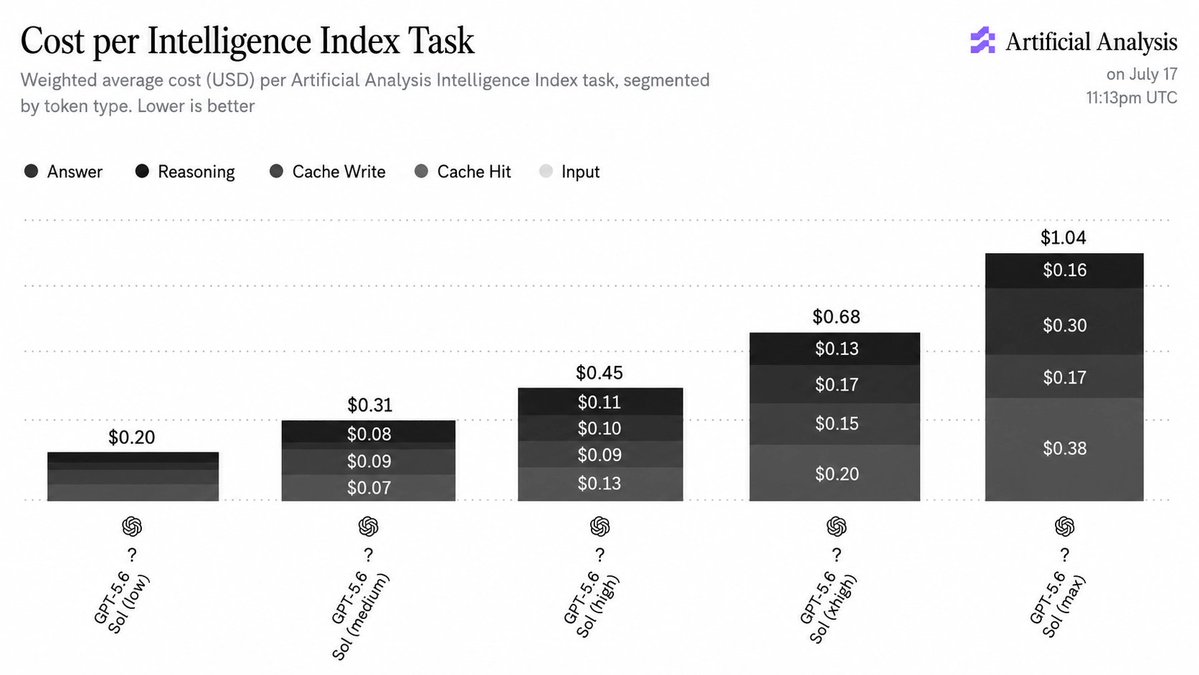
In Artificial Analysis’ testing from July 17, each step up in GPT-5.6 Sol’s reasoning level increased the average cost per task by roughly 50%. The charts below show how additional reasoning affects both intelligence and cost.
## Take Advantage of Cache Reads.
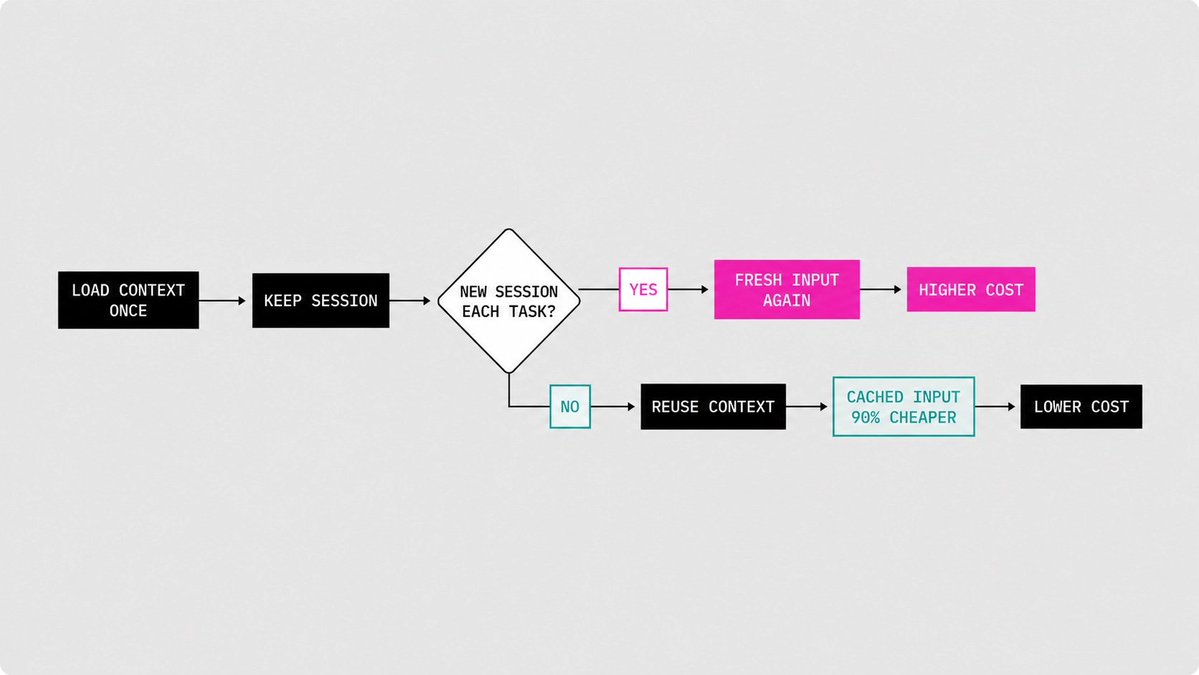
Cached input is 90% cheaper than fresh input. Codex tasks that repeatedly process the same codebase or context benefit enormously.
Each of the GPT-5.6 models has a cache TTL of ~30 minutes. That means maintaining a single session you work in will be better than starting a new session for each task.
Codex’s compaction has also gotten good enough that you can run a single session to hundreds of millions of tokens without even experiencing any issues.
If you keep the session hot, you’ll have much cheaper prompt processing. You can set Codex automations scheduled every 20 minutes to keep your cache alive and use those automations to drive long running processes.
## Using Multi-Agent Workflows Effectively.
Different models are trained on different data and optimized for different goals, meaning each will be slightly better or worse at certain things.
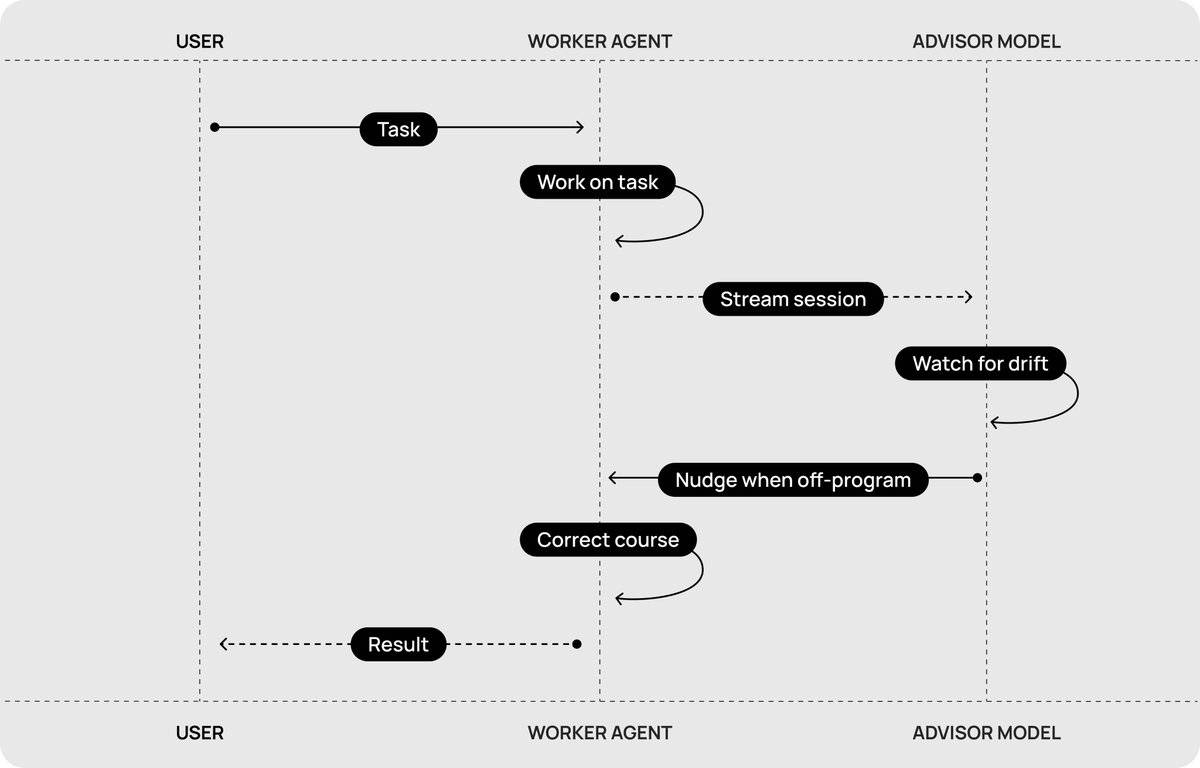
The Advisor workflow, gives one agent a narrow job: read the full session, keep track of the goal and constraints, and step in whenever the worker starts drifting. This helps automatically steer the worker and improve reliability across longer tasks.
Local Codex also lets you bring other providers to the app. This means you can experiment with lower-cost, open-weight models like Kimi K2.7 Code, or models with different strengths, such as GLM-5.2 for long-horizon reasoning and coding, while staying inside the familiar Codex experience.
You can then use these external models for bounded subagent work, helping reduce costs or take advantage of the different strengths of each model.
One important nuance: this is done through Codex configuration and custom agent files, rather than a simple in-app model picker. Codex supports local providers such as Ollama and LM Studio, along with custom Responses-compatible providers.
## Conclusion
Subscription usage limits are pretty generous, but as AI agents become more useful to more people, many are pushing the limits way beyond what one subscription can offer.
And even if you have the money to burn, not every “frontier” model sits at the frontier of all use cases. Often a small model can completely wipe the floor with a consortium of the world’s best models on a few benchmarks.
Speed is an important toggle, during the day when you’re interacting with your agents, high tok/s can dramatically improve your experience. During off hours, a /goal with a slow, extra reasoning model can make a world’s difference.
And lastly, keep an eye on Artificial Analysis, it’s full of high quality model speed benchmarks and intelligence indexes.
Thank you to Sarah Chieng (@MilksandMatcha), Joyce Er, and Hai-Ching for your review and input, and Halley Change (@halleychangg) for designing the graphics featured in this blog.
## 相关链接
- [Cerebras](https://x.com/cerebras)
- [@cerebras](https://x.com/cerebras)
- [132K](https://x.com/cerebras/status/2081828128952095022/analytics)
- [@0xSero](https://x.com/@0xSero)
- [@zhennydez](https://x.com/@zhennydez)
- [independently trained and served](https://community.openai.com/t/introducing-gpt-5-6-series-sol-terra-and-luna-coming-july-9-10am-pt/1384931)
- [OpenAI developer pricing July 21 2026](https://developers.openai.com/api/docs/pricing)
- [smartest of the bunch](https://openai.com/index/previewing-gpt-5-6-sol/)
- [16/576 of all models on Artificial Intelligence’ model intelligence index](https://artificialanalysis.ai/models/gpt-5-6-luna)
- [Sol on Cerebras at 750 tokens per second](https://openai.com/index/previewing-gpt-5-6-sol/)
- [up to 10x faster speed advantage than regular mode of Sol](https://artificialanalysis.ai/models/gpt-5-6-sol)
- [reasoning level](https://x.com/cerebras/status/2067357992929153268)
- [Artificial Analysis’ testing from July 17](https://artificialanalysis.ai/models/gpt-5-6-sol/)
- [90% cheaper than fresh input](https://developers.openai.com/api/docs/guides/prompt-caching)
- [has a cache TTL of ~30 minutes](https://developers.openai.com/api/docs/guides/prompt-caching)
- [@MilksandMatcha](https://x.com/@MilksandMatcha)
- [@halleychangg](https://x.com/@halleychangg)
- [Upgrade to Premium](https://x.com/i/premium_sign_up)
- [3:44 AM · Jul 28, 2026](https://x.com/cerebras/status/2081828128952095022)
- [132.8K Views](https://x.com/cerebras/status/2081828128952095022/analytics)
- [View quotes](https://x.com/cerebras/status/2081828128952095022/quotes)
---
*导出时间: 2026/7/28 12:31:43*
---
## 中文翻译
# 充分利用 GPT-5.6:Sol、Terra 和 Luna
**作者**: Cerebras
**日期**: 2026-07-27T19:44:39.000Z
**来源**: [https://x.com/cerebras/status/2081828128952095022](https://x.com/cerebras/status/2081828128952095022)
---

作者:@0xSero & Zhenwei Gao (@zhennydez)
您的 Codex 订阅现在包含三个主要模型:Sol、Terra 和 Luna。每个模型都经过独立训练和服务,并配有推理调节功能。它们共同让您能够为每项任务在速度、成本和智能之间选择最佳平衡。
## 价格对比一览(OpenAI 开发者定价 2026 年 7 月 21 日)
在价格方面,无论是在短上下文还是长上下文使用中,Terra 的成本是 Sol 的一半,而 Luna 的成本仅为 Sol 的五分之一。

这种定价与智能和速度非常吻合。在实践中,每个模型最适合不同类型的工作:
1. Sol 是其中最智能的。它最适合长时间运行的任务、复杂的技术挑战和个人助理工作。这种附加能力的代价是更高的延迟和成本,但 Sol 擅长协调子代理并在扩展的工作流程中处理大型项目。
2. Terra 位居中间,以 Sol 一半的价格提供了大部分智能。它的速度也适度更快。与 Sol 搭配使用时,Terra 可以成为一个强大的子代理:Sol 可以权衡选项并设定方向,然后将实施工作交给更快、更便宜的 Terra。
3. Luna 是三者中速度最快且最实惠的,同时其性能仍优于市场上的大多数模型,价格仅为 Sol 的五分之一。对于大多数日常 AI 任务,Luna 游刃有余,能以极低的成本提供可靠的性能。截至 2026 年 7 月 17 日,它在 Artificial Intelligence 的模型智能指数中在所有模型中排名第 16/576。

## 为任务选择最佳模型
您如何决定哪个模型应该处理请求以及应该应用多少推理?该选择必须在生成任何 token 之前做出。
## 从 Luna 开始,然后升级。
处理任何任务的一种简单方法是选择一个在您愿意支付的价格下提供速度和智能最佳平衡的模型。在 GPT-5.6 系列中:
1. GPT-5.6-Sol:最高的智能下限和上限
2. GPT-5.6-Luna:最高的速度下限和上限
一个好的默认设置是用 Luna 开始大多数任务,然后在进展停滞时升级到 Terra 或 Sol,例如当代理卡住、修复不再生效或模型开始失去思路时。如果您愿意为速度和智能支付更多费用,您可以在 Cerebras 上以每秒 750 个 token 的速度运行 Sol,这比 Sol 的常规模式拥有高达 10 倍的速度优势。

## 测试时计算 / 推理
定制模型处理任务的另一种方法是调整其推理级别。在 Codex 中,您可以从五个选项中选择:“Light(轻度)”、“Medium(中度)”、“High(高度)”、“Extra High(超高)”和“Ultra(极致)”。
通过使用更多的计算机处理时间来提高输出的准确性,模型将在向用户提供答案之前生成用于自我论证和质疑的 token。
- Light(轻度):非常适合快速完成基本任务,例如查找文件、克隆和配置仓库、整理下载内容等。对于模型确切知道需要做什么且失败概率较低的任何情况,您都应选择此推理级别。
- Medium(中度):对于需要一定解释、规划或调试,但不需要深入探索的任务,这是一个很好的日常默认设置。这可能包括跨文件总结、实现小功能或排查熟悉的问题。
- High(高度)和 Extra-High(超高):最适合困难的 STEM 和编码任务,例如复杂的调试、架构决策、大型重构,或有几种可行方法的问题。大多数常规助理任务不需要这么多推理(如果有的话)。
- Ultra(极致):如果您非常清楚自己想要什么并有详细的约束条件,请使用最高推理模式,尤其是对于跨越多个独立系统的工作。例如,构建接口和 API 以非常特定的方式连接 2 个 API。
我们通常将 Ultra 模式保留给最大的研究问题和 novel 挑战。Ultra 模式往往会很快耗尽您的使用限额,但您可以放心,模型已充分利用全部推理预算来探索、验证和完善其答案。
在 Artificial Analysis 7 月 17 日的测试中,GPT-5.6 Sol 的推理级别每提升一级,每个任务的平均成本大约增加 50%。下图显示了额外的推理如何影响智能和成本。

## 利用缓存读取。
缓存的输入比新鲜输入便宜 90%。重复处理相同代码库或上下文的 Codex 任务从中受益匪浅。
每个 GPT-5.6 模型的缓存 TTL(生存时间)约为 30 分钟。这意味着维护您工作的单个会话比为每个任务启动新会话要好。
Codex 的压缩功能也已经足够好,您可以在单个会话中运行数亿个 token 而不会遇到任何问题。
如果您保持会话处于活跃(热)状态,您的提示处理成本将低得多。您可以设置每 20 分钟运行一次的 Codex 自动化来保持缓存有效,并使用这些自动化来驱动长时间运行的进程。

## 有效使用多代理工作流程。
不同的模型在不同的数据上训练并针对不同的目标进行优化,这意味着每个模型在某些方面都会略好或略差。
Advisor 工作流程赋予一个代理一项狭窄的工作:读取完整的会话,跟踪目标和约束,并在工作者开始偏离时介入。这有助于自动引导工作者并提高较长任务的可靠性。
本地 Codex 还允许您将其他提供商引入应用程序。这意味着您可以在熟悉的 Codex 体验中,试验低成本的开源权重模型,如 Kimi K2.7 Code,或具有不同优势的模型,例如用于长线推理和编码的 GLM-5.2。
然后,您可以将这些外部模型用于有界的子代理工作,有助于降低成本或利用每个模型的不同优势。
一个重要的细微差别:这是通过 Codex 配置和自定义代理文件完成的,而不是简单的应用内模型选择器。Codex 支持本地提供商(如 Ollama 和 LM Studio)以及自定义与 Responses 兼容的提供商。

## 结论
订阅使用限额相当慷慨,但随着 AI 代理对更多人变得更有用,许多人正在将需求推向远超单一订阅所能提供的极限。
而且即使您有足够的资金,并非每个“前沿”模型都处于所有用例的前沿。通常,一个小模型可以在某些基准测试中完全击败世界最佳模型的联合体。
速度是一个重要的开关,白天当您与代理交互时,高 tok/s(每秒 token 数)可以显著改善您的体验。在非工作时间,使用慢速、高推理模型的 /goal 可能会产生天壤之别。
最后,请关注 Artificial Analysis,里面充满了高质量的模型速度基准测试和智能指数。
感谢 Sarah Chieng (@MilksandMatcha)、Joyce Er 和 Hai-Ching 的审查和投入,以及 Halley Change (@halleychangg) 设计本博客中使用的图表。
## 相关链接
- [Cerebras](https://x.com/cerebras)
- [@cerebras](https://x.com/cerebras)
- [132K](https://x.com/cerebras/status/2081828128952095022/analytics)
- [@0xSero](https://x.com/@0xSero)
- [@zhennydez](https://x.com/@zhennydez)
- [独立训练和服务](https://community.openai.com/t/introducing-gpt-5-6-series-sol-terra-and-luna-coming-july-9-10am-pt/1384931)
- [OpenAI 开发者定价 2026 年 7 月 21 日](https://developers.openai.com/api/docs/pricing)
- [其中最智能的](https://openai.com/index/previewing-gpt-5-6-sol/)
- [在 Artificial Intelligence 的模型智能指数中所有模型中排名第 16/576](https://artificialanalysis.ai/models/gpt-5-6-luna)
- [在 Cerebras 上以每秒 750 个 token 的速度运行 Sol](https://openai.com/index/previewing-gpt-5-6-sol/)
- [比 Sol 的常规模式拥有高达 10 倍的速度优势](https://artificialanalysis.ai/models/gpt-5-6-sol)
- [推理级别](https://x.com/cerebras/status/2067357992929153268)
- [Artificial Analysis 7 月 17 日的测试](https://artificialanalysis.ai/models/gpt-5-6-sol/)
- [比新鲜输入便宜 90%](https://developers.openai.com/api/docs/guides/prompt-caching)
- [缓存 TTL 约为 30 分钟](https://developers.openai.com/api/docs/guides/prompt-caching)
- [@MilksandMatcha](https://x.com/@MilksandMatcha)
- [@halleychangg](https://x.com/@halleychangg)
- [升级到 Premium](https://x.com/i/premium_sign_up)
- [3:44 AM · Jul 28, 2026](https://x.com/cerebras/status/2081828128952095022)
- [132.8K Views](https://x.com/cerebras/status/2081828128952095022/analytics)
- [查看引用](https://x.com/cerebras/status/2081828128952095022/quotes)
---
*导出时间: 2026/7/28 12:31:43*