# How to Build Services-as-Software Business
**作者**: Alex Vacca
**日期**: 2026-04-15T19:47:23.000Z
**来源**: [https://x.com/itsalexvacca/status/2044502868556992937](https://x.com/itsalexvacca/status/2044502868556992937)
---

Sequoia partner Julien Bek recently published the thesis I have been betting on since 2022.
He calls it "Services: The New Software."
> The argument in one line: the next trillion-dollar company will sell the work, not the tool, because for every dollar of software spend there are six or more dollars of services spend sitting next to it, and AI just turned that services budget into something a startup can actually attack.
I laughed when I read it, because we have been building that company since 2022.
ColdIQ. Seven million in ARR. Four hundred B2B clients. Thirty-plus people across ten countries and four continents. Bootstrapped.
I left an eighty-thousand-dollar operations job at Worldcoin, the iris-scanning company Sam Altman co-founded. My first client paid three thousand a month. We (@MichLieben and I) ran the campaigns ourselves for a year and wrote down everything we learned.
This article is the operating manual I wish someone handed us when we started.
Two readers who can take the most away:
- The operator sitting on an idea they have never acted on.
- The founder plateaued between a small consultancy and a real business.
If that is you, keep reading. Even if you don't fit in the above two buckets, you can still take away lots of scaling and business advice from here.
## The math, in one picture
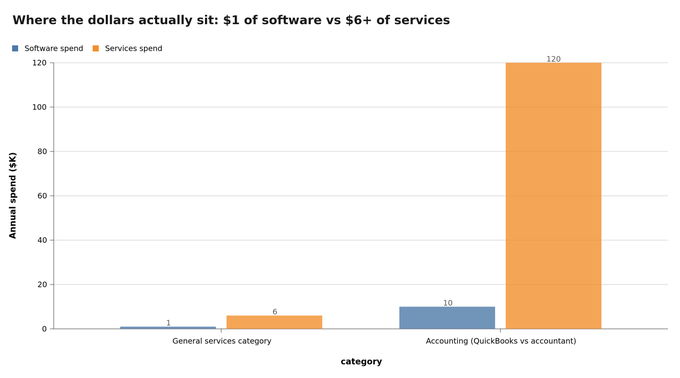
Bek uses a simple example that makes the whole thesis obvious.
A company spends around ten thousand a year on QuickBooks and a hundred and twenty thousand on an accountant who actually closes the books. That is roughly one to twelve in that specific vertical. Most services categories run closer to one to six.
Every software founder is chasing the QuickBooks budget, and the real money is sitting inside the accountant budget.
Cold outbound has the exact same shape.
A B2B company pays a few seats of sales tooling, a single SDR salary, and a meaningful multiple of both to an agency when they hire one. Software is a small line on that budget. The work is the expensive one. I did not need a Sequoia spreadsheet in 2022 to see this. I needed my first client to say yes.
## Copilot versus autopilot, and why only one survives the next model release
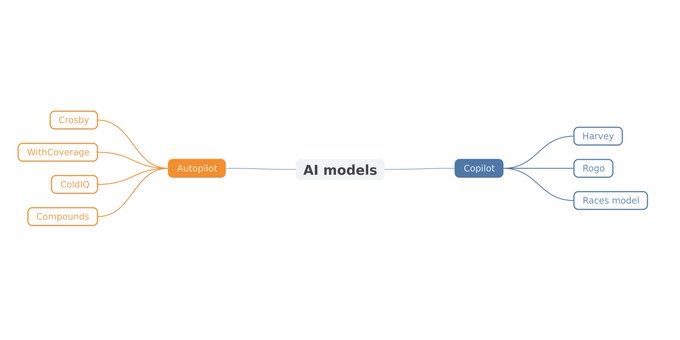
Bek draws a line between two models that look similar on the surface and behave completely differently underneath.
A copilot puts AI in the hand of a professional. The professional takes the output, carries the risk, and owns the client relationship. Harvey sells to law firms that way. Rogo sells to investment banks.
An autopilot skips the professional entirely and sells the outcome directly to the buyer who actually wants it. Crosby ships the NDA to the company that needs one. WithCoverage closes the insurance policy for the CFO. ColdIQ books the meeting. The customer is buying the thing they came for, and the tool is invisible underneath.
Every AI-tool founder I know is asking the same question right now: What happens when the next model update turns my product into a feature?
It is the right question to ask.
A company selling the tool is in a permanent race against the model and has to win by staying upstream of it forever.
A company selling the work improves every time the model does, because the cost of delivery drops while the price to the customer stays put. The margin widens. The data moat deepens. That is the whole difference. One model compresses your business. The other compounds it.
## Worldcoin to $7M ARR: My Journey
In 2022 I was doing operations at Worldcoin, Sam Altman's iris-scanning project. The job paid eighty thousand a year and came with the kind of resume line that opens other doors.
Then Mich (@MichLieben) told me one day that I was his biggest potential competitor if I stayed where I was. That was the nicest insult I had ever received. A month later I quit.
The first client at ColdIQ paid three thousand a month. The early campaigns were run by hand, and every campaign that worked or failed got written up the same day it happened. That discipline of documentation is what eventually turned a services company into a software company.
You run the work manually until you have seen every edge case the market can throw at you, and then you encode the pattern, automate it, and price what comes out of the pipeline like a product instead of labor.
By month thirty-one we had crossed six million in ARR. The company today looks like four hundred clients, thirty-plus employees across ten countries, and $7M+ in ARR. Somewhere in the last stretch I stepped out of daily delivery entirely, and the business has been better since. I was the ceiling.
None of that required being smart. It required being early, being wrong in public a hundred times, and being stubborn enough to refuse the lazy version of "agency" that just means a body shop charging for activity.
The playbook
Here is how I would do it today if I had to start again from zero. Six steps. The order matters more than anything else on the page.
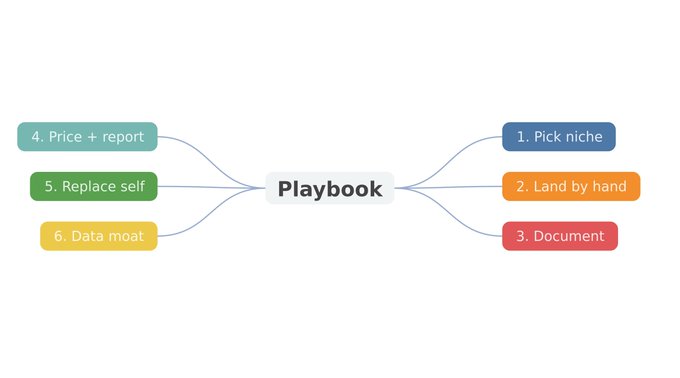
## 1. Pick one outsourced line item inside one industry.
Go narrow. The narrower the slice, the faster you accumulate proprietary data, and the data is the moat.
Three questions help you evaluate a niche:
- Is the work already outsourced to someone today, so that you are swapping into an existing budget line rather than inventing one?
- Is the work mostly intelligence work, meaning pattern recognition and rule application, rather than genuine strategic judgement that only a human can hold?
- Is the services spend in that category meaningfully larger than the software spend?
Cold outbound cleared all three. That is why it worked.
## 2. Land your first clients yourself.
You do not need a website, a deck, or a funnel to start. You need a short list of paying customers who will tell you what they hated about the last vendor they hired, so you learn which part of the work is worth productizing later.
Charge a retainer floor you want to be anchored to in three years. ColdIQ opened at three thousand a month because anything below that left us unable to actually deliver.
- Sell the outcome your client actually wants, not the activity you happen to generate.
- Record and transcribe every sales call.
- The objections you hear in the first ten calls become the copy on the sales page you publish after the first ten clients.
- If a prospect ghosts you twice, move on. You have a targeting problem, and no amount of follow-up will fix it.
## 3. Do the work by hand for as long as it takes, and document every step.
I know you want to build the tool first. Please resist that. The data you accumulate while running the work manually is worth far more than any MVP you could ship in the same window.
At ColdIQ the early campaigns were all run manually, and that period is the training set that let us run more than two thousand two hundred campaigns across hundreds of clients in the years that followed.
Four artifacts to produce from day one:
One markdown file per repeatable task, written as if you are handing it to someone who starts on Monday.
A Loom any time the work involves a cursor.
One decision log per client with dated notes on why you made the calls you made.
One file of failed campaigns and the reasons they failed.
That last file becomes the most valuable artifact you produce in your first year.
## 4. Price the work like a service, and report on it like a product.
> Your clients do not care how the work gets done. They care about the outcome, and they care about being able to watch what is happening.
Sell the outcome, and build dashboards, telemetry, and reports the way a SaaS company would build them.
- One pricing shape that works: an upfront setup fee to cover onboarding, a monthly retainer tied to an outcome metric such as meetings booked or closes delivered, and a performance bonus on top when you exceed the target.
- One reporting cadence that works: a live dashboard for every client from day one, a weekly update from the account owner covering wins and misses and next week's plan, and a quarterly conversation with the decision-maker rather than only the operator.
Retention in a services business starts looking like SaaS retention when the client experience looks like SaaS too.
## 5. Replace yourself on delivery before you scale anything else.
Every agency founder falls into the same trap. You keep doing the work personally because nobody else does it quite as well. You are probably right that they cannot. You are also the ceiling.
Hire in this order:
First a delivery operator who can run multiple accounts alone after a short shadowing period. That role is pure execution and does not require a founder's judgement.
Second a technical automator, fluent in whatever stack you run, whose job is to turn the markdown workflow files into running agents.
Third a head of delivery who manages the first two and owns quality across the book.
Avoid hiring a marketer, a salesperson, or a COO until the delivery layer runs without you. Every early hire outside of delivery is a rounding error at best and a burn-rate accelerator at worst. When I stepped out of the last piece of delivery work that still needed me, the business moved forward the next month.
## 6. Compound the data moat before you compound the software.
Bek's convergence point is the whole long game. Judgement turns into intelligence as your dataset grows, and three years of running the work gives you an asset no pure-SaaS competitor can buy, license, or ship around.
- Save every third-party input you pull, in both raw and cleaned form.
- Save every output you delivered to a client, tagged with the outcome it produced.
- Save the reasoning your team used when they made judgement calls over the top of the system, because the why matters more than the decision once you start training on it.
- Save every client objection and the response that closed it.
Give this process enough time and you end up with a data asset your competitors cannot bootstrap into existence.
Eventually the agents run delivery while the humans run judgement. That transition happens quietly in the background for years before anyone outside the company notices.
## The accelerator
Two years into ColdIQ I started getting a steady stream of messages from operators who wanted to build something like this. Some were still at real jobs sitting on real ideas. Others were running small agencies plateaued somewhere in the middle. A few were asking whether the math still worked in 2026.
I turned the answer into a program. The ColdIQ Accelerator now has more than two hundred and eighty-seven members, and the same model has helped one hundred and seventy-three agencies add somewhere between five and fifty thousand in monthly revenue.
Members get the agents we use internally, the list builder we built for our own delivery, the template library behind more than two thousand two hundred campaigns, and the same playbook that took ColdIQ from zero to three hundred fifty thousand a month.
The program is the operating stack handed over to someone who wants to do what we did without the years of false starts underneath it.
The pattern I see in the members who win is always the same:
They pick one outsourced, intelligence-heavy niche, and they run the work by hand until it teaches them what to automate.
If you recognized yourself in the description at the top of this piece, check out our Accelerator program.
Sequoia can name a category. Founders can raise on a category. The head start still belongs to whoever is willing to do the work by hand until the work tells them what to automate.
The companies that look like services firms and earn like software firms are never accidents. They are what happens when one person decides the agency model is lazy, and sets out to prove it. Start before the category closes.
## 相关链接
- [Alex Vacca](https://x.com/itsalexvacca)
- [@itsalexvacca](https://x.com/itsalexvacca)
- [204K](https://x.com/itsalexvacca/status/2044502868556992937/analytics)
- [@MichLieben](https://x.com/@MichLieben)
- [@MichLieben](https://x.com/@MichLieben)
- [ColdIQ Accelerator](https://scale.coldiq.com/system-breakdown?utm_source=twitter&utm_medium=organic&utm_campaign=post)
- [Accelerator](https://scale.coldiq.com/system-breakdown?utm_source=twitter&utm_medium=organic&utm_campaign=post)
- [Upgrade to Premium](https://x.com/i/premium_sign_up)
- [3:47 AM · Apr 16, 2026](https://x.com/itsalexvacca/status/2044502868556992937)
- [204.9K Views](https://x.com/itsalexvacca/status/2044502868556992937/analytics)
- [View quotes](https://x.com/itsalexvacca/status/2044502868556992937/quotes)
---
*导出时间: 2026/4/16 15:03:17*
---
## 中文翻译
# 如何构建“服务即软件”业务
**作者**: Alex Vacca
**日期**: 2026-04-15T19:47:23.000Z
**来源**: [https://x.com/itsalexvacca/status/2044502868556992937](https://x.com/itsalexvacca/status/2044502868556992937)
---

红杉资本合伙人 Julien Bek 最近发布了我自 2022 年以来一直押注的论题。
他称之为“服务即新型软件”。
> 一句话概括论点:下一家万亿美元级公司将出售工作成果,而非工具,因为每花费一美元购买软件,旁边就伴随着六美元甚至更多的服务支出,而人工智能刚刚将这笔服务预算变成了初创公司真正可以攻克的领域。
读到这句话时我笑了,因为我们从 2022 年起就在构建这样的公司。
ColdIQ。七百万美元的年度经常性收入(ARR)。四百家 B2B 客户。三十多名员工,分布在四大洲的十个国家。白手起家,自力更生。
我离开了 Worldcoin——那家由 Sam Altman 联合创立的虹膜扫描公司——那里一份年薪八万美元的运营工作。我的第一个客户每月支付三千美元。我们(我和 @MichLieben)亲手运行了一年的营销活动,并记录了我们学到的每一点经验。
这篇文章是我希望在我们创业之初有人递给我们的操作手册。
两类读者能从中获益最多:
- 手握想法却从未付诸行动的创业者。
- 陷入小型咨询公司与成熟企业之间瓶颈期的创始人。
如果这说的是你,请继续读下去。即使你不属于上述两类人,你仍然可以从中获得大量关于扩展和商业发展的建议。
## 一图看懂的数学逻辑

Bek 用了一个简单的例子,让整个论题显而易见。
一家公司每年在 QuickBooks 上大约花费一万美元,而在真正负责结账的会计师身上花费十二万美元。在这个特定垂直领域,比例大约是 1:12。大多数服务类别的比例更接近 1:6。
每个软件创始人都在追逐 QuickBooks 预算,但真正的钱躺在会计师的预算里。
冷启动拓展业务有着完全相同的结构。
一家 B2B 公司购买几个席位的销售工具,支付一名 SDR(销售开发代表)的薪水,当他们雇佣代理商时,还要支付比这两者高得多的费用。软件在那笔预算中只占很小的一行。工作本身才是昂贵的部分。2022 年,我不需要红杉资本的数据表也能看清这一点。我只需要我的第一个客户说“行”。
## 副驾驶与自动驾驶,为何只有一个能存活到下一个模型发布

Bek 划分了两种模型,它们表面看起来相似,底层行为却截然不同。
副驾驶将 AI 交给专业人士。专业人士负责产出,承担风险,并拥有客户关系。Harvey 就是以这种方式向律师事务所销售。Rogo 则向投资银行销售。
自动驾驶完全跳过专业人士,直接向真正需要结果的买家出售成果。Crosby 向需要 NDA 的公司发送保密协议。WithCoverage 为首席财务官(CFO)落实保单。ColdIQ 预定会议。客户买的是他们想要的东西,而工具在底层隐而不见。
我认识的每一位 AI 工具创始人都在问同样的问题:当下一次模型更新把我的产品变成一个功能时,会发生什么?
这是一个值得追问的好问题。
一家销售工具的公司正处于与模型的永久竞赛中,必须永远保持在模型的上游才能获胜。
一家销售工作成果的公司则会随着模型的每次迭代而改进,因为交付成本下降了,但向客户收取的价格却保持不变。利润率扩大了。数据护城河加深了。这就是全部的区别。一种模型会压缩你的业务;另一种则会使其复利增长。
## 从 Worldcoin 到 700 万 ARR:我的历程
2022 年,我在 Sam Altman 的虹膜扫描项目 Worldcoin 负责运营工作。这份工作年薪八万美元,拥有能开启其他大门的简历背书。
有一天,Mich(@MichLieben)告诉我,如果我留在原位,我就是他最大的潜在竞争对手。这是我收到过的最动听的“侮辱”。一个月后,我辞职了。
ColdIQ 的第一个客户每月支付三千美元。早期的营销活动都是手动运行的,每一个成功或失败的活动都在发生当天被记录下来。这种文档记录的纪律最终将一家服务公司转变成了软件公司。
你要手动执行工作,直到你见识过市场能抛出的每一个边缘情况,然后你将模式编码、自动化,并像定价产品一样为从流程中产出的结果定价,而不是像定价劳动力那样。
到了第三十一个月,我们的 ARR 已超过六百万。今天,公司拥有四百家客户,三十多名员工遍布十个国家,ARR 超过 700 万。在最后的冲刺阶段,我完全退出了日常交付工作,从那以后业务变得更好了。因为我曾经是公司发展的天花板。
这一切都不需要绝顶聪明。它只需要趁早入场,在公开场合犯错一百次,并且足够固执,拒绝那种只是卖人头、按活动收费的懒惰“代理”模式。
## 操作手册
如果今天要从零开始,我会这样做。六个步骤。顺序比页面上其他任何东西都重要。

## 1. 在某一个行业中挑选一个外包项目。
要窄。切口越窄,积累专有数据的速度就越快,而数据就是护城河。
三个问题有助于你评估一个细分领域:
- 这项工作今天是否已经外包给了某人?这样你就是在置换一个现有的预算项目,而不是凭空创造一个。
- 这项工作是否主要是智力工作,即模式识别和规则应用,而不是只有人类才能持有的真正的战略判断?
- 该类别的服务支出是否明显大于软件支出?
冷启动拓展业务完美通过了这三项考验。这就是它奏效的原因。
## 2. 亲自拿下你的第一批客户。
开始时你不需要网站、PPT 或漏斗。你需要一份付费客户的简短名单,他们会告诉你他们讨厌上一家供应商的哪一点,这样你就能学到工作中哪部分值得在以后产品化。
收取一笔预付金,其数额要达到你希望三年后被锚定的水平。ColdIQ 的起步价是每月三千美元,因为低于这个价格我们就无法真正交付。
- 出售客户真正想要的结果,而不是你碰巧产生的活动。
- 录制并转录每一次销售通话。
- 你在前十次通话中听到的反对意见,将成为你在获得前十个客户后发布的销售页面的文案。
- 如果一个潜在客户两次玩失踪,就继续前行。你有一个定位问题,任何程度的跟进都无法解决它。
## 3. 只要需要,就亲手做这项工作,并记录每一步。
我知道你想先构建工具。请忍住。你在手动运行工作时积累的数据,比你在同一时间段内能发布的任何 MVP 都有价值得多。
在 ColdIQ,早期的营销活动都是手动运行的,那段时间成了训练集,让我们在随后的几年中能够为数百家客户运行两千两百多个营销活动。
从第一天起就要产出四类资料:
每个可重复任务一个 Markdown 文件,写得就像你要把它交给周一刚入职的人一样。
只要工作涉及光标,就录一个 Loom 视频。
每个客户一个决策日志,记录日期和你做出决策的原因。
一个失败活动及其失败原因的文件。
最后一个文件将成为你在第一年产出的最有价值的资产。
## 4. 像服务一样定价工作,像产品一样汇报。
> 你的客户不在乎工作是如何完成的。他们在乎的是结果,也在乎能够看到正在发生的事情。
出售结果,并像 SaaS 公司那样构建仪表板、遥测技术和报告。
- 一种有效的定价模式:一笔涵盖入职培训的预付设置费,一笔与结果指标(如预定的会议或达成的交易)挂钩的月度预付金,以及超额完成目标时的绩效奖金。
- 一种有效的汇报节奏:从第一天起就为每个客户提供实时仪表板,客户负责人每周更新一次,涵盖得失和下周计划,每季度与决策者而不仅仅是操作员进行一次对话。
当客户体验看起来也像 SaaS 时,服务业务中的留存率就开始像 SaaS 留存率了。
## 5. 在扩展其他任何东西之前,先在交付工作上替换你自己。
每个代理机构的创始人都落入同样的陷阱。你继续亲自做这项工作,因为其他人做得没那么好。你可能是对的,他们确实做不到。你也确实是公司的天花板。
按以下顺序招聘:
首先是一名交付运营人员,在短时间的影子跟岗后,能够独立管理多个账户。这个角色是纯执行,不需要创始人的判断力。
其次是一名技术自动化人员,精通你运行的任何技术栈,其工作是将 Markdown 工作流文件转变为运行的代理。
第三是一名交付主管,管理前两者并拥有整个业务的质量控制。
在交付层脱离你之前,避免招聘营销人员、销售人员或 COO。在交付之外招聘的每一个早期员工,往好了说只是一个微不足道的误差,往坏了说则是燃烧率的加速器。当我退出最后一块仍然需要我的交付工作时,业务在下个月就向前迈进了一大步。
## 6. 在复利软件之前,先复利数据护城河。
Bek 的融合点是整个长期博弈。随着数据集的增长,判断力转化为智能,三年的运行为你带来了一项任何纯 SaaS 竞争对手都无法购买、许可或绕过的资产。
- 保存你拉取的每一个第三方输入,包括原始和清洗后的形式。
- 保存你交付给客户的每一个输出,并标记其产生的结果。
- 保存你的团队在系统之上做出判断时使用的推理过程,因为一旦你开始基于此进行训练,“为什么”比决策本身更重要。
- 保存每一个客户的异议以及促成成交的回应。
给这个过程足够的时间,你最终将获得一个竞争对手无法通过引导程序创建的数据资产。
最终,代理负责交付,而人类负责判断。这种转变在公司内部悄无声息地进行多年,直到公司以外的人注意到。
## 加速器
在 ColdIQ 运营两年后,我开始收到想要构建类似业务的创业者发来的源源不断的信息。有些人还在正经工作岗位上,手握真正的想法。另一些人则在经营着陷入中间瓶颈的小型代理机构。还有几个人在问,到了 2026 年这套模式是否依然行得通。
我把答案变成了一个项目。ColdIQ Accelerator 现在拥有超过 287 名成员,同样的模式已帮助 173 家代理机构增加了 5 千到 5 万美元不等的月收入。
成员可以获得我们内部使用的代理、我们为自己交付构建的列表生成器、支撑 2200 多个营销活动的模板库,以及将 ColdIQ 从零带到月入 35 万美元的同一套操作手册。
这个项目就是将操作栈移交给那些想做我们所做之事,却不想经历多年试错的人。
我在那些获胜的会员身上看到的模式总是相同的:
他们挑选一个外包的、重智力的细分领域,并亲手做这项工作,直到工作教会他们该自动化什么。
如果你在本文开头的描述中认出了自己,请查看我们的 Accelerator 项目。
红杉可以定义一个类别。创始人可以为一个类别融资。先发优势仍然属于那些愿意亲手做工作,直到工作告诉他们该自动化什么的人。
那些看起来像服务公司、赚钱像软件公司的公司绝非偶然。它们是当一个人决定代理模式是懒惰的,并着手证明这一点时发生的产物。在类别关闭之前开始吧。