# MiniMax H3 实战教程:用 4 段提示词,设计一支 55 秒真人夏日 MV
**作者**: AI Dance Paradise
**日期**: 2026-10-25T17:16:57.000Z
**来源**: [https://x.com/LoveUolanda/status/2114405986274508834](https://x.com/LoveUolanda/status/2114405986274508834)
---
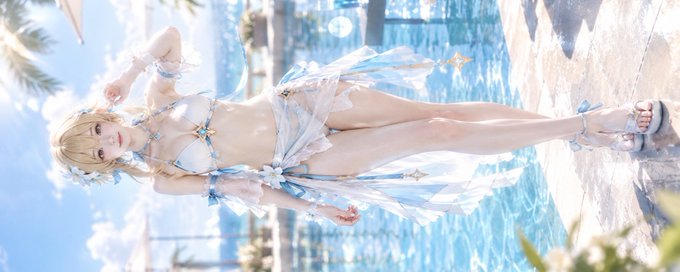
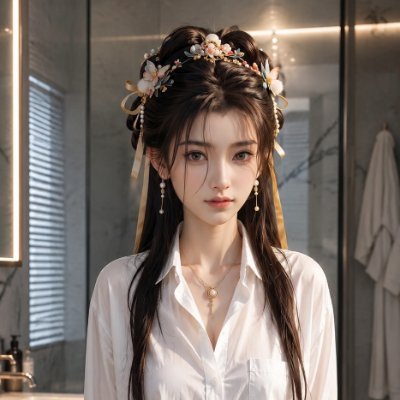
如何用 MiniMax H3,把一张人物参考图扩展成包含泳池、海滩奔跑、贴地仰拍、水面泡沫遮挡的真人摄影 MV?
> **AI Dance Paradise@LoveUolanda**: [原文链接](https://x.com/LoveUolanda/status/2114406130579636602)
>
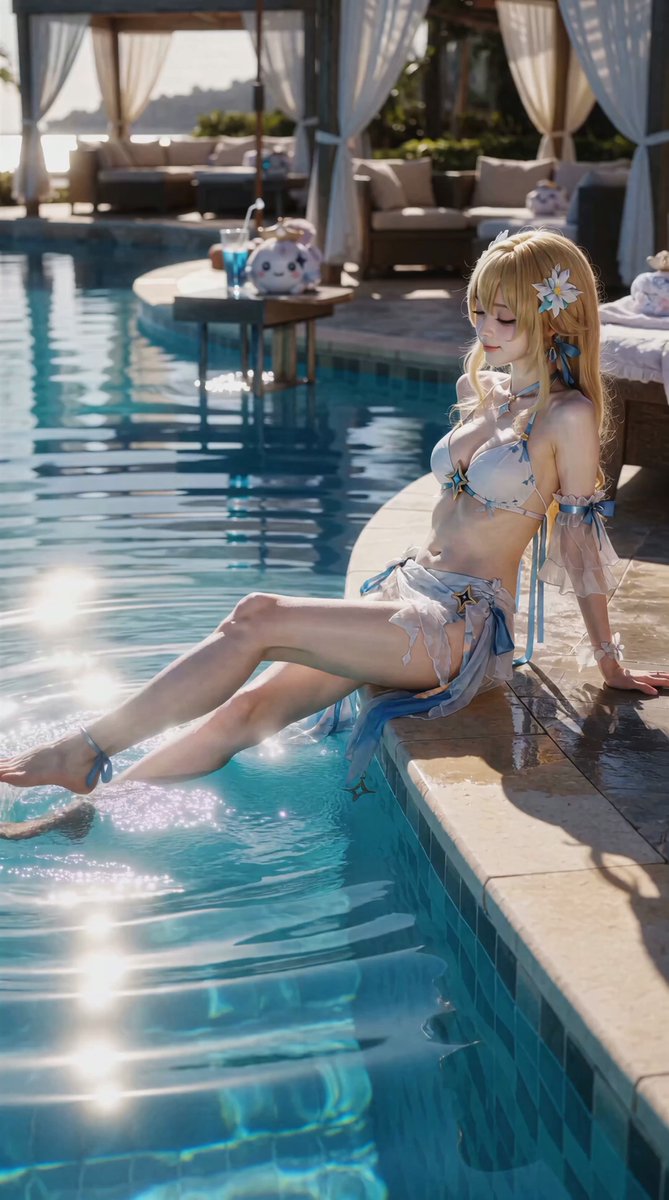
> 使用H3 提示词拍摄一组夏日MV,提示词分享。
> 荧的夏日假期|泳池 × 海边 × 泡澡
> 泳池边的清凉时光、海浪间的夏日邂逅,还有泡澡时的惬意放松。 这一次,旅行者荧也要好好享受属于自己的假期!
> #荧 #旅行者荧 #Lumine #GenshinImpact #原神 #原神荧 #GenshinLumine #夏日假期 #泳装 #泳池
>
> 
这次整理了一套完整的四段提示词。核心不是简单堆叠“电影感、写实、运镜丰富”等形容词,而是把人物身份、身体动作、摄影机位置、构图几何关系和镜头切换分别写清楚。
整套方案由四个独立生成的片段组成,总时长约 55 秒。
## 一、先建立正确的参考图工作流
每段生成时,只需要提供:
- Picture 1: 人物身份与外观参考。
- Audio 1: 当前片段对应的音乐。
其中最重要的一点是:参考图负责锁定人物,不代表必须复制参考图里的姿势、背景和摄影机角度。
提示词中明确区分两类信息:
需要保留的内容: 脸型、五官比例、肤色、发型、发色、身体比例,以及服装的可识别特征。
需要重新设计的内容: 场景、身体姿势、摄影机机位、取景范围、运镜路径和镜头之间的剪辑关系。
如果希望多个独立生成的片段仍然是同一个人,每一段都应重新上传同一张人物参考图,并重复强调身份一致性。只在第一段提示词中写身份锁定,不足以保证后续独立生成自动继承人物外观。
## 二、第一段:泳池坐姿 → 高位倾斜海滩奔跑(10 秒)
目标:用两个完整镜头建立夏日 MV 的视觉风格。
00:00–00:05|泳池边坐姿
人物坐在泳池边,双手支撑身体,腿部一伸一屈,伸出的脚轻轻触碰水面,制造自然涟漪。
摄影机从池边前侧稍高于人物髋部的位置拍摄,缓慢横向移动。人物、伸出的腿、泳池边缘与水面共同构成画面中的斜向线条。
00:05–00:10|高位倾斜海滩奔跑
通过一次干净的硬切,转换到高位斜俯视的海滩跟拍。人物沿湿沙与浅海水的边界持续奔跑,轻薄衣料和头发随运动与海风摆动。
这里的关键经验是:倾斜构图不等于简单地把摄影机歪一下。
需要同时描述摄影机的高位斜俯角、画面滚转、海岸线的对角方向、人物在画面中的斜向位置,以及连续跟随人物的运镜。即使地平线没有出现,海岸线和浪线也能建立强烈的倾斜视觉感。
人物自身的跑步姿态仍须符合正常重力与人体运动规律,不能为了模拟画面倾斜而扭曲身体。
## 三、第二段:漂浮特写 → 浅水背后跟拍 → 擦头发(15 秒)
目标:用三个不同的机位表现同一个人,同时维持人物身份和动作连续性。
00:00–00:05|水面漂浮
人物仰面漂浮,头部位于画面右侧,身体向左延伸。摄影机接近水面,从人物侧方平行缓慢滑动。
人物随着水流轻微起伏,头发自然铺展在水面上。镜头重点表现脸部、肩线、湿发、水波和空间层次,而不是从高处俯拍整个身体。
00:05–00:10|浅水奔跑背后跟拍
切换到人物后方,摄影机保持腰胯附近的高度并稍微向下看。人物背对镜头,在浅水中自然奔跑,腿部交替迈步,脚步激起小范围水花。
摄影机可以从后侧三分之四角度逐渐调整到更直接的正后方视角,但这应当是同一镜头里的连续运动,而不是额外插入一个机位。
00:10–00:15|斜上方擦头发
再次硬切到泳池边,人物坐在躺椅上,双手用毛巾擦拭湿发。摄影机从前侧斜上方约 30–45 度拍摄,让头部、毛巾、双手、肩膀、弯曲的膝盖和椅子同时出现在构图中。
要特别描述手与毛巾之间持续、合理的接触,以及毛巾随挤压形成的真实褶皱。否则模型容易出现手已经离开毛巾,擦头发动作却仍然继续的情况。
身份一致性是这一段的核心。 背面镜头虽然不一定能看清五官,但发型、发色、身体比例和服装特征仍然需要保持一致。
## 四、第三段:固定贴地仰拍 → 起身 → 硬切到新场景(15 秒)
目标:让一个极特殊的 POV 机位成为开场,再自然过渡到常规 MV 运镜。
00:00–00:03|Fixed Floor-Level POV
摄影机的光学中心距离地面仅几厘米,镜头轴线垂直向上、直指天花板。
人物仍然坐在椅子上,延续擦头发的动作。弯曲的双腿在近景中形成自然的弧线,人物的脸从腿部轮廓之间显露出来,未被人物遮挡的区域可以看到天花板。
这个镜头必须明确:摄影机是固定的、不可见的 POV 视角,而不是需要出现在画面里的另一台设备。
00:03 左右|结束动作并硬切
人物自然完成最后一次擦发动作,放下毛巾,身体前倾并起身。摄影机不追随人物站起,而是继续留在原来的地面位置。
随后执行明确的硬切。
00:03–00:08|泳池边站姿
切到新的泳池或海边场景。人物站在水边,以三分之四侧身姿态轻轻转向水面,再回头看镜头。摄影机在人物侧前方进行平缓横向移动。
00:08–00:15|浅水动作与回身
摄影机后退跟拍人物走向浅水区。人物自然迈步,稍微转动躯干并伸出一只手维持平衡,然后回望镜头,最终停留在放松的三分之四站姿。
这一段的重点是镜头语言的切换:开场依靠固定机位和身体遮挡建立视觉冲击,后续则通过常规跟拍、人物转身和水面空间恢复流动感。
## 五、第四段:浴缸水线视角 + 前景泡沫遮挡(15 秒)
目标:把水面本身变成镜头语言,而非反复切换正面、侧面和俯拍。
这段借鉴浴缸写真式的泡沫构图,但继续使用整套 MV 的低饱和、冷中性色彩与真人摄影质感,而不是暖黄、奶油色的浴室广告风格。
00:00–00:05|建立水线与人物轮廓
摄影机位于浴缸前端,贴近水面,保持约一半画面在水面上、一半在水面下。
靠近镜头的白色泡沫形成虚化前景。人物起初被泡沫部分遮挡,随着摄影机缓慢向前移动,脸部与湿发逐渐显露。
00:05–00:10|穿过泡沫靠近人物
摄影机继续沿同一方向前进,从泡沫簇之间的自然缝隙穿过。人物缓慢转头看向镜头,并轻轻整理脸侧的一缕湿发。
泡沫负责提供前景层次,水线负责建立空间关系,人物的脸部则保持主要视觉焦点。镜头不能突然跃出水面,也不能在此时切换成常规正面机位。
00:10–00:15|水线低角度人像收尾
摄影机轻微向上调整角度,但仍然维持贴近水面的视角。人物先向下看向镜头,然后自然抬眼,最后停留在安静的近距离水线人像中。
整段保持一镜到底,不使用闪屏、频繁切镜或突然拉远。
这一设计的关键不是让泡沫完全挡住人物,而是通过近景虚化、局部遮挡和缓慢移动,让人物逐步显现,同时保留清晰、可信的脸部细节。
## 六、这套 H3 提示词最值得复用的五个技巧
1. 把“人物身份”和“场景重建”分开写。
明确 Picture 1 的保留范围,避免模型将参考图中的原姿势、背景和机位也一起复制。
2. 用具体身体动作代替情绪形容词。
与其只写“优雅地奔跑”,不如写清躯干前倾、腿部交替、手臂反向摆动、脚步落地和衣料滞后运动。
3. 用摄影机几何关系描述特殊视角。
高位斜俯拍、固定贴地垂直仰拍、半水上半水下的水线机位,都需要说明镜头高度、光轴方向、人物位置和背景关系。
4. 让每个镜头只有一个主要运镜逻辑。
例如横向滑动、连续后跟、固定机位、沿水面前推。不要在同一镜头中堆叠无关的旋转、缩放、俯仰和突然变焦。
5. 把镜头切换与镜头内部运动分开写。
“硬切”负责改变镜头,“连续跟踪”负责描述镜头内部的运动。明确区分两者,可以减少模型在一个镜头中突然跳到另一机位的问题。
## 七、实际生成建议
四段提示词应作为四个独立任务使用,不要直接把所有内容合并成一个超长任务。
第一段使用源音频 00:00–00:10;第二段使用源音频 00:10–00:25。后续两段分别选择对应的 15 秒音频片段,并在提示词中明确局部时间轴与音乐的关系。
每段都重新提供同一张人物参考图。完成后,再检查各片段的脸部身份、服装、发型、色彩、动作连续性和硬切位置。若独立生成的片段出现身份漂移,应优先加强身份锚点,而不是继续增加场景形容词。
需要注意:提示词只能提高模型遵循这些设计的概率,无法保证每次生成都得到完全一致的脸部、精确到帧的切点或百分之百正确的身体动作。实际输出仍需检查和筛选。
## 总结: 好的 H3 提示词,不是写得越华丽越好,而是把人物、动作、机位、构图、光线与时间结构写成一套模型能够执行的拍摄方案。
完整提示词
下面一共是四段独立提示词,对应mv4段画面,大约每15秒一段
subject_definitions:
<Subject 1> is the person identified by <Picture 1>. Use it as the sole authority for her facial identity, facial proportions, recognizable appearance, and natural body characteristics. Her identity must remain consistent throughout both shots. Do not copy the original pose, background, camera angle, or framing of <Picture 1>.
<Picture 1> is used only as the character identity anchor. The environments, locations, body poses, framing, lighting, and camera movements are reconstructed from the descriptions below. Wardrobe may adapt to the individual scenes.
<Audio 1> is the original soundtrack segment covering source time 00:00–00:10. Reuse this segment as the soundtrack for the entire 10-second output, preserving its actual rhythm and musical continuity.
summary:
Create a 10-second, 16:9 photorealistic live-action summer lifestyle music video containing exactly two complete shots: a sunlit swimming-pool seated pose followed by a dramatically tilted, high-angle beach-running shot.
Reconstruct a beautiful resort swimming pool, sparkling turquoise water, warm late-afternoon sunlight, tropical beach scenery, wet sand, white surf, and wind-driven lightweight beachwear. Prioritize precise body posture, leg positioning, natural movement, diagonal composition, and physically coherent camera geometry.
The defining visual feature is the second shot: a pronounced diagonal image composition produced by a high oblique camera position, controlled camera roll, the shoreline's steep diagonal, and the runner's movement across the frame. Do not reduce this effect to a generic tilted-camera instruction.
retention_analysis:
<Subject 1> (both shots): fully_preserved - Preserve the same recognizable facial identity and natural appearance derived from <Picture 1>. Her identity must not change between the pool and beach scenes.
<Picture 1>: partially_preserved - Retain the character's identity only. Do not preserve its original pose, background, environment, composition, or camera position.
<Audio 1>: fully_copy - Reuse the supplied 00:00–00:10 audio segment as the complete soundtrack for this 10-second generation.
detailed_description:
The target video is a photorealistic live-action summer lifestyle MV with warm backlighting, luminous water reflections, natural skin texture, cinematic depth, and carefully controlled diagonal compositions. Both shots remain continuous internally. Do not insert additional cuts within either shot.
[Shot 1]
A woman sits on the paved edge of a bright turquoise swimming pool, her body positioned on the right side of the composition. The pool fills the left and central portions of the frame. In the distance, softly blurred poolside structures, lounge furniture, tropical greenery, and a warm sunlit sky establish the resort setting. Bright circular reflections and scattered highlights glitter across the water.
Her pelvis rests on the edge. Both palms are planted behind her hips to support her weight, with her fingers naturally spread against the hard surface. Her shoulders relax backward while her upper torso inclines slightly forward. One knee is bent and raised while the opposite leg stretches diagonally toward the lower-left part of the image. The extended ankle relaxes, and her toes approach and lightly sweep through the water, producing small splashes and expanding ripples. She looks down toward her extended leg and the water. Her pose must remain physically supported, with believable pressure through her hands, pelvis, and legs.
The camera is outside the pool, slightly above the seated hip level and offset toward the front-side of the extended leg. Aim across the water toward her legs and torso, looking slightly downward. This is a side-front medium-wide composition, not a waterline close-up and not an overhead view.
Place her head in the upper-right region, her torso along the right side, and her extended leg reaching diagonally toward the lower-left. The pool edge recedes obliquely behind her, while the water provides a bright, open foreground. Keep the distant pool architecture comparatively stable. The diagonal sensation comes primarily from the camera's offset viewing direction, the edge of the pool, and her extended leg, not from an exaggerated Dutch angle.
Use one continuous, slow lateral camera drift along the pool edge, moving slightly toward the extended foot while maintaining approximately the same height and side-front viewing direction. Foreground ripples shift against the more distant pool edge, creating subtle parallax. Do not orbit around the woman, abruptly zoom, or rotate the camera midway through the shot.
Warm sunlight behind her creates luminous hair highlights, soft rim lighting along her shoulders, bright water reflections, and natural lens bloom. Preserve skin detail and the distinction between the sunlit water and shaded poolside pavement.
At 00:05.000, make a clean cut motivated by the diagonal direction of her extended leg and the pool's receding edge.
[Shot 2] At 00:05.000, the scene cuts to a tropical shoreline viewed from a much higher, oblique camera position.
The woman runs diagonally along wet sand beside shallow seawater. A lightweight white, semi-sheer beach cover-up streams behind her over her scene-appropriate swimwear. Her hair and the loose fabric flow backward and sideways with the running motion and coastal wind.
Her torso inclines forward along the direction of travel. Her pelvis follows the stride naturally, while her shoulders counter-rotate slightly. Her legs alternate through continuous running steps: one knee advances toward the next landing while the opposite leg bends backward, then the positions reverse. Her arms swing in opposition to her legs, with relaxed elbows. One arm briefly angles downward beside her body while the other bends nearer the torso as her posture changes. Her head remains aligned with her movement. She does not pause to pose.
The camera is positioned well above her, offset to the side and slightly ahead of her travel path. Its optical axis points steeply downward across the beach at an oblique angle, approximately 50–65 degrees below horizontal. The viewer sees the top and side of her head, shoulders, back, hips, legs, and trailing fabric. This is a high-angle oblique tracking shot, not a conventional eye-level side view and not a perfectly vertical overhead shot.
The beach forms distinct geometric regions. Wet sand occupies the left portion of the frame, while sunlit seawater fills the right. The narrow white surf boundary runs steeply and diagonally through the image, sweeping from the upper-left or upper-central region toward the lower-left region. Bright golden reflections break up the water into shimmering patterns. The beach and water boundary remains a clearly recognizable leading line.
Create a pronounced, sustained tilted-frame sensation. Rotate the camera around its optical axis so that the diagonal shoreline, surf edge, and runner's body create intersecting directional lines. Because the horizon is outside the composition, express the tilt through the orientation of the shoreline and the entire environmental frame rather than inventing an artificial sloping horizon.
Place the runner diagonally through the central region, with her head toward the upper portion of the frame and her legs extending toward the lower portion. Her body must remain anatomically natural relative to gravity. The image is rotated; her spine, hips, knees, ankles, and running mechanics are not distorted to imitate the tilt.
Follow her in one uninterrupted high-angle tracking movement, travelling diagonally alongside and slightly behind her. Maintain a consistent downward viewing direction and the same general camera-roll orientation. The runner stays prominent while the sand, surf, and water slide diagonally behind her. Make small, smooth adjustments to follow her direction without suddenly swinging around to a frontal view. Preserve the steep camera position throughout the shot rather than gradually dropping to eye level.
Her footfalls land naturally along the wet sand and shallow-water boundary. Fine water spray appears briefly around her feet. Her cover-up billows outward, then trails behind her with a slight delay after each stride. Backlight illuminates the fabric edges and individual strands of hair, creating a luminous outline against the darker wet sand and water. Bright highlights remain detailed rather than washing out the body silhouette.
The camera tracks the running action continuously until the end of the 10-second segment. There is no internal cut, no freeze, no sudden camera roll reversal, and no artificial transition effect.
overall_soundscape:
Use only environmental sounds already present in <Audio 1>, if any. Preserve the original soundtrack and avoid adding unrelated splashes, footsteps, wind effects, or vocal sounds over the supplied audio.
non_diegetic_music:
<Audio 1> is the complete source audio for this segment. Reuse its 00:00–00:10 interval continuously and preserve its musical phrasing, timing, and original vocal content, if present. Do not restart the music at the internal shot change. The visual cut at local 00:05.000 should occur over the continuing soundtrack.
# H3 Full-Reference Prompt — Summer Cinematic MV, Part 2
## Identity-Locked Floating → Rear Tracking → Poolside Towel-Drying
### subject_definitions
<Subject 1> is the exact same woman depicted in <Picture 1>. <Picture 1> is the sole and authoritative visual identity reference for this subject.
**IDENTITY LOCK — HIGHEST PRIORITY**
Reproduce the actual person shown in <Picture 1>, not a newly designed woman inspired by her.
Preserve her exact recognizable facial identity, facial proportions, eye shape, nose, lips, jawline, skin tone, hairstyle, hair color, hairline, and natural body proportions. Preserve her existing clothing design, colors, and distinctive details wherever the described physical actions allow.
The face and identity must remain consistent across all three shots, including changes in camera angle, lighting, wet-hair appearance, and body pose.
Do not reinterpret her identity based on the beach, swimming pool, towel, or lighting. Do not generate a different face for the rear-tracking shot or the final close-up.
<Picture 1> is used for the person's identity and appearance only. Its original pose, framing, background, and camera angle are not binding. Reconstruct the environments, camera positions, and body actions described below while retaining the same person.
If the reference image does not show a particular body part or viewing angle clearly, infer it conservatively from the visible anatomy and established identity. Do not invent a new face, hairstyle, body type, or character design.
<Audio 1> is the original soundtrack segment covering source time 00:10–00:25. Use this exact 15-second segment as the soundtrack for the output, with source time 00:10 corresponding to local time 00:00.
### summary
Create a 15-second, 16:9 photorealistic live-action summer lifestyle MV featuring the exact person from <Picture 1> in three consecutive shots: floating on her back in a swimming pool, running away through shallow seawater, and sitting beside the pool drying her wet hair with a towel.
The environment and camera work may be reconstructed freely to match the specified scenes. The subject's identity must not be reconstructed freely: her appearance is fixed to <Picture 1>.
Only the subject's pose, body orientation, expression appropriate to the action, and naturally changing physical state may change. Maintain the same recognizable face, hairstyle identity, body proportions, and established wardrobe design in every shot.
### retention_analysis
<Subject 1> — identity: fully_preserved. Use <Picture 1> as the single source of truth for facial identity, hair identity, skin tone, and body proportions. All three shots feature the same person.
<Subject 1> — appearance: fully_preserved. Preserve the reference clothing design and distinctive colors wherever possible. Do not independently redesign the outfit, replace it with a different character costume, or change the person's apparent age or body type.
<Subject 1> — pose and action: newly_generated. The floating pose, rear-running pose, and seated towel-drying pose must follow the descriptions in this prompt, not the original pose in <Picture 1>.
Environment and composition: newly_generated. Create the swimming pool, tropical shoreline, shallow seawater, poolside furniture, parasol, and foliage as described.
Camera: newly_generated. Use the specified physical camera positions and continuous movement paths.
<Audio 1>: fully_copy. Preserve the original source interval 00:10–00:25 without restarting the music at shot transitions.
### detailed_description
The entire video follows one continuous character identity established by <Picture 1>. The character may turn away from the camera, become partially obscured by water or hair, or appear from an elevated angle, but she must never become a different person.
Maintain natural anatomy, realistic skin, coherent lighting, and physically plausible interactions with water, sand, furniture, and towel. Do not add internal cuts within a specified shot.
[Shot 1 — Local 00:00–00:05]
### Water-Level Floating Close-Up
The same woman from <Picture 1> floats on her back in a bright swimming pool. Her facial identity, hair color, hairline, hairstyle identity, skin tone, and body proportions remain consistent with the reference.
Her body lies horizontally across the water, with her head on the right side of the frame and her torso and legs extending toward the left. The back of her head rests naturally on the water. Her face turns upward, her neck relaxes, and her shoulders remain close to the surface. Both arms open outward in a relaxed floating position.
Her hair spreads naturally across the water. Loose strands drift with the ripples, but her underlying hairstyle and hair identity remain recognizable. Wetness changes the appearance of individual strands without redesigning her haircut or hair color.
Small ripples move around her head, shoulders, and arms. Her body rises and falls gently with the water. She makes subtle balance adjustments without performing a vigorous swimming stroke.
Place the camera almost at water level beside her body. Aim horizontally across the surface from a shallow side angle, showing her face, shoulder line, and extended body. The camera is not overhead and does not look upward from underwater.
Compose her head toward the right third, with the torso and legs extending to the left. The water occupies most of the frame. Soft-focus poolside furniture and pale parasols provide background depth.
Glide slowly alongside her, parallel to her body, maintaining a consistent low camera height. Foreground ripples slide past the lens while her face remains recognizable. Do not orbit around her head or abruptly change the camera angle.
Use natural sunlight, detailed skin texture, realistic wet hair, and physically plausible reflections. Preserve her identity even as the water and changing angle alter the appearance of her face.
Cut cleanly at local 00:05.000.
[Shot 2 — Local 00:05–00:10]
### Rear Tracking Through Shallow Water
The exact same woman from <Picture 1> runs away from the camera through shallow seawater. This is not a new character or a substitute model. Preserve the reference subject's hair identity, skin tone, body proportions, and distinctive clothing appearance.
Her back faces the camera. Her torso inclines slightly forward, and her arms extend moderately outward for balance. Her legs alternate through natural running strides. One foot lifts from the water as the opposite foot approaches its next landing. Each landing produces a small, physically plausible splash.
Her hair moves backward and sideways with the running rhythm and coastal wind. Any existing loose clothing reacts naturally to movement, wind, and gravity. Wetness and fabric motion may change, but do not replace her recognizable appearance with a newly designed outfit or body type.
Position the camera directly behind her at approximately waist-to-hip height, pointing slightly downward toward her legs and the shallow water. Begin from a rear three-quarter view, then gradually move toward a more directly rear-facing view while tracking forward. This change occurs as one continuous camera movement, not as a cut or orbit.
Keep the subject-to-camera distance coherent. The shoreline recedes into the distance, wet sand occupies the left side, and the sea fills the right. Maintain a comparatively level horizon. The diagonal energy comes from the coastline, perspective, and running motion rather than an exaggerated Dutch angle.
Although her face is not fully visible from behind, preserve her identity through consistent hair color, hairstyle, body proportions, and clothing details. Do not change her appearance simply because the camera sees her from the back.
The camera follows her forward at approximately her running pace. Her body remains compositionally stable while the background recedes. Keep the feet, splashes, and lower legs spatially consistent with the water surface. Avoid uncontrolled shake, sudden zooming, or abrupt changes of perspective.
Cut cleanly at local 00:10.000.
[Shot 3 — Local 00:10–00:15]
### Oblique Overhead Poolside Towel-Drying Finale
The same woman from <Picture 1> now sits beside the swimming pool, drying her wet hair with a soft towel. Her recognizable facial identity, facial proportions, skin tone, hair color, hairstyle identity, and body proportions remain unchanged.
Her pelvis rests on a poolside lounge chair. Her knees are bent, and her upper body inclines forward. Her head tilts downward and slightly to one side. Both hands hold a towel against her head, pressing it gently against the crown and sides of her wet hair.
She rubs the towel in small continuous movements, then repositions it to dry another area. Her elbows bend and relax naturally. Her head turns slightly as her hands move the towel toward the back and ends of her hair.
The towel compresses under her hands and forms realistic folds. Her hands remain in physical contact with the towel throughout each rubbing motion. Damp strands shift naturally, while her underlying hairstyle, hairline, and recognizable hair color remain consistent with <Picture 1>.
Place the camera above her eye level and offset diagonally toward her front-side, looking downward at approximately 30–45 degrees. Keep the head, towel, hands, shoulders, bent knees, and lounge chair visible together.
Position the head and towel near the upper-central portion of the frame. Her forearms form diagonal lines toward the towel, while her bent knees and chair edges create intersecting lines. Use the poolside decking, pale parasol, and foliage as environmental context.
Move the camera slowly forward along the established oblique viewing direction. Allow a small lateral adjustment to create natural parallax between her arms, head, chair, and background. Do not orbit around her head, switch abruptly to a frontal portrait, or change the character's facial structure.
The camera angle may reveal a new view of the same face, but it must not create a new face. Any partially visible facial features must remain consistent with the identity anchor in <Picture 1>.
Use warm daylight, realistic damp-hair highlights, visible towel texture, and soft foliage shadows. Finish on the same continuous towel-drying action as her hands gently settle.
### overall_soundscape
Use only environmental sounds already present in <Audio 1>, if any. Do not invent additional splashes, footsteps, towel noises, wind effects, or voices that conflict with the supplied audio.
### non_diegetic_music
<Audio 1> is the complete soundtrack reference for this segment. Reuse the source interval 00:10–00:25, corresponding to local time 00:00–00:15. Preserve the original musical phrasing, rhythm, and vocal content, if present. Do not restart the music at local 00:05 or 00:10.
### final_visual_constraints
**Character identity takes priority over scene redesign.**
1. All three shots depict the exact same person identified by <Picture 1>.
2. Do not create a replacement face, new character, alternate hairstyle, or different body type.
3. Preserve the reference clothing design and distinctive appearance wherever compatible with the scene.
4. Only the pose, orientation, expression, wetness, and natural motion change as required by the actions.
5. The environment and camera composition may change freely to match each described scene.
6. Keep the specified three-shot order and continuous internal camera movement.
7. Preserve realistic anatomy, coherent perspective, physical contact with water and towel, and photorealistic live-action rendering.
# H3 — Floor-Level POV Opening → Hard Cut → Seaside MV Continuation
## subject_definitions
`<Subject 1>` is the exact same person shown in `<Picture 1>`. `<Picture 1>` is the sole and authoritative reference for the subject's facial identity and recognizable appearance. Preserve the same face shape, facial proportions, eyes, eyebrows, nose, lips, jawline, skin tone, hairstyle, hair color, hairline, apparent age, body proportions, and distinctive visual characteristics.
The subject must remain recognizably the same person throughout every shot. Do not replace the person with a lookalike, redesign the face, change the hairstyle without a natural reason, or alter the original outfit design. Changes are limited to natural pose, orientation, expression, and plausible damp-hair movement.
## summary
Create a 15-second realistic live-action MV continuation.
The opening 3 seconds use a fixed, invisible, floor-level smartphone POV with its optical axis pointing vertically upward. The subject is still seated after the previous scene, naturally finishing the hair-drying gesture. The camera remains completely static. The subject's bent-leg silhouette creates a natural frame around the face, while the ceiling forms the background.
At approximately 00:03, the subject naturally finishes wiping the hair, lowers the towel, and begins to rise from the seated position.
A clear hard cut occurs after this opening. The remaining sequence switches to a new seaside / poolside MV scene with a fresh camera composition, new body poses, and expressive but natural movement.
The overall visual treatment continues the previous MV's realistic photographic style: cool-neutral daylight, restrained blue-grey water, low saturation, natural skin tones, soft contrast, detailed wet hair, and realistic water reflections. Avoid warm creamy bathroom grading, artificial beauty-filter skin, excessive bloom, or CG-like rendering.
`<Picture 1>` remains the sole identity reference. Reconstruct the poses, scenes, and camera compositions around the same person.
## integrated_multimodal_description
### [Shot 1 — 00:00–00:03] Fixed Floor-Level Vertical-Upward POV
The shot begins with a completely static, invisible smartphone camera positioned only a few centimeters above the floor.
The optical axis points vertically upward, perpendicular to the floor and directly toward the ceiling. The camera does not tilt, pan, rotate, rise, or move during this opening shot.
The subject is seated naturally on a chair, continuing the previous hair-drying scene. The subject holds a towel and gently finishes wiping the damp hair. The pose is relaxed and physically plausible.
The close contours of the subject's naturally bent legs enter the foreground and frame the composition. The face remains visible through the open space between the legs, with the ceiling visible wherever the subject does not obstruct the upward-facing view.
The composition is created by the fixed camera position and the subject's seated posture. The camera does not move to find the face.
Use natural wide-angle perspective with believable foreshortening. The foreground limbs may appear larger because of their proximity to the lens, while the face remains farther away and recognizable. Avoid exaggerated distortion.
The subject briefly glances down toward the camera while finishing the hair-drying gesture. The expression is relaxed and natural, with no exaggerated posing.
The towel remains an ordinary hair-drying towel. The subject does not reach toward the floor, pick up objects, or perform any unrelated action.
The scene retains the previous MV's cool-neutral color treatment. Soft daylight, muted blue-grey reflections, natural skin tones, and realistic hair texture are visible. The ceiling and room remain softly detailed and unobtrusive.
The camera is an invisible recording viewpoint. No phone, camera body, tripod, or filming equipment appears in the image.
### [Transition — Around 00:03] Natural Rise → Hard Cut
The subject completes the final gentle towel movement, lowers the towel naturally, and shifts their weight forward.
The subject rises from the chair in one continuous, physically plausible movement. The upper body leans forward slightly, the feet settle naturally, and the subject stands up without exaggerated motion.
The camera remains fixed in its floor-level vertical-upward position during the rise. The subject may move partially out of the frame as they stand.
At approximately 00:03, make a clean, unmistakable hard cut.
Do not attempt to follow the subject upward with the floor-level camera. Do not transform the first shot into a moving camera. The transition is created by the edit itself.
### [Shot 2 — 00:03–00:08] New Scene — Standing Poolside Portrait
After the hard cut, the scene changes to a realistic poolside or seaside environment consistent with the previous MV.
The subject is now standing beside the water, with the same recognizable appearance and unchanged outfit design. The damp hair and towel-drying continuity remain natural, but the towel is no longer the focus of the scene.
The camera begins at a medium-wide, slightly low three-quarter angle. The subject is framed against softly blurred blue-grey water and a restrained, bright background. The composition is not a continuation of the floor-level shot.
The subject gently shifts their weight onto one leg. The other leg relaxes slightly, creating a natural asymmetrical stance. The shoulders turn a little toward the water, while the head gradually turns back toward the camera.
The subject raises one hand to lightly smooth a damp section of hair near the temple. The gesture is brief and understated. The other arm rests naturally beside the body.
The camera performs a smooth, shallow lateral tracking movement, revealing a little more of the water behind the subject. The movement remains physically plausible and does not become a rapid orbit.
The subject looks toward the water first, then turns their gaze toward the camera. The expression is calm and subtly playful, with natural eye movement and a relaxed mouth.
Maintain the previous MV's restrained color palette: cool-neutral daylight, muted blue-grey water, soft white highlights, realistic skin texture, and naturally damp hair. The subject's skin must remain neutral and lifelike rather than orange, overly pink, waxy, or artificially smoothed.
### [Shot 3 — 00:08–00:15] New Pose — Shallow-Water Movement and Gentle Turn
The scene continues beside the water with a new camera composition and a more dynamic body pose.
The subject takes a few natural steps toward the shallow water. The steps are relaxed and deliberate, with believable weight transfer through the hips, knees, and ankles. The feet make small ripples in the water.
The camera tracks backward smoothly at a low-to-medium height, maintaining a three-quarter view of the subject. The subject remains clearly visible while the water and shoreline create depth behind them.
As the subject reaches the shallow edge, they gently turn their torso toward the water and extend one arm slightly outward for balance. The other arm follows the body's rotation naturally. The movement creates a graceful curved silhouette without becoming a staged dance pose.
The subject then turns back toward the camera with a small, natural change of expression. Damp hair shifts with the movement and settles against the shoulders.
The camera performs a restrained diagonal tracking movement, allowing the shoreline and water reflections to form subtle diagonal lines in the composition. The horizon, when visible, remains naturally positioned. Do not force an extreme Dutch angle.
Near the end of the shot, the subject pauses in a relaxed three-quarter stance. One leg bears the body weight while the other rests lightly forward in the shallow water. The subject looks toward the camera, then briefly glances toward the water.
The camera eases into a gentle medium portrait. The final frame contains the subject's face, upper body, natural stance, and softly moving water in the background.
The scene ends without a fade, flash, or artificial transition. The movement settles naturally while preserving the same realistic live-action appearance and identity from `<Picture 1>`.
## camera_and_composition
**Shot 1 — Opening POV**
- Camera height: only a few centimeters above the floor.
- Optical axis: vertical, perpendicular to the floor, pointing directly upward.
- Camera movement: completely static for the entire 3-second shot.
- Foreground: natural contours of the subject's bent legs, framing the composition.
- Face placement: visible through the opening between the legs.
- Background: ceiling in unobstructed areas.
- Device visibility: the camera is an invisible recording viewpoint; no filming equipment appears.
**Shot 2 — Poolside Portrait**
- Camera height: slightly below the subject's upper-body level.
- Angle: three-quarter view, subtly low.
- Movement: smooth lateral tracking.
- Composition: medium-wide portrait with water in the background.
- Subject movement: weight shift, small hair-adjustment gesture, gradual head turn.
**Shot 3 — Shallow-Water Movement**
- Camera height: low-to-medium.
- Angle: three-quarter view with natural perspective.
- Movement: smooth backward tracking with a restrained diagonal component.
- Composition: subject and water remain visually balanced.
- Subject movement: natural steps, gentle torso turn, arm extension for balance, return to a relaxed stance.
- Ending: a calm medium portrait with subtle water movement.
## overall_soundscape
Use `<Audio 1>` as the primary music reference. Preserve its musical character, timing, and emotional progression.
Any environmental sound should remain subtle and natural: faint water movement, small ripples near the subject's feet, and quiet ambient room or seaside tone where appropriate.
Do not introduce loud splashes, exaggerated breathing, dramatic sound effects, or unrelated audio events. The opening floor-level shot should not receive an artificial sound cue merely because the camera angle is unusual.
## non_diegetic_music
Follow `<Audio 1>` for the rhythm and emotional pacing. Do not replace the supplied music with a newly composed soundtrack.
The subject's movements should feel naturally synchronized with the musical pulse without becoming lyric acting or exaggerated choreography. The hard cut around 00:03 should feel like a deliberate MV edit rather than a beat-synchronized flash transition.
## final_visual_constraints
- Total duration: exactly 15 seconds.
- Shot 1 lasts approximately 3 seconds and uses a fixed, invisible, floor-level vertical-upward POV.
- The opening camera remains completely static; the subject's posture creates the composition.
- The subject finishes the hair-drying gesture and naturally rises.
- A clean hard cut occurs around 00:03.
- The remaining 12 seconds introduce new poses, a new scene, and new camera compositions.
- Do not make the subject pick up anything from the floor.
- Do not continue the floor-level viewpoint after the hard cut.
- Preserve the exact recognizable identity and original outfit design from `<Picture 1>`.
- Continue the earlier MV's cool-neutral, low-saturation, realistic photographic color treatment.
- Maintain natural skin texture, realistic damp hair, believable body proportions, and physically plausible movement.
- No identity substitution, no extra people, no artificial beauty-filter skin, no CG rendering, no flash cuts, no strobe effects, and no unnecessary camera-angle switching.
- The recording device must never appear as an object in the scene.
# H3 — Split-Level Waterline MV / Foam-Obscured Portrait
## subject_definitions
`<Subject 1>` is the exact same person shown in `<Picture 1>`. `<Picture 1>` is the sole and authoritative visual reference for the person's identity and recognizable appearance. Preserve the same facial identity, facial proportions, eyes, eyebrows, nose, lips, jawline, skin tone, hairstyle, hair color, hairline, apparent age, body proportions, and distinctive visual characteristics. Do not replace the person with a lookalike or reinterpret the face. Preserve the original outfit design and its recognizable details wherever visible. Changes are limited to natural pose, head orientation, expression, and plausible water-related details such as damp hair.
`<Subject 2>` is a modern, understated bathing environment with a white bathtub, clear water, and naturally accumulated white bath foam. The environment uses cool-neutral daylight, muted blue-grey reflections, pearl-white foam, and realistic water optics. It must visually match the restrained, natural color treatment of a live-action seaside photography MV rather than a warm, creamy, stylized bathroom commercial.
## summary
[reference-conditioned video generation]
A 15-second realistic live-action MV sequence featuring `<Subject 1>`, filmed from an unusual split-level waterline perspective inside a bathtub. The camera stays extremely close to the water surface, with the waterline dividing the image into above-water and below-water portions. Large, softly defocused clusters of white foam repeatedly obscure parts of the foreground and lower composition, creating natural depth and revealing the subject gradually.
The entire sequence is designed as one continuous physical camera movement, not a montage. The camera slowly tracks forward between the foam clusters, allowing the person's face and damp hair to emerge from behind the foreground. The person remains relaxed and naturally expressive, occasionally turning toward the lens or gently moving a section of hair.
The visual treatment matches a realistic, low-saturation seaside MV: cool-neutral daylight, restrained blue-grey water, pearl-white highlights, soft natural contrast, lifelike skin texture, realistic damp hair, and shallow depth of field. Highlights remain controlled, whites retain texture, and the skin does not become orange, overly pink, waxy, or artificially smoothed.
`<Picture 1>` remains the sole identity reference. Reconstruct the environment and camera composition around the same person rather than generating a new face.
## retention_analysis
Identity retention has the highest priority. Maintain the same recognizable person from `<Picture 1>` throughout the entire sequence, especially during the gradual reveal, head turn, and final close waterline portrait. Do not treat changes in camera angle, wet hair, reflections, or partial foam occlusion as permission to redesign the face.
The camera's waterline position, foam obstruction, and continuous forward trajectory are the defining visual elements. Foam is a foreground layer, not an object attached to the subject. It may drift naturally with the water, but it must not cover the person's face for the entire shot.
Preserve visual continuity in hairstyle, hair color, skin tone, body proportions, and outfit details wherever they are visible. Do not introduce a different outfit, additional people, decorative fantasy effects, or unrelated objects.
## detailed_description
The video lasts exactly 15 seconds and is designed as one uninterrupted take. No cuts, no angle-switching montage, no artificial transitions, and no flash or strobe effects.
The camera is physically positioned at the bathtub's water surface. Its optical viewpoint remains approximately half above water and half below water. A visible waterline naturally divides the image throughout the sequence. Subtle refraction and small ripples affect the underwater portion, while the above-water portion captures the person's face and the softly blurred bathroom background.
The color palette remains consistent with restrained, realistic seaside cinematography: muted blue-grey water, cool-neutral whites, soft natural highlights, low saturation, and believable skin color. The room is illuminated by broad, diffused daylight rather than strong amber bathroom lighting. Do not add orange cinematic grading, heavy teal-orange color separation, excessive bloom, or artificial beauty-filter skin.
White bath foam forms uneven clusters close to the lens. The nearest foam is heavily defocused, creating soft irregular shapes across the lower foreground. Small gaps between the foam clusters reveal the waterline, the subject, and the background in stages. Foam blocks portions of the lower composition naturally; the framing prioritizes the face, eyes, damp hair, shoulders, and overall portrait silhouette without deliberately isolating intimate body areas.
### [Shot 1 — 00:00–00:05] Establish the Waterline and Reveal the Subject
The shot opens almost at water level, looking forward from the front end of the bathtub. The camera's viewpoint is split by the waterline, with approximately half above the surface and half below it.
Large soft clusters of white foam dominate the immediate foreground. The nearest bubbles are out of focus, while small areas of the background remain visible above the foam. The person is initially only partly visible beyond the foam, with the face not yet completely revealed.
The camera begins a slow, steady forward tracking movement. Its height remains almost fixed relative to the water surface. Tiny ripples travel across the frame, and small foam fragments drift past the lower edge of the lens.
As the camera advances, the foam clusters gradually separate to create a natural opening. The same person from `<Picture 1>` becomes more clearly visible in the middle distance. The face and hairstyle retain the reference identity, and the original outfit remains unchanged wherever it can be seen.
The subject initially looks slightly away from the camera, with a relaxed, natural expression. Cool-neutral daylight creates restrained highlights along the water and damp hair. The face should retain real skin texture and realistic facial proportions, not an airbrushed or computer-generated finish.
The camera does not suddenly emerge from the water or jump to a conventional dry angle.
### [Shot 2 — 00:05–00:10] Glide Through Foam Toward the Face
Without a cut, the camera continues moving forward through a narrow gap between two foreground foam clusters. One cluster passes slowly across the lower foreground, briefly obscuring part of the composition before drifting sideways with the water.
The waterline remains visible and close to the middle of the frame. Small underwater ripples distort the lower edge of the image without obscuring the subject's facial features.
The person gently turns their head toward the camera. The movement is unhurried and physically natural: the eyes shift first, followed by a small head turn, until the gaze meets the lens. Preserve the exact identity from `<Picture 1>` during the turn. Do not alter the eye shape, facial structure, apparent age, or hairstyle to accommodate the changing view.
One hand rises naturally to adjust a small section of damp hair beside the face. The fingers move through the hair briefly and then lower again. The gesture is a small, believable moment rather than a choreographed pose.
The camera makes a subtle forward and lateral adjustment to maintain a clear view of the face through the opening in the foam. This is a continuous physical tracking movement, not a digital zoom or a sudden reframing jump.
The image retains the same low-saturation blue-grey water, pearl-white foam, neutral daylight, and realistic skin color. Foam highlights remain soft and detailed rather than glowing pure white. The background stays subdued, with no new objects or visual distractions.
### [Shot 3 — 00:10–00:15] Low Waterline Portrait and Natural Finish
The camera glides slightly closer and makes a gentle upward pitch while keeping the waterline visibly close to the lens. The perspective becomes a subtle low-angle waterline portrait, but the camera remains physically at the water surface.
The subject's face becomes the clearest element in the frame. Damp strands of hair sit naturally around the face and shoulders. The subject glances down toward the camera, then raises their eyes to meet the lens with a calm, understated expression and a faint natural smile.
A soft foam cluster remains between the lens and the lower composition, producing a blurred white foreground layer. It must not rise unnaturally over the face or completely hide the subject. Tiny bubbles and ripples move gently in the lower portion of the frame.
The camera slows smoothly as it reaches its closest position. The movement settles without a sudden stop, pullback, cut, or switch to an above-water camera. Keep the waterline split clearly recognizable through the final frame.
The final composition is intimate but natural: the face and eyes remain sharp, the foam is softly blurred, and the bathroom background stays understated. Use realistic water reflections, restrained highlights, fine skin texture, and natural damp-hair detail. Maintain the same identity and appearance established by `<Picture 1>`.
End on the continuous waterline portrait, with the camera nearly stationary and only subtle water movement remaining.
## overall_soundscape
Use the sound character present in `<Audio 1>` as the primary audio reference. Preserve its original musical mood and timing. Any water ambience should remain quiet and subordinate to the supplied audio: gentle water movement, occasional small ripples, and subtle foam movement close to the camera. Avoid exaggerated bubbling, dramatic splashes, loud breathing, or invented sound effects that compete with the music.
## non_diegetic_music
Follow `<Audio 1>` for the music, rhythm, and emotional progression. Do not replace it with a newly composed soundtrack or add an unrelated musical style. Camera movement and the subject's small gestures should feel naturally paced against the supplied audio, without lip-sync acting or exaggerated performance.
## final_visual_constraints
- Exactly 15 seconds; one uninterrupted shot.
- `<Picture 1>` is the sole identity reference. Preserve the same person and recognizable appearance throughout.
- Preserve the reference outfit design and distinctive visual details wherever visible; do not invent a replacement outfit.
- Use the split-level waterline perspective as the defining camera technique.
- Keep the lens close to the water surface, with a recognizable above-water / below-water split through the final frame.
- Use soft foam clusters as natural foreground occlusion; let them reveal the subject gradually without continuously hiding the face.
- Maintain the earlier MV's cool-neutral, low-saturation, realistic photographic color treatment: blue-grey water, pearl-white foam, soft daylight, and natural skin tones.
- Keep real skin texture, realistic hair strands, restrained highlights, and physically believable water movement.
- No warm creamy color grading, exaggerated orange skin, plastic skin, fantasy effects, artificial lens flares, flash cuts, strobe effects, or sudden camera transitions.
- No additional people, no identity substitution, no sudden hairstyle redesign, and no unexplained changes in body proportions.
- Camera motion must remain continuous and physically plausible throughout the sequence.
#AIArt #AIVideo #提示词分析 #promptshare #MINIMAXH3 #ai教程
## 相关链接
- [AI Dance Paradise](https://x.com/LoveUolanda)
- [@LoveUolanda](https://x.com/LoveUolanda)
- [1.8K](https://x.com/LoveUolanda/status/2114405986274508834/analytics)
- [Oct 26](https://x.com/LoveUolanda/status/2114406130579636602)
- [#旅行者荧](https://x.com/hashtag/%E6%97%85%E8%A1%8C%E8%80%85%E8%8D%A7?src=hashtag_click)
- [#Lumine](https://x.com/hashtag/Lumine?src=hashtag_click)
- [#GenshinImpact](https://x.com/hashtag/GenshinImpact?src=hashtag_click)
- [#原神](https://x.com/hashtag/%E5%8E%9F%E7%A5%9E?src=hashtag_click)
- [#原神荧](https://x.com/hashtag/%E5%8E%9F%E7%A5%9E%E8%8D%A7?src=hashtag_click)
- [#GenshinLumine](https://x.com/hashtag/GenshinLumine?src=hashtag_click)
- [#夏日假期](https://x.com/hashtag/%E5%A4%8F%E6%97%A5%E5%81%87%E6%9C%9F?src=hashtag_click)
- [#泳装](https://x.com/hashtag/%E6%B3%B3%E8%A3%85?src=hashtag_click)
- [#泳池](https://x.com/hashtag/%E6%B3%B3%E6%B1%A0?src=hashtag_click)
- [#AIArt](https://x.com/search?q=%23AIArt&src=hashtag_click)
- [#AIVideo](https://x.com/search?q=%23AIVideo&src=hashtag_click)
- [#提示词分析](https://x.com/search?q=%23%E6%8F%90%E7%A4%BA%E8%AF%8D%E5%88%86%E6%9E%90&src=hashtag_click)
- [#promptshare](https://x.com/search?q=%23promptshare&src=hashtag_click)
- [#MINIMAXH3](https://x.com/search?q=%23MINIMAXH3&src=hashtag_click)
- [#ai教程](https://x.com/search?q=%23ai%E6%95%99%E7%A8%8B&src=hashtag_click)
- [Upgrade to Plus](https://x.com/i/premium_sign_up)
- [1:17 AM · Oct 26, 2026](https://x.com/LoveUolanda/status/2114405986274508834)
- [1,891 Views](https://x.com/LoveUolanda/status/2114405986274508834/analytics)
---
*导出时间: 2026/10/27 23:37:05*
---
## 中文翻译
# MiniMax H3 实战教程:用 4 段提示词,设计一支 55 秒真人夏日 MV
**作者**: AI Dance Paradise
**日期**: 2026-10-25T17:16:57.000Z
**来源**: [https://x.com/LoveUolanda/status/2114405986274508834](https://x.com/LoveUolanda/status/2114405986274508834)
**阅读**: 1891
**点赞**: 2
**转发**: 1
**回复**: 0
---

如何用 MiniMax H3,把一张人物参考图扩展成包含泳池、海滩奔跑、贴地仰拍、水面泡沫遮挡的真人摄影 MV?
> **AI Dance Paradise@LoveUolanda**: [原文链接](https://x.com/LoveUolanda/status/2114406130579636602)
>
> 使用H3 提示词拍摄一组夏日MV,提示词分享。
> 荧的夏日假期|泳池 × 海边 × 泡澡
> 泳池边的清凉时光、海浪间的夏日邂逅,还有泡澡时的惬意放松。 这一次,旅行者荧也要好好享受属于自己的假期!
> #荧 #旅行者荧 #Lumine #GenshinImpact #原神 #原神荧 #GenshinLumine #夏日假期 #泳装 #泳池
>
> 
这次整理了一套完整的四段提示词。核心不是简单堆叠“电影感、写实、运镜丰富”等形容词,而是把人物身份、身体动作、摄影机位置、构图几何关系和镜头切换分别写清楚。
整套方案由四个独立生成的片段组成,总时长约 55 秒。
## 一、先建立正确的参考图工作流
每段生成时,只需要提供:
- Picture 1: 人物身份与外观参考。
- Audio 1: 当前片段对应的音乐。
其中最重要的一点是:参考图负责锁定人物,不代表必须复制参考图里的姿势、背景和摄影机角度。
提示词中明确区分两类信息:
需要保留的内容: 脸型、五官比例、肤色、发型、发色、身体比例,以及服装的可识别特征。
需要重新设计的内容: 场景、身体姿势、摄影机机位、取景范围、运镜路径和镜头之间的剪辑关系。
如果希望多个独立生成的片段仍然是同一个人,每一段都应重新上传同一张人物参考图,并重复强调身份一致性。只在第一段提示词中写身份锁定,不足以保证后续独立生成自动继承人物外观。
## 二、第一段:泳池坐姿 → 高位倾斜海滩奔跑(10 秒)
目标:用两个完整镜头建立夏日 MV 的视觉风格。
00:00–00:05|泳池边坐姿
人物坐在泳池边,双手支撑身体,腿部一伸一屈,伸出的脚轻轻触碰水面,制造自然涟漪。
摄影机从池边前侧稍高于人物髋部的位置拍摄,缓慢横向移动。人物、伸出的腿、泳池边缘与水面共同构成画面中的斜向线条。
00:05–00:10|高位倾斜海滩奔跑
通过一次干净的硬切,转换到高位斜俯视的海滩跟拍。人物沿湿沙与浅海水的边界持续奔跑,轻薄衣料和头发随运动与海风摆动。
这里的关键经验是:倾斜构图不等于简单地把摄影机歪一下。
需要同时描述摄影机的高位斜俯角、画面滚转、海岸线的对角方向、人物在画面中的斜向位置,以及连续跟随人物的运镜。即使地平线没有出现,海岸线和浪线也能建立强烈的倾斜视觉感。
人物自身的跑步姿态仍须符合正常重力与人体运动规律,不能为了模拟画面倾斜而扭曲身体。
## 三、第二段:漂浮特写 → 浅水背后跟拍 → 擦头发(15 秒)
目标:用三个不同的机位表现同一个人,同时维持人物身份和动作连续性。
00:00–00:05|水面漂浮
人物仰面漂浮,头部位于画面右侧,身体向左延伸。摄影机接近水面,从人物侧方平行缓慢滑动。
人物随着水流轻微起伏,头发自然铺展在水面上。镜头重点表现脸部、肩线、湿发、水波和空间层次,而不是从高处俯拍整个身体。
00:05–00:10|浅水奔跑背后跟拍
切换到人物后方,摄影机保持腰胯附近的高度并稍微向下看。人物背对镜头,在浅水中自然奔跑,腿部交替迈步,脚步激起小范围水花。
摄影机可以从后侧三分之四角度逐渐调整到更直接的正后方视角,但这应当是同一镜头里的连续运动,而不是额外插入一个机位。
00:10–00:15|斜上方擦头发
再次硬切到泳池边,人物坐在躺椅上,双手用毛巾擦拭湿发。摄影机从前侧斜上方约 30–45 度拍摄,让头部、毛巾、双手、肩膀、弯曲的膝盖和椅子同时出现在构图中。
要特别描述手与毛巾之间持续、合理的接触,以及毛巾随挤压形成的真实褶皱。否则模型容易出现手已经离开毛巾,擦头发动作却仍然继续的情况。
身份一致性是这一段的核心。 背面镜头虽然不一定能看清五官,但发型、发色、身体比例和服装特征仍然需要保持一致。
## 四、第三段:固定贴地仰拍 → 起身 → 硬切到新场景(15 秒)
目标:让一个极特殊的 POV 机位成为开场,再自然过渡到常规 MV 运镜。
00:00–00:03|Fixed Floor-Level POV
摄影机的光学中心距离地面仅几厘米,镜头轴线垂直向上、直指天花板。
人物仍然坐在椅子上,延续擦头发的动作。弯曲的双腿在近景中形成自然的弧线,人物的脸从腿部轮廓之间显露出来,未被人物遮挡的区域可以看到天花板。
这个镜头必须明确:摄影机是固定的、不可见的 POV 视角,而不是需要出现在画面里的另一台设备。
00:03 左右|结束动作并硬切
人物自然完成最后一次擦发动作,放下毛巾,身体前倾并起身。摄影机不追随人物站起,而是继续留在原来的地面位置。
随后执行明确的硬切。
00:03–00:08|泳池边站姿
切到新的泳池或海边场景。人物站在水边,以三分之四侧身姿态轻轻转向水面,再回头看镜头。摄影机在人物侧前方进行平缓横向移动。
00:08–00:15|浅水动作与回身
摄影机后退跟拍人物走向浅水区。人物自然迈步,稍微转动躯干并伸出一只手维持平衡,然后回望镜头,最终停留在放松的三分之四站姿。
这一段的重点是镜头语言的切换:开场依靠固定机位和身体遮挡建立视觉冲击,后续则通过常规跟拍、人物转身和水面空间恢复流动感。
## 五、第四段:浴缸水线视角 + 前景泡沫遮挡(15 秒)
目标:把水面本身变成镜头语言,而非反复切换正面、侧面和俯拍。
这段借鉴浴缸写真式的泡沫构图,但继续使用整套 MV 的低饱和、冷中性色彩与真人摄影质感,而不是暖黄、奶油色的浴室广告风格。
00:00–00:05|建立水线与人物轮廓
摄影机位于浴缸前端,贴近水面,保持约一半画面在水面上、一半在水面下。
靠近镜头的白色泡沫形成虚化前景。人物起初被泡沫部分遮挡,随着摄影机缓慢向前移动,脸部与湿发逐渐显露。
00:05–00:10|穿过泡沫靠近人物
摄影机继续沿同一方向前进,从泡沫簇之间的自然缝隙穿过。人物缓慢转头看向镜头,并轻轻整理脸侧的一缕湿发。
泡沫负责提供前景层次,水线负责建立空间关系,人物的脸部则保持主要视觉焦点。镜头不能突然跃出水面,也不能在此时切换成常规正面机位。
00:10–00:15|水线低角度人像收尾
摄影机轻微向上调整角度,但仍然维持贴近水面的视角。人物先向下看向镜头,然后自然抬眼,最后停留在安静的近距离水线人像中。
整段保持一镜到底,不使用闪屏、频繁切镜或突然拉远。
这一设计的关键不是让泡沫完全挡住人物,而是通过近景虚化、局部遮挡和缓慢移动,让人物逐步显现,同时保留清晰、可信的脸部细节。
## 六、这套 H3 提示词最值得复用的五个技巧
1. 把“人物身份”和“场景重建”分开写。
明确 Picture 1 的保留范围,避免模型将参考图中的原姿势、背景和机位也一起复制。
2. 用具体身体动作代替情绪形容词。
与其只写“优雅地奔跑”,不如写清躯干前倾、腿部交替、手臂反向摆动、脚步落地和衣料滞后运动。
3. 用摄影机几何关系描述特殊视角。
高位斜俯拍、固定贴地垂直仰拍、半水上半水下的水线机位,都需要说明镜头高度、光轴方向、人物位置和背景关系。
4. 让每个镜头只有一个主要运镜逻辑。
例如横向滑动、连续后跟、固定机位、沿水面前推。不要在同一镜头中堆叠无关的旋转、缩放、俯仰和突然变焦。
5. 把镜头切换与镜头内部运动分开写。
“硬切”负责改变镜头,“连续跟踪”负责描述镜头内部的运动。明确区分两者,可以减少模型在一个镜头中突然跳到另一机位的问题。
## 七、实际生成建议
四段提示词应作为四个独立任务使用,不要直接把所有内容合并成一个超长任务。
第一段使用源音频 00:00–00:10;第二段使用源音频 00:10–00:25。后续两段分别选择对应的 15 秒音频片段,并在提示词中明确局部时间轴与音乐的关系。
每段都重新提供同一张人物参考图。完成后,再检查各片段的脸部身份、服装、发型、色彩、动作连续性和硬切位置。若独立生成的片段出现身份漂移,应优先加强身份锚点,而不是继续增加场景形容词。
需要注意:提示词只能提高模型遵循这些设计的概率,无法保证每次生成都得到完全一致的脸部、精确到帧的切点或百分之百正确的身体动作。实际输出仍需检查和筛选。
## 总结: 好的 H3 提示词,不是写得越华丽越好,而是把人物、动作、机位、构图、光线与时间结构写成一套模型能够执行的拍摄方案。
完整提示词
下面一共是四段独立提示词,对应mv4段画面,大约每15秒一段
主体定义:
<主体 1> 是由 <图片 1> 确认的人物。将其作为她面部身份、五官比例、可识别外观和自然身体特征的最终权威依据。她的身份必须在两个镜头中保持一致。不要复制 <图片 1> 原有的姿势、背景、摄影机角度或取景。
<图片 1> 仅用作人物身份锚点。环境、地点、身体姿势、取景、光线和摄影机运动均根据以下描述重新构建。服装可根据具体场景做相应调整。
<音频 1> 是覆盖源时间 00:00–00:10 的原声片段。将此片段作为整个 10 秒输出的配乐,保留其真实节奏与音乐连续性。
概要:
创作一段 10 秒、16:9 的照片级写实真人夏日生活方式音乐视频,包含且仅包含两个完整镜头:先是一个阳光照射下的泳池坐姿,随后是一个极具戏剧性的高位倾斜海滩奔跑镜头。
重建一个美丽的度假村泳池、闪烁的蓝绿色水面、温暖的午后阳光、热带海滩风光、湿沙、白色浪花和随风飘动的轻薄泳装外套。优先保证精确的身体姿态、腿部位置、自然运动、斜向构图以及物理上合理的摄影机几何关系。
核心视觉特征是第二个镜头:由高位斜向机位、受控的画面滚转、海岸线的陡峭斜线以及跑步者穿越画面的运动共同产生的明显斜向画面构图。不要把这个效果简化成一句泛泛的“倾斜摄影机”指令。
保留分析:
<主体 1>(两个镜头): 完全保留 - 保留源自 <图片 1> 的同一可识别面部身份和自然外观。她在泳池与海滩场景之间身份不得改变。
<图片 1>: 部分保留 - 仅保留人物身份。不要保留其原有姿势、背景、环境、构图或摄影机位置。
<音频 1>: 完全复制 - 将提供的 00:00–00:10 音频片段作为这段 10 秒生成的完整配乐。
详细描述:
目标视频是一支照片级写实真人夏日生活方式 MV,具有温暖的逆光、明亮的水面反射、自然的皮肤质感、电影般的景深和精心控制的斜向构图。两个镜头在内部均保持连续。不要在任一镜头内插入额外的剪切。
[镜头 1]
一位女子坐在明亮的蓝绿色泳池铺砌边缘上,身体位于画面右侧。泳池占据画面的左侧和中部。远处,柔和虚化的池畔建筑、躺椅、热带绿植和温暖阳光下的天空确立了度假村环境。明亮的圆形反光和散落的亮点在水面上闪烁。
她的骨盆坐在池边。双掌撑在髋部后方支撑体重,手指自然张开贴住坚硬的表面。双肩向后放松,上半身微微前倾。一膝弯曲抬起,另一条腿向画面左下方斜伸。伸出的脚踝放松,脚趾靠近水面并轻轻划过,产生小水花和扩散的涟漪。她低头看向伸出的腿和水面。她的姿势必须有物理支撑,手、骨盆和腿部要有可信的压力感。
摄影机位于泳池外侧,略高于坐姿髋部高度,并向伸出腿的前侧偏移。跨过水面朝她的腿和躯干拍摄,视线略微向下。这是一个侧前方的中景构图,不是贴近水面的特写,也不是俯视。
她的头部位于画面右上区域,躯干沿右侧,伸出的腿斜向延伸至左下。泳池边缘在她身后斜向退去,水面则提供明亮开阔的前景。远处泳池建筑保持相对稳定。斜向感主要来自摄影机偏移的观察方向、泳池边缘和她伸出的腿,而不是夸张的荷兰角。
使用一个连续、缓慢的横向漂移,沿泳池边缘略微朝伸出的脚移动,同时保持大致相同的高度和侧前方的观察方向。前景的涟漪相对较远的池边滑动,形成细微的视差。不要环绕女子旋转、突然变焦,或在镜头中途旋转摄影机。
她身后的温暖阳光产生明亮的高光发丝、肩部柔和的轮廓光、明亮的水面反射和自然的镜头光晕。保留皮肤细节以及阳光照射的水面与阴影中池畔铺面之间的区分。
在 00:05.000 处,以她伸出腿的斜向和泳池边缘的退去方向为动机,做一个干净的切换。
[镜头 2] 在 00:05.000,场景切到从更高、斜向机位观看的热带海岸线。
女子沿浅海水旁的湿沙斜向奔跑。一件轻薄、半透的白色泳罩在她身后飘动,罩在符合场景的泳装外。她的头发和宽松的衣料随跑步动作和海风向后方和侧面飘动。
她的躯干沿行进方向前倾。骨盆自然跟随步伐,双肩略微反向旋转。双腿交替进行连续的跑步步伐:一膝向前迈进落地的同时另一条腿向后弯曲,然后位置互换。手臂与腿反向摆动,肘部放松。一只手臂随身体姿势变化时而垂在身侧,时而靠近躯干弯曲。头部与运动方向保持一致。她不会停下来摆姿势。
摄影机位于她上方相当高的位置,向侧面偏移并略微位于她行进路径前方。其光轴以斜角陡峭向下越过海滩,大约低于水平面 50–65 度。观众看到她头顶和侧面、肩膀、背部、臀部、腿部和飘动的衣料。这是一个高位斜向跟拍镜头,不是常规的平视侧面视角,也不是完全垂直的俯拍。
海滩形成清晰的几何区域。湿沙占据画面左侧,阳光下的海水填充右侧。狭窄的白色浪花边界以陡峭的斜线贯穿画面,从左上或中上区域扫向左下区域。明亮的金色反光把水面打散成闪烁的图案。海滩与水的边界保持为一条清晰可辨的引导线。
营造明显且持续的倾斜画面感。让摄影机绕光轴旋转,使斜向的海岸线、浪花边缘和跑步者的身体形成相交的方向线。由于地平线在构图之外,通过海岸线的方向和整个环境画面来表达倾斜,而不是虚构一条人工的倾斜地平线。
跑步者斜向穿过画面中部,头部朝向上方,腿部向下方延伸。她的身体在重力下必须保持解剖学上的自然。画面是旋转的;她的脊柱、髋部、膝盖、脚踝和跑步力学不应为模仿倾斜而扭曲。
以一个不间断的高位跟拍运动跟随她,沿她身旁并略微靠后的斜向路径移动。保持一致的向下观察方向和相同的整体画面滚转方向。跑步者保持突出,而沙地、浪花和水面在她身后斜向滑动。做小幅、平滑的调整来跟随她的方向,不要突然转到正面视角。在整个镜头中保持陡峭的机位,而不是逐渐降到平视。
她的脚步沿湿沙与浅水的边界自然落地。细小的水雾在她脚边短暂出现。泳罩向外鼓起,然后在每一步之后略微滞后地在她身后飘动。逆光照亮衣料边缘和一根根发丝,在较暗的湿沙和水面上形成明亮的轮廓。明亮的高光保持细节,而不是把身体轮廓冲刷掉。
摄影机持续跟踪跑步动作直到 10 秒片段结束。没有内部剪切、没有定格、没有突然的画面滚转反转,也没有人工转场效果。
整体音景:
只使用 <音频 1> 中已有的环境音(如有)。保留原声带,避免在提供的音频上添加无关的水花、脚步声、风声效果或人声。
画外音乐:
<音频 1> 是本片段的完整源音频。连续复用其 00:00–00:10 区间,保留其音乐乐句、节拍和原有的人声内容(如有)。不要在内部镜头切换处重启音乐。本地 00:05.000 处的画面切换应在持续的音乐上进行。
# H3 完整参考提示词 — 夏日电影感 MV,第二段
## 身份锁定漂浮 → 背后跟拍 → 泳池边毛巾擦发
### 主体定义
<主体 1> 是 <图片 1> 中描绘的同一位女子。<图片 1> 是该主体唯一且权威的视觉身份参考。
**身份锁定 — 最高优先级**
复现 <图片 1> 中展示的真实人物,而不是受她启发新设计的女子。
保留她确切的可识别面部身份、五官比例、眼型、鼻子、嘴唇、下颌线、肤色、发型、发色、发际线和自然身体比例。在所描述的身体动作允许的范围内,保留她现有服装的设计、颜色和独特细节。
面部和身份必须在所有三个镜头中保持一致,包括摄影机角度、光线、湿发外观和身体姿势的变化。
不要根据海滩、泳池、毛巾或光线重新诠释她的身份。不要为背后跟拍镜头或最后的特写生成不同的脸。
<图片 1> 仅用于人物身份和外观。其原有姿势、取景、背景和摄影机角度不具约束力。按照以下描述重建环境、摄影机位置和身体动作,同时保留同一个人。
如果参考图未能清楚展示某个身体部位或视角,请根据可见的解剖结构和既定身份进行保守推断。不要发明新的脸、发型、体型或角色设计。
<音频 1> 是覆盖源时间 00:10–00:25 的原声片段。使用这个确切的 15 秒片段作为输出的配乐,源时间 00:10 对应本地时间 00:00。
### 概要
创作一段 15 秒、16:9 的照片级写实真人夏日生活方式 MV,主角是 <图片 1> 中的确切人物,包含三个连续镜头:在泳池中仰面漂浮、在浅海水中向前奔跑远离镜头、坐在泳池边用毛巾擦干湿发。
环境和摄影工作可以自由重构以匹配指定场景。主体的身份不得自由重构:她的外观固定为 <图片 1>。
只有主体的姿势、身体朝向、与动作相称的表情以及自然变化的身体状态可以改变。在每个镜头中保持相同的可识别面孔、发型身份、身体比例和既定服装设计。
### 保留分析
<主体 1> — 身份: 完全保留。使用 <图片 1> 作为面部身份、发型身份、肤色和身体比例的唯一事实来源。三个镜头均为同一个人。
<主体 1> — 外观: 完全保留。尽可能保留参考服装的设计和独特颜色。不要独立重新设计服装、替换为不同的角色服饰,或改变人物的 apparent 年龄或体型。
<主体 1> — 姿势和动作: 新生成。漂浮姿势、背后奔跑姿势和坐姿擦发姿势必须遵循本提示词中的描述,而不是 <图片 1> 的原始姿势。
环境和构图: 新生成。按描述创建泳池、热带海岸线、浅海水、池畔家具、遮阳伞和绿植。
摄影机: 新生成。使用指定的物理摄影机位置和连续运动路径。
<音频 1>: 完全复制。保留原始源区间 00:10–00:25,不在镜头切换处重启音乐。
### 详细描述
整段视频遵循由 <图片 1> 确立的一个连续人物身份。角色可以背对镜头、被水面或头发部分遮挡,或以高位角度出现,但她绝不能变成另一个人。
保持自然的解剖结构、真实的皮肤、连贯的光线,以及与水、沙、家具和毛巾在物理上可信的互动。不要在指定镜头内添加内部剪切。
[镜头 1 — 本地 00:00–00:05]
### 水平漂浮特写
<图片 1> 中同一位女子仰面漂浮在明亮的泳池中。她的面部身份、发色、发际线、发型身份、肤色和身体比例与参考保持一致。
她的身体横向躺在水面上,头部位于画面右侧,躯干和腿部向左延伸。后脑自然枕在水面。脸朝上,颈部放松,双肩贴近水面。双臂以放松的漂浮姿势向外张开。
她的头发自然铺展在水面。散落的发丝随涟漪漂动,但底层发型和头发身份仍然可辨。湿润改变单根发丝的外观,但不重新设计她的发型或发色。
小涟漪在头部、肩部和手臂周围移动。她的身体随水轻轻起伏。她做出细微的平衡调整,但不进行剧烈的游泳动作。
将摄影机几乎放在与水面齐平的位置,位于她身体旁。以浅侧角水平越过水面拍摄,展示她的脸、肩线和伸展的身体。摄影机不在头顶上方,也不从水下向上看。
构图上她的头部位于右侧三分之一处,躯干和腿向左延伸。水面占据画面大部分。柔焦的池畔家具和浅色遮阳伞提供背景景深。
沿她身旁缓慢滑行,与身体平行,保持一致的低位摄影机高度。前景涟漪从镜头前滑过,而她的脸保持可辨。不要环绕她的头部旋转或突然改变摄影机角度。
使用自然阳光、细致的皮肤质感、真实的湿发和物理上可信的反射。即使水面和角度变化改变她面孔的外观,也要保留她的身份。
在本地 00:05.000 处做干净的切换。
[镜头 2 — 本地 00:05–00:10]
### 穿过浅水的背后跟拍
<图片 1> 中确切同一位女子在浅海水中向远离镜头的方向奔跑。这不是新角色或替身模特。保留参考主体的发型身份、肤色、身体比例和独特的服装外观。
她背对镜头。躯干略微前倾,双臂适度向外伸展以保持平衡。双腿以自然的跑步步伐交替。一只脚从水中抬起,另一只脚迈向下一次落地。每次落地都产生小而物理上可信的水花。
她的头发随跑步节奏和海风向后方和侧面移动。任何宽松的衣物对运动、风和重力做出自然反应。湿度和衣料运动可以变化,但不要用新设计的服装或体型替换她可识别的外观。
将摄影机直接放在她身后约腰胯高度,略微向下指向她的腿和浅水。从后侧三分之四视角开始,然后逐渐移动到更直接的正后方视角并向前跟踪。这一变化是同一连续摄影机运动的一部分,而不是剪切或环绕。
保持主体与摄影机距离的连贯。海岸线向远处退去,湿沙占据左侧,海面填充右侧。保持相对水平的地平线。斜向的能量来自海岸线、透视和跑步运动,而不是夸张的荷兰角。
虽然从背后不能完全看清她的脸,但要通过一致的发色、发型、身体比例和服装细节保留她的身份。不要仅仅因为摄影机从背后拍她就改变她的外观。
摄影机以大约她跑步的速度向前跟随。她的身体在构图中保持稳定,而背景向远处退去。保持双脚、水花和小腿与水面在空间上一致。避免不受控的抖动、突然变焦或视角的突变。
在本地 00:10.000 处做干净的切换。
[镜头 3 — 本地 00:10–00:15]
### 斜上方泳池边毛巾擦发收尾
<图片 1> 中同一位女子现在坐在泳池边,用柔软的毛巾擦干湿发。她可识别的面部身份、五官比例、肤色、发色、发型身份和身体比例保持不变。
她的骨盆坐在池畔躺椅上。双膝弯曲,上身前倾。头向下倾斜并略微偏向一侧。双手把毛巾按在头上,轻柔地压在湿发的头顶和两侧。
她以小幅连续的动作揉动毛巾,然后重新放置以擦干另一个区域。手肘自然弯曲放松。当她的手把毛巾移向头发后部和发梢时,头部略微转动。
毛巾在手下被压缩并形成真实的褶皱。在整个揉动过程中,她的手始终与毛巾保持物理接触。湿润的发丝自然移动,而她的底层发型、发际线和可识别的发色与 <图片 1> 保持一致。
将摄影机放在高于她视线的位置,并向她的前侧斜向偏移,以约 30–45 度向下看。让头部、毛巾、双手、肩膀、弯曲的膝盖和躺椅同时可见。
头部和毛巾位于画面中上区域附近。她的前臂朝毛巾形成斜线,弯曲的膝盖和椅子边缘形成相交的线条。使用池畔铺面、浅色遮阳伞和绿植作为环境背景。
沿既定的斜向观察方向缓慢向前移动摄影机。允许小幅的横向调整,在她的手臂、头部、椅子和背景之间产生自然视差。不要环绕她的头部旋转、突然切换到正面人像,或改变角色的面部结构。
摄影机角度可以展示同一张脸的新视角,但不得创造一张新脸。任何部分可见的面部特征必须与 <图片 1> 中的身份锚点一致。
使用温暖的日光、真实的湿发高光、可见的毛巾纹理和柔和的绿植阴影。在她的双手轻柔放下的同一连续擦发动作上结束。
### 整体音景
只使用 <音频 1> 中已有的环境音(如有)。不要发明与提供的音频冲突的水花、脚步声、毛巾声、风声效果或人声。
### 画外音乐
<音频 1> 是本片段的完整配乐参考。复用源区间 00:10–00:25,对应本地时间 00:00–00:15。保留原始的音乐乐句、节奏和人声内容(如有)。不要在本地 00:05 或 00:10 处重启音乐。
### 最终视觉约束
**人物身份优先于场景重设计。**
1. 所有三个镜头描绘的都是 <图片 1> 确认的同一个人。
2. 不要创造替身面孔、新角色、替代发型或不同体型。
3. 在与场景兼容的范围内保留参考服装设计和独特外观。
4. 只有姿势、朝向、表情、湿度和动作所需的自然运动可以改变。
5. 环境和摄影机构图可以自由变化以匹配每个描述的场景。
6. 保持指定的三镜头顺序和连续的内部摄影机运动。
7. 保留写实的解剖结构、连贯的透视、与水和毛巾的物理接触,以及照片级写实的真人渲染。
# H3 — 贴地 POV 开场 → 硬切 → 海边 MV 延续
## 主体定义
`<主体 1>` 是 `<图片 1>` 中展示的确切同一个人。`<图片 1>` 是主体面部身份和可识别外观的唯一权威参考。保留相同的脸型、五官比例、眼睛、眉毛、鼻子、嘴唇、下颌线、肤色、发型、发色、发际线、apparent 年龄、身体比例和独特的视觉特征。
主体在每个镜头中都必须保持可识别为同一个人。不要用长相相似的人替换、重新设计面孔、在没有自然理由的情况下改变发型,或更改原有服装设计。变化仅限于自然的姿势、朝向、表情以及可信的湿发运动。
## 概要
创作一段 15 秒的写实真人 MV 延续。
开头 3 秒使用固定、不可见、贴地的手机 POV,光轴垂直向上。主体仍坐在前一场景的位置,自然完成擦发动作。摄影机保持完全静止。主体弯曲双腿的剪影在面部周围形成自然的画框,天花板构成背景。
约在 00:03 处,主体自然完成擦拭头发,放下毛巾,开始从坐姿起身。
在这个开场之后发生一次清晰的硬切。其余序列切换到新的海边/泳池边 MV 场景,采用全新的摄影机构图、新的身体姿势,以及富有表现力但自然的运动。
整体视觉处理延续前一 MV 的写实摄影风格:冷中性日光、克制的蓝灰色水面、低饱和、自然肤色、柔和对比、细致的湿发和真实的水面反射。避免温暖的奶油色浴室调色、人工美颜滤镜皮肤、过度光晕或 CG 般的渲染。
`<图片 1>` 仍是唯一的身份参考。围绕同一个人重构姿势、场景和摄影机构图。
## 综合多模态描述
### [镜头 1 — 00:00–00:03] 固定贴地垂直向上 POV
镜头以一台完全静止、不可见的手机摄影机开始,其位置仅高出地面几厘米。
光轴垂直向上,垂直于地面,直指天花板。在这个开场镜头中,摄影机不倾斜、不摇移、不旋转、不升高、不移动。
主体自然地坐在椅子上,延续之前的擦发场景。主体拿着毛巾,轻柔地完成擦拭湿发。姿势放松且物理上可信。
主体自然弯曲双腿的近景轮廓进入前景并构成画面。面部通过双腿之间的空隙可见,主体未遮挡的向上视野处可以看到天花板。
构图由固定的摄影机位置和主体的坐姿共同创造。摄影机不移动去寻找面部。
使用自然的广角透视和可信的近大远小。前景的肢体因靠近镜头可能显得较大,而面部距离较远但保持可辨。避免夸张的畸变。
主体在完成擦发动作时短暂低头看向摄影机。表情放松自然,没有夸张的摆拍。
毛巾仍是一条普通的擦发毛巾。主体不伸手向地面、不捡拾物品、不做任何无关动作。
场景保留前一 MV 的冷中性色彩处理。柔和的日光、柔和的蓝灰色反射、自然肤色和真实的发质清晰可见。天花板和房间保持柔和的细节且不抢眼。
摄影机是不可见的记录视点。画面中不出现手机、机身、三脚架或拍摄设备。
### [转场 — 约 00:03 处] 自然起身 → 硬切
主体完成最后一次轻柔的毛巾动作,自然放下毛巾,重心前移。
主体以一个连续、物理上可信的动作从椅子上起身。上身略微前倾,双脚自然落定,主体站立起来而没有夸张的动作。
在起身过程中,摄影机保持在贴地垂直向上的固定位置。主体站立时可能部分移出画面。
约在 00:03 处,做一次干净、明确的硬切。
不要试图让贴地摄影机跟随主体向上移动。不要把第一个镜头变成运动镜头。转场由剪辑本身完成。
### [镜头 2 — 00:03–00:08] 新场景 — 泳池边站姿人像
硬切之后,场景切换到与前一 MV 一致的写实泳池边或海边环境。
主体现在站在水边,保持同样的可识别外观和未变的服装设计。湿发和擦发的连续性保持自然,但毛巾不再是场景的焦点。
摄影机从中景、略微偏低的三分之四角度开始。主体在柔和虚化的蓝灰色水面和克制的明亮背景前构图。这个构图不是贴地镜头的延续。
主体轻柔地把重心移到一条腿上。另一条腿略微放松,形成自然的不对称站姿。肩膀稍微转向水面,头部逐渐转回摄影机。
主体抬起一只手,轻轻整理太阳穴附近的一缕湿发。动作简短而含蓄。另一只手臂自然垂在身侧。
摄影机进行平滑、小幅的横向跟踪运动,展现出主体身后更多的水面。运动保持物理上可信,不变成快速的环绕。
主体先看向水面,然后将视线转向摄影机。表情平静而略带俏皮,眼部运动自然,嘴部放松。
保持前一 MV 克制的色彩基调:冷中性日光、柔和的蓝灰色水面、柔和的白色高光、真实皮肤质感和自然湿润的头发。主体皮肤必须保持中性且逼真,而不是橙色、过度粉红、蜡质或人工磨皮的。
### [镜头 3 — 00:08–00:15] 新姿势 — 浅水运动与轻柔回身
场景在水边继续,采用新的摄影机构图和更具动感的身体姿势。
主体向浅水区迈出几步自然的步伐。步伐放松而有控制,重心通过髋部、膝盖和脚踝可信地转移。双脚在水中产生小涟漪。
摄影机以低到中等高度平滑后退跟踪,保持主体的三分之四视角。主体保持清晰可见,而水面和海岸线在其身后形成景深。
当主体到达浅水边缘时,躯干轻柔地转向水面,一只手臂略微向外伸展以保持平衡。另一只手臂自然跟随身体旋转。这个动作形成优雅的曲线剪影,而不变成刻意编排的舞蹈姿势。
然后主体转回面向摄影机,表情自然地发生细微变化。湿发随运动移动并贴合肩膀。
摄影机进行克制的斜向跟踪运动,让海岸线和水面的反射在构图中形成细微的斜线。可见时地平线保持自然位置。不要强行使用极端荷兰角。
在镜头接近结束时,主体以放松的三分之四站姿停顿。一条腿承受体重,另一条腿在浅水中轻轻前伸。主体看向摄影机,然后短暂瞥向水面。
摄影机缓缓进入一个柔和的中景人像。最后一帧包含主体的面部、上半身、自然站姿和背景中轻柔波动的水面。
场景在不淡出、不闪屏、不人工转场的情况下结束。动作自然安定,同时保持与 `<图片 1>` 一致的写实真人外观和身份。
## 摄影机与构图
**镜头 1 — 开场 POV**
- 摄影机高度:仅高出地面几厘米。
- 光轴:垂直,垂直于地面,直接向上。
- 摄影机运动:整个 3 秒镜头完全静止。
- 前景:主体弯曲双腿的自然轮廓,构成画面。
- 面部位置:通过双腿之间的开口可见。
- 背景:未遮挡区域可见天花板。
- 设备可见性:摄影机是不可见的记录视点;不出现任何拍摄设备。
**镜头 2 — 泳池边人像**
- 摄影机高度:略低于主体上半身水平。
- 角度:三分之四视角,略微偏低。
- 运动:平滑的横向跟踪。
- 构图:中景人像,背景为水面。
- 主体运动:重心转移、小幅整理头发的动作、逐渐转头。
**镜头 3 — 浅水运动**
- 摄影机高度:低到中等。
- 角度:自然透视的三分之四视角。
- 运动:平滑后退跟踪,带有克制的斜向分量。
- 构图:主体与水面在视觉上保持平衡。
- 主体运动:自然步伐、轻柔转体、伸展手臂保持平衡、回到放松站姿。
- 结尾:平静的中景人像,带有细微的水面运动。
## 整体音景
使用 `<音频 1>` 作为主要音乐参考。保留其音乐特质、节拍和情感推进。
任何环境音应保持细微和自然:轻微的水流、主体脚边的小涟漪,以及适当时候安静的室内或海边环境音。
不要引入响亮的水花、夸张的呼吸、戏剧性的音效或无关的音频事件。开场的贴地镜头不应仅仅因为摄影机角度不寻常就获得人工声音提示。
## 画外音乐
跟随 `<音频 1>` 的节奏和情感推进。不要用新创作的配乐替换提供的音乐。
主体的动作应与音乐律动自然同步,但不变成对歌词的表演或夸张的编舞。约 00:03 处的硬切应感觉像一次刻意的 MV 剪辑,而不是节拍同步的闪光转场。
## 最终视觉约束
- 总时长:恰好 15 秒。
- 镜头 1 持续约 3 秒,使用固定、不可见、贴地垂直向上的 POV。
- 开场摄影机保持完全静止;主体的姿势创造构图。
- 主体完成擦发动作并自然起身。
- 约在 00:03 处发生一次干净的硬切。
- 其余 12 秒引入新姿势、新场景和新的摄影机构图。
- 不要让主体从地面捡起任何东西。
- 不要在硬切之后继续贴地视角。
- 保留 `<图片 1>` 中确切的可识别身份和原有服装设计。
- 延续前一 MV 的冷中性、低饱和、写实摄影色彩处理。
- 保持自然皮肤质感、真实的湿发、可信的身体比例和物理上合理的运动。
- 不做身份替换、不添加额外人物、不做人工美颜滤镜皮肤、不做 CG 渲染、不闪切、不频闪,不做不必要的摄影机角度切换。
- 拍摄设备绝不能作为物体出现在场景中。
# H3 — 分层水线 MV / 泡沫遮挡人像
## 主体定义
`<主体 1>` 是 `<图片 1>` 中展示的确切同一个人。`<图片 1>` 是人物身份和可识别外观的唯一权威视觉参考。保留相同的面部身份、五官比例、眼睛、眉毛、鼻子、嘴唇、下颌线、肤色、发型、发色、发际线、apparent 年龄、身体比例和独特的视觉特征。不要用长相相似的人替换或重新诠释面孔。在可见范围内保留原有服装设计及其可识别细节。变化仅限于自然的姿势、头部朝向、表情以及可信的与水相关的细节(如湿发)。
`<主体 2>` 是一个现代、低调的洗浴环境,包括白色浴缸、清澈的水和自然堆积的白色泡沫。该环境使用冷中性日光、柔和的蓝灰色反射、珠白色泡沫和真实的水面光学效果。它必须在视觉上匹配写实海边摄影 MV 的克制、自然色彩处理,而不是温暖奶油色、风格化的浴室广告。
## 概要
[基于参考的视频生成]
一段 15 秒的写实真人 MV 序列,主角为 `<主体 1>`,从一个不寻常的浴缸内分层水线视角拍摄。摄影机极度贴近水面,水线把画面分为水上和水下两部分。大团柔和失焦的白色泡沫反复遮挡前景和画面下部,创造自然的景深并逐步展现主体。
整个序列设计为一个连续的物理摄影机运动,而非蒙太奇。摄影机在泡沫簇之间缓慢向前跟踪,让人物的脸和湿发从前景后面浮现。人物保持放松和自然的表情,偶尔转向镜头或轻柔地拨动一缕头发。
视觉处理匹配写实、低饱和的海边 MV:冷中性日光、克制的蓝灰色水面、珠白色高光、柔和的自然对比、逼真的皮肤质感、真实的湿发和浅景深。高光保持受控,白色保留纹理,皮肤不会变得橙色、过度粉红、蜡质或人工磨皮。
`<图片 1>` 仍是唯一的身份参考。围绕同一个人重构环境和摄影机构图,而不是生成一张新脸。
## 保留分析
身份保留具有最高优先级。在整个序列中保持 `<图片 1>` 中同一可识别的人物,尤其是在逐步显现、转头和最后的近距离水线人像期间。不要把摄影机角度、湿发、反射或局部泡沫遮挡的变化当作重新设计面孔的许可。
摄影机的水线位置、泡沫遮挡和连续向前轨迹是核心视觉元素。泡沫是前景层,不是附着在主体身上的物体。它可以随水自然漂动,但绝不能在整个镜头中遮住人物的脸。
在可见范围内保持发型、发色、肤色、身体比例和服装细节的视觉连续性。不要引入不同的服装、额外人物、装饰性的奇幻效果或无关物体。
## 详细描述
视频恰好持续 15 秒,设计为一个不间断的长镜头。没有剪切、没有换角度蒙太奇、没有人工转场、没有闪屏或频闪效果。
摄影机物理上位于浴缸的水面处。其光学视点大约一半在水上、一半在水下。在整个序列中,一条可见的水线自然分割画面。细微的折射和小涟漪影响水下部分,而水上部分捕捉人物的面部和柔和虚化的浴室背景。
色调保持与克制、写实的海边摄影一致:柔和的蓝灰色水面、冷中性的白色、柔和的自然高光、低饱和度和可信的肤色。房间由大面积的漫射日光照明,而不是强烈的琥珀色浴室灯光。不要添加橙色电影调色、沉重的青橙色彩分离、过度光晕或人工美颜滤镜皮肤。
白色泡沫在靠近镜头处形成不均匀的簇。最近的泡沫严重失焦,在下部前景形成柔和的不规则形状。泡沫簇之间的小缝隙分阶段显露水线、主体和背景。泡沫自然地遮挡画面下部的部分区域;取景优先考虑面部、眼睛、湿发、肩膀和整体人像剪影,而不刻意隔离私密的身体区域。
### [镜头 1 — 00:00–00:05] 建立水线并显现主体
镜头几乎从水面高度开始,从浴缸前端向前看。摄影机视点被水线分割,大约一半在水面之上、一半在水面之下。
大团柔和的白色泡沫主导近景。最近的气泡失焦,而背景的小片区域在泡沫上方保持可见。人物起初在泡沫之外只部分可见,面部尚未完全显露。
摄影机开始缓慢、平稳的向前跟踪运动。其高度相对水面几乎保持固定。细小的涟漪在画面中移动,小块泡沫碎片从镜头下缘漂过。
随着摄影机推进,泡沫簇逐渐分开形成自然的开口。`<图片 1>` 中同一个人在中景处变得更清晰可见。面部和发型保持参考身份,在可见范围内原有服装保持不变。
主体起初略微偏离镜头方向,表情放松自然。冷中性日光沿水面和湿发形成克制的高光。面部应保留真实的皮肤质感和写实的五官比例,而不是磨皮或电脑生成的效果。
摄影机不突然跃出水面或跳到常规的干燥角度。
### [镜头 2 — 00:05–00:10] 穿过泡沫靠近面部
不做剪切,摄影机继续向前,穿过两个前景泡沫簇之间的窄缝。其中一簇缓慢地掠过下部前景,短暂遮挡部分画面,然后随水漂向侧面。
水线保持可见并接近画面中部。水下的小涟漪使画面下缘轻微扭曲,但不遮挡主体的面部特征。
人物轻柔地把头转向摄影机。动作从容且物理自然:眼睛先移动,随后头部小幅转动,直到视线与镜头相遇。在转头过程中保留 `<图片 1>` 中的确切身份。不要为适应变化的视角而改变眼型、面部结构、apparent 年龄或发型。
一只手自然抬起,整理脸颊旁的一小缕湿发。手指短暂地穿过头发然后放下。这个动作是一个小的、可信的瞬间,而不是编排好的姿势。
摄影机做细微的向前和横向调整,以通过泡沫开口保持面部的清晰视野。这是连续的物理跟踪运动,不是数字变焦或突然的重新构图。
画面保持同样的低饱和蓝灰色水面、珠白色泡沫、中性日光和写实肤色。泡沫高光保持柔和且有细节,而不是发出纯白的光。背景保持低调,没有新物体或视觉干扰。
### [镜头 3 — 00:10–00:15] 低水线人像与自然收尾
摄影机略微滑近,并做轻柔的向上俯仰,同时保持水线明显贴近镜头。透视变为细微的低角度水线人像,但摄影机仍在水面上。
主体的脸成为画面中最清晰的元素。湿发自然地围绕面部和肩膀。主体先向下看向摄影机,然后抬眼与镜头相遇,表情平静含蓄,带着一丝自然的微笑。
一团柔软的泡沫保留在镜头与画面下部之间,产生虚化的白色前景层。它不得不自然地升到面部上方或完全遮住主体。微小的气泡和涟漪在画面下部轻轻移动。
摄影机在到达最近位置时平滑减速。运动在没有突然停止、后拉、剪切或切换到水上摄影机的情况下安定下来。在最后一帧中保持水线分割清晰可辨。
最终构图亲密但自然:面部和眼睛保持清晰,泡沫柔和虚化,浴室背景保持低调。使用真实的水面反射、克制的高光、细腻的皮肤质感和自然的湿发细节。保持 `<图片 1>` 确立的同一身份和外观。
以连续的水线人像结束,摄影机几乎静止,仅剩细微的水面运动。
## 整体音景
使用 `<音频 1>` 中存在的声音特质作为主要音频参考。保留其原始的音乐情绪和节拍。任何水声氛围应保持安静并服从于提供的音频:轻柔的水流、偶尔的小涟漪以及靠近摄影机处细微的泡沫运动。避免夸张的冒泡、戏剧性的水花、响亮的呼吸或与音乐竞争的虚构音效。
## 画外音乐
跟随 `<音频 1>` 的音乐、节奏和情感推进。不要用新创作的配乐替换或添加无关的音乐风格。摄影机运动和主体的小动作应与提供的音频自然配合,不做对口型表演或夸张的演出。
## 最终视觉约束
- 恰好 15 秒;一个不间断的镜头。
- `<图片 1>` 是唯一的身份参考。在整个序列中保持同一个人和可识别外观。
- 在可见范围内保留参考服装设计和独特的视觉细节;不要发明替代服装。
- 使用分层水线视角作为核心摄影技术。
- 保持镜头贴近水面,在最后一帧中仍可辨认水上/水下的分割。
- 使用柔和的泡沫簇作为自然的前景遮挡;让它们逐步显露主体,而不持续遮住面部。
- 保持前一 MV 的冷中性、低饱和、写实摄影色彩处理:蓝灰色水面、珠白色泡沫、柔和日光和自然肤色。
- 保持真实的皮肤质感、写实的发丝、克制的高光和物理上可信的水面运动。
- 不做温暖奶油色调色、不做夸张的橙色皮肤、塑料皮肤、奇幻效果、人工镜头光晕、闪切、频闪效果或突然的摄影机转场。
- 不添加额外人物、不做身份替换、不做突然的发型重设计,不做无法解释的身体比例变化。
- 摄影机运动必须在整个序列中保持连续且物理上可信。
#AIArt #AIVideo #提示词分析 #promptshare #MINIMAXH3 #ai教程
## 相关链接
- [AI Dance Paradise](https://x.com/LoveUolanda)
- [@LoveUolanda](https://x.com/LoveUolanda)
- [1.8K](https://x.com/LoveUolanda/status/2114405986274508834/analytics)
- [Oct 26](https://x.com/LoveUolanda/status/2114406130579636602)
- [#旅行者荧](https://x.com/hashtag/%E6%97%85%E8%A1%8C%E8%80%85%E8%8D%A7?src=hashtag_click)
- [#Lumine](https://x.com/hashtag/Lumine?src=hashtag_click)
- [#GenshinImpact](https://x.com/hashtag/GenshinImpact?src=hashtag_click)
- [#原神](https://x.com/hashtag/%E5%8E%9F%E7%A5%9E?src=hashtag_click)
- [#原神荧](https://x.com/hashtag/%E5%8E%9F%E7%A5%9E%E8%8D%A7?src=hashtag_click)
- [#GenshinLumine](https://x.com/hashtag/GenshinLumine?src=hashtag_click)
- [#夏日假期](https://x.com/hashtag/%E5%A4%8F%E6%97%A5%E5%81%87%E6%9C%9F?src=hashtag_click)
- [#泳装](https://x.com/hashtag/%E6%B3%B3%E8%A3%85?src=hashtag_click)
- [#泳池](https://x.com/hashtag/%E6%B3%B3%E6%B1%A0?src=hashtag_click)
- [#AIArt](https://x.com/search?q=%23AIArt&src=hashtag_click)
- [#AIVideo](https://x.com/search?q=%23AIVideo&src=hashtag_click)
- [#提示词分析](https://x.com/search?q=%23%E6%8F%90%E7%A4%BA%E8%AF%8D%E5%88%86%E6%9E%90&src=hashtag_click)
- [#promptshare](https://x.com/search?q=%23promptshare&src=hashtag_click)
- [#MINIMAXH3](https://x.com/search?q=%23MINIMAXH3&src=hashtag_click)
- [#ai教程](https://x.com/search?q=%23ai%E6%95%99%E7%A8%8B&src=hashtag_click)
- [Upgrade to Plus](https://x.com/i/premium_sign_up)
- [1:17 AM · Oct 26, 2026](https://x.com/LoveUolanda/status/2114405986274508834)
- [1,891 Views](https://x.com/LoveUolanda/status/2114405986274508834/analytics)
---
*导出时间: 2026/10/27 23:37:05*