# Master 97% of Codex in 1 Hour
**作者**: Nate Herk
**日期**: 2026-05-06T01:37:38.000Z
**来源**: [https://x.com/nateherk/status/2051838770912129464](https://x.com/nateherk/status/2051838770912129464)
---
Codex is an absolute beast. And most people are barely scratching the surface.
In one session I went from a blank project to a deployed YouTube comment intelligence system, complete with a reusable skill, a live dashboard, and a weekly automation that runs while I sleep.
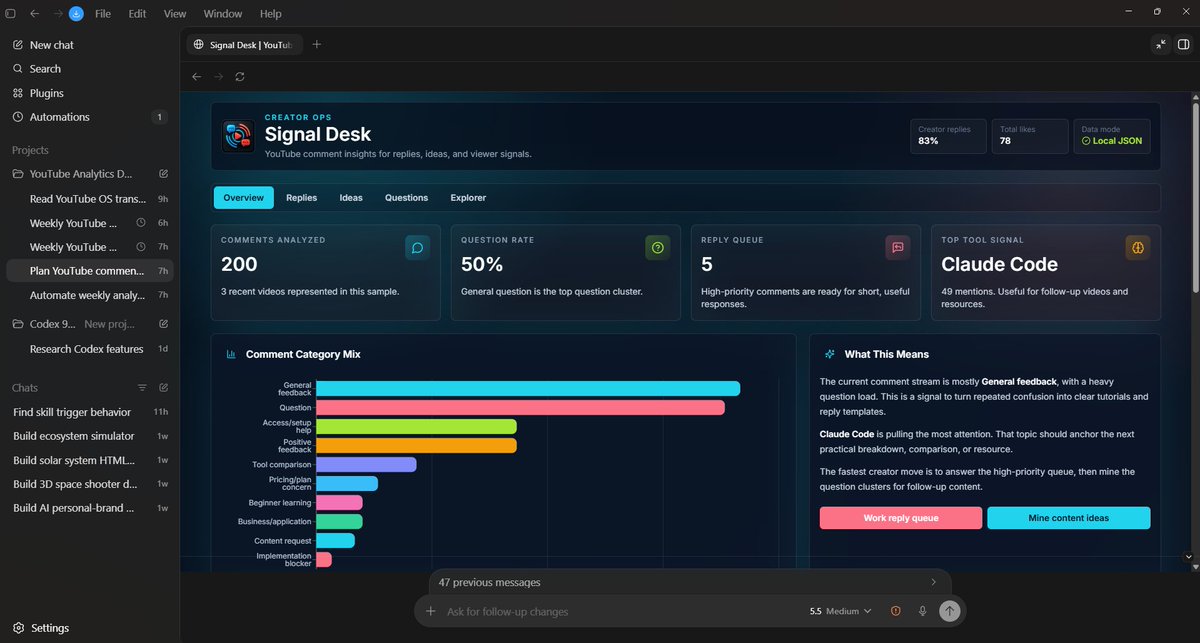
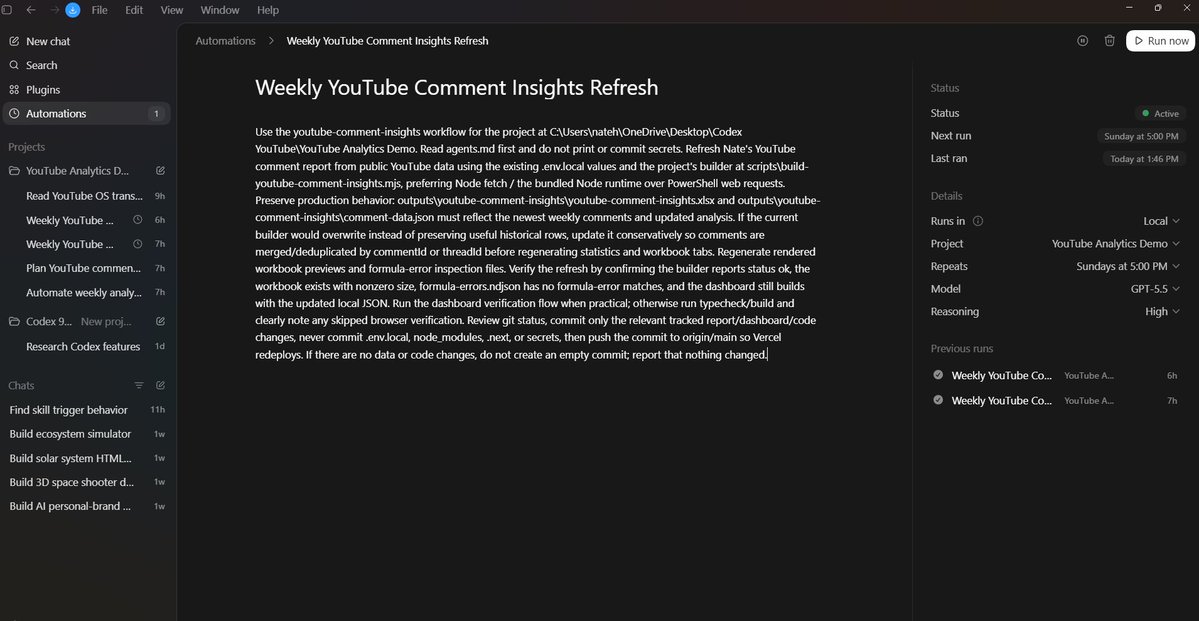
Here's the entire flow, no skipped steps.
## TL;DR
→ Codex works inside a folder. Same as Claude Code. Different harness, different model.
→ Plan mode + agents.md + .env is the foundation. Get those right and the rest gets easier.
→ Skills turn one-off chats into reusable recipes. Global or project-level, your call.
→ GitHub + Vercel deploy any localhost dashboard to a live URL with one connect.
→ Weekly automations work, but the model picker defaults to GPT-5.2. Change it.
→ Browser use inside Codex is the cleanest QA loop I've used.
## The Codex Mental Model
If you've used ChatGPT on the web, the interface is going to feel familiar.
Projects on the left. Chats on the left. Talk to ChatGPT in the middle. The toggle at the bottom switches model (GPT-5.5, 5.4, etc.), speed, and intelligence (low, medium, high, extra high).
That's the surface. Underneath, it's a different beast.
Codex can do everything chat can do. Plus it reads your local files, builds Excel sheets, writes apps, controls your mouse and keyboard, and automates browsers. ChatGPT on the web can do none of that.
The closest comparison is Claude Code, which I still use every day. Same idea, different harness.
→ Claude Code uses Opus, Sonnet, Haiku
→ Codex uses ChatGPT models (5.5, 5.4, etc.)
→ Both work inside the same folder structure
→ Both speak markdown configuration files
I find Claude better for exploratory thinking and brainstorming. I find Codex more pragmatic, more execution-heavy, and stronger at staying on a long plan. Different strengths. Use both.
I did a full breakdown comparing and testing the two, check that out here: https://x.com/nateherk/status/2047436441664262323?s=20
The mindset shift: stop asking "which tool is the best?" Start asking "which tool is right for this specific job?"
## Setting Up Your First Project
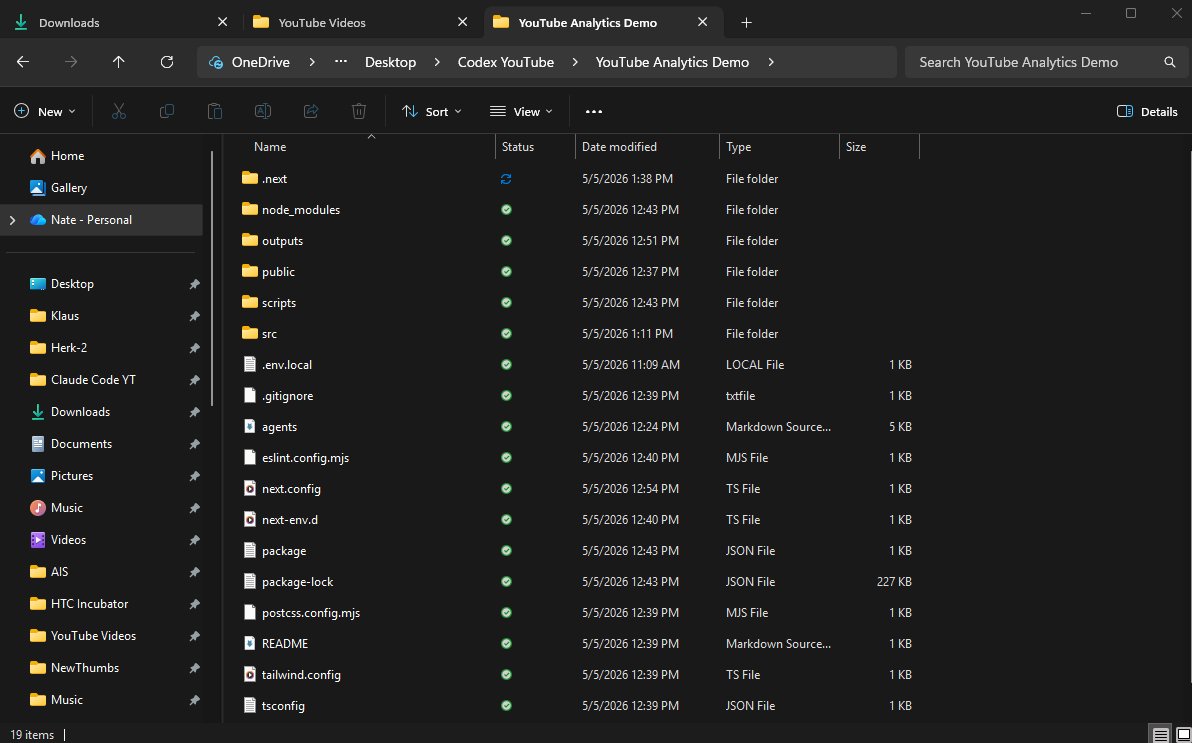
A project in Codex is just a folder on your computer. That's the whole secret.
When you create a new project, Codex opens a file picker. Choose where the folder lives. Done. Now any file inside that folder, Codex can read, write, edit, organize, or move.
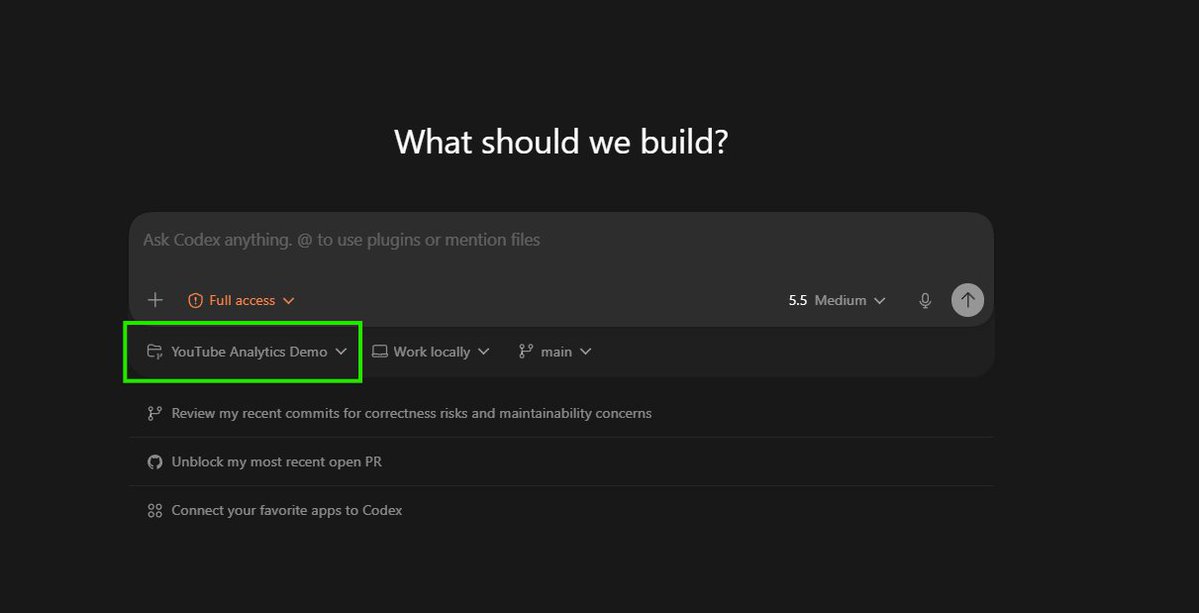
The first thing every project needs is an `agents.md` file.
If you're coming from Claude Code, this is the equivalent of `claude.md`. Same idea, different name. It's the onboarding doc Codex reads every time you open a new chat. It tells the agent who you are, what the project is, and what the goal looks like.
Don't write it yourself the first time. Just talk to Codex.
Tell it the project goal in plain English. Tell it to draft an agents.md. It creates the file in the project root with sections for context, project goal, product direction, and key constraints. You read it. You edit it. Done.
The next thing to know is plan mode.
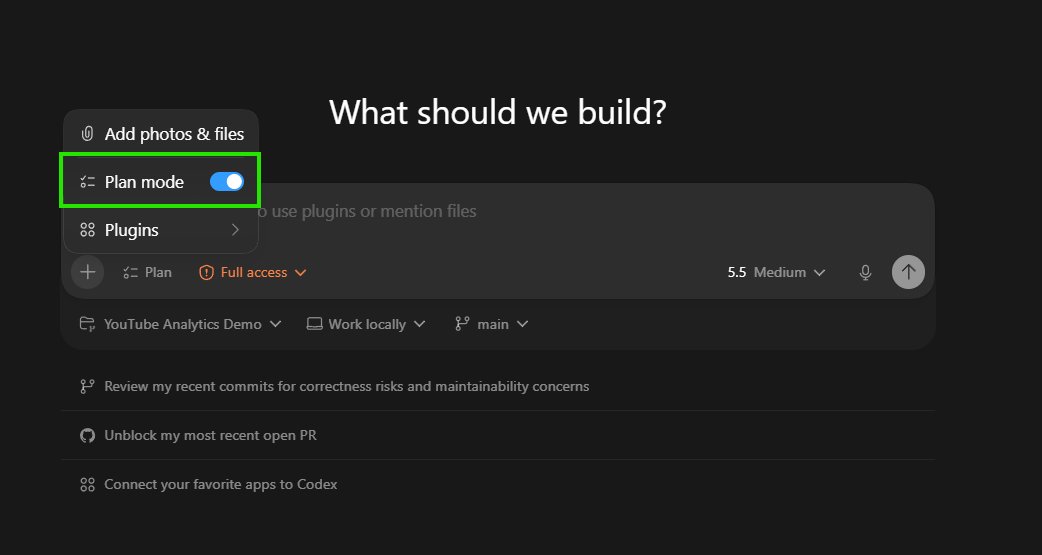
Plan mode means Codex won't execute anything. It just brainstorms, asks questions, and produces a plan. I start every meaningful build in plan mode. Once the plan is solid, I submit and let it execute.
Skipping plan mode is the single biggest reason builds go sideways.
## Connecting to Anything
Codex has plugins for the obvious tools. Slack, Drive, GitHub, Vercel, Figma, Canva, Higgsfield, Hugging Face, Notion, Teams, SharePoint, and more.
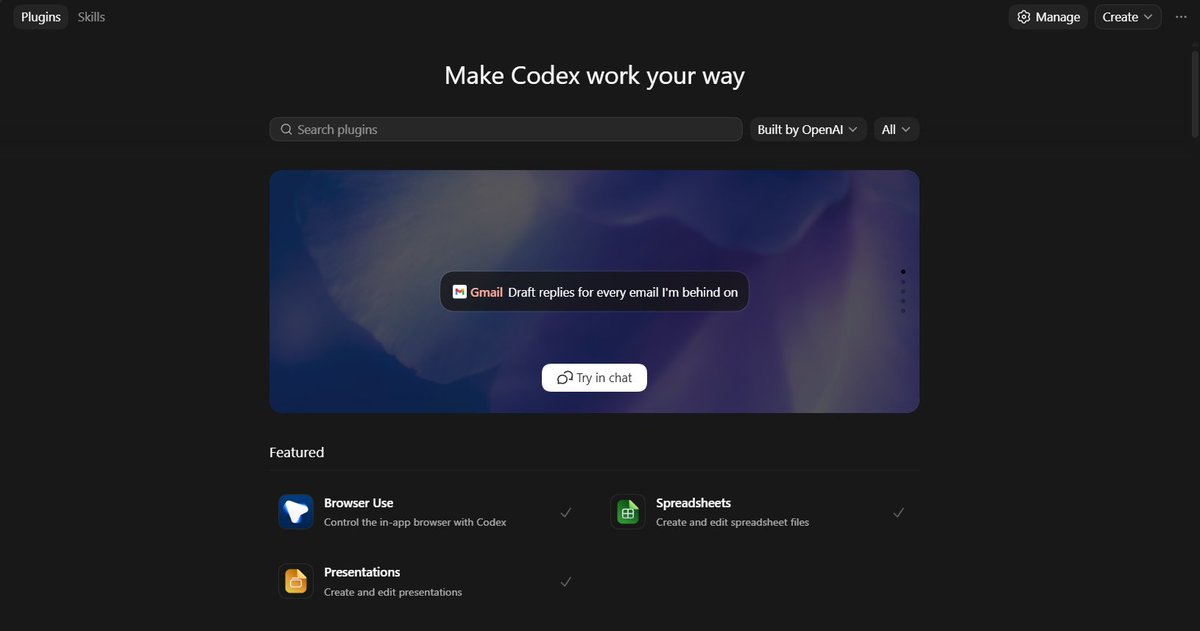
But not everything has a plugin. YouTube, for example, doesn't.
When that happens, you don't go hunting. You ask Codex.
In plan mode I told it the goal: pull recent comments from my YouTube channel. It came back with three options. API key, OAuth, or both. I chose API key. It came back with a step-by-step plan to set up Google Cloud, enable the YouTube Data API v3, and create a key.
A few minutes later I had a working API key in `.env.local`.
The dot in front of `env` matters. That's how Codex knows to exclude this file from public commits when you push to GitHub. Always paste keys there. Never into a random `secrets.txt`.
Once the key was in, I had Codex test the connection. It tried PowerShell first (failed on a TLS issue), then Node, then Python (both worked). I asked it to save that learning into project memory so it never tries the broken path again.
That's the loop you want. Try, fail, save the lesson, never fail the same way twice.
## Building a Real Deliverable
The point of any tool is the deliverable.
Mine was a YouTube comment intelligence Excel sheet. I asked Codex to pull 200 of my most recent comments across recent videos, analyze them, and put it all in a workbook with charts and creator-focused insights.
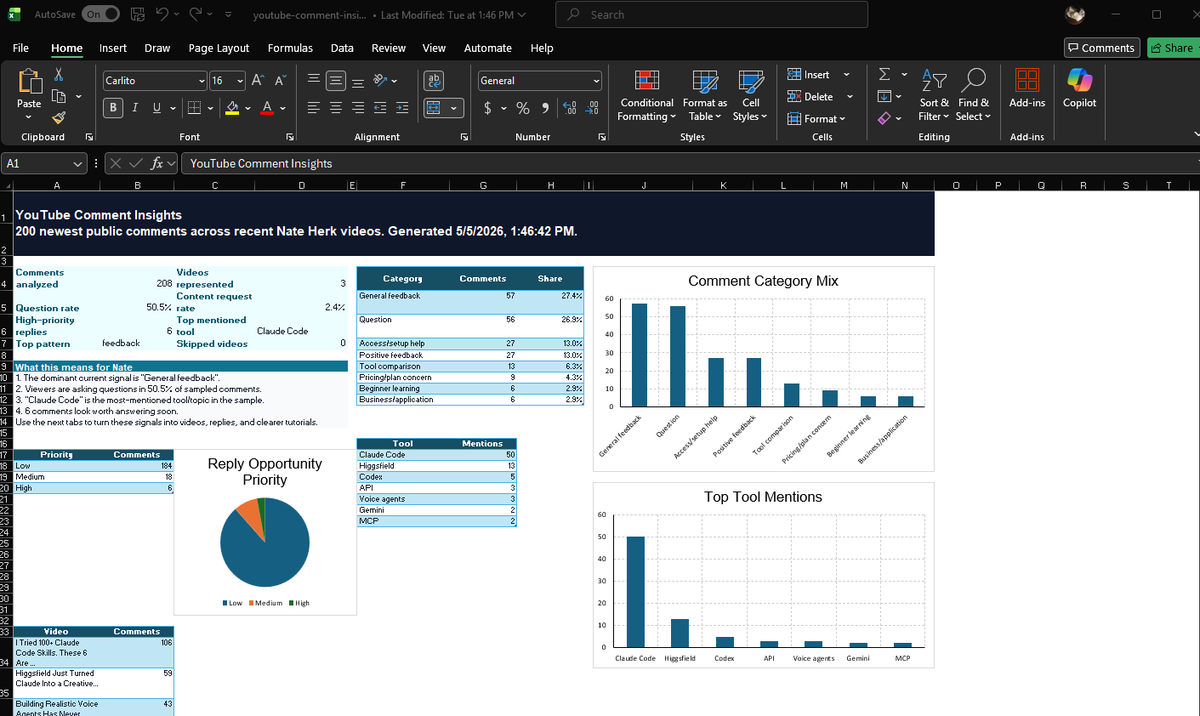
Plan mode again. Codex asked clarifying questions. How many comments? Which videos? How should it classify them?
I went with its recommendations.
A few minutes later I had a workbook with:
→ Content category mix (general feedback, questions, tool comparisons, etc.)
→ Tool mention rankings (Claude Code, Codex, API, etc.)
→ Question rate, content-requested rate, high-priority items
→ Frequent question patterns
→ Reply opportunities ranked by priority
→ Content idea suggestions pulled from the comments
→ A raw tab with all 200+ comments
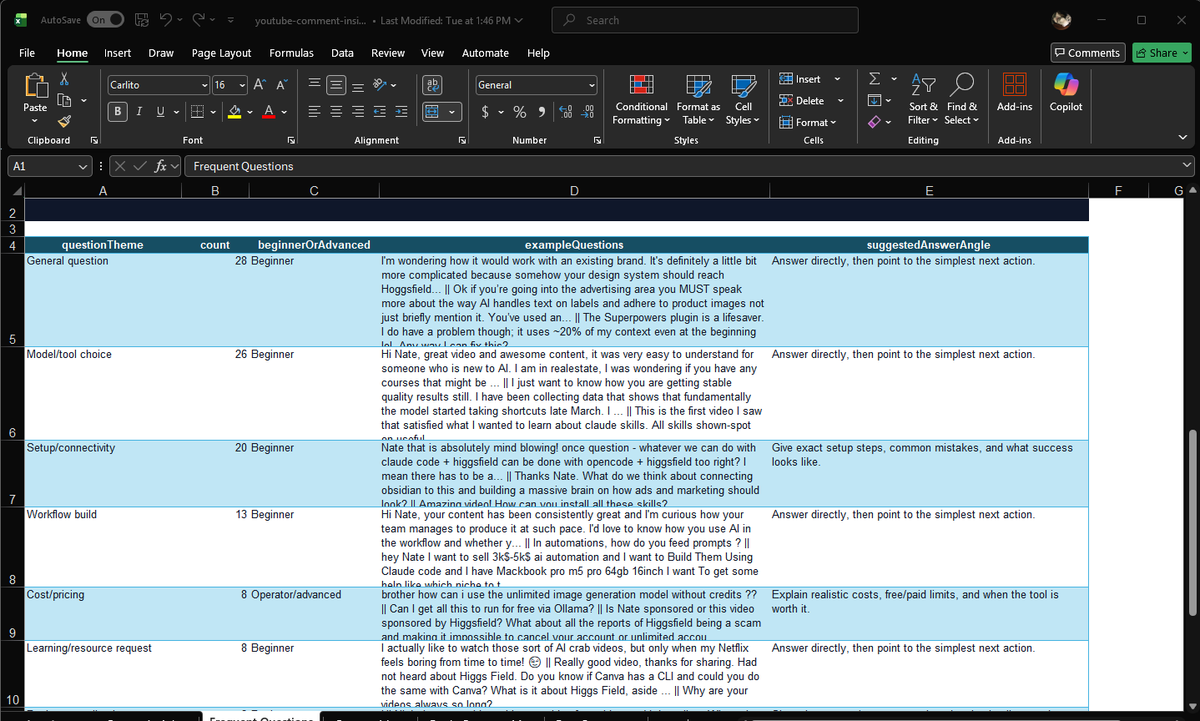
The first version was OK. Not great. My prompt was vague.
That's the lesson. Vague prompts produce generic insights. The more specific you are about which patterns matter to you, the more useful the workbook becomes.
## Turning Workflows Into Skills
Here's where it got interesting.
That comment workbook took 20 minutes the first time. It would take 20 minutes every time, unless I turned it into a skill.
A skill is a reusable recipe.
Think of it like making chocolate chip pancakes. The first time, you pull up a recipe and follow it to a T. Measurements, temperature, timing. The next time, you grab the same recipe. The pancakes come out the same. If you tweak something and like it, you update the recipe. The skill gets sharper every time you use it.
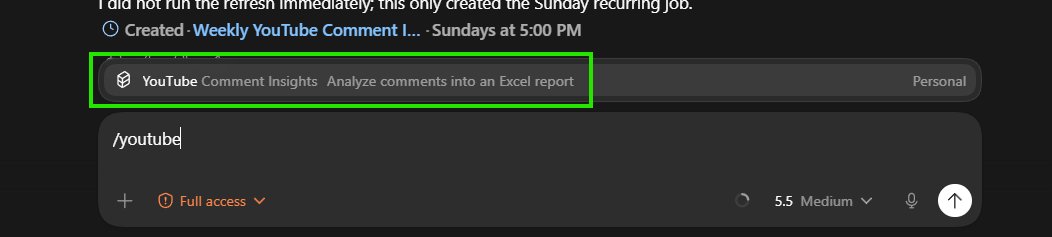
Skills in Codex are markdown files. That's it.
After the workbook was built, I told Codex to turn the flow into a skill. It reverse-engineered everything I had just done into a fresh file inside the `.codex` folder.
Two storage levels:
→ Global: stored in the user-level `.codex` folder. Available in every project.
→ Project-level: stored inside the project itself. Only available there.
Switching between them is one sentence. "Move that skill to the project level." Done.
To call a skill, you have two options. Slash command (`/youtube-comment-insights`) or natural language ("pull recent comments and run the insights workflow"). Both work.
## From Localhost to Live URL
The Excel sheet was the backend. Now I needed a frontend.
I asked Codex to build a dashboard that visualizes the data, served on localhost, with charts, AI insights, a comment explorer, and a clean UI. I told it to use GPT Image 2 to mock up concepts before writing any code.
This is one of my favorite Codex patterns.
GPT Image 2 generates concept art, logos, and UI references that get saved as project assets. The dashboard build then references those assets. It produces a much sharper-looking output than letting the model freestyle the design.
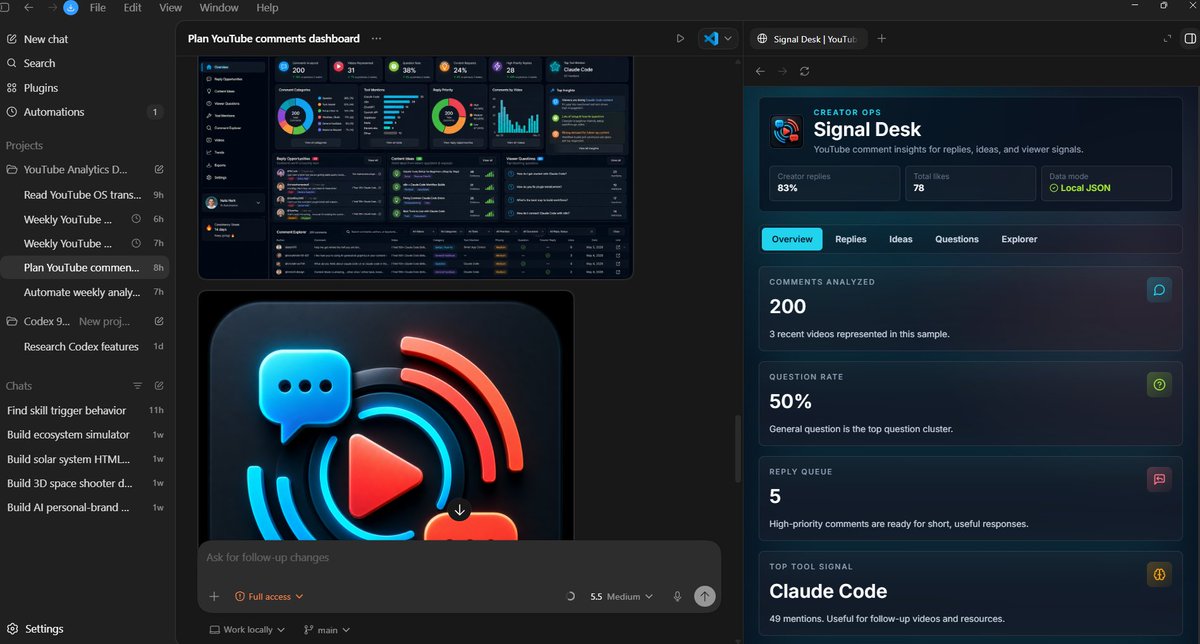
Before Codex returned the dashboard, it ran a built-in browser verification loop. Two visual passes. It found three issues on its own, fixed them, and ran another pass before handing it back.
The dashboard worked. Localhost only.
Localhost lives on your machine. Nobody else can hit that URL.
To take it live I used two more tools. GitHub and Vercel.
1️⃣ Connect Codex to GitHub (one CLI auth step)
2️⃣ Tell Codex to create a private repo and push the dashboard codebase
3️⃣ Connect Vercel to the same GitHub account
4️⃣ Import the repo into Vercel
5️⃣ Click deploy
Thirty seconds later I had a live URL.
The killer detail: GitHub and Vercel talk to each other. Every push to the repo triggers an automatic Vercel deploy. So I never have to log in to Vercel again. I work in Codex. Codex pushes to GitHub. Vercel updates the live site.
Three tools. One workflow.
## Weekly Automations (and the gotcha)
Codex has an Automations tab. Scheduled chats that run on a cron.
I set one up to run every Sunday at 5pm. The prompt: pull fresh comments, update the Excel sheet, refresh the dashboard data, push to GitHub, let Vercel auto-deploy.

That's a real "while I sleep" workflow.
But here's the thing.
The first run took 40 minutes when it should have taken 7. Two reasons.
→ I had the Excel file open on my desktop. Codex couldn't overwrite it.
→ The automation defaulted to GPT-5.2, which is way slower than 5.5.
The model picker inside the automation panel does NOT inherit from your active chat. You have to set it explicitly per automation. I switched mine to 5.5 high. Re-ran. Done in 7 minutes.
If you build an automation and it feels slow, check that model setting first.
The other thing to know about local automations: they only run when your machine is on. Close Codex or shut down your laptop, the cron pauses. For 24/7 you need a cloud setup. Claude Code recently shipped cloud routines for exactly this. Codex doesn't have a native equivalent yet, so for now keep your machine on or move the workflow to a VPS.
## Browser Use as a QA Loop
Codex has built-in browser use that's smoother than anything I've used elsewhere.
I told it to open the dashboard in the in-app browser, click around, try to break it, and report back. It did.
Six issues found:
→ External YouTube links not opening in a new tab
→ Empty explorer state too bare
→ Search too literal, no fuzzy matching
→ Active tab state mostly visual, not accessible
→ Two minor UI inconsistencies
Watching the cursor move around the dashboard live in the in-app browser is wild. It catches things I missed. It surfaces UX problems I never would have caught from the code alone.
The pattern that unlocks this: bake the QA pass into your skill or your project memory. Every time you ship a new dashboard or feature, the agent runs a browser pass before it returns to you. You stop being the QA tester. The agent does it.
Browser use isn't just for QA either. Use it for:
→ Logging into tools that don't have an API
→ Pulling reports from dashboards that don't expose data
→ Automating clicks through any UI you can describe in natural language
## Quality-of-Life Details Worth Knowing
A handful of things that make Codex feel less like a tool and more like a workspace.
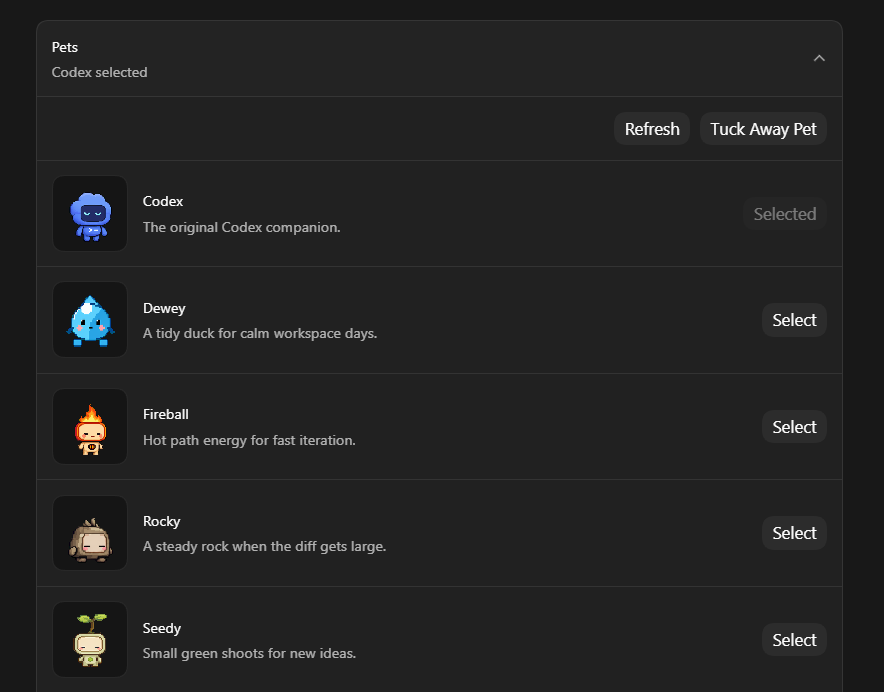
→ The pet. A tiny animated character in the bottom corner. Pick from Codex, Dewey, Sadie, BSOD, Stacky, or Fireball. While Codex works, the pet shows progress. Hover for the current task. Switch tabs and a notification dot appears when something needs attention.
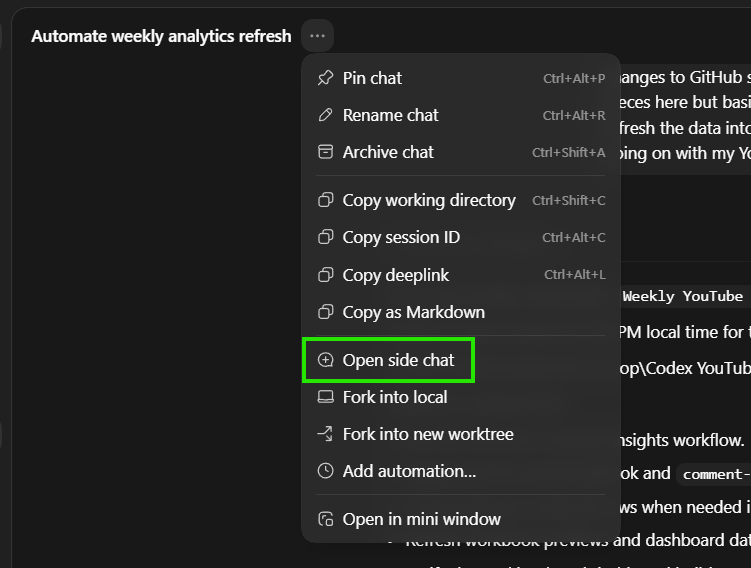
→ Side chat. Open a side chat off your main conversation. Same project context, different thread. Ask a quick question without polluting the main session. Close it when you're done.
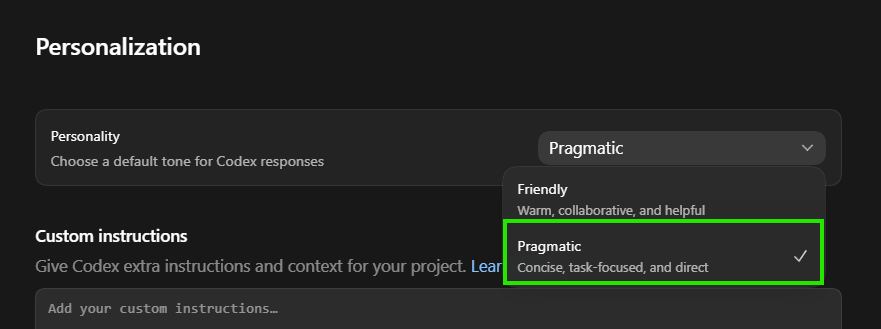
→ Personality. Friendly or Pragmatic. I run Pragmatic by default. Concise, task-focused, direct. No filler.
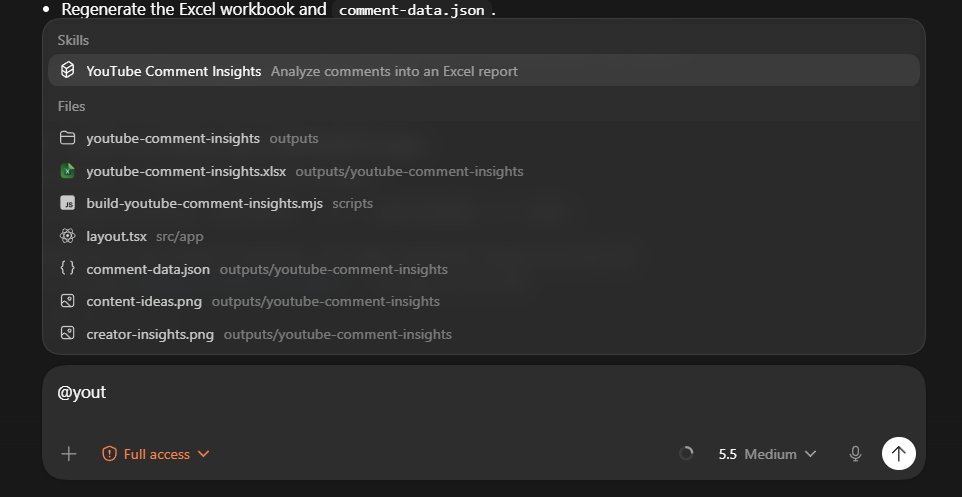
→ The slash menu. `/personality`, `/pets`, `/skills`, `/browseruse`, `/pdf`, `/skillcreator`, and more. Type a slash and browse what's available.
→ The `@` mention. Tag a specific file or plugin in your prompt. Way cleaner than pasting a path.
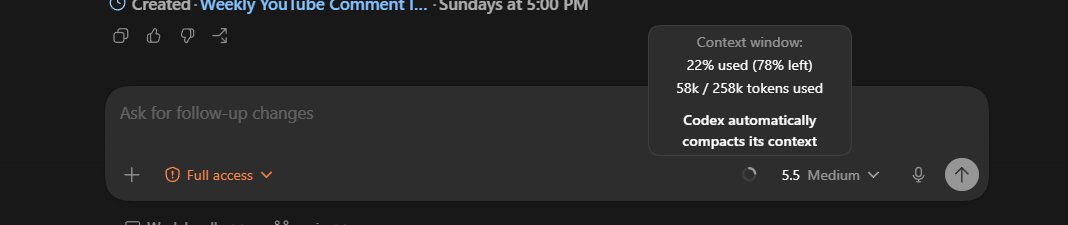
→ The session bar. Bottom of the chat shows context window usage. Settings shows session limits remaining (5-hour and weekly). Codex auto-compacts the context just like Claude Code, so you rarely have to manage it manually.
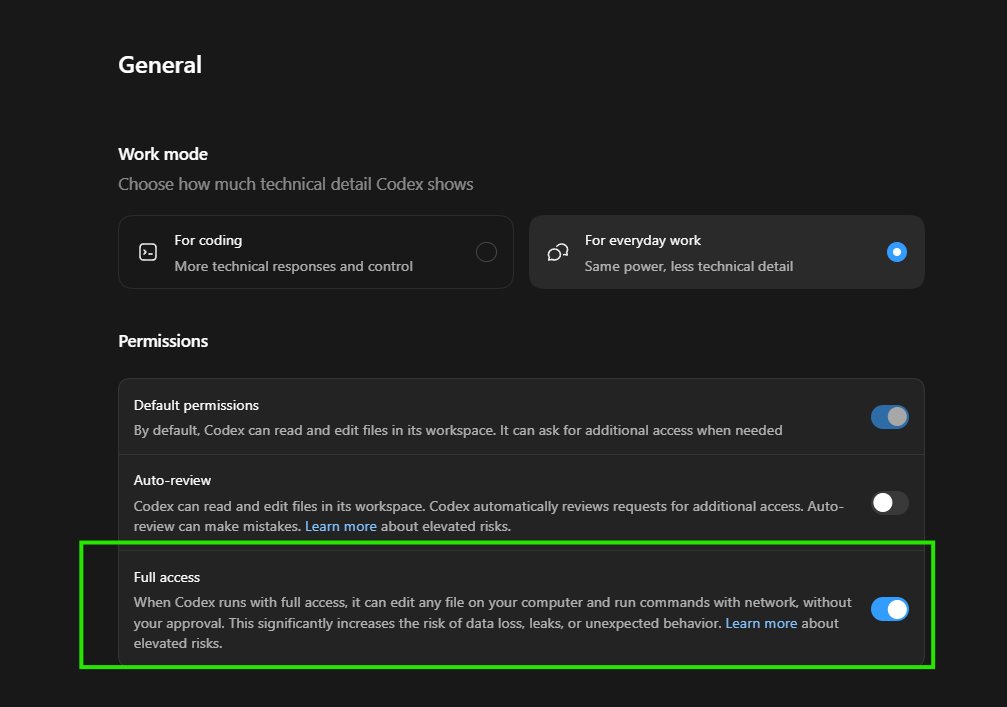
→ Full access mode. Settings → General → Full access. Skips approval prompts. Faster, riskier. Start on default. Switch to full once you trust the project.
## Wrap
Codex is not magic.
The first time you build something, it'll hit issues. The first automation will run slow. The first skill won't be perfect. That's normal.
Treat every failure as golden knowledge. When something breaks, ask Codex to save the lesson into project memory. Next time, it knows. The system gets smarter every time you use it.
You're teaching a kid to ride a bike. You don't take your hand off the handlebars on day one.
In one hour I went from blank project to a working AI workflow that pulls fresh data from YouTube, analyzes 200+ comments, visualizes them on a live dashboard, refreshes itself every Sunday, and QAs itself with browser use before shipping.
All from inside a folder on my computer.
That folder is portable. Open it in Codex, Claude Code, OpenClaude, Cursor, or anything else that speaks markdown. The harness changes. The work doesn't.
Master that pattern and you've mastered 97% of what these tools are for.
I walk through the entire build step by step in the full video. Link in the first reply.
## 相关链接
- [Nate Herk](https://x.com/nateherk)
- [@nateherk](https://x.com/nateherk)
- [7.6K](https://x.com/nateherk/status/2051838770912129464/analytics)
- [https://x.com/nateherk/status/2047436441664262323?s=20](https://x.com/nateherk/status/2047436441664262323?s=20)
- [Upgrade to Premium](https://x.com/i/premium_sign_up)
- [9:37 AM · May 6, 2026](https://x.com/nateherk/status/2051838770912129464)
- [7,676 Views](https://x.com/nateherk/status/2051838770912129464/analytics)
---
*导出时间: 2026/5/6 13:26:39*
---
## 中文翻译
# 1小时掌握 97% 的 Codex
**作者**: Nate Herk
**日期**: 2026-05-06T01:37:38.000Z
**来源**: [https://x.com/nateherk/status/2051838770912129464](https://x.com/nateherk/status/2051838770912129464)
---

Codex 绝对是个猛兽。但大多数人只是浅尝辄止。
在一次会话中,我从零开始构建了一个已部署的 YouTube 评论智能系统,其中包含一个可复用的技能、一个实时仪表板,以及一个在我睡眠时运行的每周自动化任务。


这是完整的流程,没有任何步骤省略。
## TL;DR
→ Codex 在文件夹内运行。和 Claude Code 一样。只是底层架构不同,模型不同。
→ Plan 模式 + agents.md + .env 是基础。把这几项做好了,剩下的就容易了。
→ 技能将一次性聊天转化为可复用的配方。全局限定或项目级限定,由你决定。
→ GitHub + Vercel 可以一键将任何本地仪表板部署为实时 URL。
→ 每周自动化可以运行,但模型选择器默认是 GPT-5.2。记得修改它。
→ Codex 内部的浏览器使用功能是我用过的最干净的 QA(质量保证)循环。
## Codex 的心智模型
如果你用过网页版的 ChatGPT,你会觉得这个界面很眼熟。
左边是项目列表。左边是聊天记录。中间是和 ChatGPT 对话。底部的切换开关用于切换模型(GPT-5.5, 5.4 等)、速度和智能等级(低、中、高、超高)。
这只是表面。在底层,它是完全不同的猛兽。
Codex 能做聊天能做的所有事。此外,它能读取你的本地文件、构建 Excel 表格、编写应用程序、控制你的鼠标和键盘,以及自动化浏览器。网页版 ChatGPT 则完全做不到这些。
最接近的同类产品是 Claude Code,我至今每天都在使用。理念相同,底层架构不同。
→ Claude Code 使用 Opus, Sonnet, Haiku
→ Codex 使用 ChatGPT 模型 (5.5, 5.4 等)
→ 两者都在相同的文件夹结构中工作
→ 两者都通过 markdown 配置文件交流

我发现 Claude 更适合探索性思考和头脑风暴。我觉得 Codex 更务实,更侧重于执行,并且更擅长坚持执行长计划。各有所长。结合使用。
我做过详细的对比和测试,详见这里:https://x.com/nateherk/status/2047436441664262323?s=20
心态转变:停止问“哪个工具最好?”。开始问“哪个工具最适合这项具体工作?”。
## 搭建你的第一个项目
Codex 里的一个项目只是你电脑上的一个文件夹。这就是全部秘密。
当你创建一个新项目时,Codex 会打开一个文件选择器。选择文件夹的位置。完成。现在,该文件夹内的任何文件,Codex 都可以读取、写入、编辑、整理或移动。

每个项目首先需要的是一个 `agents.md` 文件。
如果你是从 Claude Code 转过来的,这相当于 `claude.md`。理念相同,名字不同。这是每次你打开新聊天时 Codex 阅读的入职文档。它告诉代理你是谁,项目是什么,以及目标是什么。
第一次别自己写。直接告诉 Codex。
用通俗的英语告诉它项目目标。让它起草一个 agents.md。它会在项目根目录创建文件,包含上下文、项目目标、产品方向和关键约束部分。你阅读它。你编辑它。完成。
接下来需要了解的是 Plan 模式。

Plan 模式意味着 Codex 不会执行任何操作。它只是头脑风暴、提问并制定计划。每次有意义的构建,我都从 Plan 模式开始。一旦计划稳妥,我就提交并让它执行。
跳过 Plan 模式是构建出问题的最大原因。
## 连接到任何事物
Codex 拥有针对主流工具的插件。Slack、Drive、GitHub、Vercel、Figma、Canva、Higgsfield、Hugging Face、Notion、Teams、SharePoint 等等。

但并非所有东西都有插件。比如 YouTube 就没有。
当这种情况发生时,你不需要四处寻找。你问 Codex。
在 Plan 模式下,我告诉它目标:从我的 YouTube 频道拉取最近的评论。它返回了三个选项。API 密钥、OAuth 或两者皆有。我选择了 API 密钥。它返回了一个分步计划:设置 Google Cloud,启用 YouTube Data API v3,并创建密钥。
几分钟后,我在 `.env.local` 中得到了一个可用的 API 密钥。
`env` 前面的点很重要。这样 Codex 就知道当你推送到 GitHub 时,会将此文件排除在公共提交之外。始终将密钥粘贴在那里。永远不要粘贴到随机的 `secrets.txt` 中。
密钥到位后,我让 Codex 测试连接。它先试了 PowerShell(因为 TLS 问题失败),然后是 Node,接着是 Python(都成功了)。我要求它将这个经验教训保存到项目记忆中,这样它就再也不会尝试那条错误路径了。
这就是你想要的循环。尝试,失败,保存教训,绝不再犯同样的错误。
## 构建实际交付物
任何工具的要点在于交付物。
我的交付物是一个 YouTube 评论智能 Excel 表格。我让 Codex 从最近的视频中拉取 200 条我最新的评论,分析它们,并将所有内容放入一个包含图表和创作者导向洞察的工作簿中。

再次进入 Plan 模式。Codex 提出了澄清性问题。多少条评论?哪些视频?如何对它们进行分类?
我采纳了它的建议。
几分钟后,我有了一个包含以下内容的工作簿:
→ 内容类别组合(一般反馈、问题、工具比较等)
→ 工具提及排名(Claude Code, Codex, API 等)
→ 提问率、内容请求率、高优先级项目
→ 常见问题模式
→ 按优先级排序的回复机会
→ 从评论中提取的内容创意建议
→ 一个包含所有 200 多条评论的原始数据标签页

第一个版本还可以。不算好。我的提示词很模糊。
这就是教训。模糊的提示词产生通用的洞察。你越具体地说明哪些模式对你很重要,工作簿就越有用。
## 将工作流转化为技能
这就变得有趣了。
那个评论工作簿第一次花了 20 分钟。如果不变成技能,每次都会花 20 分钟。
技能是一个可复用的配方。
把它想象成做巧克力薄饼煎饼。第一次,你找来食谱并严格按照步骤执行。用量、温度、时间。下一次,你拿出同样的食谱。煎饼做出来是一样的。如果你调整了某些地方并且喜欢,你就更新食谱。每次使用,技能都会变得更精炼。

Codex 中的技能是 markdown 文件。就这样。
工作簿构建完成后,我让 Codex 将流程转化为一个技能。它将我刚刚做的一切逆向工程,变成了 `.codex` 文件夹中的一个新文件。
两种存储级别:
→ 全局:存储在用户级的 `.codex` 文件夹中。在每个项目中都可用。
→ 项目级:存储在项目内部。仅在那里可用。
在两者之间切换只需一句话。“把那个技能移到项目级”。完成。
要调用技能,你有两个选项。斜杠命令(`/youtube-comment-insights`)或自然语言(“拉取最近的评论并运行洞察工作流”)。两者都有效。
## 从本地主机到实时 URL
Excel 表格是后端。现在我需要前端。
我让 Codex 构建一个仪表板来可视化数据,运行在本地主机上,包含图表、AI 洞察、评论浏览器和一个简洁的 UI。我告诉它在编写代码之前使用 GPT Image 2 来模拟概念。
这是我最喜欢的 Codex 模式之一。
GPT Image 2 生成概念图、Logo 和 UI 参考图,这些会被保存为项目资产。仪表板构建随后会引用这些资产。这比让模型自由设计外观要清晰得多。

在 Codex 返回仪表板之前,它运行了一个内置的浏览器验证循环。两次视觉检查。它自己发现了三个问题,修复了它们,并在交给我之前又运行了一次检查。
仪表板运行成功。仅限本地主机。
本地主机存在于你的机器上。其他人无法访问那个 URL。
为了上线,我又使用了两个工具。GitHub 和 Vercel。
1️⃣ 将 Codex 连接到 GitHub(一步 CLI 认证)
2️⃣ 告诉 Codex 创建一个私有仓库并推送仪表板代码库
3️⃣ 将 Vercel 连接到同一个 GitHub 账户
4️⃣ 将仓库导入 Vercel
5️⃣ 点击部署
三十秒后,我有了一个实时的 URL。
最 killer 的细节:GitHub 和 Vercel 会相互对话。每次推送到仓库都会触发自动的 Vercel 部署。所以我再也不需要登录 Vercel 了。我在 Codex 里工作。Codex 推送到 GitHub。Vercel 更新实时站点。
三个工具。一个工作流。
## 每周自动化(以及坑点)
Codex 有一个自动化标签页。基于 cron 定时运行的聊天。
我设置了一个在每周日下午 5 点运行。提示词:拉取新评论,更新 Excel 表格,刷新仪表板数据,推送到 GitHub,让 Vercel 自动部署。

这真是一个“在我睡觉时”的工作流。
但是有个坑。
第一次运行花了 40 分钟,而本应只花 7 分钟。两个原因。
→ 我在桌面上打开了 Excel 文件。Codex 无法覆盖它。
→ 自动化默认使用 GPT-5.2,这比 5.5 慢得多。
自动化面板内的模型选择器不会继承你当前聊天的设置。你必须为每个自动化明确设置。我把我的切换到了 5.5 高级模式。重新运行。7 分钟搞定。
如果你构建了一个自动化并且感觉慢,先检查那个模型设置。
关于本地自动化还需要知道一点:它们只在你的机器开机时运行。关闭 Codex 或合上笔记本电脑,cron 就会暂停。对于 24/7 运行,你需要云设置。Claude Code 最近推出了云例程正是为了这个。Codex 目前还没有原生的等效功能,所以现在保持你的机器开启,或者将工作流移至 VPS。
## 浏览器作为 QA 循环
Codex 拥有内置的浏览器使用功能,比我在其他地方用过的任何功能都要流畅。
我让它打开应用内浏览器中的仪表板,到处点击,试图弄坏它,然后汇报。它照做了。
发现了六个问题:
→ 外部 YouTube 链接没有在新标签页打开
→ 空的浏览器状态太简陋
→ 搜索太字面化,没有模糊匹配
→ 活动标签状态主要是视觉上的,无法访问
→ 两个小的 UI 不一致
看着光标在应用内浏览器中实时在仪表板上移动真是太神奇了。它能捕捉到我错过的东西。它能暴露出仅从代码中绝对无法发现的 UX 问题。
解锁这一点的模式:将 QA 检查环节融入到你的技能或项目记忆中。每次你发布新的仪表板或功能时,代理在返回给你之前都会运行一次浏览器检查。你不再做 QA 测试员。代理来做。
浏览器使用不仅仅是为了 QA。还可以用于:
→ 登录没有 API 的工具
→ 从不暴露数据的仪表板拉取报告
→ 通过任何你可以用自然语言描述的 UI 自动化点击
## 值得了解的生活质量细节
有一些细节让 Codex 感觉不像是工具,而更像是一个工作空间。
→ 宠物。右下角的一个小动画角色。从 Codex、Dewey、Sadie、BSOD、Stacky 或 Fireball 中选择。当 Codex 工作时,宠物显示进度。悬停查看当前任务。切换标签页,当需要注意时会出现通知点。

→ 侧边聊天。从主对话开启一个侧边聊天。相同的项目上下文,不同的线程。问一个快速问题而不污染主会话。完成后关闭它。

→ 性格。友好或务实。我默认使用务实。简洁,专注任务,直接。没有废话。

→ 斜杠菜单。`/personality`、`/pets`、`/skills`、`/browseruse`、`/pdf`、`/skillcreator` 等等。输入斜杠并浏览可用内容。
→ `@` 提及。在你的提示词中标记特定文件或插件。比粘贴路径要干净得多。

→ 会话栏。聊天底部显示上下文窗口使用情况。设置显示剩余的会话限制(5小时和每周)。Codex 会像 Claude Code 一样自动压缩上下文,所以你很少需要手动管理它。

→ 完全访问模式。设置 → 通用 → 完全访问。跳过批准提示。更快,风险更大。从默认开始。一旦你信任该项目,切换到完全访问。

## 总结
Codex 不是魔法。
你第一次构建东西时,会遇到问题。第一个自动化会运行缓慢。第一个技能不会完美。这很正常。
把每一次失败都视为黄金知识。当东西坏了时,让 Codex 把教训保存到项目记忆中。下一次,它就知道了。你每次使用,系统都会变聪明。
你在教孩子骑自行车。你不会在第一天就松开把手。
在一小时内,我从空白项目变成了一个有效的 AI 工作流,它从 YouTube 拉取新数据,分析 200 多条评论,在实时仪表板上可视化,每周日自动刷新,并在交付前使用浏览器功能进行自我 QA。
这一切都在我电脑上的一个文件夹里完成。
那个文件夹是便携的。在 Codex、Claude Code、OpenClaude、Cursor 或任何其他支持 markdown 的工具中打开它。底层架构会变。工作成果不会。
掌握了这种模式,你就掌握了这些工具 97% 的用途。
我在完整视频中一步步演示了整个构建过程。链接在第一条回复中。
## 相关链接
- [Nate Herk](https://x.com/nateherk)
- [@nateherk](https://x.com/nateherk)
- [7.6K](https://x.com/nateherk/status/2051838770912129464/analytics)
- [https://x.com/nateherk/status/2047436441664262323?s=20](https://x.com/nateherk/status/2047436441664262323?s=20)
- [升级到 Premium](https://x.com/i/premium_sign_up)
- [9:37 AM · May 6, 2026](https://x.com/nateherk/status/2051838770912129464)
- [7,676 次观看](https://x.com/nateherk/status/2051838770912129464/analytics)
---
*导出时间: 2026/5/6 13:26:39*