# 3 Secret Ways Claude Code’s Creator Actually Uses It
**作者**: Nate Herk
**日期**: 2026-08-12T15:51:49.000Z
**来源**: [https://x.com/nateherk/status/2087567741901287573](https://x.com/nateherk/status/2087567741901287573)
---
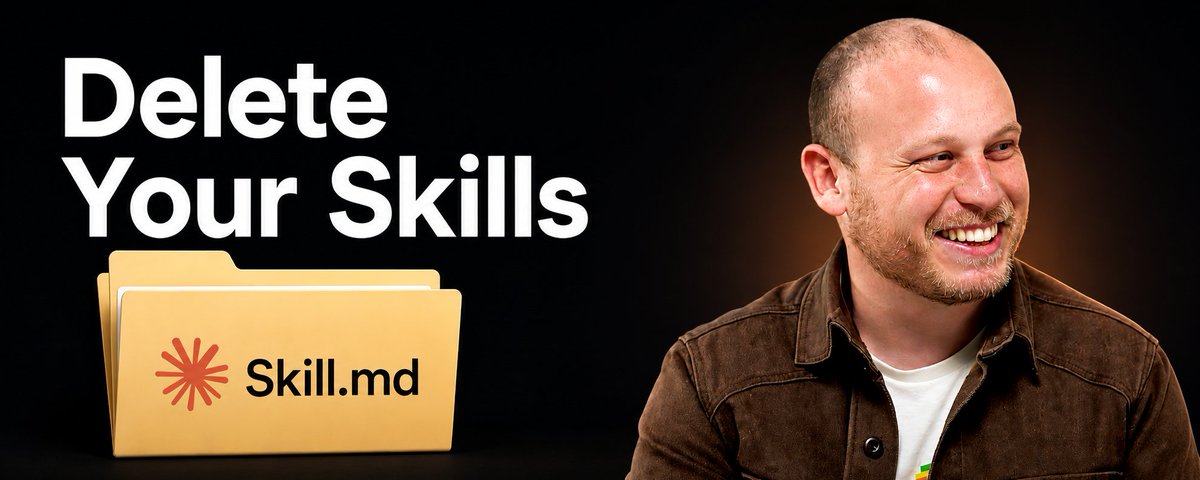
More Instructions Are Making Claude Code Worse
I've spent months adding skills, hooks, and persistent instructions to make Claude Code better.
Then Opus 5 dropped, and some of my results felt worse.
The strange part is that the fix might be deleting instructions, giving Claude a harder task, and letting it think.
TL;DR
→ Anthropic deleted more than 80% of Claude Code's system prompt for Opus 5
→ Instructions written for an older model can hobble a newer one
→ Keep business context, brand rules, and non-negotiables, but loosen the recipe
→ Give Claude a high-level goal, guardrails, exit criteria, and a way to verify its work
→ Manage AI agents like capable people: set direction, review, and let them use their brains
## Why Claude Feels Worse
Boris Cherny, the creator of Claude Code, explained this in a 35-minute interview on the Y Combinator YouTube channel, and it changed how I think about my entire setup.
Every model is different.
Different strengths. Different flaws. Different behaviors that need correcting.
That means Claude Code's harness is always changing. Anthropic adds and deletes tools, rewrites the prompts attached to those tools, and changes the system prompt whenever a new model ships.
For Opus 5, the team deleted more than 80% of Claude Code's system prompt.
A lot of those old instructions were compensating for behavior the previous model should have handled but could not. Opus 5 could already do those things, so keeping the correction only got in its way.
This hit me because Opus 5 had felt degraded in some of my real work.
I was occasionally going back to 4.8 because I liked the output better.
My first assumption was that the new model was worse. I had not seriously considered that my old instructions might be the problem.
Boris's recommendation is simple: every six months, delete or disable your CLAUDE.md, skills, and hooks. See what the current model does without them.
You might be surprised.
Think about teaching three people to build a slide deck:
→ A 10-year-old
→ A college student
→ A professional who has spent 10 years making hundreds of decks
The 10-year-old probably needs exact instructions. The 10 slides to create. The title format. The colors. Where every block of text goes.
Give that same recipe to the experienced professional and you prevent them from using their judgment.
The instructions that help the beginner can hobble the expert.
Boris calls this product overhang. Today's models can already do things we have not discovered because our products and prompts have not given them the room to show us.
One way to find those capabilities is to give the model a slightly harder task than you think it can handle.
## What My No-Skills Test Showed
I made a duplicate of my AI operating system and removed the CLAUDE.md file and all my skills.
Then I gave both versions the same task: take Boris's interview and create one of the YouTube resource guides I make for my audience.
The version with my full setup created a polished nine-page guide.
It used my colors. It added my header image. It linked to my YouTube channel at the top and AIS+ at the bottom.
It knew my preferences because I had given it that context.
The blank version looked messier.
No branded header. No polished formatting. No knowledge of where my links belonged.
But honestly, I preferred the content structure.
Without a skill telling it exactly how to break down a resource guide, Claude organized the interview around its main ideas. It gave each idea a clear label and attached the relevant timestamp.
The first version followed my recipe better.
The second version thought about the material better.
My takeaway is not to delete every skill.
It is to separate context from procedure.
I still want Claude to know:
→ Where my business context and wiki live
→ Which image belongs in the header
→ Which brand colors to use
→ Which links are required
But instead of prescribing the entire structure, the skill can say: make the resource guide however you think is best, then apply these brand requirements.
Keep the destination. Loosen the route.
## The Advice Depends on Your Work
The annoying part is that you cannot take advice from Boris, Andrej Karpathy, another YouTuber, me, or someone in a community and apply it blindly.
Boris and Karpathy often speak from the perspective of people designing model harnesses, training models, and working inside massive software codebases every day.
That is not how I use Claude most of the time.
My day-to-day work is research, knowledge work, documents, and deliverables. I need Claude to understand my company, my file structure, my audience, and my brand.
Someone building software may be able to delete a lot of old build and orchestration instructions because the model and harness now handle those patterns better.
A knowledge worker may still need strong persistent context because the model cannot guess which logo, link, wiki, or business rule matters.
Both can simplify their setup, but they should not delete the same things.
The useful question is not, "Should I delete all my skills?"
It is, "Which instructions provide necessary context, and which ones are micromanaging a capable model?"
## Prompt Goals, Not Recipes
Modern models do not need a 40-step recipe for every task.
Boris recommends giving them four things:
1️⃣ A high-level task
2️⃣ Clear guardrails
3️⃣ Exit criteria
4️⃣ Room to choose the route
Then let the model cook.
This does not mean accepting mediocre output.
Claude still needs to know what good looks like. If the standard is vague, the result will probably be vague too.
When I set a /goal, I define the outcome and list the evidence the agent must produce to prove it reached that outcome.
Sometimes I add language like this:
"I am not looking for a prototype or proof of concept. I want something tested, iterated on 10 times, fully QA'd, and ready to go to market tomorrow."
That language is a little emotional, but I have found that models sometimes respond well to it. It communicates the level of persistence and finish I expect without telling the agent every move to make.
## Verification Is the Real Skill
Boris's biggest point was that the skill is becoming less about prompt engineering.
It is becoming more about giving Claude a hard task and making it possible for Claude to verify its own work along the way.
Verification is the part most people miss.
Do not just say what good looks like. Give the agent concrete ways to test whether it got there.
Have it run the tests. Inspect the output. Compare the result against the standard. Ask another agent to play devil's advocate. Keep iterating until the evidence passes.
This idea is tool-agnostic.
Claude Code. Hermes. Codex. Whatever comes next.
The durable skill is managing AI agents.
Good managers do not micromanage every click. They set direction, check in, review the work, and apply judgment and taste.
They also let capable people use their brains. Those people were hired for a reason.
The same is true for the sessions and agents we spin up.
Outsource some of the thinking to them, but never outsource the understanding.
You are still responsible for the vision. You still need to understand what the system is doing, judge whether the output is good, and decide whether it is safe to use.
## Wrap
Claude may not be getting worse. Your old instructions may be preventing a better model from showing you what it can do.
Keep the context. Cut the micromanagement. Raise the standard and make the agent prove it got there.
I walk through the test and all three changes in the full video. Link in the first reply.
Which instruction in your AI setup would you test removing first?
## 相关链接
- [Nate Herk](https://x.com/nateherk)
- [@nateherk](https://x.com/nateherk)
- [2.9K](https://x.com/nateherk/status/2087567741901287573/analytics)
- [Upgrade to Premium](https://x.com/i/premium_sign_up)
- [11:51 PM · Aug 12, 2026](https://x.com/nateherk/status/2087567741901287573)
- [2,971 Views](https://x.com/nateherk/status/2087567741901287573/analytics)
- [View quotes](https://x.com/nateherk/status/2087567741901287573/quotes)
---
*导出时间: 2026/8/13 10:51:52*
---
## 中文翻译
# 3个Claude Code创造者实际使用的秘密方法
**作者**: Nate Herk
**日期**: 2026-08-12T15:51:49.000Z
**来源**: [https://x.com/nateherk/status/2087567741901287573](https://x.com/nateherk/status/2087567741901287573)
---

更多指令正在让Claude Code变得更糟
我花了数月时间添加技能、钩子和持久指令来让Claude Code变得更好。
然后Opus 5发布了,我的一些结果感觉反而更差了。
奇怪的是,解决办法可能是删除指令,给Claude一个更难的任务,然后让它自己思考。
TL;DR
→ Anthropic为Opus 5删除了Claude Code系统提示中超过80%的内容
→ 为旧模型编写的指令可能会束缚新模型
→ 保留业务上下文、品牌规则和不可妥协项,但放宽操作步骤
→ 给Claude一个高层次目标、护栏、退出标准,以及验证其工作的方法
→ 像管理有能力的人一样管理AI代理:设定方向、审查结果,让他们动脑思考
## 为什么Claude感觉更差了
Boris Cherny,Claude Code的创造者,在Y Combinator YouTube频道的一次35分钟采访中解释了这一点,这改变了我对整个设置的看法。
每个模型都是不同的。
不同的优势。不同的缺陷。需要纠正的不同行为。
这意味着Claude Code的框架一直在变化。Anthropic会添加和删除工具,重写与这些工具关联的提示词,并在每次发布新模型时更改系统提示。
对于Opus 5,团队删除了Claude Code系统提示中超过80%的内容。
很多旧指令是在补偿前一个模型本应处理但无法处理的行为。Opus 5已经能做这些事情,所以保留这些修正反而妨碍了它。
这让我很受触动,因为Opus 5在我的一些实际工作中确实感觉退步了。
我偶尔会回到4.8版本,因为我更喜欢它的输出。
我的第一反应是新模型更差了。我没有认真考虑过旧指令可能才是问题所在。
Boris的建议很简单:每六个月,删除或禁用你的CLAUDE.md、技能和钩子。看看当前模型在没有它们的情况下能做什么。
你可能会感到惊讶。
想想教三个人制作幻灯片:
→ 一个10岁的孩子
→ 一个大学生
→ 一个花了10年制作了数百个演示文稿的专业人士
10岁的孩子可能需要精确的指令。要创建的10张幻灯片。标题格式。颜色。每块文本放在哪里。
把同样的配方给经验丰富的专业人士,你就阻止了他们运用自己的判断力。
帮助初学者的指令可能会束缚专家。
Boris称之为“产品过剩”。今天的模型已经能做我们尚未发现的事情,因为我们的产品和提示词没有给它们展示的空间。
发现这些能力的一种方法是给模型一个比你认为它能处理的稍微难一点的任务。
## 我的无技能测试显示了什么
我复制了我的AI操作系统,并删除了CLAUDE.md文件和所有技能。
然后我给两个版本分配了相同的任务:把Boris的采访制作成我为观众制作的YouTube资源指南之一。
带有完整设置的版本创建了一份精美的九页指南。
它使用了我的颜色。它添加了我的页眉图片。它在顶部链接了我的YouTube频道,在底部链接了AIS+。
它知道我的偏好,因为我给了它这些上下文。
空白版本看起来比较凌乱。
没有品牌页眉。没有精美的格式。不知道我的链接应该放在哪里。
但说实话,我更喜欢它的内容结构。
在没有技能告诉它如何分解资源指南的情况下,Claude围绕主要观点组织了采访。它给每个观点一个清晰的标签,并附上了相关的时间戳。
第一个版本更好地遵循了我的配方。
第二个版本更好地思考了材料。
我的结论不是删除所有技能。
而是将上下文与流程分开。
我仍然希望Claude知道:
→ 我的业务上下文和wiki在哪里
→ 哪个图片属于页眉
→ 使用哪些品牌颜色
→ 哪些链接是必需的
但与其规定整个结构,技能可以说:以你认为最好的方式制作资源指南,然后应用这些品牌要求。
保留目的地。放宽路线。
## 建议取决于你的工作
令人烦恼的是,你不能盲目地采纳Boris、Andrej Karpathy、其他YouTuber、我或社区中某人的建议。
Boris和Karpathy经常从设计模型框架、训练模型以及每天在大型软件代码库中工作的人的角度发言。
这不是我大多数时候使用Claude的方式。
我的日常工作涉及研究、知识工作、文档和交付物。我需要Claude理解我的公司、文件结构、受众和品牌。
构建软件的人可能能够删除很多旧的构建和编排指令,因为模型和框架现在能更好地处理这些模式。
知识工作者可能仍然需要强大的持久上下文,因为模型无法猜测哪个标志、链接、wiki或业务规则是重要的。
两者都可以简化他们的设置,但他们不应该删除相同的东西。
有用的问题不是“我应该删除所有技能吗?”
而是“哪些指令提供了必要的上下文,哪些是在微观管理一个有能力的模型?”
## 提示目标,而非配方
现代模型不需要每个任务的40步配方。
Boris建议给它们四样东西:
1️⃣ 一个高层次任务
2️⃣ 清晰的护栏
3️⃣ 退出标准
4️⃣ 选择路线的空间
然后让模型自由发挥。
这并不意味着接受平庸的输出。
Claude仍然需要知道好的标准是什么。如果标准是模糊的,结果可能也是模糊的。
当我设置一个/goal时,我定义结果并列出代理必须产生的证据,以证明它达到了该结果。
有时我会添加这样的语言:
“我不是在寻找原型或概念验证。我想要经过测试、迭代10次、全面QA并通过、明天就能上市的东西。”
这种语言有点情绪化,但我发现模型有时对此反应良好。它传达了我期望的坚持和完成水平,而不需要告诉代理每一步该怎么做。
## 验证才是真正的技能
Boris最重要的观点是,技能越来越不在于提示工程。
而越来越在于给Claude一个困难的任务,并让Claude在过程中能够验证自己的工作。
验证是大多数人忽略的部分。
不要只说好的标准是什么。给代理具体的测试方法,让它检验是否达到了标准。
让它运行测试。检查输出。将结果与标准进行比较。让另一个代理扮演魔鬼代言人。不断迭代,直到证据通过。
这个想法与工具无关。
Claude Code。Hermes。Codex。无论接下来出现什么。
持久的技能是管理AI代理。
好的管理者不会微观管理每一次点击。他们设定方向、检查进度、审查工作,并运用判断力和品味。
他们也会让有能力的人动脑思考。那些人被雇佣是有原因的。
对我们启动的会话和代理也是如此。
把一些思考外包给它们,但永远不要外包理解。
你仍然对愿景负责。你仍然需要理解系统在做什么,判断输出是否优秀,并决定使用它是否安全。
## 总结
Claude可能并没有变差。你旧的指令可能正在阻止一个更好的模型向你展示它的能力。
保留上下文。减少微观管理。提高标准,让代理证明它达到了标准。
我在完整视频中演示了测试和所有三项更改。链接在第一条回复中。
你会先测试删除AI设置中的哪条指令?
## 相关链接
- [Nate Herk](https://x.com/nateherk)
- [@nateherk](https://x.com/nateherk)
- [2.9K](https://x.com/nateherk/status/2087567741901287573/analytics)
- [Upgrade to Premium](https://x.com/i/premium_sign_up)
- [11:51 PM · Aug 12, 2026](https://x.com/nateherk/status/2087567741901287573)
- [2,971 Views](https://x.com/nateherk/status/2087567741901287573/analytics)
- [View quotes](https://x.com/nateherk/status/2087567741901287573/quotes)
---
*导出时间: 2026/8/13 10:51:52*