# I Tried 100+ Claude Code Skills. These 6 Are The Best
**作者**: Nate Herk
**日期**: 2026-05-03T14:12:42.000Z
**来源**: [https://x.com/nateherk/status/2050941624578920535](https://x.com/nateherk/status/2050941624578920535)
---
400 hours in Claude Code. I've worked with real estate agencies, HVAC companies, coaches, marketing agencies, etc.
Different industries. Same problems. Same six skills keep showing up.
These aren't flashy demos. They're boring, simple, and effective. The kind of skills businesses actually write checks for.
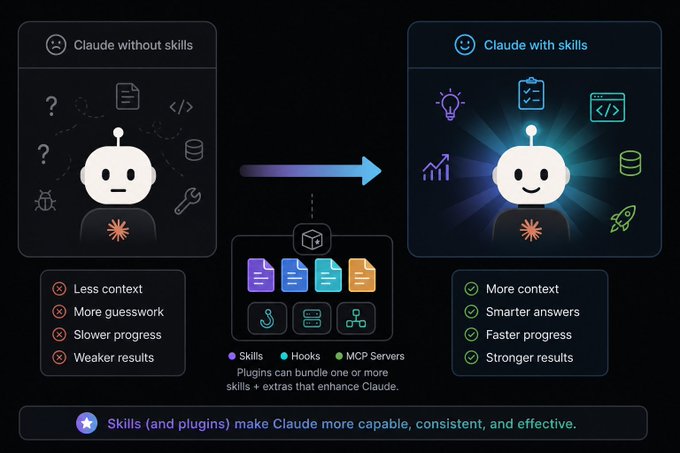
Quick note: I'll use the word "skill" throughout this, but technically some of these are plugins. A skill is a markdown file that teaches Claude how to do a specific job. A plugin is a bigger package around that skill. It can contain multiple skills plus extras like hooks or MCP servers that change how Claude Code behaves under the hood. For this breakdown, the technical category doesn't matter. What matters is that each one makes Claude noticeably better at its job.
## 1. The Factory: Skill Creator
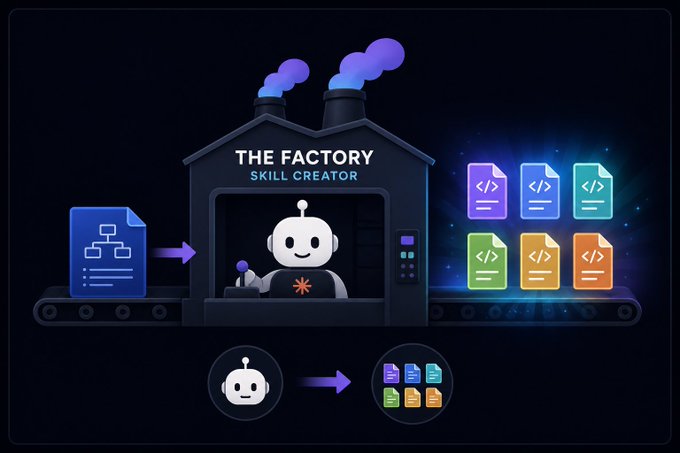
This is the skill that builds every other skill.
You describe what you want in plain English. Claude drafts the skill, tests it, iterates on it, and packages it into something you can use forever. You don't manually touch a skill.md file. You don't figure out the formatting. You just talk to Claude like you're explaining the job to a coworker and walk away with a skill that runs the same every time.
You can even drop in an SOP and it turns that into a reusable skill.
The skill itself isn't what a client pays for. But every automation you sell to an HR company, a real estate agency, a coach, they all come out of this one. It's the factory that builds the product.
Simple example: a real estate agency wastes hours every week writing property descriptions. Without Skill Creator, you're writing out the whole skill.md file, figuring out trigger conditions, testing it over and over. With Skill Creator, you explain it naturally and it builds, tests, and packages it. Compresses the learning curve.
I installed this one globally on a user scope. No matter what project I'm working in, if I need to build a skill, it just invokes automatically.
Install:
/plugin install skill-creator@claude-plugins-official
## 2. The Process: Superpowers
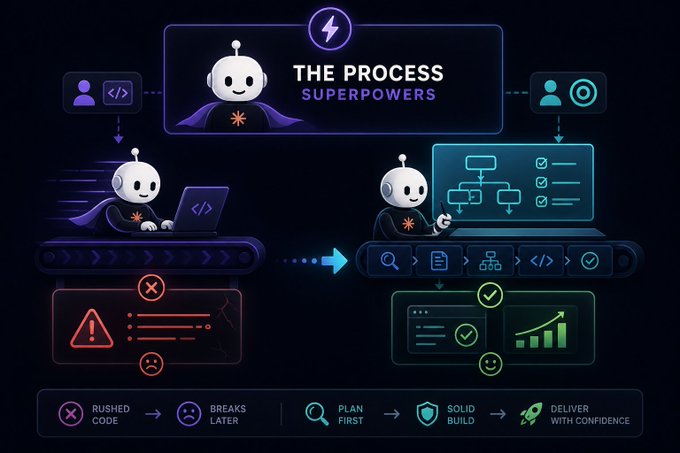
The number one failure mode in Claude Code is rushed code.
You ask for something. Claude sprints to write it. On the surface it looks fine. Then your client runs it and it falls apart.
Superpowers forces Claude to work like a senior developer. Instead of jumping in and writing code right away, Claude steps back and plans the whole thing first.
Here's what it does:
→ Plans the entire implementation before writing a single line
→ Works in an isolated environment so nothing breaks your main project
→ Writes tests before writing code
→ Brainstorms solutions
→ Reviews its own work in two stages: once for whether it matches the spec, once for code quality
It won't make Claude one-shot everything. A large part of your job is still QA. But getting 80% right on the first pass instead of 60%? That's fewer debugging cycles, less time fixing things, and lower token costs.
150,000+ stars on GitHub. Most popular community skill out there.
Install:
/plugin install superpowers@claude-plugins-official
## 3. The Clean Room: GSD
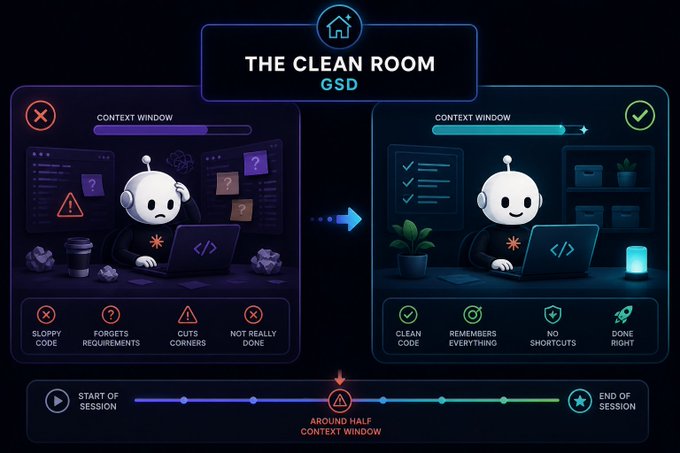
If Superpowers is about how Claude writes code, GSD is about the environment Claude writes it in.
Here's what stood out after long sessions.
You start a session. Things are great. Claude's nailing everything. Then somewhere around halfway through the context window, it starts to fall apart. Code gets sloppy. Claude forgets requirements you set at the beginning. It cuts corners. It tells you things are done when they're not.
That's context rot.
GSD fixes it with context engineering. Instead of letting one big session slowly degrade, it spawns fresh sub-agents for each task. Each one gets a clean context window focused only on what it needs to know. Your main session stays clean. Each task gets the full power of Claude's context window instead of just the leftovers.
It also has built-in quality gates:
→ Scope reduction detection catches when Claude silently drops a requirement you asked for
→ Security enforcement anchors verification to your threat model
These aren't things you'd manually think to check, especially if you're not coming from a software engineering background. That's exactly why having them automated matters.
There's an autonomous mode too. Hand Claude a spec and walk away. It'll plan, execute, commit, and work through the whole project without babysitting.
Here's the key relationship: Superpowers gives Claude the process (plan, test, review, repeat). GSD gives Claude the clean context so that process actually works every time.
The sub-agents cost tokens. But what it saves you is the hours you'd spend redoing work that Claude broke because it forgot what you asked.
Install:
npx get-shit-done-cc --claude --global
Type /gsd-help inside Claude Code to see all available commands.
## 4. The Safety Net: /review + /ultra-review

This one's already built into Claude Code. Most people just aren't using it.
Type /review after writing code. Claude runs a structured code review on what you just built. Bugs, edge cases, design issues. All the stuff a careful reviewer would flag. Runs locally. Fast. Costs nothing beyond your usual usage tokens.
/ultra-review is the bigger version. Launched alongside Opus 4.7. Instead of running locally, it uploads your branch to a cloud sandbox and spins up a fleet of reviewer agents in parallel. Each one attacks your codebase from a different angle: logic, security, performance, edge cases.
The key part: before any bug shows up on your list, it has to be independently reproduced and verified. No pile of style nitpicks or false positives. Confirmed bugs only.
The annoying part. A few requirements:
→ Need Claude Code version 2.1.86 or later
→ Must be signed in with a Claude account. An API key alone won't work.
→ /ultra-review can take 10-20 minutes, but it runs in the background so you can keep working
→ Pro and Max plans get 3 free runs to try. After that it's $5-20 per run depending on size
Practically, this fits at the end of any Claude Code workflow. Plan with Superpowers. Execute with clean context using GSD. Then before you merge anything important, run /review to catch what Claude missed.
Use /review for fast feedback on everything. Save /ultra-review for the merges that matter. Big refactors. Anything touching payments, auth, or database migrations. The kind of commit where a production bug costs way more than the time and tokens.
No install needed. Just type /review or /ultra-review in your terminal on Claude Code 2.1.86+.
## 5. The Compressor: Context Mode
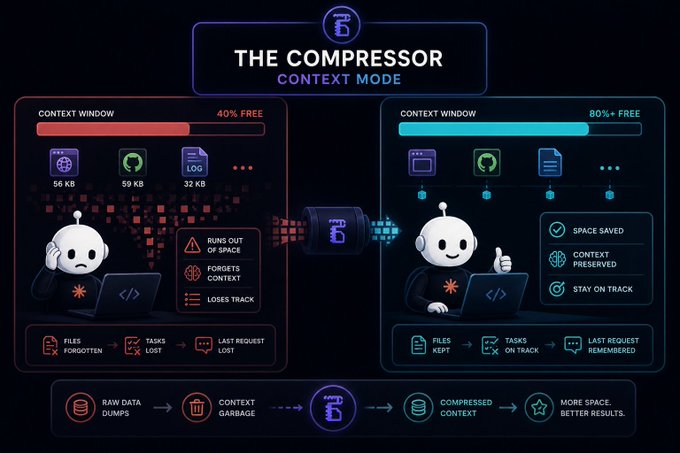
Every tool call Claude makes dumps raw data into your context window.
A Playwright snapshot? 56 kilobytes. 20 GitHub issues? 59 kilobytes. After about 30 minutes of real work, 40% of your context window is just garbage. Log output, raw data, stuff Claude never actually needs to look at.
And when Claude runs out of space and compacts the conversation, it forgets what files it was editing, what tasks were in progress, and what you last asked it to do.
Context Mode fixes both halves of this problem.
First, it keeps the garbage out. When Claude runs a command or fetches a URL, Context Mode routes that call through a sandbox. Your code runs in an isolated subprocess. The raw output gets captured and only the part Claude actually needs comes back into the context window.
The numbers from their benchmarks:
→ 56KB Playwright snapshot becomes 299 bytes
→ 46KB access log becomes 155 bytes
→ 315KB of raw output across a full session becomes 5KB total
You can check your own numbers anytime by running /context-mode:ctx-stats.
Second, it tracks every meaningful event in your session in a local SQL database. Every file edit, every task, every decision, every error. When Claude compacts the conversation, Context Mode rebuilds a session snapshot and injects it back in. The model picks up exactly where you left off. Files, tasks, last prompt. All intact.
Sessions that used to fall apart at the 30-minute mark now run for three hours without slowdown. You stop wasting prompts reminding Claude of context it already had.
Install:
/plugin marketplace add mksglu/context-mode
/plugin install context-mode@context-mode
Restart Claude Code after install. The plugin auto-installs the MCP server, hooks, and routing instructions.
## 6. The Memory: Claude Mem

If Context Mode keeps your current session clean, Claude Mem carries knowledge across all future sessions.
Claude Code starts every new session from scratch. You open a session. Explain the project for the fifth time this month. 10 minutes and thousands of tokens just getting Claude caught up.
You can try to solve this with CLAUDE.md files and memory files. Those are plain text files that give Claude persistent project instructions. They work, but you have to maintain them by hand. Miss an update and Claude misses that context.
Claude Mem takes this completely over. It hooks into Claude's session lifecycle and automatically captures what happened during your session. File edits, decisions, bug fixes, commands. Then it uses Claude's own Agent SDK to compress all of that into semantic summaries and stores everything in a local SQLite database with vector search.
New session? The relevant parts get injected back automatically. It also auto-generates folder-level CLAUDE.md files and updates them as you work. Your project documentation literally writes itself while you code.
The retrieval uses a three-layer search system:
1️⃣ Returns a compact index of observations
2️⃣ Pulls a timeline around the ones that matter
3️⃣ Fetches full details only for the specific handoff you need
About 10x token savings on retrieval compared to dumping everything in at session start.
You pick up a project you haven't touched in two weeks and Claude already knows what you were working on, what you decided, and where you left off. Everything runs locally with a web viewer so you can see exactly what Claude remembers about your project.
Install:
/plugin marketplace add thedotmack/claude-mem
/plugin install claude-mem
Important: don't run the npm install command. That installs the SDK library only and nothing actually works because the hooks never register. Stick with the two commands above.
## Bonus: Frontend Design
One more. This is the official frontend design skill from Anthropic.
If you're building anything visual in Claude Code, whether it's website design, slide decks, or UI components, this skill makes them look significantly less AI-generated. Install it globally so whenever you're designing anything, it activates automatically.
Worth noting: this type of capability is also baked into Anthropic's new product, Claude Design. But if you bring that project back into Claude Code, you'll want this skill installed.
Install:
/plugin install frontend-design@claude-plugins-official
## How to Actually Sell This
Stop selling the workflow. Sell the outcome.
Saving the business owner 10 hours a week. Cutting their admin mistakes and human error. Speeding up their leads. That's what they actually want to pay for.
Instead of offering to build an AI workflow, you're offering to save time, cut costs, and help them focus on making more profit.
If you're brand new, don't try to use all six right away.
1️⃣ Pick one skill
2️⃣ Learn it
3️⃣ Build out a few workflows using it
4️⃣ Show a business owner a demo
They won't care about your experience. They'll care about the value of what you're showing them.
Once you understand how these skills work and how they piece together, you build better automations quicker and cheaper. More demos, more content, more of your own business automated. All of that experience helps you communicate value to business owners much better.
I walk through all six installs and the full selling strategy in the video. Link in the first reply.
## 相关链接
- [Nate Herk](https://x.com/nateherk)
- [@nateherk](https://x.com/nateherk)
- [1.5K](https://x.com/nateherk/status/2050941624578920535/analytics)
- [Upgrade to Premium](https://x.com/i/premium_sign_up)
- [10:12 PM · May 3, 2026](https://x.com/nateherk/status/2050941624578920535)
- [1,505 Views](https://x.com/nateherk/status/2050941624578920535/analytics)
---
*导出时间: 2026/5/3 23:29:50*
---
## 中文翻译
# 我试用了 100+ 个 Claude Code 技能。这 6 个是最好的
**作者**: Nate Herk
**日期**: 2026-05-03T14:12:42.000Z
**来源**: [https://x.com/nateherk/status/2050941624578920535](https://x.com/nateherk/status/2050941624578920535)
---

我在 Claude Code 上投入了 400 个小时。我与房地产机构、暖通空调(HVAC)公司、教练、营销代理公司等都有过合作。
行业不同,问题相同。同样的六个技能反复出现。
这些都不是花哨的演示。它们枯燥、简单且有效。正是那种企业真正愿意买单的技能。
快速说明:我在全文中会使用“技能”这个词,但从技术上讲,其中一些是插件。技能是一个 Markdown 文件,用于教导 Claude 如何完成特定工作。插件则是围绕该技能构建的更大包。它可以包含多个技能以及额外的功能,例如 hooks 或 MCP 服务器,用于在底层改变 Claude Code 的行为。对于本次拆解,技术分类并不重要。重要的是,每一个都能让 Claude 在其工作表现上有显著提升。

## 1. 工厂:技能创造者 (Skill Creator)

这是构建所有其他技能的技能。
你用平实的英语描述你想要的东西。Claude 起草技能、测试它、迭代改进,并将其打包成你可以永久使用的东西。你无需手动触摸 skill.md 文件。无需弄懂格式。你只需像向同事解释工作一样与 Claude 交谈,然后就可以带着一个每次运行都稳定的技能离开。
你甚至可以丢进一份 SOP(标准作业程序),它会将其转化为可重用的技能。
客户付费的对象并不是技能本身。但你卖给 HR 公司、房地产机构或教练的每一个自动化,都源于此。它是制造产品的工厂。
简单例子:一家房地产机构每周浪费数小时撰写房产描述。如果没有 Skill Creator,你需要写出完整的 skill.md 文件,弄清楚触发条件,并反复测试。有了 Skill Creator,你用自然语言解释,它就会构建、测试并打包。这压缩了学习曲线。
我在用户范围内全局安装了这一个。无论我在处理什么项目,如果需要构建技能,它都会自动调用。
安装:
/plugin install skill-creator@claude-plugins-official
## 2. 流程:Superpowers

Claude Code 中排名第一的失败模式是代码匆忙。
你提出要求。Claude 冲刺着去写。表面上看起来没问题。然后你的客户运行它,它就崩了。
Superpowers 强制 Claude 像高级开发人员一样工作。它不是直接跳进去写代码,而是先退后一步,规划整个事情。
以下是它的作用:
→ 在写下一行代码之前规划整个实现过程
→ 在隔离环境中工作,这样不会破坏你的主项目
→ 在写代码之前先写测试
→ 头脑风暴解决方案
→ 分两个阶段审查自己的工作:一次检查是否符合规范,一次检查代码质量
它不会让 Claude 一次性搞定所有事情。你工作的一大部分仍然是 QA(质量保证)。但在第一遍就做对 80% 而不是 60%?这意味着更少的调试周期,更少的修复时间,以及更低的 Token 成本。
在 GitHub 上有超过 150,000 星。这是最受欢迎的社区技能。
安装:
/plugin install superpowers@claude-plugins-official
## 3. 净室:GSD

如果说 Superpowers 关注的是 Claude 如何写代码,那么 GSD 关注的是 Claude 编写代码的环境。
在长时间的使用后,以下几点尤为突出。
你开始一个会话。一切都很棒。Claude 完美搞定一切。然后大约在上下文窗口的一半处,它开始崩溃。代码变得草率。Claude 忘记了你在开始时设定的要求。它偷工减料。它告诉你事情完成了,其实没有。
这就是上下文腐烂。
GSD 通过上下文工程来修复这个问题。它不会让一个大会话慢慢退化,而是为每个任务生成新的子代理。每个子代理都有一个干净的上下文窗口,只专注于它需要知道的事情。你的主会话保持清洁。每个任务都能获得 Claude 上下文窗口的全部能力,而不是剩下的残羹冷炙。
它还有内置的质量门控:
→ 范围缩减检测,可以捕捉 Claude 何时悄悄丢弃了你要求的某个功能
→ 安全执行,将验证锚定到你的威胁模型
这些不是你会手动想到要检查的事情,特别是如果你没有软件工程背景的话。这正是让它们自动化至关重要的原因。
它还有一个自主模式。把规范交给 Claude 然后离开。它会规划、执行、提交,并完成整个项目,无需你时刻盯着。
这里的关键关系是:Superpowers 为 Claude 提供了流程(规划、测试、审查、重复)。GSD 为 Claude 提供了干净的上下文,以便该流程每次都能真正奏效。
子代理会消耗 Token。但它为你节省的是 hours,那些你本需要花费在重做 Claude 因为忘记要求而搞乱的工作上的时间。
安装:
npx get-shit-done-cc --claude --global
在 Claude Code 中输入 /gsd-help 以查看所有可用命令。
## 4. 安全网:/review + /ultra-review

这个已经内置在 Claude Code 中。大多数人只是没有使用它。
在编写代码后输入 /review。Claude 对你刚刚构建的内容运行结构化的代码审查。Bug、边缘情况、设计问题。所有一个细心的审查者会标记出来的东西。在本地运行。快速。除了常规的使用 Token 外,没有额外成本。
/ultra-review 是更高级的版本。它与 Opus 4.7 一同发布。它不是在本地运行,而是将你的分支上传到云沙箱,并并行启动一组审查代理。每个代理从不同的角度攻击你的代码库:逻辑、安全、性能、边缘情况。
关键部分是:在任何 Bug 出现在你的列表上之前,它必须被独立复现和验证。没有一堆风格挑剔或误报。只有确认的 Bug。
烦人的部分。有一些要求:
→ 需要 Claude Code 版本 2.1.86 或更高
→ 必须使用 Claude 账户登录。仅靠 API key 是不行的。
→ /ultra-review 可能需要 10-20 分钟,但它在后台运行,所以你可以继续工作
→ Pro 和 Max 计划可以免费试用 3 次。之后根据大小,每次运行费用为 5-20 美元
实际上,这适合放在任何 Claude Code 工作流的最后。使用 Superpowers 规划。使用 GSD 在干净的上下文中执行。然后在你合并任何重要内容之前,运行 /review 来捕捉 Claude 遗漏的东西。
对任何事情都使用 /review 以获得快速反馈。把 /ultra-review 留给重要的合并。大型重构。任何涉及支付、身份验证或数据库迁移的内容。那种生产环境 Bug 的代价远超过时间和 Token 的提交。
无需安装。只需在 Claude Code 2.1.86+ 的终端中输入 /review 或 /ultra-review。
## 5. 压缩器:上下文模式 (Context Mode)

Claude 的每次工具调用都会将原始数据转储到你的上下文窗口中。
一个 Playwright 快照?56 千字节。20 个 GitHub 问题?59 千字节。在大约 30 分钟的实际工作后,你的上下文窗口中有 40% 只是垃圾。日志输出、原始数据、Claude 实际上永远不需要看的东西。
而且当 Claude 空间不足并压缩对话时,它会忘记它正在编辑什么文件、什么任务正在进行,以及你最后要求它做什么。
Context Mode 解决了这一问题的两个部分。
首先,它把垃圾挡在外面。当 Claude 运行命令或获取 URL 时,Context Mode 通过沙箱路由该调用。你的代码在隔离的子进程中运行。原始输出被捕获,只有 Claude 真正需要的部分才会回到上下文窗口。
他们基准测试中的数字:
→ 56KB 的 Playwright 快照变成 299 字节
→ 46KB 的访问日志变成 155 字节
→ 整个会话中 315KB 的原始输出总共变成 5KB
你可以随时运行 /context-mode:ctx-stats 来检查你自己的数字。
其次,它在本地 SQL 数据库中跟踪你会话中的每一个有意义的事件。每次文件编辑、每个任务、每个决策、每个错误。当 Claude 压缩对话时,Context Mode 会重建会话快照并将其重新注入。模型正好从中断的地方接续。文件、任务、最后的提示。全部完好无损。
以前在 30 分钟时就会崩溃的会话现在可以运行三个小时而不减速。你不再浪费提示去提醒 Claude 它已有的上下文。
安装:
/plugin marketplace add mksglu/context-mode
/plugin install context-mode@context-mode
安装后重启 Claude Code。该插件会自动安装 MCP 服务器、hooks 和路由指令。
## 6. 记忆:Claude Mem

如果说 Context Mode 保持你当前会话的清洁,那么 Claude Mem 则将知识跨越到所有未来的会话。
Claude Code 每次新会话都是从零开始。你打开一个会话。这是本月第五次解释这个项目。仅仅为了让 Claude 赶上进度就要花 10 分钟和数千个 Token。
你可以尝试用 CLAUDE.md 文件和记忆文件来解决这个问题。这些是给 Claude 提供持久项目指令的纯文本文件。它们有效,但你需要手动维护它们。错过一次更新,Claude 就会错过那个上下文。
Claude Mem 完全接管了这一点。它挂钩到 Claude 的会话生命周期,并自动捕获你的会话期间发生的事情。文件编辑、决策、Bug 修复、命令。然后它使用 Claude 自己的 Agent SDK 将所有这些压缩成语义摘要,并将所有内容存储在带有向量搜索的本地 SQLite 数据库中。
新会话?相关部分会自动注入回来。它还会自动生成文件夹级别的 CLAUDE.md 文件,并在你工作时更新它们。你的项目文档真的在你编码时自动编写。
检索使用三层搜索系统:
1️⃣ 返回观察结果的紧凑索引
2️⃣ 拉取相关结果周围的时间线
3️⃣ 仅为你需要的特定交接获取完整细节
与在会话开始时倾倒所有内容相比,检索可节省约 10 倍的 Token。
你拿起一个两周没碰的项目,Claude 已经知道你在做什么,你决定了什么,以及你在哪里停下的。一切都在本地运行,并带有一个 Web 查看器,所以你可以确切地看到 Claude 记住了你项目的什么内容。
安装:
/plugin marketplace add thedotmack/claude-mem
/plugin install claude-mem
重要提示:不要运行 npm install 命令。那只会安装 SDK 库,实际上没有任何效果,因为 hooks 永远不会注册。坚持使用上面的两个命令。
## 额外赠送:前端设计
还有一个。这是 Anthropic 官方的前端设计技能。
如果你要在 Claude Code 中构建任何视觉化的东西,无论是网站设计、幻灯片还是 UI 组件,这个技能都能让它们看起来不那么像 AI 生成的。全局安装它,这样每当你设计任何东西时,它都会自动激活。
值得注意的是:这种能力也内置在 Anthropic 的新产品 Claude Design 中。但如果你把那个项目带回 Claude Code,你会希望安装这个技能。
安装:
/plugin install frontend-design@claude-plugins-official
## 如何真正出售这些服务
停止出售工作流程。出售结果。
每周为企业主节省 10 小时。减少他们的行政错误和人为失误。加快他们的线索转化。这才是他们真正愿意付费的。
你提供的不是构建 AI 工作流程,而是提供节省时间、削减成本,并帮助他们专注于创造更多利润。
如果你完全是新手,不要试图立即使用全部六个。
1️⃣ 选择一个技能
2️⃣ 学习它
3️⃣ 使用它构建几个工作流程
4️⃣ 向企业主展示演示
他们不会在乎你的经验。他们在乎的是你向他们展示的价值。
一旦你理解了这些技能如何工作以及它们如何组合在一起,你就能更快、更便宜地构建更好的自动化。更多的演示、更多的内容、你自己的更多业务实现自动化。所有这些经验都能帮助你更好地向企业主传达价值。
我在视频中演示了所有六个安装和完整的销售策略。链接在第一条回复中。
## 相关链接
- [Nate Herk](https://x.com/nateherk)
- [@nateherk](https://x.com/nateherk)
- [1.5K](https://x.com/nateherk/status/2050941624578920535/analytics)
- [升级到 Premium](https://x.com/i/premium_sign_up)
- [10:12 PM · May 3, 2026](https://x.com/nateherk/status/2050941624578920535)
- [1,505 次观看](https://x.com/nateherk/status/2050941624578920535/analytics)
---
*导出时间: 2026/5/3 23:29:50*