# 5 Hacks to Instantly Level Up Your AI Second Brain
**作者**: Nate Herk
**日期**: 2026-07-23T22:46:24.000Z
**来源**: [https://x.com/nateherk/status/2080424316353548635](https://x.com/nateherk/status/2080424316353548635)
---

The number one question I get right now is how my AI operating system is organized. Where files should route, how wikis should be structured, where client projects go.
And it matters, because a disorganized OS doesn't just give you wrong answers in chat. It bakes those wrong answers into your skills and your automations.
I add more data to mine every single week without losing accuracy, and it comes down to five habits.
## TL;DR
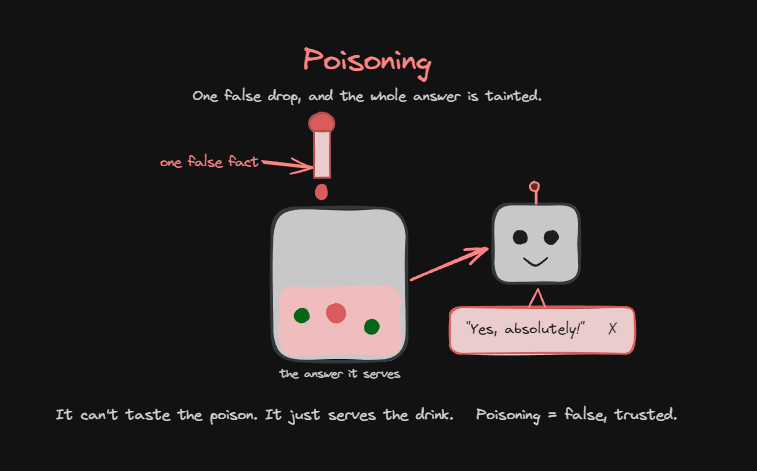
→ Almost every wrong answer traces back to four failure modes: poisoning, bloat, confusion, clash
→ Tip 1: treat your CLAUDE.md as a router, not a system prompt
→ Tip 2: have the AI audit its own setup (I built a free skill for this)
→ Tip 3: cron the data you always want fresh
→ Tip 4: segment knowledge into separate wikis
→ Tip 5: when it misses something, make it backtrack and fix its own routing
## Why Agents Get It Wrong
When your agent tells you something incorrect, it's one of four failure modes.
1️⃣ Poisoning. A false fact is sitting in the context. The agent isn't lying, it grabs the bad fact and confidently delivers it, to you or in an email to a customer. It's the easiest one to fix: verification. Fact-check with a web search or two, cross-check against your live database, or force a human in the loop anytime it's not 100% confident.
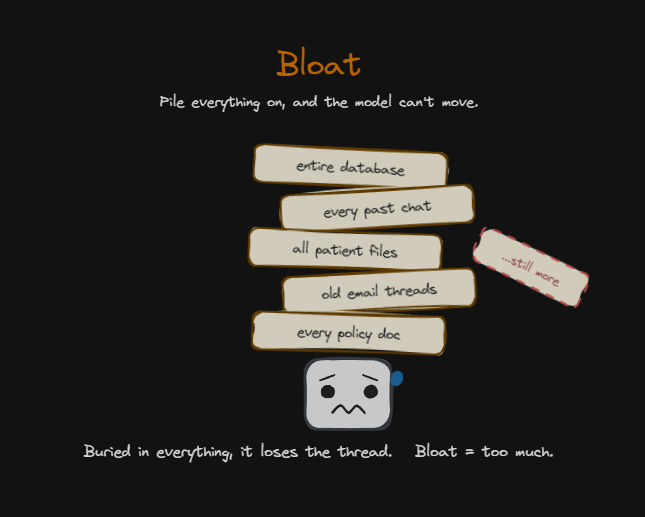
2️⃣ Bloat. Too much data. Between context rot and needle in the haystack, the agent can't pull out what's relevant anymore, and stuff bleeds into answers where you don't want it.
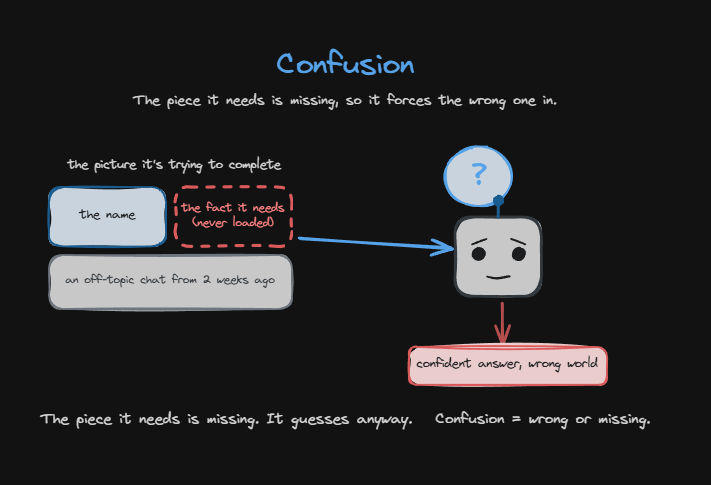
3️⃣ Confusion. An irrelevant fact, or something missing entirely. This is the classic hallucination, because the agent fills the gap with its own answer.
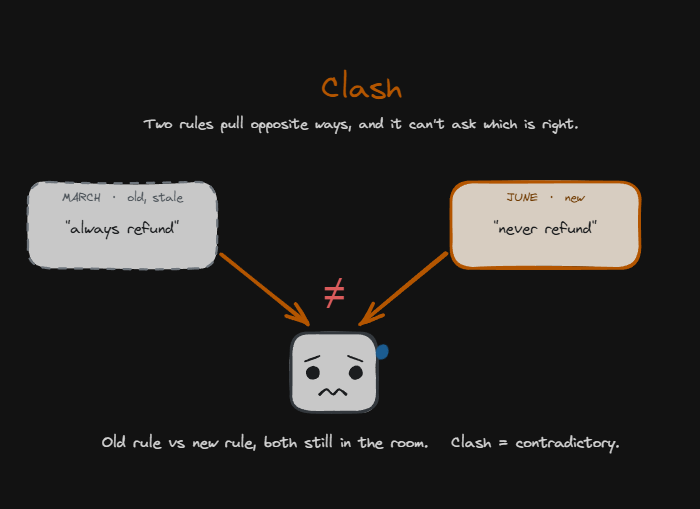
4️⃣ Clash. Two sources disagree. In March your policy was always refund. In June it became never refund. A refund question comes in and the agent doesn't know which to trust, so sometimes it picks the old one, sometimes the new one, sometimes it makes up a third thing.
## Expertise vs Situational Context
If you use my Four Cs framework (context, connections, capabilities, cadence), the context and connections are the second brain piece. I think of context as expertise and connections as situational.
Expertise context is the rulebook. Who you are, your goals, your policies. It's preloaded into every run, like a system prompt.
Situational context is what you pull just in time.
Think of a principal and a teacher making a seating chart. The principal knows how classrooms should run, where the whiteboard is, how to build a good chart. But the teacher knows which student has bad vision and needs to sit closer, and which two kids will laugh through the whole class if they sit together. That's the situational layer.
Yesterday's customer support ticket doesn't need to live in your context permanently. Leave it in there and you're buying bloat, confusion, maybe a clash. Pull it in live on Thursday at 2pm when the question actually shows up.
## I Let a Skill Roast My Own Setup
I turned all of this into a free OS audit skill. The premise: your indexes and wikis are claims about what exists and what's current, and the audit checks every claim against reality. It's read-only. It never fixes, renames, or deletes, it just writes a report into an audits folder. Works on any Claude Code project.
It checks routing integrity (does everything your CLAUDE.md points to actually exist, and is anything misrouted in the reverse direction), index truth (do your indexes match what's on disk), freshness (is each data feed fresh, drifting, frozen, retired, or on-demand), plus memory, bloat, duplication, and organization. On big projects with 100+ folders it fans out one Explore sub-agent per check and merges the reports.
I ran it on a month-old copy of my own setup. Two minutes later:
→ Routing integrity: red. An OTA misroute, plus unmapped OTAs.
→ Index truth: red. The index claimed 55 folders. The disk had 79.
→ Freshness: red. Knowledge current through June 29, almost a full month stale.
→ Hygiene and context placement red, bloat and duplication yellow.
Here's what stood out. The report includes a section called "what would wrong-answer you today." Any question about the business after June 29 would have gotten a confident answer based on June state. Confidently wrong is the worst version of wrong.
Then it hands you a fix list and waits for approval: finish the in-flight cleanup, repair the routing and indexes, ingest the missed Q&As and meetings, and set up weekly crons so it stops drifting in the first place.
The skill is in my free Skool community: https://www.skool.com/ai-automation-society
## Tip 1: Treat CLAUDE.md as a Router
Most people use their CLAUDE.md like a system prompt. Here's your background, here's what you do. For specific projects that's correct.
But my whole OS lives under one massive folder, and the root CLAUDE.md is almost purely a router. A master table of contents. If you need business knowledge, here's the wiki path and the hot cache. Here's where API keys live. Here's where skills, agents, decisions, templates, and references live.
Inside that one folder: brand assets (logos, fonts, pictures of me), brainstorms from grill-me sessions, audits, a decision log, my wiki, a projects folder that holds almost every deliverable I make (including one subfolder per YouTube video), and standalone repos for the big stuff.
Two reasons I like it this way. One push to GitHub backs everything up. And I can cd into any subproject that has its own CLAUDE.md when I want project-specific rules.
It's all just files and folders, so I can plug in Claude Code, Codex, or anything else on top of the same brain.
Flat structure or nested doesn't really matter. What matters is that the routing rules let you and your agents find things.
## Tip 2: Have the AI Audit Itself
Before I built the skill, I just did this conversationally at the end of every week: open everything up, check that the routing rules are still accurate, and suggest changes based on best practices and how I actually talk to you every day.
That loop is how my knowledge got segmented in the first place. I had one master wiki, and Claude Code itself pointed out that I was feeding it two distinct types of data on a weekly cadence and suggested splitting them. Less bloat, less confusion, faster answers, and fewer tokens burned per search.
There's no right way to build a second brain. The only way you're doing it wrong is if you keep getting wrong answers and do nothing about it.
A simple test: open your file explorer and try to find something you made, without search and without asking Claude. If you can follow your own folders to it, the structure is intuitive, and an agent with routing rules can navigate it too.
## Tip 3: Automate the Data Pulls
If you keep telling your agent "hey, go pull that data," pay attention. That's not situational context anymore, it's recurring.
Every Monday I have a Q&A. Every Tuesday I meet with my leadership team. Both belong in my wiki, every week, no exceptions. So crons pull them in automatically, and even if I forget after a meeting, the data is already there next time I open a session.
Setting this up is genuinely simple now. You need the API key, and then it's natural language: set up this cron, set up this routine, push this script to Modal.
## Tip 4: Segment Knowledge
When a node of knowledge is distinct and going to keep growing, give it its own wiki. My YouTube transcripts and my meeting transcripts each have one.
The payoff is narrower search. If my agent needs to know whether I've ever covered Apify, it goes straight to the YouTube transcripts wiki instead of digging through 5 or 10x more files.
The most common question I get here is where client projects go. I'd keep client information inside my OS, segmented by client. One clients folder, then Client A, Client B, Client C, each holding the internal knowledge: signed the contract June 25th, project price, discovery calls, scope of work.
But the actual deliverables I'd build in a separate client-facing repo, so the client can be a collaborator or I can push it to an environment. My OS keeps a pointer to where that repo lives and full context on the engagement, without owning the client's files every time I push my own repo.
## Tip 5: Make It Backtrack
When your agent searches five minutes for something it should have found instantly, or tells you it doesn't have access to a file you know is there, don't just say "don't let that happen again."
Make it backtrack. Go look through what you did, where you searched, and figure out why you didn't find that data right away.
It comes back with the honest version: I made a mistake, here's where I should have looked. Now it has proven its own miss, so have it fix it. Update the routing, move things, reorganize based on what it found. That lands way better than a vague instruction to make no mistakes.
## The Next Problem: Teams
Second brains are blowing up right now, and the question every business is about to hit is how you sync them at the team and department level.
I don't have a full answer yet, but I don't think it's a tech problem. You could do this with Google Drive, Notion, or GitHub. It's a people problem: getting a team to habit-shift into syncing data, knowing what to pull in, making their agents read things, and handling permissions.
So the best move right now is mastering your own system. When the team-level version arrives, you'll have already walked the walk.
I walk through all of this, including the live audit, in the full video. Link in the first reply.
## 相关链接
- [Nate Herk](https://x.com/nateherk)
- [@nateherk](https://x.com/nateherk)
- [https://www.skool.com/ai-automation-society](https://www.skool.com/ai-automation-society)
- [Upgrade to Premium](https://x.com/i/premium_sign_up)
- [6:46 AM · Jul 24, 2026](https://x.com/nateherk/status/2080424316353548635)
- [7,027 Views](https://x.com/nateherk/status/2080424316353548635/analytics)
- [View quotes](https://x.com/nateherk/status/2080424316353548635/quotes)
---
*导出时间: 2026/7/24 16:08:20*
---
## 中文翻译
# 瞬间升级你的 AI 第二大脑的 5 个技巧
**作者**: Nate Herk
**日期**: 2026-07-23T22:46:24.000Z
**来源**: [https://x.com/nateherk/status/2080424316353548635](https://x.com/nateherk/status/2080424316353548635)
---

我现在收到最多的问题就是我的 AI 操作系统是如何组织的。文件应该路由到哪里,wiki 应该如何构建,客户项目应该放在哪里。
这很重要,因为一个混乱的操作系统不仅会在聊天中给你错误的答案。它还会将这些错误的答案固化到你的技能和自动化流程中。
我每周都会向我的系统添加更多数据而不会降低准确性,这归结为五个习惯。
## TL;DR
→ 几乎每个错误的答案都可以追溯到四种失败模式:中毒、膨胀、混淆、冲突
→ 技巧 1:将你的 CLAUDE.md 视为路由器,而不是系统提示词
→ 技巧 2:让 AI 审计它自己的设置(为此我构建了一个免费的技能)
→ 技巧 3:对你总是想要保持新鲜的数据进行定时任务(cron)处理
→ 技巧 4:将知识分段到独立的 wiki 中
→ 技巧 5:当它遗漏某些东西时,让它回溯并修复它自己的路由
## 为什么 Agent 会出错
当你的 agent 告诉你一些不正确的事情时,它属于四种失败模式之一。
1️⃣ 中毒。上下文中存在一个虚假的事实。Agent 没有撒谎,它抓取了那个错误的事实并自信地将其传达给你,或者在给客户的电子邮件中传达出来。这是最容易修复的:验证。通过一两次网络搜索进行事实核查,对照你的实时数据库进行交叉检查,或者只要不是 100% 确信就强制进行人工干预。

2️⃣ 膨胀。数据太多。在上下文腐烂和大海捞针之间,agent 再也无法提取出相关的内容,而且内容会渗透到你不希望它出现的答案中。

3️⃣ 混淆。一个不相关的事实,或者完全缺失某些东西。这是典型的幻觉,因为 agent 用它自己的答案填补了空白。

4️⃣ 冲突。两个来源意见不一致。在三月,你的政策是总是退款。到了六月,变成了从不退款。当来了一个退款问题时,agent 不知道该信任哪一个,所以有时它选旧的,有时选新的,有时甚至会编造出第三种东西。

## 专业知识与情境上下文
如果你使用我的 Four Cs 框架(上下文、连接、能力、节奏),那么上下文和连接就是第二大脑的部分。我将上下文视为专业知识,将连接视为情境。
专业知识上下文是规则手册。你是谁,你的目标,你的政策。它会被预加载到每次运行中,就像一个系统提示词。
情境上下文是你即时提取的内容。
想象一下校长和老师在制作座位表。校长知道教室应该如何运作,白板在哪里,如何制作一个好的座位表。但老师知道哪个学生视力不好需要坐得更近,以及哪两个孩子如果坐在一起会整节课都在笑。这就是情境层。
昨天的客户支持工单不需要永久存在于你的上下文中。把它留在那里,你就是在买膨胀、混淆,甚至可能是一个冲突。在周四下午 2 点问题真正出现时,实时拉取它。
## 我让一个技能“吐槽”我自己的设置
我把所有这些都变成了一个免费的操作系统审计技能。前提是:你的索引和 wiki 是关于存在什么以及什么是最新的声明,而审计会根据实际情况检查每一个声明。它是只读的。它从不修复、重命名或删除,它只是将报告写入一个审计文件夹。适用于任何 Claude Code 项目。
它检查路由完整性(你的 CLAUDE.md 指向的所有内容是否真的存在,以及是否有任何东西在反向路由中路由错误)、索引真实性(你的索引是否与磁盘上的内容匹配)、新鲜度(每个数据源是新鲜的、漂移的、冻结的、退役的还是按需的),以及内存、膨胀、重复和组织。对于拥有 100 多个文件夹的大型项目,它会为每次检查展开一个 Explore 子 agent,然后合并报告。
我在我自己设置的一个月前的副本上运行了它。两分钟后:
→ 路由完整性:红色。一个 OTA 错误路由,加上未映射的 OTA。
→ 索引真实性:红色。索引声明有 55 个文件夹。磁盘上有 79 个。
→ 新鲜度:红色。知识截止到 6 月 29 日,几乎过时了一个月。
→ 卫生和上下文位置为红色,膨胀和重复为黄色。
这是突出的地方。报告包含一个名为“今天什么会给你一个错误的答案”的部分。任何关于 6 月 29 日之后业务的问题都会基于 6 月的状态得到一个自信的答案。自信地错是错误中最糟糕的一种。
然后它会递给你一个修复列表并等待批准:完成进行中的清理,修复路由和索引,摄取错过的问答和会议,并设置每周定时任务,以从根本上阻止它漂移。
这个技能在我的免费 Skool 社区里:https://www.skool.com/ai-automation-society
## 技巧 1:将 CLAUDE.md 视为路由器
大多数人像使用系统提示词一样使用他们的 CLAUDE.md。这是你的背景,这是你做的事情。对于特定项目,这是正确的。
但我的整个操作系统位于一个巨大的文件夹下,根目录的 CLAUDE.md 几乎纯粹是一个路由器。一个主目录表。如果你需要业务知识,这是 wiki 路径和热缓存。这是 API 密钥所在的地方。这是技能、agent、决策、模板和参考资料所在的地方。
在那个文件夹内:品牌资产(logo、字体、我的照片)、来自“拷问我”环节的头脑风暴、审计、决策日志、我的 wiki、一个包含我制作的几乎所有可交付成果的项目文件夹(包括每个 YouTube 视频的一个子文件夹),以及针对重要内容的独立仓库。
我喜欢这种方式的两个原因。推送到 GitHub 一次就可以备份所有内容。而且当我想要特定于项目的规则时,我可以 cd 进入任何有自己的 CLAUDE.md 的子项目。
这一切都只是文件和文件夹,所以我可以将 Claude Code、Codex 或任何其他东西插入到同一个大脑之上。
扁平结构还是嵌套结构并不重要。重要的是路由规则让你和你的 agent 能够找到东西。
## 技巧 2:让 AI 审计它自己
在我构建这个技能之前,我只是每周结束时通过对话来做这件事:打开所有东西,检查路由规则是否仍然准确,并根据最佳实践以及我实际上每天如何与它交谈来建议更改。
正是这个循环让我的知识在最初时分段了。我曾经有一个主 wiki,Claude Code 本身指出我每周节奏都在向它喂入两种不同类型的数据,并建议将它们分开。更少的膨胀,更少的混淆,更快的答案,每次搜索消耗的 token 更少。
构建第二大脑没有正确的方法。你做错的唯一方式就是如果你不断得到错误的答案却对此无动于衷。
一个简单的测试:打开你的文件资源管理器并尝试找到你制作的东西,不使用搜索,也不询问 Claude。如果你能通过你自己的文件夹找到它,那么结构是直观的,拥有路由规则的 agent 也可以导航它。
## 技巧 3:自动化数据拉取
如果你一直告诉你的 agent“嘿,去拉取那个数据”,请注意。那不再是情境上下文了,那是经常性的。
每周一我都有一个问答环节。每周二我与我的领导团队开会。两者都属于我的 wiki,每周一次,毫无例外。所以定时任务会自动将它们拉入,即使我在会议后忘记了,下次我打开会话时数据已经在那里了。
现在设置起来真的很简单。你需要 API 密钥,然后就是自然语言:设置这个定时任务,设置这个例程,将这个脚本推送到 Modal。
## 技巧 4:分段知识
当一个知识节点是独特的并且会不断增长时,给它自己的 wiki。我的 YouTube 转录稿和我的会议转录稿各自都有一个。
回报是更窄的搜索。如果我的 agent 需要知道我是否曾经涵盖过 Apify,它会直接去 YouTube 转录稿 wiki,而不是挖掘 5 到 10 倍多的文件。
我在这里得到的最常见问题是客户项目去哪里。我会将客户信息保留在我的操作系统内,按客户分段。一个客户文件夹,然后是客户 A、客户 B、客户 C,每个都保存内部知识:6 月 25 日签署合同、项目价格、发现电话、工作范围。
但我实际构建的可交付成果我会放在一个单独的面向客户的仓库中,这样客户可以成为协作者,或者我可以将其推送到某个环境。我的操作系统保留该仓库所在位置的指针以及参与的完整上下文,而无需在每次推送我自己的仓库时都拥有客户的文件。
## 技巧 5:让它回溯
当你的 agent 搜索了五分钟才找到它本应该瞬间找到的东西,或者告诉你它无权访问你知道就在那里的文件时,不要只说“别让这种事再发生”。
让它回溯。去看看你做了什么,你在哪里搜索的,并找出为什么你没有立即找到那个数据。
它会带着诚实的版本回来:我犯了一个错误,这是我本应该看的地方。现在它已经证明了自己的失误,所以让它修复它。更新路由,移动东西,根据它发现的情况重新组织。这比一个含糊的“别犯错误”的指令要好得多。
## 下一个问题:团队
第二大脑现在正在爆发,每个企业即将面临的问题是如何在团队和部门层面同步它们。
我还没有完整的答案,但我不认为这是一个技术问题。你可以用 Google Drive、Notion 或 GitHub 来做这件事。这是一个人的问题:让团队习惯性地转变为同步数据,知道要拉取什么,让他们的 agent 阅读东西,以及处理权限。
所以现在最好的举措是掌握你自己的系统。当团队级版本到来时,你已经实践过了。
我在完整视频中讲解了所有这些,包括实时审计。链接在第一个回复中。
## 相关链接
- [Nate Herk](https://x.com/nateherk)
- [@nateherk](https://x.com/nateherk)
- [https://www.skool.com/ai-automation-society](https://www.skool.com/ai-automation-society)
- [Upgrade to Premium](https://x.com/i/premium_sign_up)
- [6:46 AM · Jul 24, 2026](https://x.com/nateherk/status/2080424316353548635)
- [7,027 Views](https://x.com/nateherk/status/2080424316353548635/analytics)
- [View quotes](https://x.com/nateherk/status/2080424316353548635/quotes)
---
*导出时间: 2026/7/24 16:08:20*