# Your second brain is useless until AI can read the patterns inside it
**作者**: Penguin
**日期**: 2026-06-02T12:18:19.000Z
**来源**: [https://x.com/PenguinWeb3/status/2061784475718090930](https://x.com/PenguinWeb3/status/2061784475718090930)
---
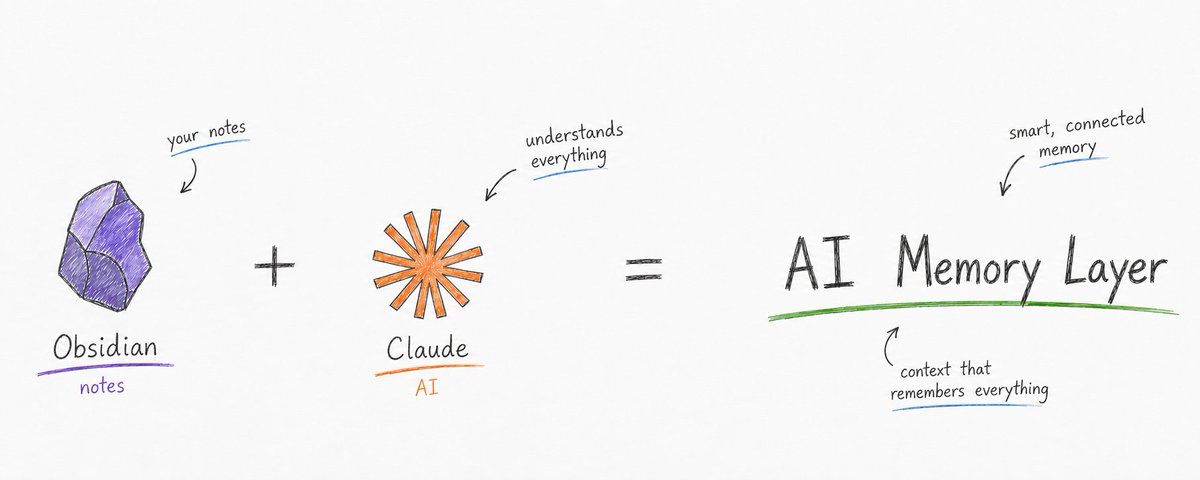
## How To Build An AI Ready Second Brain In Obsidian
most people use Obsidian like a prettier notes app, they save:
- random ideas
- useful threads
- articles
- videos
- prompts
- project notes
- half-finished thoughts
then forget 80% of it exists, and the problem isn't Obsidian
the problem is that their second brain is only storage
a real second brain should help you:
- remember, connect, decide, and reuse your own thinking
and AI makes this way more important
because Codex become much better when they can see your actual context
not just one prompt, but your patterns
## 1. Why most second brains fail
most second brains fail because people treat them like libraries
they focus on:
- perfect folders
- tags
- dashboards
- templates
- graph view
- aesthetic systems
but none of that matters if the notes do not help you think better
a second brain isn't useful because it stores more information
it becomes useful when it can answer questions like:
- what do I keep thinking about?
- what mistakes do I repeat?
- what ideas are connected?
- what do I already know about this topic?
- what should I do next?
- what did I try before?
that's the difference between a notes app and a thinking system
## 2. What your second brain should actually store
do not only save information, save FULL context
your vault should include:
- ideas
- observations
- decisions
- mistakes
- projects
- prompts
- workflows
- articles you like
- posts you like
- personal rules
- things that feel fake
- useful examples
- repeated patterns
the goal is not to collect everything, your goal is to build a system that understands how you think
because AI is not only improved by more information, it's improved by better context
## 3. Simple folder structure
you don't need a complicated folder tree, start simple
example:
```
00 Inbox
01 Ideas
02 Projects
03 Research
04 Workflows
05 Prompts
06 Mistakes
07 Decisions
08 People / Companies
09 Writing / Voice
10 Archive
```
what each folder does:
```
00 Inbox
quick dump for anything you do not want to lose
01 Ideas
raw thoughts, article ideas, business ideas, random observations
02 Projects
things you are building, testing, writing, or planning
03 Research
articles, videos, tools, examples, market research
04 Workflows
repeatable systems you use more than once
05 Prompts
useful prompts for Claude, Codex, ChatGPT, NotebookLM, etc.
06 Mistakes
things that went wrong and what to avoid next time
07 Decisions
why you chose something, what tradeoff you accepted
08 People / Companies
people, creators, startups, companies, clients, competitors
09 Writing / Voice
your style, hooks, phrases, posts you like, things that feel fake
10 Archive
old notes that are not active but may still be useful later
```
you don't need to build a museum, just build a memory system
## 4. Every note needs a reason
this is the part most people skip
a note should not only say what happened
it should say why it matters
use this simple format:
```
What is this?
Why does it matter?
Where can I use it?
What does it connect to?
What question does it create?
```
example:
```
Topic: AI agents
What is this?
AI systems that can move tasks forward, not just answer questions.
Why does it matter?
Because boring repeated workflows are where agents become useful first.
Where can I use it?
Content research, lead research, code review, file organization, weekly reports.
What does it connect to?
[[AI workflows]]
[[Boring work]]
[[Automation]]
[[Claude]]
[[Codex]]
Question:
What tasks do I repeat every week that an agent could handle?
```
this makes the note useful later, not just saved
## 5. Why AI changes the second brain
before AI your second brain was mostly for you
now it can become context for AI
that changes everything
because AI is usually weak when it has:
- no memory
- no examples
- no taste
- no constraints
- no history
- no idea what you care about
that is why generic AI output feels empty, it doesn't know your patterns, it doesn't know your taste, it doesn't know what you tried before, it doesn't know what sounds fake to you
but when AI can read your vault, it can help with:
- finding repeated patterns
- summarizing what you already think
- connecting old ideas
- turning notes into plans
- finding contradictions
- improving decisions
- creating better prompts
- continuing projects without starting from zero
this is where Obsidian becomes way more powerful, not because it stores notes, but because it gives AI memory
## 6. What to ask Claude
once your vault has enough useful notes, you can start asking better questions
not random prompts, context prompts
use prompts like this:
```
Read my vault and find the 10 ideas I keep repeating.
Explain what they reveal about my thinking.
---
Find contradictions in my notes.
Where do I say one thing but act like another thing?
---
Look at my project notes.
Tell me what I should do next based on what I already wrote.
---
Take this messy note and turn it into:
- clear idea
- action steps
- related notes
- questions to answer next
---
Find everything in my vault related to [topic].
Summarize what I already know.
Then tell me what is missing.
```
this is the real value
AI becomes better when it can see the system behind your thinking
## 7. The weekly workflow
you do not need to live inside Obsidian all day
just run a simple loop
once a week:
```
1. dump new ideas into Inbox
2. move useful notes into folders
3. link notes that are obviously related
4. ask AI to find repeated patterns
5. turn the best patterns into projects / decisions / prompts
6. delete or archive useless noise
```
that's enough, the point isn't to organize perfectly, the point is to reduce friction, if your vault makes it easier to think, it is working
if it only makes you feel organized, it is probably just decoration
## 8. What makes this better than random AI chats
random AI chats reset too much
every new chat usually needs the same context again:
- who you are
- what you are building
- what style you like
- what you hate
- what you already tried
- what your goals are
- what constraints matter
that's context waste, a second brain fixes this
instead of explaining yourself every time, you build a memory layer
AI stops being only a chatbot, it becomes something closer to an assistant that can understand your history
not perfectly, but enough to make the work feel less random
## 9. What this can become over time
after a while, your Obsidian vault can show you things you would normally miss
like:
- topics you keep returning to
- ideas you almost built but forgot
- mistakes that repeat
- workflows that should be automated
- questions you still have not answered
- projects that connect to each other
- content ideas hidden inside old notes
- business ideas hidden inside research
- personal rules you keep learning the hard way
this is why the second brain idea actually matters
not because notes are cool, but because memory is leverage
the more useful context you store, the easier it becomes to think, build, write, decide, and use AI properly
I tried to put everything important here about building a second brain in Obsidian
if this was useful, save it for later
-- By Pengu
## 相关链接
- [Penguin](https://x.com/PenguinWeb3)
- [@PenguinWeb3](https://x.com/PenguinWeb3)
- [37K](https://x.com/PenguinWeb3/status/2061784475718090930/analytics)
- [Upgrade to Premium](https://x.com/i/premium_sign_up)
- [8:18 PM · Jun 2, 2026](https://x.com/PenguinWeb3/status/2061784475718090930)
- [37.1K Views](https://x.com/PenguinWeb3/status/2061784475718090930/analytics)
- [View quotes](https://x.com/PenguinWeb3/status/2061784475718090930/quotes)
---
*导出时间: 2026/6/3 09:34:01*
---
## 中文翻译
# 在AI能读懂其中的模式之前,你的第二大脑毫无用处
**作者**: Penguin
**日期**: 2026-06-02T12:18:19.000Z
**来源**: [https://x.com/PenguinWeb3/status/2061784475718090930](https://x.com/PenguinWeb3/status/2061784475718090930)
---

## 如何在 Obsidian 中构建一个 AI 就绪的第二大脑
大多数人把 Obsidian 当作一个更好看的笔记应用来用,他们保存:
- 随机的想法
- 有用的推文串
- 文章
- 视频
- 提示词
- 项目笔记
- 未完成的思考
然后忘记其中 80% 的内容的存在,但这并不是 Obsidian 的问题
问题在于他们的第二大脑仅仅是存储
一个真正的第二大脑应该帮助你:
- 记住、连接、决定以及重用你自己的思考
而 AI 让这一点变得更加重要
因为当 Codex 能看到你实际的上下文时,它们会变得更强
不仅仅是一个提示词,而是你的模式
## 1. 为什么大多数第二大脑都会失败
大多数第二大脑失败是因为人们把它们当作图书馆
他们专注于:
- 完美的文件夹
- 标签
- 仪表盘
- 模板
- 关系图谱
- 美观的系统
但如果笔记不能帮助你更好地思考,这些都不重要
第二大脑之所以有用,不是因为它存储了更多信息
当它能回答如下问题时,它才变得有用:
- 我一直在思考什么?
- 我重复犯了哪些错误?
- 哪些想法是相互关联的?
- 关于这个话题我已经知道了什么?
- 我下一步该做什么?
- 我以前尝试过什么?
这就是笔记应用和思维系统的区别
## 2. 你的第二大脑实际上应该存储什么
不要只保存信息,要保存完整的上下文
你的知识库应该包括:
- 想法
- 观察
- 决策
- 错误
- 项目
- 提示词
- 工作流
- 你喜欢的文章
- 你喜欢的帖子
- 个人原则
- 感觉虚假的东西
- 有用的例子
- 重复的模式
目标不是收集所有东西,你的目标是构建一个理解你如何思考的系统
因为 AI 的提升不仅靠更多的信息,更靠更好的上下文
## 3. 简单的文件夹结构
你不需要复杂的文件夹树,从简单开始
示例:
```
00 收件箱
01 想法
02 项目
03 研究
04 工作流
05 提示词
06 错误
07 决策
08 人物 / 公司
09 写作 / 语调
10 归档
```
每个文件夹的作用:
```
00 收件箱
快速放置任何你不想丢失的东西
01 想法
原始想法、文章点子、商业点子、随机观察
02 项目
你正在构建、测试、撰写或计划的东西
03 研究
文章、视频、工具、案例、市场研究
04 工作流
你使用超过一次的可重复系统
05 提示词
用于 Claude、Codex、ChatGPT、NotebookLM 等的有用提示词
06 错误
出了什么问题以及下次要避免什么
07 决策
你为什么选择某事,你接受了什么权衡
08 人物 / 公司
人物、创作者、初创公司、公司、客户、竞争对手
09 写作 / 语调
你的风格、钩子、短语、你喜欢的帖子、感觉虚假的东西
10 归档
不再活跃但以后可能仍有用的旧笔记
```
你不需要建造一个博物馆,只需建立一个记忆系统
## 4. 每条笔记都需要一个理由
这是大多数人跳过的部分
一条笔记不应该只说发生了什么
它应该说为什么这很重要
使用这个简单的格式:
```
这是什么?
为什么它很重要?
我可以在哪里使用它?
它连接到什么?
它引发了什么问题?
```
示例:
```
主题:AI 代理
这是什么?
能够推进任务的 AI 系统,而不仅仅是回答问题。
为什么它很重要?
因为无聊的重复性工作流程是代理首先变得有用的地方。
我可以在哪里使用它?
内容研究、线索研究、代码审查、文件整理、周报。
它连接到什么?
[[AI 工作流]]
[[无聊的工作]]
[[自动化]]
[[Claude]]
[[Codex]]
问题:
我每周重复哪些任务可以由代理处理?
```
这使得笔记在以后变得有用,而不仅仅是被保存
## 5. 为什么 AI 改变了第二大脑
在 AI 之前,你的第二大脑主要是为你自己准备的
现在它可以成为 AI 的上下文
这改变了一切
因为 AI 在拥有以下条件时通常很弱:
- 没有记忆
- 没有例子
- 没有品味
- 没有约束
- 没有历史
- 不知道你关心什么
这就是为什么通用的 AI 输出感觉空洞,它不知道你的模式,它不知道你的品味,它不知道你以前尝试过什么,它不知道什么对你来说听起来很假
但是当 AI 可以读取你的知识库时,它可以帮助:
- 发现重复的模式
- 总结你已经在思考的内容
- 连接旧的想法
- 将笔记转化为计划
- 发现矛盾
- 改进决策
- 创建更好的提示词
- 从零开始继续推进项目
这就是 Obsidian 变得强大得多的地方,不是因为它存储笔记,而是因为它赋予 AI 记忆
## 6. 该问 Claude 什么
一旦你的知识库有足够有用的笔记,你就可以开始问更好的问题
不是随机的提示词,而是上下文提示词
使用像这样的提示词:
```
阅读我的知识库,找出我不断重复的 10 个想法。
解释它们揭示了关于我思维的什么信息。
---
在我的笔记中找出矛盾。
我在哪里说一套但做的却是另一套?
---
看看我的项目笔记。
根据我已经写的内容,告诉我下一步该做什么。
---
拿这条混乱的笔记,把它变成:
- 清晰的想法
- 行动步骤
- 相关笔记
- 下一步要回答的问题
---
在我的知识库中找出与 [主题] 相关的所有内容。
总结我已经知道的内容。
然后告诉我缺少了什么。
```
这才是真正的价值
当 AI 能看到你思维背后的系统时,它会变得更好
## 7. 每周工作流
你不需要整天都待在 Obsidian 里
只需运行一个简单的循环
每周一次:
```
1. 将新想法倾倒到收件箱
2. 将有用的笔记移动到文件夹
3. 链接明显相关的笔记
4. 让 AI 寻找重复的模式
5. 将最好的模式转化为项目 / 决策 / 提示词
6. 删除或归档无用的噪音
```
这就足够了,重点不是完美地组织,重点是减少摩擦,如果你的知识库让思考变得更容易,它就是有效的
如果它只让你感觉井井有条,那它可能只是装饰品
## 8. 为什么这比随机的 AI 聊天更好
随机的 AI 聊天重置得太频繁
每次新的聊天通常都需要再次提供相同的上下文:
- 你是谁
- 你在构建什么
- 你喜欢什么风格
- 你讨厌什么
- 你已经尝试过什么
- 你的目标是什么
- 什么约束很重要
这就是上下文的浪费,第二大脑解决了这个问题
你不再每次都解释自己,而是构建一个记忆层
AI 不仅仅是一个聊天机器人,它变成了某种更接近助手的东西,可以理解你的历史
不完美,但足以让工作感觉不那么随机
## 9. 随着时间的推移,这能变成什么
过了一段时间,你的 Obsidian 知识库可以向你展示你通常会错过的东西
比如:
- 你不断回到的话题
- 你差点构建但忘记了的想法
- 重复的错误
- 应该自动化的工作流
- 你仍未回答的问题
- 相互连接的项目
- 隐藏在旧笔记中的内容想法
- 隐藏在研究中的商业想法
- 你不断通过惨痛教训学到的人生原则
这就是为什么第二大脑这个概念实际上很重要
不是因为笔记很酷,而是因为记忆是一种杠杆
你存储的有用上下文越多,思考、构建、写作、决策以及正确使用 AI 就变得越容易
我试图把关于在 Obsidian 中构建第二大脑的所有重要内容都放在这里
如果这很有用,请保存以备后用
-- By Pengu

## 相关链接
- [Penguin](https://x.com/PenguinWeb3)
- [@PenguinWeb3](https://x.com/PenguinWeb3)
- [37K](https://x.com/PenguinWeb3/status/2061784475718090930/analytics)
- [升级至 Premium](https://x.com/i/premium_sign_up)
- [2026年6月2日 下午8:18](https://x.com/PenguinWeb3/status/2061784475718090930)
- [37.1K 观看](https://x.com/PenguinWeb3/status/2061784475718090930/analytics)
- [查看引用](https://x.com/PenguinWeb3/status/2061784475718090930/quotes)
---
*导出时间: 2026/6/3 09:34:01*