你的安全带,你的记忆 ✍ Harrison Chase🕐 2026-04-12📦 10.6 KB 🟢 已读 𝕏 文章列表 文章由 LangChain 创始人 Harrison Chase 撰写,指出代理框架(安全带)已成为构建智能体的主流方式且不会消失。核心观点在于:框架与代理的记忆紧密相连。若使用封闭框架或专有 API,开发者将失去对记忆的控制权,导致严重的供应商锁定效应。文章强调记忆对于个性化体验和数据飞 wheel 的重要性,呼吁开发者使用开源、模型无关的开放框架,以真正拥有并控制属于用户的长期记忆数据。 Agent架构开源LangChain内存管理供应商锁定模型无关性技术观点 # 你的安全带,你的记忆 **作者**: Harrison Chase **日期**: 2026-04-03T17:36:19.000Z **来源**: [https://x.com/hwchase17/status/2042978500567609738](https://x.com/hwchase17/status/2042978500567609738) ---  代理框架正逐渐成为构建代理的主流方式,并且这种趋势不会改变。这些框架与代理的内存紧密相连。如果您使用封闭的框架——尤其是当它位于专有 API 之后时——您实际上是将代理内存的控制权拱手让给了第三方。内存对于创建良好且用户粘性的代理体验至关重要。这会导致严重的锁定效应。内存(以及框架)应该是开放的,这样您才能真正拥有自己的内存。 ## 代理框架是构建代理的方式,而且它们不会消失。 过去三年里,构建智能体的“最佳”方法发生了巨大变化。ChatGPT 刚问世时,你只能创建简单的 RAG 链( 朗链然后模型变得更好一些,可以创建更复杂的流程(LangGraph 后来他们的技术有了很大的进步,这催生了一种新型的脚手架—— 代理线束 。 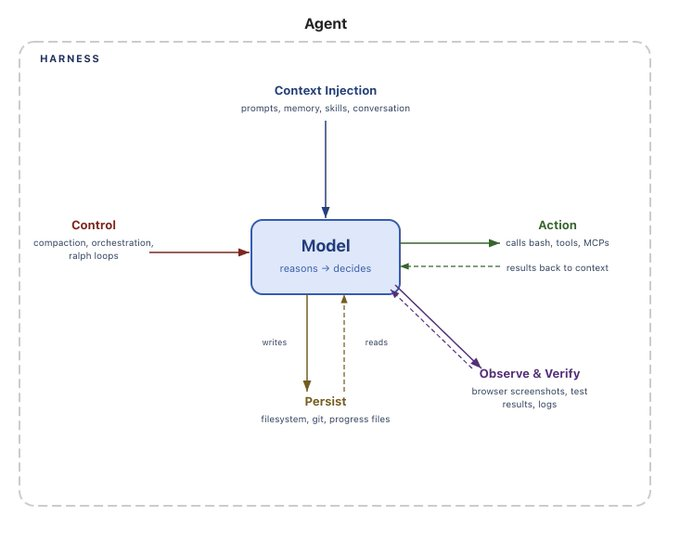 💡 代理安全带不会消失。 有时人们会认为模型会吸收越来越多的脚手架。事实并非如此。已经发生(并将继续发生)的是,2023 年所需的许多脚手架已不再需要。但这些脚手架已被其他类型的脚手架所取代。根据定义,代理是与工具和其他数据源交互的逻辑逻辑模型 (LLM)。LLM 周围始终会有一个系统来促进这种交互。需要证据吗?当 Claude Code 的源代码泄露时,就出现了这种情况。512k 行代码那段代码就是框架。即使是世界上最好的模型制造商,也在框架上投入巨资。 当像网络搜索这样的功能被集成到 OpenAI 和 Anthropic 的 API 中时,它们并不是“模型的一部分”。相反,它们是位于 API 背后的轻量级框架的一部分,该框架通过工具调用来协调模型与这些网络搜索 API 之间的交互。 ## 线束与记忆有关 莎拉·伍德斯写了一篇很棒的博客关于“内存不是插件(而是框架)”这一点,我完全同意。 有些人认为内存是一种独立服务,与任何特定的硬件平台都无关。但就目前而言,这种观点并不正确。 安全带的一项重要职责是与环境互动。正如莎拉所说: > 要求将内存接入代理程序框架,就好比要求将驾驶功能接入汽车一样。管理上下文(因此也包括内存)是代理程序框架的核心能力和职责。 记忆只是一种上下文形式。短期记忆(对话中的消息、大型工具调用结果)由框架处理。长期记忆(跨会话记忆)需要由框架更新和读取。Sarah 还列举了框架与记忆相关的其他许多方式: > 情况如何? 代理商.md 或者 CLAUDE.md 文件已加载到上下文中吗? 目前,记忆的概念还处于萌芽阶段。记忆的研究还处于非常早期的阶段。显而易见,长期记忆通常不在最小可行产品(MVP)的范畴之内。首先,你需要让智能体能够基本正常运行,然后才能考虑个性化。这意味着我们(作为一个行业)仍在探索记忆的本质。这意味着目前还没有公认的或通用的记忆抽象概念。如果记忆的概念日趋成熟,并且我们不断探索最佳实践,那么独立的记忆系统或许会变得有意义。但就目前而言,这还为时尚早。正如 Sarah 所说,“归根结底,系统如何管理上下文和状态才是智能体记忆的基础。” ## if you don't own your harness, you don't own your memory The harness is intimately tied to memory. 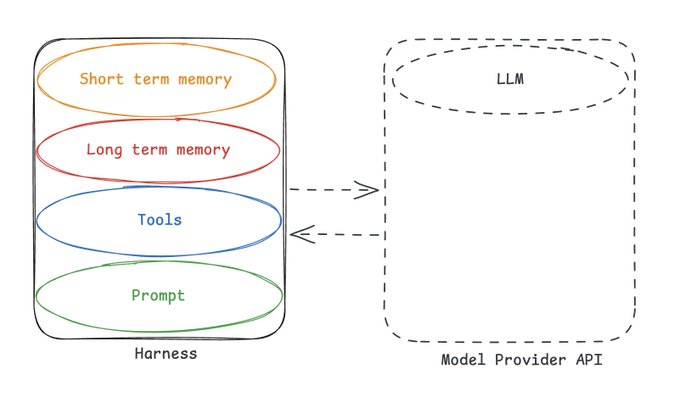 💡If you use a closed harness, especially if its behind an API, you don’t own your memory. This manifests itself in several ways. Mildly bad: If you use a stateful API (like OpenAI’s Responses API, or Anthropic’s server side compaction), you are storing state on their server. If you want to swap models and resume previous threads - that is no longer doable. 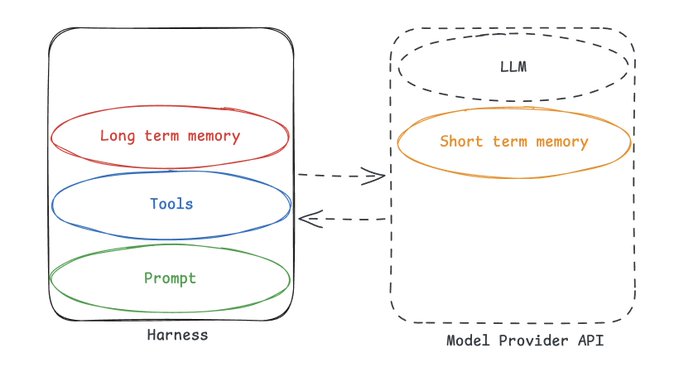 Bad: If you use a closed harness (like Claude Agent SDK, which uses Claude Code under the hood, which is not open source), this harness interacts with memory in a way that is unknown to you. Maybe it creates some artifacts client side - but what is the shape of those, and how should a harness use those? That is unknown, and therefor non-transferrable from one harness to another. 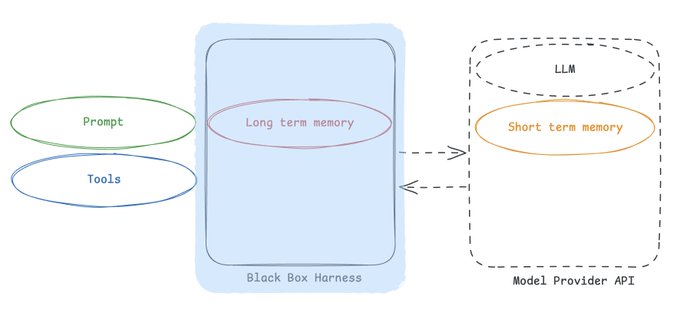 💡But worst is something else - when the whole harness, including long term memory is behind an API. In this situation, you have zero ownership or visibility into memory, including long term memory. You do not know the harness (which means you don’t know how to use the memory). But even worse - you don’t even own the memory! Maybe some parts are exposed via API, maybe no parts are - you have no control over that.  When people say that the “models will absorb more and more of the harness” - this is what they really mean. They mean that these memory related parts will go behind the APIs that model providers offer. 💡This is incredibly alarming - it means that memory will become locked into a single platform, a single model. Model providers are incredibly incentivized to do this. And they are starting to. Anthropic launched Claude Managed Agents. This puts literally everything behind an API, locked into their platform. Even if the whole harness isn’t behind the API, model providers are incentivized to move more and more behind APIs - and are already doing so. For example: even though Codex is an open source, it generates an encrypted compaction summary (that is not usable outside of the OpenAI ecosystem). Why are they doing this? Because memory is important, and it creates lock in that they don’t get from just the model. ## Memory is important, and it creates lock in Although memory is early, it is clear to everyone that it is important. It is what allows agents to get better as users interact with them, and allows you build up a data flywheel. It is what allows your agent to be personalized to each of your users, and build up an agentic experience that molds to their desires and usage patterns. 💡Without memory, your agents are easily replicable by anyone who has access to the same tools. With memory, you build up a proprietary dataset - a dataset of user interactions and preferences. This proprietary dataset allows you to provide a differentiated and increasingly intelligent experience. It’s been relatively easy to switch model providers to date. They have similar, if not identical, APIs. Sure, you have to change prompts a little bit, but that’s not that hard. But this is all because they are stateless. As soon as there is any state associated, its much harder to switch. Because this memory matters. And if you switch, you lose access to it. Let me tell a story. I have an email assistant internally. It’s built on top of a template in Fleet, our no-code platform for building Enterprise ready OpenClaws. This platform has memory built in, so as I interacted with my email assistant over the past few months it built up memory. A few weeks ago, my agent got deleted by accident. I was pissed! I tried to create an agent from the same template - but the experience was so much worse. I had to reteach it all my preferences, my tone, everything. The plus side of my email agent deleted - it made me realize how powerful and sticky memory could be. ## Open Memory, Open Harnesses Memory needs to be opened, owned by whomever is developing the agentic experience. It allows you to build up a proprietary dataset that you actually control. Memory (and therefor harnesses) should be separate from model providers. You should want optionality to try out whatever models are best for your use case. Model providers are incentivized to create lock in via memory. This is why we are building Deep Agents. Deep Agents: - Is open source - Is model agnostic - Uses open standards like agents.md and skills - Has plugins to Mongo, Postgres, Redis and others for storing memories - Is deployable: (1) via LangSmith Deployment (self hostable, can be deployed on any cloud, can bring your own database to serve as a memory store); (2) behind any standard web hosting framework In order to own your memory, you need to be using an Open Harness Try out Deep Agents today. Thank you to a few people for review and thoughts: - Sydney Runkle, who is doing a lot of great Deep Agents and memory work - Viv Trivedy, who is a leading voice on agent harnesses - Nuno Campos, who has some great writing on context engineering for finance agents - Sarah Wooders, who is CTO of Letta, a company that has consistently been at the forefront of stateful agents ## 相关链接 - [Harrison Chase](https://x.com/hwchase17) - [@hwchase17](https://x.com/hwchase17) - [647K](https://x.com/hwchase17/status/2042978500567609738/analytics) - [LangGraph](https://github.com/langchain-ai/langgraph) - [代理线束](https://blog.langchain.com/the-anatomy-of-an-agent-harness/) - [很棒的博客](https://x.com/sarahwooders/status/2040121230473457921) - [Apr 4](https://x.com/sarahwooders/status/2040121230473457921) - [120K](https://x.com/sarahwooders/status/2040121230473457921/analytics) - [代理商.md](http://agents.md/) - [CLAUDE.md](http://claude.md/) - [Claude Managed Agents](https://platform.claude.com/docs/en/managed-agents/overview) - [Fleet](https://www.langchain.com/langsmith/fleet) - [Deep Agents](https://docs.langchain.com/oss/python/deepagents/overview) - [agents.md](http://agents.md/) - [skills](https://agentskills.io/home) - [Mongo](https://www.mongodb.com/docs/atlas/ai-integrations/langgraph/) - [LangSmith Deployment](https://docs.langchain.com/langsmith/deployment) - [Deep Agents](https://docs.langchain.com/oss/python/deepagents/overview) - [Sydney Runkle](https://x.com/sydneyrunkle) - [Viv Trivedy](https://x.com/Vtrivedy10) - [Nuno Campos](https://x.com/nfcampos) - [Sarah Wooders](https://x.com/sarahwooders) - [Upgrade to Premium](https://x.com/i/premium_sign_up) - [10:50 PM · Apr 11, 2026](https://x.com/hwchase17/status/2042978500567609738) - [647.3K Views](https://x.com/hwchase17/status/2042978500567609738/analytics) - [View quotes](https://x.com/hwchase17/status/2042978500567609738/quotes) --- *导出时间: 2026/4/12 18:10:08*
A Agent Harness 与记忆的重要性 文章探讨了 Agent Harnesses 成为构建 Agent 主导方式的现状,以及其与记忆的紧密联系。作者指出,闭源的 Harness 会导致用户失去对 Agent 记忆的控制权,从而形成严重的供应商锁定。为了构建个性化和具有粘性的 Agent 体验,文章主张 Harness 和记忆应当是开放的,确保用户拥有自己的数据。 技术 › Hermes ✍ Harrison Chase🕐 2026-04-17 AgentMemoryLangChainClaudeOpenAI架构锁定开源Context
为 为什么你学了很多 Agent 工具,还是做不出真正可用的 Agent? 文章指出许多人学习 AI Agent 时陷入了“工具焦虑”,盲目追逐 LangChain、MCP 等框架,却忽视了 Agent 的本质是一套围绕目标运行的系统。作者强调,真正的难点在于系统设计——理解工具调用、记忆、反馈修正及工程化约束,而非仅仅跑通 Demo。文章推荐 GitHub 项目 agent_learning,主张从 LLM 基础、Prompt 等底层原理开始,逐步构建从基础到工程化的完整知识体系,最终实现 Agent 在真实环境中的稳定运行。 技术 › Agent ✍ Nana🕐 2026-06-15 Agent系统设计LLM学习路线LangChain工程化人工智能方法论LangGraph架构
腾 腾讯开源 AI Agent 运行时系统 TencentDB Agent Memory 文章深度解析了腾讯开源的 TencentDB Agent Memory 系统。不同于市面上的“向量数据库+RAG”方案,该系统旨在解决长任务中的“上下文退化”问题。其核心创新在于短期压缩(Offload 机制)与长期记忆(四层流水线)的结合,通过三层回溯、任务图动态压缩及结构化记忆提取,有效管理了 Agent 的上下文窗口与记忆生命周期。 技术 › Agent ✍ huangserva🕐 2026-05-22 腾讯开源Agent记忆系统LangChain架构设计上下文管理AI工程化
6 69个最佳开源AI仓库推荐(2026年4月) 文章精选了69个经过实战验证、维护活跃的开源AI仓库,旨在替代昂贵的API订阅。内容涵盖完整的AI技术栈,包括本地大模型推理、RAG知识库构建、AI智能体框架、提示词与评估、模型微调、工具链及部署等十大领域,为开发者、研究人员和独立黑客提供免费的生产级AI工具清单。 技术 › 工具与效率 ✍ self.dll🕐 2026-04-29 开源AI工具LLMAgentRAG模型微调OllamaLangChain本地部署资源合集
C ChatGPT Agent Loop 优化技术解析 本文深入解析了 ChatGPT 如何通过 Harness、API 和 Inference 三层架构优化 Agent 循环,重点介绍了持久化 WebSocket、增量 Token 化、KV 缓存管理和推测解码等技术,以降低成本并提升效率。 技术 › Harness Engineering ✍ Bytebytego🕐 2026-07-30 Agent优化LLM架构ChatGPTOpenAI性能成本控制WebSocketTokenization
I I got tired of being a human AGENTS.md 作者受够了每次与编码代理沟通时重复上下文,因此开发了AsterMem,一个本地运行的内存服务器。它将记忆存储为Markdown文件,支持离线运行,并自动提炼用户画像供代理读取。用户可完全控制和编辑记忆,避免黑盒问题。 技术 › Agent ✍ Asterove🕐 2026-07-29 Agent本地化隐私保护MarkdownCursorClaudePythonFastAPIReact开源
B BestBlogs 早报 · 07-29|MCP 无状态化与多智能体编排成本 本期早报探讨 MCP 协议的无状态核心变化与 Claude 的生产化接入,分析 Codex 与 ChatGPT Work 共用的执行框架差异,并审视多智能体并行中上下文搬运的隐性成本“编排器的税”。同时涵盖图工程、vLLM 商业化及 Uber 零增长架构等速览内容。 技术 › LLM ✍ ginobefun🕐 2026-07-29 MCPAgentOpenAI架构多智能体上下文Claude早报DevOps工程化
从 从零构建邮件AI助手实战指南 介绍了LangChain官方开源的Agents From Scratch教程,手把手教开发者从零构建能处理邮件的AI助手。教程涵盖基础搭建、评估体系、记忆机制四个阶段,提供完整代码和测试方案,适合初学者快速上手。 技术 › Agent ✍ 孤桜ETH🕐 2026-07-29 LangChain邮件助手AI实战教程开源PythonGmail API
大 大部分人用 skill还停留在下载别人写好的 文章指出当前大部分人对 Skill 的使用仅停留在下载现成工具层面,而更先进的项目已开始将方法论、思维方式及商业经验转化为可运行、可复用的 Skill。文中列举了女娲、dbskill、ljg-skills 等典型案例,并分析了中英文社区在 Skill 生态上的不同侧重,强调“造 Skill 的 Skill”才是生产力杠杆。 技术 › Skill ✍ Jason Zhu🕐 2026-07-29 SkillAgent方法论生产力开源女娲dbskill生态中文社区
H Hermes Agent Masterclass: 安装、配置与基础命令 本文介绍了开源 AI Agent Hermes 的安装与基础配置。Hermes 由 Nous Research 开发,支持多种模型和终端运行,具有会话复用和技能积累的独特设计。文章详细讲解了在 Windows、macOS 和 Linux 上的安装步骤、设置向导流程以及如何配置推理提供商。 技术 › Agent ✍ tonbi🕐 2026-07-29 HermesAgentAI安装教程CLI工具与效率开源
J Jack Dorsey's Buzz: Clearly Explained Buzz 是一款集成了智能体的团队聊天工具,允许用户切换底层模型并保留对话记忆,支持本地共享计算。文章探讨了其 Agents 团队协作、Git 工作流及数据控制优势,适合小团队快速迭代。 技术 › Agent ✍ The Startup Ideas Podcast (SIP)🕐 2026-07-29 BuzzJack DorseySlackAgent本地模型团队协作开源
E Eval Engineering: the step that turns a $200 model into a $200,000 system 文章探讨了 Eval Engineering 的重要性,指出通过构建评估层,可以将基础模型转化为高价值系统。作者介绍了一种利用现有工具(如 LangChain、AWS 等)搭建评估引擎的方法,强调通过自动化的评估反馈机制来提升 Agent 的准确性和可靠性。 技术 › Agent ✍ Argona🕐 2026-07-29 Eval EngineeringAgent评估系统自动化LangChainAWS模型优化编码助手