Open Memory, Own the Intelligence mem0 2026-09-15 17.1 KB 16.1K 157 ☆ 收藏 𝕏 文章列表 本文探讨了AI Agent开发中开放Harness与记忆所有权的重要性。作者引用Harrison Chase的观点——'不拥有Harness就不拥有记忆',并区分了Memory(从上下文窗口记录的事实,如用户偏好、仓库知识)和Intelligence(利用这些事实让会话更智能的机制)。文章详细介绍了Mem0的方案:通过custom_instructions和infer=False控制记忆提取,用语义+BM25+实体搜索进行检索,并借助Dream实现记忆合并、替代与综合。作者主张将记忆层置于Harness之外,存储于SQL、向量数据库和实体存储中,从而实现跨Harness的记忆与智能的可移植性,即使前沿实验室的循环保持封闭。 Mem0AgentMemoryHarnessLLM开源可移植性LangChainClaude Code 69 值得读 ▶ 文章对开放harness、记忆与智能的区分及mem0的落地能力有较新且及时的阐述,但行文口语化、结构松散,部分论证停留在'vague words'层面,且文末被截断,深度与完整性受限。 # Open Memory, Own the Intelligence **作者**: mem0 **日期**: 2026-09-14T18:18:37.000Z **来源**: [https://x.com/mem0ai/status/2099563486275854485](https://x.com/mem0ai/status/2099563486275854485) --- 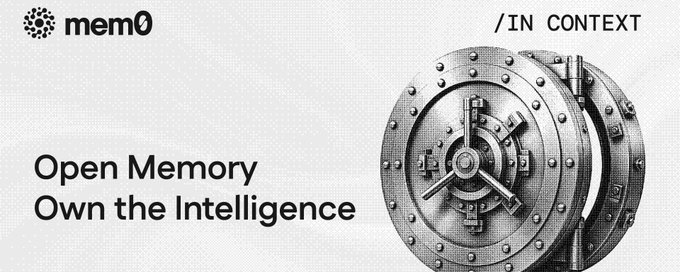 # Open Harness, Open Memory An open harness is basically where you own the loop and can change it. The harness, which is a package of your agent loop, the context, tools, instructions etc, should be OPEN. The problem right now is this harness itself is closed in most of the cases. It does not make sense since you would not be able to have a organizational intelligence without an open harness. If your loop is closed and the model provider is sitting behind the API, you dont know whats actually kept, whats thrown away, or how that loop is writing or cutting memory. “if you don't own your harness, you don't own your memory" line pretty much comes from [Harrison Chase](https://www.langchain.com/blog/your-harness-your-memory). I do like his writings along with many Langchain folks like [Viv](https://www.langchain.com/blog/the-anatomy-of-an-agent-harness), Sydney and this article is probably originating from their thoughts + mine hehe. 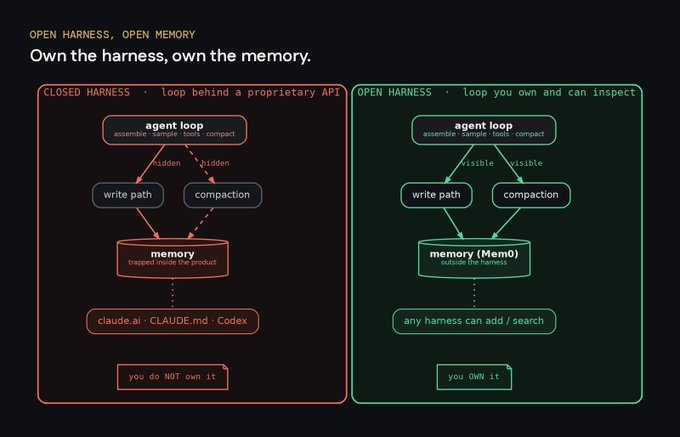 Well here, my notion right now is that we should: - atleast own the memory and intelligence - have easy import / export across harnesses Why? I do agree with the idea of having a open harness but since the frontier labs are moving ahead at an impressive rate and everyones setup being different, being relevant to mem0, I think we are good as long as we transfer memory and intelligence no matter the harness. # Memory and Intelligence Okay so these two get mixed a lot and are pretty different. I will put it very vaguely here. Memory: The facts that get written down from your active context window. This can be multiple things like - user preferences - repo knowledge - what failed last time and the RCA for the same etc etc Intelligence: What are you actually doing with these stored facts to make sure your running / next session is smarter than before. So usually intelligence is derived from a compilation of [traces, evals](https://www.langchain.com/blog/own-your-intelligence), context window, the harness itself!! That's why the [OPEN harness](https://www.langchain.com/blog/your-harness-your-memory) concept becomes so important. You can only derive a partial intelligence in a closed structure. But still, wanted to give a rundown on what [mem0](https://docs.mem0.ai/) does! 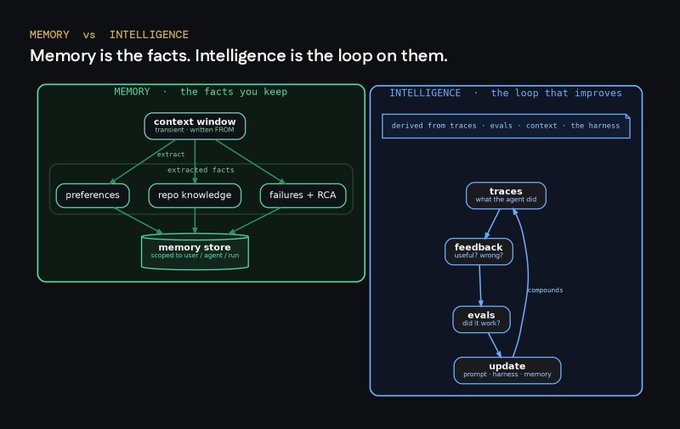 # Mem0 Memory and Intelligence + Control Memory: [Adding memories] Extract. Default [add](https://docs.mem0.ai/core-concepts/memory-operations/add) extracts facts from the messages you send in that call, and on Platform it also pulls earlier messages that share the same user_id / run_id as conversation context so a later "he" can resolve. Can you control it? → Yes, - [custom_instructions](https://docs.mem0.ai/platform/features/custom-instructions) (project setting, or per add) will let you define what actually matters to you for extraction - [infer=False](https://docs.mem0.ai/platform/features/direct-import) will store each user / assistant message as-is (this is on add, not on search) [Searching memories] Retrieve. [Search](https://docs.mem0.ai/api-reference/memory/search-memories) on Platform is semantic + BM25 + entities, and it can also use [Temporal reasoning](https://docs.mem0.ai/platform/features/temporal-reasoning) plus [Memory Decay](https://docs.mem0.ai/platform/features/memory-decay) if you turn decay on Can you control it? Yes, - [user_id / agent_id / run_id](https://docs.mem0.ai/platform/features/entity-scoped-memory), and on Platform also app_id, to scope whose memories you are talking about - top_k and threshold are how the call can be picky Intelligence: [Dream](https://docs.mem0.ai/platform/features/dream) (Platform): The dream concept can somewhat be classified under intelligence here (the synthesis part). It basically - merges: if two rows are the same fact, one stays the canonical row and the other is marked merged (hidden by default), not deleted - supersede: marks the old fact as history and links it to the current one, does not overwrite, does not delete - synthesis (opt-in, Pro+): a pile of small notes becomes one pattern with sources linked Btw, those changes are recorded, and on Pro+ you can review Dream activity in the dashboard. The underlying rows Dream touches are never deleted. I would still agree that reading through traces and evals really comes in the intelligence part as majority play, but if you are looking for the portability context across harnesses, Mem0 does a pretty good job here. In vague words, you have a memory layer which will do the extraction, retrieval, search along with proper updating, learning etc, and you can control how each feature behaves like an open memory even though on Platform you call it as an [API](https://docs.mem0.ai/platform/overview) (OSS is the same add / search as a library or your own server). Where the rows actually live is the other mix-up, so that next. # Where memory sits Okay so people say "memory" and they point at the context window, or at some markdown the harness loaded, or at compact, and they talk like the facts live there. The window is not the store though, it is just where the facts get written down from, same as I said in the memory / intelligence bit, and when the session ends or the loop compacts that copy is gone or rewritten so you cannot hand it to Tuesday's tool. If the only copy you have is Claude's own memory ([claude.ai](http://claude.ai/) Memory, or Claude Code CLAUDE.md / auto memory), or Codex memories, that still lives inside that product. [Chase](https://www.langchain.com/blog/your-harness-your-memory) is right that you do not own that layer if the loop is closed. I just do not think that layer is where the facts have to sit. [Mem0](https://docs.mem0.ai/core-concepts/how-it-works) sits outside the harness, between your application and the model. The loop talks to it through add / search (MCP also exposes get / update / delete if the agent wants those). The plugin or the MCP is just a door inside the harness, the memory is not sitting in that door. The rows themselves live in a few stores that are built for different lookups ([how it works](https://docs.mem0.ai/core-concepts/how-it-works)): - SQL holds the facts and the metadata, and that is the source of truth - the vector DB holds embeddings so search can actually find them - the entity store holds the people / places / things mentioned, which is what boosts ranking later 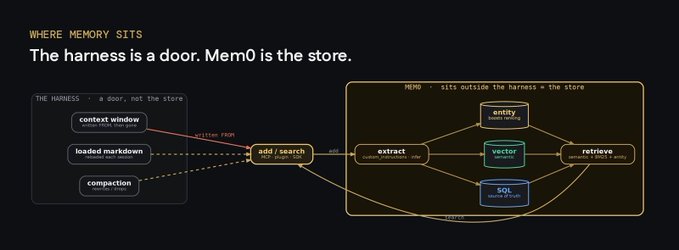 Two ways to run those stores ([Platform vs OSS](https://docs.mem0.ai/platform/platform-vs-oss)). On Platform they live in your Mem0 account and Mem0 hosts them, and this is also where Dream and the extra retrieval bits sit. On OSS you pick the backing stores and you hold the disk, same add / search / IDs Why sit it outside? Because the frontier labs are moving ahead at an impressive rate and the loop is going to stay closed (might stay closed???), or atleast keep moving pieces behind an API. If "how this repo works" only lives inside that loop, next month's harness does not have it. If it lives in that external layer, any harness that can add / search can use the same facts and the same store-side intelligence from earlier. So my ideology for where memory should sit is pretty much the first section's bar again. The window can stay with whatever closed harness you like this week. The facts should sit in Mem0, not in the harness, because that is how memory and intelligence can transfer no matter the loop. # Portability This is the easy import / export line from the start, the second half of that bar. Claude memory stays in Claude and Codex memories stay in Codex, so switching tools means you are reteaching preferences and RCAs from scratch, which is the silo I am trying to get away from. Mem0 is the other setup. One store sitting outside the harness, then a bunch of official doors into it. You do not convert Claude's file into Codex's file. You install the [connector](https://docs.mem0.ai/integrations) for the harness you are already in, same project, same API key, same user_id, and once the other harness has its connector pointed at that same project, both loops write to the same store. Theres ACTUALLY INSANE AMOUNT OF INTEGRATIONS MEM0 HAS: Coding tools. [Claude Code](https://docs.mem0.ai/integrations/claude-code), [Cursor](https://docs.mem0.ai/integrations/cursor), [Codex](https://docs.mem0.ai/integrations/codex), [Kimi](https://docs.mem0.ai/integrations/kimi), [OpenCode](https://docs.mem0.ai/integrations/opencode), [Antigravity](https://docs.mem0.ai/integrations/antigravity), [DeepSeek Harness](https://docs.mem0.ai/integrations/deepseek-plugin). Agent frameworks. [LangChain](https://docs.mem0.ai/integrations/langchain) / [LangGraph](https://docs.mem0.ai/integrations/langgraph), [CrewAI](https://docs.mem0.ai/integrations/crewai), [AutoGen](https://docs.mem0.ai/integrations/autogen), [Hermes](https://docs.mem0.ai/integrations/hermes), [OpenClaw](https://docs.mem0.ai/integrations/openclaw), [Pi](https://docs.mem0.ai/integrations/pi-agent), [Strands](https://docs.mem0.ai/integrations/strands), [Google ADK](https://docs.mem0.ai/integrations/google-ai-adk), [Mastra](https://docs.mem0.ai/integrations/mastra), [Vercel AI SDK](https://docs.mem0.ai/integrations/vercel-ai-sdk). Also MCP. [Claude.ai](https://docs.mem0.ai/integrations/claude-ai), Windsurf, VS Code, anyone that can hit [https://mcp.mem0.ai/mcp](https://mcp.mem0.ai/mcp). Voice / ops. [LiveKit](https://docs.mem0.ai/integrations/livekit), [Pipecat](https://docs.mem0.ai/integrations/pipecat), [n8n](https://docs.mem0.ai/integrations/n8n), [Zapier](https://docs.mem0.ai/integrations/zapier). 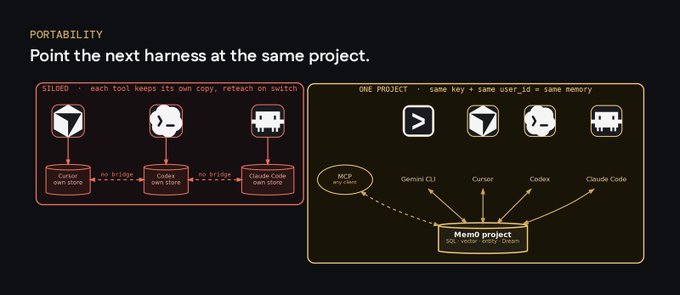 I mean, pretty bluntly, you can use it with any setup. If theres no official provider, you can still use it as a MCP offering! All Integrations / Plugins here- [https://mem0.ai/integrations](https://mem0.ai/integrations) Docs- [https://docs.mem0.ai/integrations](https://docs.mem0.ai/integrations) So this is how you see it, on Platform you open the dashboard or you search from whichever of those you opened today. This is how it ports, you did not migrate a file, you pointed the next harness at the same project. If you already live in one of these harnesses, just try the connector for that harness at [docs.mem0.ai/integrations](https://docs.mem0.ai/integrations), same project and same user_id, and that is honestly the whole CTA. If you have any questions, doubts, problems while using these plugins/integrations, throw your feedback here- [integrations@mem0.ai](mailto:integrations@mem0.ai) # References Argument - [Harrison Chase, Your harness, your memory](https://www.langchain.com/blog/your-harness-your-memory) - [Harrison Chase, What does it mean to own your intelligence?](https://www.langchain.com/blog/own-your-intelligence) - [Vivek Trivedy, The anatomy of an agent harness](https://www.langchain.com/blog/the-anatomy-of-an-agent-harness) - [LangChain, Deep Agents memory](https://docs.langchain.com/oss/python/deepagents/memory) Mem0 product - [Mem0, How Mem0 works](https://docs.mem0.ai/core-concepts/how-it-works) - [Mem0, Add memory](https://docs.mem0.ai/core-concepts/memory-operations/add) - [Mem0, Custom instructions](https://docs.mem0.ai/platform/features/custom-instructions) - [Mem0, Direct import](https://docs.mem0.ai/platform/features/direct-import) - [Mem0, Search memories](https://docs.mem0.ai/api-reference/memory/search-memories) - [Mem0, Temporal reasoning](https://docs.mem0.ai/platform/features/temporal-reasoning) - [Mem0, Memory decay](https://docs.mem0.ai/platform/features/memory-decay) - [Mem0, Entity-scoped memory](https://docs.mem0.ai/platform/features/entity-scoped-memory) - [Mem0, Dream](https://docs.mem0.ai/platform/features/dream) - [Mem0, Platform vs OSS](https://docs.mem0.ai/platform/platform-vs-oss) - [Mem0, Integrations](https://docs.mem0.ai/integrations) - [Mem0, Hosted MCP](https://docs.mem0.ai/platform/mem0-mcp) - [Mem0, Claude Code](https://docs.mem0.ai/integrations/claude-code) - [Mem0, Codex](https://docs.mem0.ai/integrations/codex) - [Mem0, Cursor](https://docs.mem0.ai/integrations/cursor) ## 相关链接 - [mem0](https://x.com/mem0ai) - [@mem0ai](https://x.com/mem0ai) - [4.9K](https://x.com/mem0ai/status/2099563486275854485/analytics) - [Harrison Chase](https://www.langchain.com/blog/your-harness-your-memory) - [Viv](https://www.langchain.com/blog/the-anatomy-of-an-agent-harness) - [traces, evals](https://www.langchain.com/blog/own-your-intelligence) - [OPEN harness](https://www.langchain.com/blog/your-harness-your-memory) - [mem0](https://docs.mem0.ai/) - [add](https://docs.mem0.ai/core-concepts/memory-operations/add) - [custom_instructions](https://docs.mem0.ai/platform/features/custom-instructions) - [infer=False](https://docs.mem0.ai/platform/features/direct-import) - [Search](https://docs.mem0.ai/api-reference/memory/search-memories) - [Temporal reasoning](https://docs.mem0.ai/platform/features/temporal-reasoning) - [Memory Decay](https://docs.mem0.ai/platform/features/memory-decay) - [user_id / agent_id / run_id](https://docs.mem0.ai/platform/features/entity-scoped-memory) - [Dream](https://docs.mem0.ai/platform/features/dream) - [API](https://docs.mem0.ai/platform/overview) - [claude.ai](http://claude.ai/) - [Chase](https://www.langchain.com/blog/your-harness-your-memory) - [Mem0](https://docs.mem0.ai/core-concepts/how-it-works) - [how it works](https://docs.mem0.ai/core-concepts/how-it-works) - [Platform vs OSS](https://docs.mem0.ai/platform/platform-vs-oss) - [connector](https://docs.mem0.ai/integrations) - [Claude Code](https://docs.mem0.ai/integrations/claude-code) - [Cursor](https://docs.mem0.ai/integrations/cursor) - [Codex](https://docs.mem0.ai/integrations/codex) - [Kimi](https://docs.mem0.ai/integrations/kimi) - [OpenCode](https://docs.mem0.ai/integrations/opencode) - [Antigravity](https://docs.mem0.ai/integrations/antigravity) - [DeepSeek Harness](https://docs.mem0.ai/integrations/deepseek-plugin) - [LangChain](https://docs.mem0.ai/integrations/langchain) - [LangGraph](https://docs.mem0.ai/integrations/langgraph) - [CrewAI](https://docs.mem0.ai/integrations/crewai) - [AutoGen](https://docs.mem0.ai/integrations/autogen) - [Hermes](https://docs.mem0.ai/integrations/hermes) - [OpenClaw](https://docs.mem0.ai/integrations/openclaw) - [Strands](https://docs.mem0.ai/integrations/strands) - [Google ADK](https://docs.mem0.ai/integrations/google-ai-adk) - [Mastra](https://docs.mem0.ai/integrations/mastra) - [Vercel AI SDK](https://docs.mem0.ai/integrations/vercel-ai-sdk) - [Claude.ai](https://docs.mem0.ai/integrations/claude-ai) - [https://mcp.mem0.ai/mcp](https://mcp.mem0.ai/mcp) - [LiveKit](https://docs.mem0.ai/integrations/livekit) - [Pipecat](https://docs.mem0.ai/integrations/pipecat) - [n8n](https://docs.mem0.ai/integrations/n8n) - [Zapier](https://docs.mem0.ai/integrations/zapier) - [https://mem0.ai/integrations](https://mem0.ai/integrations) - [https://docs.mem0.ai/integrations](https://docs.mem0.ai/integrations) - [docs.mem0.ai/integrations](https://docs.mem0.ai/integrations) - [integrations@mem0.ai](mailto:integrations@mem0.ai) - [Harrison Chase, Your harness, your memory](https://www.langchain.com/blog/your-harness-your-memory) - [Harrison Chase, What does it mean to own your intelligence?](https://www.langchain.com/blog/own-your-intelligence) - [Vivek Trivedy, The anatomy of an agent harness](https://www.langchain.com/blog/the-anatomy-of-an-agent-harness) - [LangChain, Deep Agents memory](https://docs.langchain.com/oss/python/deepagents/memory) - [Mem0, How Mem0 works](https://docs.mem0.ai/core-concepts/how-it-works) - [Mem0, Add memory](https://docs.mem0.ai/core-concepts/memory-operations/add) - [Mem0, Custom instructions](https://docs.mem0.ai/platform/features/custom-instructions) - [Mem0, Direct import](https://docs.mem0.ai/platform/features/direct-import) - [Mem0, Search memories](https://docs.mem0.ai/api-reference/memory/search-memories) - [Mem0, Temporal reasoning](https://docs.mem0.ai/platform/features/temporal-reasoning) - [Mem0, Memory decay](https://docs.mem0.ai/platform/features/memory-decay) - [Mem0, Entity-scoped memory](https://docs.mem0.ai/platform/features/entity-scoped-memory) - [Mem0, Dream](https://docs.mem0.ai/platform/features/dream) - [Mem0, Platform vs OSS](https://docs.mem0.ai/platform/platform-vs-oss) - [Mem0, Integrations](https://docs.mem0.ai/integrations) - [Mem0, Hosted MCP](https://docs.mem0.ai/platform/mem0-mcp) - [Mem0, Claude Code](https://docs.mem0.ai/integrations/claude-code) - [Mem0, Codex](https://docs.mem0.ai/integrations/codex) - [Mem0, Cursor](https://docs.mem0.ai/integrations/cursor) - [Upgrade to Premium](https://x.com/i/premium_sign_up) - [2:18 AM · Sep 15, 2026](https://x.com/mem0ai/status/2099563486275854485) - [4,938 Views](https://x.com/mem0ai/status/2099563486275854485/analytics) - [View quotes](https://x.com/mem0ai/status/2099563486275854485/quotes) --- *导出时间: 2026/9/15 09:05:51* --- ## 中文翻译 # 开放记忆,掌控智能 **作者**: mem0 **日期**: 2026-09-14T18:18:37.000Z **来源**: [https://x.com/mem0ai/status/2099563486275854485](https://x.com/mem0ai/status/2099563486275854485) ---  # 开放式 Harness,开放式记忆 开放式 harness 的本质是:你拥有整个循环,并且可以修改它。Harness 是你的智能体循环、上下文、工具、指令等的一个整体封装,它应该是开放的。 目前的问题在于,大多数情况下这个 harness 本身是封闭的。这说不通,因为如果没有开放的 harness,你就不可能拥有组织级的智能。 如果你的循环是封闭的,而模型提供商躲在 API 背后,你就不知道实际保留了什么、丢弃了什么,也不知道这个循环是如何写入或裁剪记忆的。 “如果你不拥有自己的 harness,你就不拥有自己的记忆”这句话基本上出自 [Harrison Chase](https://www.langchain.com/blog/your-harness-your-memory)。我很喜欢他的文章,还有 LangChain 的许多人,比如 [Viv](https://www.langchain.com/blog/the-anatomy-of-an-agent-harness)、Sydney,这篇文章大概就是源自他们的想法加上我的一点思考,嘿嘿。  我在这里的观点是,我们应该: - 至少拥有记忆和智能 - 能够在各个 harness 之间轻松导入/导出 为什么? 我同意拥有开放 harness 的理念,但由于前沿实验室正在以惊人的速度前进,而且每个人的环境设置都不同——就 mem0 而言——我认为只要无论什么 harness 都能传递记忆和智能,就已经足够了。 # 记忆与智能 这两个概念经常被混为一谈,但其实相当不同。我在这里先简单概括一下。 记忆:从你的活动上下文窗口中记录下来的事实。可以是很多东西,比如 - 用户偏好 - 代码库知识 - 上次失败的原因及其根因分析(RCA)等等 智能:你如何利用这些存储的事实,确保当前或下一次会话比以前更聪明。 通常,智能是从[轨迹、评估](https://www.langchain.com/blog/own-your-intelligence)、上下文窗口、harness 本身等的综合中推导出来的!这就是为什么[开放式 harness](https://www.langchain.com/blog/your-harness-your-memory) 的概念如此重要。 在封闭结构中,你只能推导出部分的智能。不过,还是想介绍一下 [mem0](https://docs.mem0.ai/) 的做法!  # Mem0 的记忆、智能与控制 记忆: [添加记忆] 提取。默认的 [add](https://docs.mem0.ai/core-concepts/memory-operations/add) 操作会从你在该次调用中发送的消息中提取事实,在平台上它还会拉取共享相同 user_id / run_id 的更早消息作为对话上下文,这样后文中的“他”才能被正确解析。 你能控制它吗?→ 能, - [custom_instructions](https://docs.mem0.ai/platform/features/custom-instructions)(项目级设置,或每次添加时设置)可以让你定义提取时什么内容对你真正重要 - [infer=False](https://docs.mem0.ai/platform/features/direct-import) 会将每条用户/助手消息原样存储(这是添加时的选项,不是搜索时的) [搜索记忆] 检索。平台上的 [Search](https://docs.mem0.ai/api-reference/memory/search-memories) 结合了语义搜索 + BM25 + 实体,如果你开启了衰减功能,还可以使用[时间推理](https://docs.mem0.ai/platform/features/temporal-reasoning)和[记忆衰减](https://docs.mem0.ai/platform/features/memory-decay) 你能控制它吗?能, - [user_id / agent_id / run_id](https://docs.mem0.ai/platform/features/entity-scoped-memory),平台上还有 app_id,用来限定你在谈论谁的记忆 - top_k 和 threshold 控制调用的筛选严格程度 智能: [Dream](https://docs.mem0.ai/platform/features/dream)(平台功能):Dream 的概念在某种程度上可以归类为这里的“智能”(综合部分)。它基本上做的是: - 合并:如果两条记录是同一个事实,一条保留为规范记录,另一条被标记为已合并(默认隐藏),而不是被删除 - 取代:将旧事实标记为历史,并链接到当前事实,不覆盖,也不删除 - 综合(可选,Pro+ 版本):一堆零散的小笔记变成一个带有来源链接的模式 顺便说一句,这些变更都会被记录,在 Pro+ 版本中你可以在仪表板中查看 Dream 的活动。Dream 所触及的底层数据行永远不会被删除。 我仍然同意,阅读轨迹和评估确实主要属于智能的范畴,但如果你在寻找跨 harness 的可移植性上下文,Mem0 在这方面做得相当不错。 简单来说,你有一个记忆层,负责提取、检索、搜索以及适当的更新、学习等,并且你可以控制每个功能的行为方式,就像开放记忆一样——即使你是在平台上通过 [API](https://docs.mem0.ai/platform/overview) 调用它(开源版的 add / search 与此相同,可以作为库使用,也可以部署在你自己的服务器上)。 数据行实际存放在哪里是另一个容易混淆的地方,接下来就讲这个。 # 记忆存在于何处 人们一说“记忆”,就会指向上下文窗口、harness 加载的某个 markdown 文件、或者压缩(compact)后的内容,仿佛事实就存在于那里。 但窗口并不是存储,它只是事实被记录下来的地方——就像我在记忆/智能部分说的那样——当会话结束或循环执行压缩时,那份副本就会消失或被重写,所以你没法把它交给周二要用的工具。 如果你唯一的副本是 Claude 自己的记忆([claude.ai](http://claude.ai/) Memory,或 Claude Code 的 CLAUDE.md / 自动记忆),或者 Codex 的记忆,那它依然存在于那个产品内部。[Chase](https://www.langchain.com/blog/your-harness-your-memory) 说得对:如果循环是封闭的,你就不拥有那一层。我只是不认为事实必须存放在那一层里。 [Mem0](https://docs.mem0.ai/core-concepts/how-it-works) 位于 harness 之外,介于你的应用和模型之间。循环通过 add / search 与它交互(如果智能体需要,MCP 还提供 get / update / delete)。插件或 MCP 只是 harness 内部的一扇门,记忆并不存放在那扇门里。 数据行本身存在于几个为不同查询方式而构建的存储中([工作原理](https://docs.mem0.ai/core-concepts/how-it-works)): - SQL 存储事实和元数据,这是事实的源头 - 向量数据库存储嵌入向量,让搜索真正能找到它们 - 实体存储保存所提到的人/地点/事物,这正是后续提升排序效果的关键  运行这些存储有两种方式([平台版 vs 开源版](https://docs.mem0.ai/platform/platform-vs-oss))。在平台上,它们位于你的 Mem0 账户中,由 Mem0 托管,Dream 和额外的检索功能也在那里。在开源版中,你选择底层存储并自己持有磁盘,add / search / ID 等用法完全相同。 为什么要放在外部? 因为前沿实验室正在以惊人的速度前进,循环会保持封闭(可能一直封闭下去???),或者至少会不断把一些部件藏在 API 后面。如果“这个代码库如何工作”只存在于那个循环内,下个月的 harness 就没有它了。如果它存在于外部层,任何能执行 add / search 的 harness 都可以使用相同的事实和之前的存储侧智能。 所以,关于记忆应该存放在哪里,我的理念基本上还是第一部分的标准。上下文窗口可以随你喜欢放在本周的任何封闭 harness 里。但事实应该存放在 Mem0,而不是 harness 里,因为只有这样,无论循环是什么,记忆和智能才能被传递。 # 可移植性 这就是开头提到的轻松导入/导出,即上述标准的后半部分。 Claude 的记忆留在 Claude 里,Codex 的记忆留在 Codex 里,所以切换工具意味着你要从零开始重新教会它你的偏好和根因分析,这正是我试图摆脱的孤岛问题。 Mem0 是另一种设置。一个位于 harness 之外的存储,然后通过许多官方接口接入。你不需要把 Claude 的文件转换成 Codex 的文件。你只需为你正在使用的 harness 安装[连接器](https://docs.mem0.ai/integrations),同一个项目、同一个 API 密钥、同一个 user_id,一旦另一个 harness 的连接器指向同一个项目,两个循环就会写入同一个存储。 Mem0 拥有的集成数量真的多到离谱: 编码工具。[Claude Code](https://docs.mem0.ai/integrations/claude-code)、[Cursor](https://docs.mem0.ai/integrations/cursor)、[Codex](https://docs.mem0.ai/integrations/codex)、[Kimi](https://docs.mem0.ai/integrations/kimi)、[OpenCode](https://docs.mem0.ai/integrations/opencode)、[Antigravity](https://docs.mem0.ai/integrations/antigravity)、[DeepSeek Harness](https://docs.mem0.ai/integrations/deepseek-plugin)。 智能体框架。[LangChain](https://docs.mem0.ai/integrations/langchain) / [LangGraph](https://docs.mem0.ai/integrations/langgraph)、[CrewAI](https://docs.mem0.ai/integrations/crewai)、[AutoGen](https://docs.mem0.ai/integrations/autogen)、[Hermes](https://docs.mem0.ai/integrations/hermes)、[OpenClaw](https://docs.mem0.ai/integrations/openclaw)、[Pi](https://docs.mem0.ai/integrations/pi-agent)、[Strands](https://docs.mem0.ai/integrations/strands)、[Google ADK](https://docs.mem0.ai/integrations/google-ai-adk)、[Mastra](https://docs.mem0.ai/integrations/mastra)、[Vercel AI SDK](https://docs.mem0.ai/integrations/vercel-ai-sdk)。 还有 MCP。[Claude.ai](https://docs.mem0.ai/integrations/claude-ai)、Windsurf、VS Code,以及任何能访问 [https://mcp.mem0.ai/mcp](https://mcp.mem0.ai/mcp) 的工具。 语音 / 运维。[LiveKit](https://docs.mem0.ai/integrations/livekit)、[Pipecat](https://docs.mem0.ai/integrations/pipecat)、[n8n](https://docs.mem0.ai/integrations/n8n)、[Zapier](https://docs.mem0.ai/integrations/zapier)。  直白地说,你几乎可以在任何环境中使用它。如果没有官方提供者,你依然可以把它当作 MCP 服务来用! 所有集成 / 插件请看这里 - [https://mem0.ai/integrations](https://mem0.ai/integrations),文档 - [https://docs.mem0.ai/integrations](https://docs.mem0.ai/integrations) 这就是你使用它的方式:在平台上打开仪表板,或者从你今天打开的那些工具中任选一个进行搜索。它就是这样实现移植的:你不是迁移了一个文件,而是把下一个 harness 指向了同一个项目。 如果你已经在使用其中某个 harness,只需在 [docs.mem0.ai/integrations](https://docs.mem0.ai/integrations) 尝试该 harness 的连接器,使用同一个项目和同一个 user_id,老实说这就是全部的行动号召了。 如果你在使用这些插件/集成时有任何问题、疑问或困难,请把你的反馈发到这里 - [integrations@mem0.ai](mailto:integrations@mem0.ai) # 参考资料 论点 - [Harrison Chase, Your harness, your memory](https://www.langchain.com/blog/your-harness-your-memory) - [Harrison Chase, What does it mean to own your intelligence?](https://www.langchain.com/blog/own-your-intelligence) - [Vivek Trivedy, The anatomy of an agent harness](https://www.langchain.com/blog/the-anatomy-of-an-agent-harness) - [LangChain, Deep Agents memory](https://docs.langchain.com/oss/python/deepagents/memory) Mem0 产品 - [Mem0, How Mem0 works](https://docs.mem0.ai/core-concepts/how-it-works) - [Mem0, Add memory](https://docs.mem0.ai/core-concepts/memory-operations/add) - [Mem0, Custom instructions](https://docs.mem0.ai/platform/features/custom-instructions) - [Mem0, Direct import](https://docs.mem0.ai/platform/features/direct-import) - [Mem0, Search memories](https://docs.mem0.ai/api-reference/memory/search-memories) - [Mem0, Temporal reasoning](https://docs.mem0.ai/platform/features/temporal-reasoning) - [Mem0, Memory decay](https://docs.mem0.ai/platform/features/memory-decay) - [Mem0, Entity-scoped memory](https://docs.mem0.ai/platform/features/entity-scoped-memory) - [Mem0, Dream](https://docs.mem0.ai/platform/features/dream) - [Mem0, Platform vs OSS](https://docs.mem0.ai/platform/platform-vs-oss) - [Mem0, Integrations](https://docs.mem0.ai/integrations) - [Mem0, Hosted MCP](https://docs.mem0.ai/platform/mem0-mcp) - [Mem0, Claude Code](https://docs.mem0.ai/integrations/claude-code) - [Mem0, Codex](https://docs.mem0.ai/integrations/codex) - [Mem0, Cursor](https://docs.mem0.ai/integrations/cursor) ## 相关链接 - [mem0](https://x.com/mem0ai) - [@mem0ai](https://x.com/mem0ai) - [4.9K](https://x.com/mem0ai/status/2099563486275854485/analytics) - [Harrison Chase](https://www.langchain.com/blog/your-harness-your-memory) - [Viv](https://www.langchain.com/blog/the-anatomy-of-an-agent-harness) - [traces, evals](https://www.langchain.com/blog/own-your-intelligence) - [OPEN harness](https://www.langchain.com/blog/your-harness-your-memory) - [mem0](https://docs.mem0.ai/) - [add](https://docs.mem0.ai/core-concepts/memory-operations/add) - [custom_instructions](https://docs.mem0.ai/platform/features/custom-instructions) - [infer=False](https://docs.mem0.ai/platform/features/direct-import) - [Search](https://docs.mem0.ai/api-reference/memory/search-memories) - [Temporal reasoning](https://docs.mem0.ai/platform/features/temporal-reasoning) - [Memory Decay](https://docs.mem0.ai/platform/features/memory-decay) - [user_id / agent_id / run_id](https://docs.mem0.ai/platform/features/entity-scoped-memory) - [Dream](https://docs.mem0.ai/platform/features/dream) - [API](https://docs.mem0.ai/platform/overview) - [claude.ai](http://claude.ai/) - [Chase](https://www.langchain.com/blog/your-harness-your-memory) - [Mem0](https://docs.mem0.ai/core-concepts/how-it-works) - [how it works](https://docs.mem0.ai/core-concepts/how-it-works) - [Platform vs OSS](https://docs.mem0.ai/platform/platform-vs-oss) - [connector](https://docs.mem0.ai/integrations) - [Claude Code](https://docs.mem0.ai/integrations/claude-code) - [Cursor](https://docs.mem0.ai/integrations/cursor) - [Codex](https://docs.mem0.ai/integrations/codex) - [Kimi](https://docs.mem0.ai/integrations/kimi) - [OpenCode](https://docs.mem0.ai/integrations/opencode) - [Antigravity](https://docs.mem0.ai/integrations/antigravity) - [DeepSeek Harness](https://docs.mem0.ai/integrations/deepseek-plugin) - [LangChain](https://docs.mem0.ai/integrations/langchain) - [LangGraph](https://docs.mem0.ai/integrations/langgraph) - [CrewAI](https://docs.mem0.ai/integrations/crewai) - [AutoGen](https://docs.mem0.ai/integrations/autogen) - [Hermes](https://docs.mem0.ai/integrations/hermes) - [OpenClaw](https://docs.mem0.ai/integrations/openclaw) - [Strands](https://docs.mem0.ai/integrations/strands) - [Google ADK](https://docs.mem0.ai/integrations/google-ai-adk) - [Mastra](https://docs.mem0.ai/integrations/mastra) - [Vercel AI SDK](https://docs.mem0.ai/integrations/vercel-ai-sdk) - [Claude.ai](https://docs.mem0.ai/integrations/claude-ai) - [https://mcp.mem0.ai/mcp](https://mcp.mem0.ai/mcp) - [LiveKit](https://docs.mem0.ai/integrations/livekit) - [Pipecat](https://docs.mem0.ai/integrations/pipecat) - [n8n](https://docs.mem0.ai/integrations/n8n) - [Zapier](https://docs.mem0.ai/integrations/zapier) - [https://mem0.ai/integrations](https://mem0.ai/integrations) - [https://docs.mem0.ai/integrations](https://docs.mem0.ai/integrations) - [docs.mem0.ai/integrations](https://docs.mem0.ai/integrations) - [integrations@mem0.ai](mailto:integrations@mem0.ai) - [Harrison Chase, Your harness, your memory](https://www.langchain.com/blog/your-harness-your-memory) - [Harrison Chase, What does it mean to own your intelligence?](https://www.langchain.com/blog/own-your-intelligence) - [Vivek Trivedy, The anatomy of an agent harness](https://www.langchain.com/blog/the-anatomy-of-an-agent-harness) - [LangChain, Deep Agents memory](https://docs.langchain.com/oss/python/deepagents/memory) - [Mem0, How Mem0 works](https://docs.mem0.ai/core-concepts/how-it-works) - [Mem0, Add memory](https://docs.mem0.ai/core-concepts/memory-operations/add) - [Mem0, Custom instructions](https://docs.mem0.ai/platform/features/custom-instructions) - [Mem0, Direct import](https://docs.mem0.ai/platform/features/direct-import) - [Mem0, Search memories](https://docs.mem0.ai/api-reference/memory/search-memories) - [Mem0, Temporal reasoning](https://docs.mem0.ai/platform/features/temporal-reasoning) - [Mem0, Memory decay](https://docs.mem0.ai/platform/features/memory-decay) - [Mem0, Entity-scoped memory](https://docs.mem0.ai/platform/features/entity-scoped-memory) - [Mem0, Dream](https://docs.mem0.ai/platform/features/dream) - [Mem0, Platform vs OSS](https://docs.mem0.ai/platform/platform-vs-oss) - [Mem0, Integrations](https://docs.mem0.ai/integrations) - [Mem0, Hosted MCP](https://docs.mem0.ai/platform/mem0-mcp) - [Mem0, Claude Code](https://docs.mem0.ai/integrations/claude-code) - [Mem0, Codex](https://docs.mem0.ai/integrations/codex) - [Mem0, Cursor](https://docs.mem0.ai/integrations/cursor) - [Upgrade to Premium](https://x.com/i/premium_sign_up) - [2:18 AM · Sep 15, 2026](https://x.com/mem0ai/status/2099563486275854485) - [4,938 Views](https://x.com/mem0ai/status/2099563486275854485/analytics) - [View quotes](https://x.com/mem0ai/status/2099563486275854485/quotes) --- *导出时间: 2026/9/15 09:05:51*
从 从执行到记忆:gstack + Compound Engineering 实现 Agent 持续进化 文章分析了 Anthropic 的 Agent Harness 架构,并介绍了 Jason Zuo 如何使用 gstack 和 Compound Engineering (CE) 构建了一套完整的工程工作流。CE 替代了 Superpowers,提供了更深入的规划和审查机制。最关键的差异在于 CE 的 /ce:compound 功能,它通过独立 Agent 将每次开发的经验转化为结构化的项目记忆,实现了 Agent 的自我优化与积累,形成了从规划、执行、审查到记忆的完整闭环。 技术 › Harness Engineering Jason Zuo 2026-04-02 AgentClaude CodeHarnessCompound EngineeringgstackDevOpsWorkflowMemoryLLMEngineering
W What is a "harness"? 文章系统解释了 AI 领域中 harness(套件/执行框架)的概念。作者指出 LLM 默认只能生成文本,要真正执行操作需要工具、调用语法、解析系统、结果回传和工具清单,这一切组成了 harness。文中区分了界面(如 Claude Code 的 TUI/GUI)与底层 harness(如 Anthropic Agent SDK、Codex App Server),并用厨房比喻说明 harness 与工具的关系。文章还解释了 MCP 的作用——类似'食谱',让代码可以在外部运行,以及 agent 的定义:LLM 与 harness 的结合体。 技术 › Harness Engineering Theo - t3.gg 2026-10-23 LLMHarnessAgentClaude CodeCodexMCPAnthropic工具调用
万 万字长文|DeepSeek Harness 从 0 到 1:一切皆插件的 Agent,到底强在哪、怎么上手 本文是一篇面向小白的 DeepSeek Harness(DSH)完整上手教程。作者介绍了 DSH 的核心特点:门槛低(DeepSeek 账号登录即用)、一切皆插件(连 Agent 循环都可替换,社区插件超 6000 个)、过程可回放(轨迹功能)。文章详细讲解了下载安装、登录方式(账号与 API Key 两种)、界面各功能入口(模式、权限、模型、推理强度等)的含义,并分析了计费方式与省钱技巧,同时提醒它仍是预览版,未经过安全审计,需注意数据安全。后续还将涵盖插件市场、原理拆解、实战练习及与 Pi、Claude Code、Codex 的对比。 技术 › Agent 小墨同学 2026-10-22 DeepSeekHarnessAgent插件开源教程Claude CodeCodex模型调用
如 如何用 Claude / DeepSeek 做资讯类视频(附提示词和开源风格 skill) 作者分享了使用 Claude Code(Opus 5.5)批量制作资讯类竖屏短视频的完整工作流。核心步骤包括:选题(AI 粗选、人工精选,信息源以推特和 Hacker News 为主)、素材准备(Gemini API 写脚本和 TTS 配音、Suno 背景音乐、背景图、logo 等)、编写初始提示词、让 Agent 撰写脚本并派子 agent 做对抗式审查、反复修改脚本与成片。文中提供了可直接复用的提示词模板,并开源了包含 18 套竖屏视频风格的 Claude Code skill(creator-style-kit),可用于固定视频的字体、配色、动效与音效风格。 技术 › Claude Code 陆三金 2026-10-20 Claude CodeSkillLLMTTSAgent短视频制作提示词Gemini内容创作开源
H How to Build a Model Router in the Harness 文章介绍 LangChain 如何为开源编码代理 Open SWE 构建模型路由器。作者首先通过 LangSmith 追踪数据分析任务类型与复杂度分布,发现许多任务无需前沿级模型;随后基于 Artificial Analysis 智能指数挑选快速、均衡、高性能三档模型(GLM-5.3-Flash、GPT-5.6 Sol、GPT-6 Astra);最后在 agent harness 的中间件层实现路由器,由分类模型根据任务标准选择最便宜可胜任的模型。结果显示每线程成本中位数降低 64%,质量无明显变化。文章强调路由决策应置于 harness 中,因其拥有网关所缺乏的任务与领域上下文。 技术 › LLM Sydney Runkle 2026-10-02 模型路由Agent成本优化LangChainOpen SWEHarnessLLM模型选择中间件
H How to build a signal-based outbound bot with Jev 作者介绍了基于 TypeSafe 发布的 Jev 模型构建信号驱动外呼机器人的方法。Jev 比通用模型快约百倍且成本极低,可为每个销售线索快速打分。作者团队曾用 Claude 做信号驱动 SDR,两周内约到 19 次会议,回复率 12%。文章详细拆解了开源项目 signal-ranker 的架构:watch.py 通过日期文件对比追踪招聘重发、融资等信号,judge.py 负责调用 Jev 评分,policy.py 用纯代码实现门槛与权重,两者分离以便复用已付费的判断结果。支持用 Claude Code 自行拉取线索或使用 yourmax.ai,可放入 Claude Code 或 Codex 终端复现。 技术 › Claude Code Nicolas Finet 2026-09-22 JevClaudeClaude CodeCodex销售线索外呼机器人开源AgentLLM信号评分
M MiniMax Code CLI 正式开源 MiniMax 宣布 Code CLI v0.4.12 以 MIT 许可证向全球开发者开源。在第三方 FrontierHarness Eval 评测中,MiniMax Code 取得了最高的通过率、最快的平均任务完成时间以及次低的 token 消耗。官方认为精心设计的 harness 能充分释放模型能力并减少开发者等待时间。开源后,开发者可以审查工具调用与权限处理机制,构建可靠的企业级应用。MiniMax 同时邀请社区参与问题反馈与修复,通过真实使用和社区审查持续强化安全防护,共同打造安全、可靠、高性能的 harness,实现 Intelligence with Everyone。 技术 › Harness Engineering M MiniMax_Agent 2026-09-19 MiniMaxCode CLI开源MIT许可HarnessLLMAgent开发者工具评测社区协作
W WTF Is Jev? 9 Things People Are Already Building With It Jev 是由 ChatGPT 联合创造者、RLHF 联合发明人 Diogo Almeida 在隐身两年后推出的决策型 AI 模型。它不做对话生成,而是为软件提供快速决策:选择题、评分、是/否判断,号称比前沿 LLM 快约 200 倍、便宜 400 倍,响应仅需几十毫秒。文章盘点了社区基于 Jev 构建的 9 个实际应用,包括 7 秒找机票的浏览器代理、上下文即时压缩工具、编码代理安全审查器、模型路由中间件等。其命名源自 19 世纪经济学家 Jevons,暗喻资源越便宜消耗越多的悖论。 技术 › LLM Matt Van Horn 2026-09-18 JevTypeSafeLLMAgent决策模型模型路由RLHFClaude CodeDiogo AlmeidaLangChain
正 正式开源!比橙皮书skill更强10倍的Huashu-Report来了! 花叔开源了Huashu-Report,一个用于让Agent产出高质量报告的Claude Code Skill,比之前的橙皮书skill更强大。文章指出AI写报告的瓶颈不在文笔,而在编造数字、重复叙述、口径不一致。解决方案分三层:先建数据表锁定数字来源,编译器检查正文引用;将可机器判定的规则全部写成函数而非留在手册中;脚本自动检查排版后仍需人工逐页目检。Skill支持六种报告原型:咨询deck、研报、学术综述、论文、调查、科普,并通过对74份顶级机构AI报告的解剖学习最佳设计品味。项目采用MIT协议开源。 技术 › Skill 花叔 2026-09-15 SkillClaude CodeAgent开源报告生成幻觉治理编译器约束工作流LLM
H Harness Engineering: 从零开始 explained 文章从零讲解 Harness Engineering(线束工程)的概念:模型只负责生成文本,而 harness 是围绕模型的软件系统,负责将模型的输出转化为实际工作。作者通过 OpenAI、LangChain、Anthropic 的案例说明,不换模型也能大幅提升 Agent 能力,关键在于模型周围的系统建设。文章以'给文章添加点赞按钮'为例,逐步拆解 harness 的构成:给模型的六件套(tools、循环、记忆、上下文、工作环境、目标与验证),以及给用户的三件套(权限限制、可观测性、评估),展示了模型'提出请求'、harness'执行动作'的协作模式。 技术 › Harness Engineering santi 2026-09-13 Harness EngineeringAgentLLMClaude CodeCodexAnthropicOpenAILangChain
从 从 0 到 1 搭建你的 Harness,定制化你的个人工作台 文章介绍了作者开发的三个围绕 Harness 的 Skill:star-your-harness 用于从零搭建个人 Agent 工作台,通过四个问题生成目录骨架;better-your-harness 用于诊断已有文件夹,从安全隐私、上下文质量、工具装备、记忆学习五层扫描并生成 HTML 报告;view-your-harness 用于可视化展示项目文件和 Skill 调用情况。作者认为 Harness 是模型之外让模型能干活的整套结构,搭建个人 Harness 能让工作在不同 Agent 间无缝衔接。 技术 › Agent 空格.space 2026-09-11 HarnessAgentSkill工作台DeepSeekClaude CodeCodex个人助理工具链开源
C Codex 'RESET' 负责人 Tibo 深度访谈:Codex 是如何建成的?为什么选择开源?为什么与 ChatGPT 合并? 本文是对 OpenAI Codex 团队负责人 Tibo Sottiaux 的深度访谈编译。访谈回顾了 Codex 从内部研究项目成长为热门 AI 编码工具的历程,详解三个反直觉决策:用 Rust 编写、全面开源、模型无关。核心洞察包括“harness 永远领先模型一点”的拐杖理论,以及 AI 重写软件开发生命周期:代码评审自动化、维护成本坍塌、意图讨论成为人类评审核心。还介绍了 Codex 与 ChatGPT 合并的架构工程、未来混合执行环境,以及 Tibo 对工程师职业发展的建议。 技术 › Codex meng shao 2026-09-10 OpenAICodexHarness EngineeringAgent开源编程语言DevOpsLLMClaude Code工具与效率