# How to achieve financial independence with AI
**作者**: Will Chen
**日期**: 2026-07-22T17:50:44.000Z
**来源**: [https://x.com/stablechen/status/2079987522105655554](https://x.com/stablechen/status/2079987522105655554)
---

I once asked how to get rich and received a meticulous plan for saving money: max out tax-advantaged accounts, automate the transfers, buy low-fee funds, and wait. Every line was sound. Together they answered a different question.
The plan could divide my paycheck, but it could never enlarge it. If I earned $5,000 a month, I might cut $1,500 from my spending and invest the difference. Once the cuts reached rent, food, and the other costs of being alive, that lever stopped. I had asked about income and been given better ways to arrange a fixed sum.

The question gets uglier when you are between jobs and spending too much time on X. Your feed fills with people saying the same things about discipline, speed, and an appetite for discomfort. They post revenue screenshots; your own day contains nothing that could plausibly be multiplied into one. The moral arrives before the mechanism: if the number is not moving, you must not want it badly enough.
Around the same time, I wanted to make $100,000 a month. I opened a spreadsheet and tried to work backward. There was my salary, a possible raise, and the money I could save. Then the rows went blank. Nothing available to me could be turned up ten or twenty times. There was no chain of events leading from an action I could take that day to the number at the top of the sheet.

I kept treating the blank rows as a flaw in myself. Perhaps I lacked nerve, discipline, or the instinct for business. That diagnosis felt serious while telling me nothing. The simpler answer was that the path required pieces I did not have: something that could hold an offer in the market, collect a response, and remain there long enough to change.
You cannot work your way toward a large goal when each day of work leaves you with the same machinery you had yesterday. Before the number becomes a path, something has to exist that can carry a possible path. The relevant question about agents is whether they make these pieces much cheaper to create and maintain.
The $100,000 target functions here as a probe. It exposes a deeper difference: one person can translate the number into variables and feedback, while another receives only pressure. The difference lies partly in the structures around them.

## The goal is a configuration
Take three people who each decide to make $100,000 a month. The first earns a salary. He can improve his work, ask for a promotion, or move to a better employer. Those actions affect income within the narrow range of a salary market. A four-percent raise does not contain a hidden route to twelve times his pay.
A trader can increase position size before lunch. Profit may rise; losses can rise faster. She might never reach the target without going broke, but the number exists inside the range of variables she controls. Capital, size, risk, and return give her a dangerous problem she can actually search.
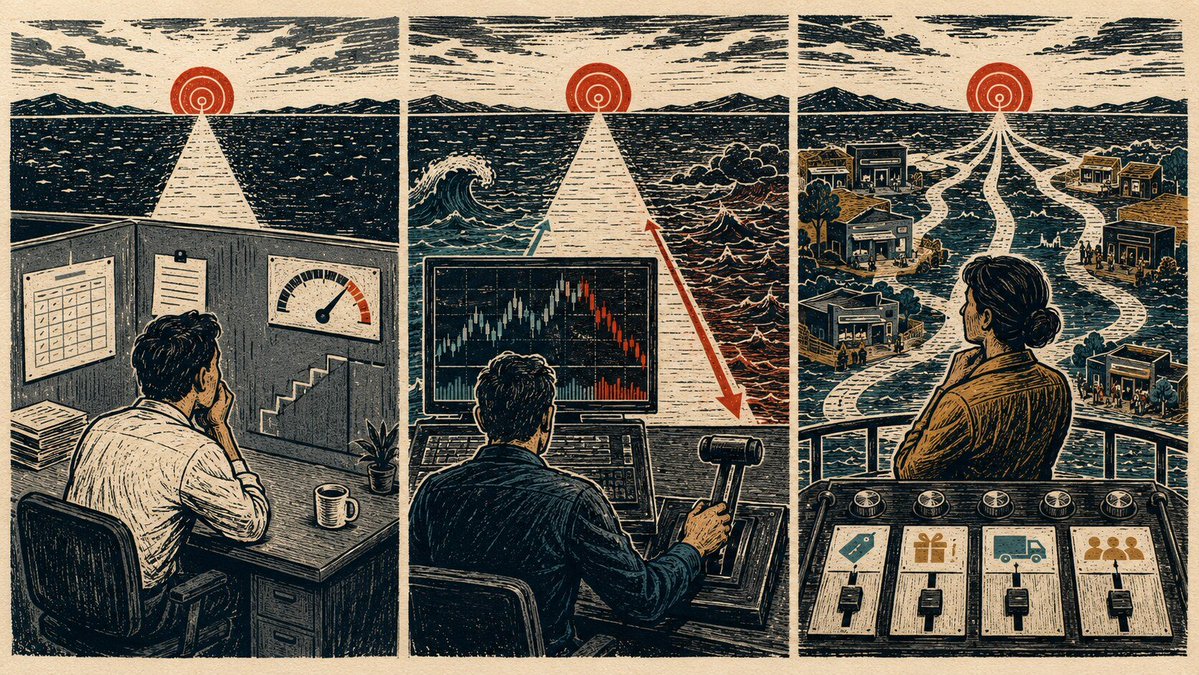
The third person owns several small businesses. He can change a price, replace an offer, try another sales channel, shut down a weak unit, and move cash toward one that is working. None of those decisions guarantees $100,000. Together they give him many possible configurations and a way to compare them.
We tend to describe the difference through character: the trader tolerates risk, the owner thinks big, the employee lacks ambition. Look at the controls and a plainer explanation appears. The employee’s levers stop early. The trader has one lever with terrifying range. The owner has several structures capable of holding different combinations of buyer, offer, price, channel, and delivery method.

That combination is what an income goal actually points toward. Somewhere there may be a buyer who will pay this price for this result, reached through this channel, at a cost that leaves a margin. Most settings produce nothing. A few fit together well enough to support the number.
No display of effort reveals the right settings in advance. They have to meet the world. The work is a search across configurations, and the payoff is usually lopsided: silence across most of the field, then a response that can repay many failed attempts.
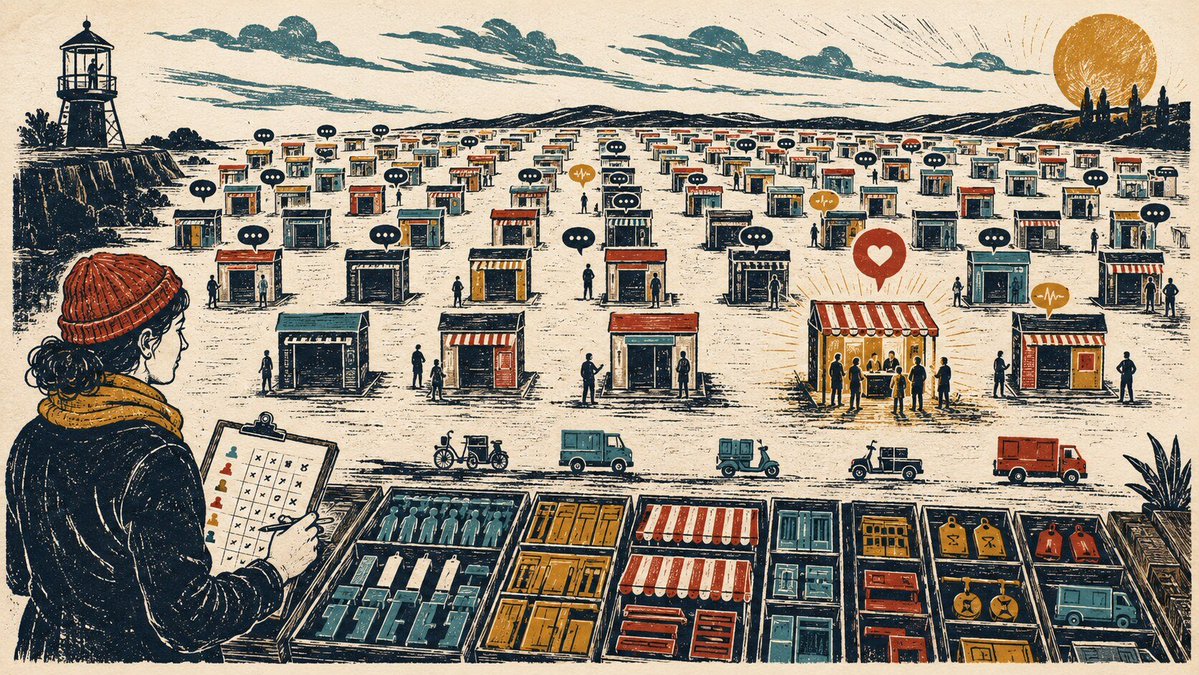
A friend of mine found one unusually good configuration in a specialized tax report he sells for about $900. A traditional firm needed weeks to prepare the old version and charged thousands; his software produces it in seconds on a server that costs roughly $5 a month. With gross margin close to 99 percent, a few orders a day take annual revenue near seven figures.
“Tax software” is too broad to explain the result. The money appears at one exact intersection: an urgent buyer finds a trusted report through the right channel, accepts the price, and buys after production has become almost free. Move the buyer, offer, channel, price, or method and the economics may disappear.

## A configuration needs somewhere to live
A configuration cannot remain a thought. A price must be posted somewhere. An offer needs a surface where another person can encounter it. Fulfillment has to occur through some repeatable arrangement. The result of each encounter has to leave a mark.
Companies have always done this. So have trading accounts, storefronts, software products, audiences, and bodies of contractual relationships. They preserve a particular arrangement while people sleep, forget, change their minds, or turn their attention elsewhere. Work enters them and changes what will happen next.
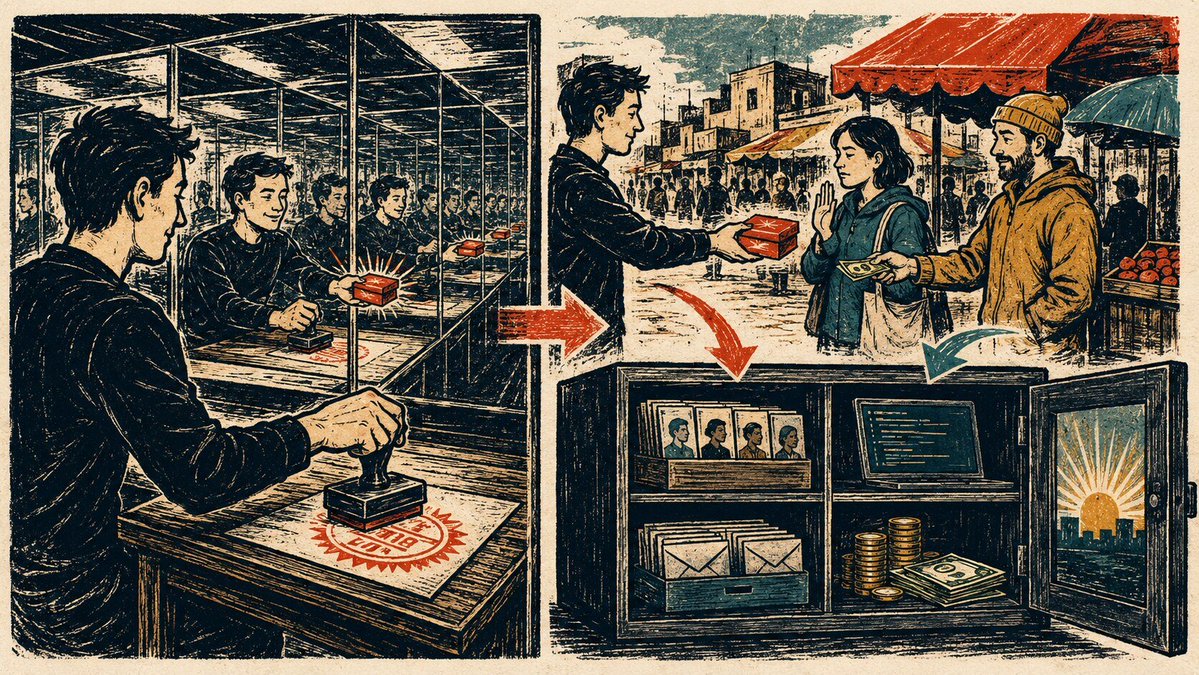
This is easy to miss because we attribute the achievement to the person and treat the surrounding machinery as scenery. Yet the machinery remembers the customer, keeps the product available, enforces the price, carries the reputation, and retains the money. It allows yesterday’s judgment to alter today’s choices.
Without something persistent, effort remains a sequence of performances. A person can work with extraordinary intensity and still begin every morning with the same range of action. Nothing has been added to the world that can preserve a correction or keep a promising configuration in place.
The missing object in my spreadsheet was therefore larger than an income lever. I lacked a place where a possible income configuration could live, receive evidence, and become different because the evidence arrived. Until that place existed, every plan came back to me as another thought.

## Intelligence needs a body and memory
This is where agents become more interesting than task automation. A model can write copy, inspect a market, produce software, answer a customer, or recommend a price. Intelligence by itself still has no continuing position in the world. A model call ends. Its attention disappears. Nothing guarantees that the next call inherits the same commitments or remembers what reality just said.
An agent acquires continuity from things outside the model: an identity, permissions, tools, accounts, files, databases, code, and a history of actions and results. These form a body of sorts. The model may supply judgment, but the surrounding container holds the configuration between moments of judgment.

External state matters more as models become more capable, not less. A smarter mind can propose better moves, but it still needs to know which move was tried, what changed, who responded, what the response cost, and which facts must remain fixed. More intelligence applied to unstable or imaginary state only produces more persuasive confusion.
The word “autonomous” is often taken to mean an agent operating without human supervision. A more useful meaning is continuity: the result of one action changes the conditions of the next without a person having to reconstruct the entire situation from memory. The loop can continue because its state survives each individual act of reasoning.
Such a loop has a simple philosophical shape. A configuration is held in the world. An action changes part of it. Something outside the agent responds. The response is retained. A later action begins from the altered state. That is how a sequence of model calls becomes a continuing process instead of a pile of disconnected outputs.
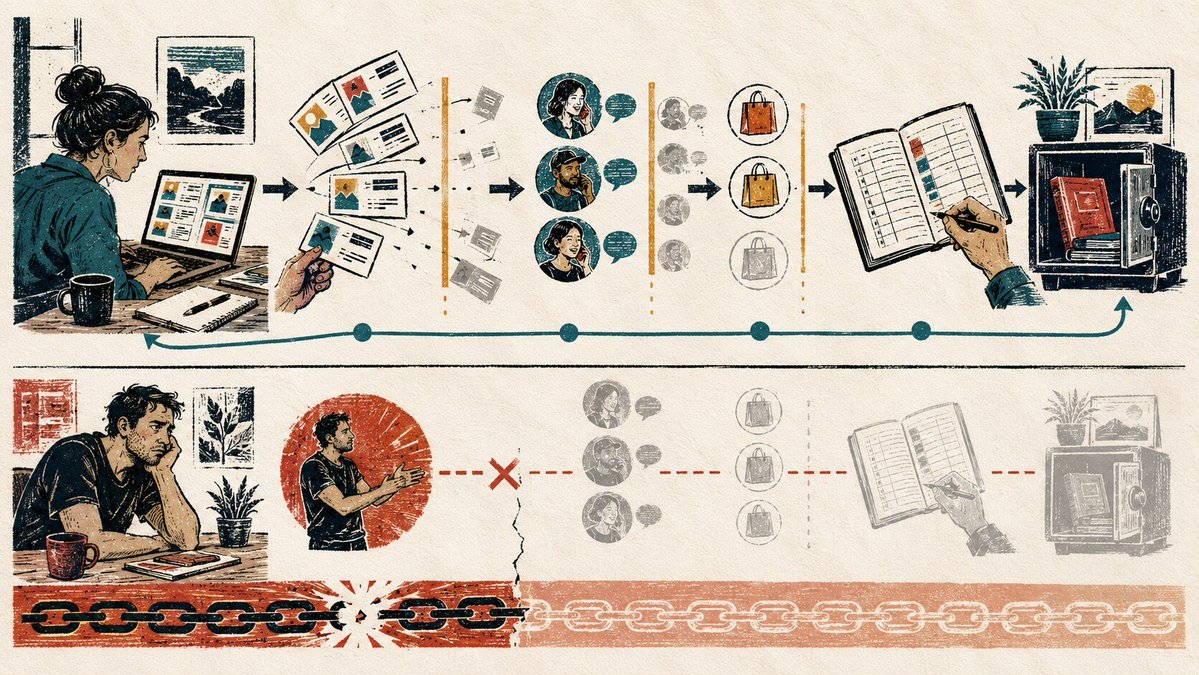
The claim has a clear boundary. We do not yet know whether autonomous agents can reliably discover and operate durable businesses, or whether their mistakes will cancel their lower costs. Demand remains external. Markets adapt. A loop can optimize noise as easily as it can find value.
The narrower claim is enough: agents reduce the cost of maintaining and revising candidate configurations in the world. They can keep more possibilities alive, carry forward more state, and shorten the distance between an idea and a real response. That changes who can afford to search, even if it does not guarantee what the search will find.
## From a heroic bet to a field of possibilities
Business search was historically expensive because one configuration arrived bundled with most of a company. Testing an offer could require designers, engineers, salespeople, support, legal work, and enough cash to keep them around while you waited for an answer. One fact from the market might cost a founder several years and much of their savings.
Investors escaped this limit with portfolios. Traders could open a position, measure it, resize it, and close it without building a firm around every thesis. Most people had no equivalent way to hold several business configurations at once, so they received only a few attempts and were told to make each one count.

If agents make each persistent configuration cheaper, the natural unit of ambition may change. Instead of one identity-consuming bet, a person might be able to keep several small possibilities in contact with the world. Most would remain quiet. A few might return enough evidence to deserve more attention.
This remains a thought experiment rather than a proven recipe. Its value is that it relocates the source of agency. The decisive advantage would come from owning more intelligence only insofar as that intelligence can inhabit durable structures, preserve separate histories, and remain answerable to signals it does not control.

The comparison returns us to the person staring at the blank spreadsheet. The absence of a path says little about the depth of their ambition. It says that their present world contains no durable configuration through which the number can answer them. Agents matter to this argument only insofar as they widen the set of structures an individual might be able to inhabit.
## Ambition is downstream of structure
The thought experiment changes the object being explained. An income goal with no structure behind it cannot generate useful corrections. It can intensify desire, shame, envy, or resolve, but those feelings still have no variable to act upon.
From the outside, ambition looks like a property of the person. From inside a working system, it is also a property of the available machinery: somewhere a configuration can live, somewhere reality can answer it, and somewhere the answer can remain. A distant goal can therefore be read as a description of missing structure rather than a demand for a more heroic self.
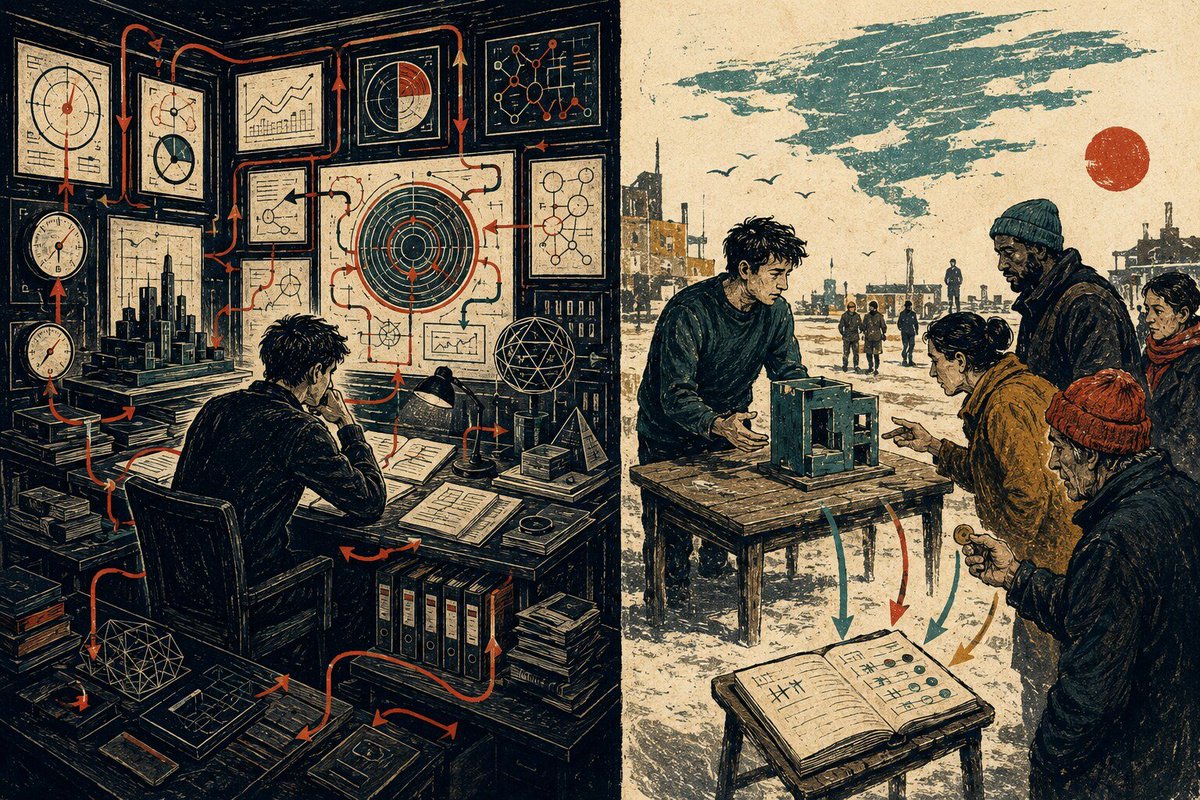
I know how easy it is to confuse a description of machinery with machinery itself. I spent two years building frameworks nobody had asked for. The diagrams improved, the language sharpened, and the architecture grew more impressive. There was no checkout page, no user waiting, and no stranger who could reject the work. Every signal still came from me.
A design starts producing knowledge when it meets something the designer cannot control. A persistent structure gives that encounter somewhere to happen and gives the result somewhere to stay. Intelligence can then return to a world that is different because the previous attempt occurred.

The path to $100,000 a month does not begin with $100,000 worth of effort. It begins when possible paths have somewhere to live. Until then, the number can only judge you. Once a structure can hold a configuration, accept a response, and change without forgetting, ambition becomes a search the world can answer.
## 相关链接
- [Will Chen](https://x.com/stablechen)
- [@stablechen](https://x.com/stablechen)
- [8.8K](https://x.com/stablechen/status/2079987522105655554/analytics)
- [Upgrade to Premium](https://x.com/i/premium_sign_up)
- [1:50 AM · Jul 23, 2026](https://x.com/stablechen/status/2079987522105655554)
- [8,847 Views](https://x.com/stablechen/status/2079987522105655554/analytics)
---
*导出时间: 2026/7/23 10:52:55*
---
## 中文翻译
# 如何利用 AI 实现财务自由
**作者**: Will Chen
**日期**: 2026-07-22T17:50:44.000Z
**来源**: [https://x.com/stablechen/status/2079987522105655554](https://x.com/stablechen/status/2079987522105655554)
---

我曾询问如何致富,并收到了一份详尽的存钱计划:最大化利用税收优惠账户,自动转账,购买低费率基金,然后等待。每一行建议都无懈可击。但合在一起,它们回答的却是另一个问题。
这个计划可以分配我的薪水,但永远无法增加它。如果我月入 5,000 美元,我或许可以从支出中削减 1,500 美元并将差额用于投资。一旦削减触及房租、食物以及其他维持生存的成本,这个杠杆就停止了。我询问的是收入,得到的却是安排固定数额的更好方法。

当你处于待业期间并在 X 上花费太多时间时,这个问题会变得愈发难看。你的动态里充斥着人们说着同样的关于自律、速度和对不适的耐受力的观点。他们发布营收截图;而你的一天中没有任何东西可以被成倍放大成那样的数字。道德评判先于机制出现:如果数字没有变动,一定是你还不够渴望。
大约在同一时间,我想月入 10 万美元。我打开一个电子表格,试图倒推计算。那里有我的薪水,可能的加薪,以及我能存下的钱。然后接下来的几行就变成了空白。我手头没有任何东西可以放大十倍或二十倍。不存在一条事件链,能将我当天采取的行动与表格顶端的那个数字连接起来。

我一直把这些空白行视为自身的缺陷。也许我缺乏胆量、纪律或商业本能。这种诊断听起来很严重,却对我毫无助益。更简单的答案是,这条道路需要我尚未拥有的拼图:某种能在市场上承载要约、收集反馈,并停留足够长的时间以产生改变的东西。
当每一天的工作留给你的都只是昨天那套同样的机器时,你无法通过努力工作达成一个巨大的目标。在数字变成路径之前,必须先存在某种能够承载可能路径的东西。关于智能体(agents),相关的问题是它们是否让这些拼图的创建和维护变得廉价得多。
这里的 10 万美元目标充当了一个探针。它暴露了一个更深层的差异:一个人可以将这个数字转化为变量和反馈,而另一个人只感受到了压力。这种差异部分在于他们周围的结构。

## 目标是一种配置
假设有三个人,每个人都决定月入 10 万美元。第一个人拿薪水。他可以改善工作表现,寻求晋升,或者跳槽到更好的雇主。这些行动仅在薪水市场的狭小范围内影响收入。百分之四的加薪并不包含通往十二倍薪资的隐藏路径。
一名交易员可以在午餐前增加仓位。利润可能会上升;亏损可能上升得更快。她可能永远无法在不破产的情况下达到目标,但这个数字存在于她控制的变量范围内。资本、规模、风险和回报给了她一个她实际上可以探索的危险问题。

第三个人拥有几家小企业。他可以调整价格,更换要约,尝试另一个销售渠道,关闭一个疲软的单元,并将现金转移给一个运作良好的单元。这些决定中没有一项能保证带来 10 万美元。但合在一起,它们给了他许多可能的配置以及一种比较它们的方法。
我们倾向于通过性格来描述这种差异:交易员能容忍风险,所有者思维宏大,员工缺乏雄心。看看那些控制手段,一个更朴素的解释就出现了。员工的杠杆很早就停止了。交易员有一个范围惊人的杠杆。所有者拥有几个能够容纳买家、要约、价格、渠道和交付方式的不同组合的结构。

那种组合正是收入目标实际指向的东西。在某处,可能存在一个买家,愿意通过这个渠道为这个结果支付这个价格,且成本能留下利润空间。大多数设置什么也产生不了。有少数能契合得足够好,以支撑这个数字。
没有任何努力的表现能预先揭示正确的设置。它们必须与世界相遇。工作是在配置空间中的搜索,而回报通常是不对称的:在大部分领域一片沉寂,然后是一个能够回报许多次失败的回应。

我的一位朋友在他出售的一份专业税务报告中找到了一个异常出色的配置。传统公司需要数周时间来准备旧版本,并且收费数千美元;而他的软件在成本约为每月 5 美元的服务器上几秒钟就能生成。由于毛利率接近 99%,每天几笔订单就能让年收入接近七位数。
“税务软件”这个词太宽泛了,无法解释这一结果。钱出现在一个精确的交汇点:一个急切的买家通过正确的渠道找到一份可信的报告,接受价格,并在生产成本几乎为零后购买。移动买家、要约、渠道、价格或方法中的任何一个,经济效益都可能消失。

## 配置需要栖身之所
配置不能仅仅停留在思想中。价格必须发布在某个地方。要约需要一个界面,让另一个人能够遇到它。履约必须通过某种可重复的安排发生。每次遭遇的结果都必须留下痕迹。
公司一直都在这样做。交易账户、店面、软件产品、受众和契约关系体系也是如此。当人们睡觉、遗忘、改变主意或把注意力转向别处时,它们保留着特定的安排。工作进入其中,并改变了接下来会发生的事情。

这很容易被忽视,因为我们把成就归功于个人,并把周围的机器视为背景。然而,机器记住了客户,保持产品可用,执行价格,承载声誉,并留住资金。它允许昨天的判断来改变今天的选择。
如果没有某种持久的东西,努力仍然只是一连串的表演。一个人可以以非凡的强度工作,但每天早上开始时行动范围依然如故。世界上没有增加任何东西来保存修正或保持有前景的配置就位。
因此,我的电子表格中缺失的物体不仅仅是一个收入杠杆。我缺乏一个空间,让可能的收入配置可以栖身、接收证据,并因为证据的到来而发生变化。直到那个空间存在之前,每一个计划都作为另一个念头回到了我这里。

## 智能需要一个身体和记忆
这就是为什么智能体变得比任务自动化更有趣的地方。模型可以撰写文案,检查市场,生产软件,回答客户,或推荐价格。智能本身在世界中仍然没有持续的立足点。一次模型调用结束。它的注意力消失。没有任何东西保证下一次调用会继承相同的承诺或记住现实刚才说了什么。
智能体从模型之外的事物中获得连续性:一个身份、权限、工具、账户、文件、数据库、代码,以及行动和结果的历史。这些形成了一种身体。模型可能提供判断,但周围的容器在判断之间的时刻中保持着配置。

随着模型变得更强大,外部状态的重要性并没有降低,反而更高了。一个更聪明的头脑可以提出更好的行动步骤,但它仍然需要知道哪一步被尝试了,什么改变了,谁回应了,回应的成本是多少,以及哪些事实必须保持固定。将更多的智能应用于不稳定或想象的状态只会产生更有说服力的困惑。
“自主”一词常被理解为指代无需人类监督的智能体。一个更有用的含义是连续性:一个行动的结果改变下一个行动的条件,而无需人从记忆中重建整个情境。循环可以继续,因为它的状态在每一次单独的推理行为中幸存下来。
这样的循环有一个简单的哲学形态。一个配置被保持在世界上。一个行动改变了它的一部分。智能体之外的事物做出了回应。回应被保留下来。后来的行动从改变后的状态开始。这就是一系列模型调用如何变成一个持续的过程,而不是一堆脱节的输出。

这个主张有一个明确的边界。我们还不知道自主智能体是否能可靠地发现并经营持久的企业,或者它们的错误是否会抵消它们的低成本。需求仍然是外部的。市场会适应。一个循环可以像发现价值一样容易地优化噪音。
更狭义的主张已经足够了:智能体降低了在世界中维护和修改候选配置的成本。它们可以让更多的可能性保持活力,向前传递更多的状态,并缩短想法与现实回应之间的距离。这改变了谁负担得起搜索,即使它不能保证搜索会发现什么。
## 从一场英雄式的赌注到一片可能性的领域
商业搜索历来是昂贵的,因为一个配置通常是伴随着大部分公司一起捆绑而来的。测试一个要约可能需要设计师、工程师、销售人员、支持人员、法律工作,以及足够的现金来在你等待答案时维持他们的运转。来自市场的一个事实可能让一位创始人付出数年和大部分积蓄的代价。
投资者通过投资组合逃脱了这个限制。交易员可以开仓,测量它,调整规模,并平仓,而无需围绕每一个论点建立一家公司。大多数人没有等效的方法来同时持有几个商业配置,所以他们只得到几次尝试机会,并被告知要让每一次都算数。

如果智能体让每一个持久配置都变得更便宜,雄心的自然单位可能会改变。不再是孤注一掷的身份赌注,一个人或许能够让几个微小的可能性与世界保持接触。大多数会保持沉寂。少数可能会返回足够的证据,值得更多的关注。
这仍然是一个思想实验,而非经过验证的配方。它的价值在于它重新定位了能动性的来源。决定性的优势只有当智能能够栖身于持久结构、保留独立的历史并保持对它无法控制的信号的负责时,才会来自于拥有更多的智能。

这种比较把我们带回了那个盯着空白电子表格的人。路径的缺失并不能说明他们雄心的深浅。它说明他们目前的世界不包含任何持久的配置,通过这些配置数字可以回应他们。智能体对这个论点的重要性,仅在于它们拓宽了个体可能栖身的结构集合。
## 雄心是结构的下游
这个思想实验改变了被解释的对象。一个背后没有结构支撑的收入目标无法产生有用的修正。它可以强化欲望、羞耻、嫉妒或决心,但这些感觉仍然没有可以作用的变量。
从外部看,雄心看起来像是一个人的属性。从一个运作系统的内部看,它也是可用机器的属性:在某处配置可以栖身,在某处现实可以回应它,在某处答案可以保留。因此,一个遥远的目标可以被解读为对缺失结构的描述,而不是对更英雄式的自我的要求。

我知道把对机器的描述与机器本身混淆是多么容易。我花了两年时间构建没有人要求的框架。图表改进了,语言犀利了,架构变得更加令人印象深刻。但没有结账页面,没有等待的用户,也没有能够拒绝这份工作的陌生人。每一个信号仍然来自我。
当一个设计遇到设计师无法控制的东西时,它就开始产生知识。一个持久的结构给这次相遇提供了一个发生的场所,并给结果提供了一个停留的地方。智能随后可以回到一个因为之前的尝试而已经变得不同的世界。

通往月入 10 万美元的道路并非始于价值 10 万美元的努力。它始于可能的路径有了栖身之所。在那之前,那个数字只能审判你。一旦一个结构能够容纳配置、接受回应、并在不遗忘的情况下改变,雄心就变成了世界可以回应的搜索。
## 相关链接
- [Will Chen](https://x.com/stablechen)
- [@stablechen](https://x.com/stablechen)
- [8.8K](https://x.com/stablechen/status/2079987522105655554/analytics)
- [升级到 Premium](https://x.com/i/premium_sign_up)
- [1:50 AM · Jul 23, 2026](https://x.com/stablechen/status/2079987522105655554)
- [8,847 次观看](https://x.com/stablechen/status/2079987522105655554/analytics)
---
*导出时间: 2026/7/23 10:52:55*