# How to build systems that create leverage
**作者**: Will Chen
**日期**: 2026-07-27T08:43:35.000Z
**来源**: [https://x.com/stablechen/status/2081661766552199175](https://x.com/stablechen/status/2081661766552199175)
---
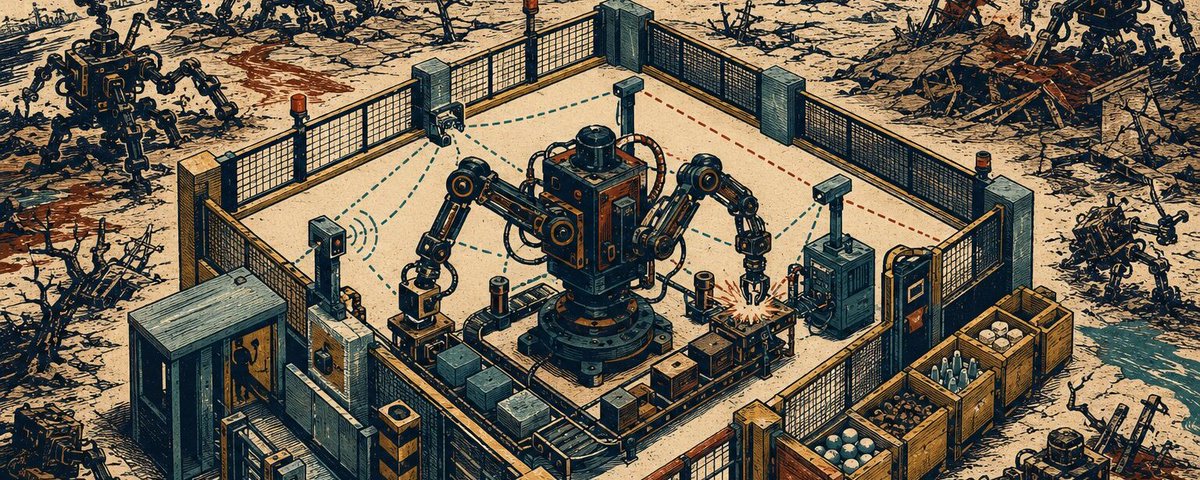
You know someone who works less than you and gets more. They seem less anxious, less consumed by the goal, and sometimes less disciplined. Yet every few months the gap between you gets larger.
It’s tempting to explain this as talent, luck, or hidden effort. Sometimes that’s right. Often the simpler answer is that the work is no longer happening entirely inside the person. It has been moved into structures around them.
Put two equally capable people at the same starting line. The first remembers every obligation, notices every change, makes every decision, performs every action, and checks every result by hand. The second spends the first month building a place where work accumulates, a few triggers that fire without her, and a way for results to come back as evidence. She looks slower because she is building instead of producing.
Run the comparison forward a year. The first person has paid full price for every result. The second made a smaller number of decisions early, then arranged for those decisions to keep having consequences. From the outside, the difference looks like character. Most people call her disciplined because they can’t see the machinery.
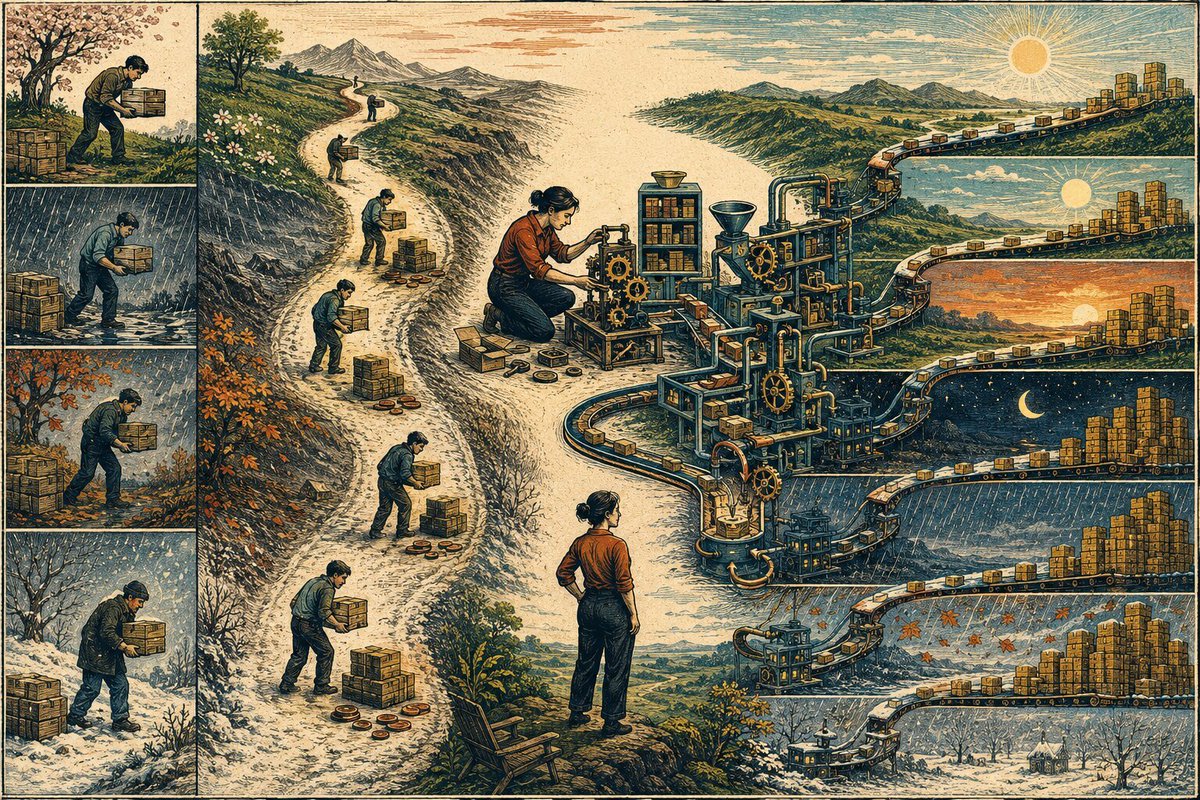
This changes where responsibility sits. Effort still matters, but it can be spent at two levels: forcing the next result, or building and maintaining the conditions that keep producing results. The second job is not effortless. It is simply paid less often.
Once you see that distinction, a lot of self-blame becomes less interesting. A disappointing result may still be your responsibility, but it is more useful to read it as information about the arrangement you are running than as a verdict on your worth.
## What leverage actually is
“Leverage” has become shorthand for hiring, raising money, building an audience, or posting more. Those may create leverage, but none of them defines it.
Leverage exists when an arrangement you make once causes the world to keep producing an effect without requiring the same effort from you again.
A physical lever makes the mechanism obvious. You place a bar on a fulcrum and geometry multiplies the force. You dig a channel once and gravity carries water through it for years. You write something down and paper remembers after the thought has left your head.
You did not create the force, the gravity, or the persistence of ink. You arranged conditions so that causes already present in the world began producing a consequence you wanted.
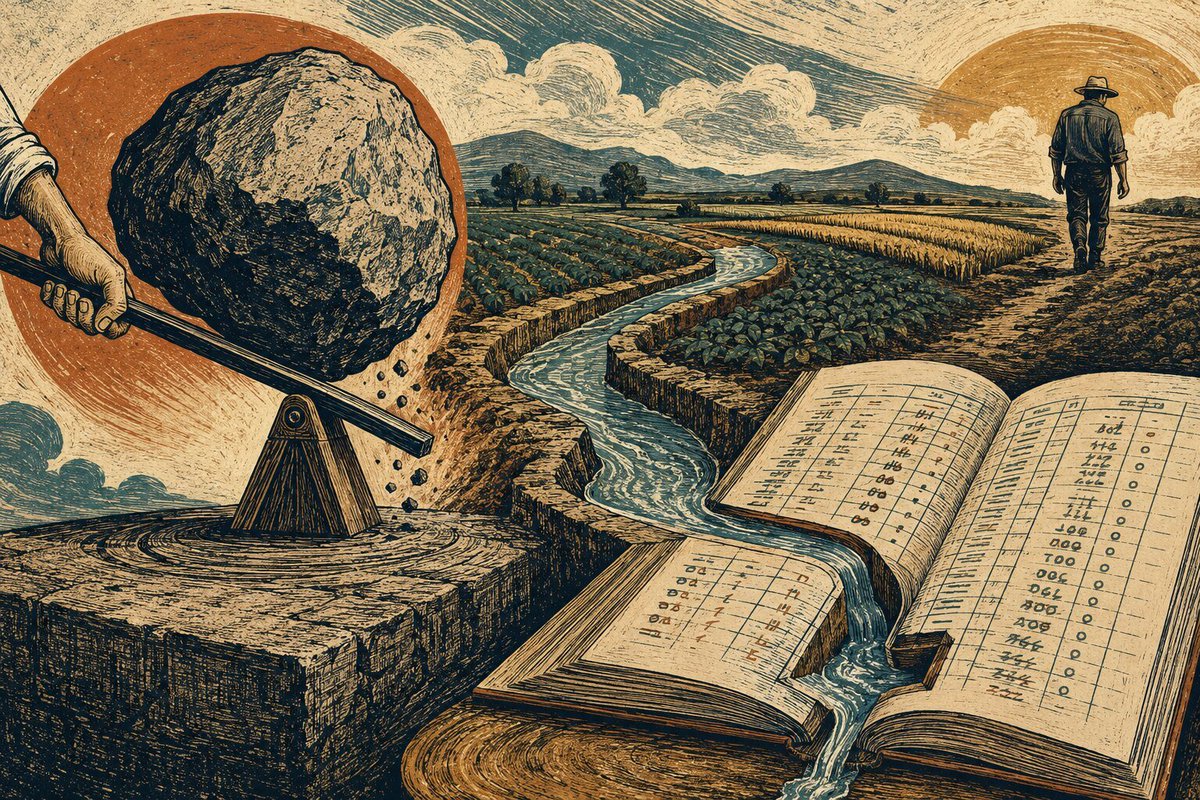
The same mechanism appears in less physical forms. A database preserves a fact after the person who entered it forgets. A contract makes future behavior more predictable by attaching it to an enforcement structure. A price recruits the choices of people you will never meet. Each arrangement continues to matter while its creator is absent.
This is why effort and causal work need separate names. Effort is the cost you feel: attention, strain, time, willpower. Causal work is the change that actually occurs in the world. We often assume the two rise together. They don’t. A small action through the right structure can move a great deal; enormous effort through no structure can leave almost nothing behind.
That leads to a useful distinction between a process and a system.
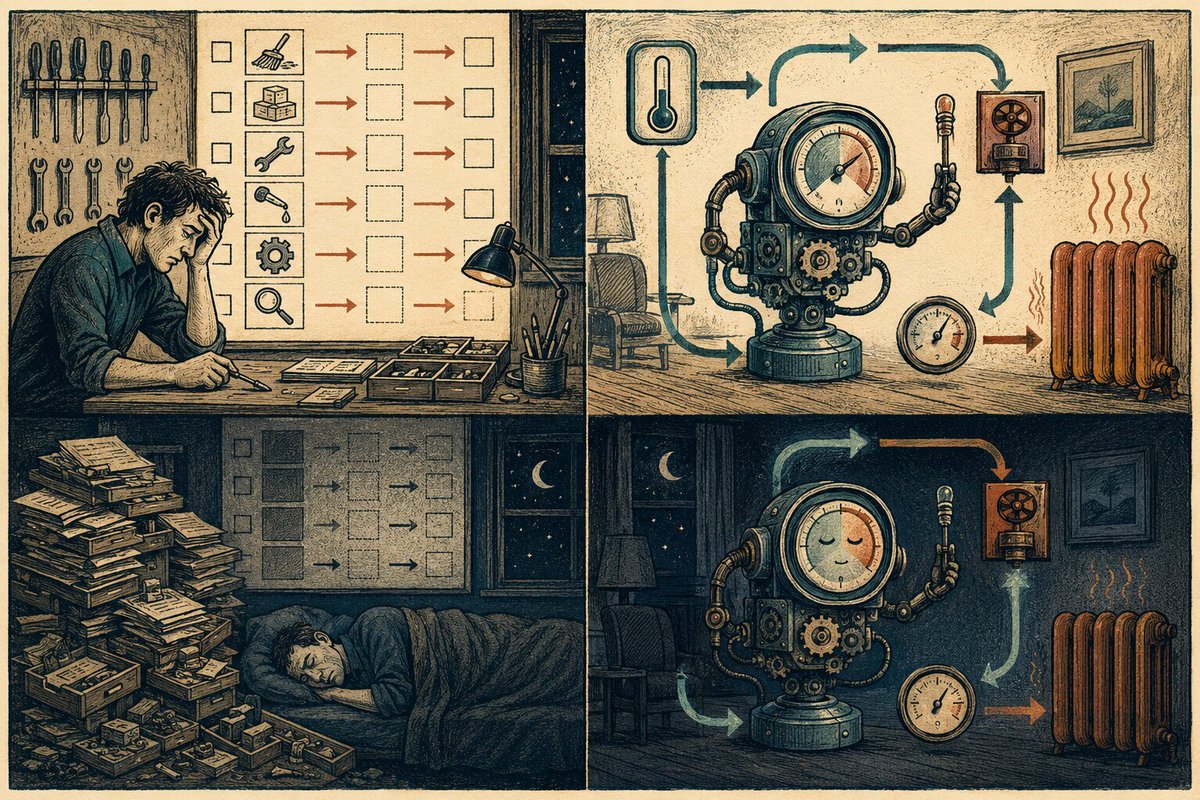
A process tells a person how to repeat work more reliably: a morning checklist, a sales script, a documented client-onboarding routine. Processes are useful because they reduce confusion and variation. They still need someone to execute every step. The checklist does not get out of bed.
A system absorbs part of the loop into the arrangement itself. A thermostat senses the temperature, compares it with a target, acts, checks again, and stops when the gap closes. The person chooses the temperature once; the room keeps being regulated.
The quickest test is: what keeps happening when you stop looking? A checklist left alone produces nothing. A thermostat left alone holds the temperature. One is organized work. The other has leverage.
## Animals figured this out before we did
Externalizing work into the environment is much older than software. Living things have been doing it for hundreds of millions of years, including organisms with very small brains and collectives with no central planner.
A spider does not patrol every point in its territory. It builds a web. Contact anywhere becomes a vibration carried to the place where the spider waits. The structure handles much of the sensing and part of the capture, converting a large area that would require constant vigilance into one signal the spider can afford to monitor.
An ant colony finds food without any ant holding a map. Each ant leaves a chemical trail. Paths that lead somewhere useful are reinforced faster than they evaporate; dead ends fade. The colony’s memory and coordination are written into the ground, and evaporation gives the system a way to forget.
A beaver does not regulate a wetland minute by minute. It changes the stream. Once the dam alters the hydrology, the water maintains many of the conditions the beaver needs. A period of construction becomes years of environmental control.

All three organisms face a recurring burden—watching, coordinating, controlling water—and move part of it outside their bodies. The resulting structure carries the burden without constant central attention.
Human tools continue the same move. A spear extends force. A tally mark extends memory. Money coordinates strangers. A corporation preserves roles and obligations beyond any one member. Software repeats rules at machine speed. An AI agent can interpret messy conditions that previously required a person. In every case, an organism reaches beyond its own bandwidth by arranging the world around it.
## What structures actually produce leverage
Most leveraged systems are compositions of a small set of primitives. Each one removes a particular recurring job from your attention. The useful question is not whether a system is “automated.” It is which parts of the loop the structure now owns.
Persistent state
Something outside you remembers where the last round ended. A ledger, customer history, database, daily log, or record of previous experiments prevents every session from beginning with reconstruction.
Persistent state absorbs memory and context loading. Its danger is equally simple: bad state compounds too. A stale record can make a system confidently wrong for months.
Reusable artifacts
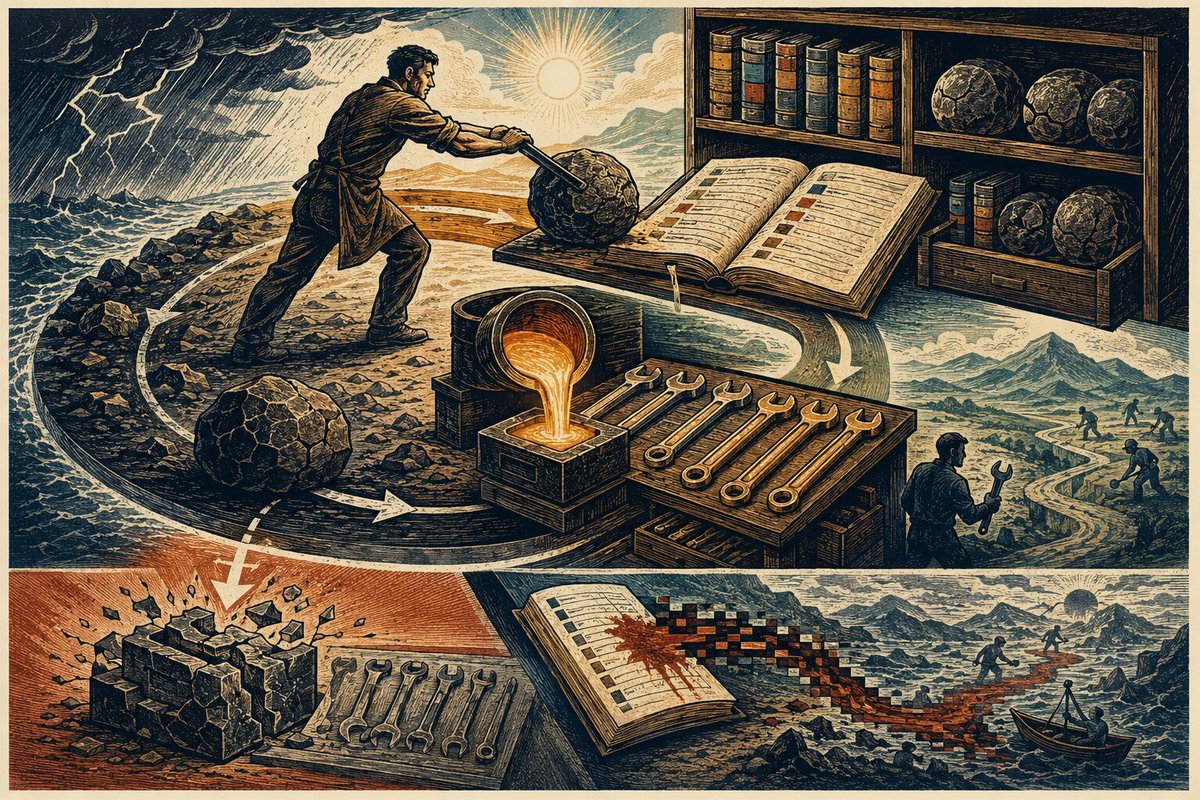
One act of work or judgment is captured so it can serve later instances. Code, templates, rubrics, examples, prompts, tests, and checklists all preserve something that was expensive to figure out.
The artifact lets later work draw on an earlier payment. It also freezes assumptions. Reuse becomes harmful when the problem changes and the artifact does not.
Environmental defaults
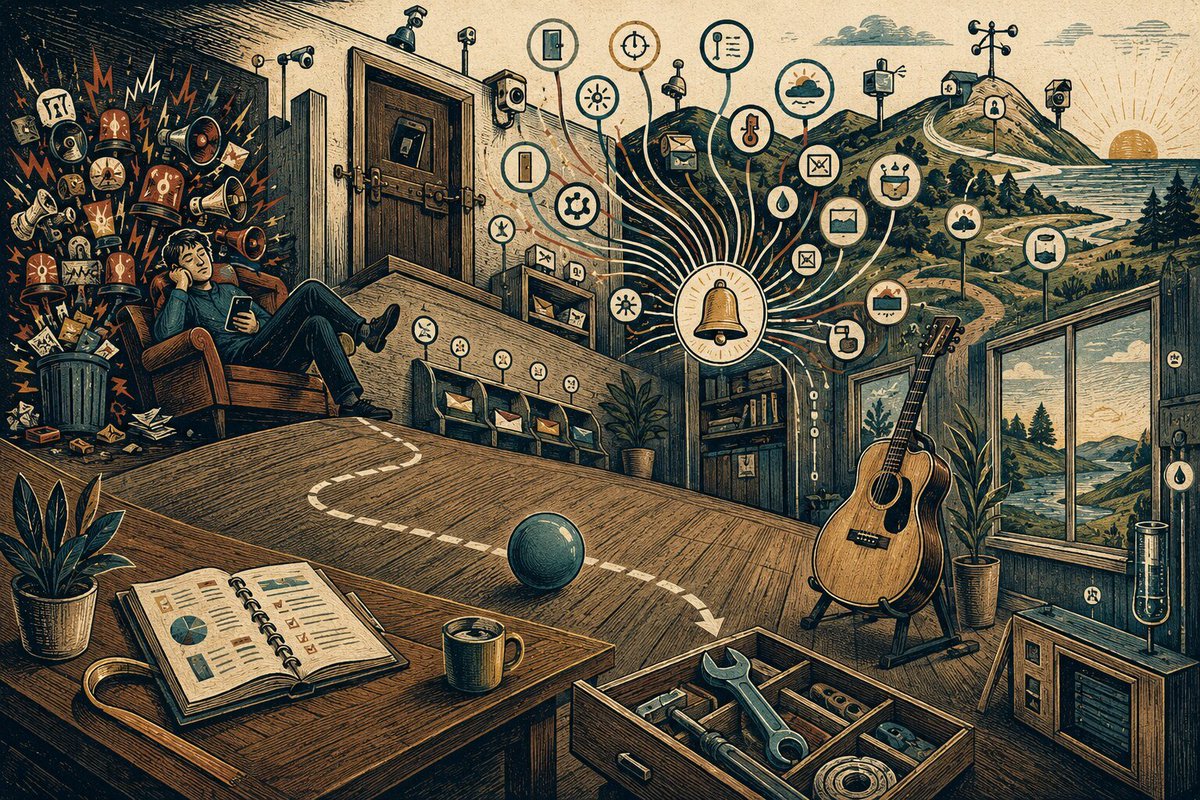
The surroundings make one action easier to start than another. A phone left in another room, a guitar kept on its stand, the correct document already open, or a workspace preloaded with the relevant context all change behavior before willpower enters the picture.
Defaults are powerful because they operate quietly. That is also the risk: they keep steering whether or not you remember choosing the direction.
Sensors and triggers
The system watches a condition and surfaces the moment that matters. A scheduled check, threshold alarm, inbox rule, test failure, or monitor absorbs vigilance—the low-value work of repeatedly looking in case something changed.
Bad sensors create noise instead of awareness. Once alerts become routine, the person learns to ignore the very channel that was supposed to protect attention.
Delegated execution
After a condition is met, something else performs the action: a machine, scheduled job, service, another person, or agent. This absorbs direct labor.
Execution alone is often weak leverage. If you still remember everything, notice everything, make every decision, and supervise every action, delegation has merely turned you into a manager of the same loop.
Feedback and correction
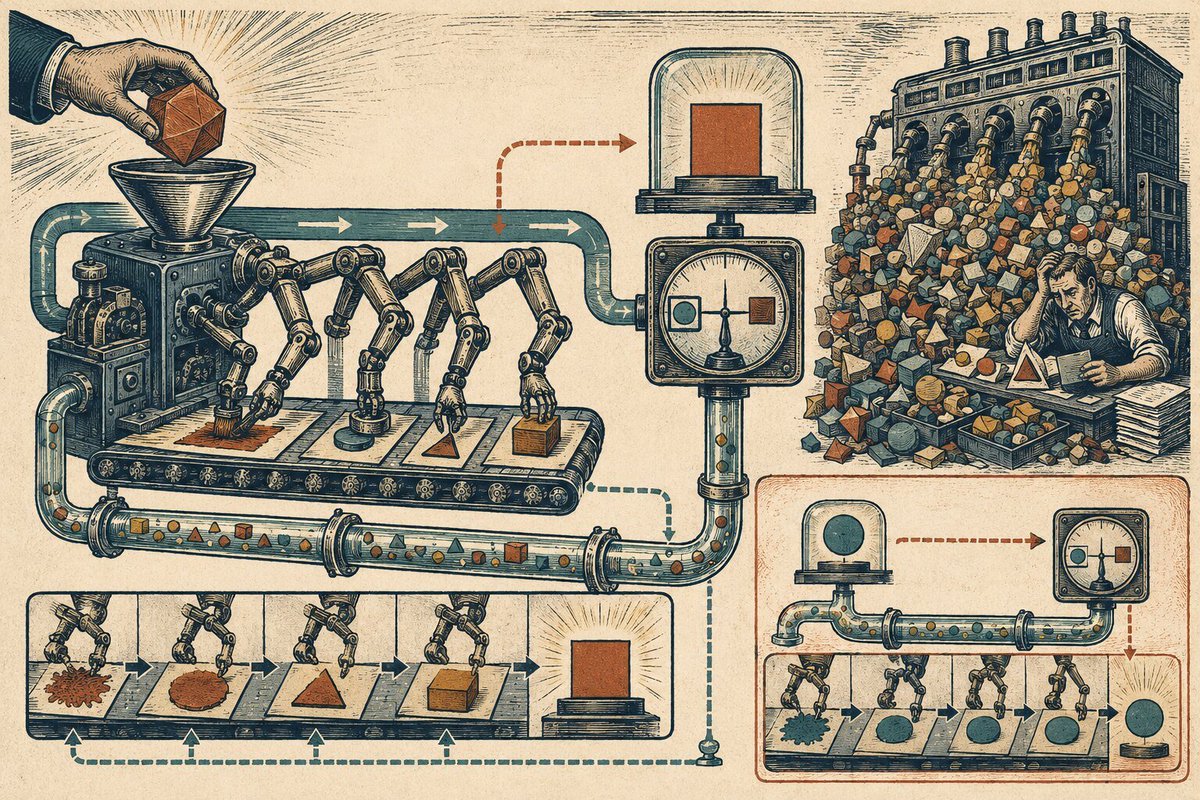
The system records what happened, compares it with the target, and changes the next action. Tests catch a regression. A budget throttles spending. An experiment routes more traffic toward the version that works.
Feedback absorbs supervision and replanning. It can also optimize the wrong target with extraordinary consistency, so the quality of the measurement matters as much as the ability to react.
Parallelism and replication
Independent instances run at the same time, and a working arrangement can be copied at low cost. Several experiments can proceed without competing for one person’s attention. Software can be deployed to thousands of machines. A proven operating pattern can be reproduced.
AI makes this primitive unusually accessible because capable processes that once required separate people can now run together. The obvious danger is scaling before the arrangement is good. Parallelism multiplies mistakes just as faithfully as successes.
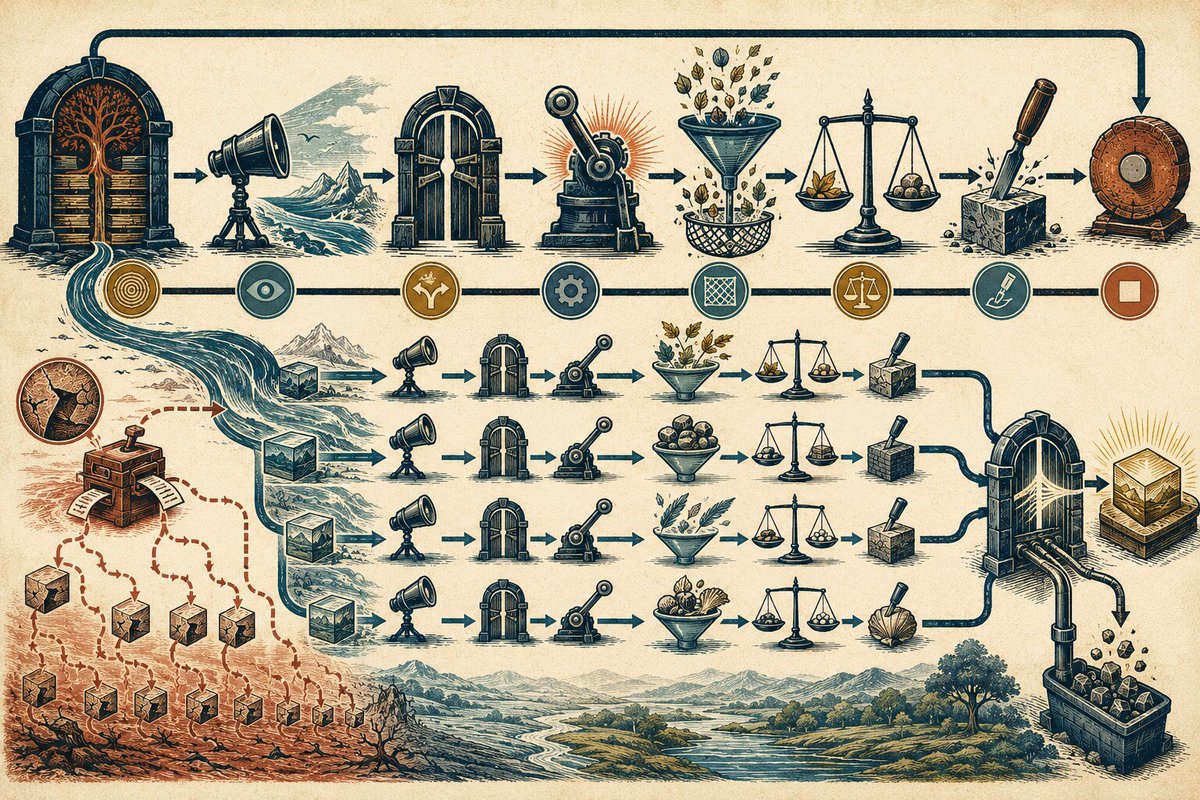
Together, the primitives form a loop: remember, notice, act, record the result, compare, adjust, repeat, and—when useful—run several copies. A person can execute that entire loop by hand. Leverage grows as more stages become properties of the arrangement.
## What AI actually changes
AI can produce a draft or write a function faster. That is useful, but speed on one task does not create a system. The model answers when called and stops.
The larger change is that AI lowered the cost of building the arrangement around the task.
Until recently, turning an intention into a working system required a long chain of translation. Someone had to write a specification, build software, connect services, create an interface, encode rules, interpret messy inputs, monitor the result, and maintain the whole thing as conditions changed. The primitives existed, but composing them was expensive enough to require teams.
AI makes much of that connective work cheaper. You can describe an intention in ordinary language and get rough machinery. A model can translate between incompatible formats, read unstructured state, propose rules, build interfaces, connect services, and turn feedback into the next action. The idea was rarely the expensive part. Connecting the idea to causal machinery was.
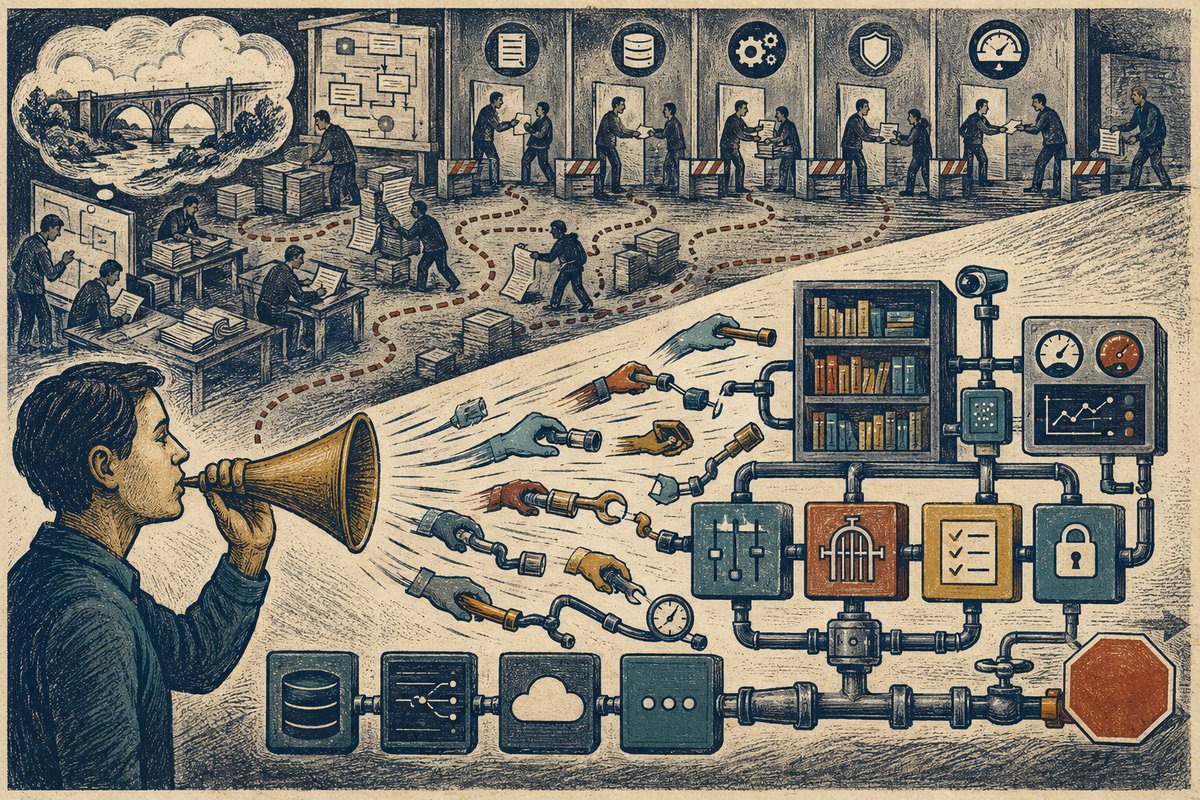
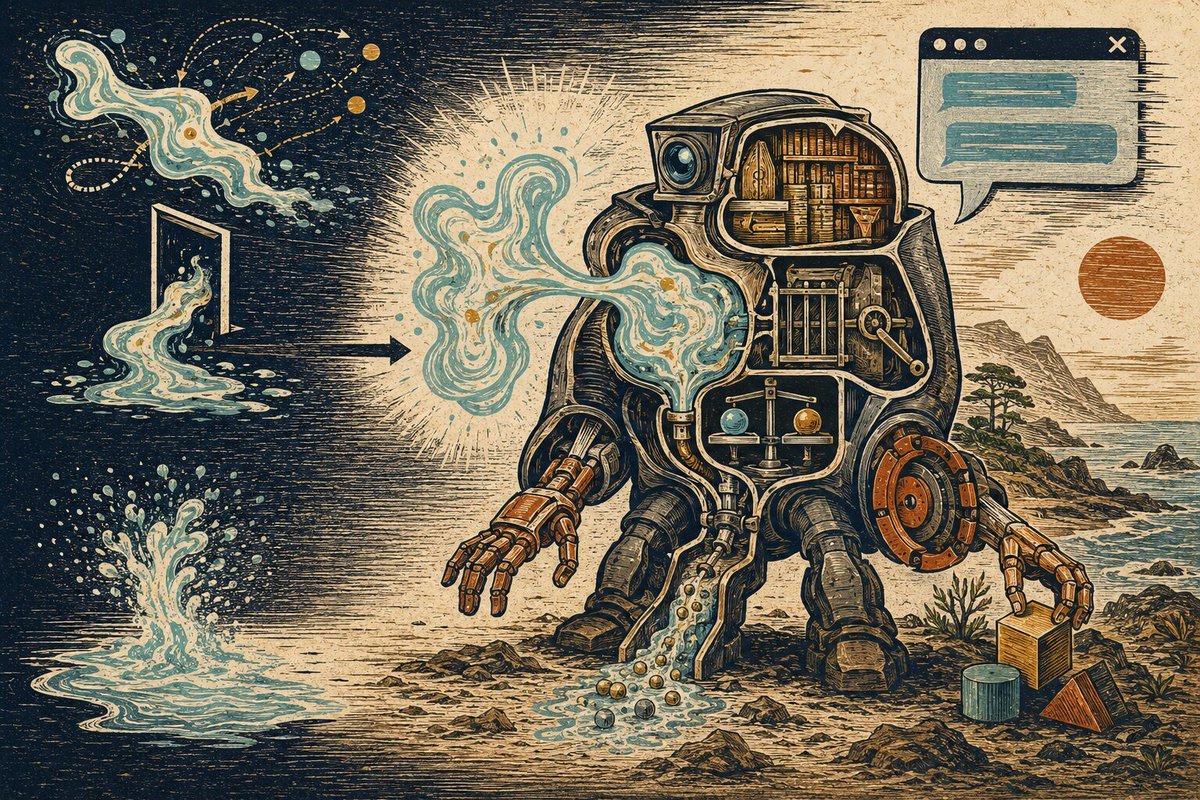
One model call gives you intelligence for a moment. Persistent effect requires a place for that intelligence to stand: memory of the previous run, a way to notice change, permission to act, evidence about the result, and a condition that tells it when to stop.
The model supplies search and interpretation. The surrounding system supplies position. Confusing the two produces impressive demos that become inert when the chat closes.
## How to build one
Take something you currently power by hand. Suppose you do freelance work and finding clients consumes part of every week.
Start by naming the outcome as a state of the world. “Do more marketing” describes an activity you perform. A state is observable: the right people keep encountering my work, and people who respond are captured and followed up with.
This phrasing matters because it separates the desired condition from the labor currently used to create it.
Next, list the recurring computations. You remember who you contacted and where the conversation stopped. You notice replies and cold leads. You decide who is worth pursuing. You rewrite a follow-up. You send it. You judge which efforts produced real conversations.
Those are not one task. They are several kinds of work currently bundled inside your attention.
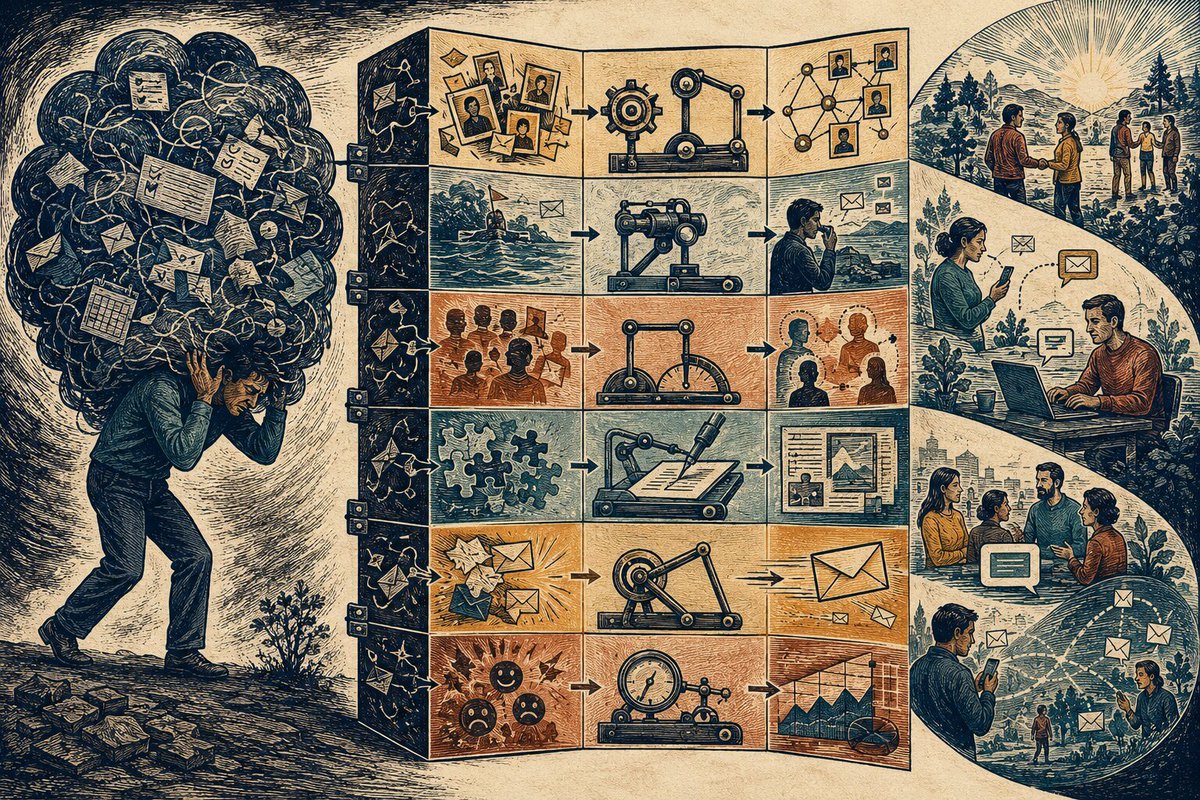
Map each job to a primitive. Relationship history needs persistent state. Replies and cold leads need triggers. Repeated messages need reusable artifacts. Scheduled follow-up needs execution. Results need feedback. Several outreach experiments may be able to run in parallel.
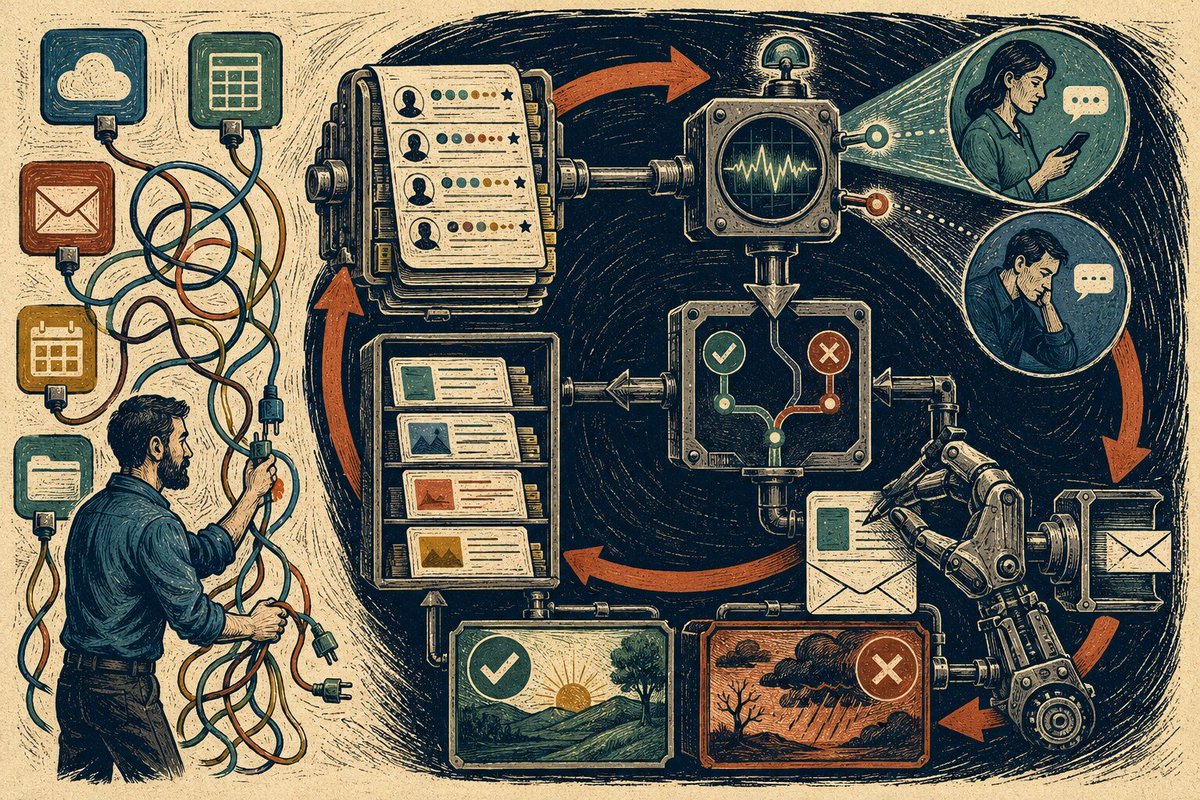
Then close the loop. State feeds the trigger. The trigger selects an action. The response returns as evidence. The evidence updates the state and changes the next action. If each piece lives in a separate app that you personally reconcile, you are still the wiring.
Now step away and ask what continues. If the honest answer is nothing, the workflow may be organized and efficient, but its leverage still depends on your attention. The part that survives your absence is the part the system actually owns.
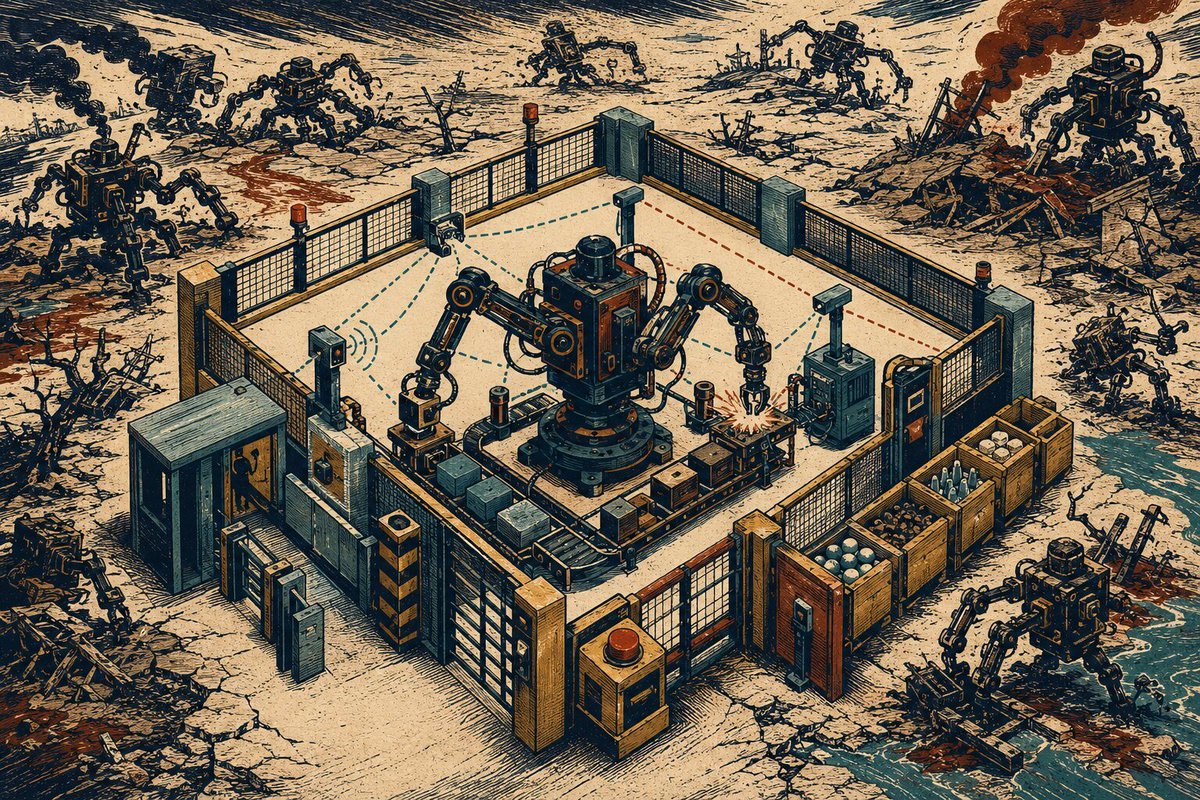
Finally, put a fence around it. Anything that can create value while you sleep can create garbage with the same diligence. Give the system a budget, permission limits, a stopping condition, and a point where uncertainty must escalate to you.
An arrangement that can act without you must also be able to stop without you. Many automation failures are simply loops that continued after the evidence had changed because nobody defined how they should die.
The domain can change. The method stays recognizable:
1. Name the outcome as a state.
2. Find the recurring computations.
3. Map each one to a primitive.
4. Connect the pieces into a loop.
5. Test what continues without you.
6. Fence the system with limits and stopping conditions.
## The part that stays yours
Return to the two people at the beginning. The one who pulled ahead did not necessarily want the goal more. She spent her early effort on machinery, and the machinery kept spending itself on the outcome.
That does not mean every difficulty is an architecture problem. Some skills are acquired only through direct practice. Reality contact cannot be delegated; someone has to find out whether the idea works outside the system’s own records. Judgment built through years in a body cannot always be frozen into a rule without losing the thing that made it good.
The system also cannot decide what deserves to be wanted. Someone must choose the target, look honestly at the feedback, revise the arrangement, and shut it down when it begins optimizing the wrong thing.
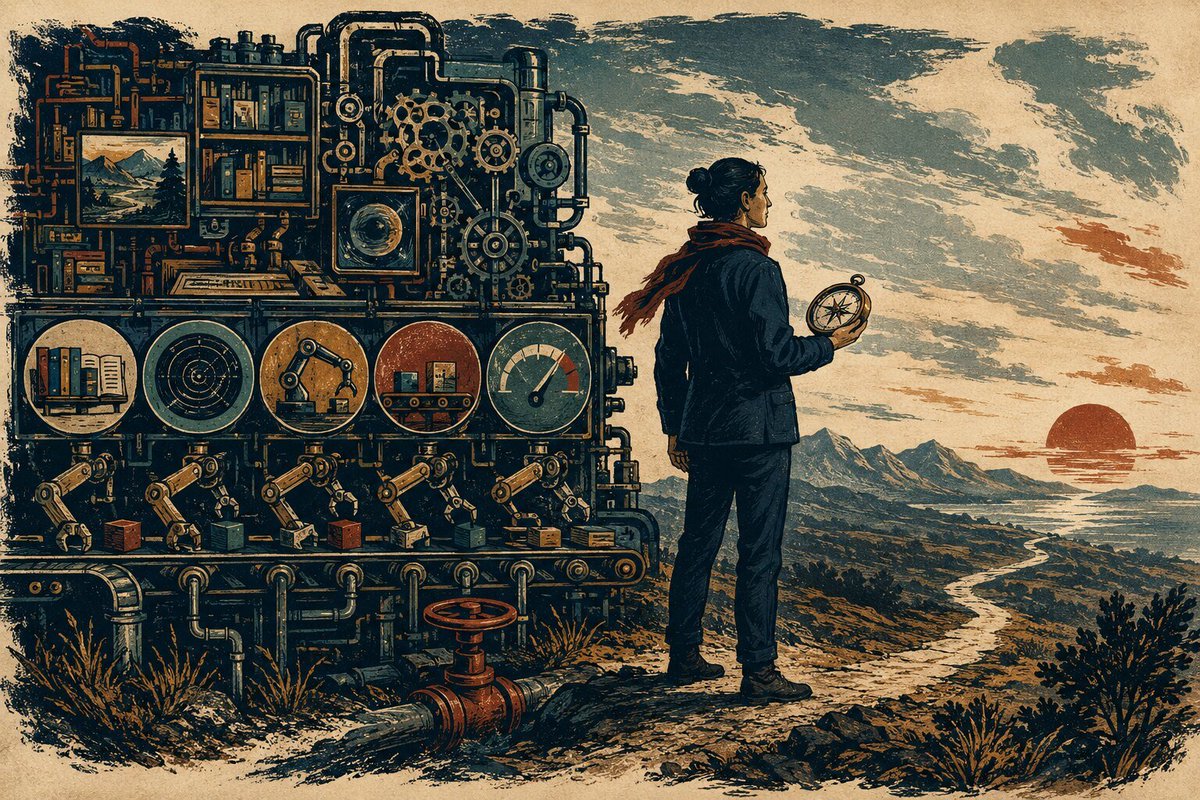
The work moves up a level. Choosing well, maintaining contact with reality, and correcting the machine remain yours.
So when you catch yourself preparing to force the same outcome by hand again, ask a more useful question:
What could I place in the world once, so that this result becomes part of how the world runs even when I’m not there?
That question is where leverage begins.
## 相关链接
- [Will Chen](https://x.com/stablechen)
- [@stablechen](https://x.com/stablechen)
- [7.8K](https://x.com/stablechen/status/2081661766552199175/analytics)
- [Upgrade to Premium](https://x.com/i/premium_sign_up)
- [4:43 PM · Jul 27, 2026](https://x.com/stablechen/status/2081661766552199175)
- [7,801 Views](https://x.com/stablechen/status/2081661766552199175/analytics)
---
*导出时间: 2026/7/27 23:31:55*
---
## 中文翻译
# 如何构建创造杠杆的系统
**作者**: Will Chen
**日期**: 2026-07-27T08:43:35.000Z
**来源**: [https://x.com/stablechen/status/2081661766552199175](https://x.com/stablechen/status/2081661766552199175)
---

你认识这样的人:他比你工作得少,得到的却更多。他看起来不那么焦虑,不那么被目标吞噬,有时也没那么自律。然而每隔几个月,你们之间的差距就会拉大。
人们很容易将其解释为天赋、运气或隐秘的努力。有时确实如此。但通常更简单的答案是,工作不再完全发生在人的内部,而是转移到了周围的结构中。
把两个能力相当的人放在同一起跑线上。第一个人记住每一个义务,注意到每一个变化,做出每一个决定,执行每一个动作,并亲自检查每一个结果。第二个人花第一个月搭建一个工作积累的地方,几个无需她干预就能触发的机制,以及让结果作为证据反馈回来的方式。她看起来更慢,因为她在构建,而不是在生产。
把这种比较向前推进一年。第一个人为每一个结果都付出了全价。第二个人在早期做出了数量较少的决定,然后安排这些决定持续产生后果。从外部看,这种差异像是个性问题。大多数人称她为自律,因为他们看不见背后的机制。

这改变了责任所在的位置。努力仍然重要,但它可以花在两个层面上:强行获得下一个结果,或者构建和维护持续产生结果的条件。第二项工作并非毫不费力,只是付款的频率更低。
一旦你看到了这种区别,很多自我责备就变得不再那么重要。令人失望的结果可能仍然是你的责任,但把它当作关于你正在运行的安排的信息来解读,比作为对你价值的判决更有用。
## 杠杆到底是什么
“杠杆”已成为招聘、融资、建立受众或多发帖子的代名词。这些可能会创造杠杆,但没有一个能定义它。
当你做出一次安排,使得世界持续产生某种效果,而无需你再次付出同样的努力时,杠杆就存在了。
物理杠杆让机制显而易见。你把一根杆子放在支点上,几何学放大了力量。你挖一次沟渠,重力就会在几年内将水输送过去。你把某事写下来,纸就会在念头离开你的脑海后依然记得它。
你并没有创造力量、重力或墨水的持久性。你安排了条件,让世界上已经存在的原因开始产生你想要的后果。

同样的机制也出现在不那么物理的形式中。数据库在输入者遗忘后仍保存着事实。合同通过将未来行为与执行结构挂钩,使其更具可预测性。价格招募了你永远不会遇见的人的选择。每一种安排都在其创造者缺席的情况下持续发挥作用。
这就是为什么努力和因果工作需要分开命名。努力是你感受到的成本:注意力、压力、时间、意志力。因果工作是世界上实际发生的变化。我们通常认为这两者是同步增长的。其实不然。通过正确的结构,一个小动作可以移动很多东西;而没有任何结构的巨大努力可能留不下任何痕迹。
这就引出了“流程”和“系统”之间一个有用的区别。
流程告诉一个人如何更可靠地重复工作:晨间检查清单、销售话术、文档化的客户入职流程。流程很有用,因为它们减少了混乱和变数。但它们仍然需要有人执行每一步。检查清单不会自己起床。
系统将循环的一部分吸收到安排本身中。恒温器感知温度,将其与目标进行比较,采取行动,再次检查,并在差距消失时停止。人只需选择一次温度;房间就会持续保持调节。
最快的测试方法是:当你停止关注时,什么仍在继续?一份被遗弃的检查清单什么也产生不了。一台被遗弃的恒温器能保持温度。一个是组织好的工作。另一个拥有杠杆。

## 动物比我们先搞懂了这一点
将工作外化到环境中远比软件古老。生物几亿年来一直在这样做,包括大脑很小的生物和没有中央规划者的集体。
蜘蛛不会巡逻其领地内的每一个点。它织一张网。任何地方的接触都会变成震动,传送到蜘蛛等待的地方。结构处理了大部分感知和部分捕获工作,将原本需要持续警惕的大片区域转化为蜘蛛有能力监控的一个信号。
蚁群在没有任何蚂蚁拿着地图的情况下找到食物。每只蚂蚁都留下一条化学踪迹。通往有用地方的路径比其蒸发得更快;死胡同则会逐渐消失。蚁群的记忆和协调被写入地下,而蒸发给了系统一种遗忘的方式。
海狸不会逐分钟地调节湿地。它改变溪流。一旦水坝改变了水文,水就会维持海狸所需的许多条件。一段时期的建设变成了多年的环境控制。

这三种生物都面临着一种经常性的负担——监视、协调、控制水位——并将其中一部分移到了体外。由此产生的结构在无需持续中央关注的情况下承担了这种负担。
人类工具延续了这一举动。长矛延伸了力量。记号延伸了记忆。金钱协调陌生人。公司在任何单个成员之外保留了角色和义务。软件以机器速度重复规则。AI 代理可以解读以前需要人参与的混乱条件。在每种情况下,生物都通过安排周围的世界而超越了自己的带宽。
## 什么结构真正产生杠杆
大多数有杠杆的系统都是由一小组基元组成的。每一个基元都从你的注意力中移除了一项特定的经常性工作。有用的问题不是系统是否“自动化”,而是结构现在拥有循环的哪些部分。
持久状态
你之外的事物记得上一轮在哪里结束。账本、客户历史、数据库、每日日志或先前实验的记录,可以防止每次会话都从重建开始。
持久状态吸收了记忆和上下文加载。它的危险同样简单:糟糕的状态也会复合。过时的记录可能会让系统在几个月内自信地犯错。
可复用的工件
一次工作或判断被捕获,以便为后续实例服务。代码、模板、评分标准、示例、提示词、测试和检查清单都保存了那些代价高昂才弄明白的东西。
工件让后续工作能够利用早期的付出。它也会冻结假设。当问题发生变化而工件没有变化时,复用就会变得有害。

环境默认值
周围环境让一个动作比另一个动作更容易开始。放在另一个房间的手机、放在架子上的吉他、已经打开的正确文档,或预加载了相关上下文的工作区,都会在意志力介入之前改变行为。
默认值很强大,因为它们悄悄地起作用。这也是风险所在:无论你是否记得选择了方向,它们都会持续引导。
传感器和触发器
系统监视某种条件,并在关键时刻浮现出来。计划检查、阈值警报、收件箱规则、测试失败或监控器吸收了警惕性——即反复查看以防发生变化的低价值工作。
糟糕的传感器产生的是噪音而不是感知。一旦警报变得例行公事,人就会学会忽略本应保护注意力的那个渠道。

委托执行
条件满足后,其他东西执行动作:机器、计划任务、服务、另一个人或代理。这吸收了直接劳动。
仅靠执行往往是微弱的杠杆。如果你仍然要记住一切、注意一切、做出每一个决定并监督每一个动作,那么委托只是把你变成了同一个循环的管理者。
反馈和修正
系统记录发生的事情,将其与目标进行比较,并改变下一个动作。测试捕捉回归。预算限制支出。实验将更多流量导向有效的版本。
反馈吸收了监督和重新规划。它也可能以惊人的始终如一度优化错误的目标,因此测量的质量与反应的能力同样重要。

并行和复制
独立实例同时运行,且工作安排可以低成本复制。几个实验可以同时进行,而无需争夺一个人的注意力。软件可以部署到数千台机器上。一个经过验证的运营模式可以被复制。
AI 让这个基元异常容易获得,因为曾经需要不同人才能运行的、有能力的流程现在可以一起运行。显而易见的危险是在安排完善之前就进行扩展。并行复制错误和复制成功一样忠实。
这些基元共同构成了一个循环:记忆、注意、行动、记录结果、比较、调整、重复,以及在有用时运行多个副本。一个人可以手动执行整个循环。随着更多阶段成为安排的属性,杠杆就会增长。

## AI 真正改变了什么
AI 可以更快地生成草稿或编写函数。这很有用,但一项任务的速度并不创造系统。模型在被调用时回答,然后就停止了。
更大的变化是,AI 降低了围绕任务构建安排的成本。
直到最近,将意图转化为一个可工作的系统还需要一长串的翻译过程。必须有人编写规范、构建软件、连接服务、创建界面、编码规则、解读混乱的输入、监视结果,并在条件变化时维护整个事物。基元是存在的,但组合它们的成本高到需要团队。
AI 让大部分连接工作变得更便宜。你可以用普通语言描述意图,并获得粗略的机制。模型可以在不兼容的格式之间进行翻译,读取非结构化状态,提出规则,构建界面,连接服务,并将反馈转化为下一个动作。想法很少是昂贵的部分。将想法连接到因果机制才是昂贵的部分。

一次模型调用给你的是片刻的智能。持久的效果需要给那个智能一个立足之地:对之前运行的记忆、注意变化的方法、行动的权限、关于结果的证据,以及告诉它何时停止的条件。
模型提供搜索和解读。周围的系统提供定位。混淆这两者会产生令人印象深刻的演示,但在聊天关闭后就会变得毫无生气。

## 如何构建一个系统
拿一件你目前亲手驱动的事情来说。假设你做自由职业,寻找客户占用了你每周的一部分时间。
首先,将结果命名为世界的一种状态。“做更多营销”描述的是你执行的一个活动。状态是可观察的:合适的人持续遇到我的作品,回复的人被捕获并得到跟进。
这种措辞很重要,因为它将期望的条件与目前用于创造它的劳动区分开来。
接下来,列出经常性的计算。你记得你联系了谁以及对话停在哪里。你注意到回复和冷线索。你决定谁值得追求。你重写一条后续消息。你发送它。你判断哪些努力产生了真正的对话。
这些不是一项任务。它们是几种目前捆绑在你注意力中的不同工作。

将每项工作映射到一个基元。关系历史需要持久状态。回复和冷线索需要触发器。重复的消息需要可复用工件。计划跟进需要执行。结果需要反馈。几个外联实验可能能够并行运行。
然后闭合循环。状态馈送给触发器。触发器选择一个动作。响应作为证据返回。证据更新状态并改变下一个动作。如果每个部分都存在于一个你必须亲自协调的独立应用程序中,你仍然是接线员。
现在退后一步,问问什么会继续。如果诚实的答案是“什么都没有”,那么工作流程可能是有序和高效的,但它的杠杆仍然依赖于你的注意力。在你缺席后存活下来的部分,就是系统真正拥有的部分。

最后,给它围上栅栏。任何能在你睡觉时创造价值的东西,都能以同样的勤勉创造垃圾。给系统一个预算、权限限制、停止条件,以及一个必须将不确定性升级给你的节点。
一个可以在没有你的情况下行动的安排,也必须能够在没有你的情况下停止。许多自动化失败仅仅是那些在证据发生变化后仍在继续的循环,因为没有人定义它们应该如何消亡。

领域可以改变。方法保持可识别:
1. 将结果命名为一种状态。
2. 找到经常性的计算。
3. 将每一个映射到一个基元。
4. 将部分连接成一个循环。
5. 测试没有你会继续什么。
6. 用限制和停止条件给系统围上栅栏。
## 仍然属于你的部分
回到开头的那两个人。那个遥遥领先的人不一定更渴望那个目标。她把早期的努力花在了机械装置上,而机械装置持续地将自己花费在结果上。
这并不意味着每个困难都是架构问题。有些技能只能通过直接实践获得。与现实接触无法委托;必须有人弄清楚想法在系统自身记录之外是否有效。通过多年亲身经验建立的判断并不总是能冻结成规则而不失去使其优秀的品质。
系统也无法决定什么值得被想要。必须有人选择目标,诚实地查看反馈,修订安排,并在它开始优化错误的东西时将其关闭。

工作上升了一个层次。做出良好的选择、保持与现实的接触、纠正机器仍然是你需要做的。
所以,当你发现自己准备再次亲手强行促成同样的结果时,问一个更有用的问题:
我可以在世界中放置什么,让这个结果成为世界运行方式的一部分,即使我不在那里?
那个问题就是杠杆开始的地方。
## 相关链接
- [Will Chen](https://x.com/stablechen)
- [@stablechen](https://x.com/stablechen)
- [7.8K](https://x.com/stablechen/status/2081661766552199175/analytics)
- [Upgrade to Premium](https://x.com/i/premium_sign_up)
- [4:43 PM · Jul 27, 2026](https://x.com/stablechen/status/2081661766552199175)
- [7,801 Views](https://x.com/stablechen/status/2081661766552199175/analytics)
---
*导出时间: 2026/7/27 23:31:55*