# Many ways to win
**作者**: kepano
**日期**: 2026-08-18T18:43:47.000Z
**来源**: [https://x.com/kepano/status/2089785345240129576](https://x.com/kepano/status/2089785345240129576)
---
Why do people flock to something? What creates an edge, an advantage, a moat? How do things win, or at least survive, in a highly competitive landscape?
Organisms, people, products, organizations, networks. All are able to overcome competitors and accumulate energy by developing strengths along certain vectors.
Successful things tend to optimize competency on a narrow set of strategies, often a unique and unusual combination of strategies. Here are eighty such strategies, grouped in broad categories, with examples from biology and business.
## Accumulation
- Usership: a critical mass of users, network effect. Examples: Phone system, the internet, scaled social networks.
- Completeness: all-in-one tool, one-stop shop. Examples: Swiss army knife, Walmart.
- Aggregation: an environment or marketplace designed for broad participation. Examples: Cities, malls, Amazon, Craigslist.
- Diversification: low-dependency on any one stream of resources. Examples: Conglomerates, omnivores.
- Omnipresence: available everywhere it might be needed, accepted by default. Examples: Visa, Coca-Cola, dandelions.
- Cloning: expands by replicating identical copies of itself. Examples: Aspen groves, franchises, sourdough starters.
## Price
- Affordability: comparatively low-cost. Examples: Mass production, fast food, fast fashion.
- Luxury: intentionally high-cost, often labor-intensive, or status symbol. Examples: Veblen goods, supercars, luxury watches.
- Skimming: ingests a large volume of very small transactions or resources. Examples: Credit cards, baleen whales, planktivores.
- Bundling: packaged freely with something desirable. Examples: Microsoft Office, cable channels, seeds in a fruit.
## Time
- Heritage: multi-generational legacy. Examples: Religions, old companies.
- Craftsmanship: uses more time, precision, and attention to detail than competitors. Examples: Handmade watches, bespoke tailoring, Leica.
- Organic: natural growth process that cannot be accelerated. Examples: Trees, ecosystems, aged cheeses.
- Endurance: ability to operate continuously over a long period of time. Examples: Marathon runners, nuclear submarines.
## Uniqueness
- Specialization: strong competence in a narrow niche. Examples: Trade schools, pandas.
- Versatility: general competence adapted to many tasks. Examples: CPUs, opposable thumbs.
- Hybrid: competence in two distinct areas, or blending of two strengths not usually found together. Examples: Frogs, cronuts, amphibious vehicles, hybrid cars.
- Divergence: creativity, unusualness, differentiation from the norm. Examples: Van Gogh, Picasso, Frank Gehry.
- Authenticity: traceable to its source, especially where counterfeiting is prevalent. Examples: Money, olive oil, art.
- Rarity: naturally limited in quantity, at the edge of the distribution curve. Examples: Beachfront property, Victor Wembanyama.
- Scarcity: artificially limited in quantity. Examples: Collectibles, NFTs.
- Secrecy: made difficult to copy by protecting private knowledge, or combining components in a way that cannot be disentangled. Examples: Magicians, Coca-Cola, trade secrets.
- Irreverence: contrarian, counter-cultural, disregard for tradition. Examples: Richard Branson, South Park.
## Offense
- Violence: destroys or consumes the opponent through physical force. Examples: Military attacks, predators.
- Litigation: weakens opponents through legal burden. Examples: Patent trolls, lawsuits, Mickey Mouse.
- Nettlesomeness: causes the opponent to make mistakes. Examples: Magnus Carlsen, terrorism.
- Sabotage: creates weaknesses in the opponent's structure or defenses. Examples: Stuxnet, cutting undersea cables.
- Parasitism: extracts or hijacks resources from a host. Examples: Mosquitos, tapeworm.
- Scavenging: opportunistically ingests dying or weakened prey. Examples: Private equity, vultures.
- Espionage: acquires enemy secrets. Examples: Spies.
- Swarming: concentrated attack from a mass of individually weak agents. Examples: Bees, DDOS attacks, Zerg rush.
- Highest bidder: overpays or outbids competitors to secure exclusivity. Examples: Real Madrid, Softbank, art collectors.
- Chokepoint: controls a passage that competitors or prey must pass through. Examples: Suez Canal, grizzlies at a waterfall.
- Puppeteering: takes over a host's behavior and directs it to serve you. Examples: Cordyceps, toxoplasma.
## Defense
- Deterrence: mutually assured destruction, projecting fear of violence or litigation. Examples: Nuclear weapons, trademarks, patents.
- Reliability: reduces maintenance costs, minimizes downtime. Examples: Zippo lighters, Toyota cars.
- Predictability: repeatable process with little deviation to create a consistent product or experience. Examples: Disneyland, Starbucks.
- Unpredictability: creating an element of surprise, confusion, or variability. Examples: Squid ink, smoke screen, Banksy, Lady Gaga.
- Decentralization: redundancy and distributed competency to reduce single points of failure. Examples: Solar power, grassroots movements.
- Security: resistance to theft, confiscation, unwanted access. Examples: Banks, vaults, locks.
- Privacy: protection against unwanted information disclosure. Examples: Encrypted messaging apps, VPNs.
- Durability: physical robustness, resistance to damage, or injury. Examples: LeBron James, cast iron skillets.
- Neutrality: displays long-term non-belligerence, a safe haven. Examples: Switzerland, Red Cross.
- Obscurity: survival by remaining unknown or undetected. Examples: Deep-sea creatures, closed-source software.
- Antifragility: becomes stronger when exposed to stress or usage. Examples: BitTorrent, muscles.
## Deception
- Camouflage: ability to blend into the surrounding environment. Examples: Chameleons, stealth aircraft.
- Mimicry: superficially adopts characteristics of another species to trick opponents. Examples: Harmless snakes mimicking venomous ones.
- Decoy: distracts or misleads adversaries. Examples: Chaff, fake security cameras.
- Lure: preys on other organisms by setting attractive traps. Examples: Anglerfish, honeypot.
- Infiltration: gets past defenses without notice. Examples: Trojan horse, malware, smuggling.
## Timing
- First-mover: acts first to gain an advantage. Examples: Netflix, Tesla.
- Second-mover: fast-follower, moves quickly to copy the first-mover. Examples: Facebook-Snapchat.
- Last-mover: waits until all opponents have expended energy on failed approaches. Examples: Apple.
## Accreditation
- Monopoly: artificial control of a resource or market approved by the governing body. Examples: Patents, regulatory capture.
- Prestige: endorsed by authoritative sources via awards, degrees, or other recognition. Examples: Michelin-starred restaurants, Ivy League graduates.
- Curation: selectiveness, particular ability in choosing and grouping. Examples: Art galleries, HBO, venture capital.
## Collaboration
- Union: reduce friction between potential competitors by adopting a common set of rules. Examples: Mergers and acquisitions, United States, European Union.
- Alliance: partnership that enables some benefits of a union while maintaining independence. Examples: Partnerships.
- Emergence: hive mind, wisdom of the crowd. Examples: Ant colonies, beehives, democracy.
- Centralization: single decision-making entity. Examples: Dictatorships.
- Standardization: emergent alignment that reduces friction. Examples: Language, railway gauge, metric system.
- Symbiosis: mutually beneficial dependency between two organisms. Examples: Two-party political system, fig wasp.
- Herding: grouping of many individuals to protect against larger or dangerous competitors. Examples: Trade associations, school of fish.
- Distributed ownership: owned by the community. Examples: REI Co-op, Green Bay Packers.
- Transparency: open and visible process or inner workings that encourages trust. Examples: Open-source software.
## Speed and scale
- Iteration: ability to iterate and change quickly, shortening the cycle time between improvements. Examples: SpaceX.
- Efficiency: uses a low amount of energy or resources to perform similar capabilities to competitors. Examples: LED bulbs.
- Agility: nimbleness, easily adapts to a changing environment. Examples: Gymnasts, squirrels, go-karts.
- Precision: high level of accuracy and exactness in performance or output. Examples: Swiss watches, CNC machining.
- Blitzing: sudden attack, expending intense resources in a concentrated manner. Examples: Hostile takeovers, blitz marketing campaigns.
- Composability: ability to assemble components and systems in different configurations. Examples: APIs, Stripe.
- Modularity: composed of independent units that can be used in different combinations. Examples: LEGO, prefab buildings.
## Ease
- Intuitiveness: ease of use and understanding, without explicit instruction. Examples: Dieter Rams designs.
- Fun: provides enjoyment and amusement. Examples: Video games, amusement parks, Duolingo.
- Simplicity: limited points of failure, minimalistic design. Examples: Hammer, MUJI.
- Low-friction: minimal resistance or hassle in use or interaction. Examples: One-click ordering.
- Charm: charisma, ability to create loyalty and warmth through delightful personality or aesthetics. Examples: Oprah Winfrey, Paris.
## Transformation
- Malleability: ability to change appearance or form, can be modified or customized easily. Examples: Clay, software code, method actors.
- Metamorphosis: transforms between states optimized for different functions or environments. Examples: Caterpillars → butterflies, tadpole → frogs.
- Copycat: replicates another's method or style. Examples: Fast fashion, generic brands.
This was originally written in November 2023, and published to my personal site. Updated in August 2026.
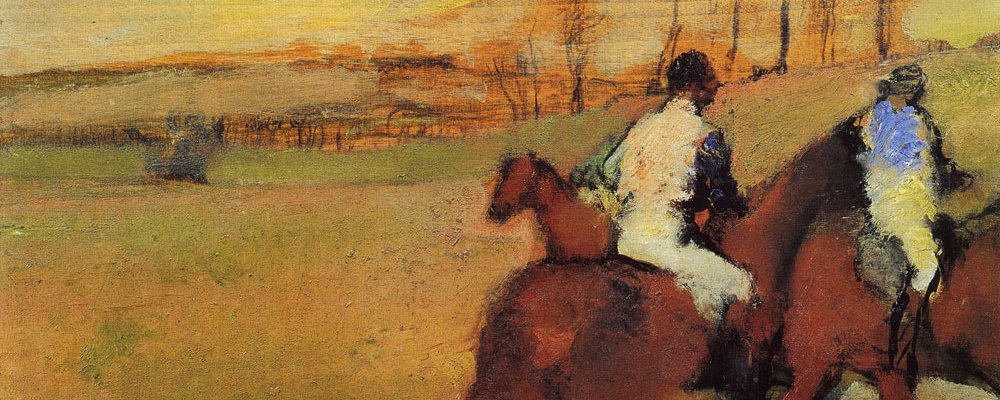
Cover image: Edgar Degas, Horses and Jockeys (ca. 1895)
## 相关链接
- [kepano](https://x.com/kepano)
- [@kepano](https://x.com/kepano)
- [38K](https://x.com/kepano/status/2089785345240129576/analytics)
- [Upgrade to Premium](https://x.com/i/premium_sign_up)
- [2:43 AM · Aug 19, 2026](https://x.com/kepano/status/2089785345240129576)
- [38.6K Views](https://x.com/kepano/status/2089785345240129576/analytics)
- [View quotes](https://x.com/kepano/status/2089785345240129576/quotes)
---
*导出时间: 2026/8/19 09:18:38*
---
## 中文翻译
# 制胜之道,不胜枚举
**作者**: kepano
**日期**: 2026-08-18T18:43:47.000Z
**来源**: [https://x.com/kepano/status/2089785345240129576](https://x.com/kepano/status/2089785345240129576)
---

为什么人们会蜂拥而至?是什么造就了优势、长处和护城河?在高度竞争的环境中,事物如何取胜,或者至少如何生存下来?
生物体、个人、产品、组织、网络——它们都能通过在某些方向上发展强项来战胜竞争者并积累能量。
成功的事物往往在一小部分策略上做到极致,而且这些策略的组合往往独特而罕见。以下是八十种这样的策略,按大类分组,并附有来自生物学和商业领域的例子。
## 积累
- 用户规模:达到临界数量的用户,形成网络效应。例如:电话系统、互联网、规模化社交网络。
- 完整性:一站式工具、一站式商店。例如:瑞士军刀、沃尔玛。
- 聚合:为广泛参与而设计的环境或市场。例如:城市、购物中心、亚马逊、Craigslist。
- 多元化:对任何单一资源来源的依赖度低。例如:大型联合企业、杂食动物。
- 无处不在:在可能被需要的地方随处可得,被默认接受。例如:Visa、可口可乐、蒲公英。
- 克隆:通过复制与自身相同的副本来扩张。例如:白杨林、连锁加盟店、酸面种。
## 价格
- 实惠:相对低成本。例如:大规模生产、快餐、快时尚。
- 奢华:有意定高价,通常劳动密集,或作为身份象征。例如:凡勃伦商品、超级跑车、奢侈腕表。
- 撇取:摄取大量极其微小的交易或资源。例如:信用卡、须鲸、食浮游生物动物。
- 捆绑:与抢手的东西免费打包提供。例如:Microsoft Office、有线电视频道、水果里的种子。
## 时间
- 传承:延续数代的遗产。例如:宗教、老字号企业。
- 匠心:比竞争者投入更多的时间、精度和对细节的关注。例如:手工腕表、高级定制、徕卡。
- 有机生长:无法被加速的自然生长过程。例如:树木、生态系统、陈年奶酪。
- 耐力:能够长时间持续运作的能力。例如:马拉松跑者、核潜艇。
## 独特性
- 专业化:在狭窄细分领域具备强大能力。例如:职业学校、大熊猫。
- 多面手:适应多种任务的综合能力。例如:CPU、对生拇指。
- 杂交:在两个截然不同的领域具备能力,或将两种通常不会同时出现的强项融合。例如:青蛙、可颂甜甜圈、两栖车辆、混合动力汽车。
- 独树一帜:创造力、不寻常、与常规的差异化。例如:梵高、毕加索、弗兰克·盖里。
- 真实性:可追溯到源头,尤其是在假货泛滥的领域。例如:货币、橄榄油、艺术品。
- 稀有:天然数量有限,处于分布曲线的边缘。例如:海滨房产、维克托·文班亚马。
- 稀缺:人为限制数量。例如:收藏品、NFT。
- 保密:通过保护私有知识,或以无法拆解的方式组合各组成部分,使其难以被模仿。例如:魔术师、可口可乐、商业机密。
- 离经叛道:逆向而行、反主流、无视传统。例如:理查德·布兰森、《南方公园》。
## 进攻
- 暴力:通过物理力量摧毁或吞噬对手。例如:军事打击、捕食者。
- 诉讼:通过法律负担削弱对手。例如:专利流氓、诉讼、米老鼠。
- 纠缠:诱使对手犯错。例如:马格努斯·卡尔森、恐怖主义。
- 破坏:在对手的结构或防线上制造弱点。例如:震网病毒、切断海底电缆。
- 寄生:从宿主身上榨取或劫持资源。例如:蚊子、绦虫。
- 食腐:机会主义地摄取垂死或衰弱的猎物。例如:私募股权、秃鹫。
- 谍报:获取敌方机密。例如:间谍。
- 蜂群:由大量个体弱小的代理发起的集中攻击。例如:蜜蜂、DDOS 攻击、虫族 rush。
- 最高出价者:通过支付高价或竞价压倒竞争者以确保独家地位。例如:皇家马德里、软银、艺术品收藏家。
- 咽喉要道:控制竞争者或猎物必经的通道。例如:苏伊士运河、守在瀑布旁的灰熊。
- 操控:接管宿主的行为并使其为自己服务。例如:冬虫夏草、弓形虫。
## 防御
- 威慑:相互确保毁灭,展示动用暴力或诉讼的恐惧。例如:核武器、商标、专利。
- 可靠性:降低维护成本、减少停机时间。例如:Zippo 打火机、丰田汽车。
- 可预测性:偏差极小的可重复流程,从而打造一致的产品或体验。例如:迪士尼乐园、星巴克。
- 不可预测性:制造惊喜、迷惑或变化元素。例如:乌贼墨汁、烟雾弹、班克西、Lady Gaga。
- 去中心化:通过冗余和分布式能力减少单点故障。例如:太阳能、草根运动。
- 安全性:抵抗盗窃、没收和未经授权的访问。例如:银行、金库、锁。
- 隐私:防止不必要的信息泄露。例如:加密通讯应用、VPN。
- 耐用性:身体上的坚固,抗损耗或抗伤害。例如:勒布朗·詹姆斯、铸铁平底锅。
- 中立:展现长期的非交战立场,作为安全避风港。例如:瑞士、红十字会。
- 隐匿:通过保持不为人知或未被察觉而生存。例如:深海生物、闭源软件。
- 反脆弱:在压力或使用中变得更强。例如:BitTorrent、肌肉。
## 欺骗
- 伪装:融入周围环境的能力。例如:变色龙、隐形飞机。
- 拟态:表面模仿另一物种的特征来欺骗对手。例如:模仿毒蛇的无毒蛇。
- 诱饵:分散或误导对手。例如:箔条、假监控摄像头。
- 引诱:通过设置有吸引力的陷阱来捕食其他生物。例如:鮟鱇鱼、蜜罐。
- 渗透:不被察觉地突破防线。例如:特洛伊木马、恶意软件、走私。
## 时机
- 先发:率先行动以获得优势。例如:Netflix、特斯拉。
- 后发:快速跟随者,迅速模仿先行者。例如:Facebook 之于 Snapchat。
- 末发:等到所有对手都在失败尝试上耗尽精力后再出手。例如:苹果。
## 认证
- 垄断:由管理机构批准的对资源或市场的人为控制。例如:专利、监管俘获。
- 声望:获得权威来源通过奖项、学位或其他认可形式的背书。例如:米其林星级餐厅、常春藤盟校毕业生。
- 精选:精挑细选,在选择和组合上的独特能力。例如:艺术画廊、HBO、风险投资。
## 协作
- 联合:通过采纳一套共同规则来减少潜在竞争者之间的摩擦。例如:并购、美利坚合众国、欧洲联盟。
- 结盟:既能获得联合的部分好处又保持独立的伙伴关系。例如:合作伙伴关系。
- 涌现:群体心智、群体智慧。例如:蚁群、蜂巢、民主。
- 集中化:单一决策实体。例如:独裁政权。
- 标准化:减少摩擦的自发性趋同。例如:语言、铁路轨距、公制。
- 共生:两种生物之间互利的依赖关系。例如:两党政治体制、榕小蜂。
- 群聚:多个个体聚集以抵御更庞大或危险的竞争者。例如:行业协会、鱼群。
- 分布式所有权:由社区共同拥有。例如:REI 合作社、绿湾包装工队。
- 透明:开放可见的流程或内部运作,以增进信任。例如:开源软件。
## 速度与规模
- 迭代:快速迭代和改变的能力,缩短改进之间的周期。例如:SpaceX。
- 高效:以更低的能量或资源消耗实现与竞争者相当的能力。例如:LED 灯泡。
- 敏捷:灵活,轻松适应变化的环境。例如:体操运动员、松鼠、卡丁车。
- 精密:在表现或产出上具有极高的准确度和精确度。例如:瑞士腕表、CNC 数控加工。
- 闪电战:突然袭击,以集中的方式投入高强度资源。例如:恶意收购、闪电式营销活动。
- 可组合性:能够以不同配置组装组件和系统的能力。例如:API、Stripe。
- 模块化:由可按不同组合使用的独立单元构成。例如:乐高、预制建筑。
## 易用
- 直观:易于使用和理解,无需明确指导。例如:Dieter Rams 的设计。
- 有趣:提供愉悦和消遣。例如:电子游戏、游乐园、Duolingo。
- 简单:故障点少、极简设计。例如:锤子、无印良品。
- 低摩擦:在使用或交互中阻力或麻烦极小。例如:一键下单。
- 魅力:个人魅力,通过讨喜的个性或美感创造忠诚与温暖。例如:奥普拉·温弗瑞、巴黎。
## 转化
- 可塑性:改变外观或形态的能力,易于被修改或定制。例如:黏土、软件代码、方法派演员。
- 变态发育:在不同功能或环境之间切换形态。例如:毛毛虫→蝴蝶、蝌蚪→青蛙。
- 模仿:复制他人的方法或风格。例如:快时尚、自有品牌。
本文最初写于 2023 年 11 月,发布于我的个人网站。2026 年 8 月更新。
封面图片:埃德加·德加,《骑师与马》(约 1895 年)
## 相关链接
- [kepano](https://x.com/kepano)
- [@kepano](https://x.com/kepano)
- [38K](https://x.com/kepano/status/2089785345240129576/analytics)
- [Upgrade to Premium](https://x.com/i/premium_sign_up)
- [2:43 AM · Aug 19, 2026](https://x.com/kepano/status/2089785345240129576)
- [38.6K Views](https://x.com/kepano/status/2089785345240129576/analytics)
- [View quotes](https://x.com/kepano/status/2089785345240129576/quotes)
---
*导出时间: 2026/8/19 09:18:38*