# How I Invest: The AI-Native VC Investment Firm
**作者**: Andre Retterath | Decoding Outliers
**日期**: 2026-08-23T19:02:40.000Z
**来源**: [https://x.com/AndreRetterath/status/2091602037729276342](https://x.com/AndreRetterath/status/2091602037729276342)
---
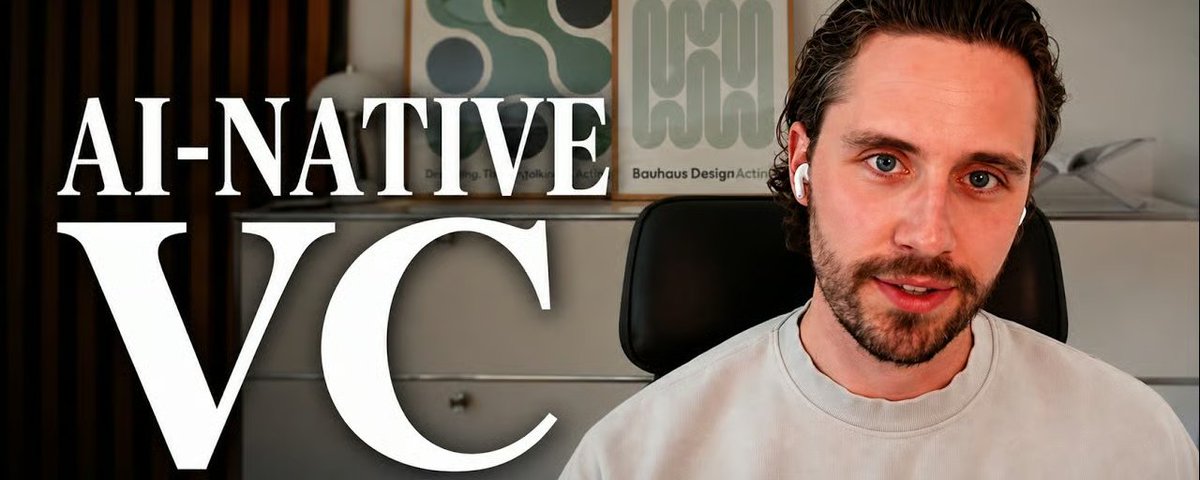
Almost every investment firm says it uses AI. Saying it is easy. Using it is doable. But building your firm around it is a different game. I recently joined David Weisburd on the [How I Invest](https://www.youtube.com/watch?v=LcfIFMbDecA&utm_source=www.newsletter.datadrivenvc.io&utm_medium=newsletter&utm_campaign=how-i-invest-the-ai-native-vc-firm)[ podcast](https://www.youtube.com/watch?v=LcfIFMbDecA&utm_source=www.newsletter.datadrivenvc.io&utm_medium=newsletter&utm_campaign=how-i-invest-the-ai-native-vc-firm) for an honest conversation about exactly this: what we learned over almost a decade of transforming Earlybird into an increasingly AI-native investment platform. We discussed power laws, founder selection, portfolio construction, sourcing automation, proprietary data, change management and where VC alpha will actually come from when everyone has access to the same AI models. For everyone who doesn’t want to spend the full 90 minutes, I extracted seven key takeaways. Let’s dive in.
## 1. The Biggest Mistake in VC Is Often the Company You Didn’t Invest In
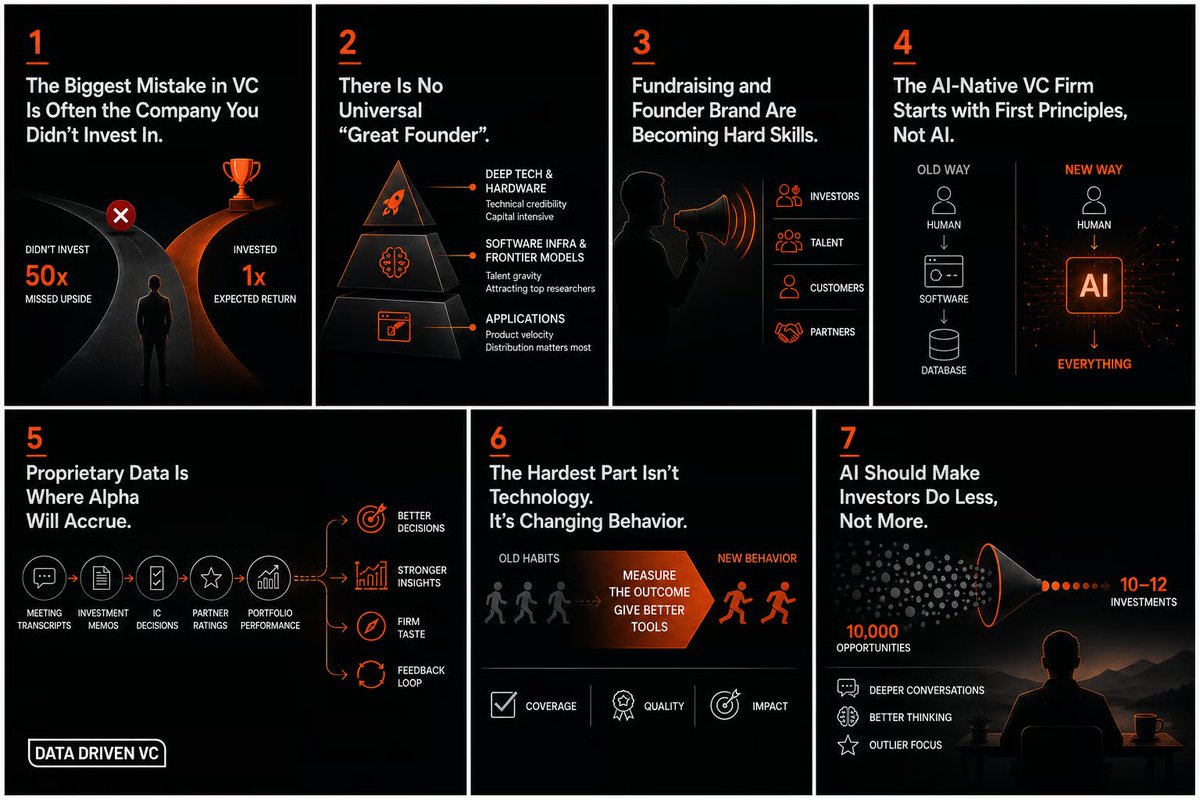
Venture capital has a strange error function. If you invest €1M into a startup and it fails, you lose €1M. If you don’t invest €1M into a company that would have returned 50x, you effectively miss €50M of potential upside. That asymmetry matters because venture follows an extreme power law. A tiny percentage of companies generate the overwhelming majority of returns. It means false negatives are incredibly expensive. This also helps explain one of the industry's biggest contradictions. Venture capital was created to finance unconventional businesses that traditional capital providers wouldn't touch. Yet investors increasingly cluster around the same companies. Why? Everyone knows they cannot afford to miss the outlier. So when Fund A looks at a company, Fund B suddenly wants to look as well. When a famous investor joins a round, everyone pays attention. FOMO becomes rational. But following consensus is also dangerous because some of the best investments initially look anything but obvious. Earlybird invested in UiPath out of Romania in 2015. Our Romanian Partner Dan Lupu led the seed round when raising money for the company was still difficult. Six years later, UiPath went public at roughly $33B. The opportunity was exceptional precisely because it wasn't yet consensus. The challenge is therefore to do two things simultaneously: Don't miss the obvious winners. Find the non-obvious winners before everyone else does. And this also means studying your anti-portfolio. One example we discussed was Lovable. We saw the company at pre-seed and passed partly because the roughly 8% ownership available was below our fund target of around 15%. In hindsight, that was incredibly expensive. At their recent [$13bn](https://x.com/search?q=%2413bn&src=cashtag_click) valuation, the investment would’ve likely returned north of 50x and potentially become a fund-returning investment by itself. The lesson isn't to ignore valuation or ownership. It's to continuously ask whether your investment rules are helping you find outliers; or systematically filtering them out.
## 2. There Is No Universal “Great Founder”
VCs love lists of founder characteristics. Relentless. Intelligent. Ambitious. Resilient. Obsessive. They're useful, but they miss something important: The ideal founder depends enormously on what they're building. At Earlybird, we roughly think about the technology stack across three layers:
- Deep Tech & Hardware
- Software Infrastructure & Frontier Models
- Applications.
At the Deep Tech layer, technical credibility is critical. Can the founders bring research into production? Do they understand manufacturing, supply chains and process engineering? At the frontier AI layer, something else becomes particularly important: talent gravity. If you're building a world model, foundation model or specialized AI infrastructure, there might only be a few dozen exceptional researchers globally for what you're doing. Can your CEO or CTO convince those people to join? At the application layer, the weighting changes again. Building software has become dramatically cheaper. You can increasingly prototype products over a weekend. Capital therefore matters less initially, while product velocity, customer understanding and distribution matter more. One framework I like is: The deeper you sit in the technology stack, the more important capital becomes. The higher you sit in the stack, the more important distribution becomes. A rocket company needs significant capital before it can even prove the technology works. An AI application might reach its first million in ARR before raising meaningful external capital. Same asset class. Completely different founder requirements.
## 3. Fundraising and Founder Brand Are Becoming Hard Skills
One particularly interesting pattern from startup data is that companies raising early rounds at higher valuations and lower dilution often continue doing so in subsequent rounds. One explanation is simple: Fundraising is a skill. And the underlying skill transfers.
Great CEOs sell a vision. They sell it to investors to attract capital. They sell it to exceptional employees to attract talent. They sell it to customers. They sell it to partners. This is particularly important for capital-intensive companies where access to funding can itself become a competitive advantage. But the same underlying capability increasingly shows up somewhere else: founder branding. Five years ago, personal brand wasn't something we thought much about in our research. Today, look at many of the fastest-growing technology companies. Their founders often have strong public identities. That's not necessarily vanity. I think of founder branding as scalable vision-selling. Instead of explaining your mission individually to every candidate, investor and customer, you package that vision and distribute it to thousands or millions of people. And this becomes more important as building gets cheaper. If 50 teams can build technically similar AI products, differentiation increasingly moves toward distribution, talent, speed and brand. In that environment, founder brand becomes part of the company's infrastructure.
## 4. The AI-Native VC Firm Starts with First Principles, Not AI
When I joined Earlybird in 2017, I encountered something that surprised me. Some of the smartest people I'd ever met were spending enormous amounts of time doing repetitive manual work. One of our founding partners once gave me a conference attendee list with around 400 people and asked: Who should I meet? I spent days searching Crunchbase, LinkedIn, Xing and our CRM before producing a prioritized list. And I remember thinking: Why is a human doing this? The same question applied everywhere. Researching companies. Finding introductions. Updating CRM systems. Preparing meetings. Creating competitive landscapes. Writing investment memos. So I started building tools for myself. First simple automations. Then knowledge graphs representing our network. Then sourcing systems and recommendation engines. Eventually we hired our first full-time engineer. At the peak, Earlybird had eight engineers, representing roughly 20% of our team, building the fundamental infrastructure. Today, three senior engineers continue developing on top of it. But the important lesson is that we didn't start by asking: “Where can we use AI?” We asked: “If we built an investment firm from scratch today, how should it work?” That's a very different starting point. Today, AI touches almost every part of our workflow. A portfolio company receives a term sheet? Benchmark it against historical term sheets. Founder meeting in 15 minutes? Automatically generate a briefing containing our previous interactions, company background, traction, competitive landscape, recent news and relevant questions. Need an investment memo? Generate a first version based on our existing knowledge and the structure of more than 1,000 historical memos. Need a presentation? Take a transcript and generate a deck in Earlybird's CI. The interface itself is changing. For years, data-driven VC meant building dashboards. I increasingly believe the dashboard is dying. The future interface is conversational. Instead of: Human → Software → Database we increasingly move toward: Human → AI → Everything.
## 5. Proprietary Data Is Where Alpha Will Accrue
This leads to perhaps the most important question David asked me: If every VC has access to the same AI models, where does alpha come from Everyone can use ChatGPT, Claude or Gemini. Everyone can buy PitchBook, Dealroom or Harmonic. Public information and foundation models are increasingly commoditized. So differentiation moves somewhere else: proprietary data. And by proprietary data, I don't necessarily mean some secret external dataset. I mean your own institutional exhaust. Meeting transcripts. Investment memos. IC decisions. Partner ratings. Rejection reasons. Founder interactions. Portfolio performance. At Earlybird, for example, we introduced a structured post-investment-committee survey in 2018. Participants rate dimensions such as market, product and team and record whether they would make the investment. Over time, you can connect those judgments to actual outcomes. Suddenly you can ask:
- Which partners are unusually good at evaluating teams?
- Where are we systematically too pessimistic?
- Which characteristics correlate with our best investments?
- What does an “Earlybird company” actually look like?
Eventually, you can begin to codify the firm's taste. Imagine scoring every startup on two dimensions: Probability of success × Fit with Earlybird. Now add a feedback loop. An investor rejects a company and labels why. A meeting gets transcribed. New information enters the system. Portfolio performance provides another signal. The recommendation engine continuously improves. The end state could look surprisingly simple: I wake up and the most relevant founder meetings are already in my calendar. Fifteen minutes before each one, I receive the briefing. The meeting is automatically captured. My feedback flows back into the system. Tomorrow's recommendations improve again. That's where I believe AI can generate real investment alpha. Not because an LLM magically becomes the world's best investor. Because the investment system starts compounding institutional knowledge.
## 6. The Hardest Part Isn't Technology. It's ...
Read the full article via my free newsletter Data Driven VC here: [https://www.newsletter.datadrivenvc.io/p/how-i-invest-the-ai-native-vc-firm](https://www.newsletter.datadrivenvc.io/p/how-i-invest-the-ai-native-vc-firm)
## 相关链接
- [Andre Retterath | Decoding Outliers](https://x.com/AndreRetterath)
- [@AndreRetterath](https://x.com/AndreRetterath)
- [1.3K](https://x.com/AndreRetterath/status/2091602037729276342/analytics)
- [How I Invest](https://www.youtube.com/watch?v=LcfIFMbDecA&utm_source=www.newsletter.datadrivenvc.io&utm_medium=newsletter&utm_campaign=how-i-invest-the-ai-native-vc-firm)
- [podcast](https://www.youtube.com/watch?v=LcfIFMbDecA&utm_source=www.newsletter.datadrivenvc.io&utm_medium=newsletter&utm_campaign=how-i-invest-the-ai-native-vc-firm)
- [$13bn](https://x.com/search?q=%2413bn&src=cashtag_click)
- [https://www.newsletter.datadrivenvc.io/p/how-i-invest-the-ai-native-vc-firm](https://www.newsletter.datadrivenvc.io/p/how-i-invest-the-ai-native-vc-firm)
- [Upgrade to Premium](https://x.com/i/premium_sign_up)
- [3:02 AM · Aug 24, 2026](https://x.com/AndreRetterath/status/2091602037729276342)
- [1,335 Views](https://x.com/AndreRetterath/status/2091602037729276342/analytics)
---
*导出时间: 2026/8/24 09:07:24*
---
## 中文翻译
# 我的投资之道:AI原生风投公司
**作者**: Andre Retterath | Decoding Outliers
**日期**: 2026-08-23T19:02:40.000Z
**来源**: [https://x.com/AndreRetterath/status/2091602037729276342](https://x.com/AndreRetterath/status/2091602037729276342)
---

几乎每家投资公司都说自己在使用AI。说说很容易,用起来也可行,但围绕AI来构建整个公司则是另一回事。我最近与David Weisburd一起做客 [How I Invest](https://www.youtube.com/watch?v=LcfIFMbDecA&utm_source=www.newsletter.datadrivenvc.io&utm_medium=newsletter&utm_campaign=how-i-invest-the-ai-native-vc-firm)[ 播客](https://www.youtube.com/watch?v=LcfIFMbDecA&utm_source=www.newsletter.datadrivenvc.io&utm_medium=newsletter&utm_campaign=how-i-invest-the-ai-native-vc-firm),坦诚地聊了正是这个话题:在将近十年间将Earlybird转型为日益AI原生的投资平台的过程中,我们学到了什么。我们讨论了幂律法则、创始人筛选、投资组合构建、项目搜寻自动化、专有数据、变革管理,以及当每个人都能使用相同的AI模型时,风投的超额收益(alpha)究竟会来自哪里。对于不想花整整90分钟的人,我提炼了七个关键要点。让我们开始吧。

## 1. 风投最大的错误往往是你没有投资的公司
风险投资有一个奇怪的误差函数。如果你向一家初创公司投资100万欧元而它失败了,你损失100万欧元。但如果你没有向一家本可以带来50倍回报的公司投资100万欧元,你实际上错失了5000万欧元的潜在收益。这种不对称性很重要,因为风投遵循极端的幂律分布。极小比例的公司创造了绝大多数的回报。这意味着“漏掉好项目”(假阴性)的代价极其高昂。这也解释了行业内最大的矛盾之一。风险投资的本意是为传统资本提供方不愿触碰的非传统业务提供资金,然而投资者却越来越多地聚集到同样的公司上。为什么?因为每个人都知道自己承受不起错过异常值(outlier)的代价。所以当基金A考察一家公司时,基金B突然也想看看。当一位知名投资人加入某轮融资时,所有人都开始关注。FOMO(错失恐惧)变成了理性行为。但随大流也很危险,因为一些最好的投资最初看起来毫不显眼。Earlybird在2015年投资了来自罗马尼亚的UiPath。我们的罗马尼亚合伙人Dan Lupu主导了种子轮,当时为这家公司融资还很困难。六年后,UiPath以约330亿美元的估值上市。这个机会之所以 exceptional,正是因为它当时还不是共识。因此,挑战在于同时做到两件事:不错过显而易见的赢家;在所有人之前找到非显而易见的赢家。这也意味着要研究你的“反投资组合”(anti-portfolio)。我们讨论的一个例子是Lovable。我们在pre-seed阶段见过这家公司,没有投资的部分原因是约8%的可获得持股比例低于我们基金约15%的目标。事后看来,这代价极其高昂。按其最近的[130亿美元](https://x.com/search?q=%2413bn&src=cashtag_click)估值计算,这笔投资很可能带来超过50倍的回报,甚至可能仅凭一笔投资就收回整个基金。教训不是要忽视估值或持股比例,而是要不断追问:你的投资规则是在帮你发现异常值,还是在系统性地把它们过滤掉。
## 2. 不存在普适的“优秀创始人”
风投喜欢罗列创始人特质清单:坚韧不拔、聪明、雄心勃勃、抗压、执着。这些清单有用,但漏掉了重要的一点:理想的创始人在很大程度上取决于他们在做什么。在Earlybird,我们大致将技术栈分为三层:
- 深科技与硬件
- 软件基础设施与前沿模型
- 应用
在深科技层,技术信誉至关重要。创始人能否将研究成果落地到生产?他们是否理解制造、供应链和工艺工程?在前沿AI层,另一个因素变得尤为重要:人才引力。如果你在构建世界模型、基础模型或专业AI基础设施,全球可能只有几十位能胜任的杰出研究者。你的CEO或CTO能说服这些人加入吗?在应用层,权重又发生了变化。构建软件的成本已大幅下降,你越来越多地可以在一个周末内做出产品原型。因此资本在早期的重要性降低了,而产品迭代速度、对客户的理解和分销变得更重要。我喜欢的一个框架是:在技术栈中越靠底层,资本越重要;越靠上层,分销越重要。一家火箭公司在证明技术可行之前就需要巨额资本,而一个AI应用可能在筹集可观外部资本之前就达到第一个100万ARR。同样的资产类别,对创始人的要求却完全不同。
## 3. 融资和创始人品牌正在成为硬技能
初创公司数据中一个特别有趣的模式是:在早期轮次中以更高估值、更低稀释融资的公司,往往在后续轮次中也能持续如此。一个简单的解释是:融资是一项技能,而且这项技能是可以迁移的。
优秀的CEO善于推销愿景。他们向投资人推销以吸引资本,向杰出人才推销以吸引他们加入,向客户推销,向合作伙伴推销。这对资本密集型公司尤其重要,因为获得资金本身就能成为竞争优势。但同样的底层能力也越来越多地体现在另一个地方:创始人品牌。五年前,我们在研究中并不太关注个人品牌。今天,看看许多增长最快的科技公司,它们的创始人往往拥有强大的公众身份。这未必是虚荣。我把创始人品牌视为“可规模化的愿景推销”。你不必向每一位候选人、投资人和客户逐一解释你的使命,而是将愿景打包,分发给成千上万乃至数百万人。随着构建成本下降,这变得更加重要。如果有50个团队都能构建技术上相似的AI产品,差异化就越来越转向分销、人才、速度和品牌。在这种环境下,创始人品牌成为公司基础设施的一部分。
## 4. AI原生风投公司从第一性原理出发,而不是从AI出发
我2017年加入Earlybird时,遇到了令我惊讶的事情:一些我见过的最聪明的人,却在大量时间做重复性的手工工作。我们的一位创始合伙人曾给我一份约400人的会议参会者名单,问我:我应该见谁?我花了好几天搜索Crunchbase、LinkedIn、Xing和我们的CRM,才产出一份排好序的名单。我记得当时在想:为什么是个人在做这件事?同样的问题无处不在:调研公司、寻找介绍人脉、更新CRM系统、准备会议、制作竞争格局图、撰写投资备忘录。于是我开始为自己构建工具。起初是简单的自动化,然后是代表我们人脉网络的知识图谱,再然后是项目搜寻系统和推荐引擎。最终我们雇佣了第一位全职工程师。在高峰期,Earlybird拥有八名工程师,约占团队的20%,构建基础的基础设施。如今,三位资深工程师仍在持续开发。但重要的教训是:我们不是从“哪里可以用AI”这个问题出发,而是问“如果今天从零开始建一家投资公司,它应该如何运作?”这是截然不同的起点。如今,AI几乎触及我们工作流的每个环节。被投公司收到条款清单?让它与历史条款清单做对标。15分钟后有创始人会议?自动生成一份简报,包含我们以往的互动、公司背景、业务进展、竞争格局、近期新闻和相关问题。需要投资备忘录?基于我们已有的知识和超过1000份历史备忘录的结构生成初版。需要演示文稿?拿一份会议记录,生成一份Earlybird品牌风格的幻灯片。界面本身也在变化。多年来,数据驱动的风投意味着构建仪表盘。我越来越相信仪表盘正在消亡,未来的界面是对话式的。我们正从“人 → 软件 → 数据库”越来越多地走向“人 → AI → 一切”。
## 5. 专有数据是超额收益的累积之处
这引出了David问我的也许是最重要的问题:如果每个风投都能使用同样的AI模型,alpha从哪里来?每个人都能用ChatGPT、Claude或Gemini,每个人都能买到PitchBook、Dealroom或Harmonic。公共信息和基础模型正日益商品化。因此差异化转移到了别处:专有数据。所谓专有数据,我不一定是指某个隐秘的外部数据集,而是指你自己的机构“排放物”:会议记录、投资备忘录、投委会决策、合伙人评分、拒绝原因、创始人互动、投资组合表现。例如在Earlybird,我们于2018年引入了结构化的投委会后调查。参与者对市场、产品、团队等维度进行评分,并记录他们是否会进行该投资。随着时间推移,你可以将这些判断与实际结果关联起来。突然之间,你可以提出这些问题:
- 哪些合伙人在评估团队方面异常出色?
- 我们在哪些方面系统性过于悲观?
- 哪些特征与我们最成功的投资相关?
- 一家“Earlybird型公司”究竟长什么样?
最终,你可以开始将机构的品味代码化。想象一下在两个维度上为每家初创公司打分:成功概率 × 与Earlybird的契合度。再加上一个反馈闭环:投资人拒绝一家公司并标注原因;会议被自动记录;新信息进入系统;投资组合表现提供另一个信号。推荐引擎持续改进。最终状态可能出奇地简单:我早上醒来,最相关的创始人会议已在我的日历上;每场会议前15分钟,我收到简报;会议被自动记录;我的反馈回流到系统;明天的推荐再次改进。我相信这才是AI能创造真正投资alpha的地方——不是因为大模型神奇地变成了世界上最优秀的投资人,而是因为投资系统开始让机构知识复利增长。
## 6. 最难的部分不是技术,而是……
请通过我的免费通讯 Data Driven VC 阅读完整文章:[https://www.newsletter.datadrivenvc.io/p/how-i-invest-the-ai-native-vc-firm](https://www.newsletter.datadrivenvc.io/p/how-i-invest-the-ai-native-vc-firm)
## 相关链接
- [Andre Retterath | Decoding Outliers](https://x.com/AndreRetterath)
- [@AndreRetterath](https://x.com/AndreRetterath)
- [1.3K](https://x.com/AndreRetterath/status/2091602037729276342/analytics)
- [How I Invest](https://www.youtube.com/watch?v=LcfIFMbDecA&utm_source=www.newsletter.datadrivenvc.io&utm_medium=newsletter&utm_campaign=how-i-invest-the-ai-native-vc-firm)
- [podcast](https://www.youtube.com/watch?v=LcfIFMbDecA&utm_source=www.newsletter.datadrivenvc.io&utm_medium=newsletter&utm_campaign=how-i-invest-the-ai-native-vc-firm)
- [$13bn](https://x.com/search?q=%2413bn&src=cashtag_click)
- [https://www.newsletter.datadrivenvc.io/p/how-i-invest-the-ai-native-vc-firm](https://www.newsletter.datadrivenvc.io/p/how-i-invest-the-ai-native-vc-firm)
- [Upgrade to Premium](https://x.com/i/premium_sign_up)
- [3:02 AM · Aug 24, 2026](https://x.com/AndreRetterath/status/2091602037729276342)
- [1,335 Views](https://x.com/AndreRetterath/status/2091602037729276342/analytics)
---
*导出时间: 2026/8/24 09:07:24*