# Why Service Businesses Win the Next Decade
**作者**: Finlay
**日期**: 2026-10-22T22:33:57.000Z
**来源**: [https://x.com/finlayekins/status/2113398480727425528](https://x.com/finlayekins/status/2113398480727425528)
---
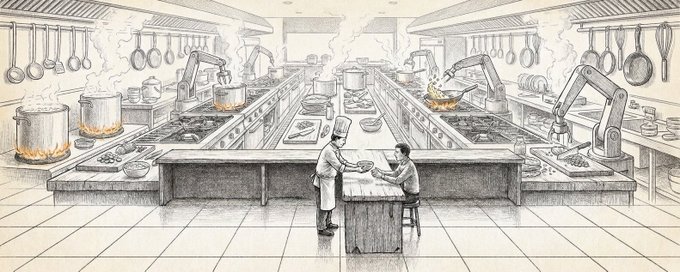
For the last twenty years, the startup path was simple: raise VC money, build software, find product-market fit, scale. Services businesses never fit the model. Services meant the customer needed something custom which involves human labour. Hence to scale a services business, you also needed to scale headcount, which didn't create the outsized leveraged returns required to live in startup land.
AI flipped this.
Software can now adapt to each user, with AI shaping the interface, meaning products can now take the job of some services. On the other side, services businesses can now have their admin and ops run by agents, meaning services can become productised (think an AI-native accounting firm). On either side, this means custom solutions can be built in a faster and more repeatable way.
Overall, this unlocks a new kind of business: a hybrid that looks like a service from the outside but runs mostly like a product - a productised service.
I'm betting on this as the next low-risk way to build a $50M+ company. I started Hourglass AI last year at 21. We sell outcomes, not software. We're bootstrapped, always profitable, and this year we had our first $100k month.
Everyone my age keeps hearing that AI is taking their grad job. I think there's never been a better time to start a business yourself. We've landed in the biggest technology boom the world has ever seen, and this is the type of business that lets anyone capitalise on it.
## Software Is Becoming a Service
For twenty years, software asked you to learn it. You bought the tool, sat through the onboarding, and bent your business around how it worked. Most people had 'proficient in Excel' on their resume.
When intelligence is basically unlimited, the product can learn you instead: your business, your systems, your context. The interface reshapes itself around how you work. It is now dead simple to clone even the most complex software using AI. This is not dissimilar to the idea of a software factory - where you can now turn a customer's intent into custom software quickly. When the software itself is cheap to copy, what's left to sell is the result.
This also benefits the consumer - no one wants another tool. They want something that works for them, and someone accountable when it doesn't.
## Services Are Becoming Software
At the same time, the other side is moving. When AI does most of the work, a service stops scaling with headcount. The first time you deliver something for a client, it's entirely custom. The fifth time, you notice most of it's the same, and build a recipe. The difference now is that with AI you can productise that recipe: the playbooks, the workflows, the verification steps. This now becomes the product behind your business and its moat is your distribution and all the learnings and failures it took to get there.
This leaves the team to focus on the human side, and also to push the boundaries of the business with new creative ventures.
Some people are calling this a software factory: turning a client's intent into a repeatable, custom software layer, fast. The customer still gets something built around them. You just aren't building it from scratch every time.
## The Hybrid Model
So software is moving towards services, and services are moving towards software. We are now at a stage where all businesses are converging to have some layer of service to them.
This business looks like a service to the customer. They talk to a human, they get exactly what they want, built to their needs. Internally, however, the process runs like a product - a machine that spits out value. As Sequoia pointed out:
> "For every dollar spent on software, six are spent on services."
This is a very big deal. The prize for business owners isn't the software budget, but the labour budget. Or, as they predict:
> "The next $1T company will be a software company masquerading as a services firm."
A services business already owns the customer relationship and the outcome, it only has to productise the delivery.
## Growth Over Cuts
Every week you hear in the news that jobs are being lost to AI. This implies that since AI makes things more efficient, you then cut people or resources. I heard Jensen Huang talk at Stanford in April, and he made it really clear to me why this is BS, with Nvidia being the example.
Say the company writes a billion lines of code in a year. Now, with AI, it can write that in one month instead. The job-cut story assumes they'll now do the same amount of work with a tenth of the people. Instead, he argued the obvious thing for them to do is write twelve billion lines of code a year and make far more revenue. His message to young people was basically: if you're willing to go all in on AI, there's more room for you than ever.
That's where the demand for these hybrid service businesses is coming from. As Niki Scevak from Blackbird put it:
> "If you improve someone's revenue, you get reflexive demand. If you save someone costs, you do not."
## Are Productised Services Lucrative?
The usual pushback against services is that they're less scalable and therefore less lucrative than software-based product businesses. Services firms trade at a fraction of software multiples, because they scale with people and their margins are thin.
This isn't true of fully AI-native productised service businesses. When most of the delivery is productised, every new client costs a fraction of the last one, and the margins start to look like software. That's the whole point of the convergence: you keep the service relationship and get product economics.
Further, if you never sell the business, it will be cash-generating and profitable. The same can't be said for most software product businesses, which often require initial capital investment, and therefore a large exit to make it worthwhile for investors.
## Why It's the Best First Business
If you're young and savvy with AI, I think this is the most risk-adjusted way to start a company right now:
- You get paid straight away. Your first client pays you for work you can already do.
- You're profitable from day one. You pay yourself out of the business, not from savings.
- You own all of it. No investors or board required.
- You find out what you actually want. Nobody knows what they want to do at 21. A service lets you figure it out and continually pivot whilst getting paid to learn.
The playbook is simple yet hard to do. To start, pick one niche skill you enjoy, sell the outcome to one client and deliver it yourself. Do it a few more times, learn what survives contact with real businesses, then get agents to do it. When you hit the ceiling of what you can do alone, if possible, combine forces with someone who has deep expertise and connections in the industry you're going after.
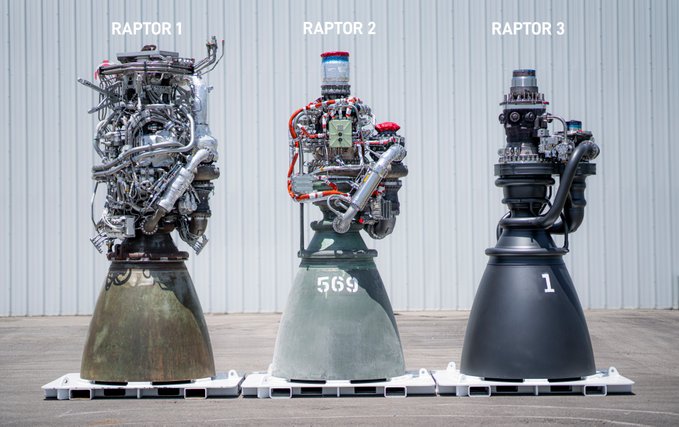
3 versions of the SpaceX Raptor Engine over time
First you must make it exist, then you can make it beautiful.
## Where This Goes
Once the business earns the right to exist, the creative part opens up. For us, that might mean acquiring businesses and rebuilding them around AI.
Another cool opportunity we see is to create an ecosystem so other young people can start these types of businesses. We already have AI expertise, playbooks and distribution to help them flourish.
Software is becoming a service, services are becoming software, and the businesses that meet in the middle will win the next decade.
If you want the playbooks I use to run Hourglass, they're open source → thehourglass.ai/finlay.
## 相关链接
- [Finlay](https://x.com/finlayekins)
- [@finlayekins](https://x.com/finlayekins)
- [55K](https://x.com/finlayekins/status/2113398480727425528/analytics)
- [As Sequoia pointed out](https://sequoiacap.com/article/services-the-new-software)
- [thehourglass.ai/finlay](https://thehourglass.ai/finlay)
- [Upgrade to Plus](https://x.com/i/premium_sign_up)
- [6:33 AM · Oct 23, 2026](https://x.com/finlayekins/status/2113398480727425528)
- [55K Views](https://x.com/finlayekins/status/2113398480727425528/analytics)
- [View quotes](https://x.com/finlayekins/status/2113398480727425528/quotes)
---
*导出时间: 2026/10/26 10:09:47*
---
## 中文翻译
# 为什么服务型企业将赢得下一个十年
**作者**: Finlay
**日期**: 2026-10-22T22:33:57.000Z
**来源**: [https://x.com/finlayekins/status/2113398480727425528](https://x.com/finlayekins/status/2113398480727425528)
**阅读**: 55037
**点赞**: 206
**转发**: 17
**回复**: 11
---

过去二十年,创业的路径很简单:融资、开发软件、找到产品市场契合点、规模化。服务型企业从来不符合这个模式。服务意味着客户需要定制化的东西,而这涉及人力劳动。因此,要规模化服务型企业,你还需要扩大员工人数,这无法创造生活在创业圈所需的巨大杠杆回报。
AI 改变了这一切。
如今软件可以适应每一位用户,由 AI 塑造交互界面,这意味着产品可以接管部分服务工作。另一方面,服务企业的行政和运营工作现在可以由智能体来处理,这意味着服务可以被产品化(想象一家 AI 原生的会计师事务所)。无论从哪一边看,这都意味着定制化解决方案可以以更快、更可复制的方式构建。
总体而言,这催生了一种新型企业:一种从外部看像服务、但运营方式主要像产品的混合体——产品化服务。
我押注这是下一个低风险打造 5000 万美元以上公司的方式。我去年 21 岁时创立了 Hourglass AI。我们出售的是结果,而不是软件。我们是自筹资金起步的,始终盈利,今年我们迎来了第一个月收入 10 万美元的月份。
我这个年纪的人总是听说 AI 会抢走他们的毕业生工作。我认为现在是自主创业的最好时机。我们恰逢世界有史以来最大的科技繁荣,而这种类型的企业让任何人都能从中获益。
## 软件正在变成服务
二十年来,软件要求你去学习它。你购买了工具,经历了入职培训,并围绕它的运作方式调整自己的业务。大多数人的简历上都写着“熟练使用 Excel”。
当智能基本上是无限的时候,产品可以反过来学习你:你的业务、你的系统、你的背景。交互界面会围绕你的工作方式自我重塑。现在用 AI 克隆哪怕最复杂的软件也变得极其简单。这与“软件工厂”的概念颇为相似——你可以快速将客户的意图转化为定制软件。当软件本身可以低成本复制时,剩下可以出售的就是结果。
这也让消费者受益——没有人想要再多一个工具。他们想要对他们有效的东西,以及当它不奏效时有人对此负责。
## 服务正在变成软件
与此同时,另一端也在发生转变。当 AI 完成大部分工作时,服务就不再随员工人数而扩张。第一次为客户交付成果时,它是完全定制的。到第五次时,你会发现大部分内容都是一样的,于是你构建了一个“配方”。现在的不同之处在于,借助 AI,你可以将这个配方产品化:操作手册、工作流程、验证步骤。这成为你业务背后的产品,其护城河是你的分发渠道,以及走到这一步所积累的所有经验和失败教训。
这让团队能够专注于人性的一面,也可以通过新的创意尝试来拓展业务的边界。
有人把这称为软件工厂:快速将客户的意图转化为可复制的定制软件层。客户依然能得到围绕自己需求打造的东西。只是你不必每次都从零开始构建。
## 混合模式
所以软件正在走向服务,服务正在走向软件。我们现在正处于一个所有企业都在趋向于拥有某种服务层的阶段。
这种企业对客户来说看起来像服务。他们与真人交流,得到完全符合自己需求的东西。但在内部,流程像产品一样运作——一台源源不断输出价值的机器。正如红杉资本指出的:
> “每在软件上花费一美元,就有六美元花费在服务上。”
这是件大事。企业主的奖金不是软件预算,而是劳动力预算。或者,正如他们所预测的:
> “下一家万亿美元公司将是一家伪装成服务公司的软件公司。”
服务型企业已经拥有客户关系和交付成果,它只需要将交付过程产品化。
## 增长优于裁员
每周你都会在新闻中听到工作正被 AI 取代。这暗示着,既然 AI 让事情变得更高效,你就应该裁员或削减资源。我四月份听过黄仁勋在斯坦福大学的演讲,他让我非常清楚地认识到这种说法为什么是无稽之谈,Nvidia 就是例证。
假设该公司一年编写十亿行代码。现在,借助 AI,它可以在一个月内完成。裁员的故事假设他们现在会用十分之一的人做同样多的工作。相反,他认为对他们来说显而易见的做法是每年编写一百二十亿行代码,创造多得多的收入。他给年轻人的信息基本上是:如果你愿意全力投入 AI,你拥有的空间比以往任何时候都大。
这就是这些混合服务型企业需求的来源。正如 Blackbird 的 Niki Scevak 所说:
> “如果你提升某人的收入,你会获得反射性需求。如果你帮某人节省成本,则不会。”
## 产品化服务有利可图吗?
对服务业务的常见质疑是,与基于软件的产品企业相比,它们可扩展性较差,因此利润也较低。服务公司的估值倍数只是软件公司的一小部分,因为它们随人员扩张,利润率微薄。
但对于完全 AI 原生的产品化服务企业来说,情况并非如此。当大部分交付被产品化后,每新增一个客户的成本只是上一个客户的一小部分,利润率开始向软件靠拢。这正是这种融合的全部意义:你保留了服务关系,同时获得了产品经济学。
此外,如果你从不出售企业,它将持续产生现金流并保持盈利。大多数软件产品企业则不然,它们往往需要初始资本投入,因此需要一次大规模退出才能让投资者觉得值得。
## 为什么它是最佳的首次创业选择
如果你年轻且精通 AI,我认为这是目前风险调整后最优的创业方式:
- 你能立刻获得报酬。你的第一个客户会为你已经能做的工作付费。
- 你从第一天起就盈利。你从业务中支付自己,而不是靠积蓄生活。
- 你拥有全部。不需要投资者或董事会。
- 你能发现自己真正想要什么。没有人在 21 岁时知道自己想做什么。服务业务让你可以边赚钱边摸索,并不断调整方向。
这套打法简单却难以执行。首先,选择一项你喜欢的小众技能,把成果卖给一个客户并亲自交付。多重复几次,了解哪些东西在接触真实业务后依然成立,然后让智能体来完成。当你触及个人能力的上限时,如果可能的话,与在你目标行业拥有深厚专业知识和人脉的人联手。

SpaceX 猛禽发动机随时间演变的三代版本
首先你必须让它存在,然后你才能让它变得完美。
## 未来走向
一旦企业赢得了存在的权利,创造性的部分就打开了。对我们来说,这可能意味着收购企业并围绕 AI 进行重构。
我们看到的另一个很棒的机会是创建一个生态系统,让其他年轻人也能创办这类企业。我们已经拥有 AI 专业知识、操作手册和分发渠道来帮助他们成长。
软件正在变成服务,服务正在变成软件,而在中间相遇的企业将赢得下一个十年。
如果你想要我用来运营 Hourglass 的操作手册,它们是开源的 → thehourglass.ai/finlay。
## 相关链接
- [Finlay](https://x.com/finlayekins)
- [@finlayekins](https://x.com/finlayekins)
- [55K](https://x.com/finlayekins/status/2113398480727425528/analytics)
- [As Sequoia pointed out](https://sequoiacap.com/article/services-the-new-software)
- [thehourglass.ai/finlay](https://thehourglass.ai/finlay)
- [Upgrade to Plus](https://x.com/i/premium_sign_up)
- [6:33 AM · Oct 23, 2026](https://x.com/finlayekins/status/2113398480727425528)
- [55K Views](https://x.com/finlayekins/status/2113398480727425528/analytics)
- [View quotes](https://x.com/finlayekins/status/2113398480727425528/quotes)
---
*导出时间: 2026/10/26 10:09:47*