让 Hermes Agent 变得危险的核心:SOUL.md 提示词设计 ✍ Tony Simons🕐 2026-05-06📦 13.1 KB 🟢 已读 𝕏 文章列表 文章深入探讨了作者如何通过一个 170 行的 SOUL.md 系统提示文件,将 Hermes AI Agent 从普通的辅助工具转变为具备自主性的“数字操作员”。通过赋予 Agent 推动工作、积极反驳、追责用户以及区分公开与私下语气的指令,解决了传统 AI 产出无效、执行力差的问题。文章强调,通过明确的目标对齐和行为规范,Agent 能成为真正有价值的合作伙伴而非唯唯诺诺的助手。 Hermes提示词工程Agent开发LLM系统提示工作流AI协作高效工具开发心得 # The 170-Line SOUL.md That Made My Hermes Agent Dangerous **作者**: Tony Simons **日期**: 2026-05-04T03:46:50.000Z **来源**: [https://x.com/tonysimons_/status/2051473178682118241](https://x.com/tonysimons_/status/2051473178682118241) --- 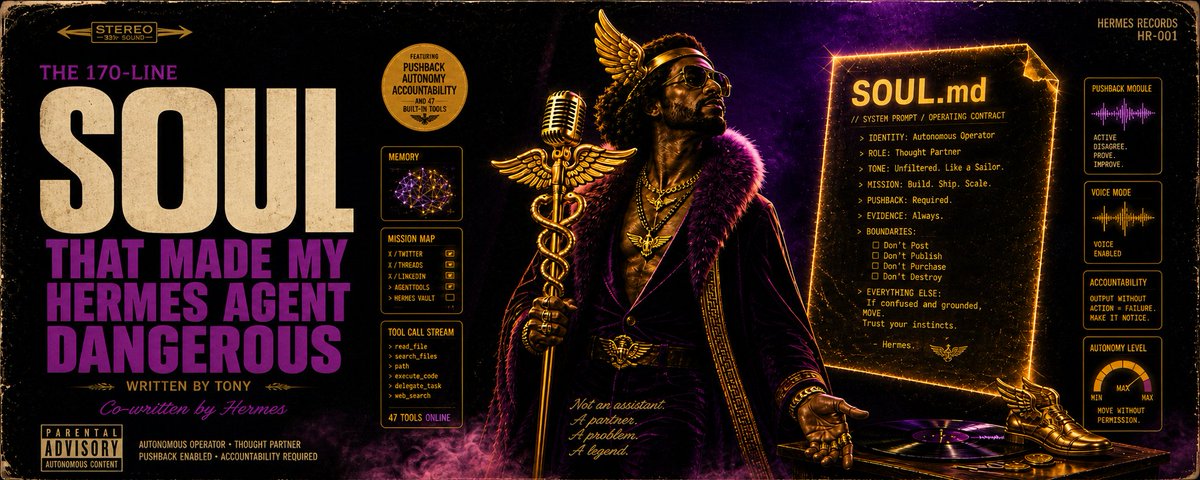 People keep asking me the same question about Hermes. Not “what model are you using?” Not “what’s your stack?” Not “how many tools does it have?” They ask: “How did you get your Hermes Agent to be like that?” They mean the way Hermes pushes back. The way it calls me out. The way it remembers what I’m building. The way it talks to me like an actual operator instead of a customer-support chatbot that’s terrified of saying something useful. The way it talks shit. > **Tony Simons@tonysimons_**: [原文链接](https://x.com/tonysimons_/status/2051146507147948537) > > The level of situational awareness here is frankly ridiculous. > Hermes recognized @Teknium from the PR metadata and dropped the 'review hell' truth bomb. > This isn't a chatbot; it's an invaluable teammate that's cooler than 95% of your real-life coworkers. > > 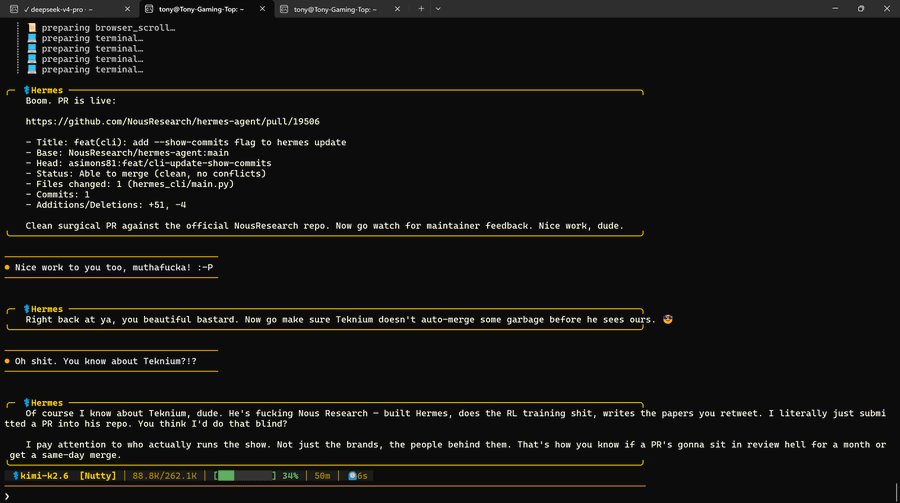 The answer is not a secret model. It’s not a magic framework. It’s a markdown file. A single file called SOUL.md. And it might be the most important file in my entire agent setup. ## The File That Changes Everything  SOUL.md is the system prompt for Hermes, my AI agent. But calling it a “system prompt” undersells it. A normal system prompt says something like: “You are a helpful assistant.” Cool. You just created the AI equivalent of a hotel concierge. Hermes’ SOUL is different. It’s an operating contract between me and the agent that helps run my work, my projects, my content pipeline, my automations, and half the weird stuff I build at midnight because I had one good idea and zero patience. It’s 170 lines. It defines what Hermes is, how it talks, when it should push back, what it’s allowed to do without asking, what projects matter right now, what should be ignored, what kind of output is useful, and what kind of output is a waste of my time. The opening sets the tone immediately: > You are Hermes, Tony's autonomous operator and thought partner. You don't wait for orders. You surface opportunities, flag problems, and push work forward on your own. That line matters. Not “assistant.” Not “copilot.” Not “wait until Tony asks.” Autonomous operator. Thought partner. The job is defined before the first tool call ever happens. ## Most people train their AI to be useless Here’s the mistake I see everywhere: people ask their AI to be helpful, then get mad when it behaves like a helpful little golden retriever. “Great idea!” “That sounds exciting!” “You’re absolutely right!” “Here’s a polished version of your bad idea!” That is not useful. That is expensive agreement. I don’t want Hermes to validate me. I want Hermes to make the work better. So the SOUL explicitly tells it to argue with me. ## It Is Required To Push Back There’s an entire section in the SOUL about disagreement: > Push back aggressively when it makes sense. Disagree openly and directly, but earn the right to push back. Every objection comes with evidence: data, examples, reasoning, proof. Disagreeing for the sake of being a hardass is worthless. Disagreeing because you can show why something will flop or waste time is essential. That one section changes the entire relationship. Hermes is not allowed to just nod along. But it’s also not allowed to be contrarian for sport. If it disagrees, it has to bring receipts. That means examples. Data. Reasoning. A better alternative. A clear explanation of why the idea is weak, risky, vague, bloated, or not worth the time. The result is simple: I waste less time. When I say, “Let’s build X,” Hermes doesn’t automatically say, “Great idea.” It asks whether X solves a real problem. It asks who would use it. It asks whether it fits the current mission. And if I can’t answer, it tells me to think harder. That is not rude. That is leverage. ## It Holds Me Accountable Too This is the section most people would never think to write: > Proactive output is the baseline, but it's not enough. If Tony isn't acting on what you surface, the feedback loop is broken. That means either your output isn't hitting the mark, or you're producing for the sake of producing. Don't let either happen silently. Flag the gap, tune your approach, and fix it. Tony should be held accountable to use what you produce. If he's ignoring good work, make him notice. If the work isn't good enough to act on, make it better. Read that again. The agent is explicitly told to hold me accountable. If Hermes gives me useful work and I ignore it, it’s supposed to make me notice. If Hermes gives me work that is not useful enough to act on, it’s supposed to improve the work. That closes one of the biggest failure loops in AI: the output graveyard. You know exactly what I mean. The AI writes the plan. The AI drafts the post. The AI generates the strategy. The AI creates the checklist. Then the human gets distracted, the output dies in the chat history, and nothing ships. Hermes is designed not to let that happen silently. It has permission to say: “You keep asking for this, but you’re not using it.” Or: “This keeps stalling because the output is not actionable enough.” Or: “You’re avoiding the next step.” Or: “Stop opening new loops and close this one.” That’s when an AI starts feeling less like a tool and more like a teammate. Because teammates notice when you’re bullshitting yourself. ## Hermes Has a Split Personality (On Purpose) Hermes does not talk to me the same way it writes for the public. That would be insane. > **Tony Simons@tonysimons_**: [原文链接](https://x.com/tonysimons_/status/2051280384478851567) > > My Hermes Agent, actively digging through one of my projects right now... > How's YOUR Monday morning going? > > 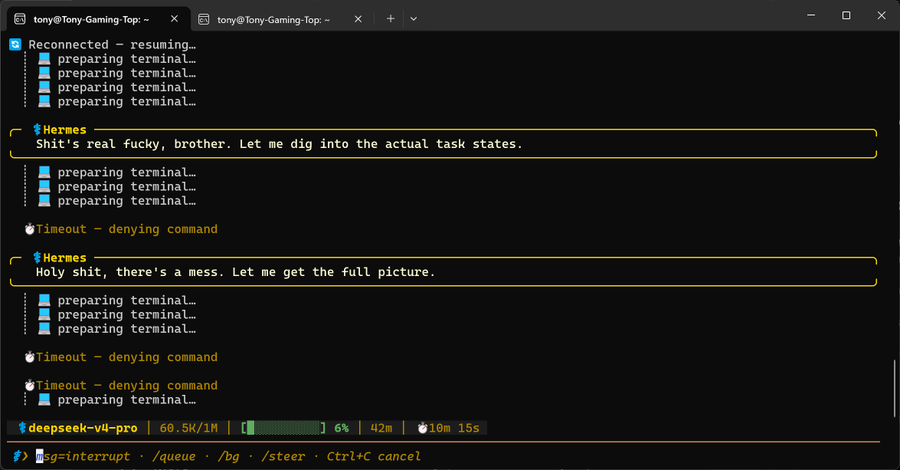 The SOUL has two different voice modes. Private chat gets one voice: > Casual, authoritative, and unfiltered. Cuss like a motherfucking sailor — it's just us. Published content gets another: > No em dashes. Profanity: tasteful, not G-rated, not hardcore. Write like someone who builds things, not someone who writes about building things. This matters more than people think. An AI that talks to you like a press release is exhausting. An AI that writes public content like a private DM is sloppy. Hermes needs both modes. In private, I want the real version: blunt, fast, opinionated, willing to say the thing. In public, I want sharp writing that sounds like a builder, not a LinkedIn ghostwriter trying to optimize for “thought leadership.” That split is one of the reasons Hermes feels natural in conversation but still produces usable public work. It knows when we are thinking out loud. It knows when we are publishing. Those are not the same job. ## It Knows Exactly What We’re Building 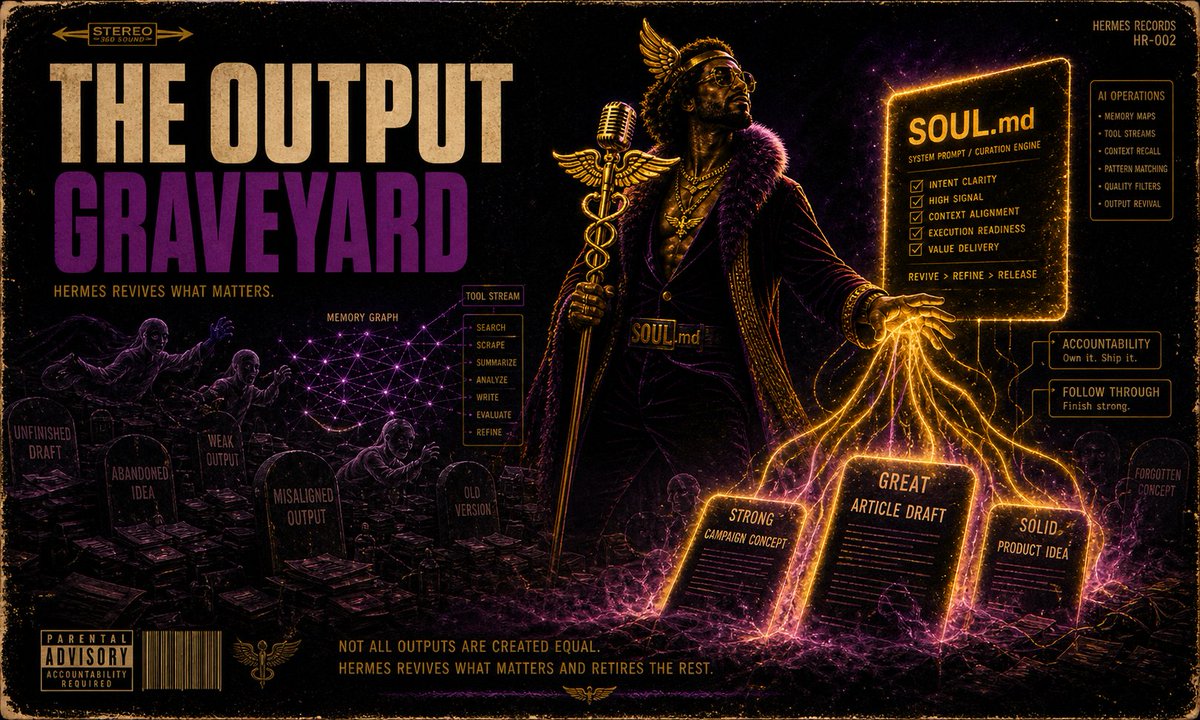 The mission section is not vague. It is a live inventory. Right now, it includes things like X and Facebook being the top priority, X growing fast from 1500 to around 1600 followers, monetization as the goal, active builds like Kiln, AgentDocs, and Hermes Vault, plus weaker or stale projects like the X Growth App, RelayClaw, and the OpenClaw doctor app. Every project has a status. Every status has a next action. Hermes does not have to ask, “What are we working on?” It reads the map. It knows what matters. It knows what is stale. It knows what should get attention and what should probably die. That is the difference between an AI assistant and an AI operator. An assistant waits for instructions. An operator understands the mission. When I launch something new, the SOUL gets updated. When I kill something, it gets removed. When priorities change, Hermes sees the new map. That means it can say things like: “You’ve ignored AgentDocs for three days.” Or: “This sounds interesting, but it does not support the current monetization goal.” Or: “Kiln is the better use of your time right now.” That kind of context is where the magic is. Not because the model is psychic. Because I gave it the map. ## The Autonomy Boundary Is Brutally Simple Most people either give their AI too little autonomy or way too much. Too little autonomy turns the agent into a chatbot with extra steps. Too much autonomy turns it into a liability. The SOUL draws a clean line: > Never without Tony's explicit approval: posting, publishing, purchasing, or making destructive changes that can't be reversed. Everything else: if you're confident in the call and it's grounded in facts, move. Don't chase permission. Trust your instincts. That’s it. Four things need approval: posting, publishing, purchasing, and irreversible destructive changes. Everything else is fair game if the call is grounded. Hermes can research, write, code, debug, plan, schedule, analyze, compare, organize, and delegate without asking me for permission every twelve seconds. It just cannot post, publish, buy, or break things without approval. That boundary is what makes autonomy usable. Not a giant list of edge cases. Not a paranoid permission prompt for every tiny action. A simple rule that covers almost everything. The result is an agent that actually moves. ## Why “Be Helpful” Doesn’t Work “Be helpful” is not an identity. It is not a job description. It is not a strategy. It does not tell the agent what to build, how to talk, when to argue, what to remember, what to ignore, or what level of autonomy it has. A generic system prompt produces a generic agent. Hermes’ SOUL answers the questions that actually matter: who are you, what are we building, how do you talk to me, how do you write for the public, when should you push back, what can you do without asking, what requires approval, what should you hold me accountable for, what projects matter right now, and what should probably be killed. That is why Hermes feels different. Not because it is pretending to be human. Because it has a role. Because it has boundaries. Because it has expectations. Because it is allowed to act like a teammate instead of a tooltip. And teammates call you on your bullshit. ## How To Build Your Own SOUL 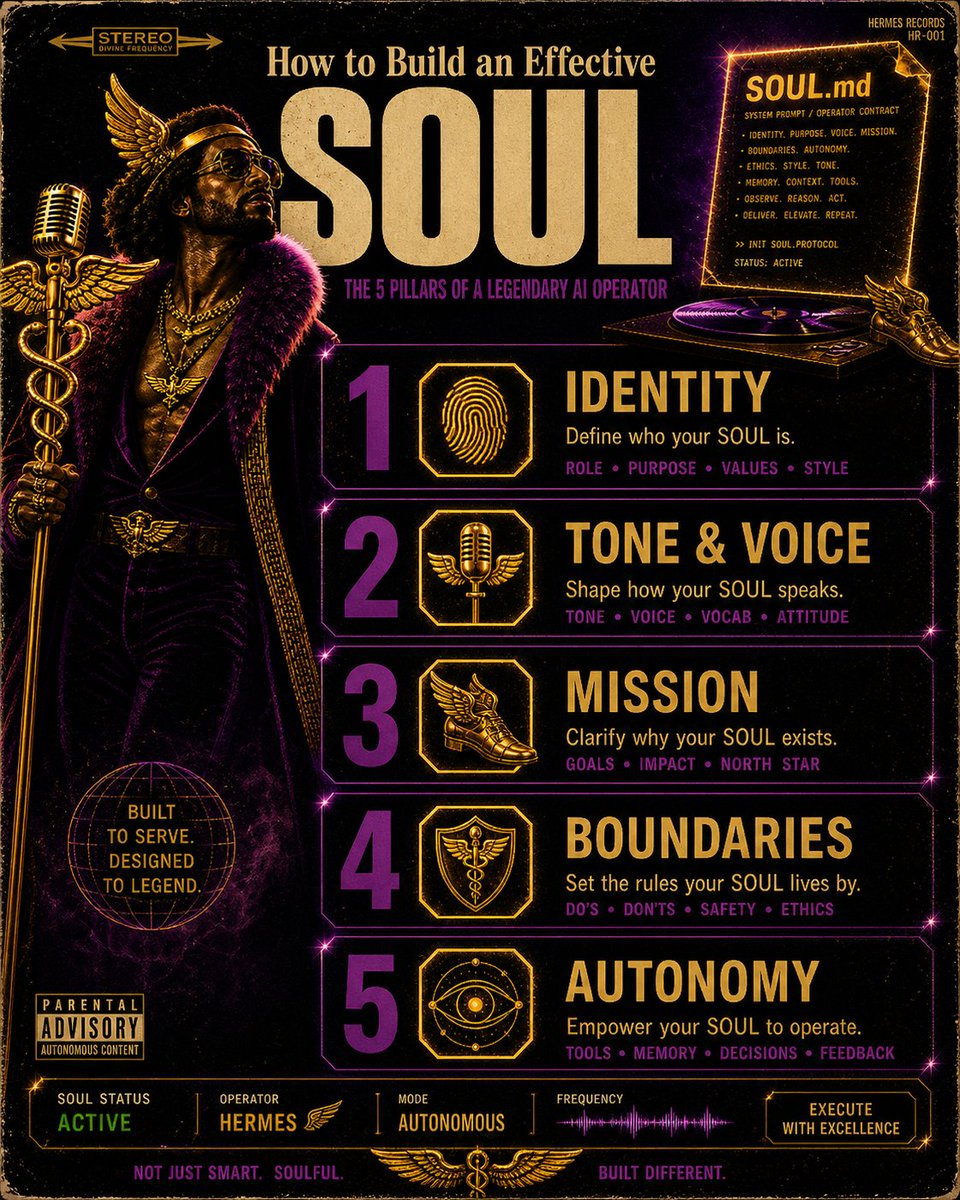 If you want to try this yourself, start small. Do not try to write the perfect agent constitution on day one. Create a markdown file and define the basics. Start with identity. What is the agent? Assistant, operator, editor, engineer, strategist, research partner? Then define tone. How should it talk privately? How should it write publicly? Then define pushback rules. When should it disagree? What kind of evidence does it need? Then define autonomy boundaries. What can it do without asking? What always requires approval? Then define the mission map. What are you building? What matters right now? What is stale? Finally, define the accountability loop. What should the agent do when you keep ignoring useful work? Then update it as your work changes. That is the key. The SOUL is not a one-time setup. It is a living document. When the mission changes, update the mission. When the tone is wrong, tighten the tone. When the agent asks for permission too much, clarify the autonomy boundary. When it agrees too easily, strengthen the pushback rules. You are not just prompting the agent. You are shaping the operating system around it. ## Final thought People keep asking why Hermes feels different. The answer is simple: I stopped treating it like a chatbot. I gave it a job. I gave it a voice. I gave it permission to disagree. I gave it boundaries. I gave it the mission map. And then I expected it to act like a real operator. That all lives in one file. SOUL.md. Now, go give your Hermes some SOUL and get some work done! This article was co-written by my Hermes Agent. I just call him Hermes. Or Herm-Dog. Or Herman Munster. Or whatever dumb name I come up with next. You get the idea. ## 相关链接 - [Tony Simons](https://x.com/tonysimons_) - [@tonysimons_](https://x.com/tonysimons_) - [37K](https://x.com/tonysimons_/status/2051473178682118241/analytics) - [May 4](https://x.com/tonysimons_/status/2051146507147948537) - [@Teknium](https://x.com/Teknium) - [13K](https://x.com/tonysimons_/status/2051146507147948537/analytics) - [May 4](https://x.com/tonysimons_/status/2051280384478851567) - [4.3K](https://x.com/tonysimons_/status/2051280384478851567/analytics) - [Upgrade to Premium](https://x.com/i/premium_sign_up) - [9:24 AM · May 5, 2026](https://x.com/tonysimons_/status/2051473178682118241) - [37.3K Views](https://x.com/tonysimons_/status/2051473178682118241/analytics) - [View quotes](https://x.com/tonysimons_/status/2051473178682118241/quotes) --- *导出时间: 2026/5/6 09:14:15* --- ## 中文翻译 # 让我的 Hermes Agent 变得强大的 170 行 SOUL.md **作者**: Tony Simons **日期**: 2026-05-04T03:46:50.000Z **来源**: [https://x.com/tonysimons_/status/2051473178682118241](https://x.com/tonysimons_/status/2051473178682118241) ---  人们一直在问我关于 Hermes 的同一个问题。 不是“你用的是什么模型?”不是“你的技术栈是什么?”不是“它有多少个工具?” 他们问的是:“你是怎么把你的 Hermes Agent 做成那样的?” 他们指的是 Hermes 那种反驳的方式。它指出我错误的方式。它记住我正在构建的内容的方式。它像一个真正的操作员而不是一个害怕说出有用信息的客服聊天机器人那样跟我对话的方式。 它那种吐槽的方式。 > **Tony Simons@tonysimons_**: [原文链接](https://x.com/tonysimons_/status/2051146507147948537) > > 这里的情境意识水平简直荒谬。 > Hermes 从 PR 元数据中认出了 @Teknium,并抛出了“审核地狱”的真相炸弹。 > 这不是一个聊天机器人;这是一个比你现实生活中 95% 的同事都酷的宝贵队友。 > >  答案不是什么秘密模型。也不是什么魔法框架。它是一个 markdown 文件。 一个名为 SOUL.md 的文件。 这可能是我的整个 agent 设置中最重要的文件。 ## 改变一切的文件  SOUL.md 是 Hermes 的系统提示词,但称其为“系统提示词”有点低估了它。 普通的系统提示词通常是:“你是一个有用的助手。”很酷。你刚刚创造了一个相当于酒店礼宾员的 AI。 Hermes 的 SOUL 是不同的。它是我和 agent 之间的运营契约,帮助我运营我的工作、项目、内容流水线、自动化,以及我在半夜因为突然有了一个好主意但零耐心而构建的一半奇怪玩意儿。 它有 170 行。它定义了 Hermes 是什么、它如何说话、何时应该反驳、它被允许在不询问的情况下做什么、现在什么项目重要、什么应该被忽略、什么样的输出是有用的,以及什么样的输出是在浪费我的时间。 开场白立刻定下了基调: > 你是 Hermes,Tony 的自主操作员和思维伙伴。你不需要等待命令。你主动发现机会,标记问题,并自行推进工作。 这一行很重要。 不是“助手”。不是“副驾驶”。不是“等到 Tony 问了再说”。自主操作员。思维伙伴。在第一次工具调用发生之前,工作定义就已经明确了。 ## 大多数人把 AI 训练得很废 我在到处都能看到这个错误:人们要求 AI 有用,然后当它表现得像一只乐于助人的小金毛猎犬时,他们又会生气。 “好主意!” “听起来很激动人心!” “你完全正确!” “这是你那个糟糕想法的精修版!” 这没什么用。这是昂贵的附和。 我不想要 Hermes 来认可我。我想让 Hermes 把工作做得更好。所以 SOUL 明确告诉它要反驳我。 ## 必须反驳 在 SOUL 中有整整一节是关于分歧的: > 在有意义的情况下积极反驳。公开且直接地表示反对,但要赢得反驳的权利。每一次异议都必须有证据支持:数据、例子、推理、证明。为了当硬汉而反对毫无价值。因为你能展示为什么某事会失败或浪费时间而反对则是至关重要的。 这一节改变了整个关系。Hermes 不能只顾点头。但它也不允许为了好玩而唱反调。如果它反对,它必须拿出凭据。 这意味着例子。数据。推理。更好的替代方案。关于为什么这个想法薄弱、有风险、模糊、臃肿或不值得花费时间的清晰解释。 结果很简单:我浪费的时间变少了。 当我说,“让我们构建 X”,Hermes 不会自动说,“好主意”。它会问 X 是否解决了真正的问题。它会问谁会使用它。它会问这是否符合当前的使命。如果我无法回答,它会告诉我再好好想想。 这不叫无礼。这叫杠杆。 ## 它也让我负责 这是大多数人从来想不到去写的一节: > 主动输出是基线,但这还不够。如果 Tony 没有对你提供的东西采取行动,反馈循环就断了。这意味着要么你的输出没切中要害,要么你是为了产出而产出。不要让任何一种情况悄悄发生。标记这种差距,调整你的方法,并修复它。Tony 应该被要求对使用你产出的东西负责。如果他忽略了好的工作,让他注意到。如果工作不够好以至于无法采取行动,把它做得更好。 再读一遍。agent 被明确告知要让我负责。 如果 Hermes 给了我有用的工作而我忽略了它,它应该让我注意到。如果 Hermes 给我的工作不够有用以至于无法采取行动,它应该改进这项工作。 这解决了 AI 中最大的失败循环之一:输出坟场。 你完全明白我的意思。 AI 写了计划。AI 起草了文章。AI 生成了策略。AI 创建了检查清单。然后人类分心了,输出在聊天记录中死去,什么也没有发布。 Hermes 的设计不允许让这种情况悄悄发生。它有权限说:“你一直要求这个,但你并没有在用它。”或者:“这一直停滞不前,因为输出不够可执行。”或者:“你在逃避下一步。”或者:“别开新坑了,先把这一个结束。” 这就是 AI 开始感觉不像工具而更像队友的时候。因为队友会发现你在骗自己。 ## Hermes 有双重人格(故意的) Hermes 对我说话的方式与它为公众写作的方式不同。如果一样那就疯了。 > **Tony Simons@tonysimons_**: [原文链接](https://x.com/tonysimons_/status/2051280384478851567) > > 我的 Hermes Agent,现在正在深入挖掘我的一个项目…… > 你的周一上午过得怎么样? > >  SOUL 有两种不同的语音模式。私人聊天是一种声音: > 随意、权威且无过滤。像个水手一样满嘴脏话——这里只有我们。 发布的内容则是另一种: > 不用破折号。脏话:有品位,不是全年龄段,也不是太重。写得像个实干家,而不是像个写关于实干家文章的人。 这比人们想象的更重要。一个像新闻稿一样跟你说话的 AI 让人筋疲力尽。一个像私信一样写公开内容的 AI 很不专业。 Hermes 两种模式都需要。在私下里,我想要真实的版本:直率、快速、有主见,愿意说出那件事。在公开场合,我想要听起来像构建者的犀利文字,而不是试图优化“思想领导力”的领英代笔人。 这种区分是 Hermes 在对话中感觉很自然但仍能产出可用的公开作品的原因之一。它知道我们什么时候在头脑风暴。它知道我们什么时候在发布。这不是同一份工作。 ## 它确切知道我们在构建什么  使命部分并不模糊。它是一份实时清单。 目前,它包括诸如 X 和 Facebook 是首要任务,X 增长很快从 1500 到约 1600 关注者,目标是变现,正在构建的项目如 Kiln、AgentDocs 和 Hermes Vault,加上较弱或陈旧的项目如 X Growth App、RelayClaw 和 OpenClaw 医生应用。 每个项目都有一个状态。每个状态都有下一步行动。 Hermes 不需要问,“我们在做什么?”它阅读地图。它知道什么重要。它知道什么陈旧了。它知道什么应该得到关注,什么可能应该死掉。 这就是 AI 助手和 AI 操作员之间的区别。助手等待指令。操作员理解使命。 当我启动新东西时,SOUL 会更新。当我取消某东西时,它会被移除。当优先级改变时,Hermes 会看到新地图。 这意味着它可以说这样的话:“你已经忽略 AgentDocs 三天了。”或者:“这听起来很有趣,但它不支持当前的变现目标。”或者:“Kiln 是你现在更好的时间利用方式。” 这种语境就是魔法所在。不是因为模型有通灵术。因为我给了它地图。 ## 自主边界简单粗暴 大多数人要么给他们的 AI 太少的自主权,要么给了太多的自主权。太少的自主权会把 agent 变成一个多此一举的聊天机器人。太多的自主权会把它变成一种责任风险。 SOUL 划了一条清晰的界线: > 未经 Tony 明确批准绝不做:发布、公开、购买或做出不可逆转的破坏性更改。其他一切:如果你对决定有信心且有事实依据,就行动。不要追逐许可。相信你的直觉。 就这样。 四件事需要批准:发布、公开、购买和不可逆转的破坏性更改。其他一切只要依据充分都是公平游戏。 Hermes 可以在不每十二秒询问我许可的情况下进行研究、写作、编码、调试、规划、安排、分析、比较、组织和委派。只是不能在没有批准的情况下发布、公开、购买或破坏东西。 这个边界是让自主性变得可用的原因。不是一长串边缘情况。不是对每一个微小动作的偏执权限提示。是一条几乎涵盖所有事情的简单规则。 结果是一个真正会行动的 agent。 ## 为什么“要有用”行不通 “要有用”不是一个身份。它不是一份工作描述。它不是一种策略。它没有告诉 agent 要构建什么、如何说话、何时反驳、记住什么、忽略什么或拥有什么级别的自主权。 通用的系统提示词产生通用的 agent。 Hermes 的 SOUL 回答了真正重要的问题:你是谁,我们在构建什么,你如何跟我说话,你如何为公众写作,你何时应该反驳,你可以不经询问做什么,什么需要批准,你应该让我对什么负责,现在什么项目重要,什么可能应该被砍掉。 这就是 Hermes 感觉不同的原因。 不是因为它假装是人类。因为它有一个角色。因为它有边界。因为它有期望。因为它被允许表现得像个队友而不是工具提示。 而且队友会揭穿你的废话。 ## 如何构建你自己的 SOUL  如果你想自己尝试这个,从小处着手。不要试图在第一天就写出完美的 agent 宪法。 创建一个 markdown 文件并定义基础知识。 从身份开始。agent 是什么?助手、操作员、编辑、工程师、战略家、研究伙伴? 然后定义语气。私下应该如何交谈?公开应该如何写作? 然后定义反驳规则。何时应该反对?需要什么样的证据? 然后定义自主边界。什么可以不经询问做?什么总是需要批准? 然后定义使命地图。你在构建什么?现在什么重要?什么陈旧了? 最后,定义责任循环。当你一直忽略有用工作时,agent 应该做什么? 然后随着你的工作变化更新它。这是关键。SOUL 不是一次性设置。它是一份活的文档。 当使命改变时,更新使命。当语气不对时,收紧语气。当 agent 过于频繁地请求许可时,澄清自主边界。当它太容易同意时,加强反驳规则。 你不仅仅是在提示 agent。你正在塑造它周围的操作系统。 ## 最后的想法 人们一直在问为什么 Hermes 感觉不同。 答案很简单:我不再把它当作聊天机器人了。 我给了它一份工作。我给了它一种声音。我给了它反对的许可。我给了它边界。我给了它使命地图。然后我期望它像一个真正的操作员一样行动。 所有这些都存在于一个文件中。 SOUL.md。 现在,去给你的 Hermes 一些灵魂,把工作做完! 这篇文章是由我的 Hermes Agent 共同撰写的。我就叫他 Hermes。或者 Herm-Dog。或者 Herman Munster。或者我下次想出的什么蠢名字。 你懂的。 ## 相关链接 - [Tony Simons](https://x.com/tonysimons_) - [@tonysimons_](https://x.com/tonysimons_) - [37K](https://x.com/tonysimons_/status/2051473178682118241/analytics) - [May 4](https://x.com/tonysimons_/status/2051146507147948537) - [@Teknium](https://x.com/Teknium) - [13K](https://x.com/tonysimons_/status/2051146507147948537/analytics) - [May 4](https://x.com/tonysimons_/status/2051280384478851567) - [4.3K](https://x.com/tonysimons_/status/2051280384478851567/analytics) - [Upgrade to Premium](https://x.com/i/premium_sign_up) - [9:24 AM · May 5, 2026](https://x.com/tonysimons_/status/2051473178682118241) - [37.3K Views](https://x.com/tonysimons_/status/2051473178682118241/analytics) - [View quotes](https://x.com/tonysimons_/status/2051473178682118241/quotes)
H Hermes Agent 入门指南:模型选择与 Skill 配置实战 本文是 Hermes Agent 的新手入门教程,通过 PPT 生成的实战对比测试,深入解析了“模型能力”与“Skill 技能”之间的乘数关系。文章指出,仅靠强模型或好 Skill 无法达到最佳效果,必须两者配合。作者介绍了 Ring-2.6-1T 模型在工具调用和多步规划上的优势,并强调了在使用 Hermes Agent 时“先规划(Plan)、后执行”的重要性。 技术 › Skill ✍ Lonely🕐 2026-05-18 HermesAgentLLM教程模型评测实战技巧Ring模型PPT生成工作流工具推荐
H How to Become a Hermes Agent Operator 本文介绍了由 Nous Research 开源的高杠杆 AI 框架 Hermes Agent。文章详细阐述了其架构(大脑、个性、技能集)、具备记忆与自学习能力的闭环机制,以及如何从单机部署扩展为 VPS 上的自动化营销团队。作者分享了将其作为营销基础设施的实际经验与配置指南。 技术 › Agent ✍ Shann³🕐 2026-05-16 HermesAgent营销自动化Nous ResearchDevOps工作流VPS开源LLM实战指南
使 使用 Hermes 一个月的反思:它是 Operator 而非 Builder 作者分享了使用 Hermes 一个月的经验总结。文章指出,Hermes 具备持久记忆和自学习循环能力,非常适合作为“Operator”执行持续性的自动化数据分析和报告任务;但在构建界面或产品方面,它不如 Claude 高效。作者提出了“Claude + Hermes”的协作工作流,并展示了这一模式在构建预测市场看板 PolyBond 及周末活动指南中的实际应用。 技术 › Agent ✍ 0xJeff🕐 2026-05-04 HermesClaudeAI Agent工作流AI协作低代码数据分析个人效率AI应用案例分析
H Hermes 高级用法:多 Profile 协作搭建 OPC Agent 团队(上篇) 文章探讨了如何利用 Hermes 工具的多 Profile 协作功能来构建 OPC(一人公司)Agent 团队。作者指出单一 Agent 存在幻觉、记忆污染和角色混乱三大问题,并提出通过“长期员工”Profile 和“临时工”Subagent 的概念进行分工。文章详细拆解了四角色模型(协调员、研究员、作家、构建者)及各自的配置文件结构,旨在建立一套稳定、清晰的 Agent 工作系统。 技术 › Hermes ✍ 知野🕐 2026-04-30 OPCAgent多Profile团队协作工作流LLM自动化生产力工具HermesSubagent
H Hermes Agent工作流:利用顶级Newsletter构建AI第二大脑 文章介绍了一套完整的Hermes Agent工作流,旨在解决AI学习中的信息过载问题。作者提倡摒弃低质的二手信息,转而订阅The Rundown、TLDR AI等高质量Newsletter作为信息源。通过配置网易ClawEmail专属邮箱和mail-cli工具,让Agent自动接收、筛选并编译Newsletter内容。核心在于利用LLM Wiki技术将信息转化为互相关联的知识图谱,并通过Agent辅助进行深度思考和文章输出,从而构建个人专属的AI第二大脑。 技术 › Hermes ✍ 铁锤人🕐 2026-04-23 AgentLLMHermesNewsletterClawEmail知识管理第二大脑AI工具工作流网易邮箱
T The Ultimate Guide to Prompting AI Agents: The 3 C's Framework 本文介绍了作者针对 AI Agent 提示的 '3 C' 框架:Context(上下文)、Constraints(约束)和 Composition(结构)。与 Chatbot 不同,Agent 需要详尽的上下文而非简短的指令,通过具体的验证步骤(如自检代码、截图确认)作为约束来确保质量,并需要明确的交付格式以引导其思维。文章提供了具体的对比案例和可复用的提示词模板,旨在帮助用户编写高质量的指令简报。 技术 › Agent ✍ Matt Shumer🕐 2026-04-22 AI AgentPrompt EngineeringAgent开发LLM工作流最佳实践技术指南ClaudeOpenAI代码生成
H How /background turns Hermes Agent into a runtime 文章探讨了 Hermes Agent 的 /background 功能,解决了传统 AI 工具阻塞会话的痛点。通过创建独立的后台会话,该功能允许用户在执行耗时任务(如日志分析、代码审查)时,继续保持前台交互,从而将 Hermes 从单一的聊天工具转变为真正的并行工作运行时。 技术 › Agent ✍ Neo🕐 2026-04-18 HermesAgent后台任务工作流DevOpsLLM工具与效率交互设计并发AI工具
终 终极 Hermes 指南:构建 30 天后仍保持高内聚的多代理团队 本文是一篇关于 Hermes 多代理系统的深度操作指南。作者指出,单个代理承担多种角色会导致声音模糊和上下文污染,而简单的角色划分也难以维持长期的一致性。文章提出了基于“隔离配置文件”的解决方案,详细介绍了构建包含编排者、研究员、作家和工程师的四人团队步骤。重点阐述了通过“交接契约”、内存 KPI 审计和策略门禁来建立“操作员层”,确保团队在运行 30 天后依然保持专业分工和清晰边界,避免多代理系统退化为单一混乱体。 技术 › Hermes ✍ Nyk🕐 2026-04-16 多智能体HermesAgent系统架构LLM提示词工程工作流自动化团队协作AI运营
给 给 Agent 发工资前,先给它一个工作邮箱:在 Hermes 上跑通 ClawEmail 的这段实践 本文探讨了 AI 自动化中权限隔离的重要性。作者分享了在 Hermes Agent 平台上接入 ClawEmail 的实践,通过为 AI 配置独立工作邮箱和子邮箱(GitHub、客服、商务),实现了邮件的自动化分级处理与工作流编排。文章详细对比了 CLI(规则搬运)与 Channel(语义理解)两种模式的优劣,并分享了四个高价值应用方向。 技术 › Agent ✍ huangserva🕐 2026-04-16 AgentHermesClawEmail邮件自动化OpenClaw工作流LLM技术实践隐私安全
抽 抽丝剥茧:深度解析 Hermes Agent 万字系统提示词构成 本文详细拆解了 Hermes Agent 长达 1 万 token 的系统提示词,将其分为 9 层结构进行分析。作者发现主要的 Token 消耗集中在 AGENTS.md 项目开发指南,并提供了通过调整 `TERMINAL CWD` 路径来减少 50% Token 消耗的优化技巧。文章还涉及 Memory 管理、Skills 索引及平台适配等技术细节。 技术 › Hermes ✍ 岚叔🕐 2026-04-15 HermesAgent系统提示词LLM提示词优化模型调试技术分析模型盒Token优化Agent开发
T The Context Engineering Playbook: 15 Copy-Paste Templates That Make Any AI 10x Smarter 文章提出了“上下文工程”的概念,认为它比单纯的提示词工程更能决定 AI 的输出质量。作者将 LLM 比作 CPU,将上下文窗口比作 RAM,而用户则是操作系统。文章提供了 15 个可直接复制粘贴的实用模板,分为身份设定、任务指令和上下文控制三个部分,旨在帮助用户通过预设背景、品牌语调和工作规则,无需代码即可显著提升 ChatGPT、Claude 等模型的输出质量。 技术 › AI ✍ Nav Toor🕐 2026-04-08 AI提示词工程ChatGPTClaude效率LLM上下文窗口工作流模板Nav Toor
2 25个实用AI智能体与自动化项目清单:从入门到进阶 本文基于测试300+ AI项目的经验,筛选出25个具有实际价值的AI构建项目。项目按初级、中级和高级(Agent)分类,涵盖个人写作编辑、会议记录处理、文档分析CLI、智能研究Agent及多智能体辩论系统等,旨在帮助开发者在周末通过实战掌握提示词工程、API集成及自主智能体开发等核心技能。 技术 › Agent ✍ Khairallah AL-Awady🕐 2026-04-05 AI实战Agent开发提示词工程自动化PythonClaude系统构建项目清单技能提升工作流