The Four Micro-Revolutions of the Intelligence Revolution ✍ brett goldstein🕐 2026-05-06📦 18.4 KB 🟢 已读 𝕏 文章列表 本文由前Google M&A团队成员撰写,深入分析了“智能革命”的演进规律。作者结合Carlota Perez的技术革命框架,预测AI发展将经历四个微观阶段:聊天、代理、语境和平台。文章指出,最终的赢家将掌握“语境”层,成为历史上最大的公司,因为它将聚合整个AI行业并消耗所有数字劳动力。 AI趋势技术革命Agent行业预测ChatGPTOpenAIAnthropicContextPlatformCarlota Perez # The Four Micro-Revolutions of the Intelligence Revolution **作者**: brett goldstein **日期**: 2026-05-05T17:23:15.000Z **来源**: [https://x.com/thatguybg/status/2051714355398602957](https://x.com/thatguybg/status/2051714355398602957) ---  I used to get paid to predict the future for the CEO of Google. It was my job on the M&A team to study where technology was going before it was obvious so Google could allocate billions of dollars of resources accordingly. I met tiny startups like Scale AI before they became big, watched markets form before they had names, and tried to understand which shifts were real and which were just noise. I was there to see the last AI hype cycle of 2014 as it boomed and busted. I even helped Google get a ChatGPT-like messaging app & assistant product off the ground and later started an accelerator where I gave talks on “How to think about the future” to hundreds of founders. This AI cycle is certainly different. It’s an Intelligence Revolution. Revolutions always feel chaotic while you are inside them and many bet their careers and businesses on a myopic view of how they play out. But every revolution follows the same pattern. It’s a pattern so predictable that I am confident betting my own career and business on it. So I figured I'd go ahead and call my shot: 1. The Intelligence Revolution will unfold in four micro-revolutions: Chat, Agents, Context then Platform. 2. The winner of the Intelligence Revolution will be the winner of The Context Revolution. Context creates real switching costs where Chat and Agents have not. Once users are aggregated in the Context Revolution, a Platform will be built on top that aggregates the entire AI industry: generative apps and agents. 3. Almost all of the players in the first two revolutions will be wiped out but there's is still opportunity for a new player to win the Context Revolution and thus the Intelligence Revolution. Incumbents are historically weak at winning multiple revolutions and OpenAI & Anthropic are suspiciously absent from the conversation about Context. 4. The winner of the Intelligence Revolution will be the largest company in history because it will be an index on the AI industry, which will consume all digital labor and software. AI will in turn consume more and more the world economy as agents and software become easier to build and robotics goes into large scale production. ## How Revolutions Happen There's no shortage of literature on the anatomy of a technology revolution. It's a pastime of computer-savvy, capitalistic philosophers like Benedict Evans, Geoffrey Moore, Balaji Srinivasan, and my favorite, Carlota Perez. They all contribute a different theory but in reality, it all comes together in one simple framework: 1. Incubation - Revolutionaries tinker with fringe ideas sometimes for years on end. 2. Installation - A paradigm shift drives a frenzy and then a crash pursuing new opportunities - Spark/Irruption - A breakthrough happens when an idea meets the perfect conditions. - Frenzy - Entrepreneurs and capital rush in pursuing new opportunities unlocked by the paradigm shift. - Crash - When capital is deployed into the best opportunities, marketing/innovation budgets are exhausted, and experimentation finds its limits, the frenzy ends and mass company extinction ensues. 3. Deployment - The winners of the revolution reach scale and deploy their products beyond the early adopters. 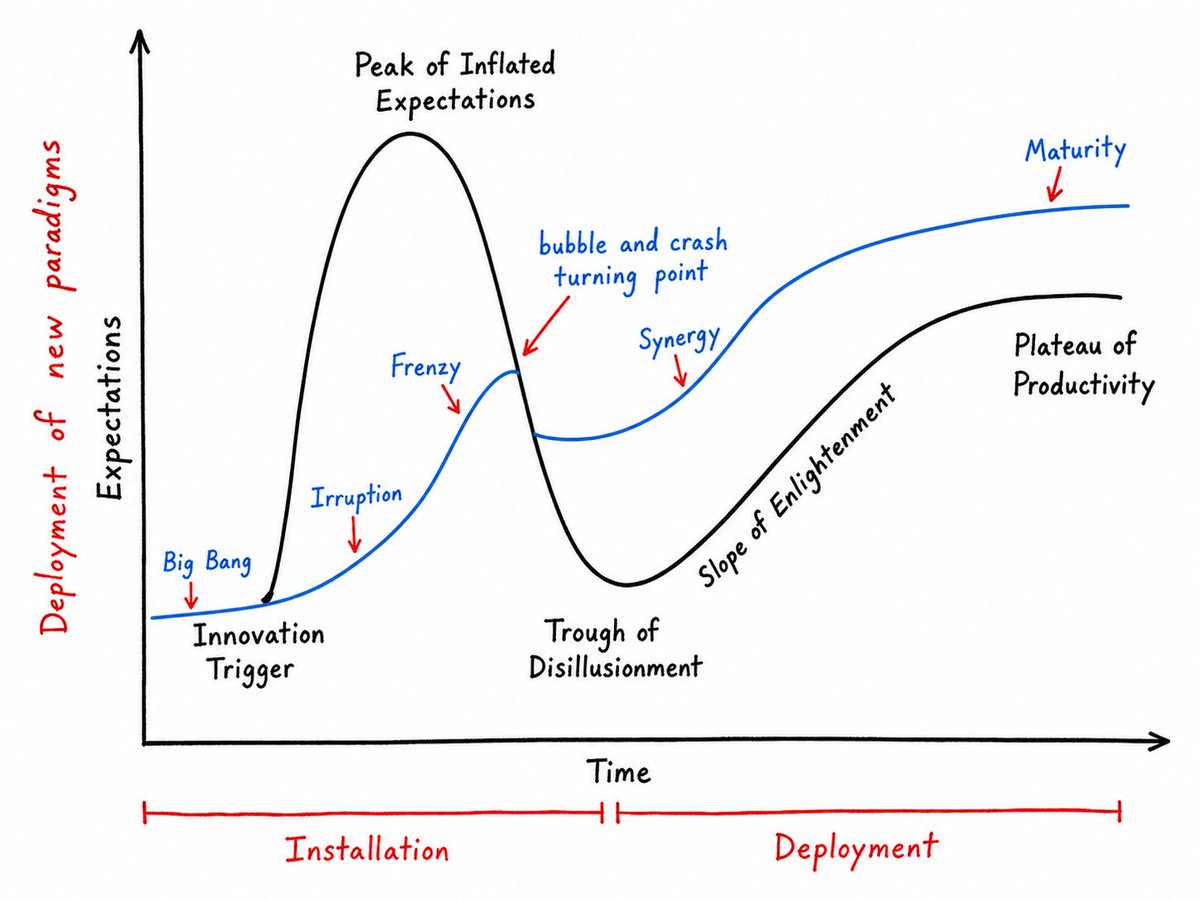 Overly of Carlota Perez' (blue) and Gartner's (black) frameworks for technology revolutions Incubation Revolutions always start with the revolutionaries, the microorganisms in the primordial soup of change. In politics they're activists who push for new policy, in society they're artists and public figures who define culture, and in tech they're the tinkerers pushing digital systems to their limit. As they say "if you want to see the future, spend time with your weirdest most technical friend." 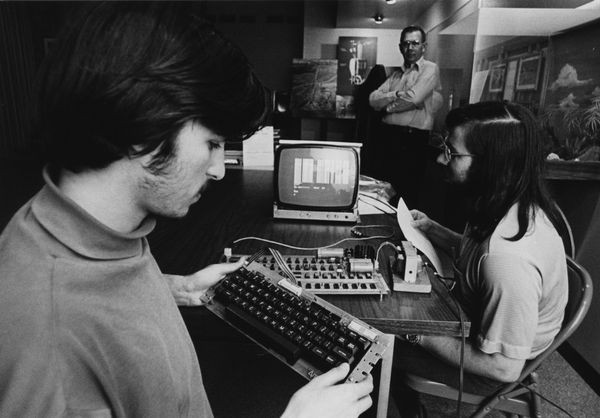 Homebrew Computer Club were the Revolutionaries of the Personal Computer Revolution Spark Eventually, the right idea meets the right conditions and it creates a paradigm shift. This is the ah-ha moment that leads to a paradigm shift that powers the revolution. Revolutions begin with one of three kinds of paradigm shifts: - Regulatory Shift - A change to the laws like marijuana, stablecoins, and or peptides (soon) - Cultural Shift - A change in human behavior at scale like Gen Z entering the workforce, COVID, or political polarization. - Technological Shift - A technological breakthrough like the transistor, the iPhone + app store, the Bitcoin whitepaper, or Attention is All You Need + scaling laws. For technology revolutions, the shift usually begins with the creation of a new tool that dramatically reduces the cost or effort for engineers' to create or distribute high value products. - The printing press for making books - Interchangeable parts for making guns - Digital audio workstations for making music - AWS for making websites - Stripe for making internet businesses - LLMs for making AI products In fact, technology is at its core a force for democratization, making things cheaper or easier to do which allows them to be accessible to more people.  Every revolution looks like the Industrial Revolution, where massive opportunities were unlocked when building blocks became composable Frenzy When valuable products suddenly become significantly cheaper and easier to build, entrepreneurs pour in. Then capital. Then more entrepreneurs and more capital. Like in the Cambrian Explosion millions of years ago, where biodiversity flourished when oxygen suddenly increased in the atmosphere, the range of companies getting started after a spark becomes overwhelming. 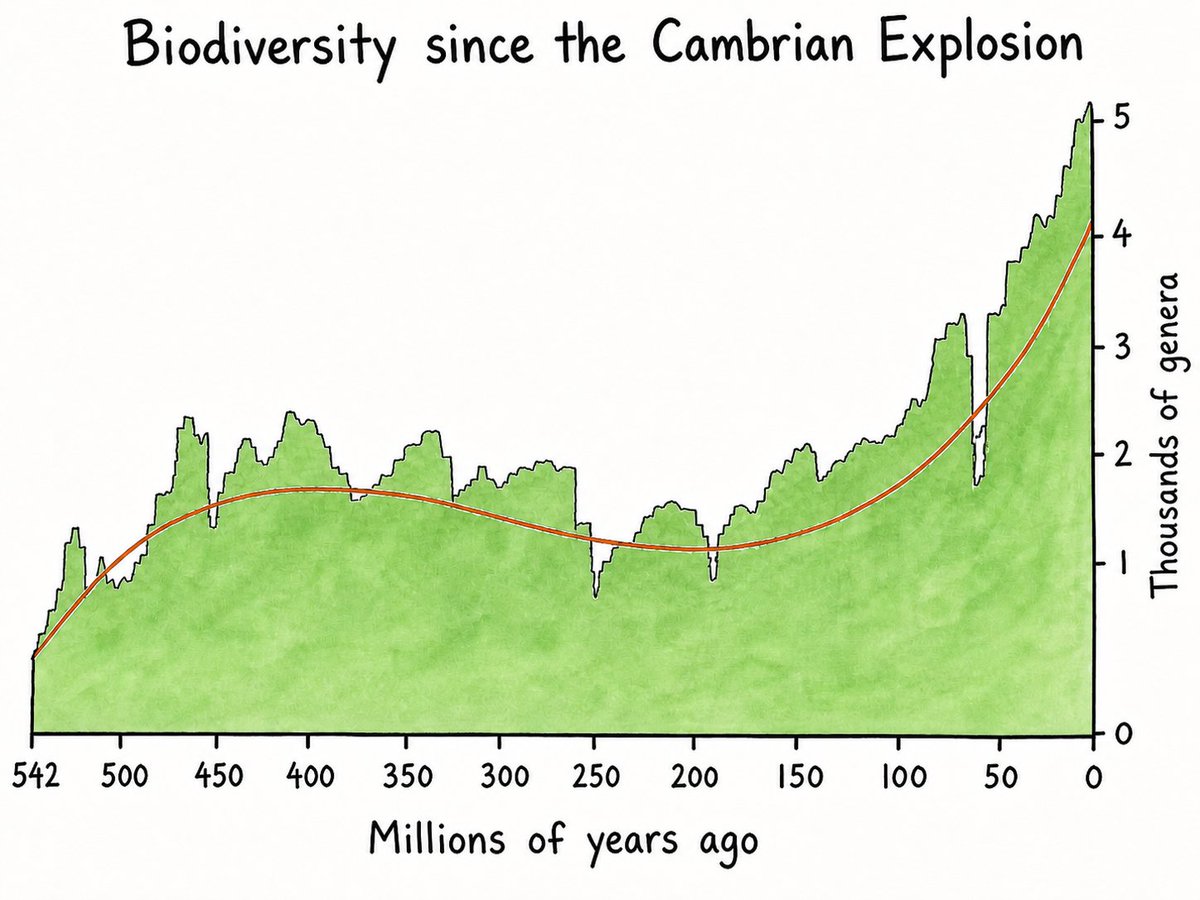 While resources are abundant, companies don't have to optimize their spending. In fact, resource abundance is directly correlated to how exploratory or exploitative any system is, whether it's startups in a bubble, VCs with fresh powder in a bull market, microorganisms in the Cambrian Explosion, or young people with life ahead of them (seeking travel and new friendships). In the frenzy, competition and capital abundance drives bidding wars, expensive marketing campaigns, and other frivolous spending.  Sorry Roy <3 Competition drives the spending higher and higher. There seems to be a direct correlation with the amount of money startups spend on brand and marketing and the severity of a bubble. If you have to ask, it's probably a bubble. Crash At some point, the market is saturated, limitations of the technology are found, enterprise marketing/innovation budgets are spent, the hype dies down and resources start to contract. Years after the Cambrian Explosion when ecosystems matured and competition for resources became more fierce, "pruning" ensued. Less adapted organisms died out. Similarly, companies that are mismanaged or pursuing opportunities propped up by the bubble die and the Revolution reaches maturity. Deployment After the crash, the winners consolidate power, their technology gets adopted at scale and moats become insurmountable. The revolution goes corporate and enters the deployment period. Crossing the Chasm Deployment can happen over many years since certain individuals and industries are slower to adopt new paradigms than others. Geoffrey Moore's classic book Crossing the Chasm explains this perfectly: first its the early adopters/tinkerers (younger people and tech companies) and last, the laggards (older people and institutions). 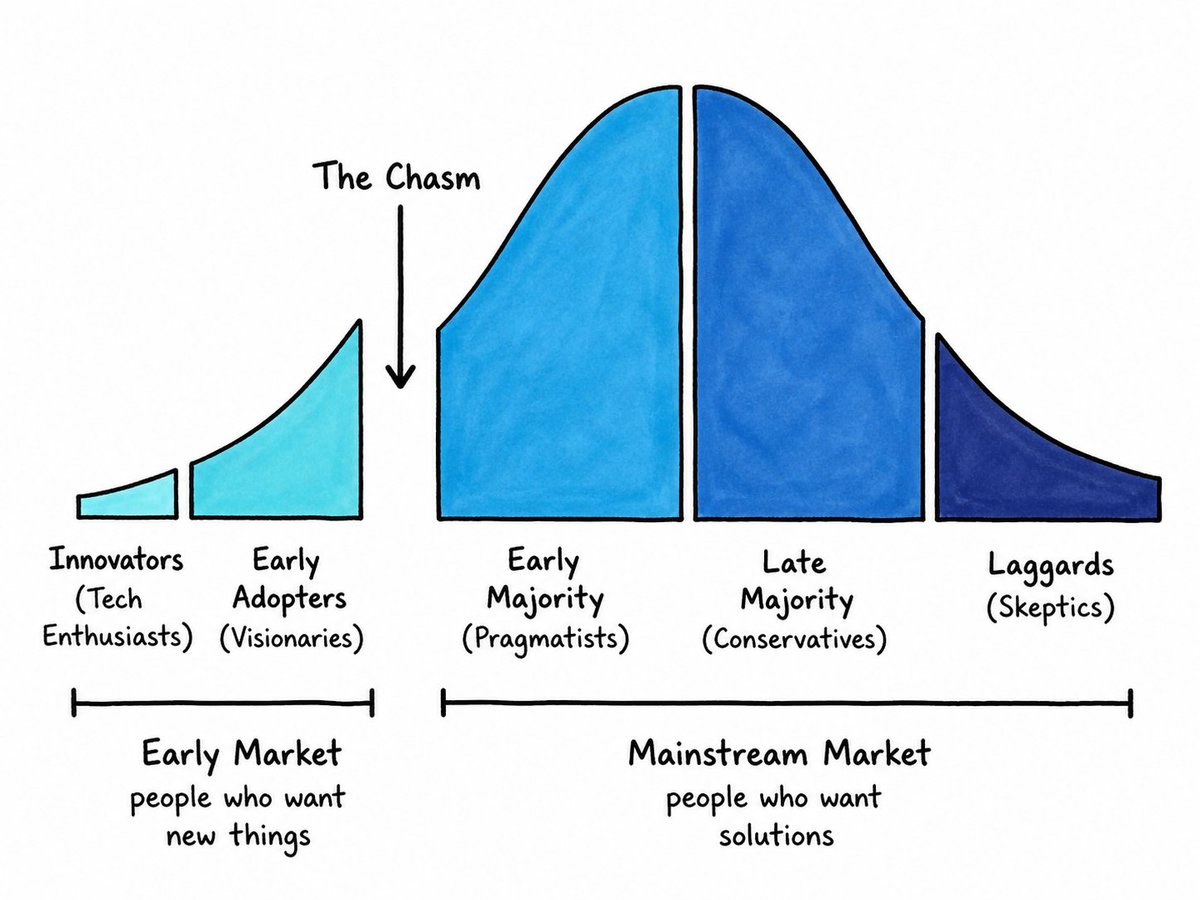 From Crossing the Chasm Overlapping Revolutions Ben Evans showed that revolutions tend to overlap and even catalyze each other. 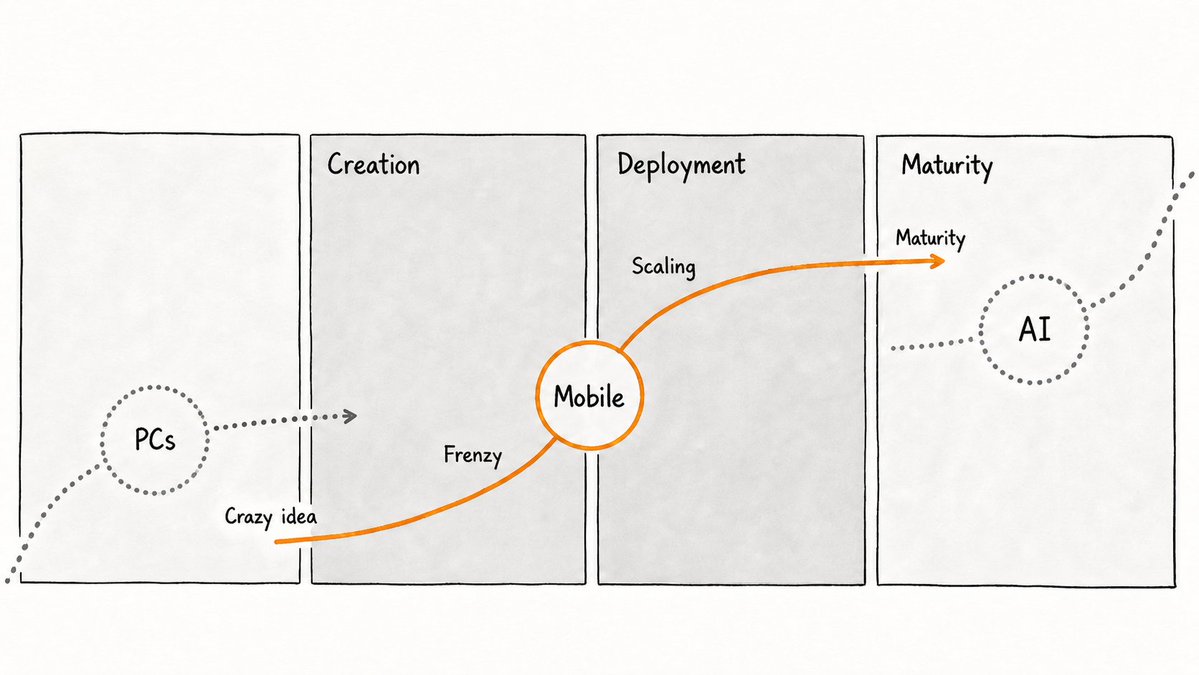 Adapted from Ben Evans / Andreessen Horowitz Humanity is a closed loop, so the deployment phase for one revolution creates the conditions for the paradigm shift that sparks the next revolution. 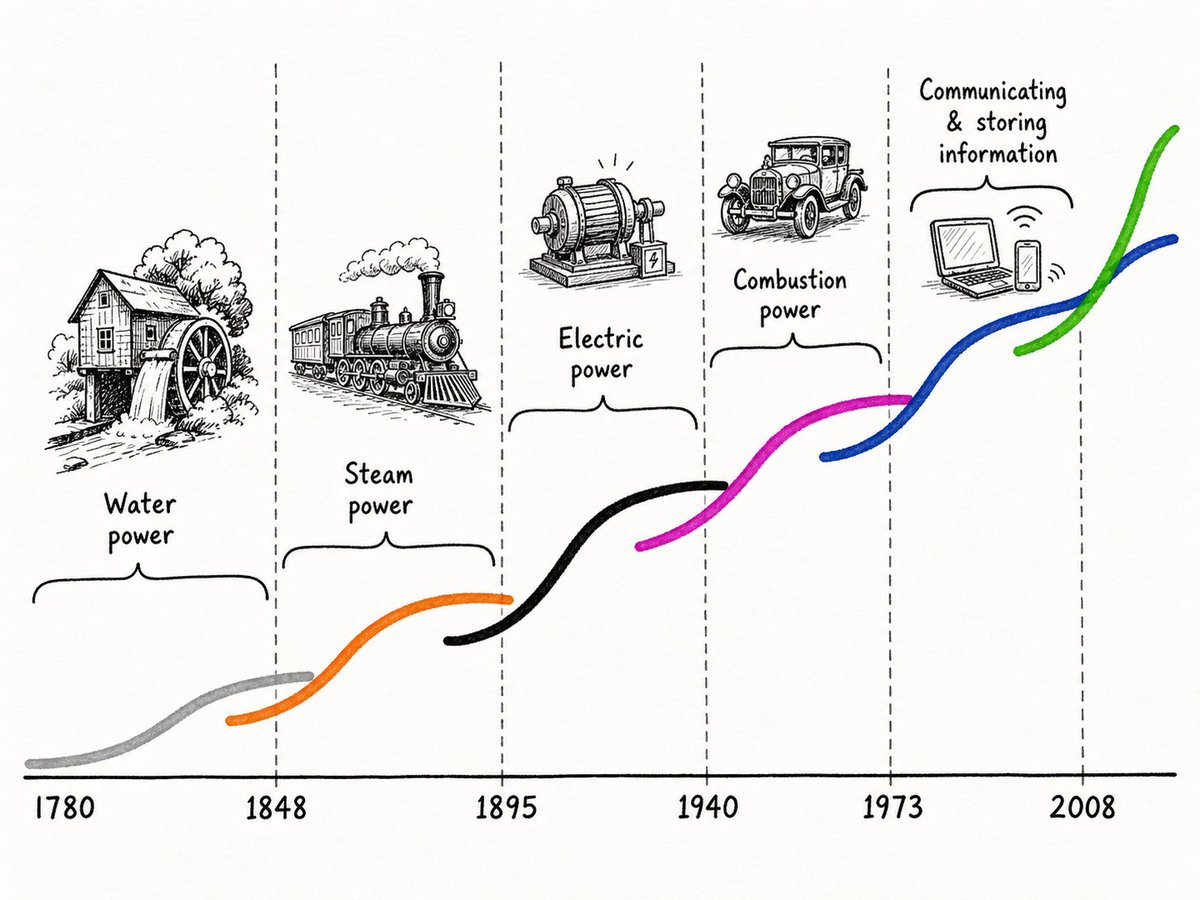 Nested Revolutions Just as revolutions can feed into each other, there are often multiple revolutions within a single revolution. The internet for example includes major revolutions such as cloud as well as micro-revolutions driven by technologies like AWS and Stripe. I believe the Intelligence Revolution is the same - a collection of four overlapping micro-revolutions that will end in one winner which will be the biggest company in history. 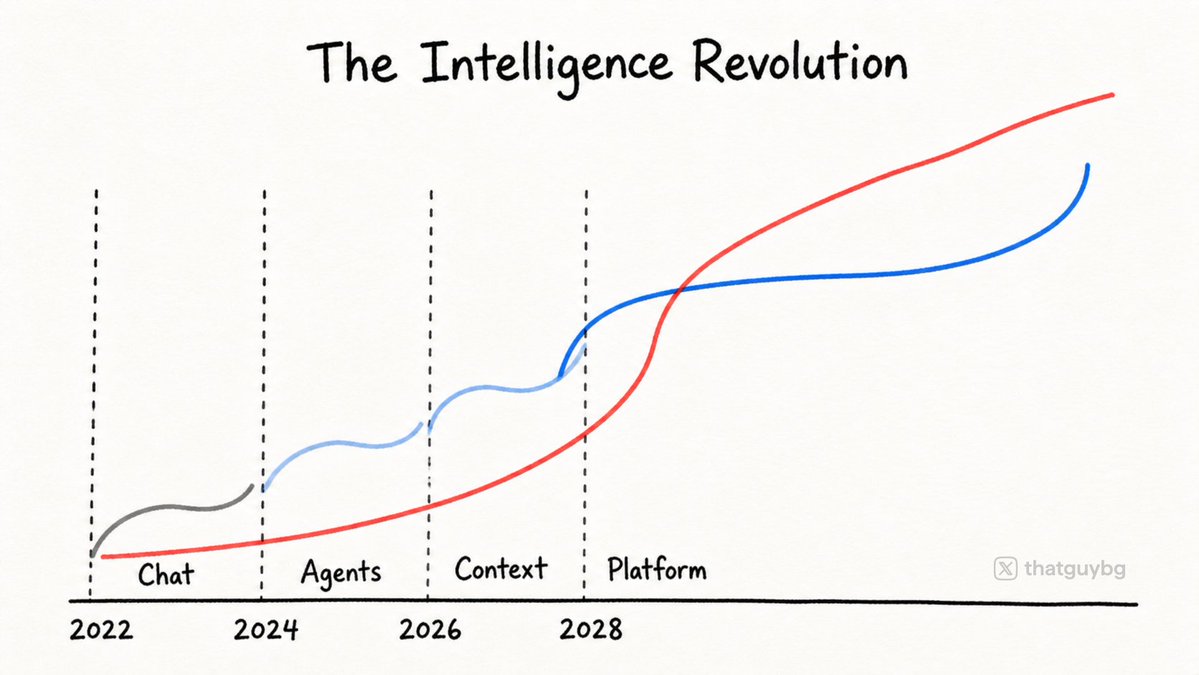 ## R1 - The Chat Revolution The first revolution gave the world intelligence that could hold a conversation. OpenAI was the obvious winner, with ChatGPT now at nearly 1 billion weekly users - the most widely used AI chat app of all time. GPT-4 gave developers reliable AI chat which revolutionized industries like therapy, content creation, and more. Unicorns like Copy.ai, Character.ai and Bible Chat emerged built directly on top of the technology. 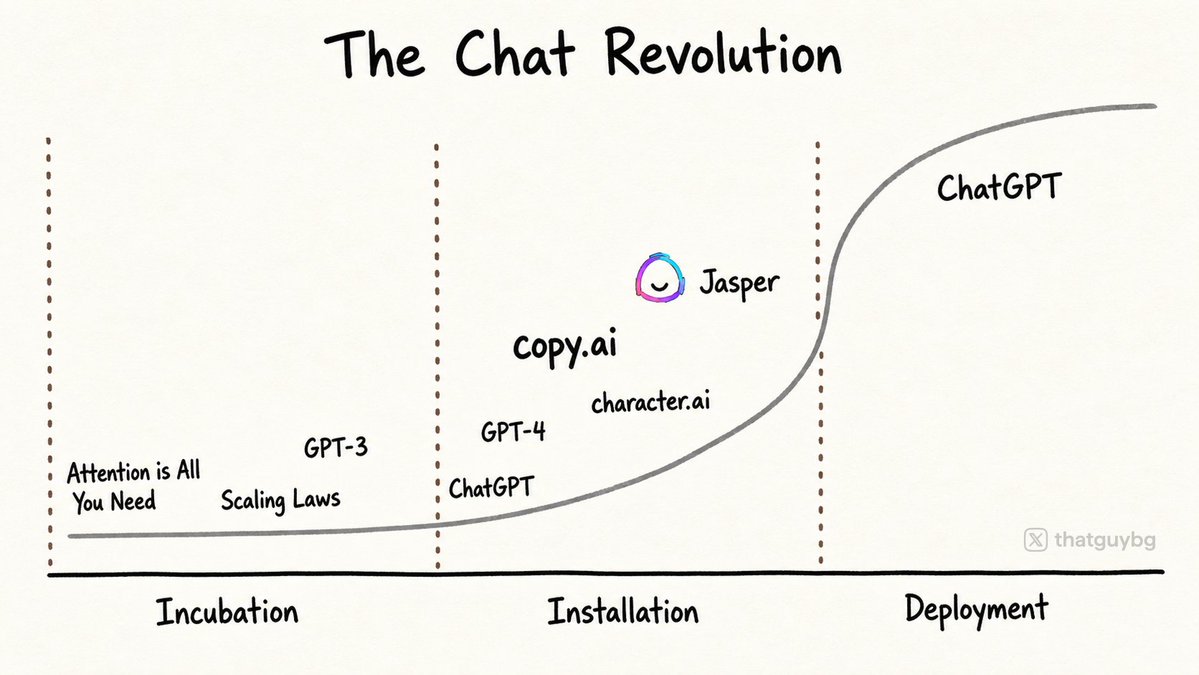 With chatGPT at scale and GPT-4+ in the hands of millions of developers, the AI tinkerers discovered structured output and tool calling, which gave chatbots new abilities. ## R2 - The Agentic Revolution In early 2023, the first examples of structured output allowing chatbots to take actions in external apps (tool calling) drove OpenAI and Anthropic to standardize structured output, tool calling and later MCPs which unleashed the Agentic Revolution. These new capabilities lead to an explosion in agent startups from AI SDRs to customer support agents, with many worth billions today. With the advent of Claude Code, Opus 4.5 and OpenClaw, the capabilities became more reliable and more powerful, which in turn gave rise to even more agent startups. 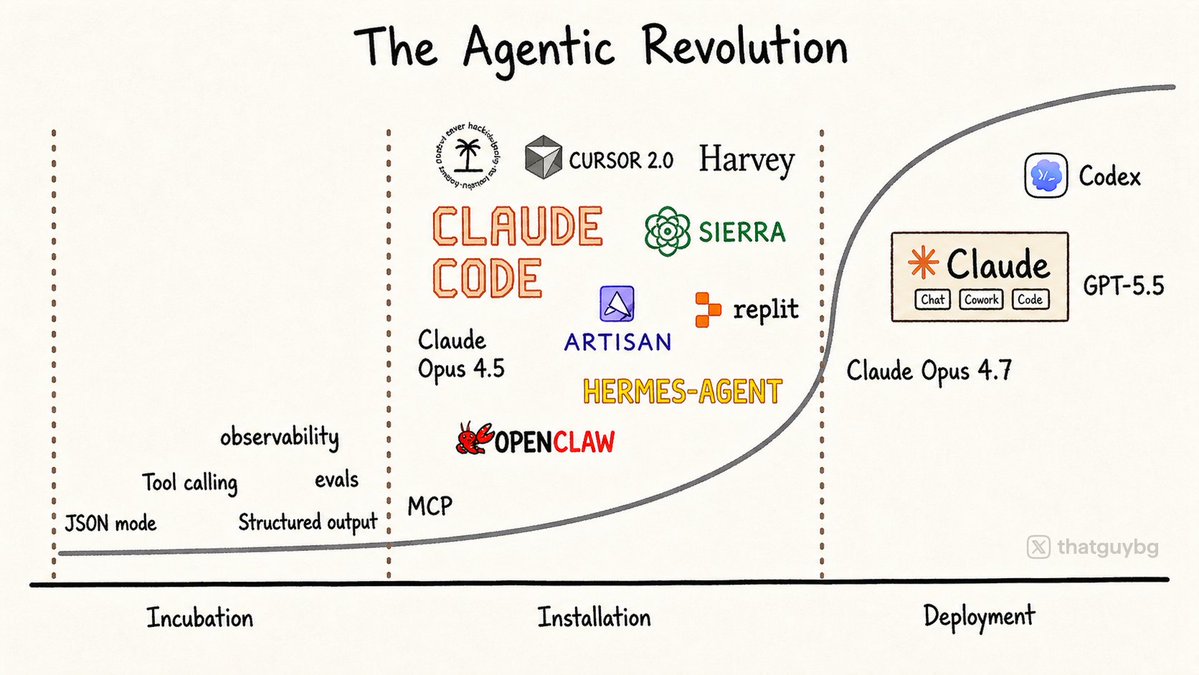 Anthropic has been the clear winner - Claude Cowork/Code is a truly agent native product and the company’s historical earnings growth speaks for itself. Claude has received worldwide attention and has become synonymous with agents. But we are currently at peak frenzy. Half of the latest YC batches are building agent startups, the guys who sold PPE during the pandemic all have AI Psychosis, and there's a 2021-crypto-boom-level energy at OpenClaw meetups around the world. When you're getting texts from your crazy uncle about setting up his Mac Mini and startups are burning $150K on launch videos, you know we're at the top. The opportunities in the agent revolution are still abundant, but the revolutionaries have already zeroed in on the catalyst for the next major paradigm shift: context. It started with Jaya Gupta and Andrej Karpathy's essays on context/knowledge graphs, Obsidian's viral second brain moment, and Garry Tan's GBrain, and will end in a new revolution. ## R3 - The Context Revolution Before the end of 2026, we will see startups and incumbents like Anthropic and Open AI attempt to standardize the context layer for intelligence in the same way that was done for tool calling and MCP in the Agentic Revolution. It fills an obvious gap. Agents that have context dramatically outperform agents without it. But most importantly, it is the first piece of the AI stack that a moat can be built on top of. Models are interchangeable, but context isn’t (as much). We have seen early attempts at standardization like memory.md or the file system paradigm in general, but these are hacky, incomplete solutions to the context problem. 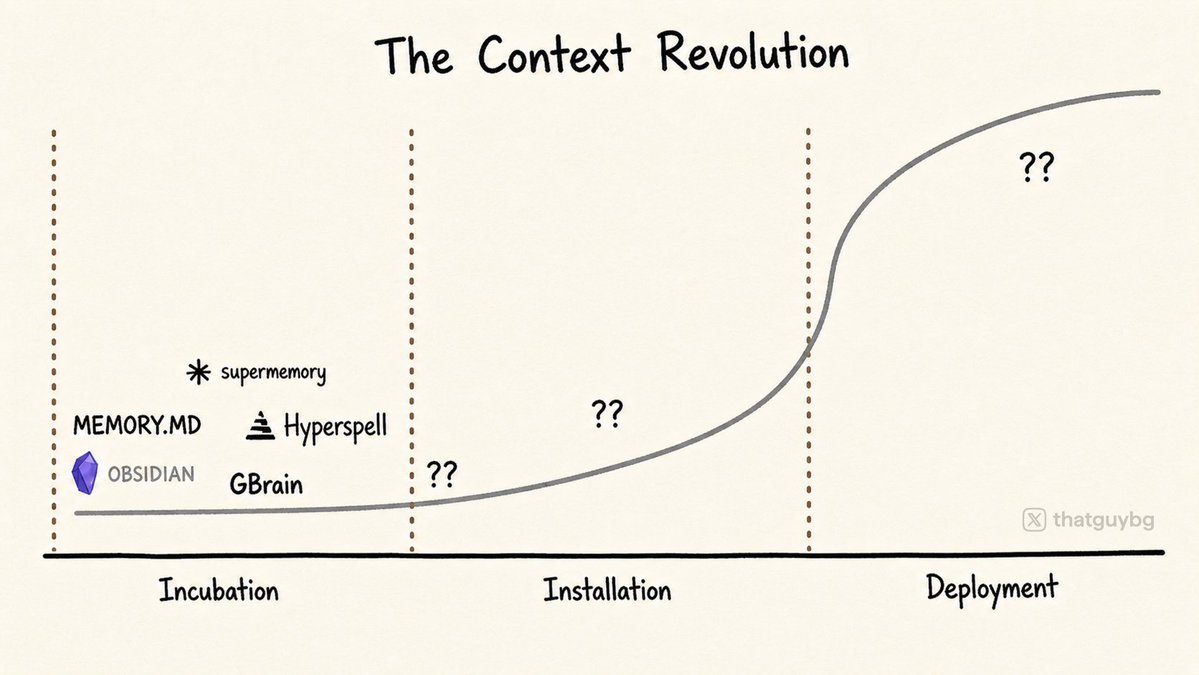 The final primitive, I believe, will be a context/knowledge graph with set entities (like people and companies), relationships, and a handful of tools for searching through and updating information like dreaming, episodic memory, and more. There are many startups (mine included) already building context graphs or company brains as some say, but until the primitive is established, no clear winners can be determined. OpenAI and Anthropic appear to be suspiciously absent, despite having originated the ideas that brought about both the Chat and Agentic revolutions. This time, it's the open source community tinkering with Context. This is actually consistent behavior for incumbents in other technological revolutions. Winners of previous revolutions tend to be wedded to old paradigms technologically, ideologically or through brand (e.g. Google feels more cloud native than Microsoft). So it’s entirely likely that while Anthropic has clearly won the Agentic Revolution, they may not win the Context Revolution. So who will win? I'll save that for another piece, but whoever does will be set up to win the last revolution and the Intelligence Revolution as a whole. ## R4 - The Platform Revolution Every major technology cycle eventually produces a platform: a place where other people build, distribute, and monetize products on top of the winning layer. It creates the powerful network effects and virality necessary to reach hyperscale and build a powerful moat. Apple had the App Store. Amazon had the marketplace. TikTok had the creator graph. The Intelligence Revolution will have the same thing. OpenAI tried to create this with custom GPTs and agent builders. Startups have made similar attempts. But these mostly failed because they lacked the two things a platform needs: - Tools to create extremely high quality supply (e.g. TikTok's video editor) - A place for demand to meet that supply (e.g. TikTok's For You page) Simply put, GPTs and agents weren't any higher quality or easier to create on chatGPT than elsewhere and chatGPT users didn't really want them. The Context Revolution changes that. When it is deployed, millions of people will have a living database of their most important information: people, companies, conversations, meeting notes, documents, decisions, and more. That database becomes the substrate for a spectacular range of agents and generative apps. The winner of the Context Revolution that owns that substrate simply needs to lean in by: - Providing the best tools for creating agents and apps (which is nearly automatic when you own the context layer) - Creating a place where users can discover, use, and pay for them. Today, tinkerers discover agents and generative apps on GitHub, X, and other corners of the internet. It is what Chris Dixon would call a "weak solution" - a hacky under-optimized way to solve a problem. 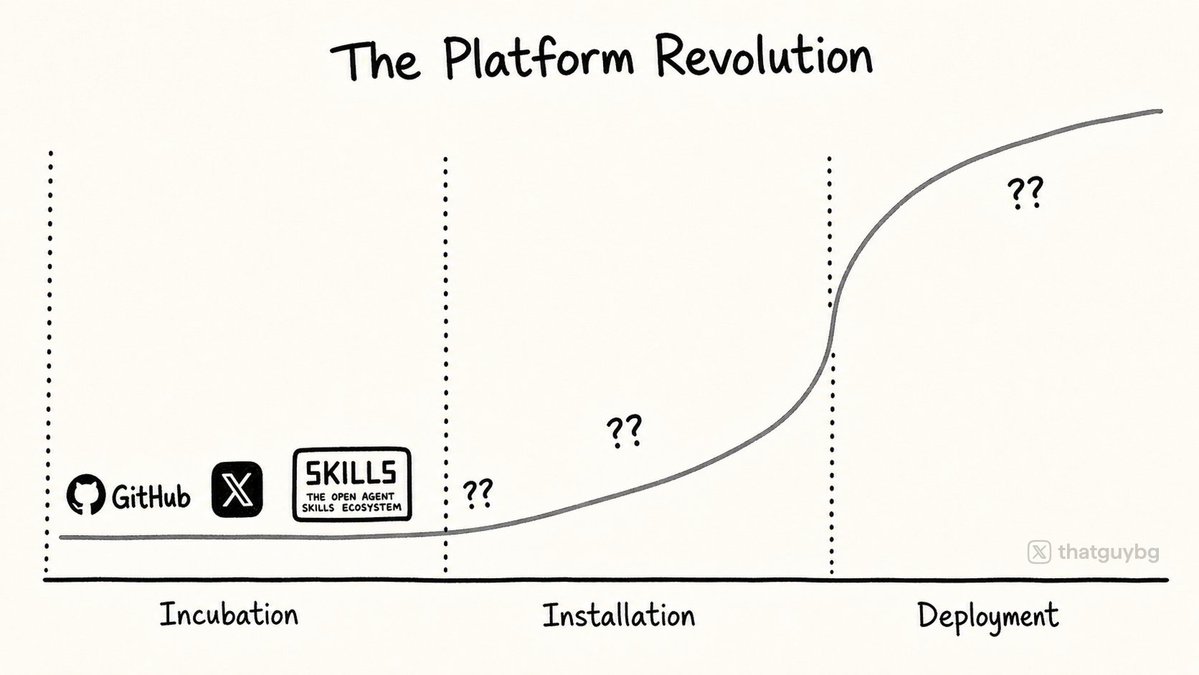 It's a clear cut example of the incubation phase of a revolution where the market is begging for a solution. This is the same transition TikTok went through. Video was taking off on social media platforms designed for text or photos. TikTok launched as the tool to create high quality videos to post on other platforms. But once it aggregated the supply of quality videos, it was able to aggregate demand, transitioning to the best place to consume video as well. And from there the flywheel just keeps spinning. 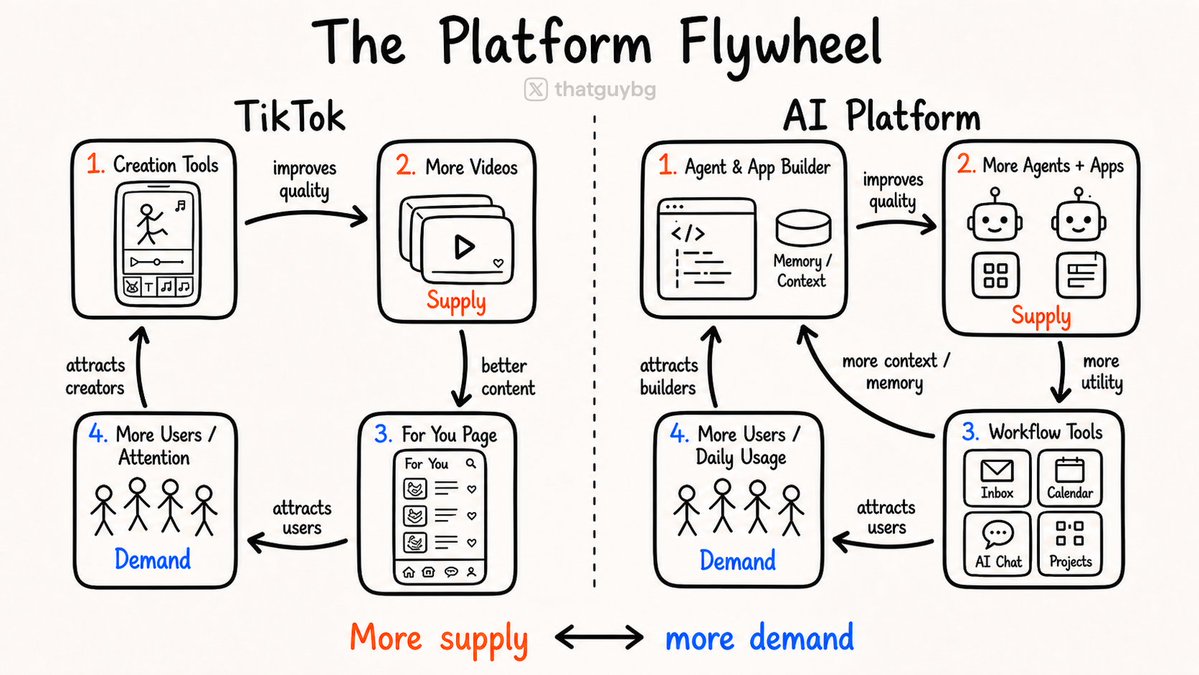 Here's the logic: - Context is sticky and is the backbone of the highest quality agents and generative apps. - Whoever wins the Context Revolution is positioned to become the tool for creating the highest quality agents and apps. - Whoever becomes the tool for creating the highest quality agents and apps is positioned to become the place for discovering, using, and paying for them. Once a Platform like this is established, it sparks a Platform Revolution where a flurry of new businesses are built on top of it. - TikTok drove content businesses - Apple's App Store drove mobile app businesses - Shopify drove eCommerce businesses But here's where it gets wild. The most powerful platforms become indexes of the markets they aggregate: single proxies for entire categories. Apple became an index of mobile software. Amazon became an index of e-commerce. Shopify became an index of independent merchants. So what market would a platform for agents and generative apps aggregate? All of them. - Whoever becomes the place for discovering, using and paying for agents and apps becomes an index on the AI industry - Agents will replace (digital) human labor and generative apps will replace software eventually, so an index on the AI industry becomes an index on all industries that touch a computer today (about 50% of the entire global economy). Of course, it doesn't end there. Marc Andreessen said "software is eating the world" in 2011 and now AI is eating software. As software and agents get easier to create and humanoid robots scale to production, more and more of the physical economy will become digitized and consumed by AI. This is why the winner of the Context Revolution and then the Platform Revolution will likely be the most valuable company of all time. There are some early signals of who this may be, but the Context Revolution has barely just begun, so the title is still up for grabs. My company, Micro is a bet to win the Context Revolution and all of the strategic decisions we've made thus far have been driven by an unconscious understanding of the ideas presented in this piece. I wrote this as a map for myself and founders like me to be able to make even better decisions in such a chaotic moment in history. Thanks to Isabel Swope, Ravi Mishra, and Saul Carlin for edits and conversations. ## 相关链接 - [brett goldstein](https://x.com/thatguybg) - [@thatguybg](https://x.com/thatguybg) - [71K](https://x.com/thatguybg/status/2051714355398602957/analytics) - [Copy.ai](http://copy.ai/) - [Character.ai](https://character.ai/) - [$150K](https://x.com/search?q=%24150K&src=cashtag_click) - [Micro](https://micro.so/) - [Upgrade to Premium](https://x.com/i/premium_sign_up) - [1:23 AM · May 6, 2026](https://x.com/thatguybg/status/2051714355398602957) - [71.8K Views](https://x.com/thatguybg/status/2051714355398602957/analytics) - [View quotes](https://x.com/thatguybg/status/2051714355398602957/quotes) --- *导出时间: 2026/5/6 20:53:51* --- ## 中文翻译 # 智能革命的四大微型革命 **作者**: brett goldstein **日期**: 2026-05-05T17:23:15.000Z **来源**: [https://x.com/thatguybg/status/2051714355398602957](https://x.com/thatguybg/status/2051714355398602957) ---  我曾经受聘为谷歌的 CEO 预测未来。 作为并购团队的一员,我的工作是在技术趋势变得显而易见之前研究其走向,以便谷歌能够据此调配数十亿美元的资源。 在 Scale AI 等初创公司成名之前,我就与这些微不足道的小公司有过接触;在市场形成甚至还没有名字之前,我就观察过它们的诞生;我也试图弄清楚哪些转变是真实的,哪些仅仅是噪音。 我亲历了 2014 年最后一次 AI 热潮的爆发与破灭。我甚至协助谷歌启动了一款类似 ChatGPT 的消息应用和助手产品,后来我创办了一个加速器,在那里向数百位创始人讲授“如何思考未来”。 这一轮 AI 周期当然与众不同。这是一场智能革命。 身陷革命之中时,你总会觉得混乱不堪,许多人会基于短视的眼光,将自己的职业生涯和生意押注在革命的发展轨迹上。 但每一次革命都遵循相同的模式。 这种模式如此可预测,以至于我有信心将自己的职业生涯和生意都押注在其上。 所以我想,不妨就直接明确我的预测: 1. 智能革命将展开为四个微型革命:对话、智能体、上下文,以及平台。 2. 智能革命的获胜者将是“上下文革命”的获胜者。在对话和智能体未能形成真正转换成本的地方,上下文却能做到。一旦用户在上下文革命中聚合,一个聚合了整个 AI 行业(生成式应用和智能体)的平台将在其上建立。 3. 前两轮革命中几乎所有的参与者都将被淘汰,但仍有机会让新玩家赢得上下文革命,进而赢得智能革命。从历史上看,现有巨头很难连续赢得多轮革命,而且 OpenAI 和 Anthropic 在关于上下文的讨论中可疑地缺席了。 4. 智能革命的获胜者将成为历史上最大的公司,因为它将成为 AI 行业的指数,而 AI 将吞噬所有数字劳动力和软件。随着智能体和软件变得更容易构建,以及机器人技术进入大规模生产,AI 反过来又将越来越多地吞噬世界经济。 ## 革命是如何发生的 关于技术革命解剖学的文献汗牛充栋。这是像 Benedict Evans、Geoffrey Moore、Balaji Srinivasan 以及我最喜欢的 Carlota Perez 这样精通计算机的资本主义哲学家们的消遣活动。 他们都提出了不同的理论,但实际上,它们都归结为一个简单的框架: 1. 孵化期 —— 革命者们有时会花上数年时间反复摆弄那些边缘的想法。 2. 安装期 —— 范式转移引发狂热,随后在追求新机会的过程中发生崩盘。 - 火花/爆发 —— 当一个想法遇到完美的条件时,突破就会发生。 - 狂热 —— 创业家和资本蜂拥而入,追逐由范式转移解锁的新机会。 - 崩盘 —— 当资本部署到最佳机会中,营销/创新预算耗尽,且实验触及极限时,狂热结束,大规模的公司灭绝随之而来。 3. 部署期 —— 革命的获胜者达到规模,并将产品部署给早期采用者之外的群体。  Carlota Perez(蓝色)和 Gartner(黑色)技术革命框架的叠加 孵化期 革命总是始于革命者,即那个变化原始汤中的微生物。 在政治领域,他们是推动新政策的活动家;在社会领域,他们是定义文化的艺术家和公众人物;在科技领域,他们是把数字系统推向极限的捣鼓者。 正如他们所说:“如果你想看看未来,就花点时间和你那个最古怪、最懂技术的朋友待在一起。”  家酿计算机俱乐部是个人计算机革命中的革命者 火花 最终,正确的想法遇到了正确的条件,从而创造了范式转移。 这就是导致范式转移的“啊哈(灵光一现)”时刻,它为革命提供了动力。 革命通常始于以下三种范式转移之一: - 监管转移 —— 法律的变化,如大麻、稳定币或肽类(很快)。 - 文化转移 —— 大规模的人类行为变化,如 Z 世代进入职场、新冠疫情或政治极化。 - 技术转移 —— 技术突破,如晶体管、iPhone + 应用商店、比特币白皮书,或《Attention Is All You Need》+ 缩放定律。 对于技术革命,转移通常始于创造一种新工具,它能大幅降低工程师创造或分发高价值产品的成本或难度。 - 制作书籍的印刷机 - 制造枪支的 interchangeable parts(互换性零件) - 制作音乐的数字音频工作站 - 制作网站的 AWS - 构建互联网业务的 Stripe - 制作 AI 产品的 LLM 事实上,技术的核心力量在于民主化,让事情变得更便宜或更容易,从而使更多人能够触及。  每一次革命看起来都像工业革命,当构建模块变得可组合时,巨大的机会被解锁 狂热 当高价值产品的构建成本突然大幅降低且变得更容易时,创业者会大量涌入。 然后是资本。 接着是更多的创业者和更多的资本。 就像数百万年前的寒武纪大爆发,当大气中的含氧量突然增加时,生物多样性繁盛起来,在火花迸发后,初创公司的数量也变得多到令人应接不暇。  当资源丰富时,公司不必优化其支出。 事实上,资源丰富度与任何系统的探索性或利用性直接相关,无论是泡沫中的初创公司、牛市中有新弹药的风投、寒武纪大爆发中的微生物,还是还有大把光阴的年轻人(寻求旅行和新的友谊)。 在狂热阶段,竞争和资本的充裕引发了竞购战、昂贵的营销活动以及其他铺张浪费的开支。  抱歉 Roy <3 竞争将支出推得越来越高。 初创公司在品牌和营销上的花费与泡沫的严重程度之间似乎存在直接的相关性。 如果你不得不问这是不是泡沫,那它很可能就是泡沫。 崩盘 在某些时刻,市场会饱和,技术的局限性被发现,企业的营销/创新预算被耗尽,炒作降温,资源开始收缩。 寒武纪大爆发数年后,随着生态系统成熟,资源竞争变得更加激烈,“修剪”随之而来。适应能力较差的生物消亡了。 同样,管理不善或追逐泡沫支撑的机会的公司会消亡,革命达到成熟期。 部署期 崩盘之后,获胜者巩固权力,他们的技术被大规模采用,护城河变得难以逾越。 革命走向企业化,进入部署期。 跨越鸿沟 部署期可能持续多年,因为某些个人和行业采用新范式的速度比其他人慢。 Geoffrey Moore 的经典著作《跨越鸿沟》完美地解释了这一点:首先是早期采用者/捣鼓者(年轻人和科技公司),最后是落后者(老年人和机构)。  摘自《跨越鸿沟》 重叠的革命 Ben Evans 指出,革命往往会重叠,甚至相互催化。  改编自 Ben Evans / Andreessen Horowitz 人类社会是一个闭环,因此一场革命的部署阶段为引发下一场革命的范式转移创造了条件。  嵌套式革命 正如革命可以相互 feed(滋养),在一场单一的革命中往往包含多场革命。 例如,互联网包括了云计算等重大革命,以及由 AWS 和 Stripe 等技术驱动的微型革命。 我相信智能革命也是如此——它是四个重叠的微型革命的集合,最终将产生一个获胜者,这家公司将成为历史上最大的公司。  ## R1 - 对话革命 第一场革命赋予了世界能够进行对话的智能。 OpenAI 是显而易见的获胜者,ChatGPT 目前拥有近 10 亿周活跃用户——是有史以来使用最广泛的 AI 聊天应用。 GPT-4 为开发者提供了可靠的 AI 聊天功能,这彻底改变了治疗、内容创作等行业。 像 Copy.ai、Character.ai 和 Bible Chat 这样的独角兽公司直接基于该技术应运而生。  随着 ChatGPT 达到规模化,以及 GPT-4+ 被数百万开发者掌握,AI 捣鼓者们发现了结构化输出和工具调用,这赋予了聊天机器人新的能力。 ## R2 - 智能体革命 2023 年初,结构化输出允许聊天机器人在外部应用中执行操作(工具调用)的早期示例,促使 OpenAI 和 Anthropic 标准化了结构化输出、工具调用,以及后来的 MCP,从而引发了智能体革命。 这些新能力导致智能体初创公司的爆发,从 AI SDR(销售开发代表)到客户支持智能体,许多公司如今的估值已达数十亿美元。 随着 Claude Code、Opus 4.5 和 OpenClaw 的出现,这些能力变得更加可靠和强大,这反过来又催生了更多的智能体初创公司。  Anthropic 是明显的获胜者——Claude Cowork/Code 是一款真正的智能体原生产品,该公司历史收益的增长不言自明。Claude 受到了全球范围内的关注,并已成为智能体的代名词。 但我们目前正处于狂热的顶峰。 最新一批 YC 创业公司中有一半都在构建智能体初创公司,那些在大流行期间倒卖个人防护设备(PPE)的人全都患上了“AI 精神错乱症”,全球各地的 OpenClaw 聚会洋溢着 2021 年加密货币繁荣时期的能量。 当你那些疯狂的叔叔发短信给你询问如何设置 Mac Mini,初创公司在启动视频上烧掉 15 万美元时,你就知道我们已经在顶峰了。 智能体革命中的机会依然丰富,但革命者们已经聚焦于下一次重大范式转移的催化剂:上下文。 这一切始于 Jaya Gupta 和 Andrej Karpathy 关于上下文/知识图谱的文章、Obsidian 关于“第二大脑”的病毒式传播时刻,以及 Garry Tan 的 GBrain,并将以一场新的革命结束。 ## R3 - 上下文革命 在 2026 年底之前,我们将看到初创公司和 Anthropic、OpenAI 等现有巨头尝试标准化智能的上下文层,其方式就像在智能体革命中标准化工具调用和 MCP 那样。 这填补了一个明显的空白。有上下文的智能体,其表现远胜于没有上下文的智能体。 但最重要的是,这是 AI 堆栈中第一个可以构建护城河的部分。 模型是可以互换的,但上下文(在较大程度上)不是。 我们已经看到了标准化的早期尝试,如 memory.md 或一般的文件系统范式,但这些对于上下文问题来说只是粗制滥造、不完整的解决方案。  我认为,最终的基元将是一个上下文/知识图谱,其中包含设定的实体(如人和公司)、关系,以及少量用于搜索和更新信息的工具,如“做梦”、情景记忆等。 许多初创公司(包括我的公司)已经在构建上下文图谱或所谓的“公司大脑”,但在基元建立之前,无法确定明确的获胜者。 OpenAI 和 Anthropic 似乎可疑地缺席了,尽管正是它们带来了引发对话革命和智能体革命的想法。这一次,是开源社区在捣鼓上下文。 实际上,这与其他技术革命中现有巨头的行为是一致的。前几轮革命的获胜者往往在技术上、意识形态上或品牌上受困于旧的范式(例如,Google 感觉比 Microsoft 更具云原生特性)。 因此,虽然 Anthropic 明显赢得了智能体革命,但它完全有可能赢不了上下文革命。 那么谁会赢呢? 我将把这个问题留待下一篇文章探讨,但无论谁赢了,都将成为赢得最后一场革命以及整个智能革命的有力竞争者。 ## R4 - 平台革命 每一次重大的技术周期最终都会产生一个平台:一个供其他人构建、分发和盈利产品的场所,它们位于获胜层之上。它创造了达到超大规模和构建强大护城河所需的强大网络效应和病毒式传播。 苹果拥有应用商店。亚马逊拥有市场平台。TikTok 拥有创作者图谱。智能革命也将拥有同样的东西。 OpenAI 试图通过自定义 GPT 和智能体构建器来创建这个平台。初创公司也做过类似的尝试。但这些大多失败了,因为它们缺乏平台需要的两样东西: - 用于创建极高质量供应的工具(例如 TikTok 的视频编辑器)。 - 需求与供应相遇的地方(例如 TikTok 的“为你推荐”页面)。 简而言之,在 ChatGPT 上创建 GPT 和智能体并不比在其他地方更容易或质量更高,而且 ChatGPT 用户也并不真正需要它们。 上下文革命改变了这一点。 当上下文层部署到位时,数百万人将拥有一个包含其最重要信息的动态数据库:人物、公司、对话、会议记录、文档、决策等等。 该数据库将成为大量智能体和生成式应用的基底。 赢得上下文革命并拥有该基底的获胜者,只需要顺势而为: - 提供创建智能体和应用程序的最佳工具(当你拥有上下文层时,这几乎是自动实现的)。 - 创建一个用户可以发现、使用和付费使用这些工具的地方。 如今,捣鼓者在 GitHub、X 和互联网的其他角落发现智能体和生成式应用。这正是 Chris Dixon 所说的“弱解决方案”——一种粗制滥造、未优化的解决问题的方式。  这是革命孵化阶段的一个明显例子,市场在乞求解决方案。 这正是 TikTok 经历的过渡。 视频在为文本或照片设计的社交媒体平台上兴起。TikTok 最初是作为在其他平台上发布高质量视频的工具而推出的。但一旦它聚合了高质量视频的供应,它就能聚合需求,进而转变为消费视频的最佳场所。从那时起,飞轮就一直在旋转。  逻辑如下: - 上下文具有粘性,是最高质量智能体和生成式应用的支柱。 - 赢得上下文革命的人将定位成为创建最高质量智能体和应用程序的工具。
C ChatGPT Agent Loop 优化技术解析 本文深入解析了 ChatGPT 如何通过 Harness、API 和 Inference 三层架构优化 Agent 循环,重点介绍了持久化 WebSocket、增量 Token 化、KV 缓存管理和推测解码等技术,以降低成本并提升效率。 技术 › Harness Engineering ✍ Bytebytego🕐 2026-07-30 Agent优化LLM架构ChatGPTOpenAI性能成本控制WebSocketTokenization
C ChatGPT Work 新手完整教学 本文详细介绍了 OpenAI 推出的工作型 AI Agent —— ChatGPT Work。文章阐述了其与普通 ChatGPT、Codex 的区别,重点说明了它在会议整理、简报制作、表格分析等职场任务中的应用,并提供了新手入门的五个步骤、实用 Prompt 以及资料安全风险评估。 技术 › Agent ✍ mousepotato🕐 2026-07-10 ChatGPTOpenAI职场效率AI实战Agent工具指南风险提示
为 为何应用层未死:避开 AI 黄砖路指南 文章探讨了创业公司如何在 OpenAI 和 Anthropic 等大厂的阴影下生存。作者提出了“黄砖路”的概念,指代大厂直接主导的通用领域(如代码生成、写作),并建议初创企业应避开此路径,转而专注于“奥兹国其他地方”——即垂直领域、多步骤工作流及遗留系统整合等大厂难以通过单一模型解决的复杂问题。文章分析了数据飞轮、模型复杂性管理及私有行业知识作为初创公司的护城河。 技术 › Agent ✍ Joe Schmidt IV🕐 2026-05-28 AI创业AgentOpenAIAnthropic行业洞察垂直应用黄砖路模型护城河投资策略
O OpenAI、Anthropic 都开始押注 FDE,FDE 才是 Agent 时代的 PMF 范式? OpenAI、Anthropic 和 Google 在 2026 年不约而同地押注 FDE(前置部署工程师),成立专门的部署公司或大规模招聘。文章深入分析了 FDE 的起源、为何成为 Agent 时代的刚需,以及它是否真的是 PMF 范式。FDE 通过驻场解决 AI 落地难题,但也面临掩盖产品缺陷和利润率挑战的风险。 技术 › Agent ✍ Kafka🕐 2026-05-20 FDEAgentPMFOpenAIAnthropic企业服务PalantirAI部署行业趋势
Z Zero to AI Engineer — The Roadmap Nobody Explains Properly 本文提供了一个为期14周的实战型AI工程师学习路线图,旨在解决初学者“只学不做”的困境。文章从环境搭建开始,详细列出了从AI基础、机器学习、深度学习到现代LLM工程及Agent开发的最佳免费资源(如OpenAI/Anthropic官方课程、Karpathy的教程等)。路线强调通过GitHub项目实践来理解原理,最终掌握部署与评估技能,真正从零开始构建可用的AI系统。 技术 › LLM ✍ Shruti Codes🕐 2026-05-17 AI工程师学习路线LLMAgent深度学习RAG实战教程机器学习OpenAIAnthropic
A AGI 前夜:智力进入接口、成本表和工作流 文章分析了 AGI(通用人工智能)临近时的现实特征,指出其冲击力不在于机器像人,而在于智力成为一种可复制、可计价的基础设施。文章探讨了 OpenAI、DeepMind、Anthropic 等巨头对 AGI 的定义与路径,强调 AGI 首先是劳动力供给的冲击。同时,文章从任务链路、接口、稳定性、成本四个维度定义了 AGI 的现实门槛,并揭示了算力战争背后的能源与地缘政治博弈。 技术 › LLM ✍ Russell🕐 2026-05-01 AGI人工智能OpenAIDeepMindAnthropicAgent算力技术趋势职场变革Karpathy
T Token计算:下一个十年的成本战争 文章指出,随着AI技术的发展,单一的“每百万Token成本”已不再是衡量支出的唯一标准。OpenAI、Anthropic等厂商引入了Session Runtime、Cache、Web Search及Outcome等多元化计费维度。这意味着企业必须从单纯的模型比价,转向针对不同任务的综合成本考量。AI经济的价值正在分层,底层资源作为“公用事业”商品化,而封装了行业Know-how和结果交付的上层服务,则将成为价值沉淀的新高地。 技术 › LLM ✍ 华尔街财经 | WSInsights 【Zenzhe 】🕐 2026-04-28 Token经济成本分析AI商业化OpenAIAnthropic定价模型AgentLLM
T The Codex Masterclass:Riley Brown 的 AI 代理工作流指南 本文详细介绍了 Riley Brown 关于 OpenAI Codex 的使用教程。文章指出 Codex 整合了编程与业务工作流,确立了新的界面标准(左侧聊天、中间代理、右侧成果)。内容包括如何利用 Skills 压缩重复工作流、设置多任务并行、连接 Notion 权限管理,以及四个上手实战项目。Riley 强调 GPT 5.5 时代浏览器代理的潜力,并鼓励用户通过探索和试错来掌握 AI 工具。 技术 › OpenAI ✍ The Startup Ideas Podcast (SIP)🕐 2026-04-28 OpenAICodexAgent工作流教程自动化Riley BrownChatGPT生产力工具
O OpenAI Agents SDK 重大升级:Harness 与 Sandbox 架构分离 OpenAI 于 2026 年 4 月 15 日升级 Agents SDK,核心是将 Harness 和 Sandbox 做进 SDK 并实现架构分离。新架构将 Agent Loop 托管化,解耦计算与控制逻辑,支持 100+ 模型及多云 Sandbox 环境。对比 Anthropic 的工具箱路线,OpenAI 选择了全托管方案,降低开发门槛。 技术 › LLM ✍ Jason Zhu🕐 2026-04-17 OpenAIAgents SDKAgentAnthropicSandbox架构设计MCP开发工具
A Agent Harness 与记忆的重要性 文章探讨了 Agent Harnesses 成为构建 Agent 主导方式的现状,以及其与记忆的紧密联系。作者指出,闭源的 Harness 会导致用户失去对 Agent 记忆的控制权,从而形成严重的供应商锁定。为了构建个性化和具有粘性的 Agent 体验,文章主张 Harness 和记忆应当是开放的,确保用户拥有自己的数据。 技术 › Hermes ✍ Harrison Chase🕐 2026-04-17 AgentMemoryLangChainClaudeOpenAI架构锁定开源Context
一 一文带你看懂 Harness Engineering 本文深入解析了AI工程领域的三次范式跃迁:从Prompt Engineering到Context Engineering,再到当前的Harness Engineering。文章用生动的游戏比喻和OpenAI的实际案例,阐述了Harness Engineering的本质——通过建立约束系统来驾驭强大的AI Agent。 技术 › Harness Engineering ✍ 数字生命卡兹克🕐 2026-04-15 AIAgent工程化范式转移OpenAIAnthropic方法论未来趋势
三 三省六部幻觉:为何虚拟公司式多Agent架构在工程上不成立 文章批判了将多个AI Agent拟人化为“产品经理”、“工程师”等角色进行流水线协作的“三省六部”架构。作者指出该模式忽视了LLM无专业壁垒的特性,导致推理过程在传递中衰减。通过对比Anthropic、OpenAI和Google的工程实践,文章提出真正的多Agent架构应依赖显式状态文件、并行搜索而非线性分工,并强调保持推理链连续性比角色扮演更重要。 技术 › Agent ✍ SagaSu🕐 2026-04-14 Agent架构设计多AgentLarge Language ModelsAnthropicOpenAI工程实践上下文管理技术选型