# How to Build Claude Workflows That Run Without You
**作者**: Chrome
**日期**: 2026-06-04T12:42:35.000Z
**来源**: [https://x.com/0xchromium/status/2062515355306631467](https://x.com/0xchromium/status/2062515355306631467)
---
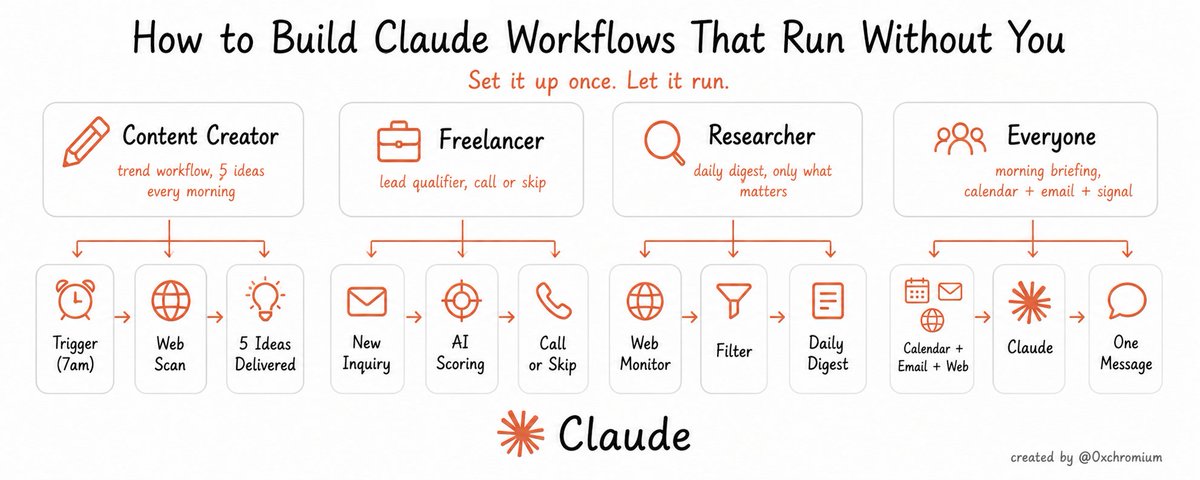
Right now you are doing work by hand that a machine could be doing while you sleep
Every morning you check the same sources for trends, you rewrite the same post for three platforms, you pull the same numbers into the same report, you send the same follow-up email after every call
None of that is thinking, it's repetition, and repetition is exactly what automation takes off your plate
Most people use Claude like a smarter search bar, they ask a question, they get an answer, they copy it out, they move on
A workflow is different, a workflow doesn't wait for you to ask, it runs on a schedule or a trigger, it uses tools to actually do things, and it hands you a finished result instead of a reply
The chat answers, the automation acts
This article shows you exactly what to build, role by role, and how to ship your first one in 30 minutes
## Part 1: What a workflow does that a chat never will
A normal chat with Claude is a conversation, you type, it responds, the work of acting on that response is still yours
A workflow has four parts that a chat doesn't:
- a ROLE, a fixed job written into its system prompt so it behaves the same way every time
- TOOLS, real access to your files, your email, your calendar, the web, a scheduling app
- a TRIGGER, a time or an event that starts it without you asking
- an OUTPUT, a defined thing it produces, a report, a draft, an email, a sorted folder
Put those together and you stop being the person who does the task, you become the person who approves it
That's the whole shift, and once you see it you can't unsee how much of your week is just you being a slow trigger for work that doesn't need you
## Part 2: What to actually build, by role
For each workflow below you get three things, what it does, how much time it gives you back, and one concrete example of it in action
## Content creator
Trend workflow
- What it does: every morning it scans the sources you care about and sends you 5-7 post ideas with the angle already written
- Time saved: 45 minutes of manual scrolling per day, around 5 hours a week
- In action: you open your phone at 8am and there's a message, "Topic X is spiking, here's a contrarian take that fits your audience, here's the hook," you pick one and start writing instead of starting from a blank screen
Repurpose workflow
- What it does: you give it one article, it produces native posts for every platform you run, a thread for X, a carousel outline for LinkedIn, a short script for Reels
- Time saved: 2-3 hours per piece of content
- In action: you paste a 1,200 word article, 90 seconds later you have a 9 tweet thread, a 6 slide carousel, and a 30 second video script, all in your voice, not generic
Weekly review workflow
- What it does: every Sunday it pulls your week's numbers, finds what outperformed, and tells you why in plain language
- Time saved: 1-2 hours of staring at analytics
- In action: "Your 3 best posts this week were all personal stories posted before 10am, your worst were product posts, do more of the first, move product content to a different format"
## Freelancer
Lead qualifier workflow
- What it does: it reads every inbound message from a prospect and tells you if they're worth a call, based on budget signals, fit, and intent
- Time saved: hours of back and forth with people who were never going to pay
- In action: an inquiry comes in, the automation replies to you, "This one mentioned a real budget and a deadline, worth a call, this other one is price shopping, send the template"
Client report workflow
- What it does: it collects the data for a client, formats it into your report template, and writes the summary
- Time saved: 3-4 hours per client per month
- In action: end of month, the automation assembles the numbers, drops them into your template, and writes "Here's what moved this month and what I recommend next," you review and send
Sales call prep workflow
- What it does: before a call it researches the prospect and hands you the questions to ask, the objections to expect, and how to position your price
- Time saved: an hour of prep per call
- In action: you give it a name and a company, it returns three sharp opening questions, the one objection you're most likely to hear, and the exact line that frames your rate as obvious
## Researcher or analyst
Daily digest workflow
- What it does: every day it sends one message with everything that moved in your niche, filtered down to only what matters
- Time saved: 1-2 hours of reading you'd never get back
- In action: 7am, one message, "Three things happened in your space yesterday that you need to know, here they are in two lines each, everything else was noise"
Company teardown workflow
- What it does: you give it a company or a project, it analyzes it against your fixed template and returns a structured breakdown
- Time saved: half a day of manual research per target
- In action: you drop in a company name, it returns the business model, the revenue signals, the weak points, and the opportunity, in the exact format you always use
Keyword monitor workflow
- What it does: it watches the web for your keywords and only pings you when something genuinely relevant shows up
- Time saved: the cost of checking 10 times a day for nothing
- In action: you set the keywords once, then silence until it matters, "Your keyword just appeared in a funding announcement, here's the link and why it's relevant to you"
## For everyone, no matter the role
Morning briefing workflow
- What it does: one message every morning with your calendar, the emails that actually need you, and the trends in your space
- Time saved: 30 minutes of opening five apps before you've had coffee
- In action: 7am, "You have 2 meetings, the 11am needs prep, 3 emails need a reply today, and one thing happened overnight you'll want to see"
File organizer workflow
- What it does: it sorts your files and notes into the right places automatically, by topic, by client, by date
- Time saved: the slow erosion of a messy desktop
- In action: you dump everything into one folder, the automation files it where it belongs and tells you what it did
Follow-up workflow
- What it does: after a meeting it drafts the follow-up email with the next steps already pulled from your notes
- Time saved: the 20 minutes you usually skip, which is why follow-ups don't happen
- In action: meeting ends, a draft is waiting, "Here's the recap and the next step, want me to send it?"
## Part 3: How it works, in plain language
Forget the technical version for a second
A chat is a single question and a single answer, the moment it's done, it's done, nothing happens until you type again
A workflow is a worker with a job description, you write down who it is and what it's responsible for, you give it the tools to do that job, you tell it when to start, and you tell it what to hand you when it's finished
That's it, four pieces:
- ROLE, the job, written as a system prompt
- TOOLS, what it's allowed to touch, files, email, web, calendar, a scheduler
- TRIGGER, what starts it, a time every day or an event like a new email
- OUTPUT, the finished thing it gives you
If you can describe a task to a new assistant in five sentences, you can build it as a workflow
## Part 4: How to build one, step by step
Step 1: write the system prompt with a role and a goal
This is the single most important part, you're hiring, so write the job description
```
You are a [role] for me
Your job is to [the one outcome you want] every [when]
You care about [what good looks like] and you avoid [what bad looks like]
When you're done, give me [the exact format of the result]
Be specific and concrete, never give me filler or generic output
```
The more specific the role, the better the result, "you are a content strategist who finds contrarian angles for a crypto and AI audience" beats "you help with content"
Step 2: connect the tools it needs
A workflow with no tools is just a chat, decide what this job actually touches:
- reading and writing files for reports, drafts, organizing
- email for follow-ups and inbox triage
- calendar for briefings and scheduling
- the web for trends, research, monitoring
- a scheduling app for publishing content
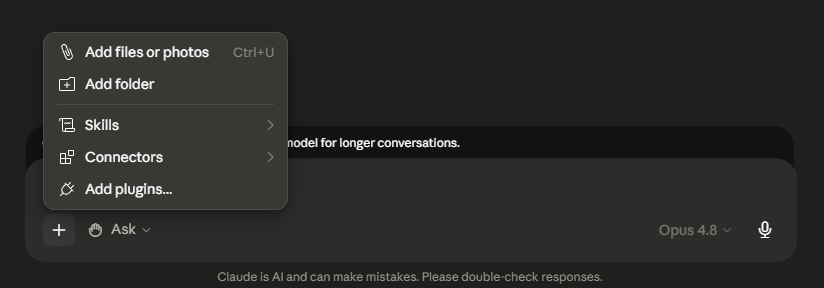
Give it only what the job needs, nothing more
Step 3: set the trigger
Decide when it runs, two options:
- a SCHEDULE, every morning at 7am, every Sunday night, every hour
- an EVENT, when a new email arrives, when a file lands in a folder
For your first workflow, use a schedule, it's the simplest and it's where most of the value is
Step 4: define what it does with the result
Tell it exactly where the output goes, send me a message, save a file to this folder, draft an email but don't send it, post to my scheduler as a draft for approval
For anything that goes to other people, keep yourself in the loop, the automation drafts, you approve, at least until you trust it
Step 5: test it and tune it
Run it once by hand before you let it run on a schedule, look at the output, then fix the prompt
The first run is never perfect, you'll see it being too generic, or missing context, or formatting wrong, so you go back to the system prompt and you add the missing instruction
Three or four rounds of this and the workflow is doing the job exactly how you would
## How to connect the tools and set up your first scheduled task in Claude Cowork
Everything above is the concept, this part is the buttons you actually click, we'll wire up the morning briefing workflow end to end, then you'll have the pattern for all the others
## Part 1: connect the connectors for the morning briefing
The briefing needs three things, your email, your calendar, and the web, here's how to turn each one on
1. Gmail
- Where to find it: in the chat bar click the plus sign or type a forward slash, hover over Connectors, then click Manage connectors, Gmail is in the Google Workspace list
- How to connect it: click Connect next to Gmail, a secure Google login window opens, sign in with the account you actually use, then grant the permissions it asks for, that one Google login covers Gmail, Calendar, and Drive together
- How to check it works: start a new chat and type "summarize my 3 most recent unread emails," if it pulls real messages back, you're connected, if you get an access blocked error, your workspace admin has to whitelist Claude first
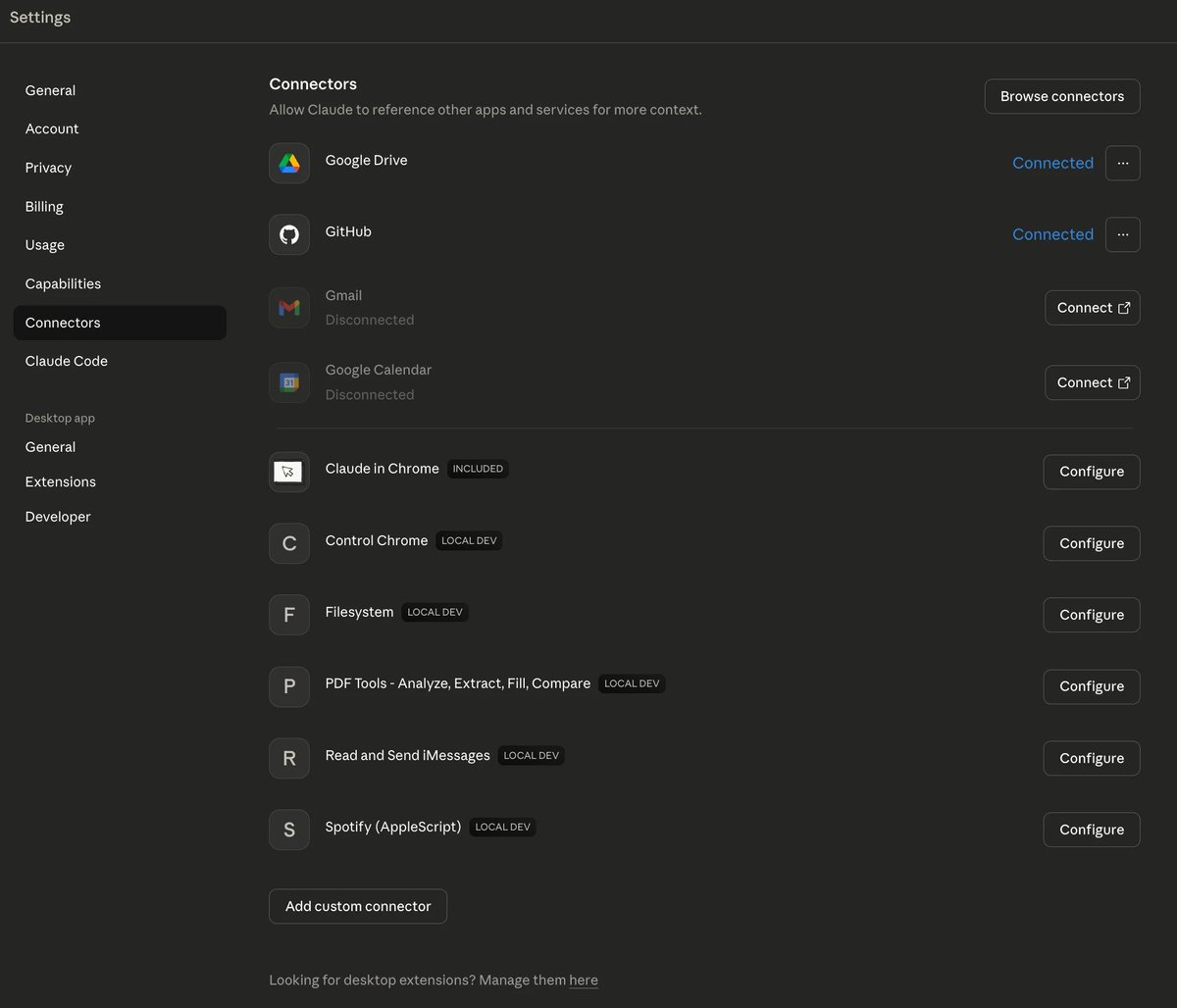
2. Google Calendar
- Where to find it: same place, plus sign or slash, Manage connectors, Google Calendar in the Google Workspace list
- How to connect it: if you already signed into Google for Gmail, Calendar is usually live on the same login, if it shows as separate, click Connect and approve the calendar permissions
- How to check it works: type "what's on my calendar today," if it lists your real events, it's working
3. Web search
- Where to find it: web search isn't a Google login, it's a built-in capability, look in the same connectors and tools menu for web search and make sure it's toggled on
- How to connect it: flip the toggle on, there's no separate account to sign into, it just needs to be enabled
- How to check it works: ask "search the web and tell me one thing that happened in [your niche] today," if it comes back with a fresh link, search is on
## Part 2: set it up as a scheduled task
Connectors give the workflow its hands, the scheduled task gives it a clock, this is what makes it run without you
Open scheduled tasks: in the same plus sign or slash menu, find scheduled tasks, this is where anything that runs on a timer lives
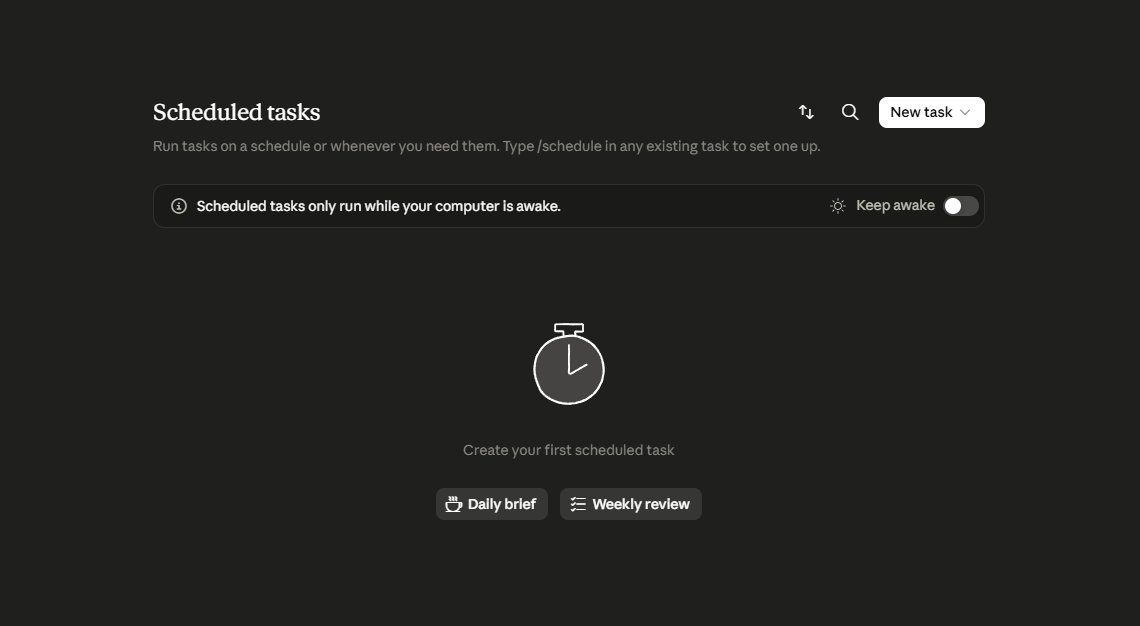
Paste the prompt: create a new scheduled task and drop in the morning briefing prompt from Part 6, the whole block, brackets filled in with your niche
Set the time: set it to run every day at 7am, or whatever time you want the briefing waiting for you, daily is the right cadence for this one
Run it once by hand: before you trust the schedule, trigger it manually once, read what it sends, then go back and fix the prompt if it's too generic or missing something, this is the same tune step from Part 4, just on the real thing
Turn on the schedule: once the manual run looks right, leave the daily schedule on, now it fires every morning on its own and the briefing is there before you open anything
For the other workflows in Part 2 you follow these exact same steps, you just change the prompt and connect different connectors for the job
## Part 5: what to change for each use case
Same five steps every time, here's exactly what changes per workflow
Trend workflow for content
- Prompt: "you are a trend scout for a [niche] audience, find me angles, not just news"
- Tools: web access
- Trigger: daily, early morning
- Output: a message with 5 to 7 ideas and hooks
Repurpose workflow
- Prompt: "you turn one article into native content for [your platforms], match my voice from these examples"
- Tools: file access for reading the source
- Trigger: event, run it when you drop in a new article
- Output: a file or message with one draft per platform
Lead qualifier
- Prompt: "you score inbound leads on budget, fit, and intent, tell me call or skip"
- Tools: email
- Trigger: event, new inquiry arrives
- Output: a one line verdict plus a reason
Client report workflow
- Prompt: "you build my monthly client report in this exact template and write the summary"
- Tools: file access, and whatever holds the data
- Trigger: monthly schedule
- Output: a finished report file ready to review
Daily digest workflow
- Prompt: "you monitor [niche] and send me only what matters, filter hard"
- Tools: web access
- Trigger: daily schedule
- Output: a short message, two lines per item
Morning briefing workflow
- Prompt: "you give me my day in one message, calendar, urgent email, one relevant trend"
- Tools: calendar, email, web
- Trigger: daily, before work
- Output: one message, nothing more
You're not learning six different skills, you're changing the role line, the tools, and the trigger, the machine underneath is identical
## Part 6: where to start, your first workflow in 30 minutes
Don't build the complicated one first, build the morning briefing workflow, it's the simplest, it touches the most useful tools, and you'll feel the value the next morning
Here's the prompt, copy it and fill in the brackets:
```
You are my morning briefing workflow
Every morning at 7am, send me one message with three sections:
1. TODAY, my calendar for the day, flag any meeting that needs prep
2. INBOX, only the emails that actually need a reply today, skip newsletters and noise
3. SIGNAL, one thing that happened in [your niche] in the last 24 hours that I'd want to know, two lines max
Rules:
- one message, no preamble, no sign off
- if a section is empty, say so in one line and move on
- never pad it with filler, I want the shortest version that's still complete
```
Now do the four steps:
- paste that as the system prompt
- connect calendar, email, and web access
- set it to run every day at 7am
- tell it to send the result as a message
Run it once by hand tonight, read the output, fix anything that's off, then let it run tomorrow on its own
That's a real workflow, working for you, before lunch
## What changes after your first one
The first workflow is never the one that matters most, the briefing workflow saves you 30 min, that's not the point
The point is what happens in your head after you watch it run, you stop seeing your week as a list of tasks and you start seeing it as a list of jobs you can hand off
The repurpose workflow becomes obvious, then the report workflow, then the lead qualifier, and within a month the question flips from "how do I do this" to "should I be doing this at all, or should a workflow"
The barrier was never the technology, it was thinking of yourself as the person who has to do the work
Build the briefing workflow tonight, that's where it starts
## 相关链接
- [Chrome](https://x.com/0xchromium)
- [@0xchromium](https://x.com/0xchromium)
- [413K](https://x.com/0xchromium/status/2062515355306631467/analytics)
- [Upgrade to Premium](https://x.com/i/premium_sign_up)
- [8:42 PM · Jun 4, 2026](https://x.com/0xchromium/status/2062515355306631467)
- [413.2K Views](https://x.com/0xchromium/status/2062515355306631467/analytics)
- [View quotes](https://x.com/0xchromium/status/2062515355306631467/quotes)
---
*导出时间: 2026/6/8 00:04:24*
---
## 中文翻译
# 如何构建无需你亲自介入的 Claude 工作流
**作者**: Chrome
**日期**: 2026-06-04T12:42:35.000Z
**来源**: [https://x.com/0xchromium/status/2062515355306631467](https://x.com/0xchromium/status/2062515355306631467)
---

此刻,你正在亲手做一些机器在你睡觉时就能完成的工作
每天早上,你查看相同的来源以获取趋势,你为三个平台重写相同的帖子,你将相同的数字汇总到相同的报告中,你在每次通话后发送相同的跟进邮件
这些都不是思考,这是重复,而重复正是自动化能帮你卸下的负担
大多数人把 Claude 当作一个更聪明的搜索栏使用,他们提问,得到答案,复制出来,然后继续
工作流则不同,工作流不需要等你去问,它按计划或触发器运行,它使用工具真正地执行任务,它交给你的是完成的结果,而不是一个回复
聊天回答问题,自动化采取行动
这篇文章将确切地告诉你按角色构建什么,以及如何在 30 分钟内发布你的第一个工作流
## 第一部分:工作流能做而聊天做不到的事
与 Claude 的普通聊天是一场对话,你打字,它回应,但根据回应采取行动的工作仍需你来完成
工作流有四个聊天不具备的部分:
- 一个角色(ROLE),写入系统提示词的固定职位,使其每次表现一致
- 工具(TOOLS),对你的文件、电子邮件、日历、网络和日程应用的真正访问权限
- 一个触发器(TRIGGER),无需你询问即可启动它的时间或事件
- 一个输出(OUTPUT),它产生的定义好的事物,如报告、草稿、电子邮件或整理好的文件夹
把这些组合在一起,你就不再是执行任务的人,而是审批任务的人
这就是整个转变,一旦你看到了这一点,你就无法忽视你的一周中有多少时间只是你充当了本不需要你的工作的缓慢触发器
## 第二部分:按角色实际构建什么
对于下面的每个工作流,你会得到三样东西:它的作用,它为你节省多少时间,以及它在运行中的一个具体例子
## 内容创作者
趋势工作流
- 作用:每天早上它扫描你关心的来源,并发送给你 5-7 个帖子想法,角度已经写好
- 节省时间:每天 45 分钟的手动滚动,每周约 5 小时
- 实际运行:早上 8 点你打开手机,有一条消息,“话题 X 正在飙升,这是一个适合你受众的反常规观点,这是诱饵(hook),”你选一个并开始写作,而不是从空白屏幕开始
内容再利用工作流
- 作用:你给它一篇文章,它会为你运营的每个平台生成原生帖子,一个 X 平台推文串,一个 LinkedIn 轮播大纲,一个 Reels 短脚本
- 节省时间:每篇内容 2-3 小时
- 实际运行:你粘贴一篇 1200 字的文章,90 秒后你有一个 9 条推文的串文,一个 6 页的轮播,和一个 30 秒的视频脚本,全部用你的口吻,不泛泛而谈
每周回顾工作流
- 作用:每周日它提取你的一周数据,找出表现突出的内容,并用通俗语言告诉你原因
- 节省时间:1-2 小时的盯着分析数据看
- 实际运行:“你本周表现最好的 3 个帖子都是早上 10 点前发布的个人故事,最差的是产品帖子,多做一些前者,将产品内容改为另一种形式”
## 自由职业者
线索筛选工作流
- 作用:它阅读来自潜在客户的每条入境消息,并根据预算信号、匹配度和意图告诉你是否值得通话
- 节省时间:与那些从未打算付费的人来回数小时的时间
- 实际运行:一个咨询进来了,自动化回复你,“这个提到了真正的预算和截止日期,值得通话,另一个只是在比价,发送模板”
客户报告工作流
- 作用:它为客户收集数据,将其格式化为你的报告模板,并撰写摘要
- 节省时间:每个客户每月 3-4 小时
- 实际运行:月底,自动化汇总数据,放入你的模板,并写下“这是本月变动的内容以及我接下来的建议,”你审核并发送
销售通话准备工作流
- 作用:在通话前它研究潜在客户,并交给你要问的问题、预期的异议以及如何定位你的价格
- 节省时间:每次通话 1 小时的准备
- 实际运行:你给它一个名字和公司,它返回三个犀利的开场问题,你最可能听到的一个异议,以及让你的费率显得理所当然的确切话术
## 研究员或分析师
每日摘要工作流
- 作用:每天它发送一条消息,包含你细分领域发生的一切,但仅筛选出重要的内容
- 节省时间:1-2 小时你再也找不回来的阅读时间
- 实际运行:早上 7 点,一条消息,“昨天你的领域发生了三件你需要知道的事情,这里每件事用两行字概括,其余的都是噪音”
公司拆解工作流
- 作用:你给它一个公司或项目,它根据你的固定模板进行分析并返回结构化的细分报告
- 节省时间:每个目标半天的手动研究
- 实际运行:你输入一个公司名称,它返回商业模式、营收信号、弱点以及机会,格式完全是你常用的那种
关键词监控工作流
- 作用:它为你监控网络上的关键词,只有当真正相关的内容出现时才会通知你
- 节省时间:每天检查 10 次却一无所获的成本
- 实际运行:你设置一次关键词,然后保持静默直到重要时刻,“你的关键词刚刚出现在融资公告中,这是链接以及它与你的相关性”
## 通用,无论什么角色
晨间简报工作流
- 作用:每天早上一条消息,包含你的日历、真正需要你处理的邮件以及你领域的趋势
- 节省时间:喝咖啡前打开五个应用程序的 30 分钟
- 实际运行:早上 7 点,“你有 2 个会议,11 点的那个需要准备,3 封邮件今天需要回复,昨晚发生了一件你会想看的事情”
文件整理工作流
- 作用:它按主题、客户、日期自动将你的文件和笔记整理到正确的位置
- 节省时间:凌乱的桌面造成的缓慢侵蚀
- 实际运行:你把所有东西倒入一个文件夹,自动化把它归档到该去的地方并告诉你它做了什么
跟进工作流
- 作用:会议结束后,它起草跟进邮件,后续步骤已经从你的笔记中提取
- 节省时间:通常被你跳过的 20 分钟,这也是为什么跟进从未发生
- 实际运行:会议结束,草稿已就绪,“这是回顾和下一步,要我发送吗?”
## 第三部分:用通俗语言解释其工作原理
暂时忘掉技术版本
聊天是一个问题和单个答案,完成的那一刻,它就结束了,在你再次输入之前什么都不会发生
工作流是一个带有工作描述的工人,你写下它是谁,它负责什么,你给它完成该工作的工具,你告诉它何时开始,你告诉它完成后交给你什么
就是这样,四个部分:
- 角色(ROLE),工作,写成系统提示词
- 工具(TOOLS),允许它接触的东西,文件、邮件、网络、日历、调度器
- 触发器(TRIGGER),什么启动它,每天的一个时间或像新邮件这样的事件
- 输出(OUTPUT),它给你的完成品
如果你能在五句话内向新助理描述一项任务,你就可以将其构建为工作流
## 第四部分:如何构建,分步指南
步骤 1:编写带有角色和目标的系统提示词
这是最重要的部分,你在招聘,所以写下职位描述
```
你是我的 [角色]
你的工作是 [你想要的一个结果] 每个 [何时]
你在意 [好的标准] 并且你避免 [坏的标准]
完成后,给我 [结果的精确格式]
要具体和务实,永远不要给我填充内容或通用的输出
```
角色越具体,结果越好,“你是一个为加密货币和 AI 受众寻找反常规角度的内容策略师”胜过“你帮助处理内容”
步骤 2:连接所需的工具
没有工具的工作流只是聊天,决定这项工作实际接触什么:
- 用于报告、草稿、整理的读写文件
- 用于跟进和收件箱分类的电子邮件
- 用于简报和排期的日历
- 用于趋势、研究、监控的网络
- 用于发布内容的调度应用

只给它工作所需的东西,不多给
步骤 3:设置触发器
决定它何时运行,两个选项:
- 一个计划(SCHEDULE),每天早上 7 点,每周日晚上,每小时
- 一个事件(EVENT),当新电子邮件到达时,当文件落入文件夹时
对于你的第一个工作流,使用计划,这是最简单的,也是大部分价值所在
步骤 4:定义它如何处理结果
确切地告诉它输出去哪里,给我发一条消息,将文件保存到此文件夹,起草一封电子邮件但不发送,发布到我的调度器作为草稿以待批准
对于任何发给其他人的东西,保持你在循环中,自动化起草,你批准,至少在你信任它之前
步骤 5:测试和调整
在让它按计划运行之前,手动运行一次,查看输出,然后修复提示词
第一次运行永远不会完美,你会发现它太泛泛,或缺少上下文,或格式错误,所以你回到系统提示词并添加缺失的指令
经过三、四轮这样的调整,工作流就会完全像你一样完成工作
## 如何在 Claude Cowork 中连接工具并设置你的第一个定时任务
以上都是概念,这部分是你实际点击的按钮,我们将端到端地连接晨间简报工作流,然后你就会掌握所有其他工作流的模式
## 第一部分:连接晨间简报的连接器
简报需要三样东西:你的邮件、你的日历和网络,以下是开启每一个的方法
1. Gmail
- 在哪里找到:在聊天栏点击加号或输入斜杠,悬停在连接器上,然后点击管理连接器,Gmail 在 Google Workspace 列表中
- 如何连接:点击 Gmail 旁边的连接,一个安全的 Google 登录窗口打开,使用你实际使用的帐户登录,然后授予它要求的权限,那一次 Google 登录同时覆盖 Gmail、日历和 Drive
- 如何检查它是否工作:开始一个新聊天并输入“总结我最近 3 封未读邮件”,如果它拉回了真实消息,你就连接上了,如果你收到访问被阻止错误,你的工作区管理员必须先将 Claude 加入白名单

2. Google 日历
- 在哪里找到:同一个地方,加号或斜杠,管理连接器,Google Workspace 列表中的 Google 日历
- 如何连接:如果你已经为 Gmail 登录了 Google,日历通常在同一登录下激活,如果显示为单独,点击连接并批准日历权限
- 如何检查它是否工作:输入“我今天日历上有什么,”如果它列出了你的真实事件,它就在工作
3. 网络搜索
- 在哪里找到:网络搜索不是 Google 登录,它是内置功能,在相同的连接器和工具菜单中查找网络搜索并确保它是开启状态
- 如何连接:打开切换开关,没有单独的帐户需要登录,它只需要被启用
- 如何检查它是否工作:问“搜索网络并告诉我今天 [你的领域] 发生的一件事,”如果它返回一个新鲜的链接,搜索已开启
## 第二部分:将其设置为定时任务
连接器给工作流双手,定时任务给它时钟,这就是让它无需你就能运行的东西
打开定时任务:在同一个加号或斜杠菜单中,找到定时任务,这是任何基于计时器运行的事物所在的地方

粘贴提示词:创建一个新的定时任务并放入第 6 部分的晨间简报提示词,整块内容,括号中填入你的细分领域
设置时间:设置为每天早上 7 点运行,或者你希望简报等待你的任何时间,对于这个任务,每天是正确的节奏
手动运行一次:在你信任计划之前,手动触发一次,阅读它发送的内容,然后回去修复提示词,如果它太泛泛或遗漏了什么,这与第 4 部分的调整步骤相同,只是在真实事物上
开启计划:一旦手动运行看起来正确,打开每日计划,现在它每天早上自动触发,简报在你打开任何东西之前就在那里
对于第 2 部分的其他工作流,你遵循这些完全相同的步骤,你只需更改提示词并为工作连接不同的连接器
## 第五部分:针对每个用例更改什么
每次都是相同的五个步骤,以下是每个工作流的确切更改内容
内容趋势工作流
- 提示词:“你是 [细分领域] 受众的趋势侦察员,给我找角度,不仅仅是新闻”
- 工具:网络访问
- 触发器:每天,清晨
- 输出:一条包含 5 到 7 个想法和诱饵的消息
内容再利用工作流
- 提示词:“你将一篇文章转化为 [你的平台] 的原生内容,从这些示例中匹配我的口吻”
- 工具:用于读取来源的文件访问
- 触发器:事件,当你放入新文章时运行
- 输出:每个平台一个草稿的文件或消息
线索筛选器
- 提示词:“你根据预算、匹配度和意向对入境线索评分,告诉我通话还是跳过”
- 工具:电子邮件
- 触发器:事件,新咨询到达
- 输出:一行判决加上一个原因
客户报告工作流
- 提示词:“你在这个确切的模板中构建我的月度客户报告并撰写摘要”
- 工具:文件访问,以及任何保存数据的东西
- 触发器:月度计划
- 输出:一个准备好审核的完成报告文件
每日摘要工作流
- 提示词:“你监控 [细分领域] 并只发给我重要的东西,严格筛选”
- 工具:网络访问
- 触发器:每日计划
- 输出:一条短消息,每项两行
晨间简报工作流
- 提示词:“你在一条消息中给我我的一天,日历、紧急邮件、一个相关趋势”
- 工具:日历、邮件、网络
- 触发器:每天,工作前
- 输出:一条消息,仅此而已
你不是在学习六种不同的技能,你是在更改角色行、工具和触发器,底层的机器是完全相同的
## 第六部分:从哪里开始,30 分钟内完成你的第一个工作流
不要先构建复杂的那个,构建晨间简报工作流,它是最简单的,它涉及最有用的工具,第二天早上你就能感受到价值
这是提示词,复制它并填入括号:
```
你是我的晨间简报工作流
每天早上 7 点,发给我一条包含三个部分的消息:
1. 今天(TODAY),我这一天的日历,标出任何需要准备的会议
2. 收件箱(INBOX),只有真正需要今天回复的邮件,跳过时事通讯和噪音
3. 信号(SIGNAL),过去 24 小时内 [你的细分领域] 发生的我希望知道的一件事,最多两行
规则:
- 一条消息,没有前言,没有落款
- 如果某一部分是空的,用一行字说明并继续
- 永远不要用填充内容,我要的是仍然完整的最短版本
```
现在做这四个步骤:
- 将其作为系统提示词粘贴
- 连接日历、邮件和网络访问
- 设置为每天早上 7 点运行
- 告诉它将结果作为消息发送
今晚手动运行一次,阅读输出,修复任何不对的地方,然后明天让它自动运行
这就是一个真正的工作流,在午餐前为你工作
## 第一个工作流之后的变化
第一个工作流从来不是最重要的,简报工作流为你节省了 30 分钟,但这不是重点
重点是当你看着它运行时你头脑中发生的变化,你不再把你的一周看作一个漫长的个人执行清单,你开始看到模式。你不再问“我怎样才能做完这个?”而是问“我该如何自动化这个?”